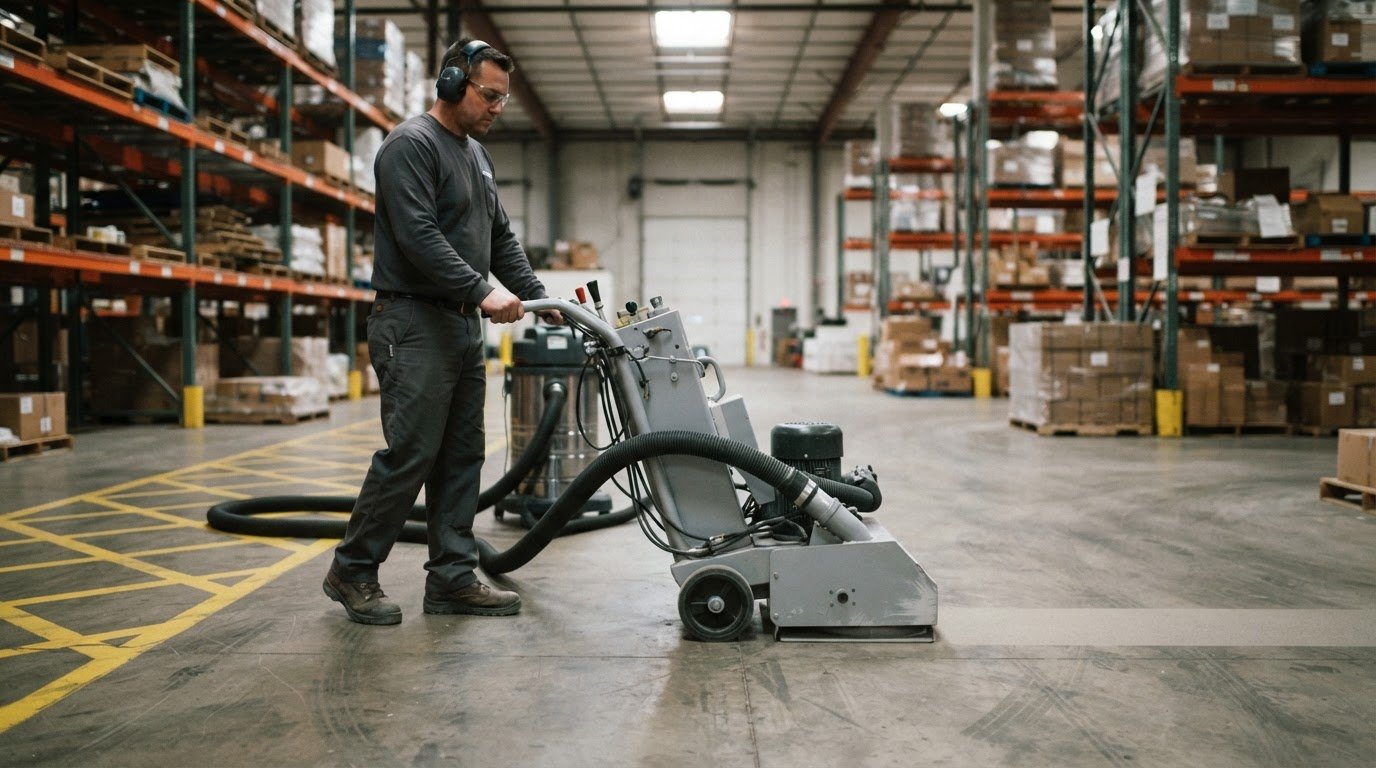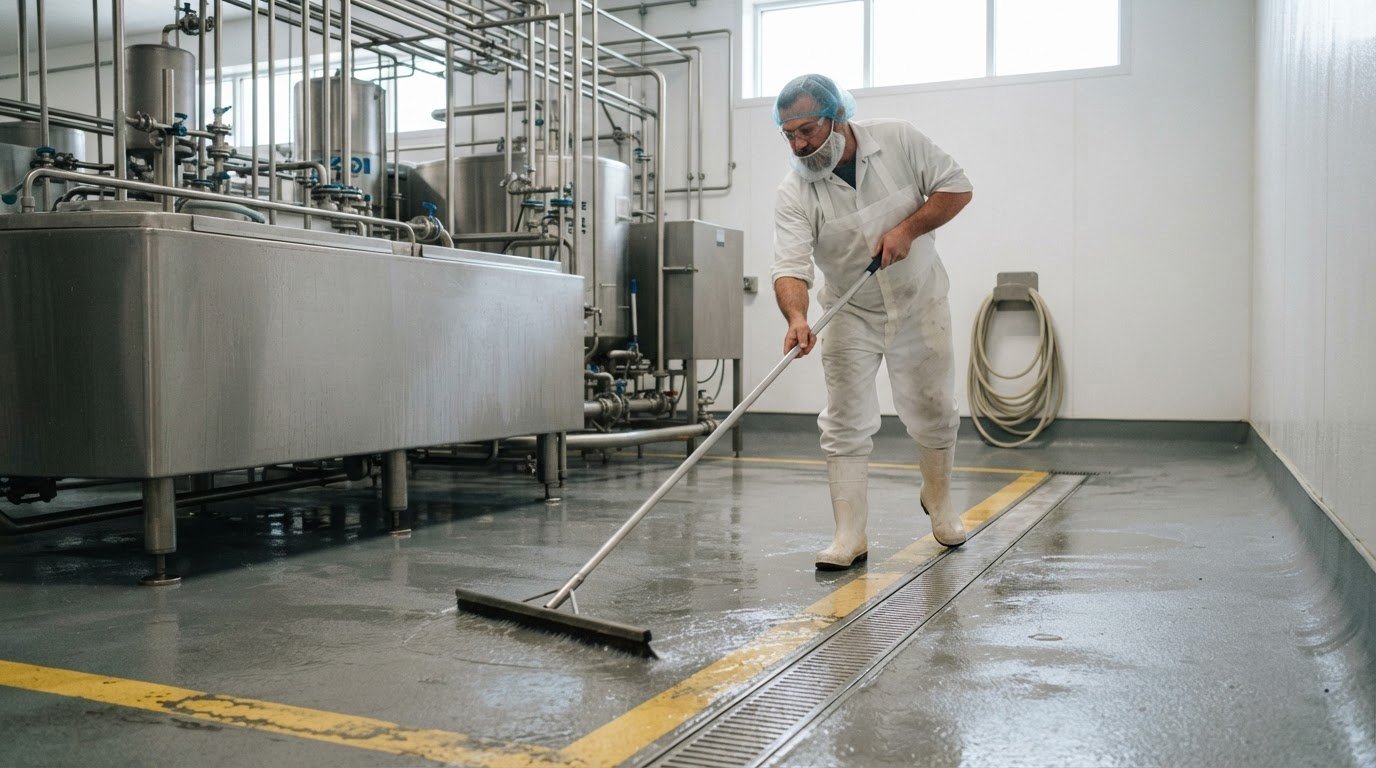
Food-safety planning starts at the floor: the Centers for Disease Control and Prevention estimates that 48 million people in the United States suffer from foodborne illnesses each year. The right striping solutions for food grade environments must fit the facility’s hygiene needs, withstand its cleaning routine, and suit the floor surface. One marking material won’t fit every area.
Floor lines should remain clear and useful through production, washdown, and daily traffic. In food facilities, choosing striping solutions for food grade environments also means accounting for spills and residue, cleaning chemicals, surface preparation, and how the layout supports hygienic operations.
This article explains how to assess these factors, prepare floors affected by oil or product residue, and weigh durability against maintenance needs. It also clarifies the role of USDA acceptance and NSF registration so you can make a practical decision based on how each area is used and cleaned.
Key Takeaways
- Choose floor markings around the facility’s hygiene needs and how each production area is used and cleaned.
- Account for oil, grease, moisture, and product residue when planning surface preparation and line placement.
- Consider how cleaning chemicals and routine maintenance may affect marking durability over time.
- Understand how hygienic design considerations relate to USDA acceptance and NSF certification.
- Use the floor layout to keep markings clear, practical, and suited to daily facility operations.
NSF registration and hygienic design
Food-floor markings need to work within the facility’s sanitation plan, not merely create visible boundaries. The Centers for Disease Control and Prevention estimates that 48 million people in the United States suffer from foodborne illnesses each year.
Hygienic design connects floor layout, surface condition, cleaning access, and material selection. For striping, the goal is to define routes and work zones without creating avoidable challenges during processing or washdown.
NSF Registration
NSF registration is one factor to consider when evaluating a specific striping product for food processing. Review its registration information and stated scope alongside the intended use, floor surface, and cleaning conditions. A label alone cannot show how an installed marking will perform in your facility. The installation plan must also account for floor preparation, line placement, and sanitation access.
Wet, Cold, and Washdown Area Suitability
For wet, cold, or washdown areas, select a marking system based on the floor and cleaning routine. The product should suit the substrate and conditions it will face, including moisture and frequent cleaning. No single type of striping suits every zone. Distinguish washdown areas from dry aisles in the layout, then match the material to each area’s operating conditions.
Approved Striping Materials
There isn’t one material name that establishes suitability for every food-grade environment. Evaluate the specific product documentation for its intended application, substrate compatibility, and relevant registration or certification details. The word “epoxy,” for example, identifies a material category, not proof that every formulation suits every processing area. Coordinate line design with the floor system; epoxy warehouse striping should fit the facility’s surface and operating needs.
Food-Grade Striping Contractors
In the United States, food-grade striping should be planned as a facility-specific installation, not treated as a paint-only task. The project plan should address floor preparation, layout, product selection, and how the work fits the sanitation routine. Include the proposed material’s documentation and intended-use details in the project scope. This makes the decision more rigorous and ties the marking plan to real processing conditions.
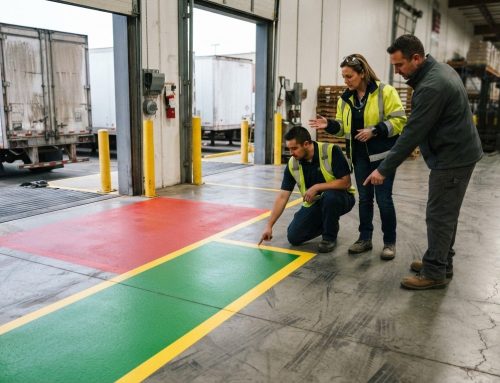
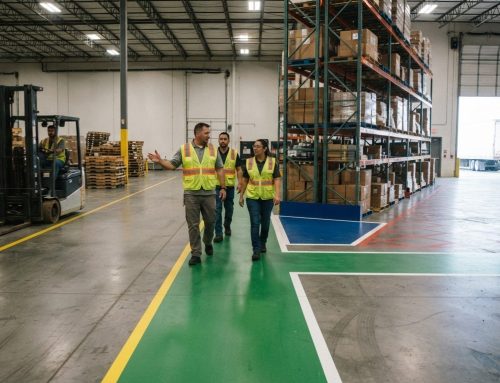
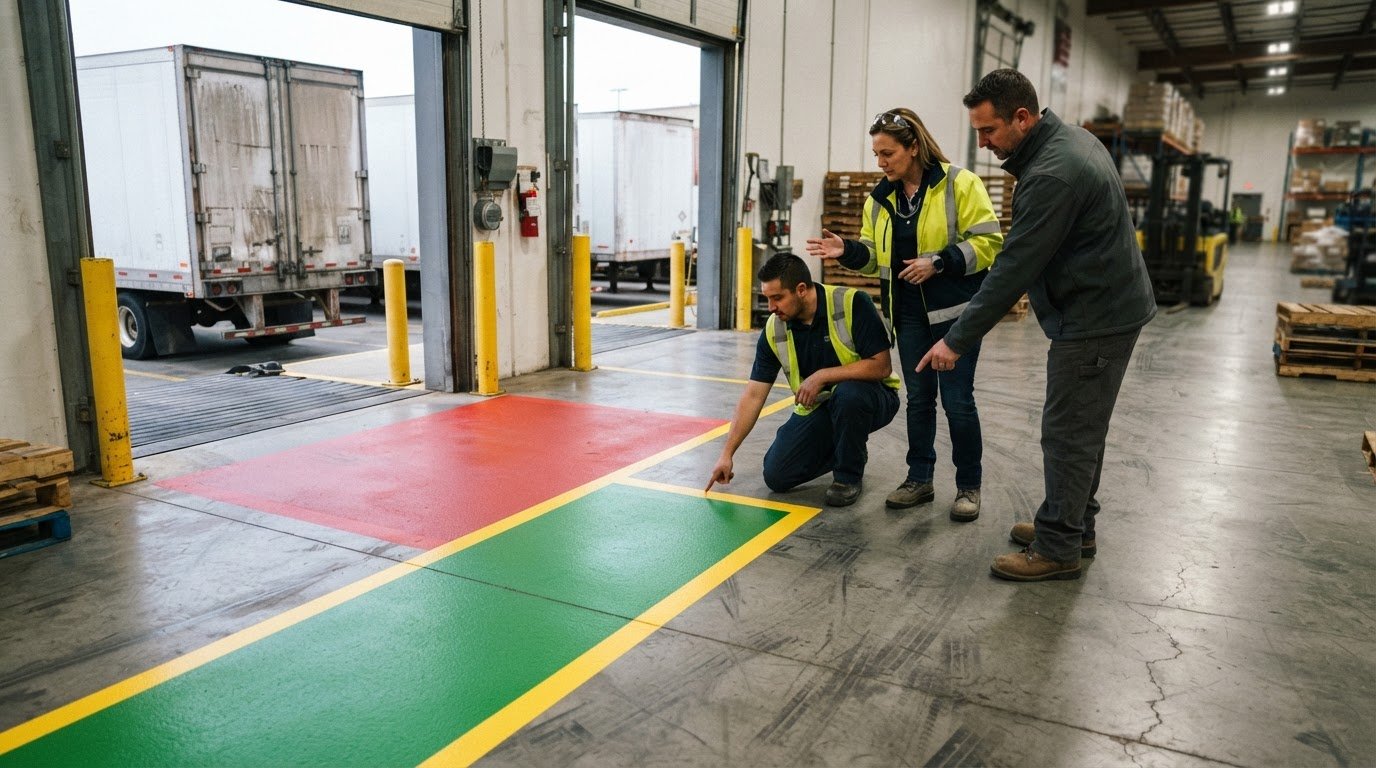
Start with a floor plan showing production lines, walkways, washdown areas, and transitions between zones. Decide which routes need clear boundaries and which markings must remain accessible during cleaning. This sequence helps prevent a layout that looks orderly on paper but obstructs equipment movement or sanitation access.
Hygienic design also applies to the lines themselves. Keep markings purposeful and easy to interpret; unnecessary visual detail can complicate cleaning or cause confusion. For example, a pedestrian route beside filling equipment should guide movement while preserving access to the equipment and surrounding floor.
Before installation, connect three decisions: the floor’s condition, the marking product’s documented use, and the area’s cleaning demands. This gives facility teams a practical basis for selecting striping solutions for food grade environments while keeping hygiene and daily operations central.
Oily, greasy, and product-contaminated surfaces
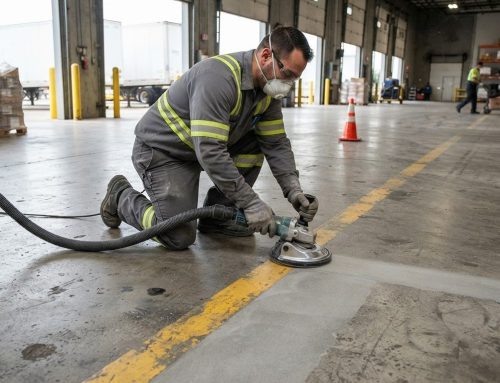
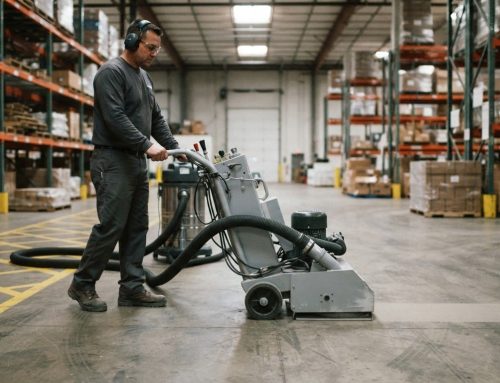
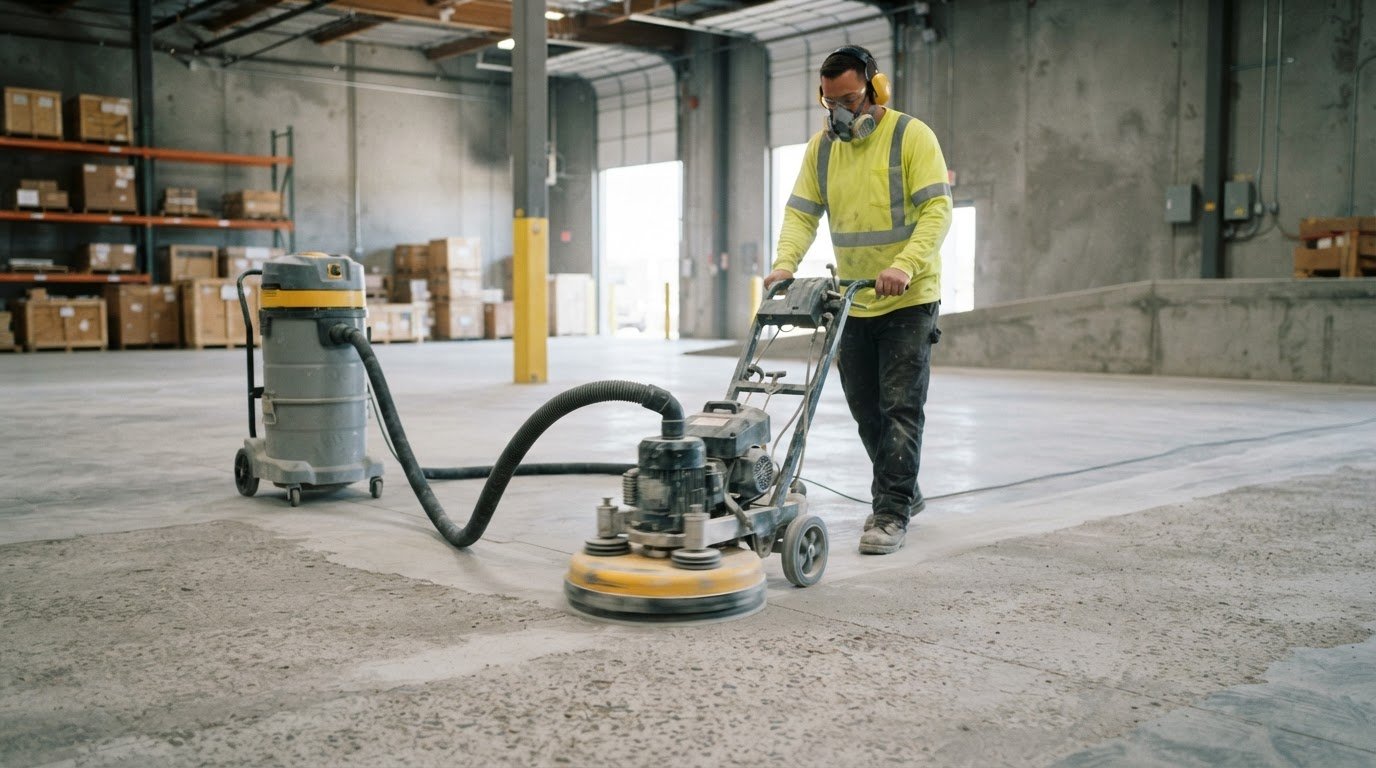
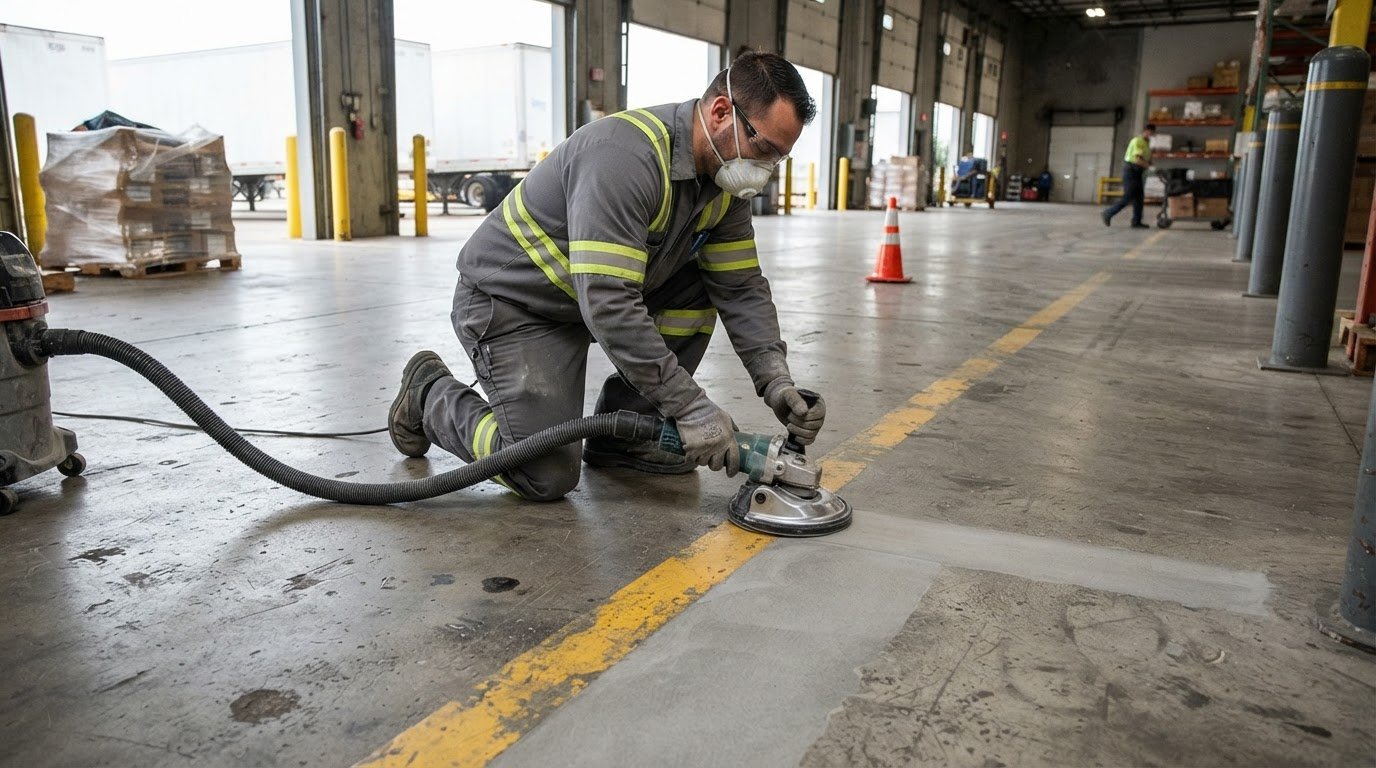
Before applying floor stripes, remove oil, grease, product residue, and loose particles from the work area. Clean the floor with a method compatible with its surface and sanitation procedures, then let it dry before marking. Remove failing paint or residue where it could interfere with adhesion.
Processing facilities face spills from liquids, oils, and particulate matter. These contaminants can leave damp, slippery surfaces and create conditions conducive to bacteria and mold. A stripe applied over residue may not bond consistently, and contamination can obscure line edges and reduce their usefulness. First identify what is on the floor and where it collects.
Inspect transitions near equipment, drains, production lines, and washdown zones. Visible spill paths can show where liquids repeatedly travel, while a greasy film may remain even when the floor looks dry. Treat each condition as a separate preparation challenge. The cleaning method should remove the contaminant without leaving a film that could affect adhesion.
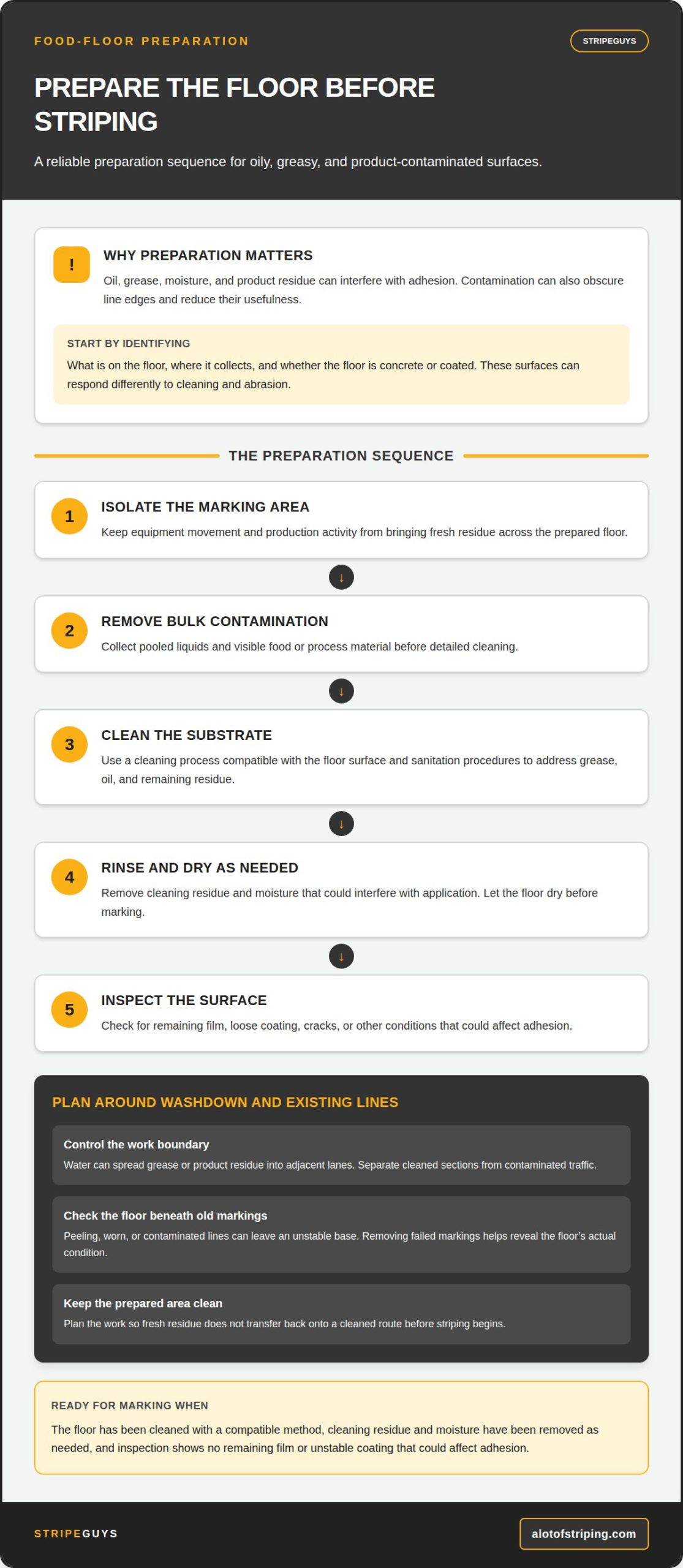
For a reliable preparation sequence, work through these steps:
- Isolate the marking area. Keep equipment movement and production activity from bringing fresh residue across the prepared floor.
- Remove bulk contamination. Collect pooled liquids and visible food or process material before detailed cleaning.
- Clean the substrate. Use a compatible cleaning process to address grease, oil, and remaining residue.
- Rinse and dry as needed. Remove cleaning residue and moisture that could interfere with application.
- Inspect the surface. Check for remaining film, loose coating, cracks, or other conditions that could affect adhesion.
Washdown requires planning, not just cleanup. Water can spread grease or product residue into adjacent lanes, so define the work boundary and separate cleaned sections from contaminated traffic. For example, prepare a route beside a processing line after nearby equipment and floors have been cleaned. Otherwise, fresh residue may transfer back before striping begins.
Existing markings need attention too. Applying new material over old lines that are peeling, worn, or contaminated can leave an unstable base. Removing failed markings before installation helps reveal the floor’s actual condition and supports a clean layout. Preparation should account for the floor material, since concrete and coated surfaces respond differently to cleaning and abrasion.
Durable results depend on matching preparation to the contaminant, substrate, and washdown routine. A project plan for food-facility floor marking can account for those conditions before work begins, including which areas need cleaning, drying, or old-line removal before new stripes go down.
Spills of liquids, oils, and particulate matter can leave damp, slippery areas and create conditions conducive to bacteria and mold. Industrial cleaning specialists such as Distribution Hygiene Services Limited can help remove stubborn contamination thoroughly before marking.
Surface durability and maintenance
Food processing floors face repeated cleaning, chemical exposure, moisture, and equipment traffic. Marking performance depends on the selected material, the floor beneath it, and the facility’s maintenance routine.
Resistance to Cleaning and Washing
Harsh cleaning chemicals can degrade flooring, so a stripe’s compatibility with the sanitation routine matters. Epoxy, polyurethane, and MMA are distinct material categories, but performance depends on the specific formulation and application. Compare product documentation for chemical exposure, sanitizers, moisture, and high-pressure washing instead of assuming any category withstands every process.
For caustic cleaners and washdown, match the marking product to the chemicals and cleaning methods used in that zone. The surface must also be sound and properly prepared; otherwise, cleaning may expose weak adhesion at the line edges. A freezer or washdown room requires attention to its actual operating conditions, not just a generic “food-safe” label.
Cure Time Before Production
Production can resume once the applied material has reached the cure stage required for the product and site conditions. Cure time varies by formulation and application conditions, so no single duration applies to every food plant. Build the work sequence around the product instructions and the facility’s production plan.
For example, a line near a washdown route should not face cleaning or traffic before its required cure is complete. Schedule application, curing, and the first planned cleaning cycle accordingly. Do not treat “dry to touch” as permission to resume production.
Peeling and Contamination Risks
Peeling paint or tape can leave gaps, lifted edges, or loose fragments. These defects can collect soil and moisture, complicate cleaning, and create a potential contamination concern if material reaches a food-handling area. Inspect line edges, intersections, and turning points where carts and equipment repeatedly cross.
Food processing facilities can include marking checks in routine cleaning observations. Look for fading, cracking, lifting, missing sections, or residue along marking edges. Repair or remove compromised sections when their condition makes the line difficult to clean or interpret. No fixed replacement interval suits every facility, because chemical exposure, traffic, washdown, and substrate condition vary.
Material choice also affects maintenance. A durable marking system must suit the floor and cleaning routine, while clear layout boundaries make worn areas easier to spot. Record the location and condition of damaged sections, then plan repairs around production and sanitation needs.
Review markings after changes to cleaners, washdown practices, or equipment routes. A new sanitizer or altered traffic pattern can change the demands on a line. For striping solutions for food grade environments, the practical standard is compatible material, correct application, complete curing, and ongoing condition-based maintenance.
USDA acceptance and NSF certification
USDA acceptance and NSF registration address different considerations. Neither label alone establishes whether a floor marking suits a processing area. Evaluate product documentation, installation condition, and the marking’s relationship to facility sanitation practices.
The USDA requirement described for food-production curtains concerns designs without food or water traps. It applies to curtains, not directly to floor striping. It does illustrate a hygienic-design principle: avoid features that hold residue or moisture. For floor markings, inspect edges, joints, and damaged sections where contamination could collect.
Consider NSF registration at the product level. Review what the registration covers and whether it applies to the intended use. A product name or material category does not, by itself, explain its registration scope or suitability for every floor. The documentation should match the actual application and facility cleaning conditions.
Separate the review into clear questions:
- Product: What use does the product documentation describe, and what does any NSF registration cover?
- Location: Is the marking installed in a dry aisle, wet processing zone, freezer, or washdown area?
- Surface: Does the floor condition support the planned application and a cleanable finish?
- Operation: Will traffic, temperature changes, moisture, or cleaning affect the installed marking?
Temperature matters because a freezer and a warm processing zone have different operating conditions. The marking material must suit its installation location and the demands of that area. Do not assume the same formulation or application method fits every room. Record the location and intended use in the project specification to tie selection to actual facility conditions.
Use documentation to support, not replace, practical review. A registration may define a product’s scope, while the installation plan addresses floor preparation, line placement, and the finished edge. These are related but distinct parts of the decision. Clear records help facility teams connect product selection with cleaning procedures and maintenance inspections.
Keep the distinction between a product credential and a hygienic outcome clear. NSF registration identifies a defined product-related scope; it does not establish that every layout or installation detail prevents contamination. Likewise, apply USDA-related design considerations to the features they address rather than generalizing from curtains to floor coatings.
For a project review, organize the facility’s zones, temperatures, cleaning methods, and product documents in one specification. This gives the installation team a concrete basis for aligning the marking plan with operational conditions. Discuss a food-facility floor-marking project when you’re ready to plan the layout and installation around those conditions.
The USDA Food Safety and Inspection Service advises keeping cold food at 40ºF or colder and identifies 0ºF or colder as best for storing frozen foods.
StripeGuys Warhouse Line Striping
StripeGuys’ warehouse line striping helps facilities turn operational layouts into clear, durable floor markings. Warehouse Floor Striping and Epoxy Line Painting define aisles, work zones, and traffic routes, while Warehouse Line Removal addresses markings that no longer fit the floor plan. The right scope depends on the facility layout, existing surface, and how teams use each area.
For food-processing operations, clear markings can support organized movement, but the striping plan should align with the facility’s sanitation requirements and selected materials. StripeGuys Warhouse Line Striping brings more than 29 years of experience in commercial and industrial floor striping. Contact StripeGuys Warhouse Line Striping to discuss your facility’s floor-marking needs.
Plan the next floor-marking step
Turn your facility’s operating needs into a clear project scope. Identify the areas that need markings, how teams use them, and where existing lines no longer support the current layout. These details help shape striping solutions for food grade environments around real workflows and floor conditions.
StripeGuys provides Warehouse Floor Striping, Epoxy Line Painting, and Parking Lot Striping. These services support different parts of facility operations, from interior routes to exterior traffic areas. A focused project discussion can define the work area and the marking changes your site needs.
Contact StripeGuys Warhouse Line Striping to discuss your floor-marking project. A practical plan is a solid place to start.
Frequently Asked Questions
What FDA and USDA requirements apply to floor markings in food processing facilities?
The USDA requirement described for food-production curtains calls for designs without food or water traps, but it concerns curtains, not floor markings. Do not treat it as a floor-striping specification or infer a universal FDA color code from it. For a marking plan, define routes and zones so the layout supports facility operations without obstructing cleaning access. Product documentation and facility procedures should guide material selection and installation.
What safety and traffic markings are recommended for food-grade facilities?
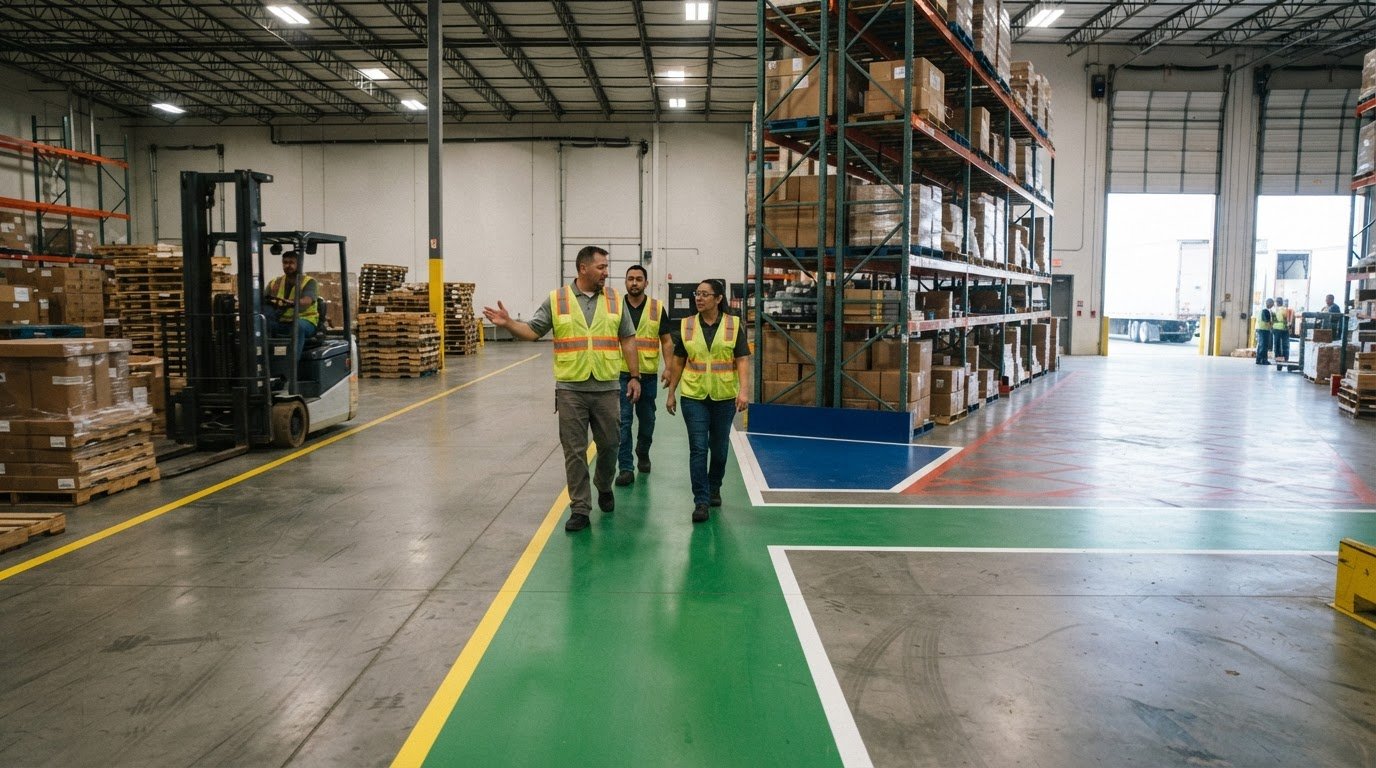
Markings should make pedestrian routes, equipment paths, and restricted work zones easy to distinguish. For example, where a pedestrian aisle crosses a forklift route, use clear, consistent lines and crossing indicators to make the boundary visible. Add directional arrows where traffic flow changes, and distinguish staging areas from travel lanes. Align the layout with actual movement patterns so markings guide staff without creating conflicting signals.
How do epoxy, polyurethane, and MMA floor striping compare for food plants?
Epoxy, polyurethane, and MMA are different material categories, but none can be assumed to suit every food plant or cleaning process. Compare product documentation for chemical exposure, sanitizers, moisture, and high-pressure washing, and confirm that it fits the floor and application conditions.