The lowest-cost approach on paper can become expensive if grinding damages the floor or leaves residue that needs rework. Choosing professional line removal vs grinding it yourself depends on the site plan, removal depth, and finish needed afterward. DIY grinding may suit a small area with straightforward requirements; larger or more sensitive jobs need closer control.
It’s sensible to compare equipment and labor with the value of doing the work in-house. But also account for surface preparation, disruption to operations, and the risk of uneven removal. Project pricing is provided after a quote request and depends on the area, marking condition, removal depth, access, and required surface preparation.
This guide explains how to assess the scope, compare grinding methods, and identify quality risks before choosing an approach. You’ll learn when professional removal can help protect the floor and align the work with the site plan, and when DIY grinding may be practical.
Key Takeaways
- Start with the site plan: the required floor condition after removal determines how much marking must be removed and what preparation follows.
- Compare DIY and professional methods by removal depth and scope, not equipment cost alone.
- Account for uneven removal and possible rework when weighing the apparent savings of grinding in-house.
- Include labor, equipment, access, surface condition, and operational disruption in your cost comparison.
- Choose the method that delivers the required finish while keeping the project aligned with facility needs and budget.
Choosing a method based on future site use
Start with what the pavement will be used for next, not the equipment you have today. A parking lot being restriped may need old lines removed cleanly enough to accommodate a revised layout. Changes to road markings also depend on the authority responsible for that roadway. The intended finish determines whether grinding, another removal method, or covering existing lines is appropriate.
Grinding mechanically removes paint or thermoplastic markings from pavement. Water blasting uses pressurized water, while chemical removal uses products that loosen marking material. Blacking out lines covers them rather than removing them, leaving the old marking beneath the new surface layer. The right method depends on the pavement, marking material, desired finish, and replacement plan.
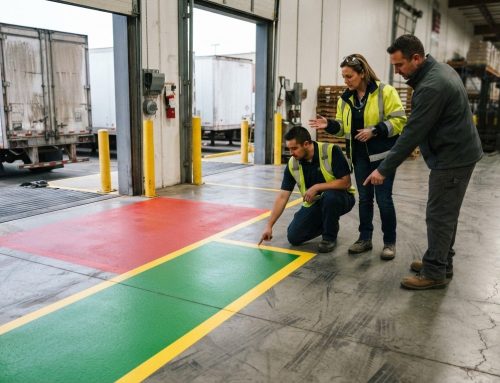
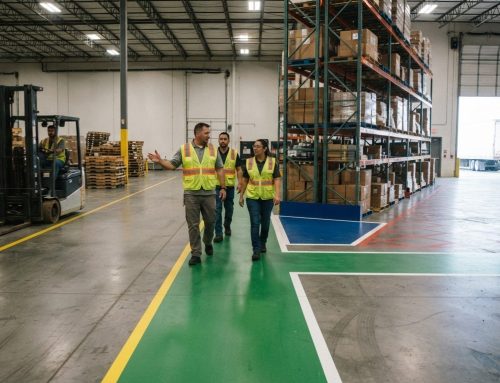
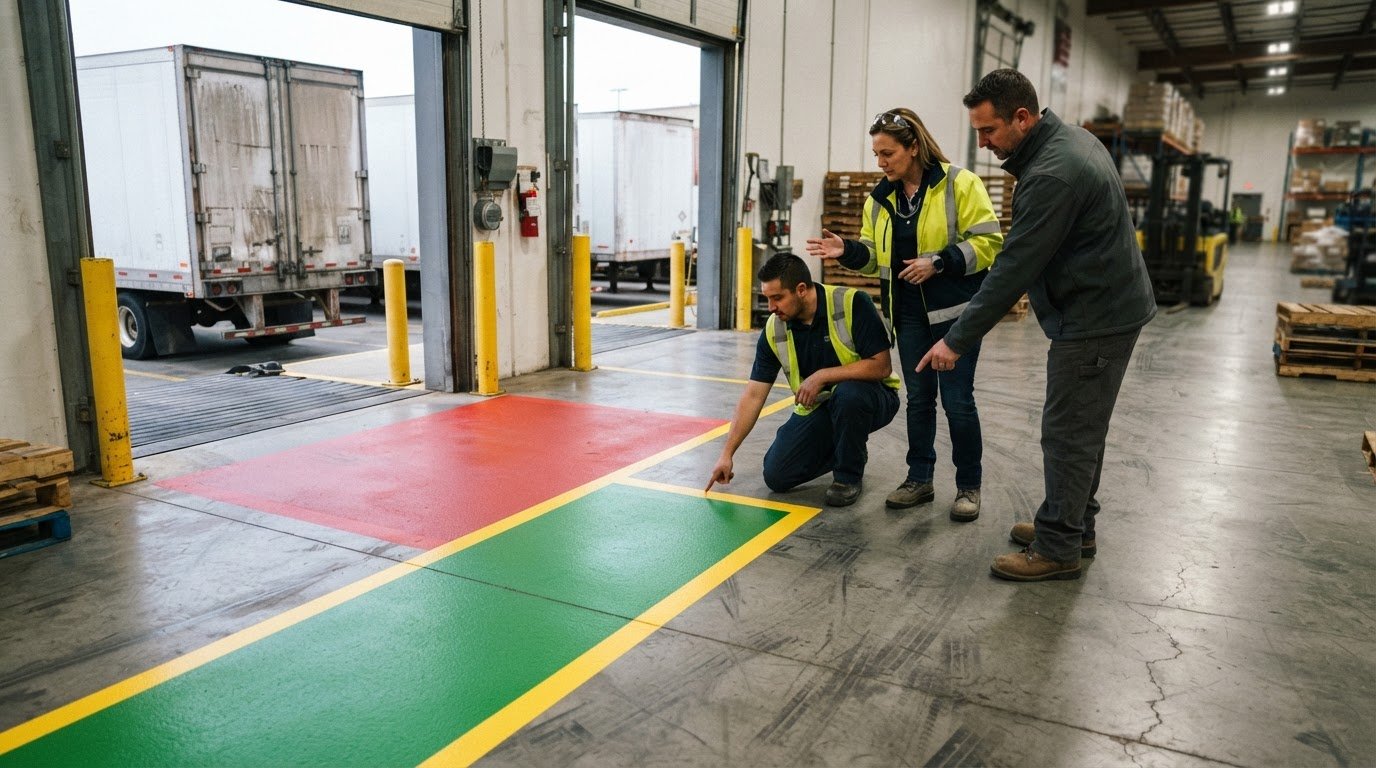
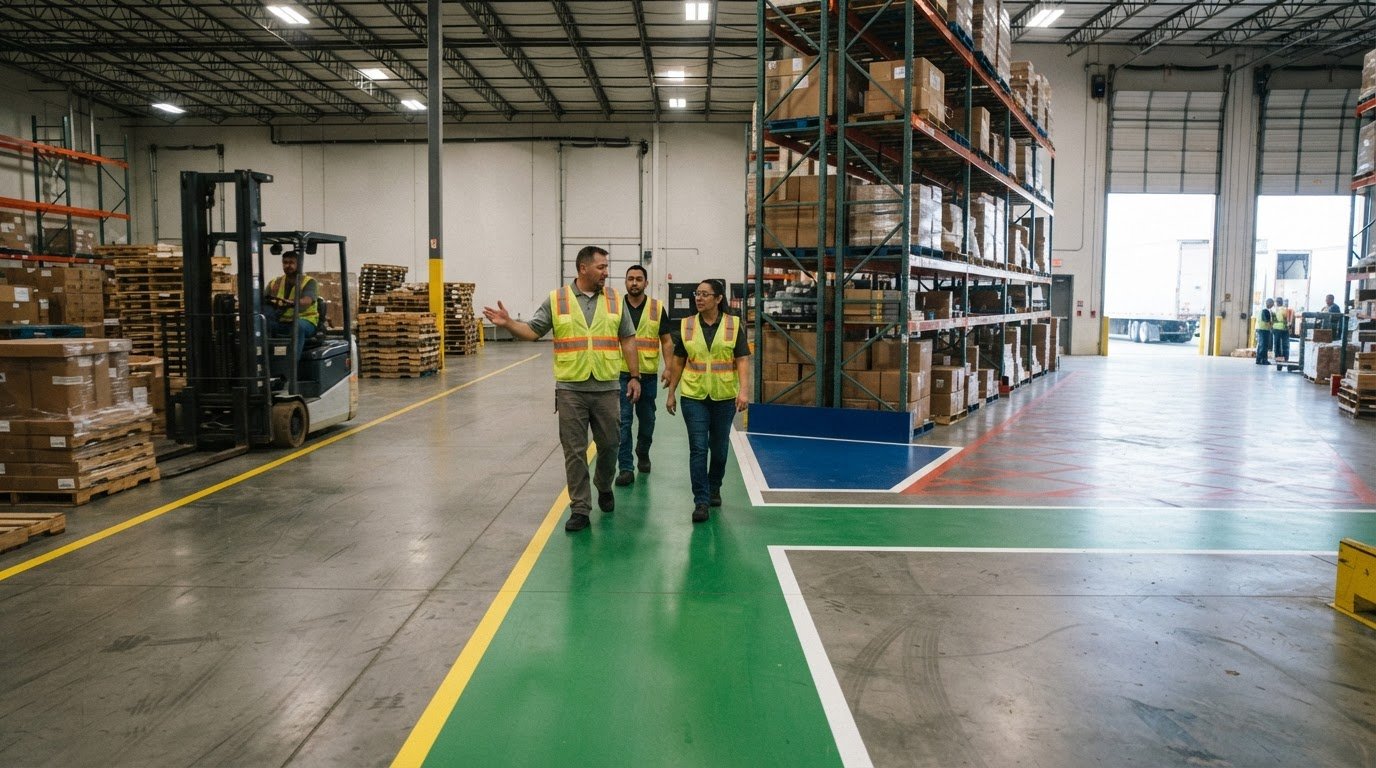
For warehouse pavement, the future layout matters as much as the immediate removal. A changed aisle or safety route may require removal before new markings can be installed. In that case, parking lot line striping relates to planning the next layout, while the removal method must suit the existing surface. Experts assess these requirements together rather than treating removal as an isolated task.
Requirements depend on whether markings are on private property or a public road, as well as the responsible jurisdiction or roadway authority. There is no single permit rule for every parking lot and road; the location and authority determine the applicable process.
Professionals remove paint and thermoplastic pavement markings by choosing a mechanical or other suitable method for the material and pavement. Grinding and shot blasting abrade the markings; water blasting and chemical methods remove them differently. The method affects both the surface left behind and its readiness for new lines.
| Option | Best fit | What remains | Future-use consideration |
|---|---|---|---|
| Grinding | Removing markings mechanically | Surface condition depends on execution | Assess suitability for the next layout |
| Water blasting | Projects suited to pressurized water | Depends on pavement and marking | Consider surface and cleanup needs |
| Chemical removal | Markings suited to chemical treatment | Depends on product and application | Account for material compatibility |
| Blacking out | Covering lines without removing them | Original marking remains underneath | May not suit a clean-surface requirement |
After removal, inspect the pavement for residue, surface damage, and defects that could affect new markings. Clean the area, repair pavement damage as needed, then prepare the surface for restriping. This sequence helps keep leftover material and unrepaired damage from compromising the new layout.
Choose grinding when mechanical removal suits the marking and required finish; choose another method when the pavement or material calls for it. Tree stump grinding addresses a different problem: wood and roots in the ground, not pavement lines. A stump grinder’s depth and the roots left behind have no bearing on how parking markings should be removed.
Differences in grinding depth and excavation scope
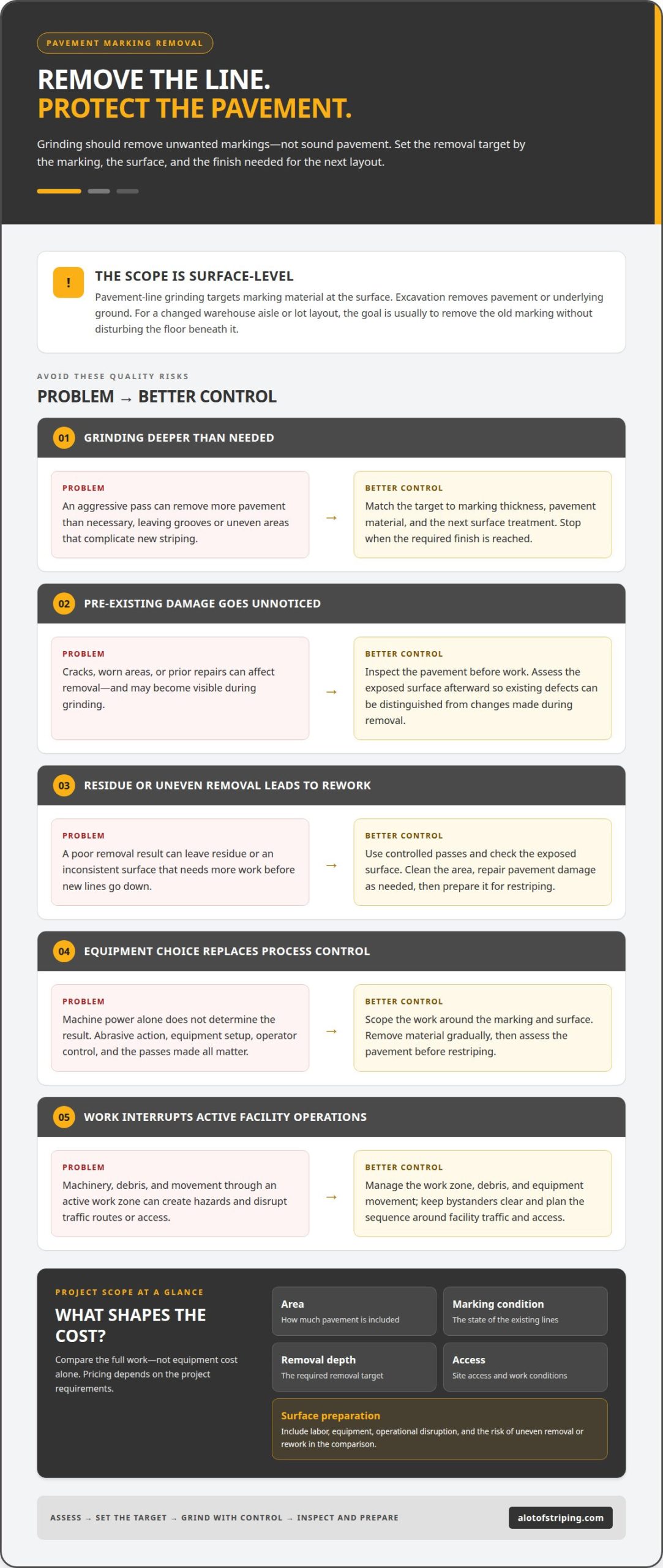
For pavement markings, grinding targets line material at the surface. Excavation is different: it removes pavement or underlying ground. A warehouse aisle being changed, for example, usually needs the old marking removed without disturbing the floor beneath it. The required finish determines when to stop.
There is no single typical depth for every painted or thermoplastic line. The marking’s thickness, pavement material, and next surface treatment all affect how much grinding is needed. The goal is to remove the unwanted line while preserving sound pavement. Grinding deeper than necessary can leave grooves or uneven areas that complicate new striping.
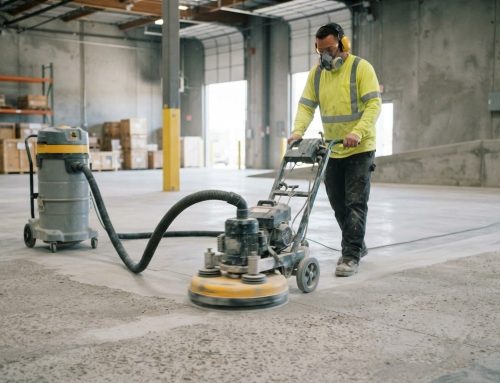
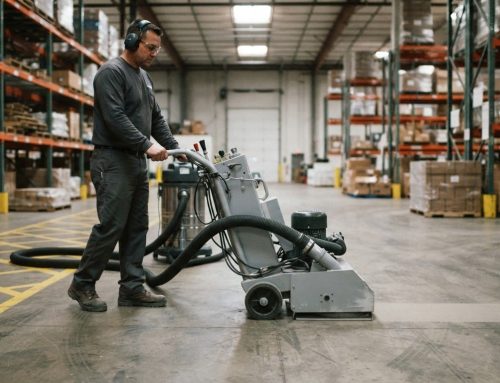
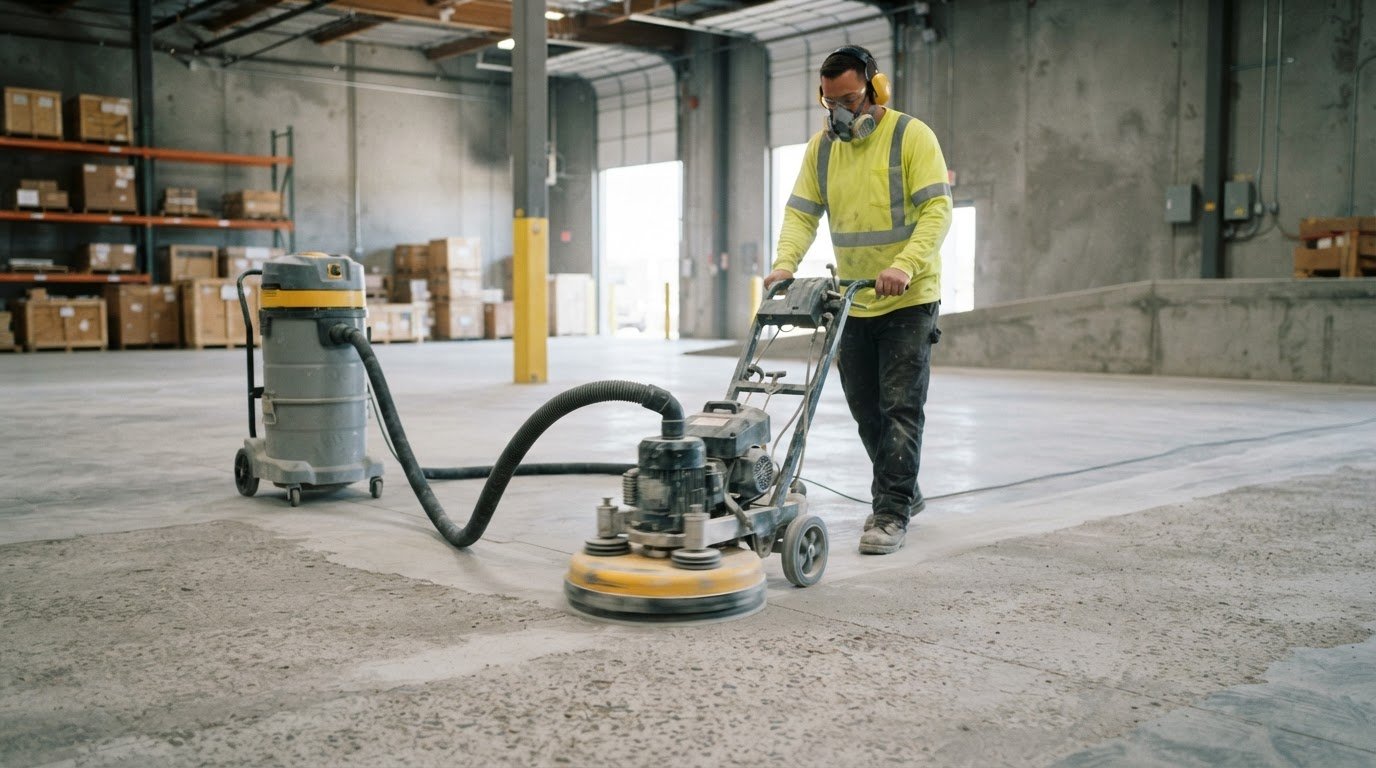
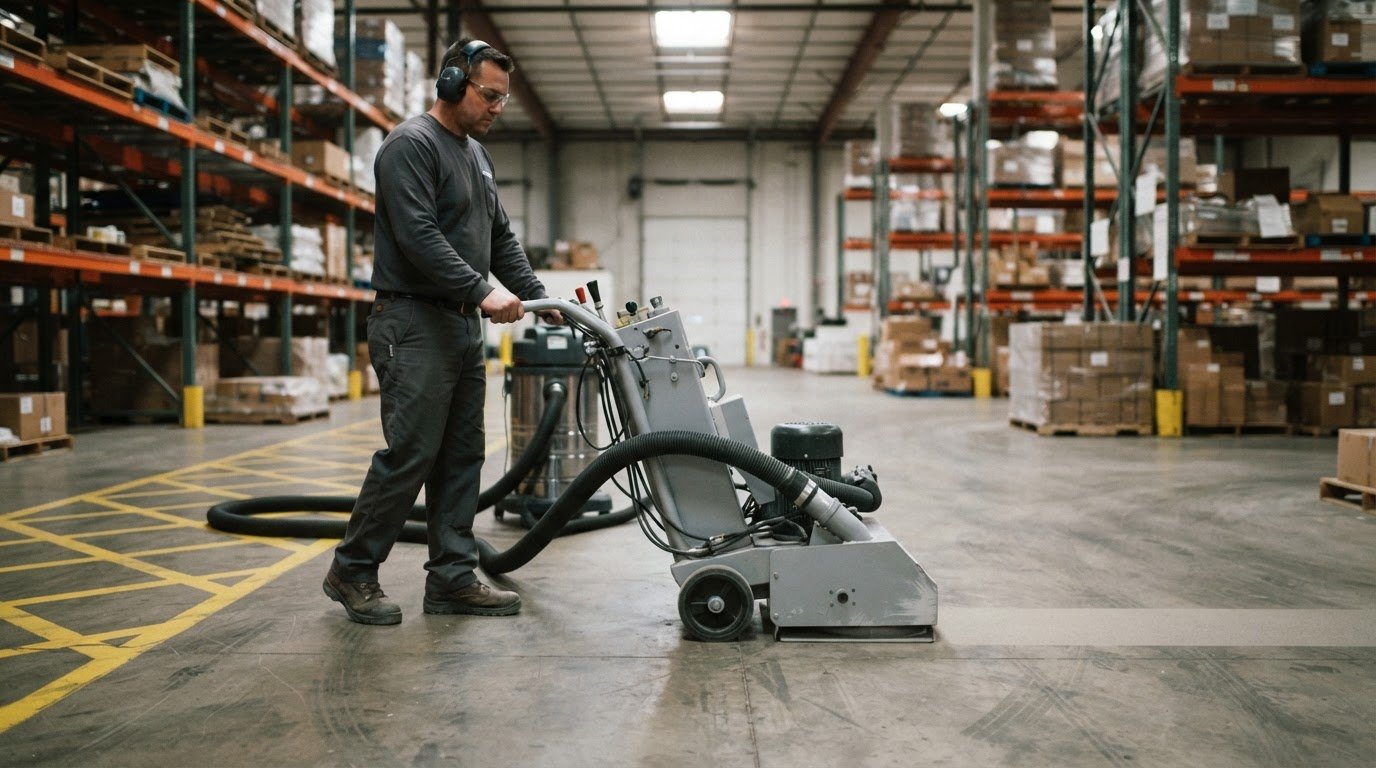
Machine power alone doesn’t determine the result. Abrasive action, equipment setup, operator control, and the passes made across the marking all matter. A controlled pass can remove material gradually; an aggressive pass may remove more pavement than necessary. Scope grinding around the surface and marking, not simply the machine available.
Don’t confuse line grinding with stump grinding. A stump grinder removes wood; pavement-line grinding removes markings from a hard surface. Homeowners may encounter stump removal around a tree, but that process involves different considerations for depth, debris, and excavation. For a parking lot or warehouse floor, the key question is whether the marking can be removed without damaging the pavement.
A sound scope follows the surface from assessment through preparation:
- Identify whether the marking is paint, thermoplastic, or another material.
- Inspect the pavement for existing cracks, worn areas, and prior repairs.
- Set the removal target according to the new layout and required finish.
- Use controlled grinding, then assess the exposed surface before restriping.
Each step affects the next. For example, grinding over cracked asphalt may reveal existing defects rather than create a sound base. A clear assessment helps distinguish pre-existing damage from changes caused during removal. It also establishes whether the work covers only the line or includes surface repair.
Machinery can pose a hazard if the work zone, debris, and equipment movement aren’t managed. Operators need to control the grinding path and keep bystanders clear. At an active facility, the work sequence should account for traffic routes and access to operating areas. These controls help contain the work area.
Choose the removal scope by matching the grinding depth to the marking and the pavement’s condition. If a revised lot layout requires removal and replacement, discuss the project scope before work begins. A defined target helps keep removal focused on the marking, not unnecessary excavation.
Grinding quality and rework risks
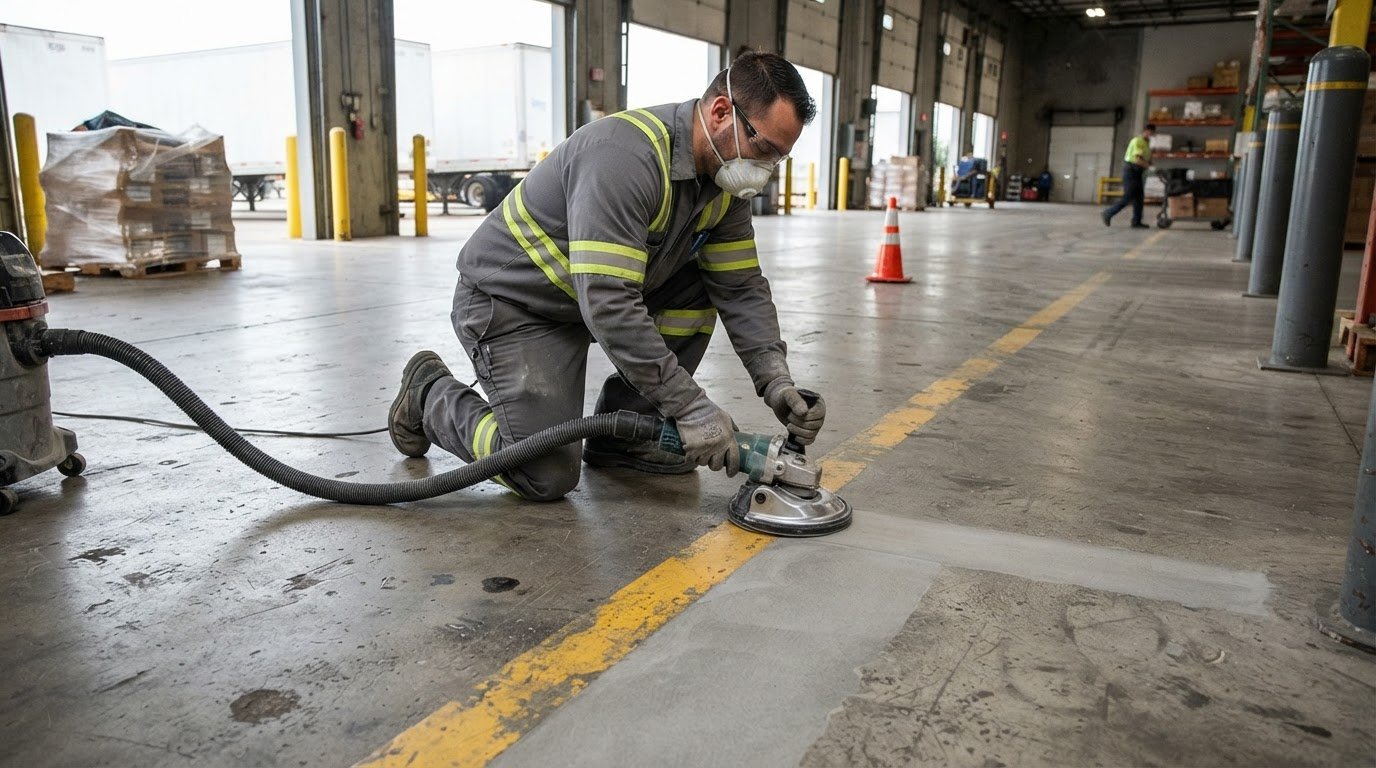
Grinding removes pavement markings through abrasion, so the operator’s path and pressure affect the surface left behind. A pass that cuts too aggressively can scar asphalt or concrete; a shallow pass can leave visible residue. Either outcome can undermine the new layout and lead to additional work.
Can grinding remove pavement markings without damaging asphalt or concrete? It can preserve the pavement when the process is controlled for the surface and material. But grinding removes material, so a poor setup or inconsistent passes can leave grooves, rough patches, or uneven color.
Quality assessment starts before the machinery runs. The work team identifies the marking material, examines pavement condition, and defines the removal area. Existing cracks or patches matter: grinding can expose defects already present, which should not be mistaken for damage caused by removal. After each pass, assess the exposed surface before continuing.
The risk of rework rises when removal leaves residue or an inconsistent profile. Improper grinding can affect the fit and finish of hardscape installations and may require rework. A remaining stripe, for example, can show through a revised layout, while excessive abrasion can leave a surface that needs repair before new markings are applied.
Can grinding create health and safety risks, including silica dust and fumes? Grinding produces dust and debris, so the work plan needs to address airborne material and restrict access to the work zone. Fumes depend on the marking material and removal method; silica exposure also depends on the material being abraded.
Surface grinding is not stump grinding. A tree stump grinder cuts wood, leaves roots underground, and produces wood chips; pavement marking removal targets the surface coating instead. “Inches” may describe stump-grinding depth, but it doesn’t define the proper removal depth for a pavement line.
A practical quality-control sequence keeps the operation focused:
- Record pavement defects and repairs before grinding begins.
- Remove the marking in controlled passes, keeping the work within the defined area.
- Inspect the surface for residue, grooves, and uneven finish.
- Address surface defects before applying replacement markings.
This sequence separates marking removal from pavement repair. On a warehouse floor, for example, an inspection after grinding shows whether residue remains or the surface needs attention before new traffic lines are applied. A defined stopping point also limits unnecessary abrasion and avoidable rework.
new markings are applied. DIY tub grinding often adds 2-3 days to a project, but that estimate concerns a different task, not pavement marking removal.
Professional grinding and removal costs
For pavement line removal, compare the full project scope, not just rental charges against contractor labor. A DIY budget should include equipment, rental duration, suitable tooling, operator time, cleanup, and possible surface repair. The choice of professional line removal vs grinding it yourself starts with these combined costs. A short, accessible strip and a large area with multiple markings can involve very different amounts of work.
How much does it cost to rent a concrete grinder or scarifier for DIY line removal? The rental total depends on machine type, rental period, tooling, delivery, and the work required afterward. Include operator time, dust and debris management, and possible rework when comparing the total with professional grinding.
Professional project pricing also depends on site conditions and the required finish. The area and marking material affect the work involved, while access and operating constraints affect how it can be sequenced. In a quote request, describe the marking type, approximate area, pavement condition, site access, and planned replacement layout. Pricing is provided after a quote request and depends on the project.
Use this cost checklist to compare complete scopes, not just one equipment charge:
- Equipment: Include rental time and tooling suited to the marking and pavement.
- Labor: Count setup, grinding, inspection, cleanup, and time managing site access.
- Surface condition: Existing cracks, patches, or damage may need attention before replacement lines.
- Rework exposure: Residual marking or an uneven surface can add another work step.
- Operations: Consider how the work area affects vehicle and pedestrian movement.
The lowest equipment charge may not mean the lowest overall project cost. A scarifier rental may seem straightforward for one marked section, but extra passes, cleanup, or repairs add to the total. A fair comparison of professional line removal vs grinding it yourself weighs the full DIY effort against a defined professional scope, including equipment, labor, and the required finish.
Keep tree work separate from pavement budgets. Stumps, stump removal, arborists, and professional stump grinders relate to removing wood and roots, not painted or thermoplastic lines. Nearby utilities can matter when excavating around a tree, but they don’t determine the cost of grinding pavement markings.
For a warehouse or parking area, compare the same marked area, removal target, surface condition, and cleanup expectations for each approach. That gives decision-makers a consistent basis for weighing equipment and labor against project requirements. Request a line-removal project quote to compare the work requirements with a DIY plan.
StripeGuys Warhouse Line Striping
StripeGuys’ warehouse line removal service helps facilities plan removal around pavement condition and the markings needed afterward. For warehouse or parking areas, consider whether existing lines need to be removed before applying a revised layout. Warehouse Line Removal and Parking Lot Striping address these connected stages of a floor or lot update.
When weighing DIY grinding against professional work, consider the removal scope, surface finish, site access, and planned replacement markings. StripeGuys also provides Epoxy Line Painting for facility marking needs. Discussing removal and new marking requirements together can help align the work with facility operations.
Set the Next Floor or Lot Project Up for Success
Choose a removal approach that supports the next stage of your facility plan, not just the immediate task. The decision between professional line removal and grinding it yourself should account for the finish needed before new markings are applied and how the work fits around daily operations. A clear scope gives the project a practical starting point.
StripeGuys can support the next step with Warehouse Floor Striping, Epoxy Line Painting, and Parking Lot Striping. Aligning removal with the layout that follows helps keep the floor or lot functional for its intended use. Share the marking condition, project area, and planned changes to start the discussion with the relevant details.
Discuss your line-removal project with StripeGuys Warhouse Line Striping and move forward with a plan that fits your site.
Frequently Asked Questions
How much does professional pavement line removal cost per linear foot or square foot?
There isn’t a universal per-foot or per-square-foot rate for pavement line removal. Pricing is provided after a quote request and depends on the project. Describe the marking area and removal scope so the estimate reflects the actual work, rather than a unit rate that may not account for layout details, pavement condition, or preparation needed afterward.
What equipment and abrasive tools are needed to grind parking lot lines off pavement?
Line grinding requires suitable grinding machinery and abrasive tooling matched to the pavement and marking. Shot blasting is another mechanical method for line removal. The equipment choice affects how the marking comes off and the surface left behind, so the method should suit the pavement and planned finish. A small test area can help assess the approach before work expands.
How long does professional line removal take compared with DIY grinding?
Project duration depends on the marked area, material, equipment setup, access, and number of passes required. DIY work also takes time to arrange machinery, prepare the work zone, operate the grinder, and clean up. Professional work organizes these tasks into a defined scope. A short line and a complex layout with intersections require different work sequences, so area alone doesn’t determine the schedule.
What factors affect professional line removal quotes, such as marking type, pavement, and site size?
Quotes reflect the marking material, pavement condition, total area, layout complexity, access, removal method, and required finish. A layout with many turns or intersecting lines, for example, takes a different approach from long, uninterrupted stripes. Planned replacement markings also determine the surface condition needed after removal. Share a site plan or marked-area measurements to define the scope clearly.