A layout change is easier to act on when people know what is changing, why it matters, what remains flexible, and when decisions take effect. Communicating layout changes to the team means giving each group clear, relevant information and a way to raise questions as plans develop.
A work-area update can affect more than the floor plan: teams may need to adjust routes, storage, equipment positions, or daily routines. Late notice or conflicting plan versions can create confusion and disrupt coordination.
This guide explains how to describe a proposed layout in plain language, distinguish fixed requirements from open decisions, and tailor updates to the teams affected. It also covers sharing changes as plans evolve, inviting useful feedback, and keeping messages consistent so employees can prepare.
Key Takeaways
- Match the timing and level of detail to the change’s scope: alert affected teams early, while waiting for key details before announcing smaller adjustments.
- Summarize the proposed change in one or two clear sentences, then distinguish fixed requirements from decisions still open to input.
- Tailor updates to each department’s responsibilities so people can see how the new layout affects their work.
- Use consistent messages across meetings and written updates, and give employees a clear way to ask questions and share feedback.
- As plans evolve, communicate what changed, why it changed, who needs to act, and when the updated layout takes effect.
Early communication based on change scope
Set the first communication date after identifying who the proposed layout affects and what work will change. Communicating layout changes to the team starts with a plan based on the project’s scope, not a single announcement sent to everyone.
-
Assess the Scope of the Change
Map affected departments, locations, work areas, and daily tasks before drafting messages or choosing channels. A change involving several locations calls for broader coordination than a revised storage zone used by one team. Check dependencies such as equipment moves, route adjustments, and shared work areas. Then identify who needs detailed instructions and who needs only a general update.
-
Give Advance Notice
Tell employees about the change before it takes effect, with enough context for affected teams to prepare. For changes involving multiple departments or locations, announce the plan early and provide updates as decisions develop. Label draft details clearly so employees can distinguish what is approved, what is still under review, and when to expect the next update.
-
Start Communication Early
Start planning messages while leaders are shaping the change and explaining its purpose. For operating model changes, organizations are advised to begin communicating with employees six months before the project starts. A warehouse layout proposal may follow a different schedule, but early planning gives teams time to raise questions before implementation details are set. Don’t wait until work begins to plan how to communicate.
- Time announcements according to how developed the plan is. Communicate small changes early, but wait until major details are established before making a broad announcement. For example, tell a work-area team that an adjustment is being considered, then share the approved aisle arrangement. This gives employees useful notice without presenting unsettled details as final.
- Build a sequence into the communication plan: an initial message, a detailed briefing, and a progress update. A change communication worksheet recommends using a template early to develop and deliver a clear vision. Its example email introduces key messages and says details will follow at the next staff meeting. Use the meeting to gather feedback and clarify open questions.
- Make the next step clear in every update. State what employees should do, who will share further information, and which plan version is current. A consistent approach to communicating layout changes to the team keeps early notice useful as plans evolve, rather than leaving employees with an announcement but no practical direction.
Explaining the proposed change and what is flexible
Give employees a clear picture of the proposed layout, its purpose, and the decisions that remain open. A concise explanation helps each person understand what is happening and where their input can still shape the plan.
-
Explain the Purpose and Benefits
Start with the operational goal, such as reducing crossing traffic between receiving and storage. Then connect the proposed layout to a practical benefit, such as a clearer route for moving materials. Keep the explanation to one or two concise sentences, as recommended for a change vision or elevator pitch. Avoid promising results the plan cannot guarantee.
-
Describe What Is Changing and Why
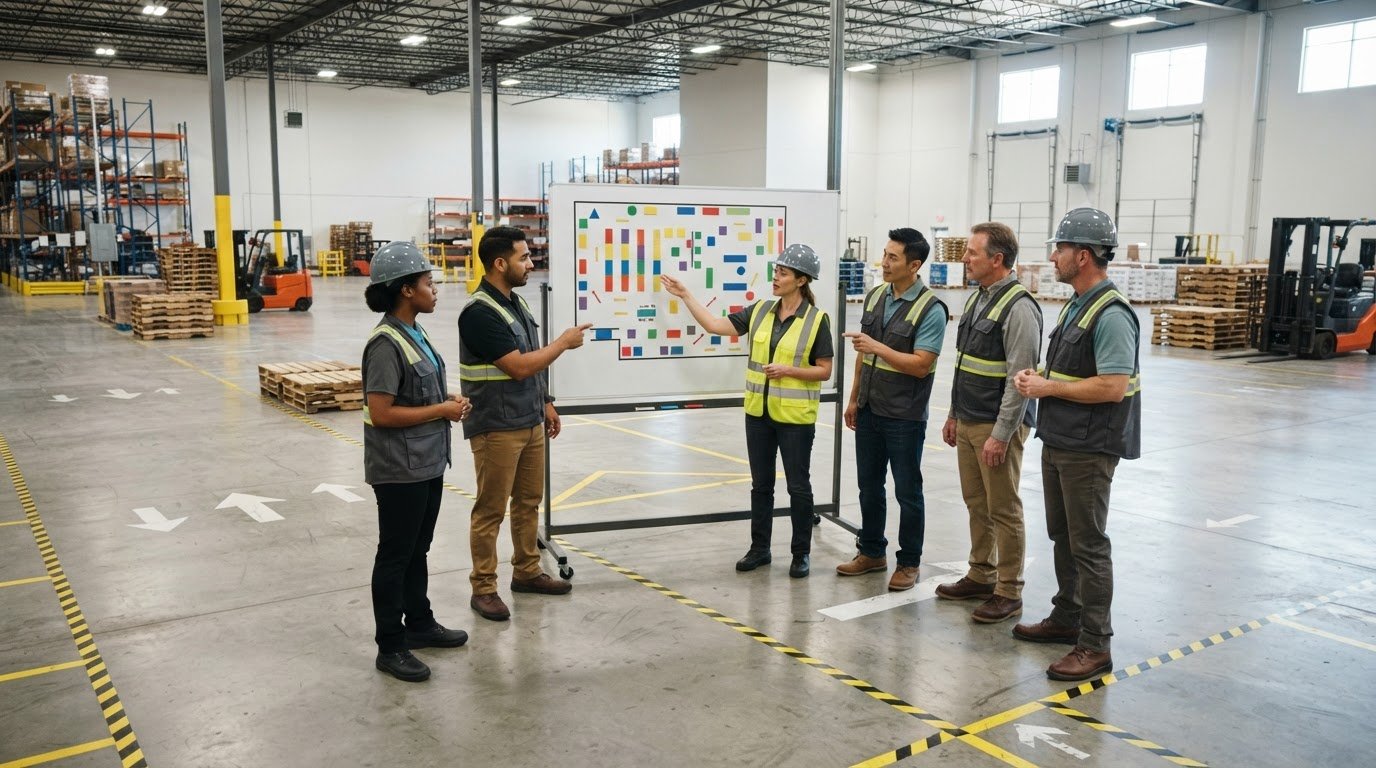
Identify the specific areas, routes, or workstations that will change, then explain the reason for each adjustment. For example, show how moving a staging zone could create a more direct path between receiving and a nearby storage area. Use a marked-up floor plan or a before-and-after diagram so employees can see the change instead of interpreting a general description.
- Separate fixed requirements from flexible choices before inviting feedback. List firm decisions, such as keeping an established equipment footprint in place, separately from adjustable elements, such as the position of nearby storage. This keeps discussions focused: employees can suggest workable options without reopening decisions the project team has already made.
- Show the boundaries on the plan itself. Use labels such as “fixed,” “proposed,” and “open for input,” and briefly explain each one. For instance, a main travel route might be fixed while the placement of a staging area remains adjustable. If a suggestion affects another team’s space or workflow, record that dependency before revising the drawing.
- Invite specific questions that test the proposal. Ask, “Which handoff could become harder?” or “Does this route leave enough room for your usual task?” People who understand the daily work can offer useful feedback. Record each suggestion, who it affects, and whether it can be acted on, then explain the decision in the next update.
- Close the explanation with the next decision point. Tell employees when the team will review comments and which plan version they should use meanwhile. If the proposed warehouse layout includes changes to floor markings, share the project details with the team as planning moves forward.

Planning targeted communications for different teams
For remote and hybrid employees, share the current floor plan and written updates through channels they can access asynchronously, then hold a live briefing for questions. To reduce disruption, sequence layout work around team workflows and explain when access, routes, or work areas will change.
-
Plan Messages for Different Teams
Match each message to the team’s tasks and preferred channel. A warehouse operations team may need a marked-up map, while supervisors may need decision notes and timing details. According to Prosci’s change-management benchmarking research, employees prefer executive messages about organizational change and immediate-supervisor messages about personal impacts. Choose senders accordingly.
Keep core facts consistent across departments, but tailor the examples. A receiving team needs to know how an updated staging area affects deliveries; maintenance needs to understand access to equipment. A shared template can keep the purpose, effective timing, and contact for questions consistent while allowing each manager to explain local impacts.
-
Explain Effects on Roles and Teams
Turn the plan into actions for each role. Tell forklift operators which routes will change, supervisors how to brief crews, and inventory staff whether storage locations will move. For each role, describe the task, where it changes in the workflow, and what support or instructions employees can use. This makes the message clear and gives people a way to raise concerns.
Then check team handoffs. If receiving stages goods in a new zone, explain how inventory staff and shipping teams will coordinate during the transition. Ask each supervisor to identify affected responsibilities and pass along unanswered questions. Don’t assume one floor plan explains every role’s impact; connect the drawing to the work people actually do.
-
Reduce Disruption to Daily Work
Sequence communications around operational dependencies. Before changing a work area, identify which teams use it, which tasks rely on nearby routes, and how employees will receive updates during the adjustment. For example, explain a temporary route before directing staff away from a familiar aisle. Specify the affected area and required action in each message.
Use a shared schedule and current plan version so employees don’t act on conflicting instructions. A supervisor can review the change with the next shift, while a written recap keeps hybrid staff informed. Track questions by team, address recurring concerns in a shared update, and revise instructions when the layout or sequence changes.
- Give remote and on-site employees equal access to opportunities to participate. Pair a live walkthrough or team meeting with a digital floor plan, written summary, and channel for follow-up questions. Name the person responsible for gathering feedback so employees know where to direct practical concerns.
- Check that each group understands its next action. Ask a supervisor to summarize the new route or work-area assignment in their own words, then address any gaps before the change takes effect. This helps leaders confirm that employees understood the message, not just that an announcement was sent.
Team communication during periods of change
An effective approach combines a clear core message, regular updates, and two-way conversations. During a layout project, explain what is changing, what employees need to do, and how they can raise questions.
- Use one source of truth for every update. Keep the current plan, decisions, and timeline together so supervisors don’t pass along outdated instructions. Prosci’s change-management communication checklist recommends that preferred senders repeat key messages five to seven times. Reinforce the same core facts verbally, in writing, and through visual materials.
- Make communication two-way. Gartner/CEB survey findings reported that 20% of employees had a strong understanding of change when they were told about it, compared with 56% when organizations held two-way conversations. Schedule a question period, invite comments on the proposed layout, and record what needs a response. Employees were five times more likely to feel angry when told about a change than when involved in two-way conversations.
- Show that feedback leads to follow-through. Ask employees to identify a specific concern, such as a blocked route or unclear handoff, and send it to the change lead. Acknowledge the issue, explain whether it affects the plan, and share the decision in a later update. This turns feedback into action instead of leaving uncertainty unresolved.
- Give each communication a purpose and next action. A message might explain the coming aisle change, direct a team to review the updated map, or clarify when a new route begins. Prosci’s Best Practices in Change Management research has identified effective communication as a top contributor to project success for more than 20 years. Keep the action specific to the audience.
- Check whether the communication is working. Ask supervisors to report repeated questions, unclear instructions, and concerns from their teams. A 2025 national study by The Grossman Group, conducted online with The Harris Poll, found that one in four change efforts fail, often because of poor communication. Use employee feedback to adjust the communication plan before confusion affects the initiative.
For a layout change involving floor markings, discuss the project with StripeGuys as your team prepares its next steps.
A team communication template can clarify the change, acknowledge challenges, and outline support. Share the sequence and timeline of events, and use automated notifications to keep employees informed. Drop-in sessions, Q&As, and a SharePoint site provide ways to ask questions and share experiences.
StripeGuys Warhouse Line Striping: Warehouse Floor Striping
StripeGuys Warhouse Line Striping can translate an approved warehouse layout into clear floor markings through warehouse floor striping. Share the finalized plan once teams have agreed on work areas, routes, and the markings they need. Clear floor lines help employees follow the intended layout in daily operations.
For projects requiring a different line-painting approach, epoxy line painting is another option. If existing markings conflict with the revised plan, warehouse line removal can clear the way for the new layout. The right work depends on what the facility needs changed, removed, or marked.
When your proposed layout is ready to implement, contact StripeGuys Warhouse Line Striping to discuss the warehouse floor marking work.
Move From Plan to Clear Floor Markings
A layout decision becomes operational when people on the floor can follow it consistently. Use the approved drawing as a working reference during implementation, and update it when decisions change. This keeps supervisors, employees, and the teams carrying out the work aligned with the same plan.
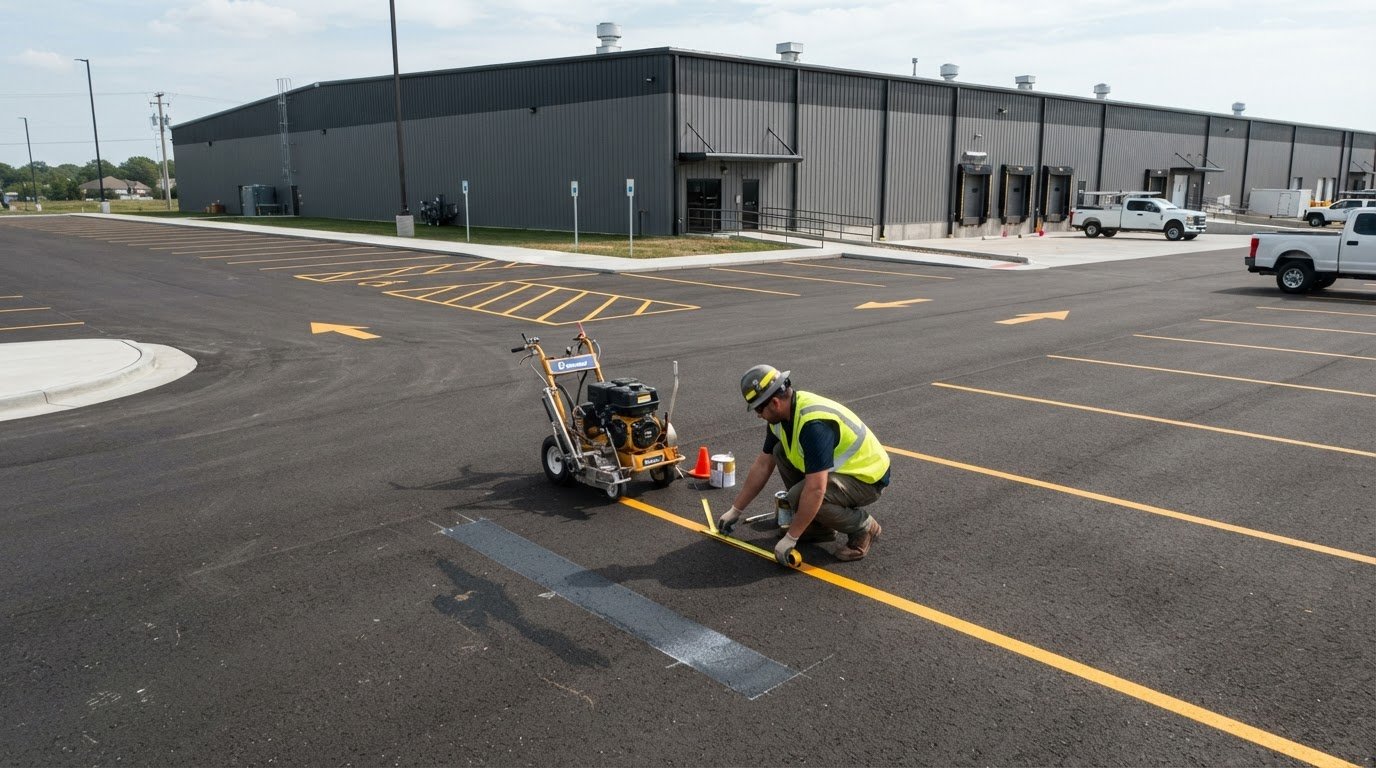
As you prepare for the next phase, connect the communication plan to the physical changes required. Warehouse floor striping, epoxy line painting, and parking lot striping can turn approved layouts into visible markings. Clear project details help identify which areas need new lines and which existing markings need attention.
Communicating layout changes to the team continues beyond the announcement. Keep the final plan accessible, make updates visible, and give employees a clear way to report conflicts they encounter during the transition. These steps help the layout work as intended in daily operations.
When your plan is ready to move forward, contact StripeGuys Warhouse Line Striping to discuss the floor-marking work. A clear plan is a practical start to a more coordinated space.
Frequently Asked Questions
What Exactly is Change Management Communication?
Change management communication is the planned exchange of information that helps people understand and respond to an organizational change. For a facility layout update, it includes more than announcing a new drawing: employees need the reason for the change, its practical effect, and a way to raise concerns. Leaders also use feedback to identify misunderstandings and keep later messages consistent as plans develop.
What information should a layout change announcement include?
Include the purpose of the change, affected areas, expected effective date, and action required from each recipient. Identify the plan version and a contact for questions so employees can distinguish current instructions from older drafts. For example, a notice about a revised staging area should name it, show its location on the plan, and clarify whether teams need to move materials or prepare for a later update.
How much notice should teams receive before a layout change?
Give notice before the change takes effect, with timing based on the plan’s scale and readiness. Announce changes involving multiple departments or locations as early as possible. For smaller changes, communicate early once the main details are established so employees receive accurate information. For operating model changes, organizations are advised to begin communicating with employees six months before the project starts.
How should teams be informed about layout change timelines and responsibilities?
Use a shared timeline that names each communication date, audience, channel, and responsible sender. Assign one person to prepare the update and a relevant manager to deliver it, then state each team’s required action and when it is due. For example, a supervisor can brief a shift before its work area changes, while the project lead maintains the current plan and gathers questions for the next update.