You might assume that grinding away old warehouse markings results in a perfectly clean floor, but the reality is often a permanent, distracting shadow left behind. If you’ve ever wondered what are ghost lines after line removal, you’re likely dealing with more than just leftover paint; you’re seeing physical changes in the concrete substrate (the structural layer beneath the surface). We understand that these unsightly outlines do more than just look bad. They create genuine safety risks by confusing forklift operators and can even prevent new epoxy coatings from adhering correctly to the floor.
This guide provides the industrial expertise you need to manage your facility’s flooring effectively while adhering to safety standards like OSHA 29 CFR 1910.176(a). You’ll learn the professional methods used to eliminate these shadows and the science behind why they form, such as moisture vapor transmission or mineral deposits. We’ll also outline actionable steps to remediate existing ghosting and provide a clear strategy for preventing them during your next layout reconfiguration to ensure your facility remains both organized and compliant.
Key Takeaways
- Identify ghost lines as physical alterations to the concrete substrate (the structural floor layer) rather than simple surface stains.
- Understand what are ghost lines after line removal by analyzing how UV shielding and chemical leaching create permanent “shadows” in porous industrial floors.
- Evaluate professional remediation methods, including diamond grinding and shot blasting, to determine the most effective way to restore floor clarity.
- Learn why specialized, dustless removal is essential for maintaining safety standards and avoiding the deep substrate scarring caused by improper grinding.
Understanding Ghost Lines in Industrial Flooring
Facility managers often encounter a frustrating phenomenon when updating their floor layouts: the persistent shadow of old markings. When asking what are ghost lines after line removal, you are identifying the visible silhouette that remains etched into the concrete surface even after the paint or tape is gone. These aren’t simply missed spots of pigment. Instead, they represent a physical or chemical change in the concrete substrate (the structural floor material) caused by years of coverage. Understanding what are ghost lines after line removal is the first step in restoring a clean, safe workspace.
Identifying the difference between residual pigment and a true ghost line is critical for planning remediation. Residual pigment feels like a raised layer on top of the concrete. A ghost line, however, is flush with the surface or slightly recessed. It often appears as a lighter or darker shade than the surrounding floor because the concrete under the old lines was protected from wear and UV exposure while the rest of the floor aged. This contrast makes the old layout visible even though the material itself has been removed.
The Visual Impact on Warehouse Safety
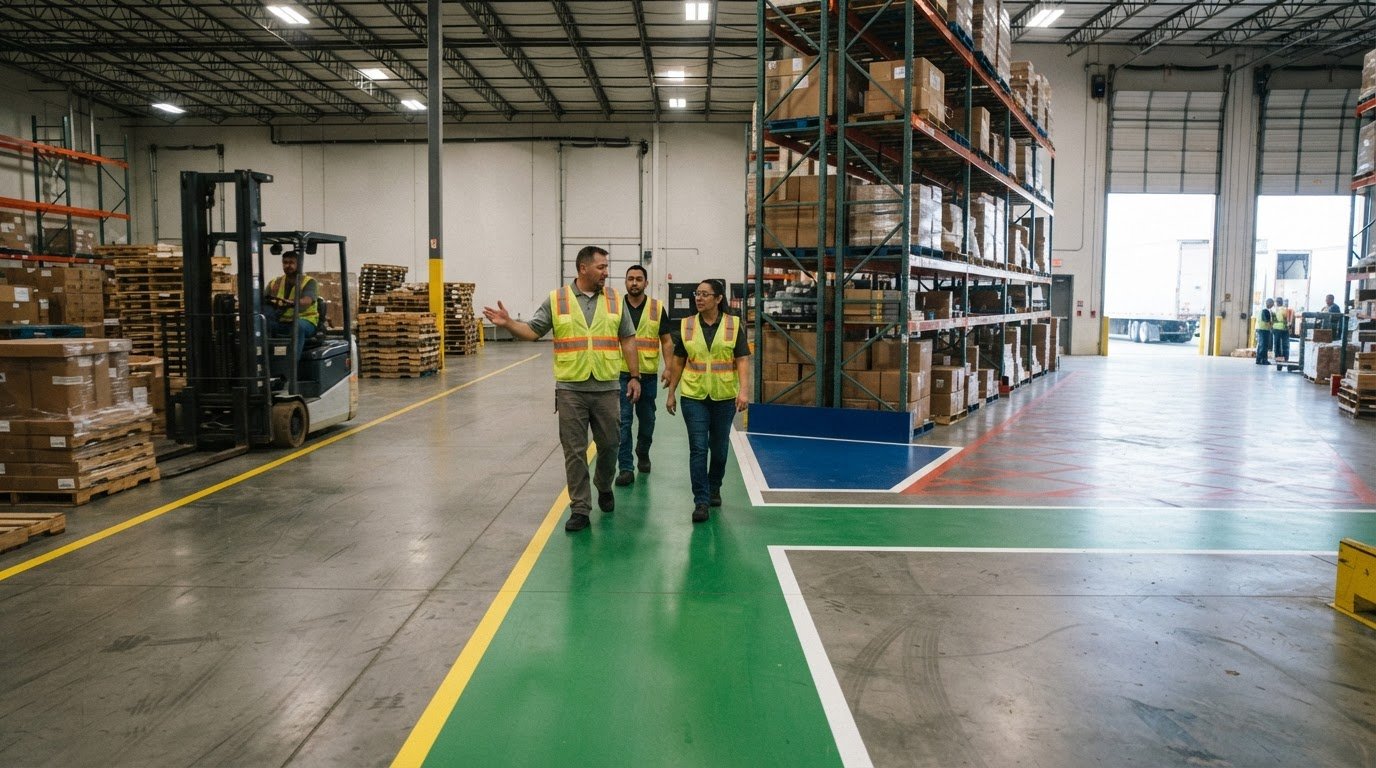
Ghost lines create significant visual noise that interferes with operational efficiency. In high-traffic environments, forklift operators rely on clear, high-contrast markings to navigate safely. Phantom lanes (old lines that are still visible) lead to hesitation and confusion, especially in intersections or loading docks. Maintaining a clean floor isn’t just about aesthetics; it directly impacts OSHA compliance regarding clearly marked pedestrian walkways and safety aisles. A facility with overlapping or confusing lines suggests a lapse in safety culture, which can lead to increased logistical stress during inspections.
Ghosting vs. Concrete Pitting
It’s vital to distinguish between a visual shadow and physical damage like pitting or scarring. Many standard abrasive blasting techniques used for industrial floor preparation can accidentally create these permanent scars if not managed by an experienced contractor. While a ghost line is a color or texture difference, pitting involves the actual removal of the concrete cream (the smooth top layer). The density of your concrete plays a major role here; more porous slabs tend to absorb paint solvents deeper, making the ghosting more prominent and harder to blend without aggressive mechanical intervention.
The Science Behind the Shadow: Why Lines Leave Ghosts
Understanding what are ghost lines after line removal requires a look at the microscopic and chemical interactions between industrial coatings and concrete. When a facility adheres to OSHA’s requirements for permanent aisles, they often apply high-durability resins that bond deeply with the floor. Over years of service, these markings create a “stencil effect” by shielding the concrete from light, chemicals, and physical wear. When you finally remove the striping, you aren’t just revealing a clean surface; you’re exposing a section of concrete that has aged differently than the rest of the facility.
The “clean spot” effect is one of the primary drivers of ghosting. While the main floor area accumulates microscopic scratches, tire marks, and embedded dirt, the concrete directly beneath the warehouse floor striping remains protected. This creates a stark contrast in texture and color. Even if every molecule of paint is removed, the physical difference in the concrete’s surface profile ensures the old lines remain visible. This differential wear means the protected concrete is often smoother and less porous than the surrounding high-traffic zones.
Concrete Porosity and Pigment Migration
Concrete is inherently porous, functioning like a dense sponge. When solvent-based paints or epoxies are applied, the resins leach into these microscopic pores (capillary tracts). In older warehouse floors, these pores are often more open due to years of heavy use, allowing pigments to penetrate several millimeters deep. This migration means that surface-level grinding often fails to reach the trapped color, leaving a permanent shadow. If you are struggling with persistent silhouettes, you can consult with our technical team to evaluate your floor’s porosity.
UV Aging and Floor Discoloration
Ambient and natural light cause a process called photo-oxidation, which yellows or fades exposed concrete over time. Because the floor markings act as a total UV block, the concrete underneath remains in its original state. This creates a permanent color mismatch that no amount of cleaning can resolve. In facilities with high natural light from skylights or bay doors, this UV-induced ghosting is significantly more prominent because the contrast between the “aged” and “protected” concrete is much sharper.

Effective Remediation: How to Remove or Mask Ghost Lines
Once you understand what are ghost lines after line removal, the priority shifts to professional remediation. You cannot simply wash these shadows away with standard cleaning agents. Effective remediation requires altering the surface profile of the concrete to match the surrounding area or masking the difference entirely. We prioritize functional outcomes, ensuring your floor remains safe and ready for a new epoxy warehouse striping layout without the distraction of phantom lanes.
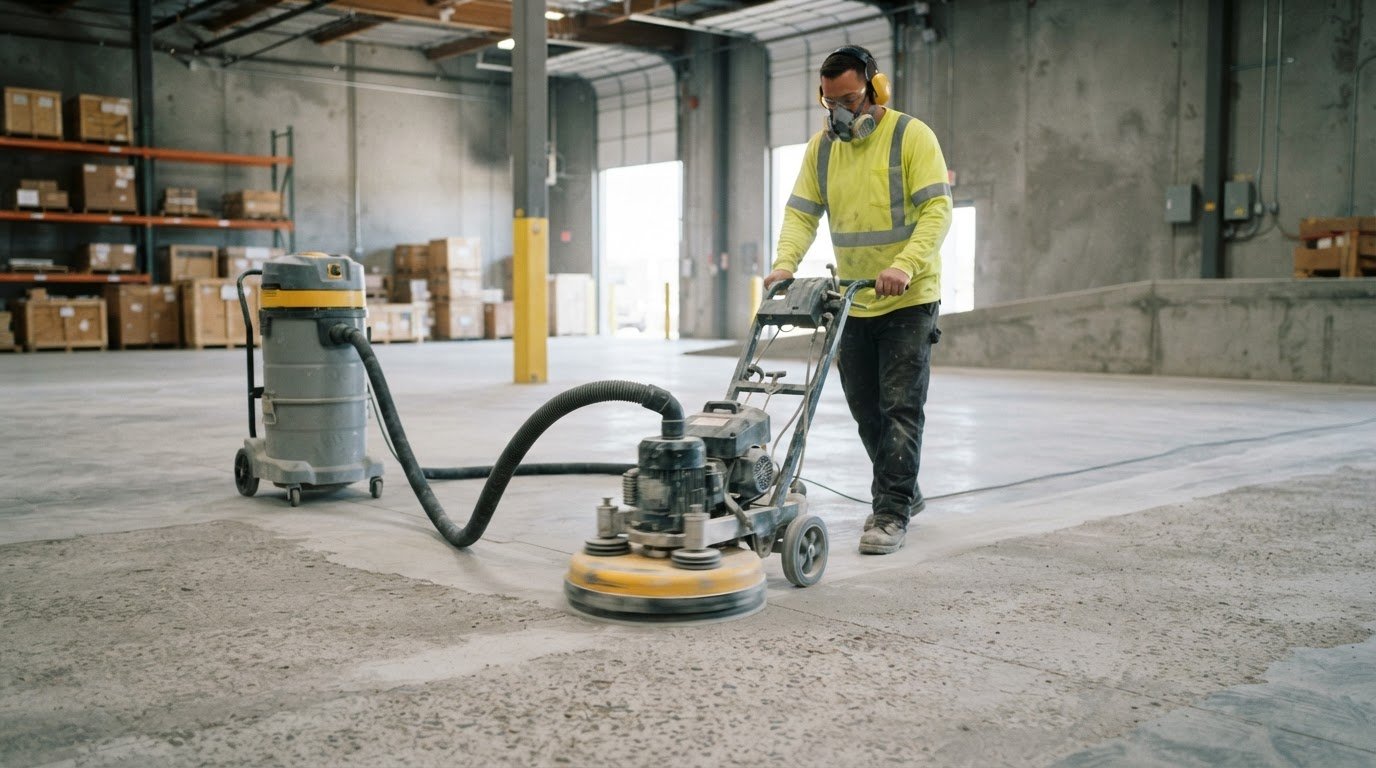
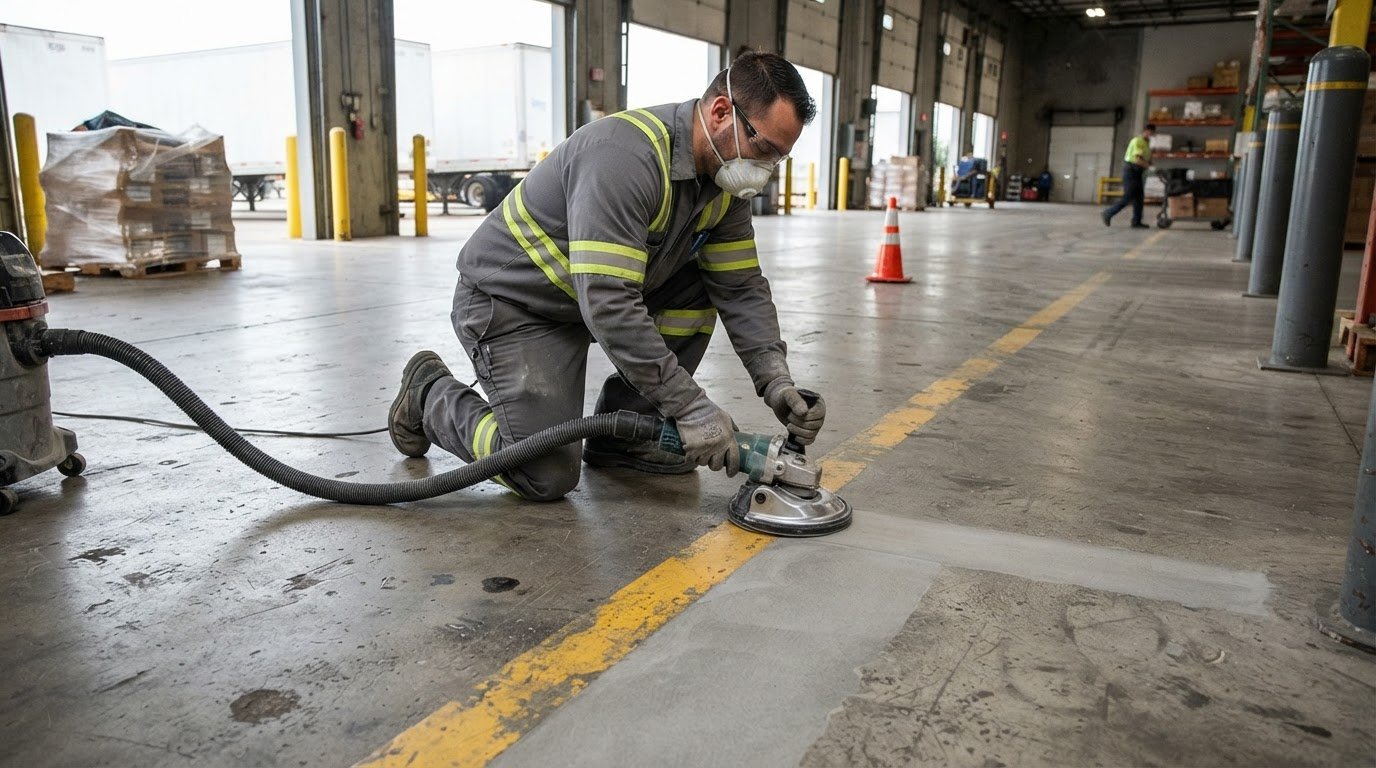
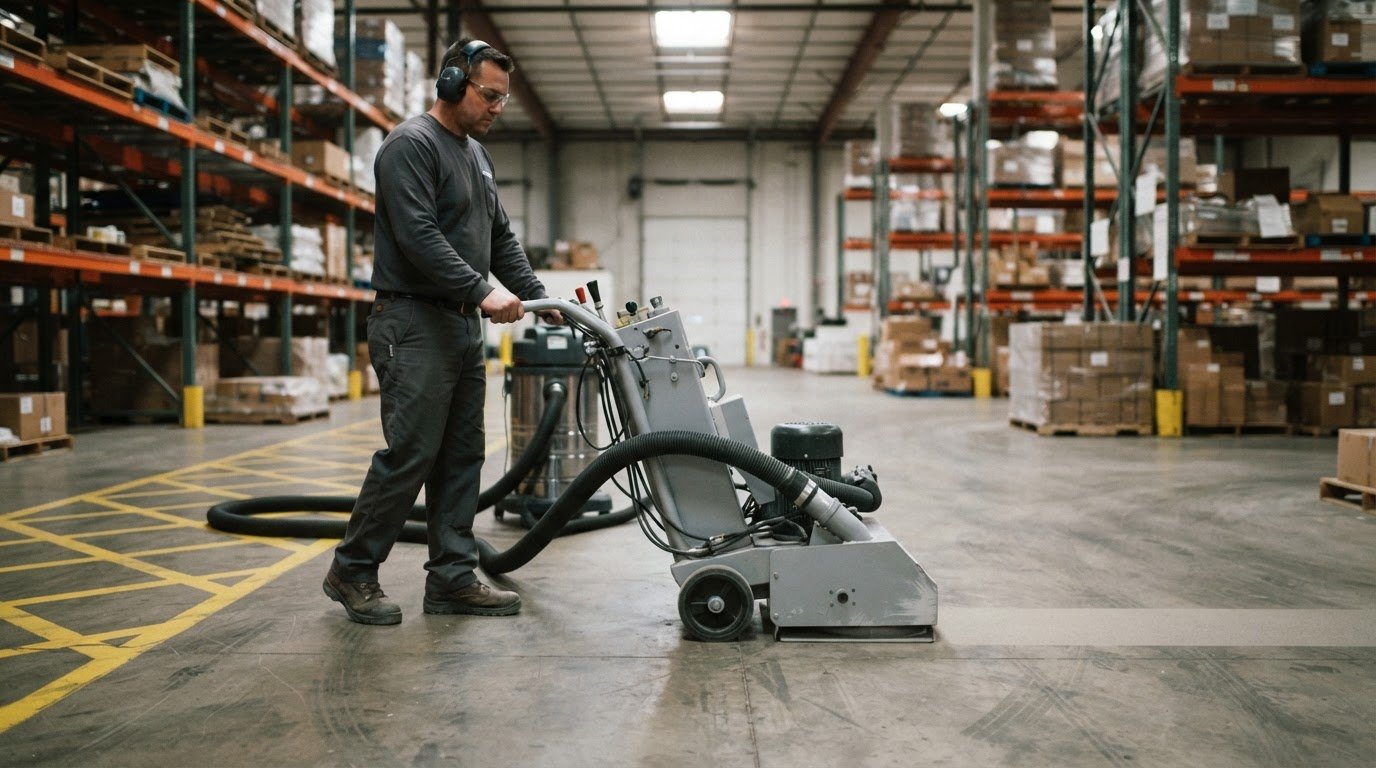
Mechanical removal is the most reliable starting point for industrial facilities. Shot blasting line removal uses small steel spheres to impact the floor, effectively stripping the top layer of concrete (the cream) to expose a fresh, uniform surface. This is ideal for heavy build-ups or deep chemical penetration. Diamond grinding, conversely, uses industrial diamonds to shave the surface. It provides a smoother finish and is often better for blending ghost lines into the existing slab without creating deep, unsightly scars.
Mechanical Surface Preparation
Establishing the correct Concrete Surface Profile (CSP) is essential for the longevity of your next marking system. Shot blasting typically achieves a higher CSP (a rougher texture), which is necessary for thick, high-performance coatings to bond correctly. Diamond grinding is preferred when you want to minimize visual contrast between the old line footprint and the rest of the floor. By leveling the surface textures, we reduce the “shadow” effect that often confuses forklift operators in high-traffic zones.
Staining and Overlays
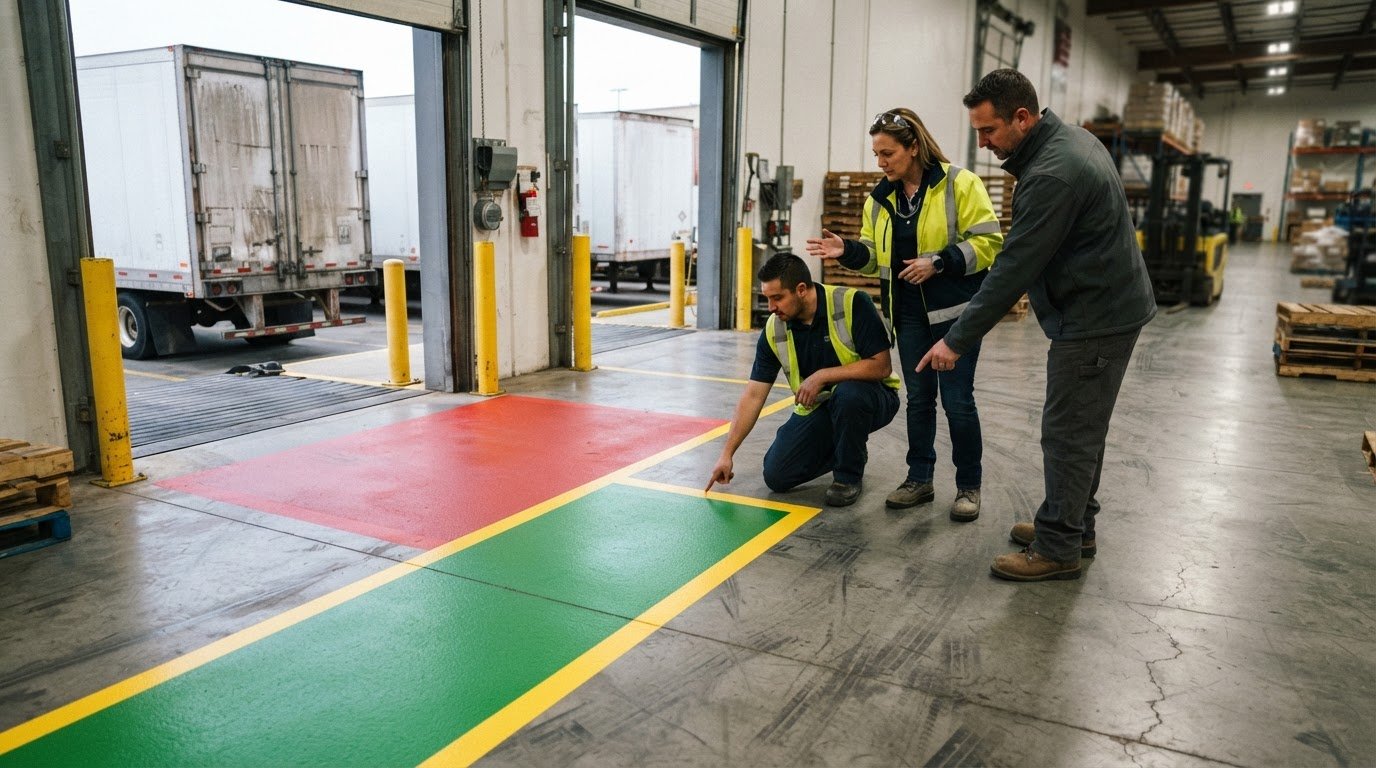
If mechanical removal doesn’t fully hide the ghosting, semi-transparent stains or dyes can unify the floor’s appearance. These products penetrate the slab to even out color discrepancies caused by years of UV shielding. Applying these treatments helps mitigate the visual noise of what are ghost lines after line removal, allowing for a cleaner transition to a new traffic pattern. For facilities requiring a total reset, applying a high-solids epoxy coating over a properly prepared floor is the most effective masking solution. This creates a uniform barrier that completely hides past footprints and provides a fresh canvas for your operations.
If your current floor is cluttered with confusing phantom lanes, contact our floor removal specialists for a technical site evaluation and a clear path to a cleaner workspace.
Professional Removal: Avoiding Permanent Floor Damage
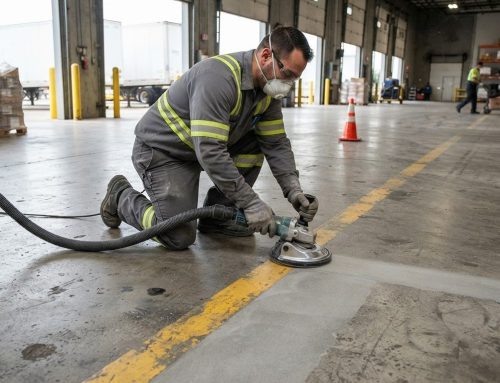
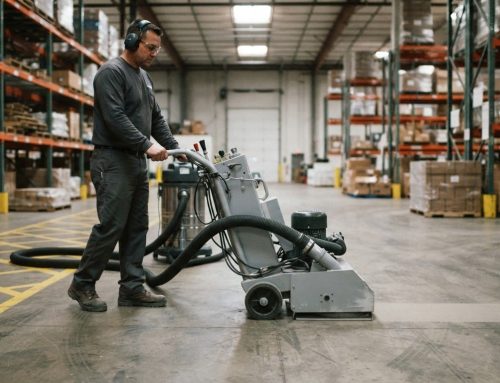
DIY attempts at grinding often fail to address the root cause of what are ghost lines after line removal, instead creating permanent mechanical scars. Without industrial-grade depth control, handheld grinders frequently gouge the concrete, making the old layout part of the floor’s permanent texture. Professional removal utilizes precision machinery designed to remove coatings while preserving the structural integrity of the slab. We evaluate the concrete’s hardness and the specific resin type before starting, ensuring the remediation method matches the floor’s physical realities.
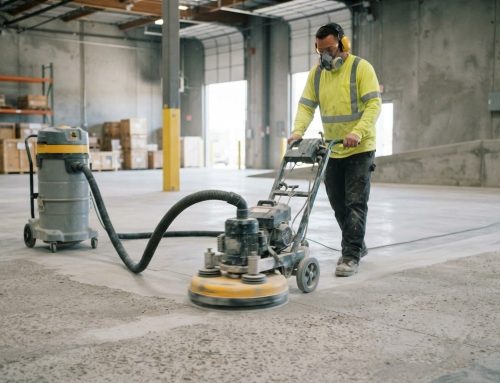
In food-grade or pharmaceutical facilities, dust control is a non-negotiable requirement for operational safety. We employ high-performance vacuum systems attached directly to our removal equipment to capture particulate matter at the source. This dustless process ensures your facility remains operational and compliant with strict air quality standards during the remediation. Using professional-grade equipment allows us to achieve a “clean slate” finish that simple rental tools cannot replicate.
The StripeGuys Warhouse Line Striping Approach
StripeGuys Warhouse Line Striping utilizes shot blasting to provide a superior surface for your facility. This process not only removes the visual shadow but also provides the necessary mechanical profile for new epoxy warehouse striping to bond permanently. By integrating the removal and re-application phases, we minimize logistical stress and ensure a shorter project timeline. Our team focuses on high-impact results that prioritize your operational needs and budgetary constraints.
Planning Your Next Layout Change
Consulting with a veteran contractor before a layout change prevents the long-term issues associated with what are ghost lines after line removal. We provide technical site evaluations to determine the most efficient path forward, whether that involves aggressive removal or strategic masking. Effective warehouse line removal is the most critical step in any facility refresh. It eliminates the visual noise that leads to safety hazards and ensures your floor remains a functional asset rather than a liability. Contacting an experienced partner ensures your project meets both OSHA compliance and high aesthetic standards.
Restoring Your Facility’s Operational Clarity
Managing a high-traffic warehouse requires more than just removing old paint; it demands a technical understanding of the concrete surface itself. We’ve explored how UV shielding and chemical penetration create these persistent shadows. Understanding what are ghost lines after line removal allows you to select the right mechanical remediation strategy, whether that involves precision shot blasting or strategic surface blending. Don’t settle for “phantom lanes” that compromise safety and operator efficiency.
With 29+ years of industrial experience, we provide national coverage for large-scale facilities requiring expert intervention. Our team specializes in OSHA-compliant safety markings and advanced removal techniques that prioritize your floor’s structural integrity. We understand the high stakes of your operational environment and offer the seasoned expertise needed to deliver a clean, professional finish. It’s time to eliminate the visual noise and reset your facility for peak performance. We’re ready to help you maintain a safe, efficient, and well-organized workspace.
Get a Professional Quote for Warehouse Line Removal and secure a safer workspace today.
Frequently Asked Questions
Can ghost lines be completely removed from warehouse concrete?
Complete removal is often impossible because the concrete itself has undergone physical and chemical changes over time. When facility managers ask what are ghost lines after line removal, they are seeing a physical “shadow” that remains because the concrete under the markings didn’t age alongside the rest of the floor. Success in masking these areas depends on the depth of the pigment migration and the density of your specific slab.
Does shot blasting remove ghost lines better than grinding?
Shot blasting removal typically performs better for deep ghosting because it strips the top layer of concrete (the cream) to reveal a fresh, uniform surface. Grinding is a lighter alternative that smooths the floor but often leaves deep-seated pigments behind in the pores. We choose the method based on the Concrete Surface Profile (CSP) required for your facility’s next layout change and the depth of the existing shadows.
Is it possible to paint directly over ghost lines?
You can paint over them, but it’s not a simple cosmetic fix. If the texture of the ghost line isn’t leveled through grinding or blasting, the old pattern will often “telegraph” (show through) the new coating. Using a high-solids epoxy is the most reliable way to mask what are ghost lines after line removal, providing a uniform finish that hides the previous footprint while ensuring the new material adheres correctly.
Why do ghost lines look like they are “glowing” or “wet” sometimes?
That “wet” or “glowing” appearance is usually the result of moisture vapor transmission. Because the concrete under the line was sealed by paint for years, it has a different moisture profile than the exposed floor. Once the paint is removed, moisture moves through the slab and carries minerals to the surface, creating a reflective sheen or white salty residue that makes the old line appear to glow.
How much does professional warehouse line removal cost?
Project costs depend on the removal method, the total linear footage, and the condition of the substrate. Every facility has unique challenges, such as deep chemical penetration or high-traffic wear, which influence the labor and equipment required. We provide technical site evaluations to establish a firm budget that aligns with your operational needs rather than relying on generic estimates that don’t account for site-specific variables.
Will ghost lines eventually fade on their own through floor traffic?
They won’t fade naturally through standard warehouse traffic. In many cases, heavy forklift traffic makes ghost lines even more prominent by wearing down and dirtying the surrounding concrete while the smoother, protected area under the old line remains unchanged. Mechanical remediation is the only effective way to unify the floor’s appearance and eliminate these visual distractions for your operators.