A single OSHA violation for improper aisle marking can now cost your facility up to $16,550 per serious finding. You already understand that clear boundaries are the backbone of a safe facility, yet many managers struggle with lines that peel under heavy forklift traffic or fail to meet evolving safety codes. Maintaining high-traffic zones requires more than just a fresh coat of paint. It requires a strategic approach to warehouse floor striping Greenville SC professionals use to ensure permanent visibility and operational order.
We’ve designed this guide to help you master the technical requirements for industrial markings so you can eliminate operational downtime and stop worrying about the July 2026 OSHA National Emphasis Program inspections. You’ll learn the specific color standards for hazard identification, the necessity of mechanical shot blasting for surface preparation, and how to select materials that offer a ten-year lifespan instead of a six-month fix. It’s time to transform your floor into a precision-engineered safety system that optimizes your logistics flow and protects your bottom line.
Key Takeaways
- Learn how to align your facility with the 2026 OSHA National Emphasis Program to avoid costly safety violations and improve forklift traffic flow.
- Discover why high-performance epoxy line painting offers a superior return on investment compared to standard traffic paint by resisting heavy-duty abrasion.
- Understand the critical role of mechanical shot blasting (using high-velocity steel grit to profile the concrete) to ensure floor markings bond permanently.
- Master the project planning stage to ensure warehouse floor striping Greenville SC services are executed without halting your facility’s 24/7 logistics flow.
Maximizing Operational Efficiency and OSHA Compliance with Floor Striping
Warehouse floor striping is more than a maintenance checklist item; it is a critical piece of industrial infrastructure. In high-volume logistics hubs, floor markings act as a silent management system that directs the movement of heavy machinery and personnel. Without these clear boundaries, facilities often suffer from “operational drift,” where pallets migrate into fire lanes and forklifts cross paths with pedestrians. Professional warehouse floor striping Greenville SC provides the necessary visual foundation to prevent these hazardous overlaps while maximizing every square foot of available floor space.
The primary goal of a well-executed marking plan is the creation of a “Visual Workplace.” This concept ensures that safety and operational standards are self-evident to every employee. By using high-visibility lines to define work cells and storage zones, you reduce the mental load on your team. They don’t have to guess where a pallet belongs or which path is safe for walking. This clarity directly translates to faster cycle times and a significant reduction in the workplace accidents that lead to costly worker’s compensation claims and equipment damage.
OSHA Safety Color Codes and Standards
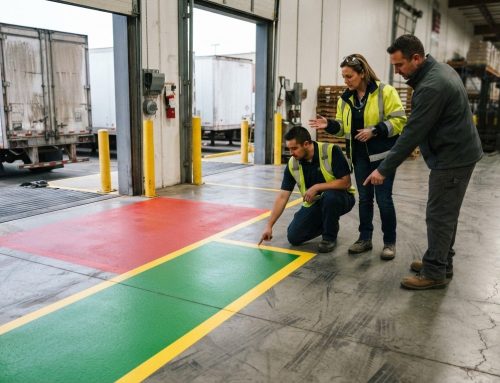
Adherence to OSHA regulation 29 CFR 1910.176(a) is mandatory for any facility using mechanical handling equipment. This standard requires permanent aisles and passageways to be appropriately marked. While some facilities experiment with temporary floor marking materials like adhesive tapes, these often fail under the friction of forklift tires. We recommend a permanent, color-coded system to ensure long-term compliance and clarity:
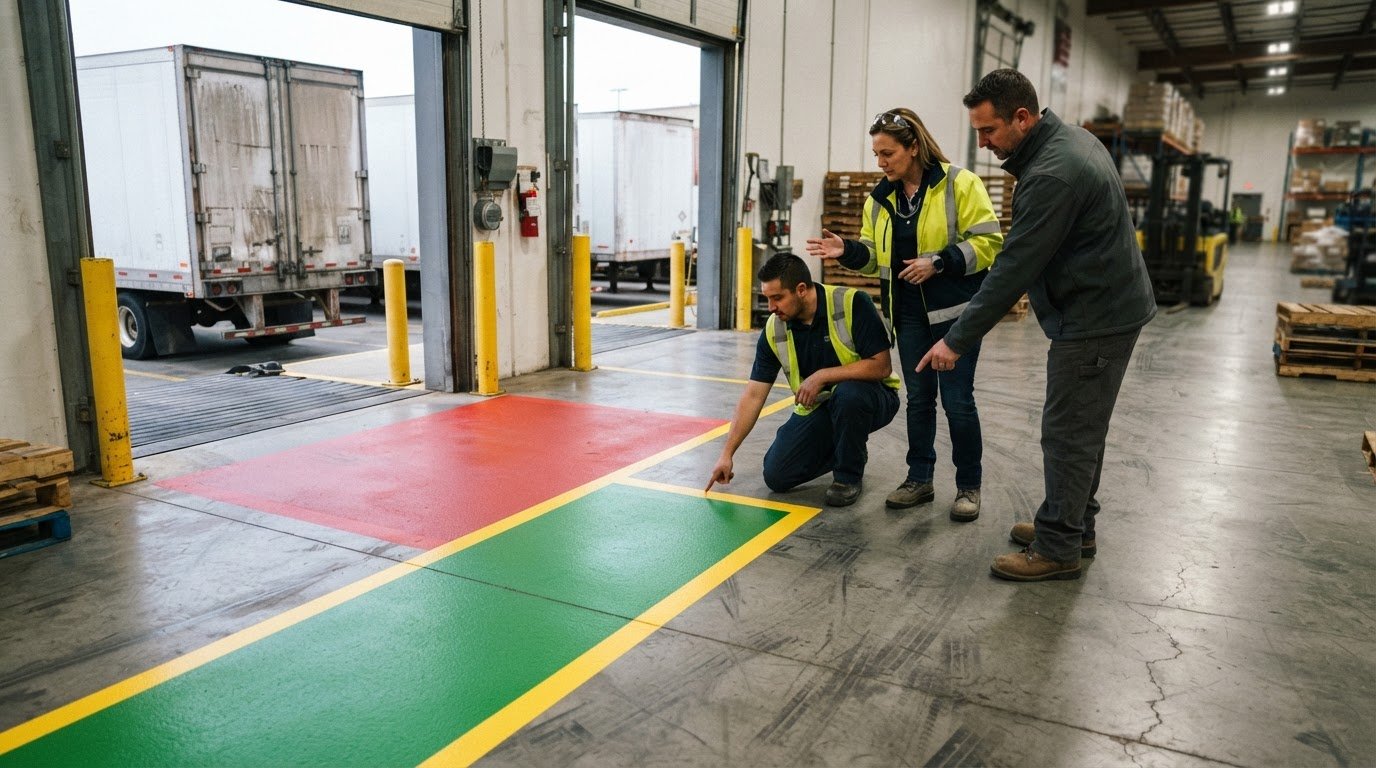
- Yellow: Used for traffic lanes, aisle ways, and work cells. This is the most common color for general boundary marking.
- Red: Reserved for fire protection equipment, emergency exits, and “Danger” zones.
- Blue: Denotes information or equipment that is not a safety hazard but requires specific placement, such as raw material staging.
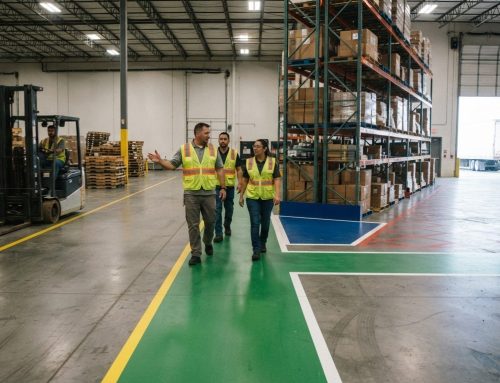
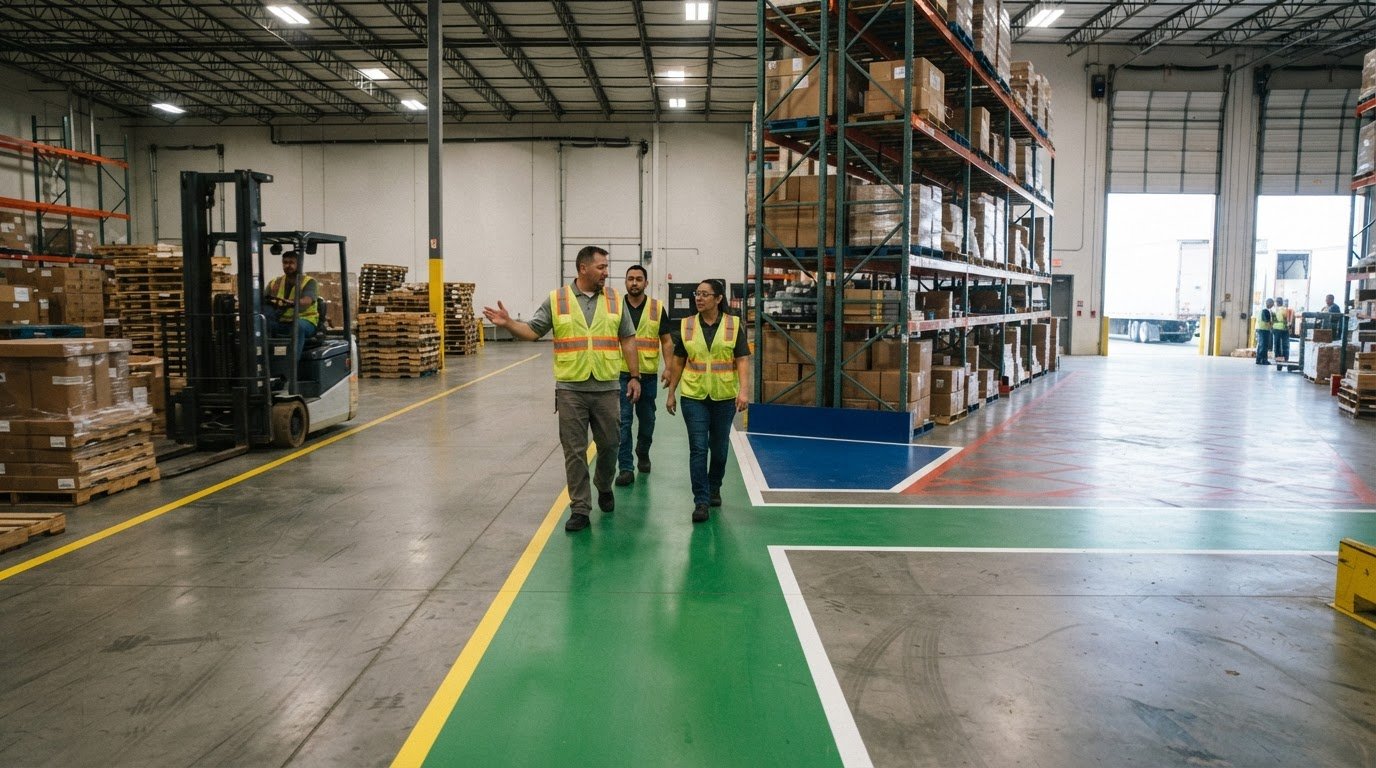
Specialized pedestrian walkways and safety aisles are essential in Greenville’s larger manufacturing plants. These designated zones keep foot traffic physically separated from forklift lanes, which is a primary focus of the 2026 OSHA National Emphasis Program.
Traffic Flow Optimization and Staging Areas
Efficiency in a warehouse depends on the speed of the “find and move” process. Clear stenciling for pallet positions and bin locations reduces search time for forklift operators, allowing them to hit their hourly throughput targets without compromising safety. By designing dedicated lanes for inbound and outbound staging, you can eliminate the dock-door congestion that often leads to shipping delays. Strategic warehouse floor striping Greenville SC ensures that your dock management is organized, predictable, and scalable, even during peak seasonal surges.
Technical Material Selection: Epoxy Line Painting vs. Standard Paint
Choosing the right material for warehouse floor striping Greenville SC determines whether your lines remain visible for a decade or peel within months. Industrial environments demand materials that can withstand constant tire scrubbing and chemical exposure. While standard water-based traffic paint is common in parking lots, it often fails in high-traffic warehouse aisles where forklifts execute tight turns. Professional applications prioritize durability by matching the material to the specific mechanical stresses of your facility. This ensures compliance with OSHA’s general requirements for walking-working surfaces, which mandate that floors remain in a clean and safe condition.
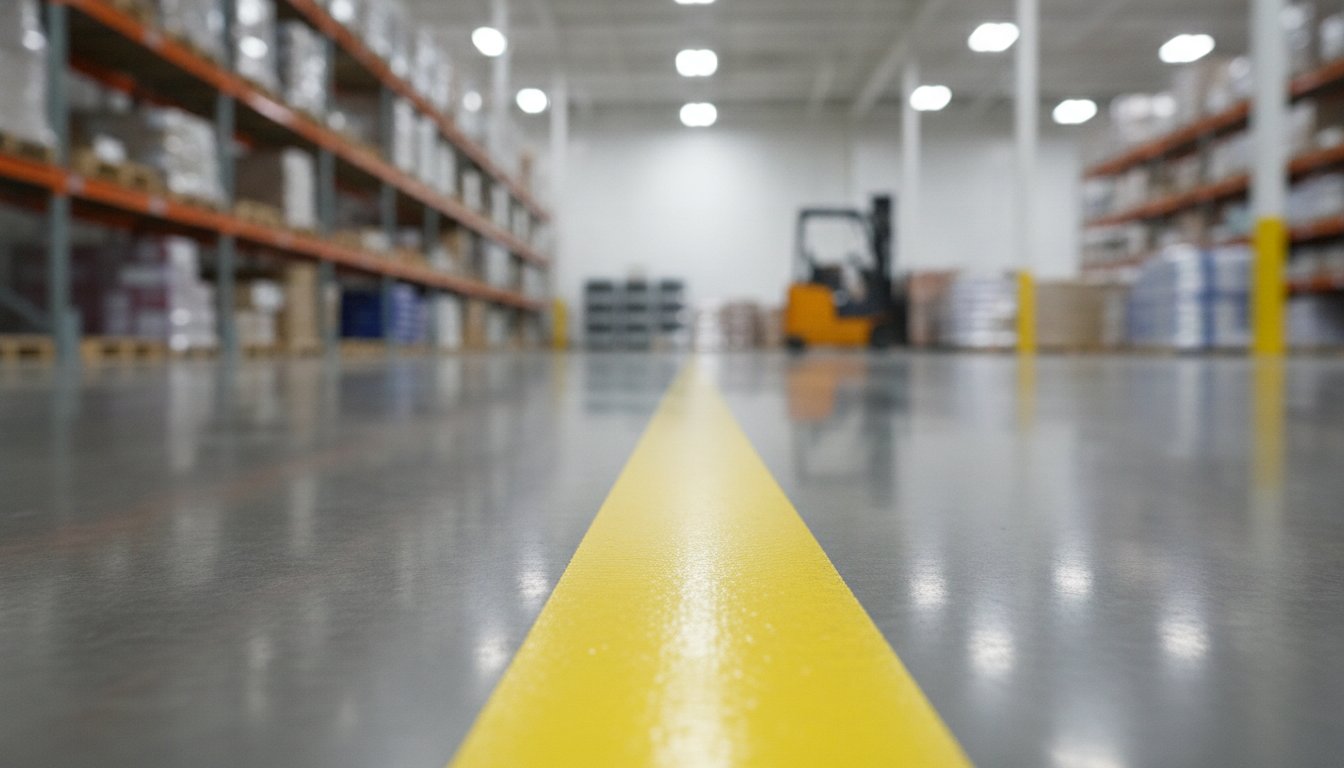
Industrial epoxy is a two-part resin system that creates a high-strength chemical bond with the concrete substrate. Unlike standard paint that sits on the surface, epoxy penetrates the pores of the concrete. This results in superior abrasion resistance and bond strength. A professionally applied epoxy line can last over 10 years, making it the standard for large-scale industrial facilities. It is also non-porous, which makes it easy to clean in food-grade or pharmaceutical environments where hygiene is critical. For specialized areas like forklift battery charging stations, we implement acid-resistant coatings and Novolac (a high-performance resin designed for chemical resistance) to protect the slab from corrosive spills.
When to Use Traditional Traffic Paint
Water-based or solvent-based traffic paint still has a place in industrial settings, particularly for temporary layouts or low-traffic storage zones. It offers significantly faster curing times than epoxy, which typically requires 48 hours to seven days to fully cure. We often integrate parking lot line striping techniques for outdoor truck courts and loading areas where UV resistance is more important than chemical bonding. If you’re unsure which material suits your specific traffic volume, you can consult with our technical team to evaluate your facility’s requirements.
While epoxy has a higher upfront material cost, it eliminates the operational downtime associated with frequent re-striping. Standard paint in a high-traffic aisle may require maintenance every six to twelve months, whereas epoxy remains visible and intact for years. This long-term ROI is why most Greenville-Spartanburg distribution centers choose epoxy for their primary logistics lanes. Investing in the right material at the start prevents the logistical headache of shutting down operations for repairs every year.
The Science of Surface Prep: Shot Blasting and Line Removal
Surface preparation is the single most important factor in the longevity of industrial markings. Industry data suggests that 90% of striping failures occur because the substrate was not properly prepared before application. If you simply apply paint over existing grime or old, peeling lines, the new coating will delaminate within weeks under the stress of forklift traffic. Professional warehouse floor striping Greenville SC requires a clean, mechanically profiled surface to ensure the bond between the coating and the concrete is permanent. Painting over failing lines is a short-term fix that leads to long-term budgetary waste.
Mechanical Removal Techniques
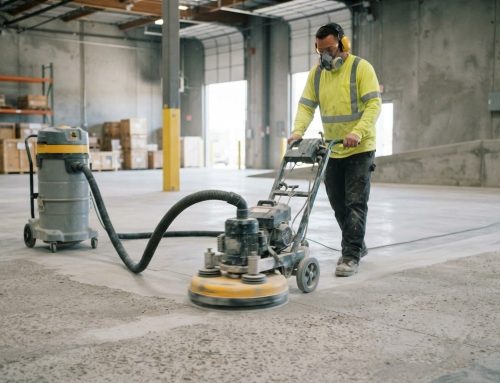
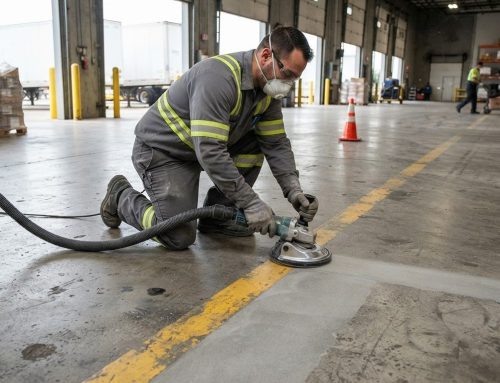
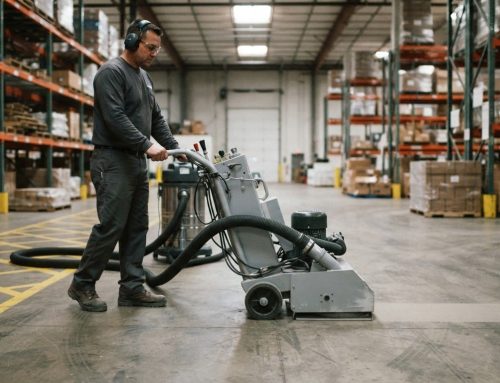
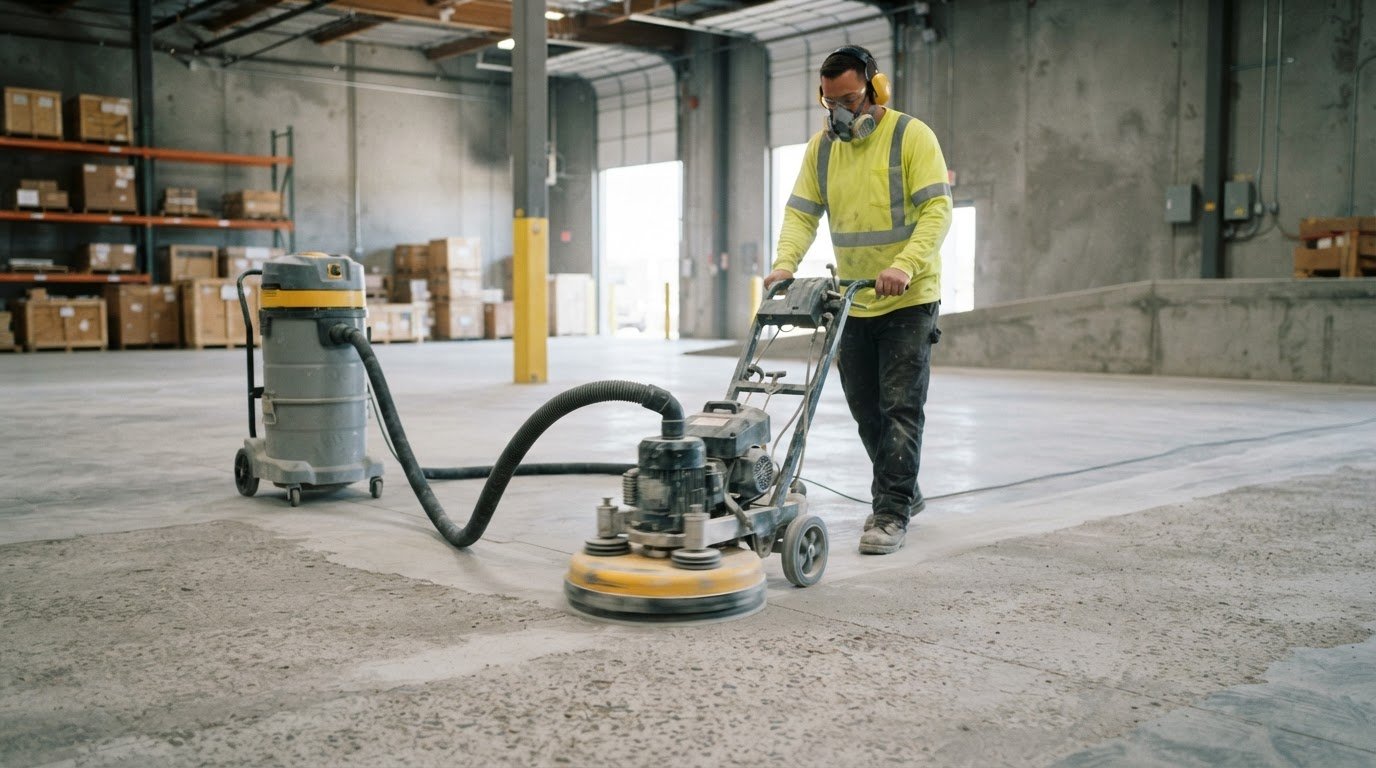
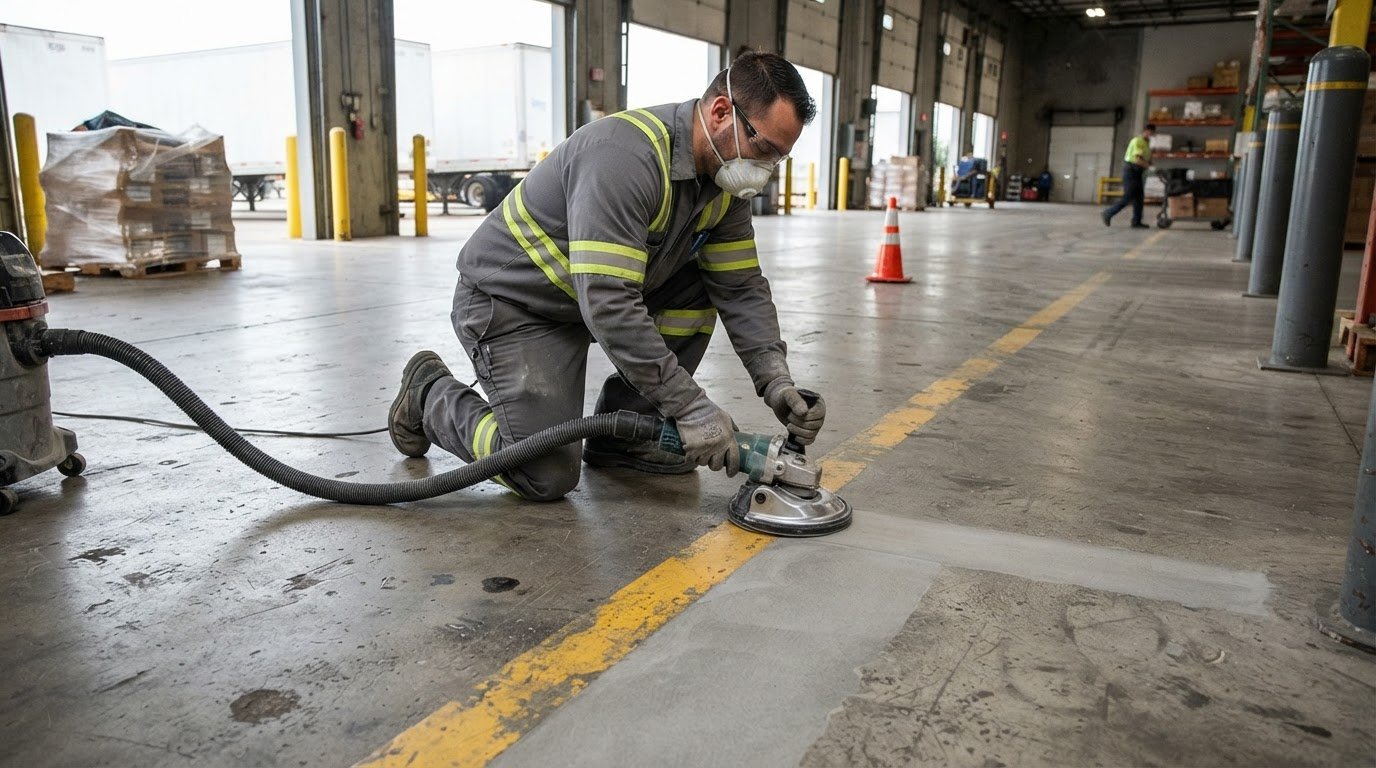
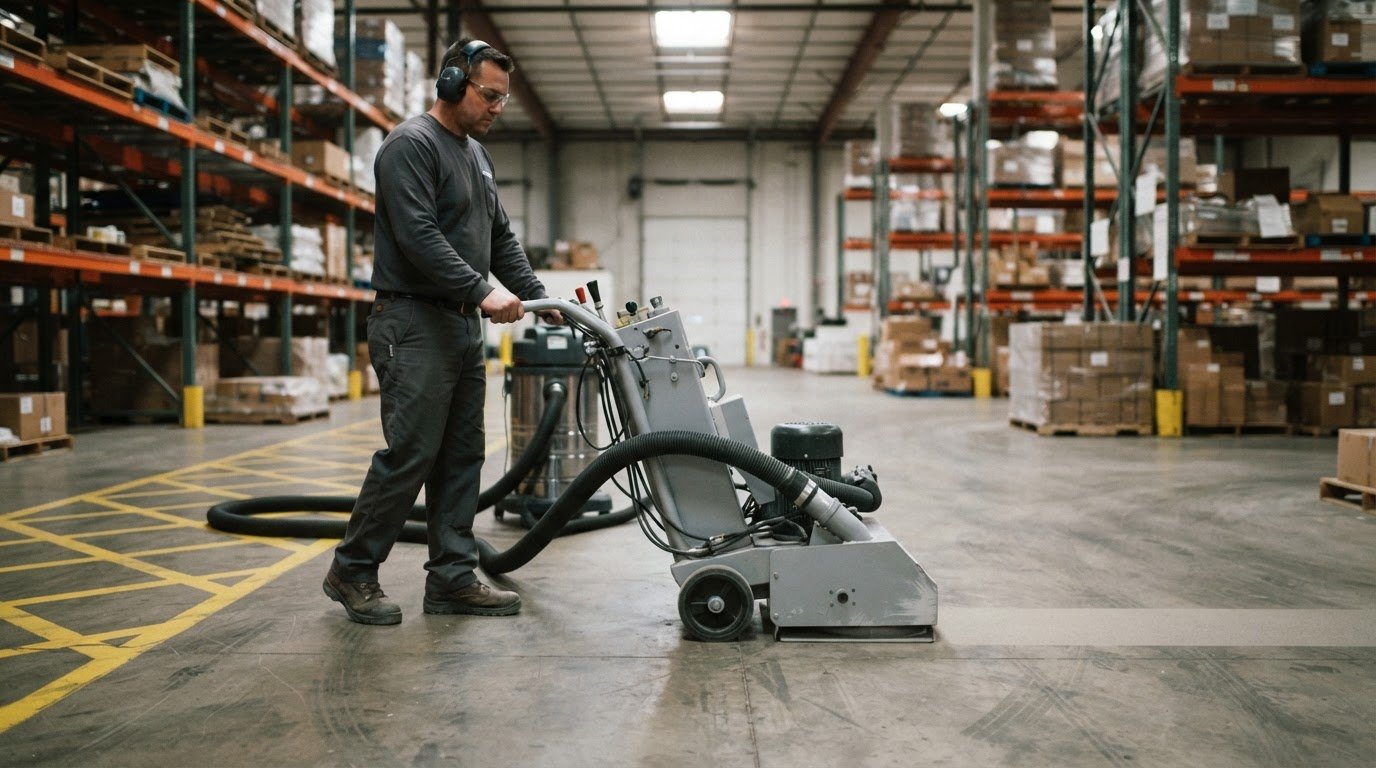
We use specialized mechanical removal methods to strip away old markings and contaminants. Shot blasting is our preferred method for most industrial slabs. It uses high-velocity steel grit to blast the surface, removing the top layer of laitance (a weak, milky layer of cement) to reveal the sound concrete beneath. For facilities with thinner slabs or specific coating requirements, we utilize diamond grinding to achieve a smoother finish. Both methods are executed with integrated vacuum systems to ensure a dust-free environment. This allows your logistics operations to continue without the risk of airborne particulates contaminating your inventory or machinery.
Surface Profiling for Maximum Adhesion
For industrial-grade epoxy to bond correctly, the concrete needs “teeth.” This is known as the Concrete Surface Profile (CSP). Following industry standards for concrete surface preparation ensures that the coating can physically lock into the slab rather than just sitting on top of it. We also perform moisture and pH testing to identify hidden contaminants like oils or sealers that could cause bubbling. Whether we are transitioning from high-durability parking garage striping in your loading areas to interior logistics lanes, the preparation must be precise. If your current lines are failing, it’s almost certainly a preparation issue. You can request a technical site evaluation to determine the best mechanical removal strategy for your specific floor type.
Implementing a High-Performance Facility Marking Strategy
Executing a facility-wide marking project shouldn’t paralyze your production. In the Greenville-Spartanburg industrial corridor, many facilities operate on 24/7 schedules, making traditional maintenance windows nearly impossible to find. Successful implementation requires a phased approach where work is completed in sections, allowing your team to move inventory and equipment without halting the entire logistics chain. Strategic planning ensures that your warehouse floor striping Greenville SC project transitions from a logistical hurdle to a functional asset with minimal impact on your daily throughput.
The final stage of any professional striping project is a comprehensive compliance audit. We verify that every line, stencil, and safety boundary meets the specific dimensions required by your internal safety protocols and federal standards. This includes confirming that aisle widths remain at least three feet wider than your largest equipment and that all high-hazard zones are marked with the correct cautionary colors. This documentation serves as a critical defense during OSHA National Emphasis Program inspections, proving that your facility maintains a proactive stance on worker safety.
Choosing the Right Contractor
Selecting a partner for your facility markings requires looking beyond the lowest bid. You need a warehouse line striping company that brings industrial-specific tenure to the table. General commercial painters often lack the heavy-duty shot blasting equipment and high-performance epoxy resins required for a ten-year floor system. With over 29 years of experience, StripeGuys Warhouse Line Striping understands the physical realities of industrial workspaces. We offer aggressive accessibility with 24/7 scheduling options, ensuring that our teams work around your shift changes and peak operational hours to keep your facility running.
Long-Term Maintenance and Re-Striping
Even the most durable epoxy system requires a basic maintenance schedule to preserve its visibility. High-wear zones, such as dock plates and tight turning radiuses where forklift tires create intense friction, should be monitored quarterly for signs of degradation. Regular cleaning is the most effective way to maintain line clarity. We recommend using non-corrosive cleaning agents in your floor scrubbers to remove rubber burns and dust without dulling the epoxy finish. As your business grows, your facility layout will likely evolve. A professional marking strategy includes planning for these future re-configurations, ensuring that new lines can be seamlessly integrated with existing systems through proper mechanical removal and surface profiling.
Securing Your Facility’s Operational Future
Optimizing your facility for safety and efficiency requires more than a casual maintenance approach. It demands a technical understanding of how industrial coatings interact with concrete under heavy-duty stress. By prioritizing specialized mechanical surface preparation and high-performance epoxy resins, you ensure your investment survives the daily friction of forklift traffic. This strategic approach to warehouse floor striping Greenville SC not only meets the rigorous standards discussed in this guide but also creates a predictable, organized environment for your personnel.
StripeGuys Warhouse Line Striping provides the seasoned expertise needed to manage large-scale industrial markings without disrupting your 24/7 production cycle. With 29+ years of industrial experience and nationwide coverage for large facilities, we specialize in the mechanical removal and profiling processes that ensure long-term bond strength. We’re ready to help you eliminate logistical stress and maintain full regulatory compliance. Get a Professional Quote for Your Warehouse Striping Project today. We’re committed to building a safer, more efficient workspace for your team.
Frequently Asked Questions
How long does professional warehouse floor striping last?
Professionally applied epoxy floor markings typically last over 10 years in high-traffic industrial environments. In contrast, standard traffic paint applied without mechanical preparation often fails within 12 to 24 months under forklift stress. The longevity of the system depends on the bond strength achieved during the mechanical shot blasting phase and the specific abrasion resistance of the resin used.
Can you stripe a warehouse floor while it is still in operation?
Yes, we execute warehouse floor striping Greenville SC projects in phases to prevent operational shutdowns. By segmenting the facility and working during off-peak shifts or weekends, we ensure your logistics flow remains uninterrupted. Our team coordinates directly with your floor managers to clear specific zones, allowing for a rolling implementation that maintains your 24/7 production schedule.
What is the difference between shot blasting and diamond grinding?
Shot blasting uses high-velocity steel grit to remove the surface layer of concrete and create a rough profile (CSP) for maximum epoxy adhesion. Diamond grinding utilizes rotating abrasive discs to achieve a smoother finish or remove thin coatings without aggressive impact. While both are effective for line removal, shot blasting is the industrial standard for ensuring a permanent bond for heavy-duty markings.
Are there specific OSHA requirements for warehouse floor marking colors?
OSHA mandates specific colors for hazard identification, specifically 1910.144(a)(1) for red (fire protection/danger) and 1910.144(a)(3) for yellow (caution/physical hazards). While the agency doesn’t dictate a full color palette for every line, standard industry practice uses yellow for primary traffic lanes. Adhering to these standards is critical for passing inspections under the 2026 National Emphasis Program.
How much downtime should we expect for an epoxy line painting project?
You should plan for a minimum of 48 hours for the epoxy to reach initial hardness, though a full chemical cure can take up to seven days. We mitigate this downtime by using a phased application strategy, allowing you to resume light traffic in completed sections while other zones are being prepared. This approach ensures that your facility never faces a total operational standstill during the project.
Is floor tape better than paint for warehouse safety aisles?
Industrial epoxy is superior to floor tape for permanent safety aisles because it creates a chemical bond with the concrete substrate. Tape frequently peels, bubbles, or tears when forklifts execute tight turns or drag pallets across the surface. While tape is suitable for temporary facility layouts, professionally applied warehouse floor striping Greenville SC provides a maintenance-free solution that withstands the daily rigors of heavy machinery.