Did you know that a single willful OSHA violation for faded or unclear floor markings can result in a fine of up to $165,514 in 2026? For facility managers, maintaining clear boundaries isn’t just about aesthetics; it’s a critical safety requirement that directly impacts your bottom line. You’ve likely dealt with the frustration of lines peeling after only a few months of heavy forklift traffic, or perhaps you’re concerned about the operational downtime required for a refresh. When you invest in warehouse floor striping memphis, you expect markings that survive the rigors of a high-volume industrial environment.
We understand that industrial floor striping is a technical engineering project rather than a simple maintenance task. This guide will teach you how to select an industrial epoxy painter who prioritizes surface preparation (the process of cleaning and roughening concrete to ensure mechanical adhesion) and uses materials designed for longevity. You’ll learn how to achieve full OSHA compliance while keeping your facility running efficiently. We’ll preview the essential 2026 safety standards, material chemistry, and project management strategies that prevent costly safety violations and ensure your floor markings remain visible for years to come.
Key Takeaways
- Identify the chemical standards that separate industrial epoxy from retail-grade paint to ensure your facility meets the durability requirements of a major logistics hub.
- Evaluate the cost-efficiency of two-part epoxy resins, which offer a significantly longer lifecycle than standard traffic paint and minimize operational downtime.
- Use our procurement checklist to vet experts in warehouse floor striping memphis, focusing on veteran contractors with 29+ years of experience and the bonding required for large-scale projects.
- Discover why professional surface preparation (the mechanical removal of old coatings to create a porous surface for bonding) is the single most important factor in preventing line failure.
Industrial Grade Standards: What Defines a Professional Epoxy Painter for Memphis Hubs?
Industrial epoxy painting isn’t a cosmetic upgrade; it’s a specialized chemical application where Epoxy resins (cross-linking polymers that create a rigid plastic surface) bond directly to a prepared concrete substrate. For facilities requiring warehouse floor striping memphis, the requirements are significantly more demanding than a standard retail lot. Memphis serves as a global logistics nexus, which means local facilities often operate 24/7 with constant heavy machinery movement. A professional industrial striping system consists of three core components: mechanical surface preparation, high-solids chemical application, and safety-compliant color-coding. This system ensures that operational boundaries remain clear, reducing the risk of accidents in high-velocity environments.
The Role of High-Performance Coatings in Modern Logistics
Standard traffic paint often fails within six months under the weight of 10,000-pound forklifts. High-performance epoxy coatings withstand this constant abrasion because they are thicker and more resilient than water-based alternatives. Clear lines correlate directly with improved safety metrics. They provide visual cues that prevent equipment-pedestrian collisions. In pedestrian zones, we integrate non-slip additives (fine aggregates suspended within the coating) to provide essential traction, even in areas prone to moisture or spills. This approach prioritizes functional safety over simple aesthetics.
Regulatory Compliance and Safety Requirements
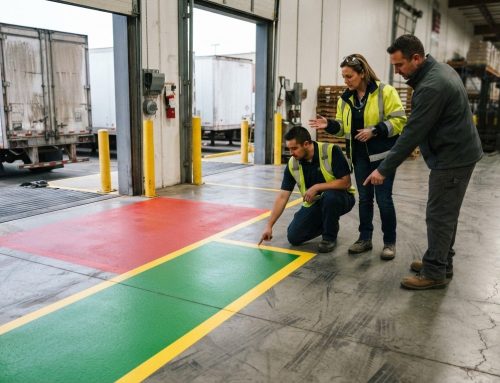
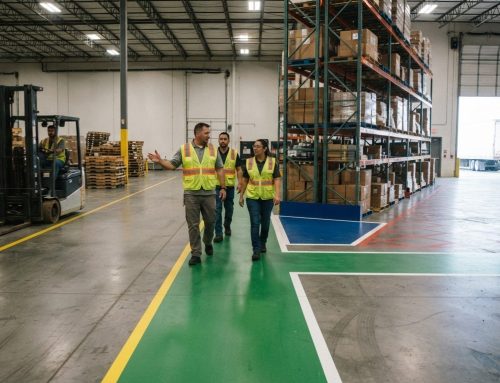
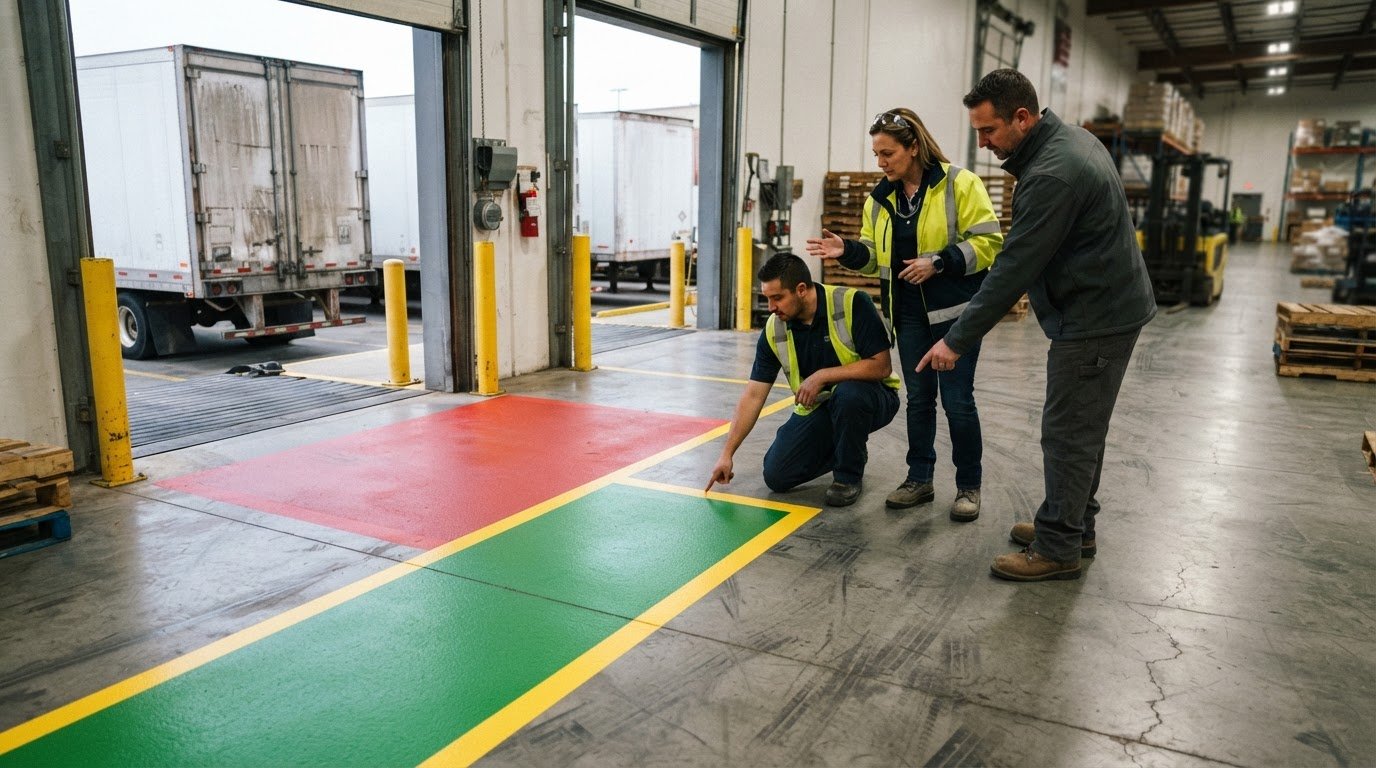
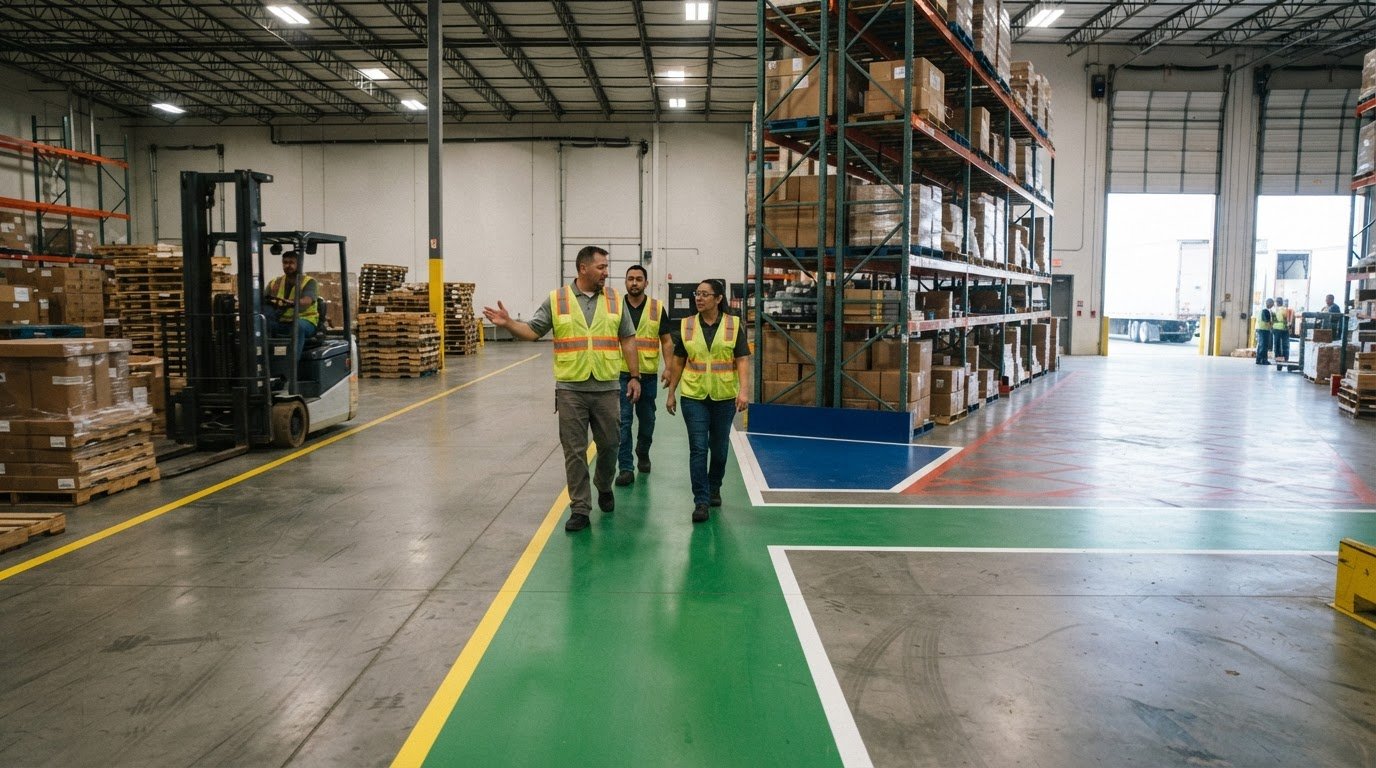
OSHA standards 1910.176 and 1910.22 require permanent aisles to be clearly marked to protect workers. Professional warehouse floor striping memphis projects significantly reduce liability by providing documented proof of safety efforts. A key element of this is the installation of pedestrian walkways and safety aisles. These paths create a physical and visual separation between human traffic and heavy machinery. By adhering to ANSI Z535 color standards (the industry benchmark for safety communication), facility managers ensure that their markings are universally recognized, preventing the confusion that leads to workplace injuries.
Performance Metrics: Comparing Epoxy Coatings to Standard Warehouse Traffic Paint
Selecting the right material for warehouse floor striping memphis depends on understanding the chemical threshold of your facility’s operations. Standard water-based traffic paint relies on simple surface adhesion, where the liquid dries into a thin film on top of the concrete. Two-part epoxy resins utilize a chemical cross-linking process that anchors the material deep into the concrete pores. This distinction is fundamental to Concrete Coating Basics; industrial environments require a bond that can withstand mechanical stress rather than just a visual line.
While traffic paint has a lower initial price point, the lifecycle costs tell a different story. In a high-traffic Memphis distribution center, standard paint may require re-application every six months. Each refresh involves labor costs and operational downtime. A professional epoxy application typically lasts three to five years under similar conditions. This provides several operational advantages:
- Reduced frequency of facility shutdowns for maintenance.
- Consistent compliance with OSHA visibility standards.
- Lower long-term labor and material expenditures.
Durability Under Heavy Equipment Load
The primary failure point for floor markings is the “shear force” exerted by heavy forklifts. Epoxy coatings offer high bond strength that resists peeling even during tight-radius turns. This durability prevents “ghosting” (the permanent staining caused by hot tires) and maintains a professional appearance. For facilities utilizing high-density racking systems, epoxy warehouse striping provides the high-visibility and impact resistance necessary to keep aisles safe and navigable.
Specialized Coatings for Harsh Environments
Industrial facilities often contain zones with specific chemical or thermal challenges. Standard paint dissolves quickly when exposed to electrolyte spills in battery charging areas. We implement acid-resistant coatings and novolac (a highly cross-linked epoxy) to protect the underlying concrete in these high-risk zones. When planning warehouse floor striping memphis projects, facility managers must also account for outdoor areas. We specify UV-stable coatings for outdoor truck courts to prevent the chalking and fading caused by sun exposure.
Beyond durability, epoxy’s high light-reflectivity index improves visibility in poorly lit areas. This can reduce the need for additional lighting and lower energy expenses. If you’re ready to upgrade your facility’s standards, connect with our technical team for a site evaluation.

Procurement Checklist: Selecting an Industrial Contractor for Large-Scale Facilities
Selecting a contractor for warehouse floor striping memphis is a decision that impacts your facility’s safety and logistical flow for years. High-volume distribution centers require a partner with a multi-decade history in the field. We recommend prioritizing contractors with at least 29 years of experience, as this tenure indicates they’ve successfully managed the chemical complexities of various concrete substrates. Large-scale industrial projects also demand rigorous insurance and bonding. Verify that your chosen contractor carries comprehensive liability and workers’ compensation coverage to protect your organization from site-related risks. Experience is the primary metric for reliability; it ensures the team understands that industrial environments don’t stop for maintenance.
Evaluating Technical Expertise and Equipment
Professional-grade execution requires specialized machinery designed for industrial accuracy. At a minimum, a contractor should utilize high-pressure airless sprayers like Graco LineLazers to ensure consistent mil thickness (the measurement of a dry coating’s depth). Using in-house crews rather than sub-contracted labor is vital for quality control. In-house teams are specifically trained in your facility’s safety protocols and are accountable for the precision of complex layouts or custom stenciling. This technical proficiency ensures that your markings meet the exact specifications required for high-density racking and automated equipment paths.
Project Management and Operational Continuity
Operational downtime is often the most significant hidden cost of a striping project. A qualified warehouse line striping company must offer around-the-clock availability to coordinate work during shift changes or weekend shutdowns. Successful implementation relies on a phased installation plan. This strategy allows specific zones to remain active while others are being treated, maintaining the flow of goods. All markings must strictly adhere to OSHA Standard 1910.176, which dictates the clear marking of permanent aisles and passageways to prevent equipment-pedestrian collisions.
For organizations managing multiple regional distribution centers, national coverage simplifies the procurement process. Working with a single provider ensures that your safety standards and material specifications remain consistent across all locations. This centralized approach reduces administrative burden and guarantees that every facility meets the same high-performance benchmarks. If you’re managing a large-scale project and need a detailed logistical plan, request a professional site consultation today.
The Implementation Phase: Surface Preparation and Long-Term Maintenance Strategies
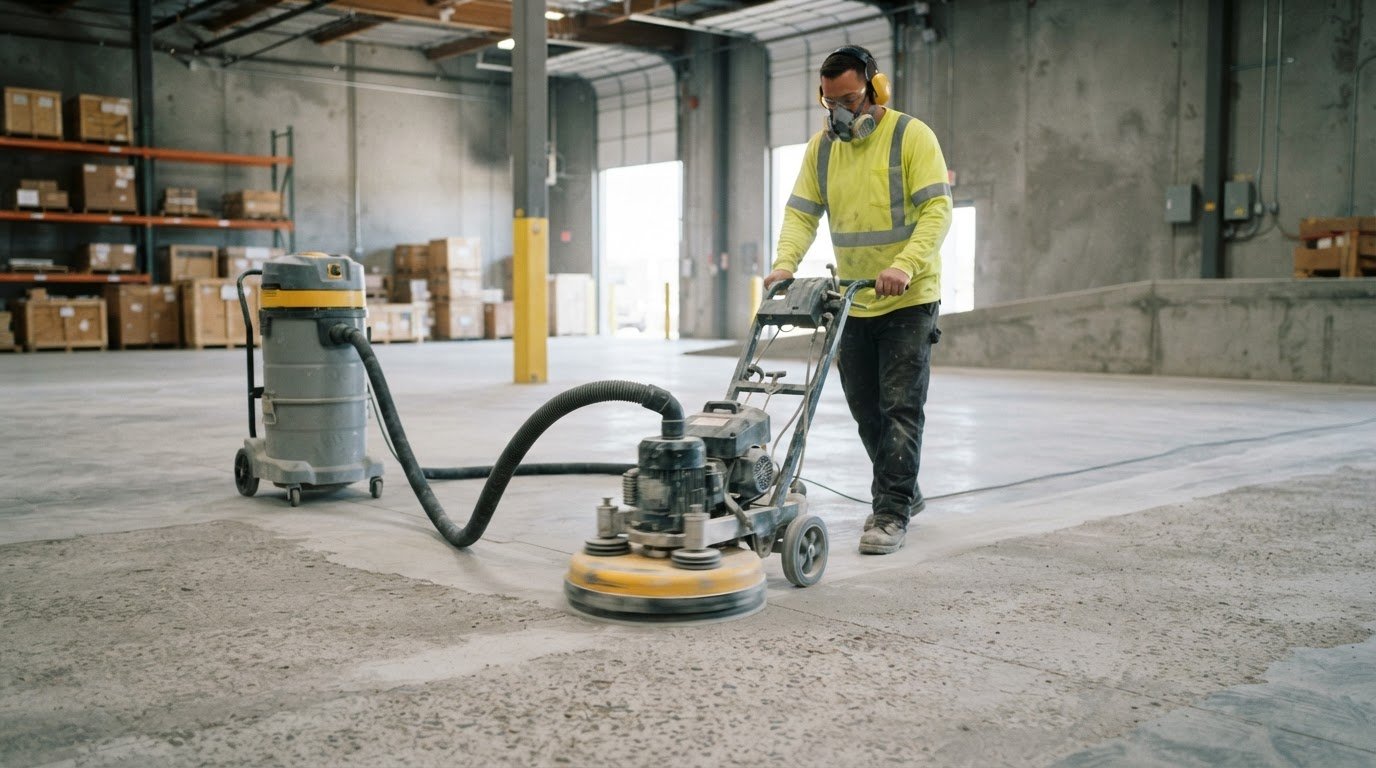
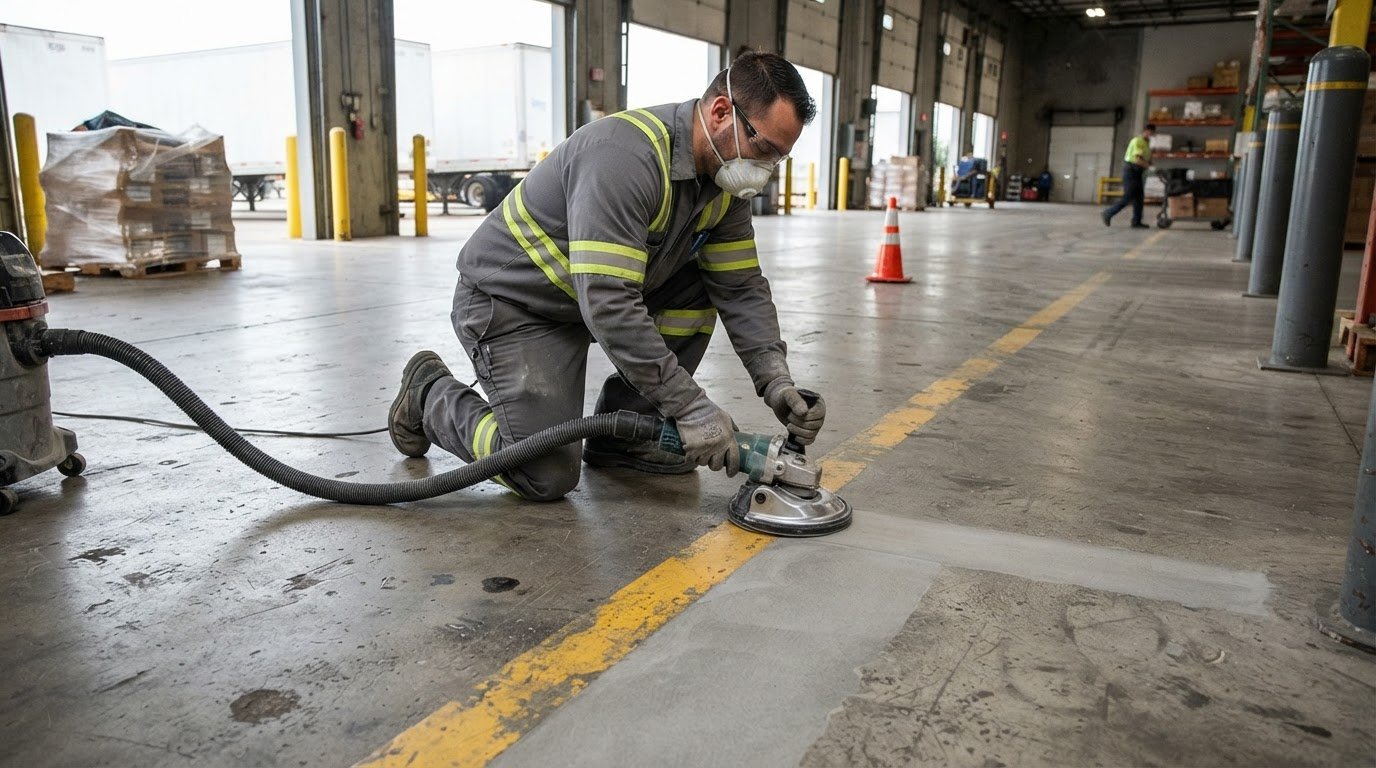
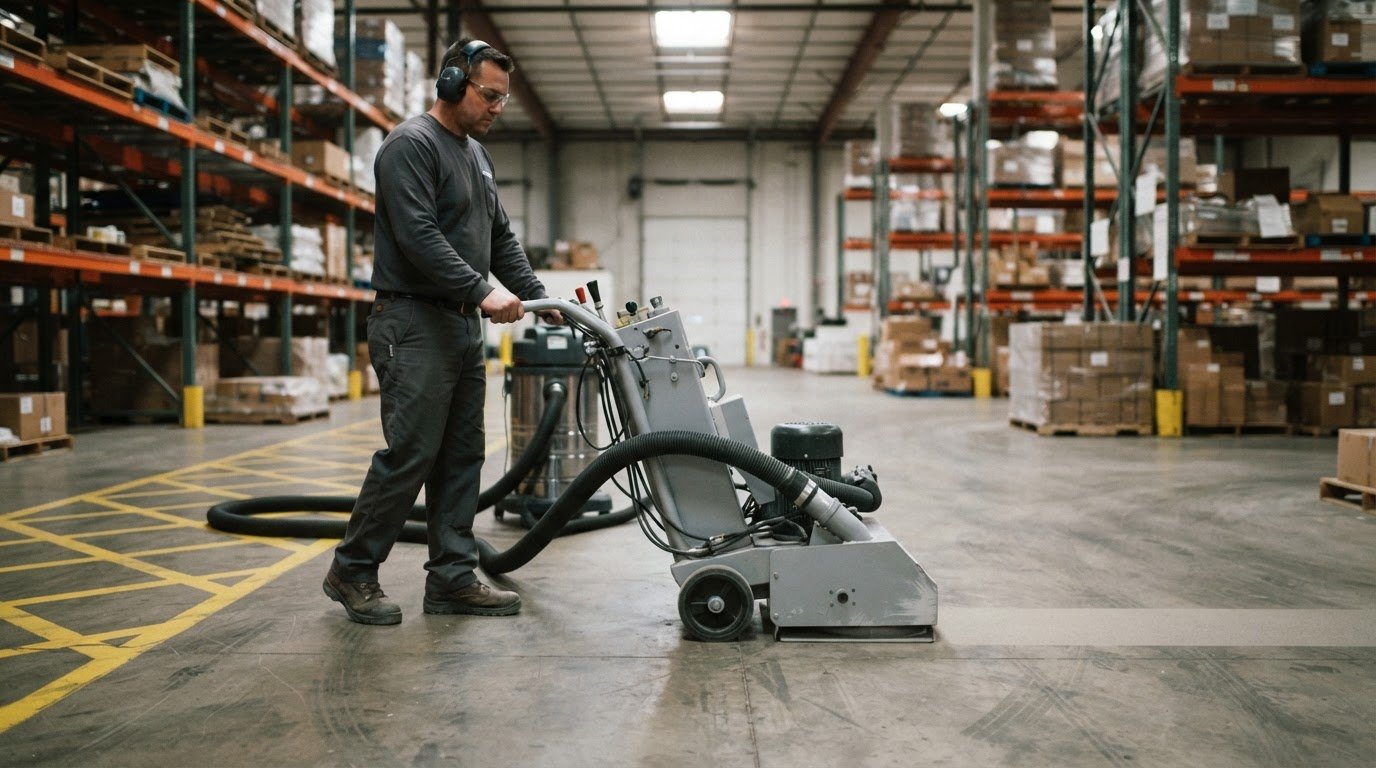
Surface preparation is the single most critical variable in determining the lifespan of warehouse floor striping memphis. Even the highest-grade epoxy resins will fail if they’re applied to a contaminated or polished concrete surface. We prioritize mechanical preparation to create a profile (a roughened texture) that allows the coating to form a permanent mechanical bond. Before any material hits the floor, our teams conduct moisture testing to ensure the concrete’s relative humidity is within acceptable limits. Excess moisture causes hydrostatic pressure, which eventually forces the coating to delaminate (peel away) from the substrate.
Mechanical Surface Preparation Techniques
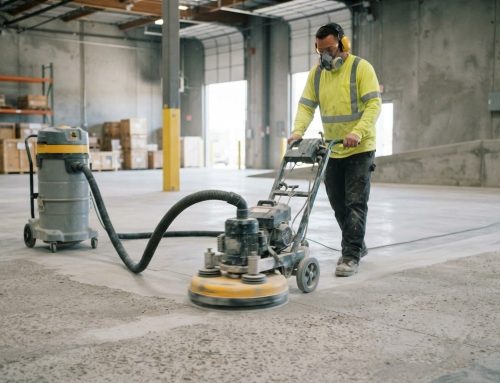
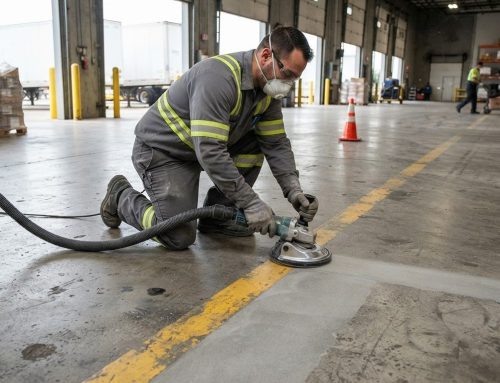
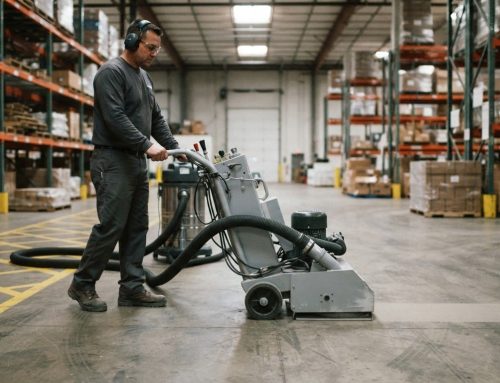
We utilize two primary methods for preparing industrial floors: shot blasting and diamond grinding. Shot blasting involves propelling steel abrasive at high velocities to strip away contaminants and open the concrete’s pores. It’s the gold standard for high-traffic zones because it creates a deep profile for maximum adhesion. Diamond grinding uses rotating abrasive discs to level uneven surfaces and remove thin-film coatings. For food-grade or sensitive electronics environments, we employ dust-contained equipment with HEPA filtration to maintain air quality. When reconfiguring a facility, professional warehouse line removal via these mechanical methods is necessary to ensure the new layout is clean and compliant.
Post-Installation Care and ROI
Maximizing the return on your investment requires a proactive maintenance strategy. While epoxy is exceptionally durable, dirt and grit act as abrasives under forklift tires. We recommend a regular cleaning schedule using non-acidic, neutral-pH cleaners to preserve the finish and maintain high visibility. General managers should inspect lines quarterly for localized impact damage. Performing small touch-ups early prevents larger sections from failing. A professionally prepared and installed epoxy system significantly reduces your total cost of ownership. By extending the interval between full re-striping projects from six months to several years, you minimize operational disruptions and maintain constant adherence to OSHA safety standards.
Optimize Your Facility’s Operational Standards for 2026
Maintaining a high-performance industrial environment requires more than just a visual refresh. It demands a technical approach to warehouse floor striping memphis that prioritizes the mechanical surface preparation and advanced material chemistry we’ve detailed throughout this guide. By choosing high-solids epoxy systems over standard traffic paint, you secure a durable solution that withstands heavy equipment load and ensures full OSHA compliance. This proactive strategy reduces facility downtime and protects your bottom line from the hidden costs of frequent maintenance cycles. It’s an investment in operational clarity that pays dividends in safety and efficiency.
We leverage over 29 years of industrial experience to deliver safety-conscious consulting and nationwide execution for large-scale distribution centers. Our expertise in OSHA-compliant safety layouts ensures your facility remains organized even under the most demanding logistical schedules. Request an Instant Quote from StripeGuys Warhouse Line Striping for Your Industrial Project to begin your facility’s transformation. We’re ready to help you establish clear boundaries and lasting durability for your industrial workspace.
Frequently Asked Questions
How long does warehouse epoxy striping typically last compared to paint?
Industrial epoxy coatings typically last between 12 and 36 months in high-traffic areas, whereas standard traffic paint often requires re-application within 6 to 12 months. The actual lifespan of your warehouse floor striping memphis depends on the volume of forklift traffic and the quality of surface preparation. Epoxy’s chemical bond resists the shear forces of heavy machinery, providing a significantly higher return on investment over several years.
Does my facility need to shut down completely during the striping process?
Total facility shutdowns aren’t usually necessary because we utilize a phased installation strategy. We coordinate with your logistics managers to stripe specific zones during shift changes, weekends, or low-activity periods. This approach ensures your operational continuity remains intact while we implement safety-compliant markings. Our goal is to minimize downtime by working around your established production schedule and maximizing crew efficiency.
What are the OSHA color requirements for warehouse floor markings?
OSHA does not mandate a specific color code for every situation, but they require that permanent aisles and passageways be clearly marked according to standards 1910.176 and 1910.22. Industry best practice involves following ANSI Z535 standards to ensure universal recognition across your workforce. For example, yellow is the standard for traffic lanes, while red indicates fire-related hazards. Adhering to these recognized standards helps you avoid willful violations and maintains a high safety benchmark.
Is shot blasting necessary for every warehouse floor striping project?
Shot blasting is essential for any high-performance epoxy project where long-term durability is the primary priority. This mechanical process removes surface laitance (a weak, milky layer of cement and sand) and creates a porous profile that allows the epoxy to anchor deep into the concrete. While some low-traffic areas might only require diamond grinding, shot blasting remains the most reliable method for ensuring your markings don’t peel under heavy equipment load.
Can epoxy floor markings be applied to old or damaged concrete surfaces?
Epoxy can be applied to older concrete surfaces once we address structural damage and surface contaminants. We use industrial grinders and specialized fillers to repair cracks and spalled areas before the striping process begins. Proper cleaning and mechanical profiling are even more critical for older floors to ensure the new coating bonds effectively. If the concrete is structurally sound, a professional epoxy system actually helps protect the surface from further wear.
What is the difference between a standard epoxy and an acid-resistant coating?
Standard epoxy provides excellent abrasion resistance, but acid-resistant coatings like novolac are engineered for extreme chemical exposure. Novolac coatings have a higher cross-linking density (a tighter chemical bond) that prevents corrosive electrolytes from penetrating the surface. These specialized coatings are necessary for forklift battery charging stations and chemical storage areas where standard epoxy would quickly degrade. Choosing the right material ensures your warehouse floor striping memphis remains intact in hazardous environments.