With warehouse injury rates currently reaching 4.8 cases per 100 employees, which is nearly double the private industry average, the margin for error in your facility layout has never been thinner. Forklift-related incidents account for approximately 25% of all warehouse injuries, making a high-visibility system for warehouse floor marking for aisle designation your most critical safety barrier. You likely already understand the logistical headache of dealing with peeling floor tape or the persistent anxiety of an OSHA inspection regarding non-compliant aisle widths. It is frustrating to invest in floor striping only to see it fail under heavy traffic within a single quarter.
This 2026 guide helps you master the technical requirements and material standards needed to build a compliant, high-performance marking system. We provide a deep dive into OSHA standard 1910.176(a) requirements, equipment clearance calculations (the specific math behind safe passage), and the long-term durability of epoxy line painting compared to heavy-duty tapes. You will learn how to reduce maintenance cycles and improve operational throughput by applying professional-grade standards to your floor. We focus on functional outcomes that protect your personnel and your bottom line through seasoned industrial expertise.
Key Takeaways
- Learn how to implement a visual management system that separates pedestrian and vehicular traffic to eliminate high-density zone collisions.
- Master the specific OSHA standards for warehouse floor marking for aisle designation, including the 2-inch to 6-inch line width requirements for industrial compliance.
- Understand the 5S color-coding framework to standardize yellow for traffic paths and red for emergency danger zones across your entire facility.
- Compare the long-term ROI of epoxy line painting against standard floor tapes to identify the most durable solution for high-pivot forklift areas.
- Discover why mechanical surface preparation, such as shot blasting, is the critical factor in preventing line peeling and extending maintenance cycles.
The Role of Aisle Designation in Warehouse Safety and Efficiency
Effective aisle designation serves as a visual management system that physically separates human movement from mechanical handling equipment. It is an engineering tool for operational flow rather than a simple aesthetic choice. Clear boundaries directly reduce forklift-pedestrian collisions in high-density zones, which is vital since these incidents comprise a large portion of warehouse injuries. Proper organization also accelerates picking speeds by removing the hesitation caused by undefined traffic lanes. As we move through 2026, high-contrast markings are becoming the standard for facilities integrating Autonomous Mobile Robots (AMRs), as these machines rely on distinct visual cues for navigation. A well-executed plan for warehouse floor marking for aisle designation ensures that both humans and robots can move with maximum precision.
OSHA 1910.176(a): The Legal Foundation
OSHA standard 1910.176(a) mandates that permanent aisles and passageways must be appropriately marked where mechanical handling equipment is used. Safety inspectors typically interpret “permanent” as any aisle that remains in a fixed location for more than 30 days. Failing to maintain these markings leads to significant OSHA fines and potential operational shutdowns during remediation. While some facilities attempt to use various floor marking tape materials to meet this requirement, the durability of the marking is often what determines compliance during an audit. If your lines are faded or peeling, you are technically out of compliance with federal safety expectations.
Traffic Flow and Conflict Point Reduction
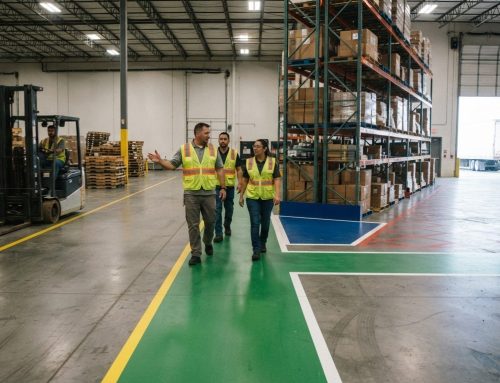
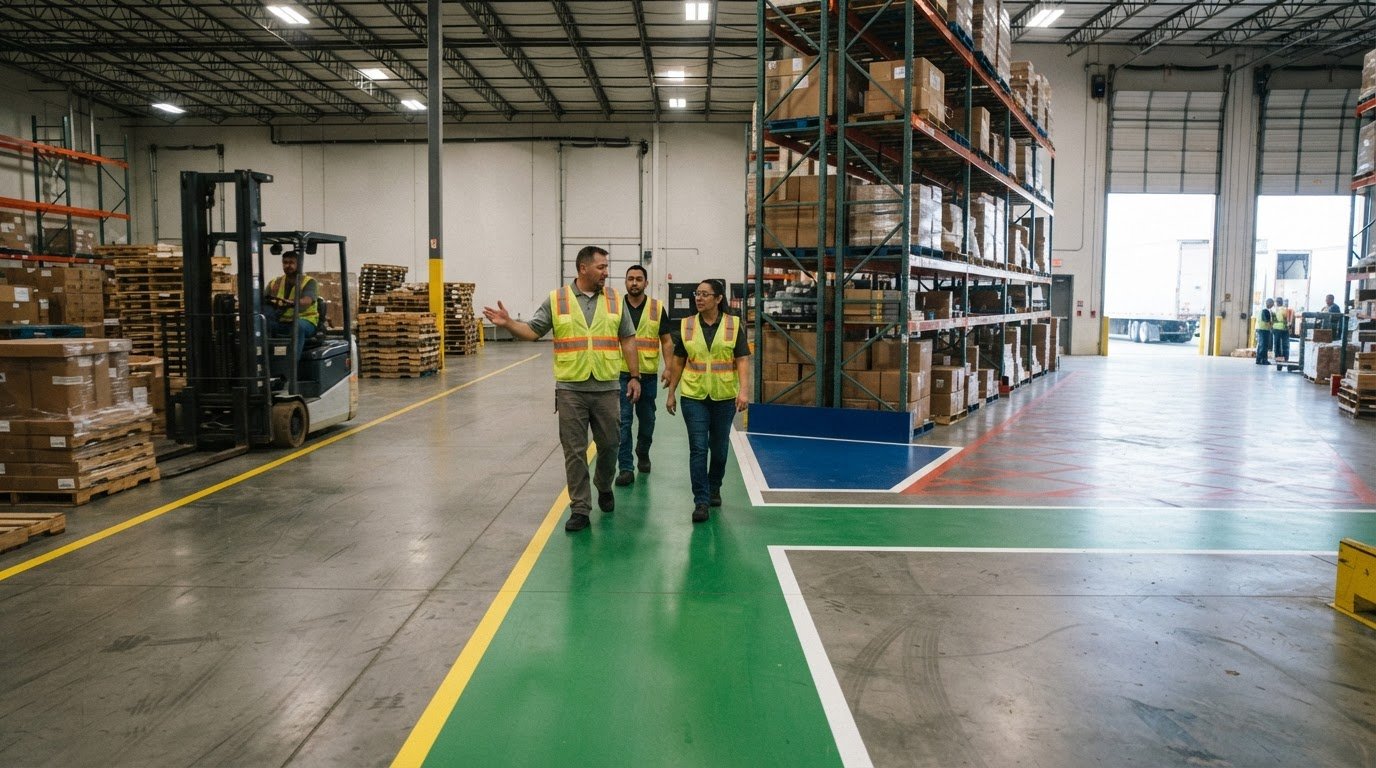
Modern layouts must account for high-risk intersection zones where equipment and personnel cross paths. Implementing dedicated pedestrian walkways and safety aisles creates a predictable environment that minimizes equipment interaction. By using warehouse floor marking for aisle designation to establish “one-way” traffic lanes, you can eliminate the congestion of head-to-head forklift traffic. This structural approach to floor striping ensures that every square foot of your facility contributes to a safer, faster logistical throughput. Reducing conflict points isn’t just about safety; it’s about protecting your bottom line from the costs of accidents and lost productivity.
OSHA Standards and Design Principles for Aisle Markings
OSHA compliance relies on the clarity and permanence of your visual boundaries. While the agency provides flexibility in color choice, industry standards for warehouse floor marking for aisle designation typically dictate line widths between 2 and 6 inches. A 4-inch line is the preferred benchmark for most facilities (providing a clear visual break that remains visible from the elevated cab of a reach truck). In facilities equipped with high-bay industrial LED lighting, visibility can be compromised by floor glare or shadows. Selecting a high-contrast, matte-finish material ensures that these boundaries remain distinct under intense overhead illumination, preventing operators from drifting out of safe lanes.
Calculating Aisle Widths for Equipment Clearance
OSHA 1910.176(a) requires that aisles be wide enough for safe passage, but safety managers often rely on the “Rule of Three” for practical application. This involves adding 3 feet to the width of your widest piece of equipment (the forklift or pallet jack) to determine the minimum aisle width. For standard sit-down forklifts, this usually results in a 12-foot to 14-foot aisle. Narrow Aisle (NA) and Very Narrow Aisle (VNA) racking systems require much tighter tolerances, sometimes as narrow as 5.5 feet. When striping these zones, you must account for the swing radius (the space the rear of the forklift occupies during a turn) at every intersection to prevent rack impacts and pedestrian accidents.
Color Coding for Instant Visual Recognition
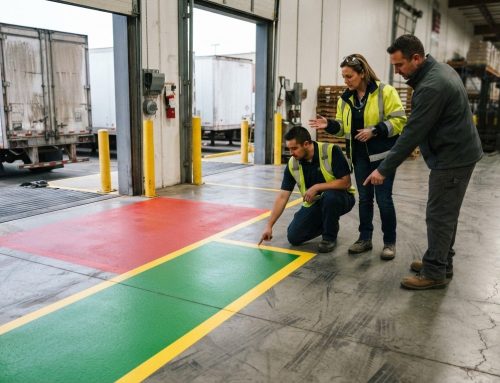
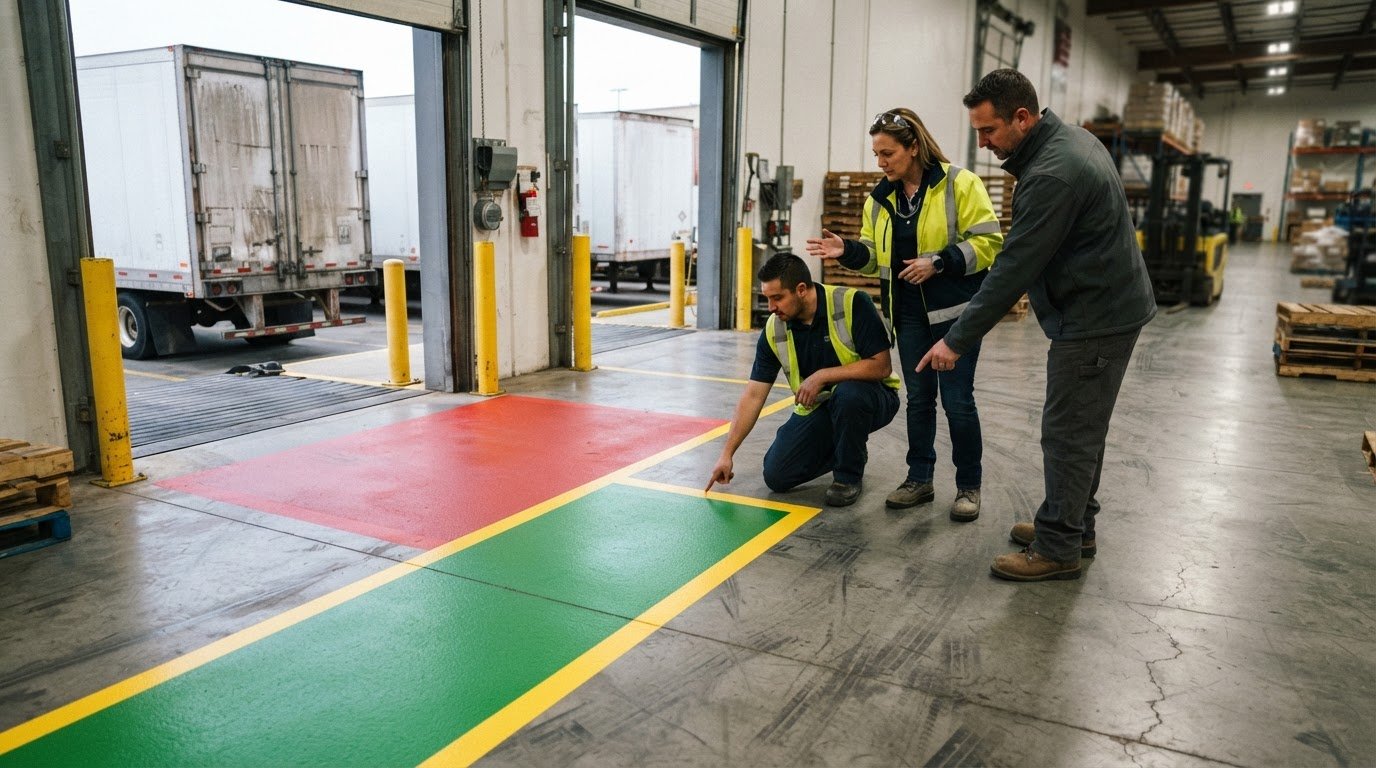
A standardized color palette reduces the cognitive load on employees, allowing for instant recognition of safety zones. Yellow is the universal standard for traffic aisles and work cells because it offers the highest visibility against gray concrete. White is typically reserved for production zones and specific storage locations, such as pallet drop spots. For high-risk areas, red and yellow diagonal stripes highlight physical hazards or “no-go” zones (areas like electrical panels or fire equipment access that must remain clear at all times). If your current layout is outdated or failing to guide traffic effectively, you should consult with an industrial striping specialist to ensure your new markings meet these rigorous 2026 standards.
For high-traffic environments where lines are subjected to constant forklift scrubbing, epoxy line painting is the superior choice for maintaining these color standards. Standard traffic paint often fails in high-pivot areas, leading to the very non-compliance issues that trigger OSHA inspections. By choosing durable materials that resist chemical cleaners and tire marks, you ensure that your safety system remains functional for years rather than months.

Selecting Materials for High-Traffic Aisle Designation
Choosing the right material for warehouse floor marking for aisle designation is a decision that dictates your maintenance budget for the next five years. While heavy-duty floor tapes are often marketed as a quick fix, they frequently fail in high-pivot forklift areas (zones where tires rotate while the vehicle is stationary). The lateral force of a heavy forklift shears the adhesive from the concrete, leading to peeling and trip hazards. Relying on our 29 years of field experience, we prioritize functional outcomes by matching material chemistry to your specific floor traffic and environmental conditions. We understand that a manufacturing plant with oil mist requires a different technical approach than a clean-room pharmaceutical facility.
The Case for Industrial Epoxy Line Painting
Industrial epoxy warehouse striping offers the highest return on investment for 24/7 facilities. Unlike standard traffic paint that merely sits on the surface, epoxy forms a mechanical bond with the concrete substrate through proper preparation. This results in superior abrasion resistance, allowing the lines to withstand thousands of forklift passes and industrial floor scrubbing without fading. In high-volume distribution centers, this durability is essential for keeping your aisle designation clear and compliant. It’s a reliable solution that reduces the frequency of repainting cycles, saving you both material costs and operational downtime.
Specialized Coatings for Unique Environments
Unique environments require specialized chemical profiles to maintain safety standards and operational integrity. For instance, cold storage facilities require coatings that can cure in sub-zero temperatures without becoming brittle. Similarly, forklift battery charging stations are prone to electrolyte spills, which can dissolve standard markings and damage the concrete. We utilize acid resistant coatings (specifically novolac epoxies) to ensure these safety boundaries remain intact despite chemical exposure. For low-light or fully automated facilities, high-visibility fluorescent options provide the necessary contrast for robotic sensors and human operators alike. If you’re ready to upgrade to a permanent, high-performance solution, request a technical material evaluation for your facility today.
Material selection is only half of the equation. Even the highest-grade epoxy will fail if the concrete isn’t prepared to receive it. Our approach emphasizes the physical realities of industrial workspaces, ensuring every application is backed by the technical preparation needed for a multi-decade service life. We focus on the bond, the brightness, and the long-term benefit to your facility’s safety culture.
Implementation and Maintenance of Aisle Marking Systems
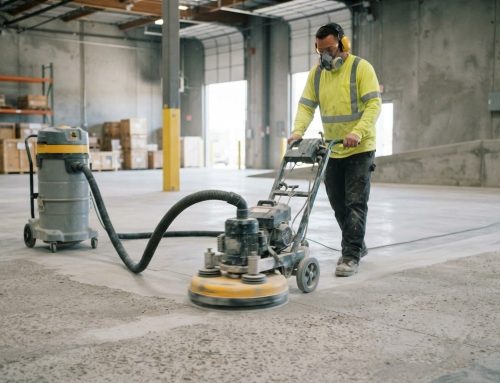
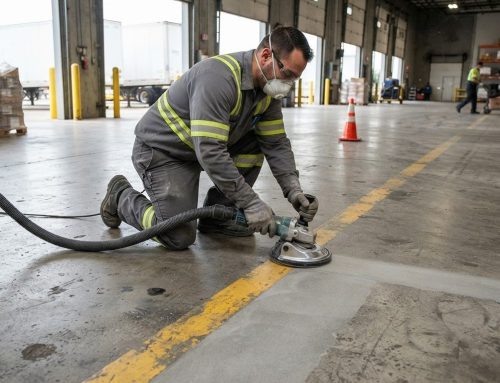
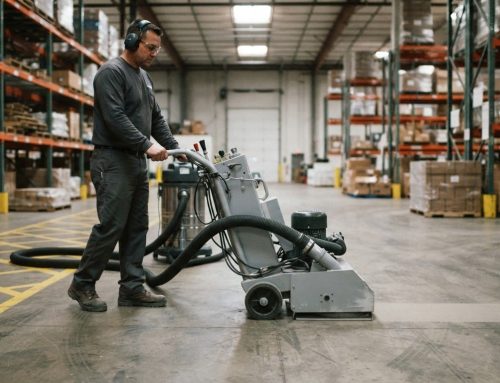
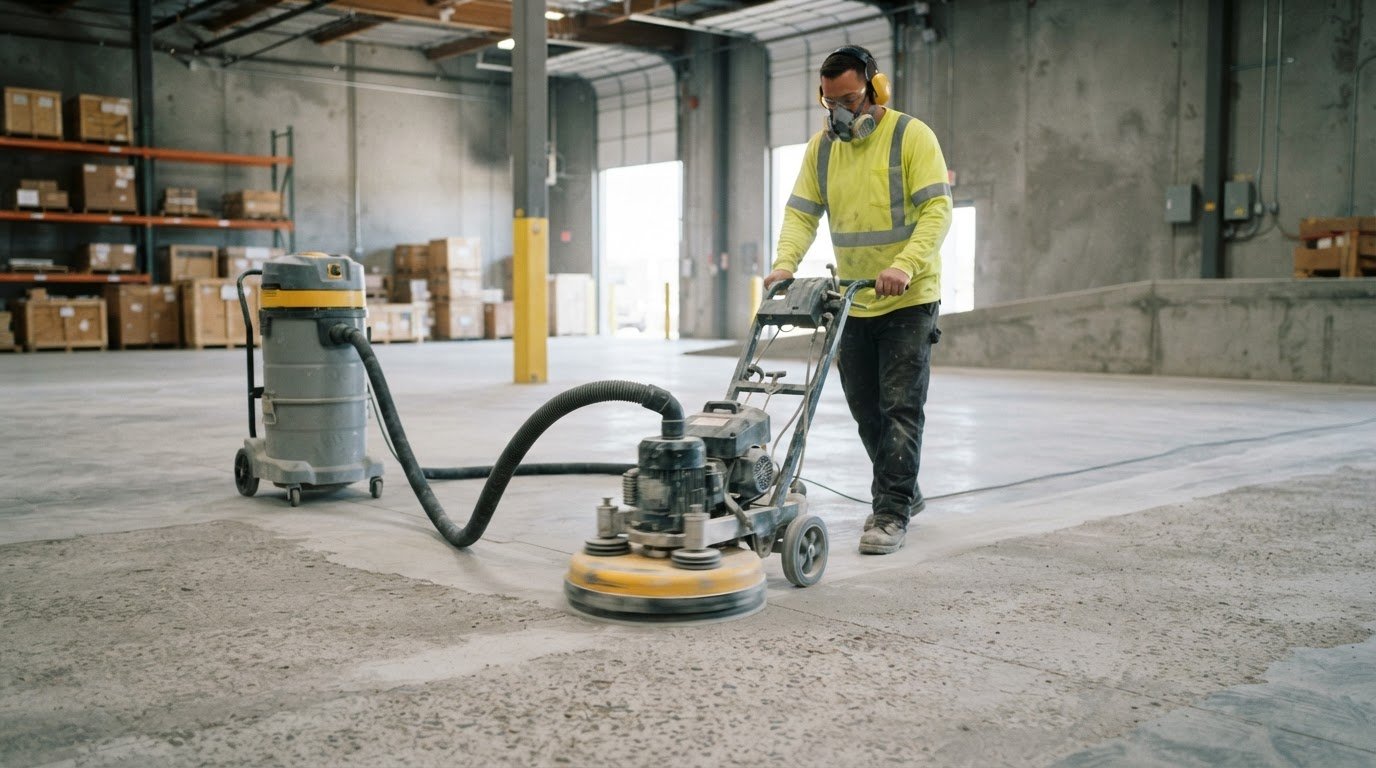
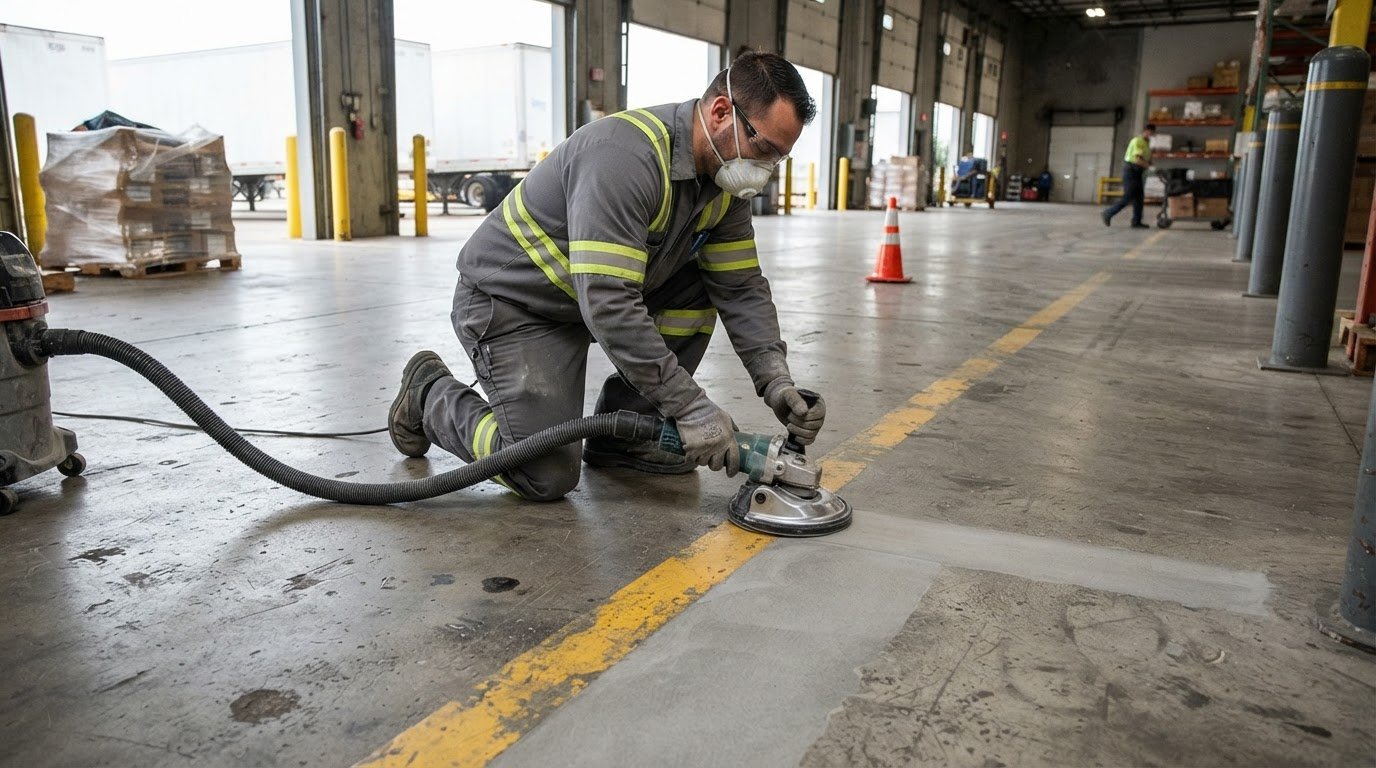
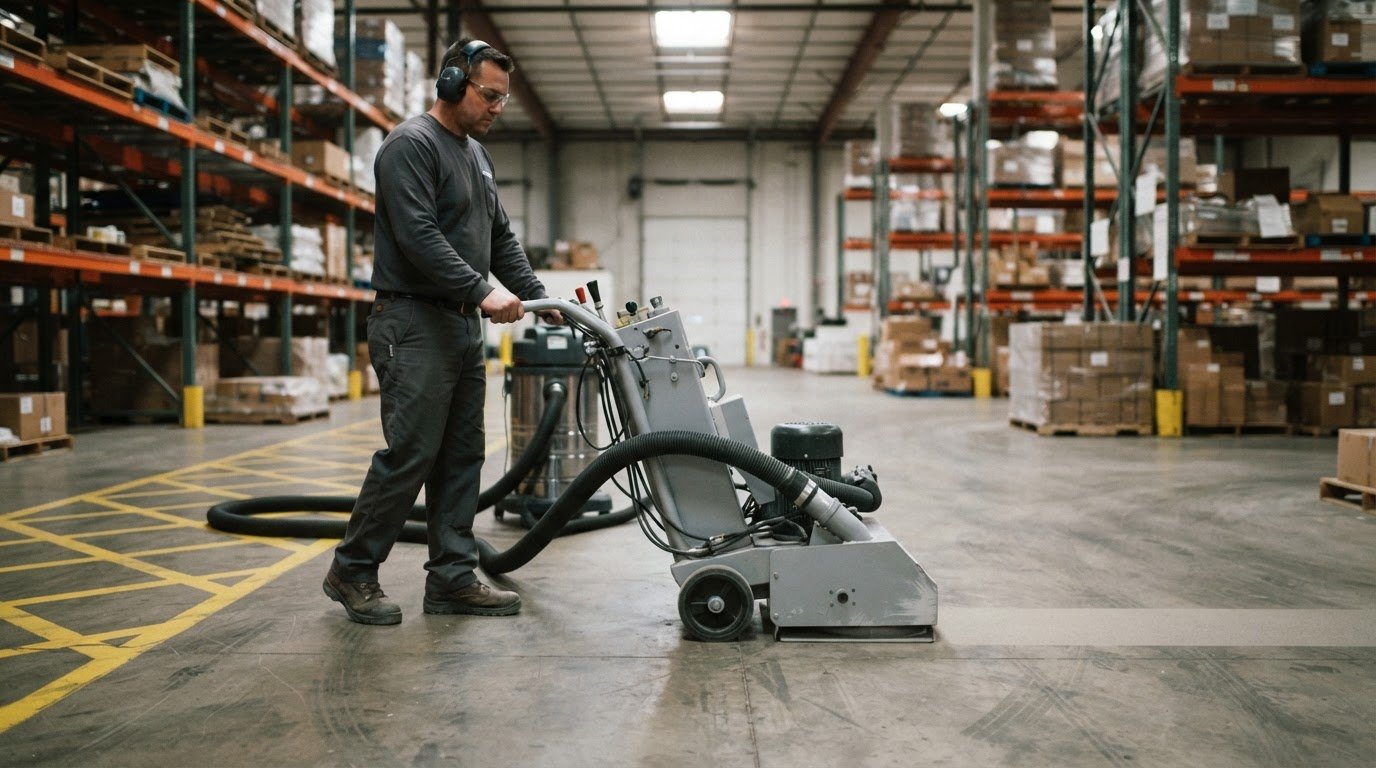
Successful execution of a warehouse floor marking for aisle designation project depends entirely on the technical preparation of the concrete substrate. Most industrial coatings fail because they’re applied to smooth, power-troweled, or contaminated surfaces where a mechanical bond cannot form. We address this by utilizing shot blasting or diamond grinding (mechanical processes that strip away the top layer of cream and contaminants) to create a specific Concrete Surface Profile, or CSP. Achieving a CSP 2-3 ensures that epoxy or polyaspartic systems can penetrate the pores of the concrete, creating a permanent anchor that won’t peel under heavy forklift scrubbing.
Managing facility downtime is a primary logistical concern for 24/7 operations. We coordinate striping phases to align with your lowest traffic windows, often working in sections to keep your shipping and receiving docks active. This structured approach prevents operational bottlenecks while ensuring the new markings have sufficient time to cure. Beyond the initial installation, establishing a rigorous maintenance schedule is a requirement for long-term OSHA compliance. Industry best practice dictates that if more than 25% of a marking is faded, peeling, or obscured, it must be replaced to maintain safety standards and avoid regulatory fines.
Surface Preparation: The Secret to Longevity
New paint fails on smooth concrete because there’s no “tooth” for the material to grab onto. Our teams use shot blasting line removal to eliminate old, non-compliant markings while simultaneously preparing the floor for the new layout. This dual-purpose step prevents “ghost lines” (faint remnants of old stripes that can confuse forklift operators or automated robots) from compromising your new traffic plan. By scouring the surface to a CSP 2-3 profile, we ensure superior adhesion for high-performance epoxy systems, directly extending the service life of your safety boundaries and reducing your long-term maintenance costs.
Professional Execution and Facility Integration
A complete safety system requires integrating pedestrian walkways and safety aisles with your primary aisle designation. This creates a comprehensive visual language that tells every person in the building exactly where they belong. For organizations with multiple facilities, hiring a national warehouse striping contractor is the most efficient way to ensure multi-site consistency. This ensures that a forklift operator in your Chicago hub sees the exact same visual cues as an operator in your Dallas distribution center, standardizing safety protocols across your entire logistics network. We focus on these physical realities to provide a dependable, safety-conscious result that protects your personnel and your operational efficiency.
Securing Your Facility’s Future Through Standardized Markings
Achieving a high-performance floor layout requires a disciplined approach to both regulatory compliance and material engineering. By prioritizing OSHA-compliant widths and leveraging the durability of epoxy line painting, you create a visual environment that protects your workforce and streamlines your throughput. The long-term success of your warehouse floor marking for aisle designation depends on mechanical surface preparation to prevent the premature failure of your investment. It is a strategic infrastructure improvement that pays dividends in reduced accidents and lower maintenance costs over time.
As specialists in OSHA-compliant safety marking systems, we bring over 29 years of industrial striping experience to every project. We provide nationwide coverage for large-scale facilities, ensuring that your operational standards remain consistent across every location in your network. You don’t have to manage the logistical stress of compliance and durability alone. Our team is ready to act as your safety-conscious consultant, delivering a no-nonsense solution that respects your budget and your timeline.
Get a Professional Aisle Marking Quote from StripeGuys and take the first step toward a safer, more efficient workspace today. We look forward to helping you optimize your facility for the years ahead.
Frequently Asked Questions
What is the OSHA requirement for warehouse aisle marking width?
OSHA recommends that aisle markings be between 2 and 6 inches wide to ensure they remain clearly visible to equipment operators and pedestrians. At a minimum, any line used for warehouse floor marking for aisle designation must be at least 2 inches wide to satisfy the requirements of standard 1910.176(a). This range allows facility managers to select a width that provides sufficient contrast against their specific floor color and lighting conditions.
Does OSHA require specific colors for warehouse aisle designation?
OSHA does not mandate specific colors for designating aisles, provided the markings clearly and consistently define the boundaries of the passageway. Most industrial facilities adopt the 5S color coding system, which uses yellow for traffic paths and work cells due to its high visibility. Red should be reserved for fire protection equipment and emergency exits to ensure these critical areas are never obstructed by inventory or machinery.
How often should warehouse floor markings be replaced?
You should replace or repair floor markings whenever more than 25% of the line becomes faded, peeling, or obscured by tire marks. In high-volume distribution centers, this threshold is typically reached every 12 to 24 months. Regular maintenance is a compliance issue, as OSHA requires that permanent aisles and passageways be kept in good repair to prevent accidents and navigation errors.
Can I use floor tape instead of paint for aisle designation?
You can use heavy-duty floor tape for aisle designation, but it is often a temporary solution in high-traffic industrial environments. While tape is easy to apply, it frequently fails in areas where forklifts pivot or drag pallets, leading to peeling and trip hazards. For a reliable, long-term result that withstands heavy scrubbing and mechanical stress, professional epoxy line painting is the industry benchmark for durability.
What is the best way to mark aisles in a warehouse with heavy forklift traffic?
The best way to mark aisles with heavy traffic is to use epoxy line painting preceded by mechanical shot blasting. This preparation creates a physical bond between the coating and the concrete, ensuring the warehouse floor marking for aisle designation doesn’t shear off under heavy loads. This seasoned approach prioritizes functional outcomes by preventing the frequent maintenance cycles associated with standard traffic paints or adhesive tapes.
Do I need to remove old floor lines before applying new markings?
Yes, you must remove old floor lines to ensure the new material achieves a proper bond and to eliminate “ghost lines” that confuse operators. Shot blasting line removal is the most efficient method for clearing old paint or tape residue while simultaneously profiling the concrete surface. Starting with a clean, profiled substrate is the only way to guarantee the longevity and clarity of your new safety layout.