Did you know that a single willful safety violation in 2026 can now result in a maximum penalty of $165,514? This isn’t just a hypothetical figure; it’s the reality of the current inflation-adjusted penalty landscape that every facility manager must navigate. You likely already understand that safety is paramount, but the financial and legal consequences of failed OSHA inspections can cripple an otherwise healthy operation overnight. Between the risk of daily fines for failure to abate and the threat of operational shutdowns, the stakes for maintaining a compliant workspace have never been higher.
We understand the logistical stress of trying to decode technical standards like OSHA 29 CFR 1910.22(b), which mandates that aisles for mechanical equipment remain clearly marked (usually with lines at least 2 inches wide). This guide promises to clarify the 2026 penalty tiers and the operational risks involved so you can protect your bottom line. We’ll preview the essential steps for remediation and explain how professional warehouse floor striping provides a functional foundation for safety, ensuring your facility remains both efficient and fully compliant.
Key Takeaways
- Review the 2026 maximum penalty adjustments, where willful violations can now exceed $165,000 per citation.
- Understand the full legal and operational consequences of failed OSHA inspections, including the high cost of daily penalties for failing to abate hazards.
- Identify critical compliance gaps in walking-working surfaces and forklift traffic zones that frequently trigger agency citations.
- Follow a structured 4-step remediation framework to mitigate hazards, perform root cause analysis, and certify corrections.
- Learn how professional warehouse floor striping acts as a proactive safety measure to minimize financial exposure and maintain operational efficiency.
The Financial Reality: OSHA Penalty Tiers and 2026 Maximums
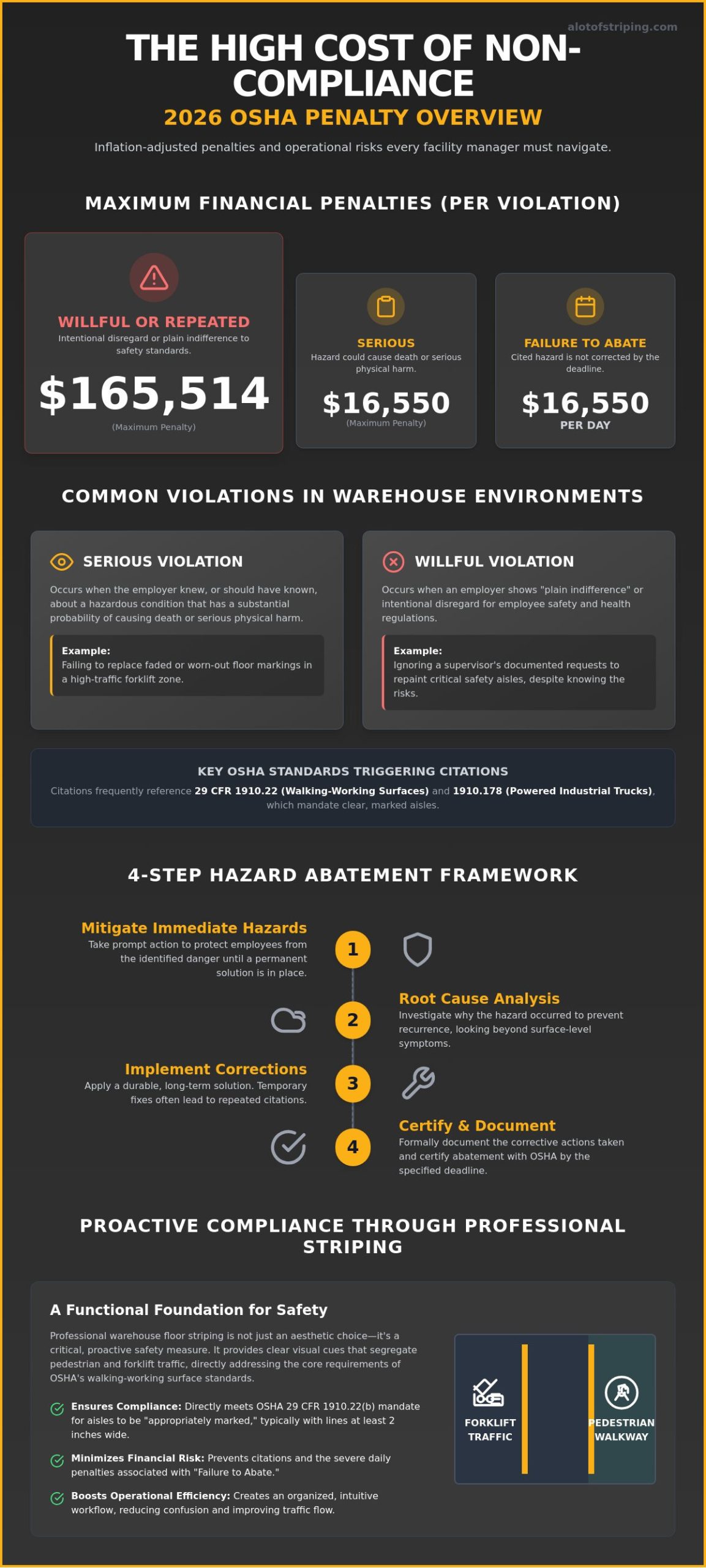
The fiscal consequences of failed OSHA inspections are calculated with a precision that can devastate an unprepared facility. For 2026, the Occupational Safety and Health Administration (OSHA) has set the maximum penalty for “Serious” and “Other-Than-Serious” violations at $16,550 per citation. While this base figure is high, the financial risk escalates dramatically for “Willful” or “Repeated” violations, which now carry a maximum penalty of $165,514. These figures aren’t just administrative fees; they represent a direct hit to operational budgets that often stems from easily preventable issues like faded warehouse floor striping or obstructed aisles.
Understanding the full scope of the consequences of failed OSHA inspections requires a look at how these penalties compound. OSHA uses a formulaic approach to determine final fine amounts, balancing the gravity of the hazard against the employer’s history. For a small-to-mid-sized operation, a single inspection resulting in multiple “Serious” citations can quickly reach six figures, potentially halting planned infrastructure upgrades or equipment purchases.
Gravity-Based Penalties and Adjustments
OSHA doesn’t apply fines in a vacuum. Inspectors use a gravity-based assessment to determine the severity of a citation, focusing on the probability of an injury and the severity of the potential harm. High-gravity violations (those likely to cause death or permanent disability) receive the highest base fines. The agency then applies adjustments based on the size of the business, the employer’s history of previous violations, and evidence of “good faith” efforts to comply. A company with a multi-decade history of clean inspections might see a reduction, while a repeat offender faces a multiplier effect that can turn a single oversight into a massive liability.
The Daily Cost of Non-Compliance
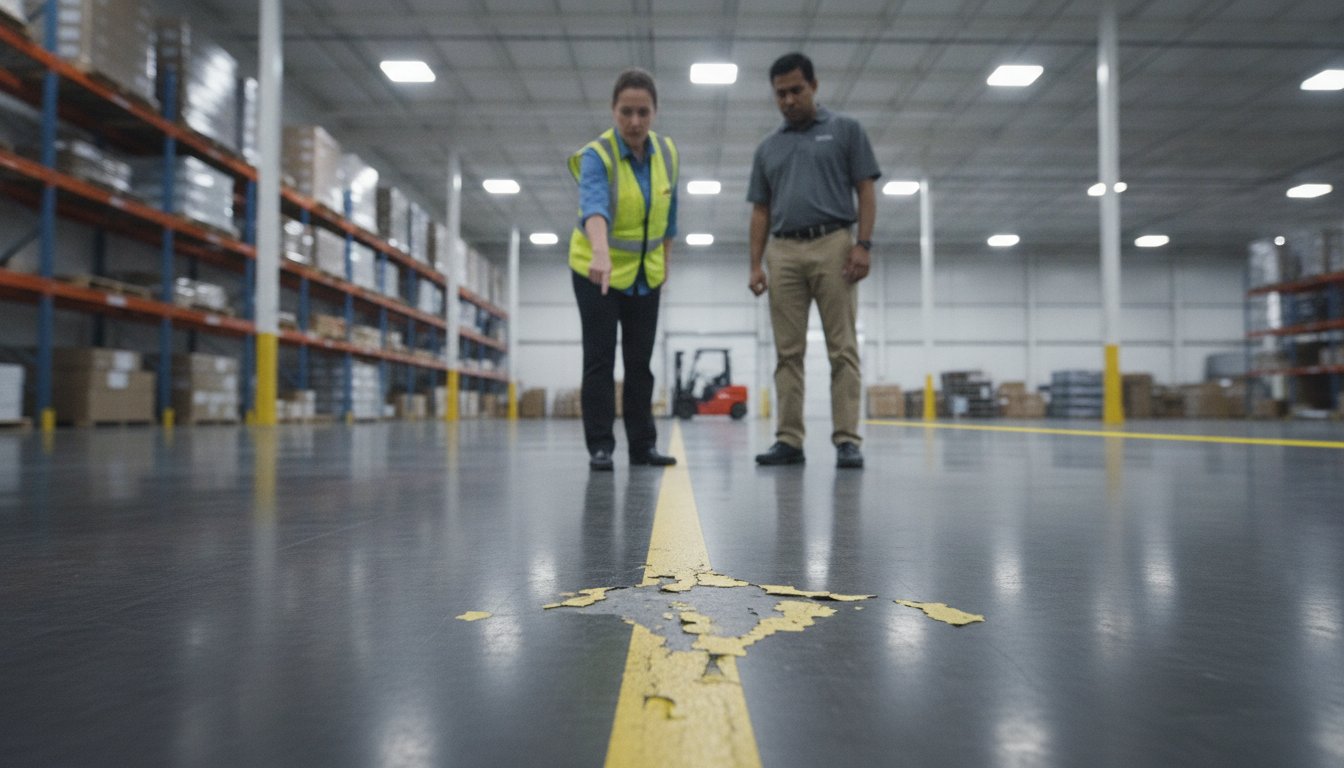
The most dangerous financial trap for industrial operators is the “Failure to Abate” penalty. If a facility fails to correct a cited hazard by the government-mandated deadline, OSHA can levy a fine of up to $16,550 for every day the violation persists past the abatement date. Abatement is the formal correction of a safety hazard within a government-mandated timeframe. Relying on immediate temporary fixes (like using duct tape or spray paint on uncleaned floors) often ends up being more expensive than professional solutions because these materials fail quickly, leading to repeated citations. For high-traffic logistics hubs, maintaining clear pedestrian walkways and safety aisles is the most reliable way to avoid these compounding daily costs.
Types of Violations and Their Impact on Industrial Facilities
OSHA classifies violations based on the severity of the hazard and the employer’s intent. In a warehouse environment, these citations usually fall into four categories: Serious, Other-Than-Serious, Willful, and Repeated. While each category carries weight, the consequences of failed OSHA inspections are most severe when they involve life-safety standards like 29 CFR 1910.22 (Walking-Working Surfaces) and 1910.178 (Powered Industrial Trucks). These regulations are the backbone of facility safety, ensuring that human workers and heavy machinery can coexist without incident.
Standard 1910.22(b) specifically requires that aisles and passageways be kept clear and properly marked wherever mechanical handling equipment is used. When floor markings are faded, missing, or improperly applied, inspectors often issue “Serious” citations because of the high probability of a forklift-pedestrian collision. If a specific standard does not explicitly cover a hazard, OSHA utilizes the General Duty Clause (Section 5(a)(1) of the OSH Act) to cite employers for recognized hazards that are likely to cause death or serious physical harm. Maintaining high-visibility pedestrian walkways and safety aisles is a primary defense against these “catch-all” citations.
Serious vs. Willful Violations in the Warehouse
A Serious violation exists when an employer knew, or should have known, that a condition posed a substantial probability of death or physical harm. For example, failing to replace worn-out markings in a high-traffic loading dock is a Serious violation. In contrast, a Willful violation occurs when an employer shows “plain indifference” or intentional disregard for safety. If a facility manager ignores a supervisor’s documented request to repaint safety aisles after a near-miss incident, OSHA may categorize the resulting citation as Willful. According to the latest schedule for OSHA’s civil penalties, the jump from Serious to Willful can increase the fine by more than tenfold.
The Hidden Costs: Beyond the Initial Fine
The immediate penalty is only the starting point. The long-term consequences of failed OSHA inspections often manifest as increased workers’ compensation premiums and significant operational downtime. When an inspector identifies a high-gravity hazard, they may halt production in that specific zone until the issue is remediated. Beyond these direct costs, a public record of safety failures damages your brand reputation, making it harder to recruit skilled industrial labor in a competitive market. If you need to assess your current facility markings to avoid these risks, you can request a professional site evaluation to identify potential compliance gaps before an inspector arrives.
The Path to Remediation: A 4-Step Abatement Framework
Receiving an official citation is a high-pressure event, but the legal consequences of failed OSHA inspections can be managed through a disciplined abatement process. Abatement is not just about fixing a physical problem; it is a documented legal response that proves your facility has returned to a state of compliance. When an inspector identifies a hazard, the clock begins ticking on your abatement date, making a structured response essential to avoid daily failure-to-abate penalties.
- Step 1: Immediate Hazard Mitigation. You must establish temporary safety measures, such as physical barriers or high-visibility signage, to protect workers until a permanent solution is implemented.
- Step 2: Root Cause Analysis. We investigate why the previous safety system failed. This often involves identifying issues like poor surface adhesion or the use of improper materials that couldn’t withstand heavy forklift traffic.
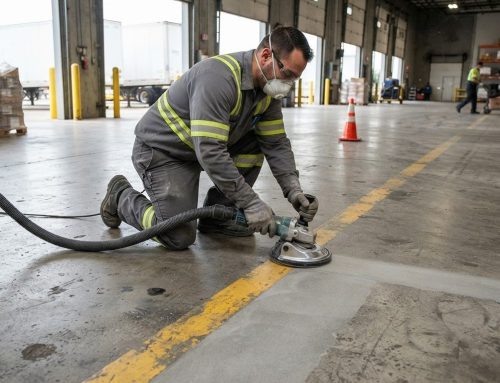
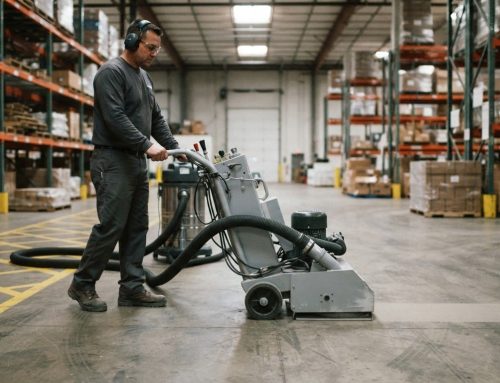
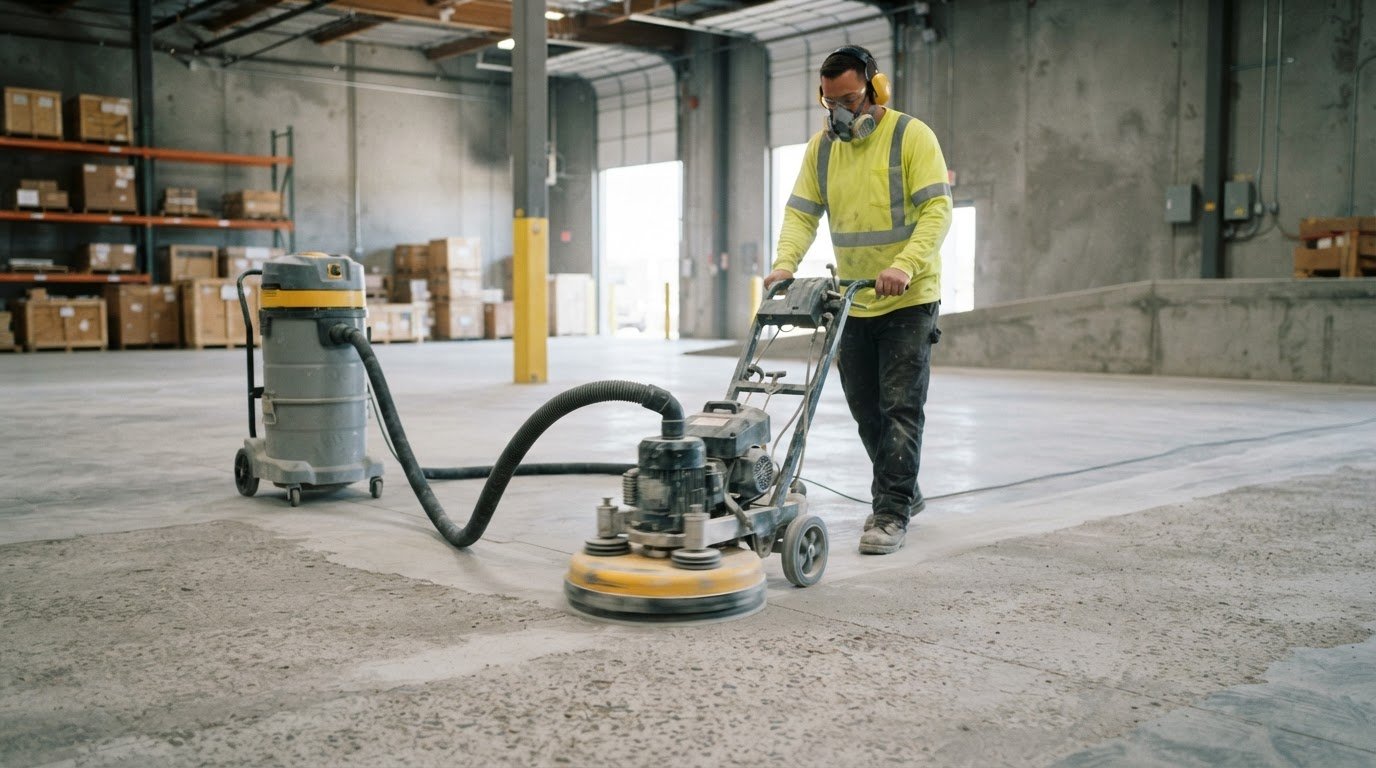
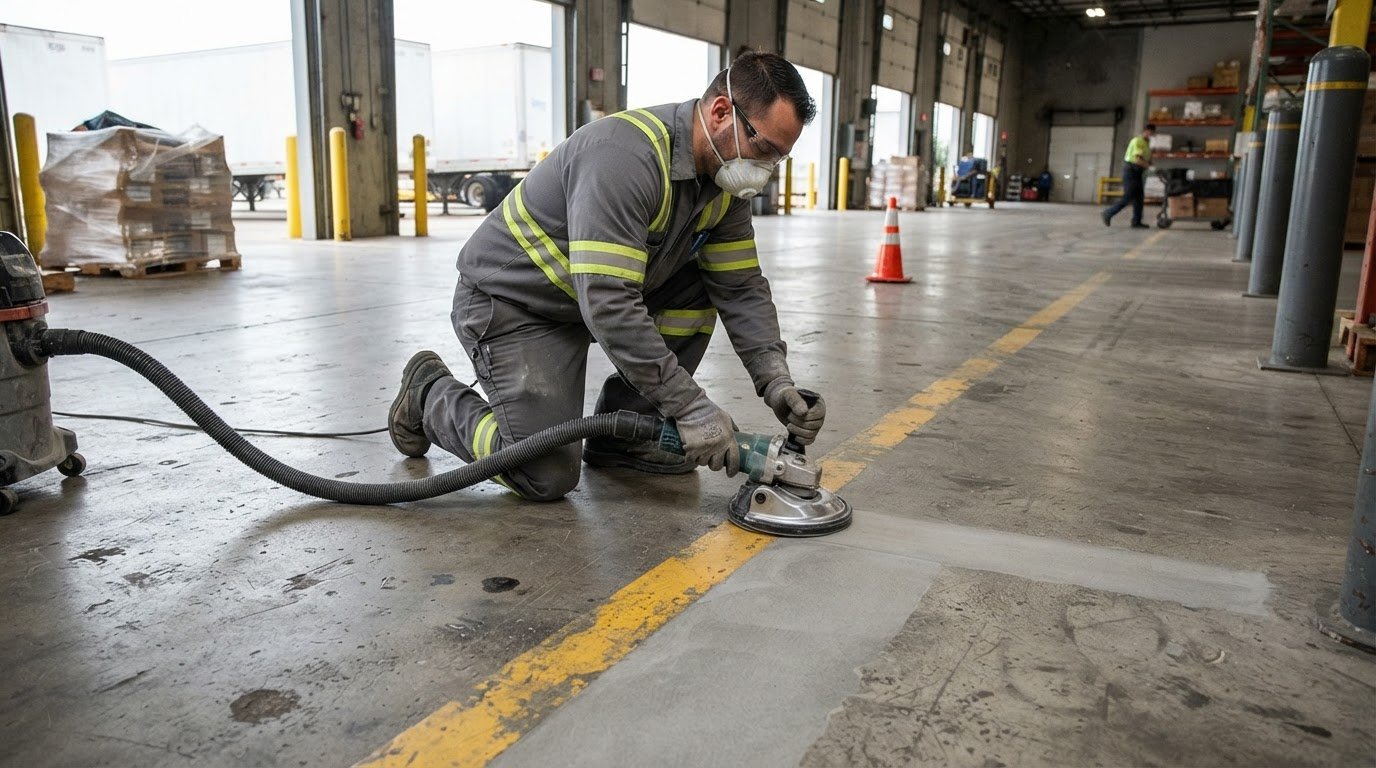
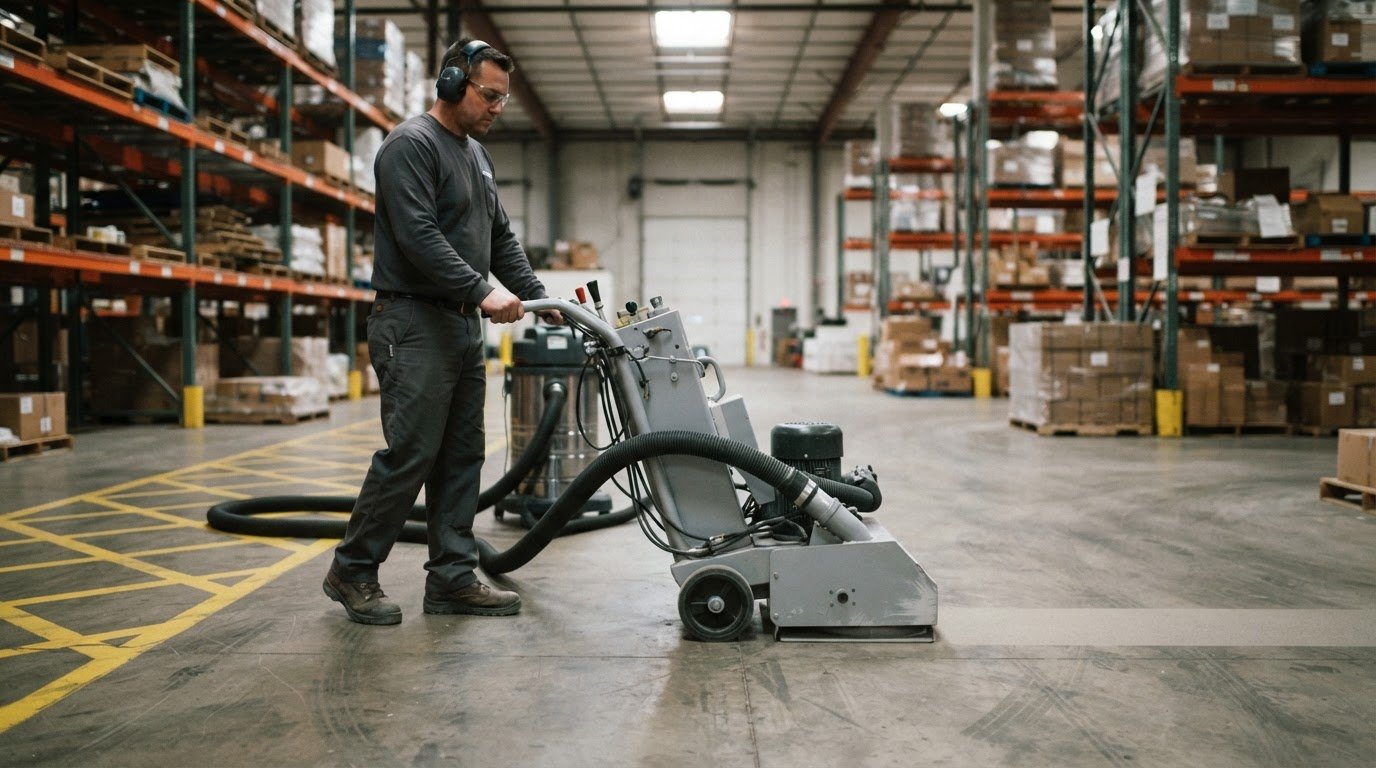
- Step 3: Professional Remediation. We utilize shot blasting line removal (a mechanical process that strips the top layer of concrete) to ensure a clean, porous surface for new applications.
- Step 4: Certification of Abatement. You must file formal documentation with OSHA, including evidence of the correction, to officially close the case and stop the accumulation of potential fines.
Understanding the specific Types of OSHA violations cited in your report will dictate the urgency and depth of your remediation plan. While temporary measures stop the immediate danger, only permanent, professional-grade corrections will satisfy an inspector during a follow-up visit.
Mechanical Removal and Surface Preparation
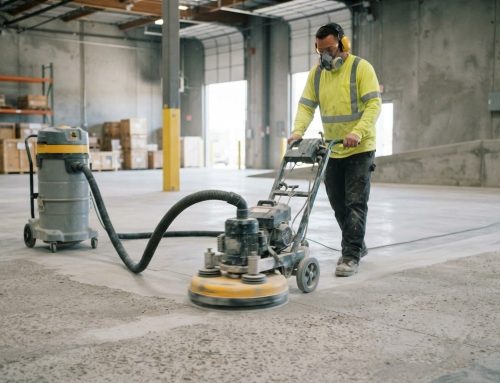
Simply painting over old, non-compliant lines is a significant compliance risk because the new layer will likely peel or exhibit poor visibility. We prioritize warehouse line removal as the first step in any remediation project to prevent “Repeated” violation citations. By removing old coatings and contaminants, we ensure long-term adhesion for epoxy line painting, creating a durable safety border that lasts for years rather than months. This mechanical preparation is the only way to guarantee that your new markings meet the visibility standards required by federal law.
Filing the Abatement Documentation
Your legal defense relies on the quality of your evidence. You must submit photos of the corrected area, invoices from professional contractors, and updated safety training logs to the local OSHA office, typically within 10 calendar days of the abatement date. OSHA considers a hazard “abated” only once the physical correction is officially verified through this paperwork. Failure to meet this administrative deadline can trigger the same severe consequences of failed OSHA inspections as the original safety hazard itself. If you need a professional partner to help document your facility’s safety upgrades, you can contact our team for a detailed compliance quote.
Proactive Compliance: Leveraging Professional Striping to Prevent Failures
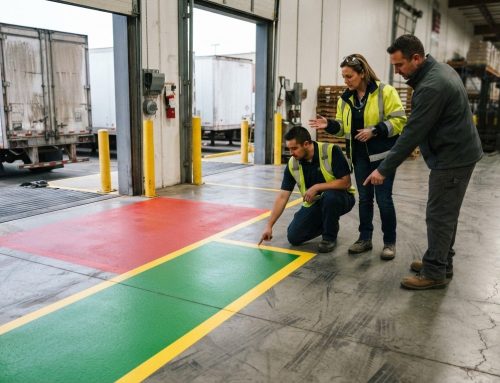
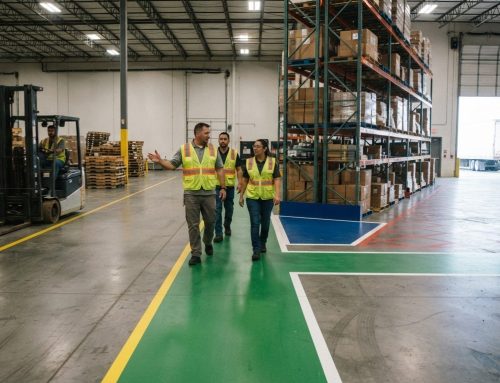
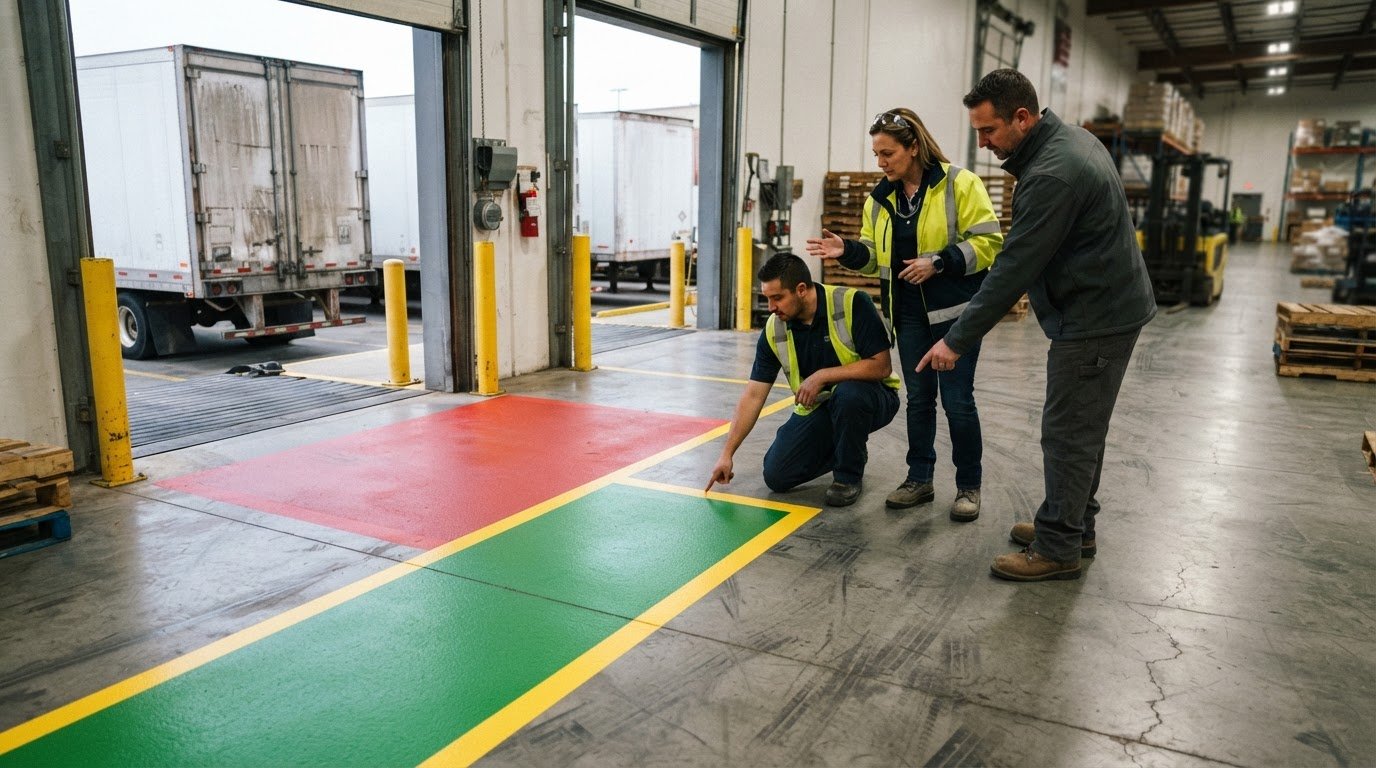
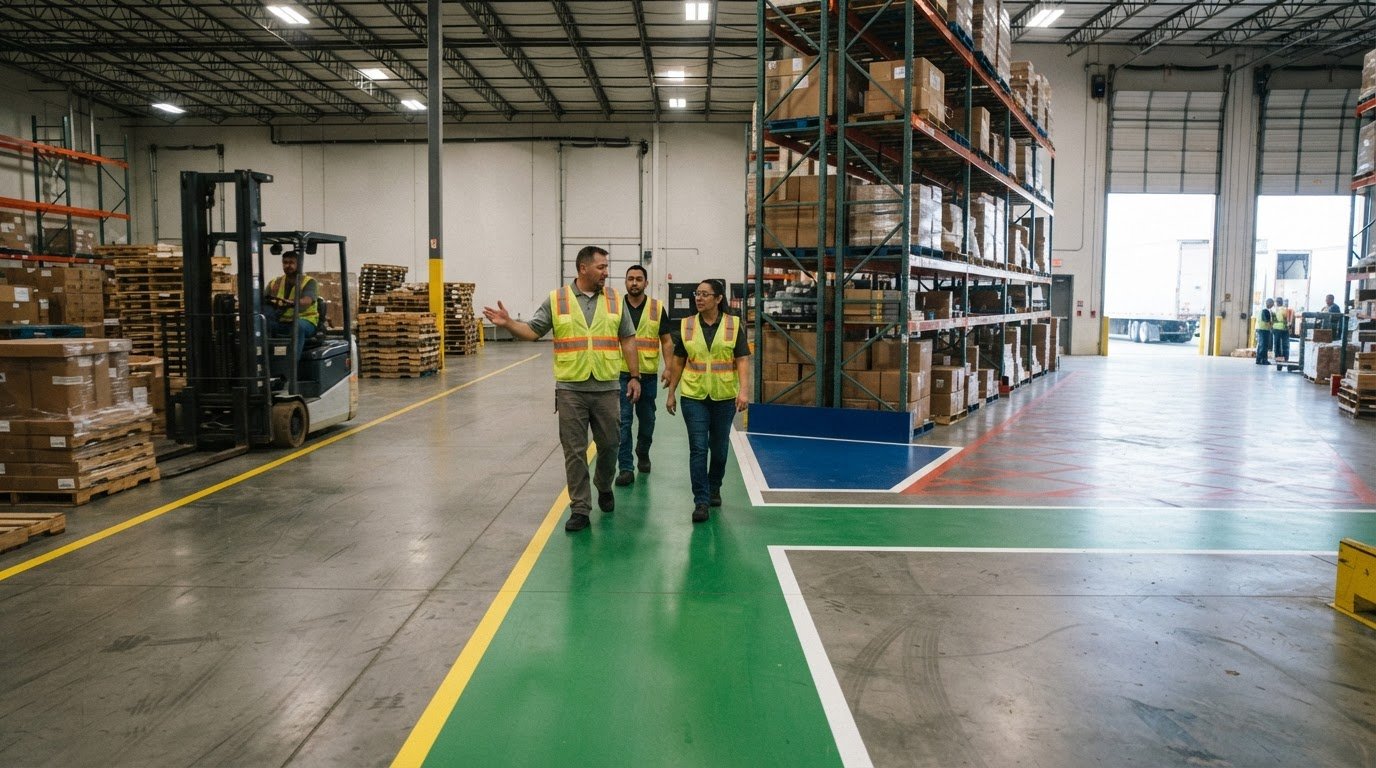
Proactive facility management is the most effective way to eliminate the severe consequences of failed OSHA inspections before they impact your balance sheet. High-visibility floor markings do more than organize a workspace; they provide the physical boundaries required by federal safety standards. By installing dedicated pedestrian walkways and safety aisles, you create a visual contract between forklift operators and floor personnel. This organization minimizes the risk of “Serious” citations, which often stem from chaotic traffic patterns in high-volume logistics hubs. When your facility’s boundaries are clear, the likelihood of a high-gravity accident decreases significantly.
The durability advantage of professional-grade epoxy over standard floor paint is a critical factor in long-term compliance. Standard paint often flakes under the weight of heavy machinery, creating a compliance gap as markings disappear over time. Epoxy line painting utilizes a chemical bond (a process where the coating becomes part of the floor surface) that resists the abrasive forces of industrial traffic. This ensures your safety borders remain crisp and visible, even in 24/7 environments. Veteran facility managers view this professional application as a form of operational insurance against the financial risks of non-compliance.
Designing for OSHA 1910 Compliance
Designing a compliant layout requires a deep understanding of aisle width requirements and equipment clearance. Standardizing your facility’s color palette is a critical step in this process. We use safety yellow for traffic aisles and red for fire equipment zones to ensure instant recognition of hazards. Additionally, we apply specialized acid-resistant coatings for battery charging stations to protect concrete from corrosive spills. Our team brings 29 years of industrial experience to every layout, helping you navigate complex safety standards while maximizing your floor’s functional square footage.
Long-Term Maintenance and Safety Audits
Establishing a regular inspection schedule for your floor markings is essential for maintaining safety integrity. We recommend quarterly audits to check for peeling or fading, especially in high-pivot points where forklift tires cause the most wear. When you consider the ROI of proactive maintenance against the $165,514 maximum penalty for a single willful violation, the choice is clear. Regular audits keep your facility “inspection-ready” at all times, removing the logistical stress of a surprise visit and preventing the compounding consequences of failed OSHA inspections. If you’re ready to secure your facility’s future and protect your workers, contact StripeGuys for a professional safety marking evaluation today.
Securing Your Facility Against Future Regulatory Risk
The 2026 penalty landscape leaves no room for error. We’ve explored how the financial consequences of failed OSHA inspections can escalate from a single citation into a six-figure liability. Protecting your operation requires more than a reactive approach; it demands a commitment to high-durability epoxy applications and precise mechanical line removal that ensures long-term visibility. By implementing a standardized color-coded system and maintaining clear traffic boundaries, you eliminate the ambiguity that leads to serious safety violations.
StripeGuys brings over 29 years of industrial marking expertise to every project, offering national coverage for large-scale distribution centers and logistics hubs. We specialize in high-durability epoxy and mechanical line removal, providing the functional reliability your facility needs to stay compliant and efficient. Don’t wait for an inspector to identify your gaps. Secure your facility with OSHA-compliant floor striping today and gain the peace of mind that comes from a safety-conscious, professional partnership. Your team’s safety and your company’s bottom line are worth the investment.
Frequently Asked Questions
What is the maximum penalty for an OSHA violation in 2026?
As of January 2026, the maximum penalty for a willful or repeated violation is $165,514 per citation. For serious and other-than-serious violations, the maximum fine is $16,550 per violation. These figures represent the direct financial consequences of failed OSHA inspections and are adjusted annually for inflation. Failing to account for these rising costs is one of the most common financial mistakes in industrial facility budgeting.
Can a company be shut down for failing an OSHA inspection?
OSHA has the authority to halt specific operations if they identify an “imminent danger” that could reasonably be expected to cause death or serious physical harm immediately. While they don’t typically shut down an entire company permanently, they can petition a federal court for an injunction to stop all work in a hazardous area. This type of operational stoppage is a severe outcome, as it results in total productivity loss until the hazard is remediated.
What happens if I cannot fix an OSHA violation by the deadline?
Failing to correct a violation by the prescribed abatement date triggers a “Failure to Abate” penalty, which can cost up to $16,550 for every day the hazard remains. If you encounter legitimate delays, you must file a Petition for Modification of Abatement (PMA) before the original deadline expires. This formal request must explain why you couldn’t meet the date and outline the interim steps you’re taking to keep employees safe.
Are warehouse floor markings required by OSHA?
Yes, OSHA Standard 29 CFR 1910.22(b) requires that all aisles and passageways be clearly marked where mechanical handling equipment, such as forklifts, is in use. While the standard doesn’t specify a color, it dictates that the markings must be visible and permanent enough to define safe travel paths. Professional warehouse floor striping is the industry standard for meeting this requirement, as it ensures boundaries remain distinct despite heavy industrial traffic.
How do I appeal an OSHA citation and fine?
You have 15 working days from the receipt of a citation to file a written “Notice of Contest” if you wish to appeal the findings or the penalty amount. This notice must be sent to the OSHA area director, who then forwards it to the Occupational Safety and Health Review Commission. Many employers also choose to request an informal conference during this 15-day window to discuss the citations and potentially reach a settlement agreement.
What is the difference between a serious and a willful OSHA violation?
A serious violation occurs when there is a substantial probability of death or serious physical harm and the employer knew or should have known about the hazard. A willful violation is significantly more severe, as it indicates the employer intentionally and knowingly committed a violation or acted with plain indifference to employee safety. Understanding these distinctions is vital, as the consequences of failed OSHA inspections vary significantly based on the perceived intent and gravity of the hazard.