Did you know that the recordable injury rate in the warehousing sector is more than double the national average for private industries? According to 2024 Bureau of Labor Statistics data, warehouse workers face 4.8 cases per 100 workers, while the private industry average sits at just 2.3. You likely recognize that a cluttered floor is more than an eyesore; it’s a liability that leads to forklift near-misses and failed safety audits. It’s frustrating to watch expensive floor tape peel away under heavy traffic, but maintaining a clear visual workplace is essential for your operational survival. This 5S floor marking guide provides the technical roadmap you need to master color standards and implementation strategies for a high-efficiency environment.
We understand that industrial facilities require functional outcomes over aesthetic flair. You need a marking system that survives the daily rigors of pallet jacks and heavy machinery without constant maintenance. In this guide, we’ll detail the 2026 ANSI Z535 color codes (the industry best practice for safety) and the OSHA 1910.22 requirements for permanent aisles. You’ll learn why professional epoxy line painting is the key to the “Sustain” phase of 5S and how to prepare your concrete surfaces for a marking system that lasts years instead of weeks.
Key Takeaways
- Understand how floor markings function as a visual factory to guide employee behavior and improve operational flow without constant supervision.
- Learn to distinguish between OSHA safety requirements and voluntary ANSI color standards to maintain a compliant and organized facility.
- Evaluate the long-term cost benefits of epoxy line painting over floor tape to ensure your 5S floor marking guide implementation withstands heavy industrial traffic.
- Follow a structured audit process to identify high-traffic hazards and design a layout that reduces the risk of forklift-pedestrian collisions.
- Recognize the importance of mechanical line removal, such as shot blasting, to create a clean surface for durable markings that won’t peel or fade.
Understanding the 5S Methodology in Modern Warehouse Management
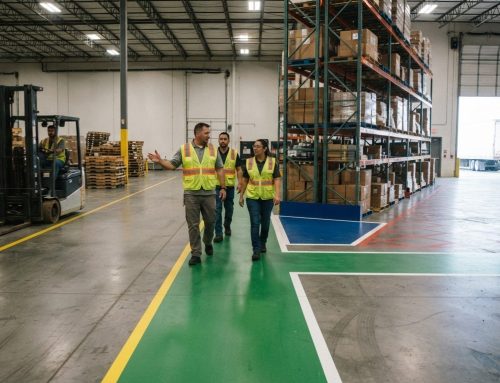
The 5S methodology is a lean manufacturing framework designed to maximize workplace efficiency through systematic organization. While many facilities treat it as a simple housekeeping checklist, it’s actually a rigorous operational discipline that transforms a chaotic warehouse into a high-throughput environment. In this context, floor markings act as the “visual factory” (a system where the facility’s status is communicated at a glance), guiding employee behavior and equipment traffic without constant management intervention.
Poor organization is a primary driver of workplace accidents. When forklifts and pedestrians lack defined boundaries, the risk of near-misses and recordable injuries skyrockets. A comprehensive 5S floor marking guide helps managers bridge the gap between safety theory and the physical reality of a 24/7 distribution center. By standardizing the floor layout, you ensure that every square foot serves a specific purpose. This reduces the cognitive load on your staff, allowing them to move faster while maintaining OSHA compliance.
The 5 Pillars: Sort, Set in Order, Shine, Standardize, Sustain
The 5S process moves through five distinct stages to create a self-sustaining culture of efficiency:
Why Visual Communication is the Backbone of Lean Manufacturing
Visual cues eliminate “motion waste,” which is the unnecessary movement of workers searching for materials or navigating blocked aisles. Clear boundaries have a profound psychological impact; when employees see a well-maintained, professional warehouse line striping system, they are more likely to respect safety protocols. This level of clarity is essential for achieving operational excellence across large-scale national networks where consistency is the foundation of profit.
The Standardized 5S Floor Marking Color Code Guide
Consistency is the foundation of any successful 5S implementation. While a 5S floor marking guide helps organize your facility, you must distinguish between voluntary organizational colors and mandated safety requirements. National brands benefit from standardized layouts because they allow personnel to move between different distribution centers without relearning the floor logic. This uniformity reduces training time and minimizes the risk of human error during high-pressure shifts.
OSHA and ANSI Compliance: Safety vs. Organization
Federal law is the primary driver for floor marking. According to OSHA standard 1910.22, all permanent aisles and passageways must be clearly marked to prevent accidents. While OSHA mandates the use of red for fire hazards and yellow for physical hazards (tripping or falling), it doesn’t specify a full 5S color palette. For comprehensive coding, most facilities look to ANSI Z535.1. This voluntary standard provides the framework for using colors like green for first aid or blue for information. You can integrate 5S colors effectively as long as they don’t contradict these established safety markers.
Defining Color Meanings for Aisles, Hazards, and Staging
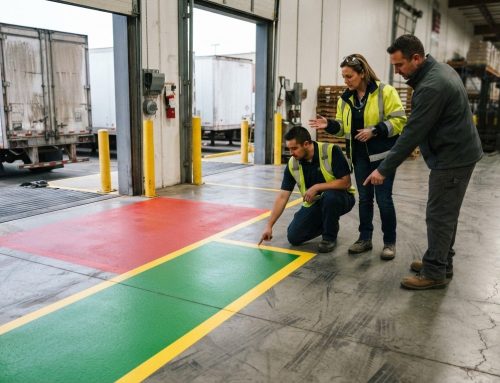
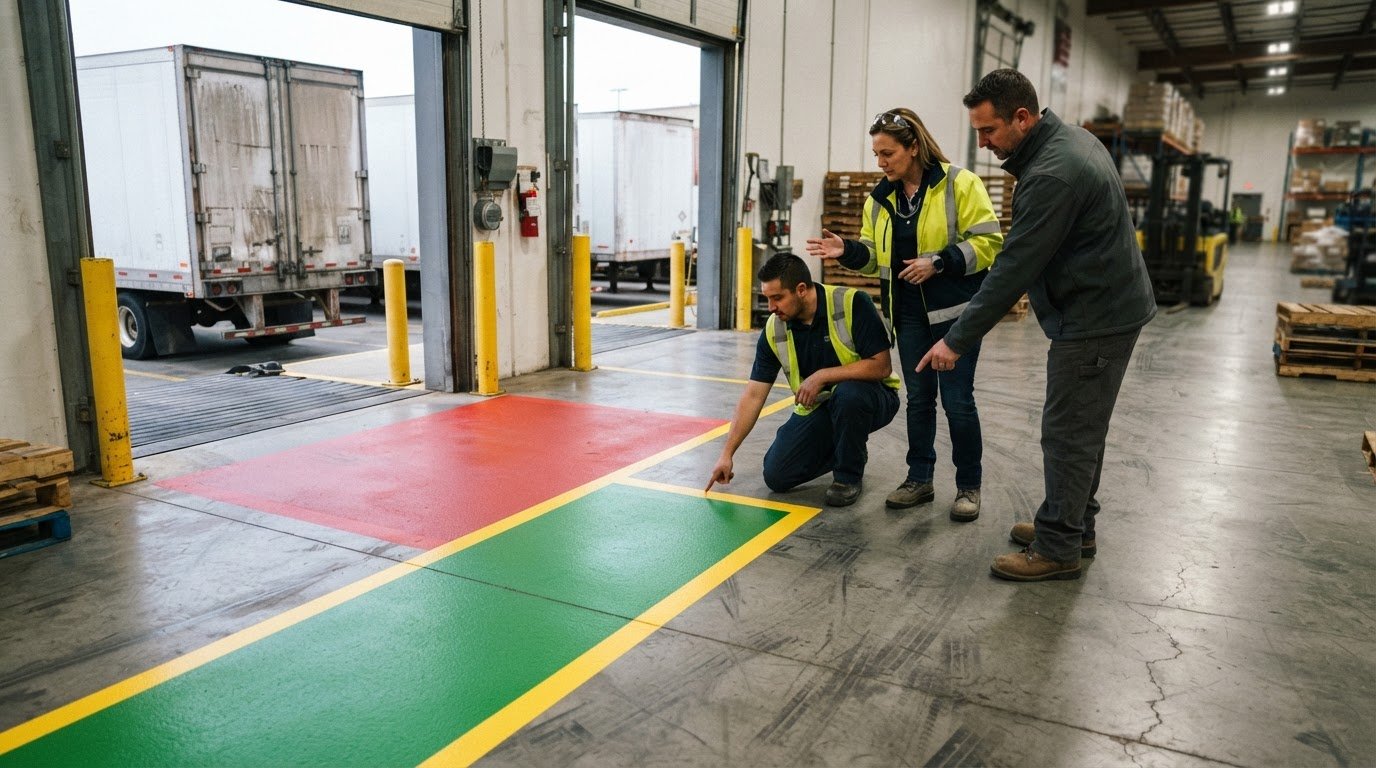
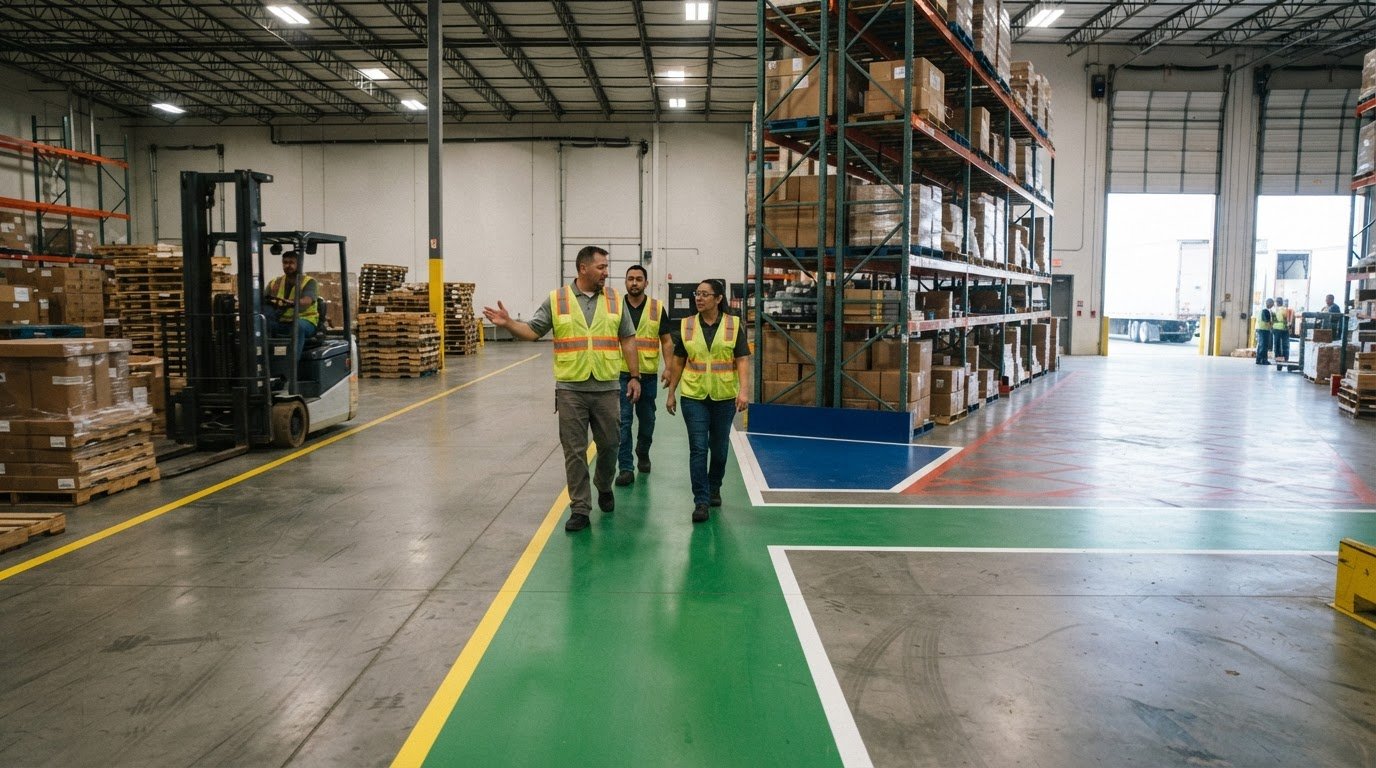
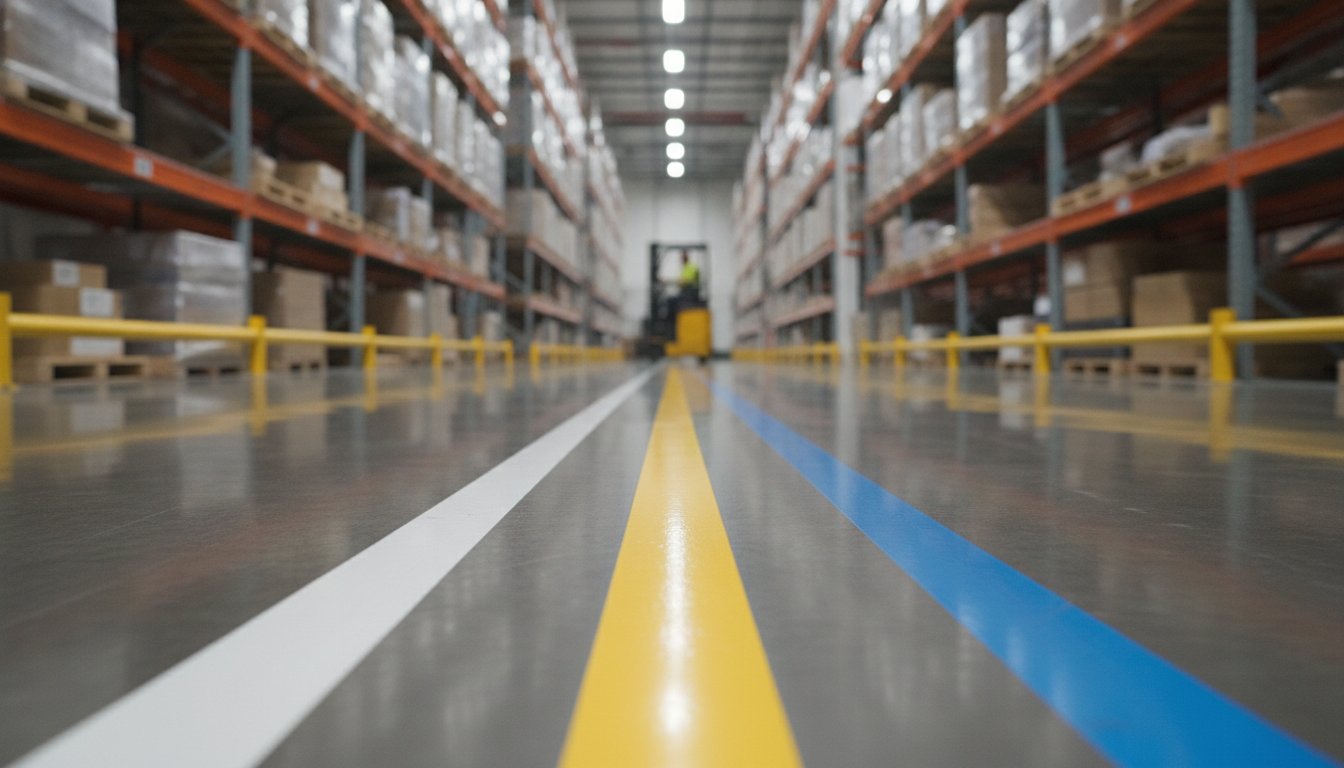
Yellow is the universal industry standard for designating traffic lanes, aisle boundaries, and work cells. Beyond traffic flow, a standardized 5S floor marking guide typically assigns colors based on material status and safety needs. Clear boundaries around safety aisles and pedestrian walkways are essential to keep workers out of forklift paths. Common assignments include:
- Red: Fire protection equipment, emergency exits, and “red tag” areas for defective parts or sorting.
- Blue: Raw materials, works-in-progress, or equipment currently under maintenance.
- Green: Finished goods, safety equipment locations (eyewash stations), and first aid kits.
- Black or White: General housekeeping, non-production zones, and stationary equipment parking.
Standardizing these colors across your entire network ensures that your safety culture remains intact regardless of the facility size. If you need assistance designing a layout that meets both 5S efficiency and federal safety goals, you can reach out to our project managers for a technical consultation.

Material Selection: Why Professional Striping Outlasts Floor Tape
When choosing materials for your 5S floor marking guide implementation, the total cost of ownership (TCO) often reveals that the cheapest upfront option is the most expensive over time. Many facilities start with vinyl floor tape because it’s fast to install; however, tape lacks the chemical bond required to survive 24/7 high-traffic distribution centers. In environments where forklifts constantly pivot and brake, tape quickly experiences “flagging” (where edges lift and peel), creating trip hazards and compromising your visual standards. This leads to a cycle of constant maintenance that drains your operational budget.
High-performance epoxy warehouse striping solves this by becoming part of the floor itself. Beyond durability, painted lines offer critical hygiene benefits for food-grade or pharmaceutical facilities. Tape creates small gaps where moisture and bacteria can collect, whereas epoxy provides a seamless, non-porous surface that withstands aggressive cleaning protocols. Additionally, crisp, painted lines command a level of professional authority that tape cannot match. They signal to employees and auditors alike that your facility operates with precision and a commitment to long-term safety standards.
Floor Tape vs. Epoxy Line Painting: A Durability Comparison
The primary failure point for tape is forklift shear force (the lateral pressure exerted when heavy equipment turns). When a forklift rotates its wheels on a piece of tape, it often tears the adhesive from the concrete. Epoxy resins resist this mechanical stress by anchoring deep into the floor’s pores. Epoxy also maintains superior visibility over the long term. While vinyl tape absorbs rubber transfer and scuffing, industrial-grade coatings are formulated to resist tire marks and chemical spills, ensuring your 5S floor marking guide remains legible for years.
Surface Preparation: The Secret to Long-Lasting 5S Markings
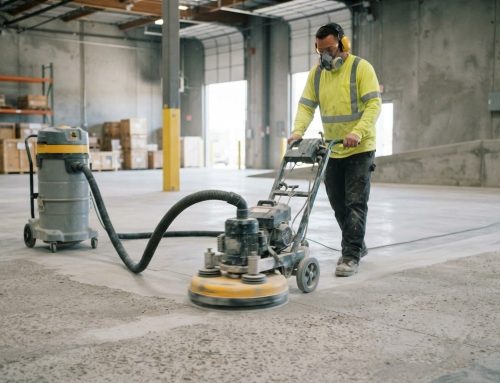
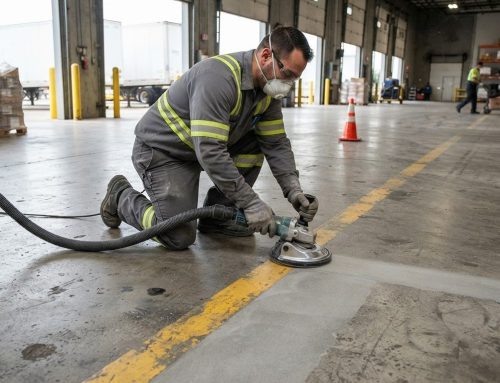
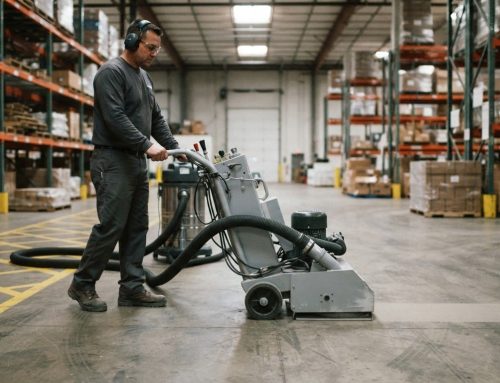
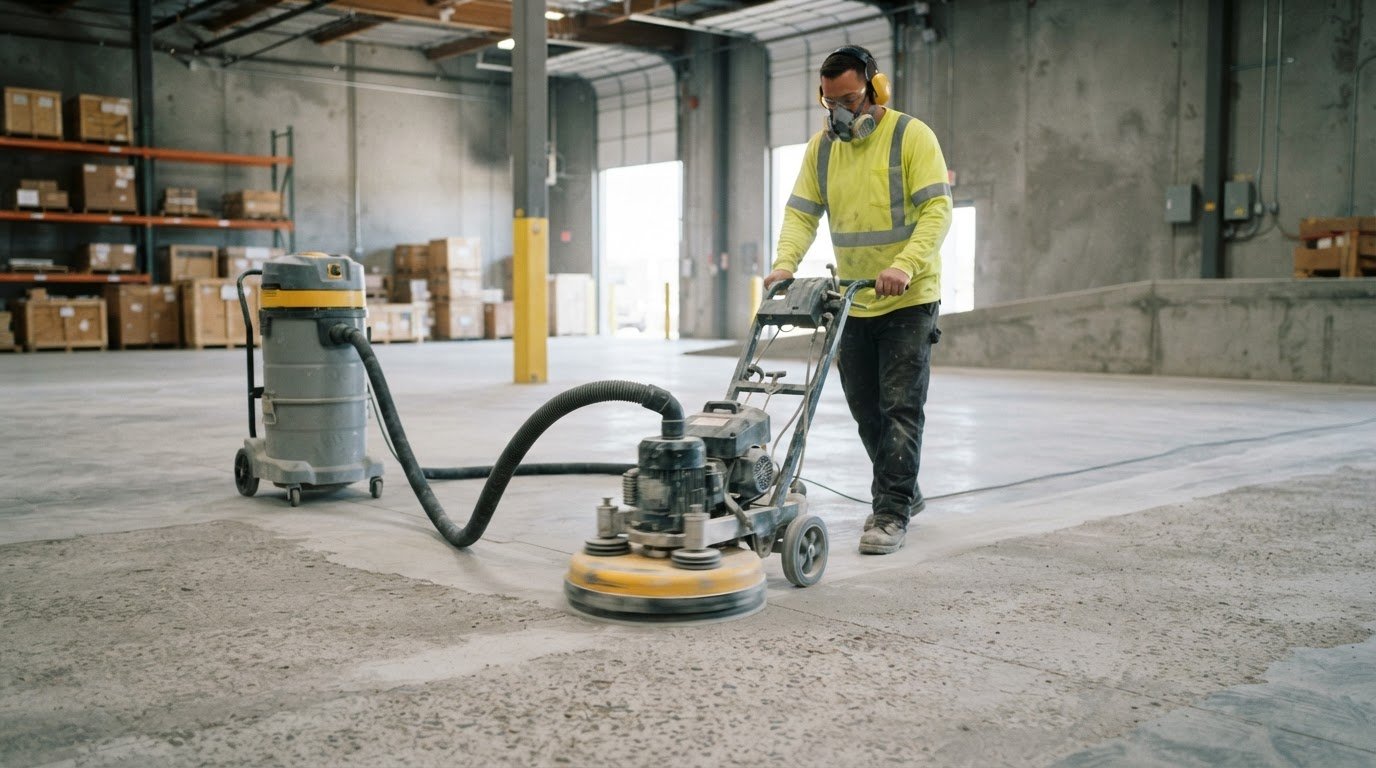
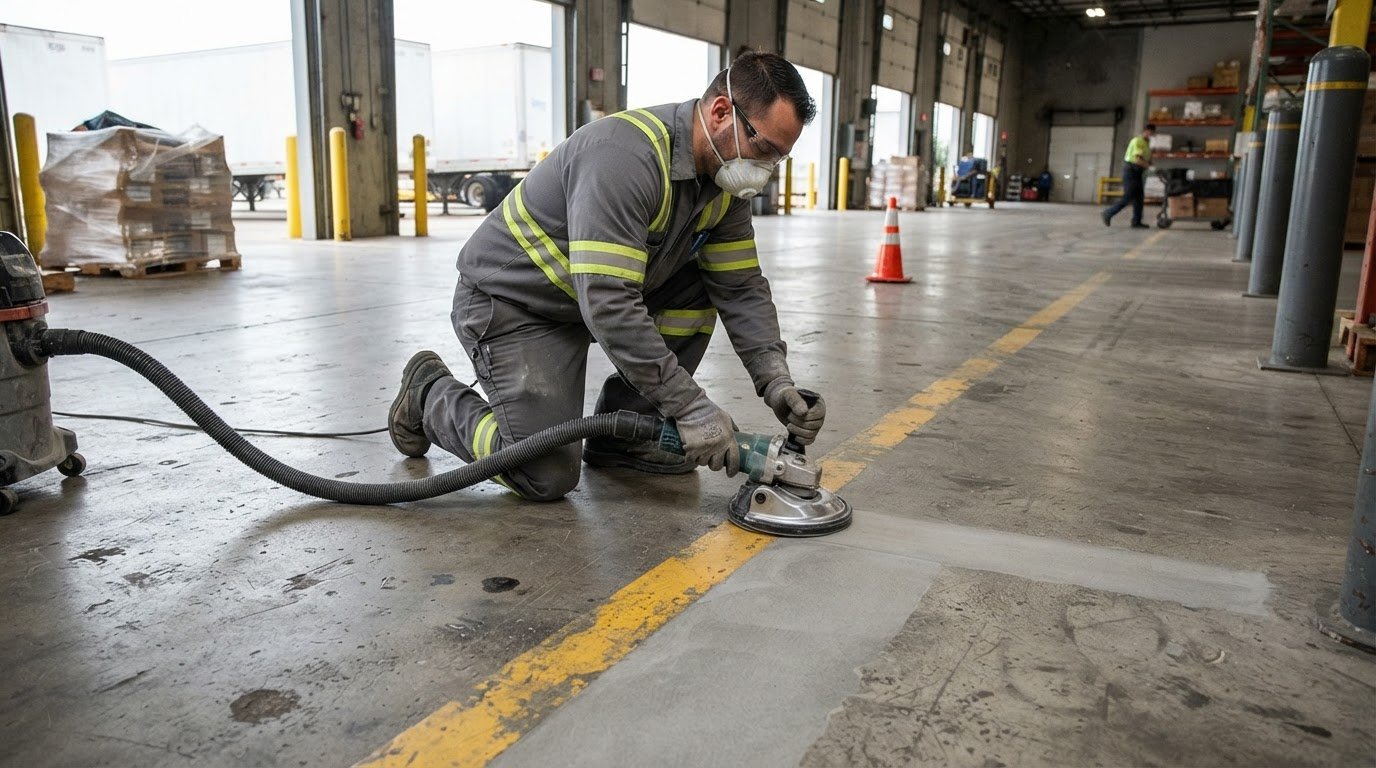
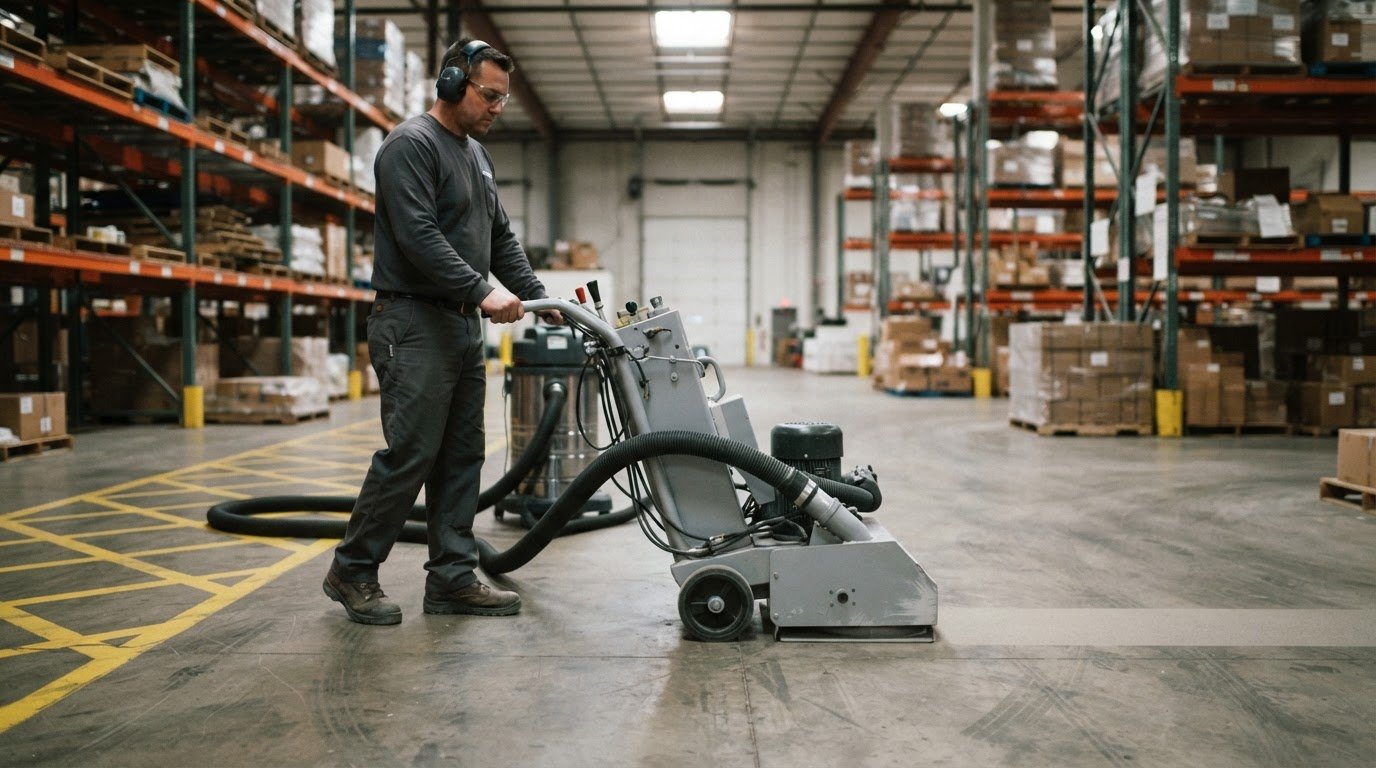
Adhesion is only as good as the preparation. Mechanical preparation, such as shot blasting or diamond grinding, is a non-negotiable step to remove surface laitance (a weak layer of cement and sand) and contaminants. This process is also essential for line removal when you need to “reset” your facility for a new 5S layout. Professional contractors use HEPA-filtered vacuum systems to ensure a dust-free environment, allowing your facility to remain operational while the surface is prepared for maximum bond strength. If you’re tired of replacing peeling tape, contact our industrial striping experts to discuss a more permanent solution for your facility.
Implementing Your 5S Floor Marking Strategy Nationwide
Executing a 5S floor marking guide across a nationwide network of distribution centers requires a disciplined project management framework. You must begin with a detailed facility audit to identify “hot spots” where forklift traffic and pedestrian paths frequently cross. After identifying these hazards, you design a layout that prioritizes one-way traffic and clear boundaries. Choosing the right materials is the next critical step; as we noted previously, epoxy is the standard for high-wear zones. Professional installation should be scheduled during low-traffic windows or planned holiday shutdowns to ensure the floor is properly prepared without stopping production. Lastly, establishing a formal audit schedule is the only way to move from a one-time project to a sustained safety culture.
Designing an Efficient Facility Layout for Safety and Flow
Efficient layouts use 5S principles to create “one-way” traffic flows, which significantly reduces aisle congestion and collision risks. You should also utilize proper stenciling to define pallet positions, trash areas, and hazardous zones. For specialized environments, such as forklift power stations, you must apply acid-resistant coatings for battery charging areas to protect the concrete from chemical spills. These details ensure that every square foot of your facility is optimized for both safety and speed. Clear stenciling eliminates guesswork for new employees and keeps your facility organized during peak seasons.
Maintaining and Auditing Your 5S System for Long-Term Success
The “Sustain” pillar is often the most difficult phase to maintain in a busy warehouse environment. You need to perform a monthly 5S floor audit to verify that lines remain clear and colors haven’t faded under dirt or grease. The “Shine” phase (regular floor scrubbing) is vital because even the best markings lose their safety value if they’re covered in tire dust or debris. You should plan for re-striping cycles every 24 to 36 months in extreme-wear zones like loading docks or main thoroughfares to keep your facility in peak condition. Regular maintenance prevents the system from degrading and ensures your 5S floor marking guide remains a functional tool for your team.
Transforming Your Facility into a Visual Powerhouse
Implementing a rigorous visual factory isn’t just about painting lines; it’s about establishing a permanent culture of safety and efficiency. This 5S floor marking guide has outlined the critical steps for moving from cluttered, high-risk aisles to a standardized environment that meets both OSHA requirements and ANSI best practices. By prioritizing high-durability epoxy over temporary tapes and utilizing mechanical surface preparation, you ensure that your investment survives the heavy-duty cycles of a modern distribution center.
StripeGuys Warhouse Line Striping brings 29+ years of industrial expertise to every project, offering nationwide service for Fortune 500 facilities. We utilize specialized epoxy systems and mechanical line removal equipment to deliver functional outcomes that withstand extreme forklift traffic. Whether you’re resetting a single warehouse or standardizing a national network, our team provides the seasoned authority needed to alleviate logistical stress and ensure safety compliance.
Get a Professional 5S Floor Marking Quote from StripeGuys Warhouse Line Striping today to begin your facility’s transformation. You’ve done the hard work of organizing your operations; now it’s time to make those standards permanent and secure.
Frequently Asked Questions
What are the standard 5S floor marking colors?
Standard colors generally follow ANSI Z535.1 guidelines to ensure facility wide clarity. Yellow designates traffic lanes and work cells, while red identifies fire equipment and emergency exits. Green is reserved for safety items like eyewash stations; blue marks materials under maintenance, and black or white is used for general storage. This 5S floor marking guide ensures that every color serves a distinct operational purpose.
Are floor markings required by OSHA?
OSHA standard 1910.22 requires that all permanent aisles and passageways be clearly marked to prevent workplace accidents. While the federal agency doesn’t mandate a specific 5S color palette, it does require that markings are visible and consistently maintained. Failing to define these boundaries can lead to failed safety audits and increased recordable injury rates in high traffic distribution centers.
Which is better for 5S: floor tape or epoxy paint?
Epoxy line painting is the superior choice for 24/7 industrial environments due to its chemical bond with the concrete. While floor tape is faster to apply, it frequently peels or “flags” under the mechanical stress of pivoting forklifts. Epoxy resists tire scuffing and aggressive cleaning, providing a lower total cost of ownership for facilities prioritizing long term operational standards.
How wide should warehouse floor marking lines be?
Industrial floor lines should generally be between 2 and 6 inches wide to ensure maximum visibility for equipment operators. Most facilities adopt a 4 inch standard for primary traffic lanes and safety boundaries. This width provides a clear visual cue that helps maintain one way traffic flows and reduces the risk of pedestrian forklift near misses in congested staging areas.
What is the “red tag” area in 5S floor marking?
A red tag area is a designated zone used during the Sort phase of the 5S process to hold items that are unnecessary or broken. These items are marked with a physical red tag for evaluation, where they’re eventually repaired, relocated, or discarded. Marking this zone with red floor striping ensures that cluttered materials don’t migrate back into active production areas.
How long does professional epoxy floor striping last?
Professional epoxy striping typically lasts between 3 and 5 years in high traffic industrial environments. The longevity depends heavily on mechanical surface preparation, such as shot blasting, which allows the coating to anchor into the concrete pores. Extreme wear zones like loading docks may require re striping cycles more frequently than stationary equipment zones or pedestrian walkways.