Did you know that 25% of all warehouse accidents occur at loading docks, and for every reported injury, there are approximately 600 near-misses? It’s a sobering reality for facility managers who deal with the daily chaos of disorganized floors. You’ve likely seen how fading lines lead to haphazard pallet placement and forklift bottlenecks that stall your entire operation. Implementing professional staging lane and pallet zone marking is not just about aesthetics; it’s a critical safety and efficiency tool that organizes flow and prevents OSHA violations.
We understand that you need markings that withstand heavy traffic without peeling or requiring constant touch-ups. This guide shows you how professional-grade striping optimizes warehouse throughput and ensures your facility meets OSHA standard 1910.176(a), which requires permanent aisles to be appropriately marked. We’ll explore high-visibility boundaries designed to last five years or more, reducing logistical stress while keeping your team safe. We will preview the technical differences between epoxy and tape, along with strategic layouts that eliminate bottlenecks at your busiest docks.
Key Takeaways
- Learn how to define critical buffer zones to eliminate disorganized floor-stacking and keep main aisles clear for maximum operational throughput.
- Compare the space efficiency of straight-row configurations against the high-speed movement of angled staging to determine the most effective layout for your inventory flow.
- Understand why professional epoxy line painting provides a superior mechanical bond compared to standard tape in high-traffic environments where forklift friction is constant.
- Implement a professional staging lane and pallet zone marking system that ensures full OSHA compliance while significantly reducing bottlenecks at your loading docks.
- Follow a structured five-step implementation framework, from mechanical surface preparation to standardized color-coding, to ensure your floor markings remain visible for years.
Optimizing Warehouse Throughput with Staging Lane and Pallet Zone Marking
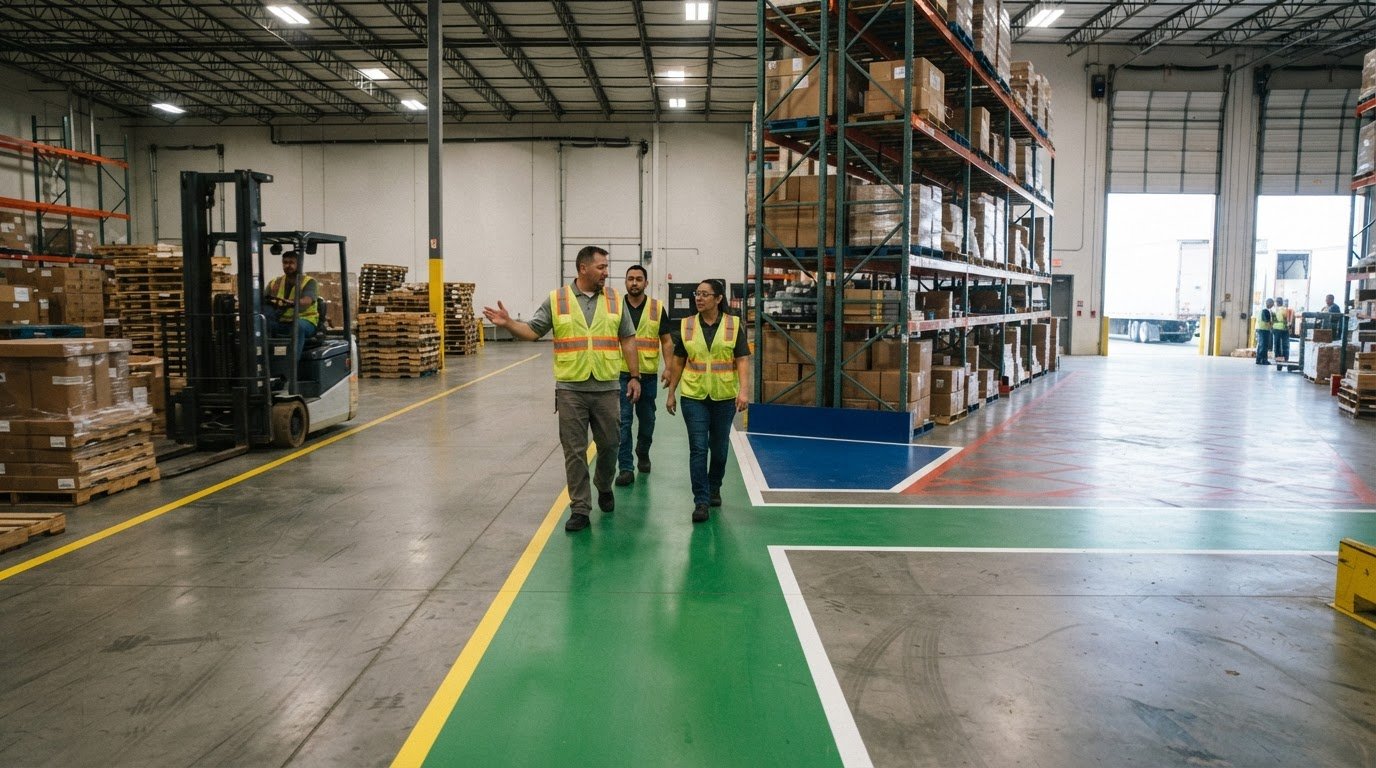
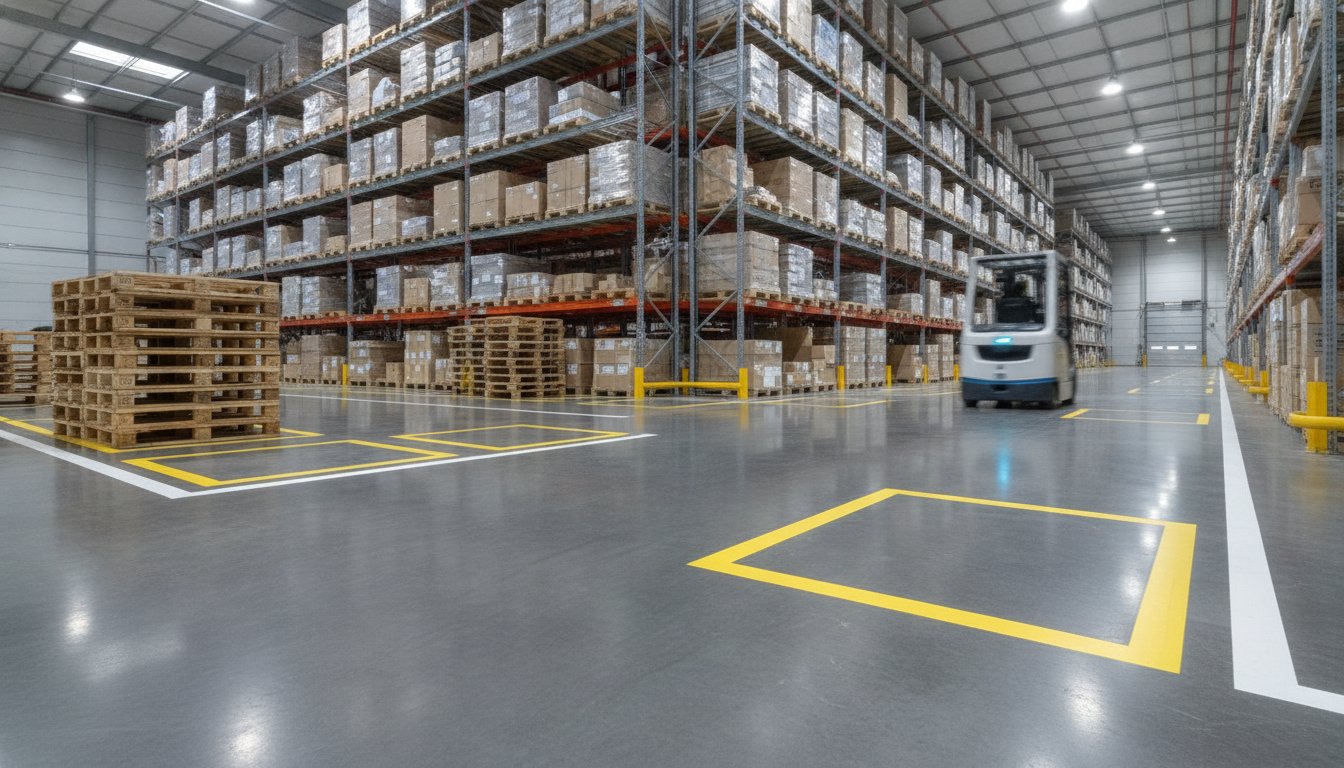
Staging lanes function as the critical buffer zones between your primary storage racks and the shipping or receiving docks. When these areas lack clear definition, “floor-stacking creep” occurs; this is the gradual expansion of pallet storage into designated travel paths. Professional staging lane and pallet zone marking ensures that every square foot of your floor has a dedicated purpose. By establishing these boundaries, you prevent aisle obstructions that force forklift operators to deviate from their routes. This organization significantly reduces “search time” during peak volume shifts because operators know exactly where to locate specific loads. They don’t have to navigate a maze of disorganized inventory to find the next pallet for the outbound truck.
Identifying Bottlenecks in Receiving and Shipping
Efficient throughput starts with analyzing traffic flow patterns to identify where unmarked pallets cause congestion. You must differentiate between inbound staging, used for sorting and quality control, and outbound staging, dedicated to final shipping preparation. An effective layout also includes designated “problem lanes” for damaged goods or non-conforming inventory. This prevents rejects from mixing with ready-to-ship stock. While a general Floor Marking Tape Overview can provide basic context on material types, high-volume industrial facilities require a more robust, permanent solution to maintain these complex flow patterns. We prioritize these layouts to ensure that your dock doors remain accessible and your floor stays organized during the busiest hours of operation.
The Safety ROI of Clear Pallet Boundaries
The financial return on safety is often measured in the accidents that don’t happen. Clearly marked zones integrate seamlessly with pedestrian walkways and safety aisles to prevent vehicle-pedestrian collisions in high-traffic dock areas. By standardizing approach paths and turning radii, you reduce the likelihood of forklift impacts against racking or stored goods. We define a buffer zone as a three-foot clearance area between pallet rows and pedestrian paths to provide an essential margin of safety. This structured demarcation ensures that even during rapid-fire dock operations, your team and your assets remain protected from avoidable logistical friction. Establishing these clear boundaries is the most cost-effective way to reduce forklift-related bottlenecks while maintaining strict compliance with safety standards.
Strategic Layouts: Angled Staging vs. Straight Row Configuration
Choosing the right staging lane and pallet zone marking layout is a calculation of density versus velocity. Straight row configurations offer the highest space efficiency for facilities with limited square footage, as they eliminate the “dead space” created by diagonal lines. However, they require forklifts to perform sharp 90-degree turns, which increases cycle times and accelerates tire wear. In contrast, angled staging prioritize speed by allowing operators to enter and exit lanes with minimal steering adjustment. Beyond the angle, lane width must account for the physical footprint of your pallets plus the width of forklift outriggers (the stabilizing legs on reach trucks) to prevent equipment strikes and pallet damage.
Effective staging also requires digital-physical synchronization. By applying high-visibility stenciled numbers or letters to each lane, you can integrate your floor zones with Warehouse Management System (WMS) software. This ensures that the location assigned in the digital queue matches the physical spot on the floor. Adhering to OSHA General Requirements (1910.22) is non-negotiable here; the standard dictates that all permanent aisles must be appropriately marked to keep workers safe. Whether you utilize “Bulk Staging” for high-volume identical SKUs or “Pick-to-Lane” strategies for mixed orders, the physical markings act as the primary enforcement mechanism for your operational logic.
Maximizing Dock Efficiency with Angled Staging Lanes
A 45-degree angle advantage provides the fastest possible entry and exit for high-volume cross-docking operations. We typically design the depth of these lanes to match standard trailer load counts (often 24 to 26 pallets) so an entire shipment fits within a single designated zone. It’s also vital to mark “no-go” zones near dock levelers. These areas must remain clear at all times to allow for mechanical maintenance and emergency access, preventing expensive downtime during critical shipping windows.
Standardizing Pallet Positions for High-Density Storage
For facilities looking to manage material costs without sacrificing organization, we often recommend “T-marks” or “Corner-marks” instead of solid lines. These markings provide the same visual guidance for pallet placement while reducing the total volume of paint required. This approach is particularly effective when integrating warehouse line striping with existing rack labeling systems. If you have oversized or non-standard footprints, we create dedicated zones to prevent these items from encroaching on standard travel paths. If you need a customized layout audit for your facility, you can consult with our project managers to find the most efficient configuration for your workflow.

Material Selection and Surface Preparation for High-Traffic Zones
Durability in high-volume staging areas is a direct result of material science and mechanical preparation. While many facilities initially opt for “heavy-duty” floor tape due to its low entry cost, this material frequently fails in 24/7 environments where forklifts perform constant pivot turns. The friction from these maneuvers creates lateral stress that shears the adhesive bond, leading to peeling and trip hazards. Professional staging lane and pallet zone marking requires a mechanical bond, where the coating physically anchors into the open pores of the concrete slab. This differs from a simple chemical bond, which merely sits on the surface and remains vulnerable to moisture vapor transmission (MVT). MVT occurs when water vapor pushes upward through the concrete; if the coating isn’t breathable or properly anchored, this pressure causes the marking to blister and delaminate.
Why Standard Paint Fails in Staging Lanes
Low-grade acrylic or traffic paints are susceptible to “hot tire pickup,” a process where heat from forklift tires softens the paint and pulls it off the floor as the vehicle moves. To prevent this, we utilize industrial epoxy warehouse striping which is specifically engineered to resist friction and skid marks. These high-performance chemistries are also essential in forklift battery charging areas where electrolyte spills would instantly dissolve standard paints. When selecting your palette, adhering to the OSHA Safety Color Code (1910.144) ensures that your color choices for hazards and equipment are universally understood by your workforce and safety inspectors alike.
Mechanical Surface Preparation: Shot Blasting vs. Grinding
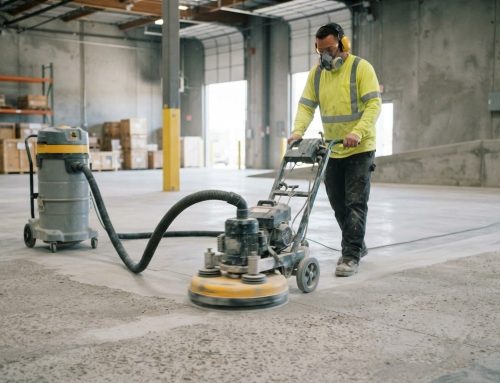
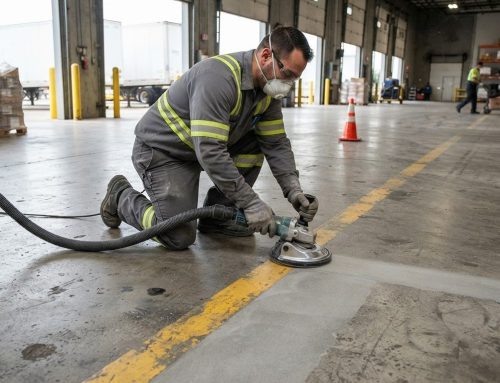
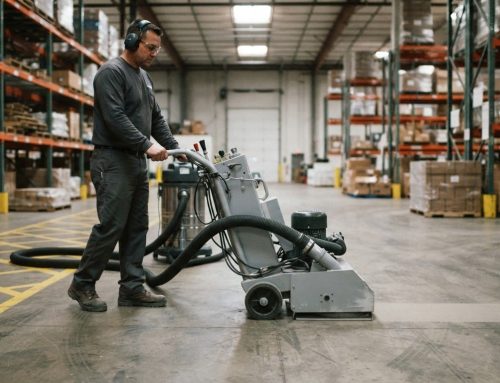
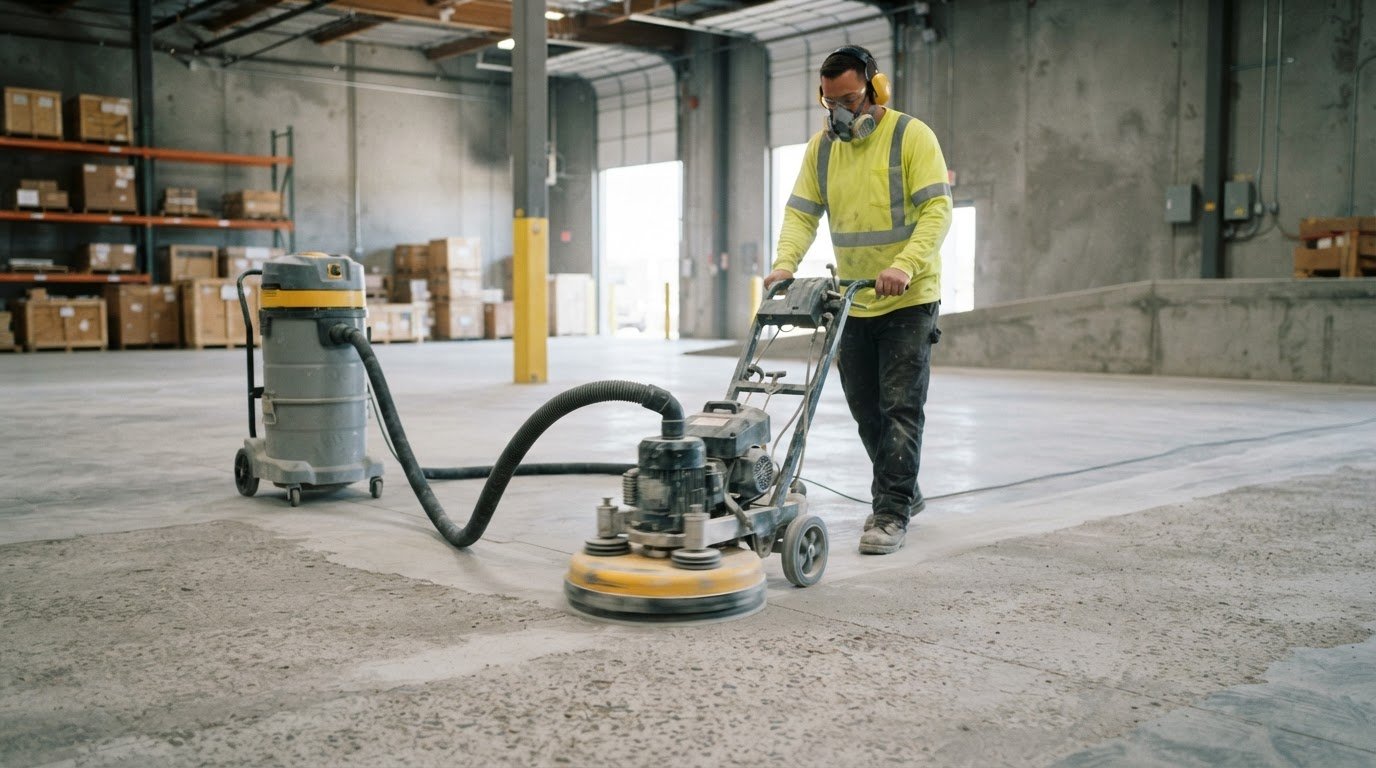
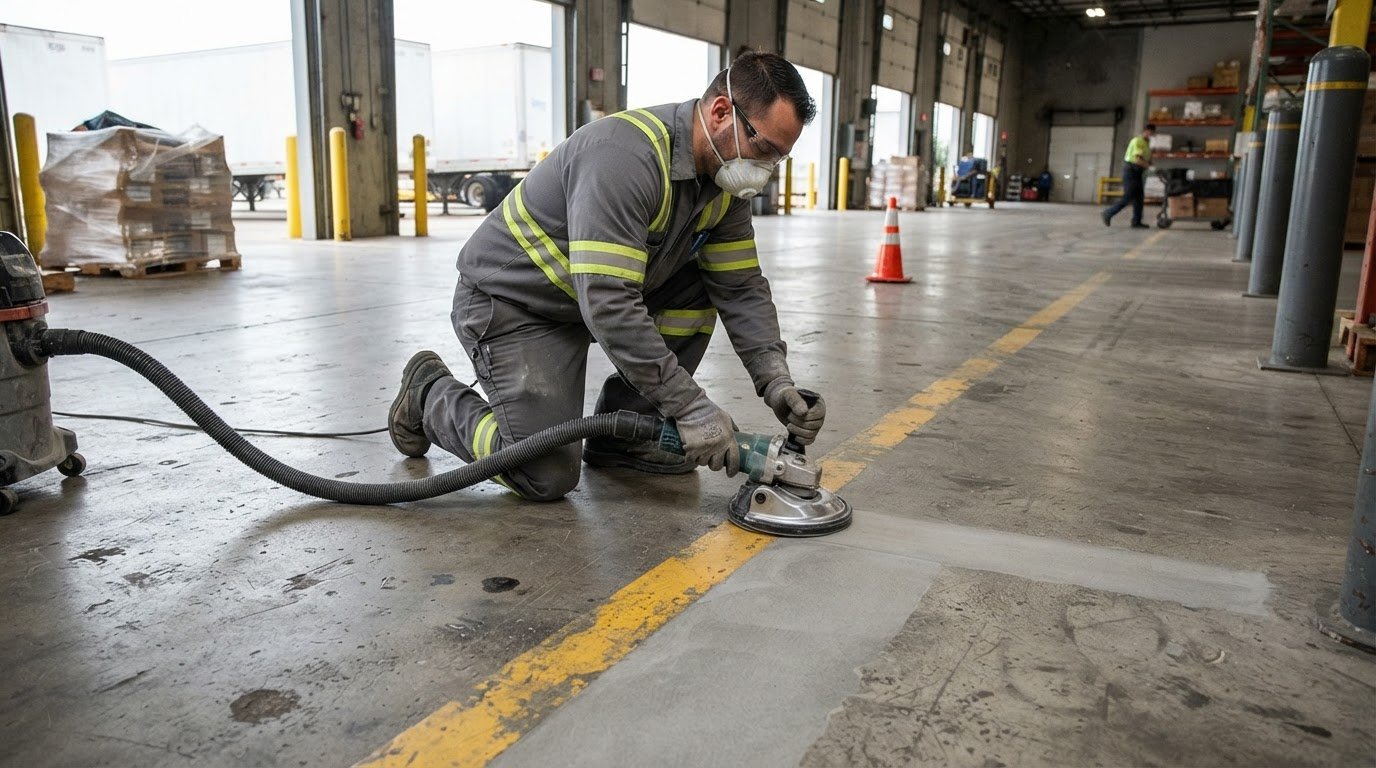
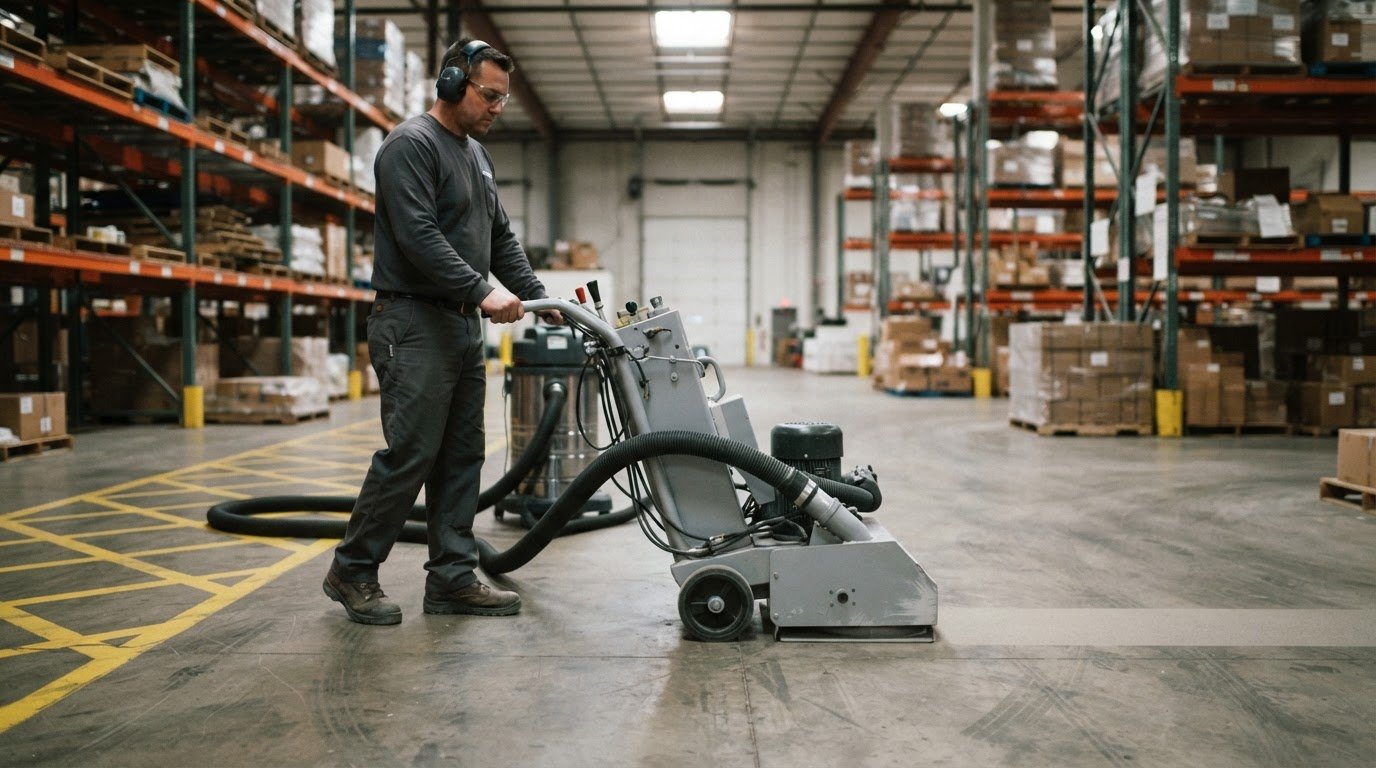
Success in floor marking is determined before the first drop of paint hits the floor. We utilize shot blasting as the gold standard for surface preparation because it fires steel abrasive at the slab to remove laitance and effectively open the concrete pores. For precision work or thin-film applications near equipment, diamond grinding is the preferred method to create a smooth, consistent profile. 90% of all floor marking failures are caused by inadequate surface preparation. By removing old contaminants and creating a textured profile, we ensure the new markings can withstand years of heavy industrial abuse. If you are ready to upgrade your facility with markings that won’t peel under pressure, request a professional site evaluation today.
Implementing a Professional Marking System: Standards and Maintenance
Successful installation of a staging lane and pallet zone marking system follows a disciplined five-step framework: Audit, Prep, Layout, Application, and Cure. We begin with a site audit to map traffic flow and identify high-friction zones. Mechanical surface preparation follows, ensuring the coating anchors deeply into the concrete. The layout phase involves precision chalking to define boundaries before we move to the application of industrial-grade coatings. Finally, the curing period allows the material to reach full mechanical hardness so it can withstand heavy forklift traffic. To minimize operational downtime, we frequently coordinate these projects during night shifts or weekends when dock activity is lowest.
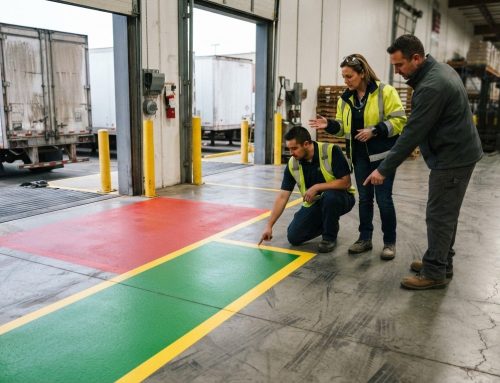
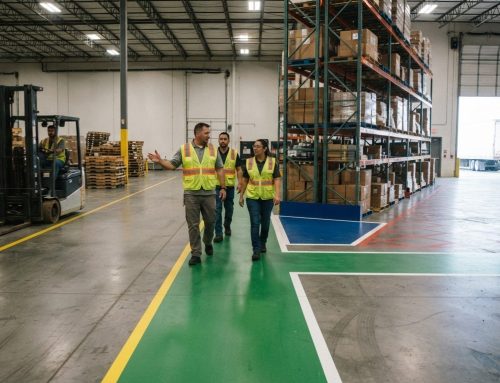
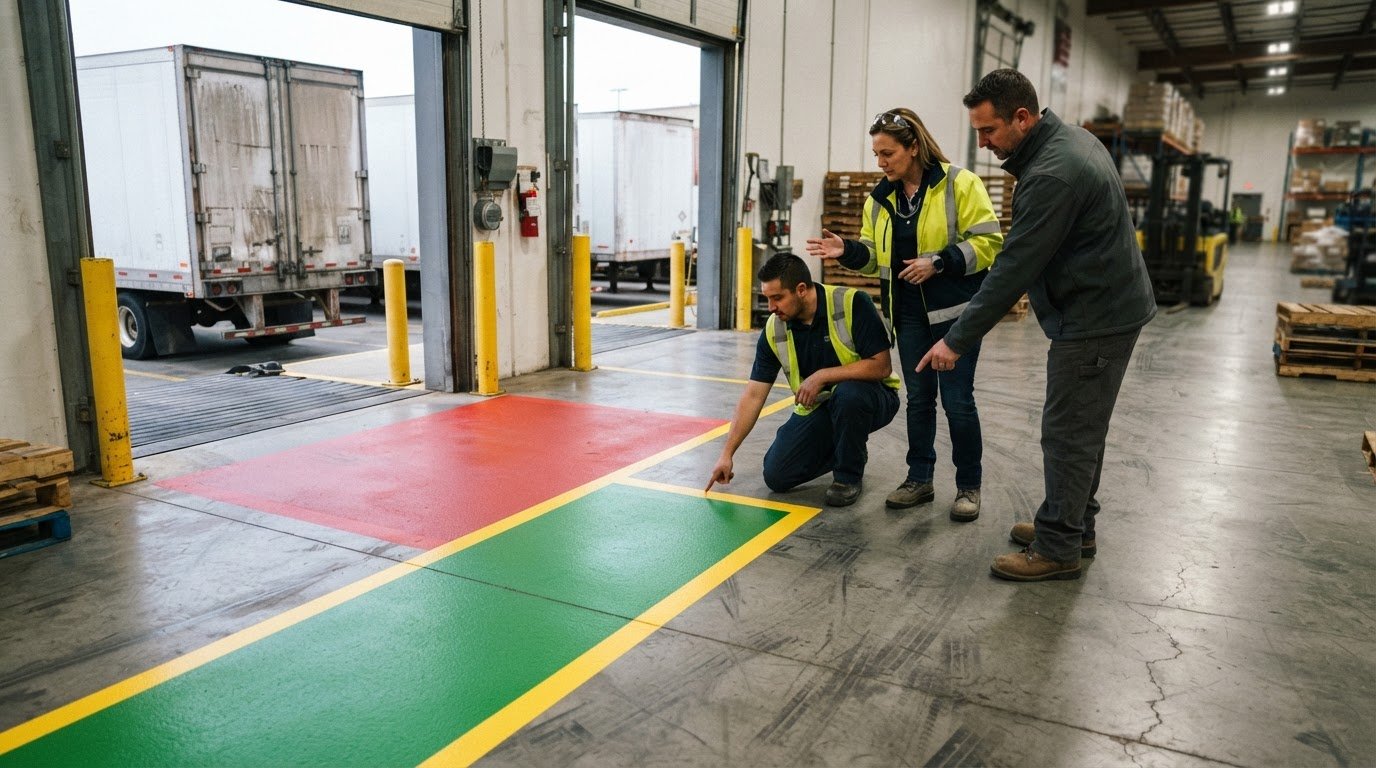
Standardizing your facility’s visual language reduces errors and improves communication. We utilize a specific color-coding framework: yellow for general traffic and aisle boundaries, red for fire equipment and emergency access, and green for first aid or safety zones. Clear stenciling for “Empty Pallet” and “Return” zones prevents the accumulation of dunnage in active work areas. This level of detail keeps your floor organized and your Warehouse Management System (WMS) data accurate, as physical zones will perfectly match digital locations.
OSHA Compliance and Color Coding Standards
OSHA 1910.176(c) mandates that storage areas must be kept free from the accumulation of materials that constitute hazards from tripping, fire, or explosion. This requirement applies to both permanent staging lanes and temporary overflow zones. For indoor truck courts or expansive loading bays that experience extreme vehicle weights, we often adapt parking garage striping techniques. These methods are specifically designed to handle the heavy steering stress and high-torque movements of tractor-trailers and heavy-duty forklifts.
Long-Term Maintenance and Re-striping Schedules
Even the most durable epoxy requires a structured maintenance plan. We recommend a quarterly “visual audit” to check for impact damage, chemical spills, or excessive wear. Your re-striping frequency depends entirely on pallet turns and traffic volume; high-volume facilities typically require a refresh every 36 to 60 months. When lines eventually wear out or your layout needs to change, we utilize professional line removal methods like shot blasting. This process strips the old material cleanly without compromising the structural integrity of your concrete floor, providing a fresh surface for new markings.
Securing Your Facility’s Long-Term Operational Standards
Precision on the warehouse floor is the foundation of industrial throughput. By moving beyond temporary tape and investing in a robust staging lane and pallet zone marking system, you eliminate the logistical friction that stalls your supply chain. We’ve explored how proper surface preparation ensures your lines withstand years of heavy forklift traffic, while strategic layouts accelerate your dock cycle times. These aren’t just aesthetic improvements; they’re functional investments in safety and compliance that protect your workforce and your bottom line.
StripeGuys Warhouse Line Striping brings 29+ years of industrial striping experience to every project. We provide national coverage for large-scale distribution centers and specialize in the mechanical surface prep required for permanent results. Our team understands the high stakes of your environment and works to maintain your operational rhythm without unnecessary downtime. If you’re ready to organize your facility with markings that last, Get a Professional Warehouse Striping Quote from StripeGuys Warhouse Line Striping today. We look forward to helping you build a safer, more efficient workspace.
Frequently Asked Questions
What is the standard width for warehouse staging lanes?
Standard staging lane width is determined by your largest piece of equipment; OSHA guidelines suggest that aisles should be at least three feet wider than the widest forklift, with a minimum width of four feet. For the markings themselves, a line width of 2 to 6 inches is the professional standard. These dimensions provide the necessary clearance for safe maneuvering while maximizing your available floor density.
Should I use floor tape or epoxy paint for pallet zone marking?
Professional epoxy line painting is the superior choice for staging lane and pallet zone marking in high-traffic facilities where forklifts perform frequent pivot turns. While heavy-duty tape is useful for temporary layouts, it often shears under the lateral stress of industrial tires. Epoxy creates a permanent mechanical bond with the concrete, ensuring your boundaries remain visible and intact for five years or more.
How does angled staging improve warehouse throughput?
Angled staging improves throughput by allowing forklift operators to enter and exit lanes with minimal steering adjustment compared to sharp 90-degree turns. This configuration reduces cycle times and minimizes the mechanical wear on your equipment’s tires and steering components. It’s a high-velocity strategy that keeps dock operations moving during peak volume shifts without creating forklift bottlenecks.
What color should staging lanes be according to OSHA standards?
OSHA standard 1910.144 designates yellow as the primary color for marking physical hazards and permanent aisles. While there isn’t a single mandatory color for storage zones, high-visibility yellow is the industry standard for traffic flow and boundary demarcation. Using yellow ensures that your facility’s visual language is instantly understood by both your workforce and safety inspectors during an audit.
How long does a professional epoxy floor striping project take to cure?
Most industrial epoxy coatings require 24 to 48 hours of cure time before they can withstand heavy forklift traffic. While the material may be dry to the touch within a few hours, the full chemical cross-linking (the process that gives epoxy its extreme durability) takes longer to complete. We coordinate application schedules during low-activity windows to ensure the markings reach full mechanical hardness without disrupting your operations.
Can I mark pallet zones on an existing epoxy floor coating?
You can apply new markings over an existing epoxy floor, but the surface must undergo mechanical preparation to ensure a proper bond. We lightly sand or scuff the existing coating to create a texture that allows the new paint to anchor effectively. Skipping this step results in poor adhesion, which causes the new lines to peel or delaminate when subjected to the friction of daily warehouse traffic.