What if removing old warehouse lines could also prepare the floor for its next marking plan? Shot blasting line removal services mechanically remove existing markings, while shot blasting can also prepare concrete for an epoxy application. The right scope depends on the markings, floor condition, and what the facility needs next. Facility managers should consider more than the lines: access to active work areas, surface condition, and how removal fits the next layout all matter.
Effective line removal is a planned reset, not an isolated blasting task. This guide explains how shot blasting works, how to plan work zones, and how to coordinate removal with facility operations and the next layout. You’ll also learn why surface preparation and safety planning matter, including StripeGuys Warhouse Line Striping’s OSHA compliance resource for 29 CFR 1910.22(b).
Established in 1994, StripeGuys Warhouse Line Striping supports commercial and industrial facilities across the continental United States, with nationwide capability for large projects. Clear communication helps facility managers plan the transition around operational needs and the work that follows. SAFETY | QUALITY | COMMUNICATION.
Key Takeaways
- Changed workflows, obsolete layouts, and worn lines can signal that floor markings need removal before a new plan is applied.
- Shot blasting line removal services involve assessing existing markings, planning work zones, removing lines, and reviewing the floor’s next needs.
- Document current and proposed markings, identify affected work zones, and coordinate access and scheduling with facility stakeholders.
- StripeGuys has supported commercial and industrial facilities since 1994, with nationwide capability for large projects and a focus on SAFETY | QUALITY | COMMUNICATION.
When Does Shot Blasting Line Removal Make Sense for an Industrial Floor?
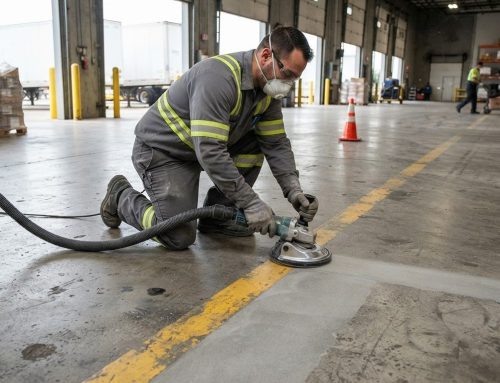
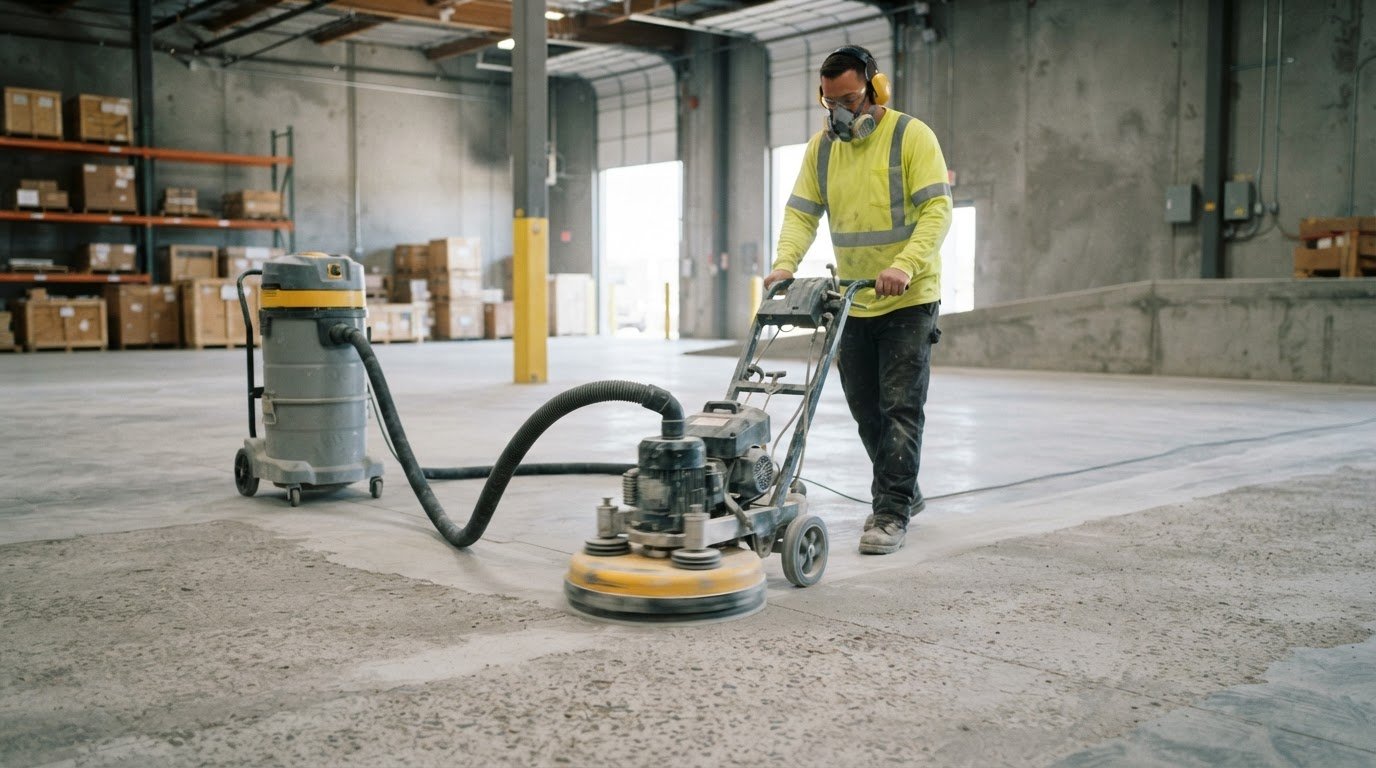
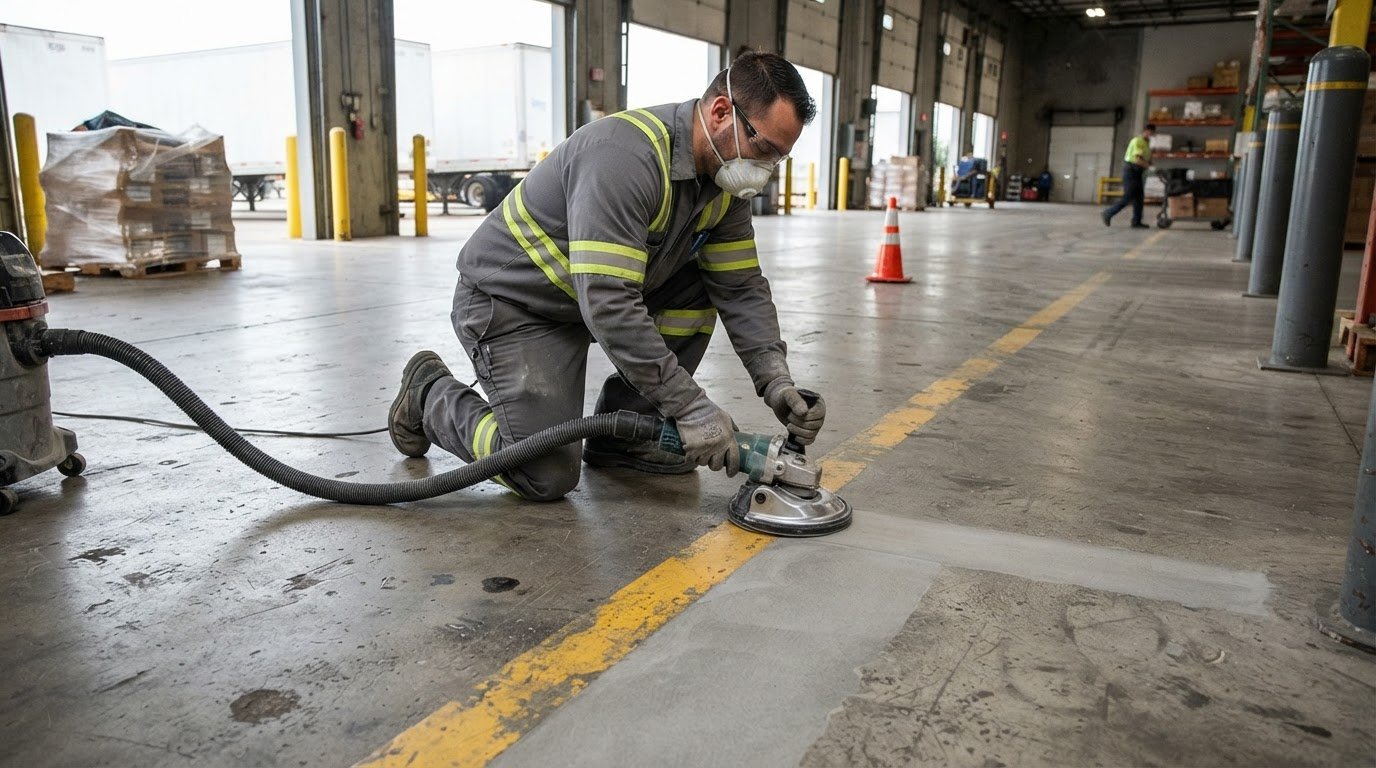
Shot blasting line removal is the mechanical removal of existing floor markings by directing abrasive material against the marked surface. The impacts break up or wear away paint and other marking material. The process treats existing lines; it doesn’t install new ones. Shot blasting for epoxy surface preparation is a separate task, with the approach selected to suit the flooring system and project needs.
Shot blasting and shot peening are related surface-treatment processes, but they serve different purposes. The Shot peening overview provides background on how repeated abrasive impacts affect a surface. For floor-line removal, the goal is to address existing markings. The floor’s condition and intended next use inform the scope and approach.
What does shot blasting remove from a warehouse floor?
Abrasive particles strike the marked floor and mechanically abrade the line material. How paint or another marking responds depends on the marking and the concrete beneath it. Shot blasting may also prepare concrete for epoxy applications, but the two tasks aren’t interchangeable: removal addresses old markings, while preparation readies the surface for a planned application.
That distinction matters when defining the project. Consider both the marked areas and what the facility needs from those surfaces afterward. The right approach depends on existing floor conditions and intended use, rather than assuming one method or result suits every warehouse.
When should a facility consider removing existing lines?
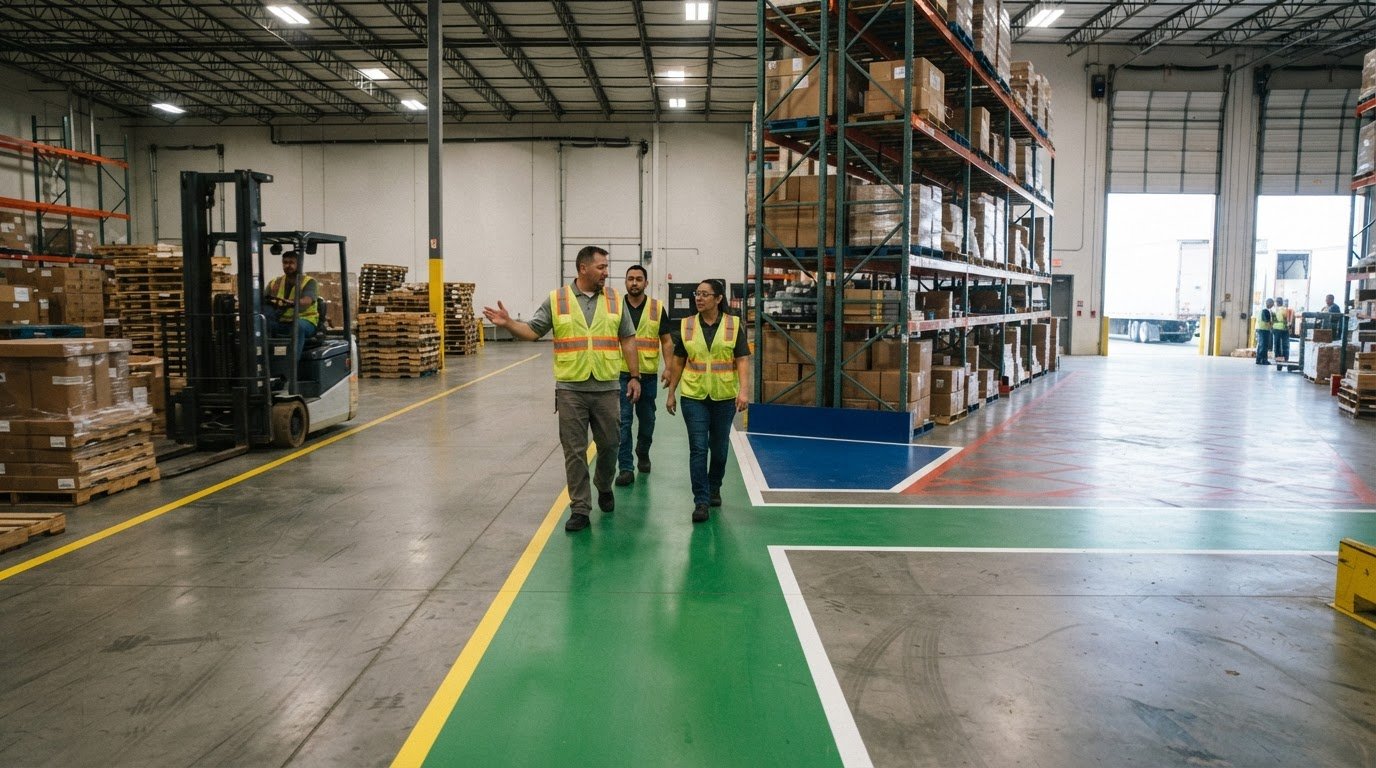
Removal may make sense when workflows change, traffic routes move, operational zones are reconfigured, or lines become worn and difficult to interpret. Leaving obsolete markings in place can compete visually with the new layout. Plan replacement markings before work begins so the removal scope supports the updated floor plan.
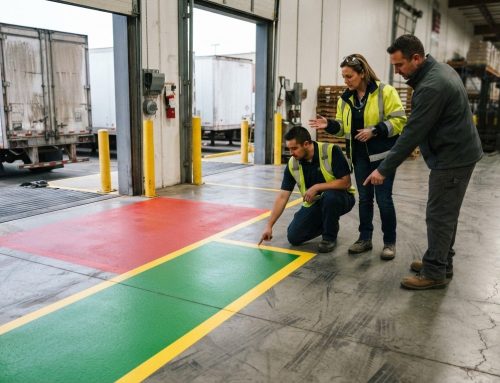
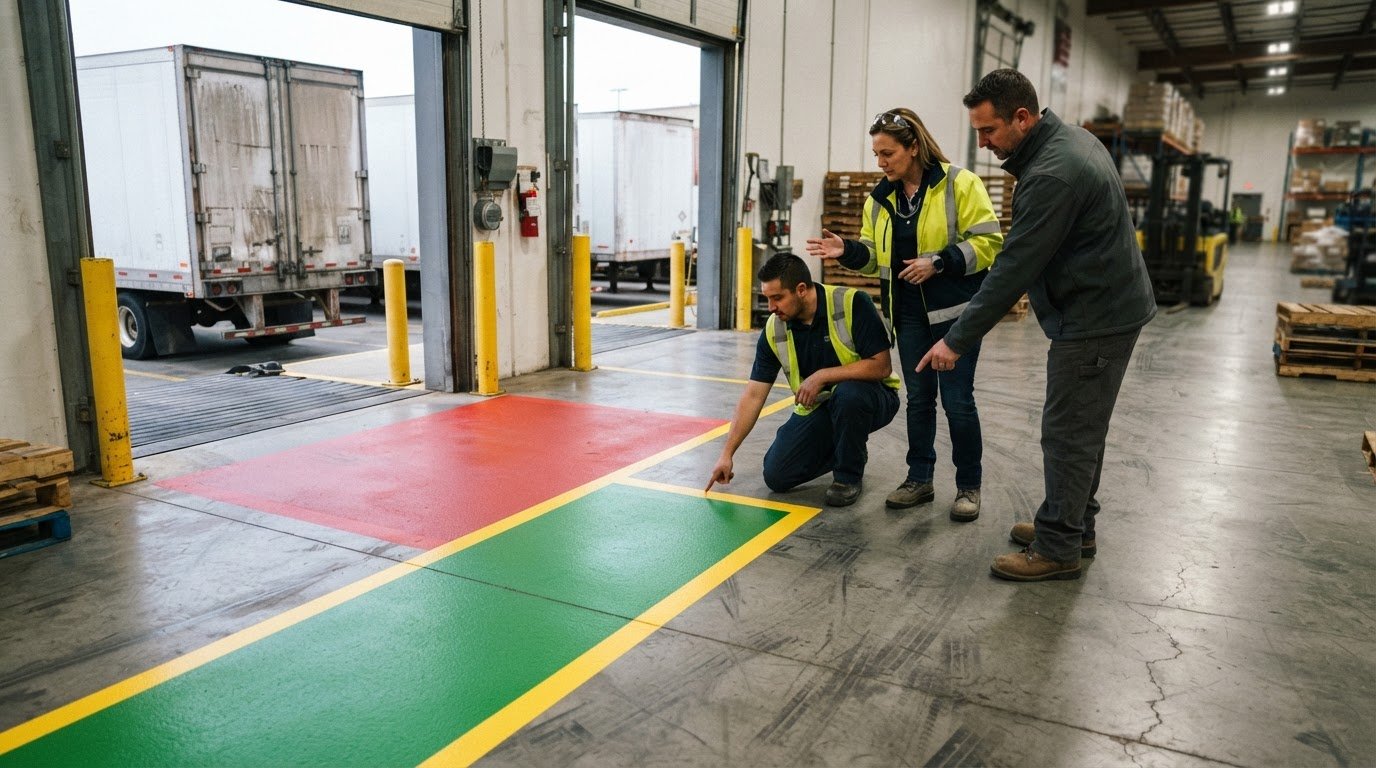
For example, a facility changing forklift routes may need to retire a former path while defining new lanes and pedestrian areas. Map the proposed layout and identify which markings should remain, move, or be removed. If new warehouse routes are part of the project, coordinate removal with warehouse floor striping so the next marking plan is considered alongside the existing floor.
How Shot Blasting Removes Floor Lines and Prepares the Surface
A well-planned removal project connects the work on existing markings to the floor’s next use. Shot blasting mechanically treats the marked surface, but the project scope and sequence depend on the floor condition, the markings being addressed, and whether new lines or an epoxy application are planned. Select the method based on the facility’s needs, not the appearance of the lines alone.
What happens during a shot blasting removal project?
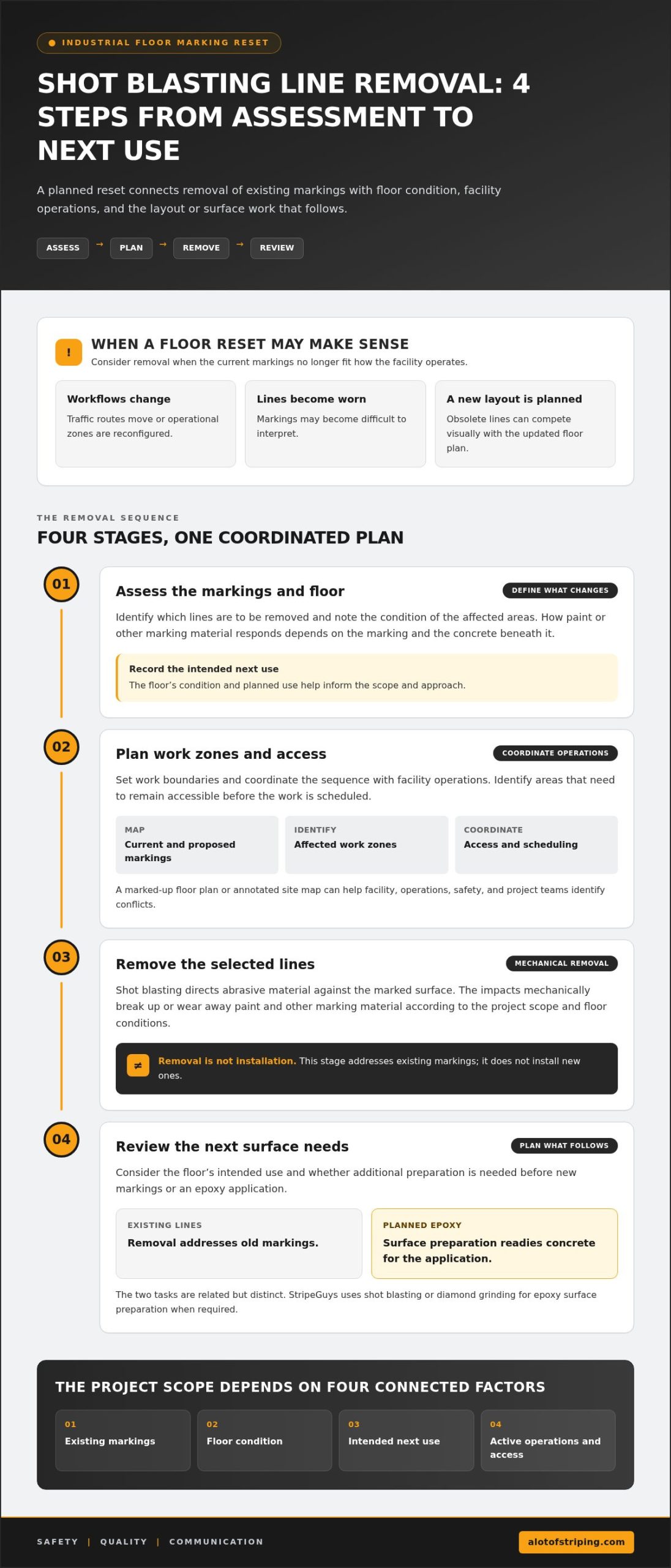
The sequence starts with a review of the marked areas and the floor’s intended next use. That assessment helps define the work zones and areas that need to remain accessible. Shot blasting uses abrasive impact against a surface; Shot Blasting Explained offers background on the process. For floor markings, the scope and sequencing are tailored to the project and floor conditions.
- Assess the markings and floor. Identify which lines are to be removed and note the condition of the affected areas.
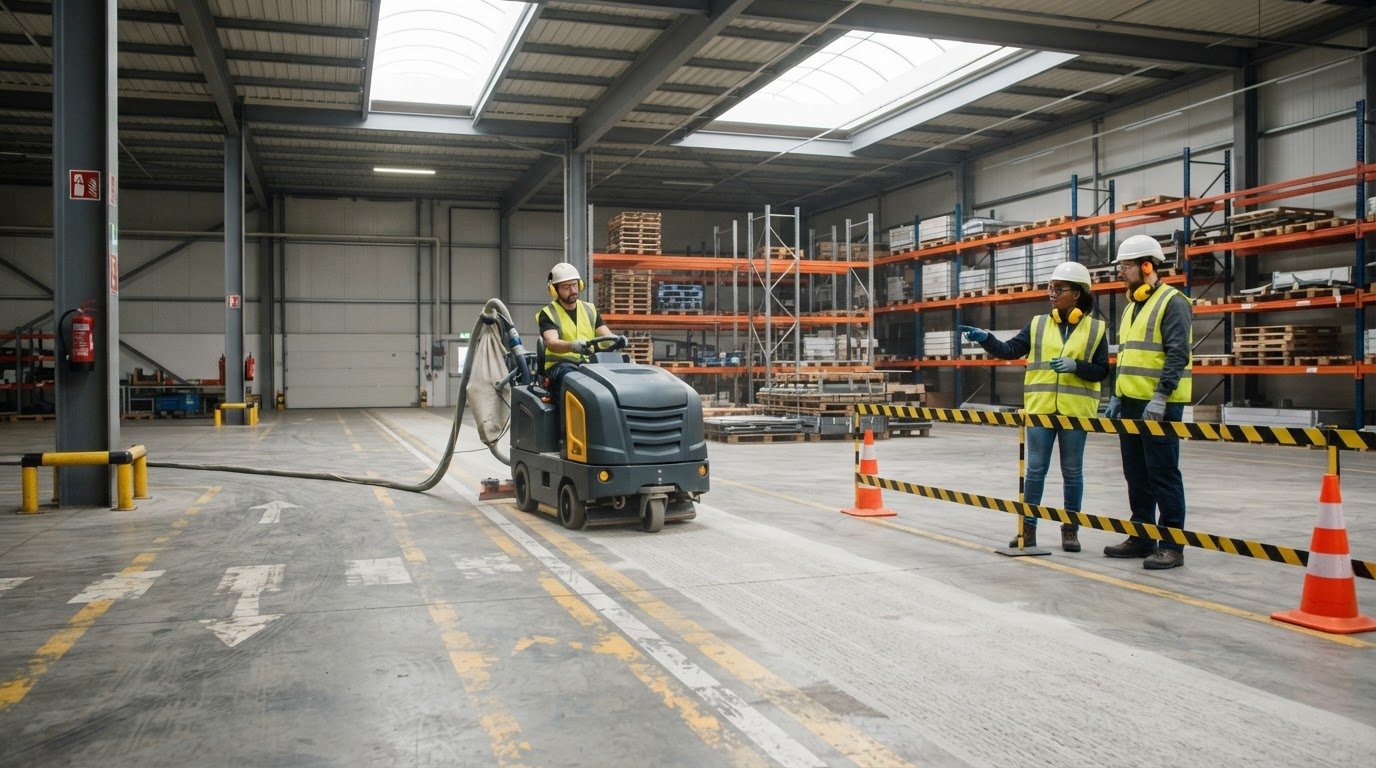
- Plan work zones. Set work boundaries and coordinate the sequence with facility operations.
- Remove the selected lines. Mechanically treat the marked surface according to the project scope.
- Review next surface needs. Consider the floor’s intended use and whether additional preparation is needed before new markings or an epoxy application.
This sequence connects removal to the work that follows. It also avoids assuming the same method or order suits every floor. Shot blasting line removal services should account for the existing surface and the requirements of the next project stage.
How does removal relate to epoxy line striping?
Removing existing lines and preparing concrete for epoxy are related but distinct stages. Removal addresses old markings. Epoxy applications may require surface preparation so the floor is ready for the planned material. StripeGuys uses shot blasting or diamond grinding for epoxy surface preparation when required.
If the next layout includes epoxy markings, coordinate the removal scope with the installation plan rather than treating each stage in isolation. The epoxy warehouse striping approach can be considered alongside the floor’s preparation needs. To discuss how removal and the next marking stage fit your facility, share your floor-marking plan.
How to Plan Shot Blasting Line Removal Around Facility Operations
Good planning brings three factors together: which markings need removal, what the floor will be used for next, and how the work area connects to active operations. Before scheduling shot blasting line removal services, create a shared picture of the current layout and proposed changes. This gives facility, operations, safety, and project teams a practical basis for coordinating access and work zones.
What should facility managers document before work starts?
Record the markings to remove, the lines or zones that will remain, and the areas expected to receive new markings. Note visible floor conditions in the affected spaces and identify pedestrian routes, vehicle paths, and work areas that need to stay accessible. A marked-up floor plan or annotated site map helps teams identify conflicts during planning.
- Existing layout: Mark lines to remove, retain, or review, and identify the operational areas they serve.
- Proposed changes: Show intended routes, zones, and replacement markings so removal supports the next layout.
- People and access: Identify pedestrian walkways, safety aisles, entrances, and routes affected by the work.
- Floor and site conditions: Record visible substrate concerns and operational constraints in the work area.
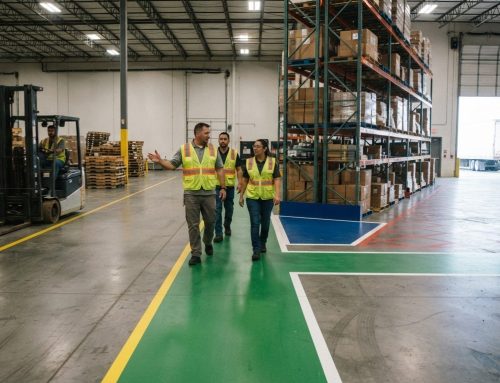
Give pedestrian routes particular attention during a transition. If the new layout includes walkways or safety aisles, plan how they fit the revised traffic pattern. StripeGuys’ pedestrian walkways and safety aisles page provides relevant context for these marking needs.
How can line removal fit an active facility schedule?
Coordinate sequencing with the people who manage receiving, shipping, equipment movement, and floor safety. Share access limitations, high-activity areas, and operational priorities during project planning. Phased work zones can help organize which areas are addressed and when, while clear communication keeps affected stakeholders aligned. This supports coordination, but it doesn’t guarantee uninterrupted operations or a set completion time.
Keep safety in the planning conversation. StripeGuys’ OSHA compliance resource includes a 29 CFR 1910.22(b) guide for facility managers reviewing walking-working surfaces. Use the site plan and stakeholder input to make the transition clear for people working in affected areas. To plan removal around your facility’s access and layout needs, discuss your project with StripeGuys.
How StripeGuys Delivers Line Removal and Supports the Next Marking Plan
StripeGuys provides warehouse line removal and shot blasting line removal services for commercial and industrial facilities. Established in 1994, the company has nationwide capability for large projects, with crews traveling to support work across the continental United States. The process starts with understanding which markings need to go, the floor’s next use, and any revised marking requirements.
Project discussions focus on facility conditions and operational priorities. StripeGuys emphasizes SAFETY | QUALITY | COMMUNICATION. Clear communication helps facility managers and project teams share scope, constraints, and next steps without assuming a particular schedule or surface result.
What can facility managers expect from the project conversation?
A project-manager consultation gives facility managers a chance to describe existing markings, the areas involved, the floor’s condition, and how operations use those spaces. The discussion can also cover which markings should remain and what the proposed layout needs to support. Sharing these details helps align the removal scope with operational needs and the work planned afterward.
StripeGuys provides a free quote and project-manager consultation. The quote is based on the project discussed, rather than an assumed standard scope. This creates a clear starting point for planning, with schedule, price, and methods specific to the project.
How does removal connect to new floor markings?
Removal may be followed by revised striping when routes or facility zones have changed. Treating these as connected stages helps keep the removal plan aligned with the layout the facility intends to use next. For example, if updated traffic paths require new lines, the proposed routes can inform both the removal scope and the next marking plan. StripeGuys also uses shot blasting or diamond grinding for epoxy surface preparation when required.
For a revised warehouse layout, warehouse floor striping can follow removal. Share the current markings, intended changes, floor conditions, and operational constraints during the project conversation. Those details help the team discuss how removal and new striping relate, without presuming a specific outcome.
Request a free project quote from StripeGuys to discuss your facility’s line removal and next marking plan: request a project quote.
Set the Next Floor Plan in Motion
Before work is scheduled, make the transition a defined facility decision, not just a floor-maintenance task. Give one internal lead responsibility for aligning the revised marking plan with operations and safety stakeholders. Agree on what the changed layout must communicate, who needs to review it, and how the facility will identify when an area is ready for its next use. Clear ownership helps prevent the removal scope and future floor plan from drifting apart.
That alignment gives the project conversation a useful starting point. Bring the current and proposed layouts, affected areas, and operational priorities together so the discussion can focus on the facility’s needs. Planning the next markings alongside shot blasting line removal services helps keep the floor transition purposeful, while leaving the specific scope and approach to the project.
StripeGuys can help you move from planning to a project-specific conversation. Request a free quote and discuss your line removal project. A clear plan is a strong first step toward a more organized floor transition.
Frequently Asked Questions
What is shot blasting line removal?
Shot blasting line removal is a mechanical process that uses abrasive impact to treat a floor’s marked surface and remove existing markings. It addresses old lines, not the installation of new shot-blast striping. When defining the scope, consider whether the facility needs removal, surface preparation for an epoxy application, replacement markings, or a combination of these stages tied to the floor’s intended use.
Can shot blasting remove old warehouse floor lines?
Yes. Shot blasting is used for warehouse line removal, with the approach guided by the existing markings, floor condition, and revised layout. For example, if a former staging area is becoming a travel lane, the plan should account for both the outdated line and the new route. StripeGuys provides shot blasting line removal services and project-manager consultation to discuss the scope and how it fits the facility’s marking plan.
Does shot blasting damage concrete when removing floor markings?
Shot blasting mechanically treats the surface, so the floor’s condition and planned use should inform the work approach. Concrete floors differ in condition, and a particular result shouldn’t be assumed for every site. During project consultation, describe visible cracking, repairs, or other areas of concern. StripeGuys can discuss how surface preparation relates to epoxy applications when required, while keeping removal and preparation distinct in the project scope.
Is shot blasting the same as shot-blast floor striping?
No. Shot blasting line removal treats existing markings to remove them, while shot blasting for floor striping refers to preparing concrete for new markings or an epoxy application. They may be planned as connected stages during a layout change, but they aren’t the same task. Clarify whether the scope includes removing old lines, preparing the floor for epoxy, installing replacement markings, or coordinating more than one stage.
How should a warehouse prepare for line removal?
Provide a current floor plan that identifies which markings should be removed and which must remain. Add the proposed layout, pedestrian routes, and access points that need consideration. Share the plan with facility and safety stakeholders so they can review the transition. StripeGuys’ OSHA compliance resource includes a 29 CFR 1910.22(b) guide that facility managers can consult when reviewing walking-working-surface safety information.
Can shot blasting line removal be scheduled while a facility is operating?
Scheduling depends on site access, active work areas, and project sequencing. An operating warehouse might identify a lower-activity zone for an initial work phase, then coordinate the next area around its material flow. This is a planning example, not a guarantee of uninterrupted operations or a set downtime period. Share access limits, operational priorities, and scheduling constraints during project consultation so they can inform the project plan.