Did you know that the warehousing industry faces 4.8 recordable injuries for every 100 full-time workers? That’s more than double the average for all private industries. A significant portion of these injuries results from workers being struck by material-handling equipment, a hazard directly addressed by clear floor markings. You’ve likely felt the frustration of lines peeling up under forklift traffic or the stress of potential fines for non-compliant walkways. It’s difficult to maintain 5S standards when your visual cues fail after only a few months of use.
By mastering lean manufacturing floor marking best practices, you can eliminate waste and optimize your facility’s operational flow. This guide provides the technical expertise needed to create a durable, OSHA-compliant workplace that reduces accidents and speeds up throughput. We’ll examine the current ANSI Z535.1 color standards and compare high-performance epoxy systems with industrial tapes to ensure your facility remains safe, organized, and ready for any kaizen event.
Key Takeaways
- Understand how visual cues support the Seiton (Set in Order) phase of 5S by organizing workspaces to eliminate search waste and improve workflow.
- Learn the critical ANSI Z535.1 color standards for hazard communication, ensuring yellow traffic lanes and red emergency zones are universally recognized.
- Compare the long-term durability of professional epoxy line painting against temporary tapes to prevent frequent repairs in high-traffic forklift areas.
- Discover the logistics of implementing lean manufacturing floor marking best practices across large-scale facilities while minimizing operational downtime.
The Role of Floor Marking in Lean 5S Methodology
In industrial environments, lean floor marking is the use of visual cues to delineate workspaces, aisles, and storage areas to minimize waste. This practice is a fundamental component of the 5S workplace organization method, specifically supporting the pillar of Seiton, or “Set in Order.” Seiton focuses on organizing the workplace so items are easy to find, use, and return. Without clear boundaries, even the most efficient facility eventually succumbs to “drift,” where materials and equipment slowly migrate into traffic lanes or block emergency exits.
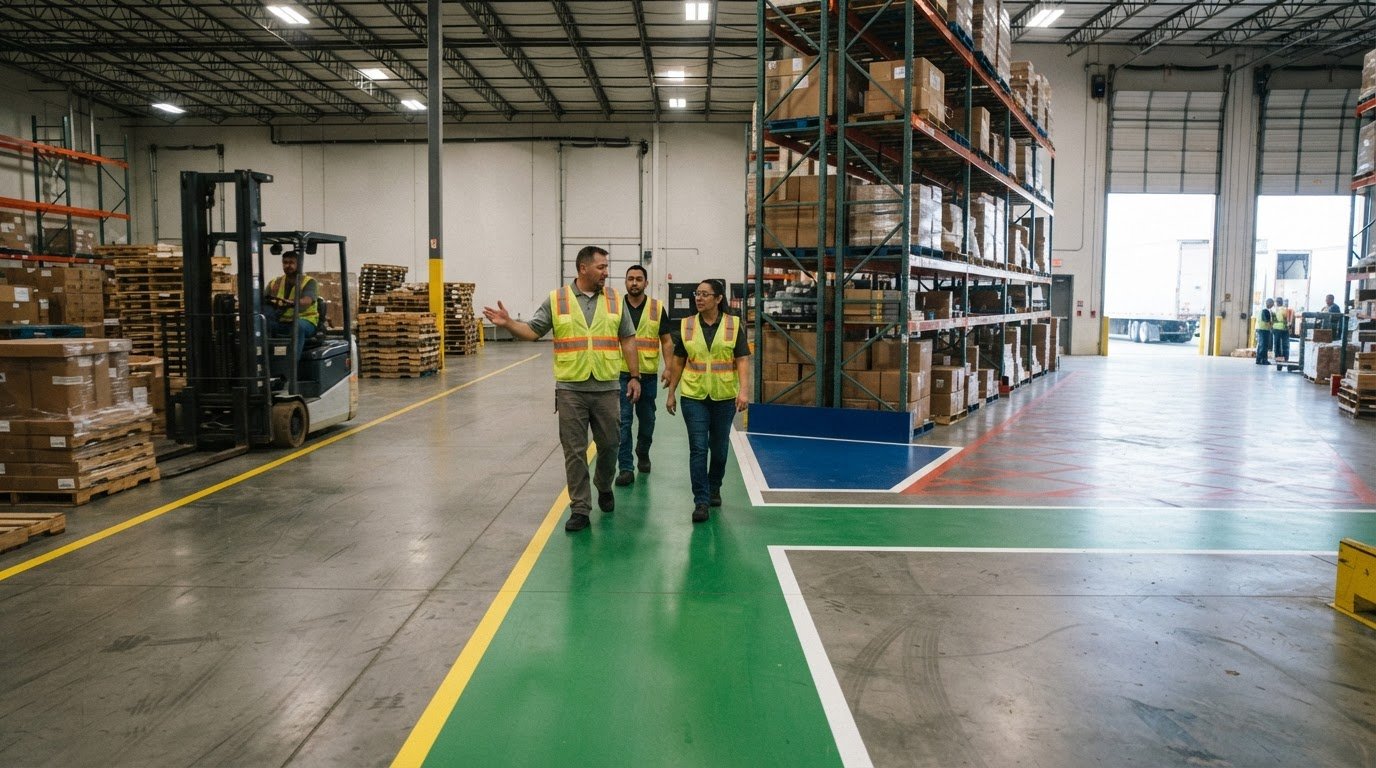
Implementing lean manufacturing floor marking best practices ensures that every square foot of your facility serves a defined purpose. These visual boundaries reduce motion waste by streamlining forklift and pedestrian paths, ensuring that traffic moves without hesitation. Beyond the logistical benefits, a well-marked floor has a significant psychological impact on your team. It reinforces employee discipline and supports “Standardized Work” by providing a constant visual reminder of where items belong. When your facility looks organized, your crew is more likely to maintain that order. It’s about creating a self-explaining workplace where the floor tells the story of the workflow.
Eliminating Waste Through Visual Cues
Visual cues are frontline tools for reducing search time. By using dedicated staging squares for tools and pallets, you ensure that operators don’t waste minutes hunting for the next item in the production queue. This organization also minimizes transport waste by defining the shortest, safest routes for material handling. Floor markings prevent over-processing by clearly identifying specific work zones so materials don’t move into unnecessary production stages. Clear paths mean fewer stops, fewer course corrections, and faster overall throughput. When a forklift operator knows exactly where to drop a load, the entire supply chain moves more predictably.
Standardizing the Visual Workplace
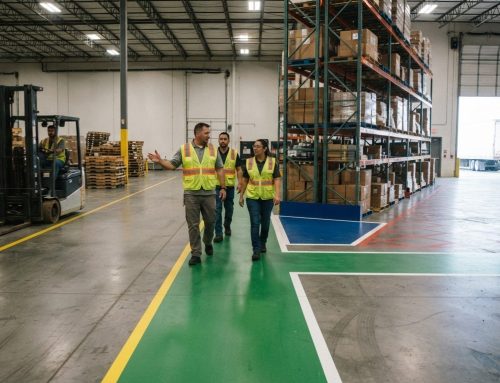
Consistency is the backbone of any national lean strategy. If your facility in one state uses different markings than your branch in another, you create confusion for visiting managers and transferred staff. Standardizing your layout across all sites ensures that safety and efficiency remain constant regardless of location. This standardization starts with “Sort” (Seiri), where markings identify red-tag areas for scrap or unnecessary items. By integrating these boundaries with pedestrian walkways and safety aisles, you create a total floor organization system that protects your people while maximizing your operational floor space. This level of organization is what separates a high-performance facility from a standard warehouse.
Standardizing Your Color Code: OSHA and ANSI Best Practices
A successful visual workplace relies on a universal language that every employee understands at a glance. Without a standardized color code, your floor markings are just paint; they don’t communicate instruction or warning. Implementing lean manufacturing floor marking best practices requires adherence to the ANSI Z535.1 safety color code, which provides a framework for consistent communication across the industrial sector. This consistency eliminates the “decision waste” that occurs when workers must stop to interpret what a specific line color means.
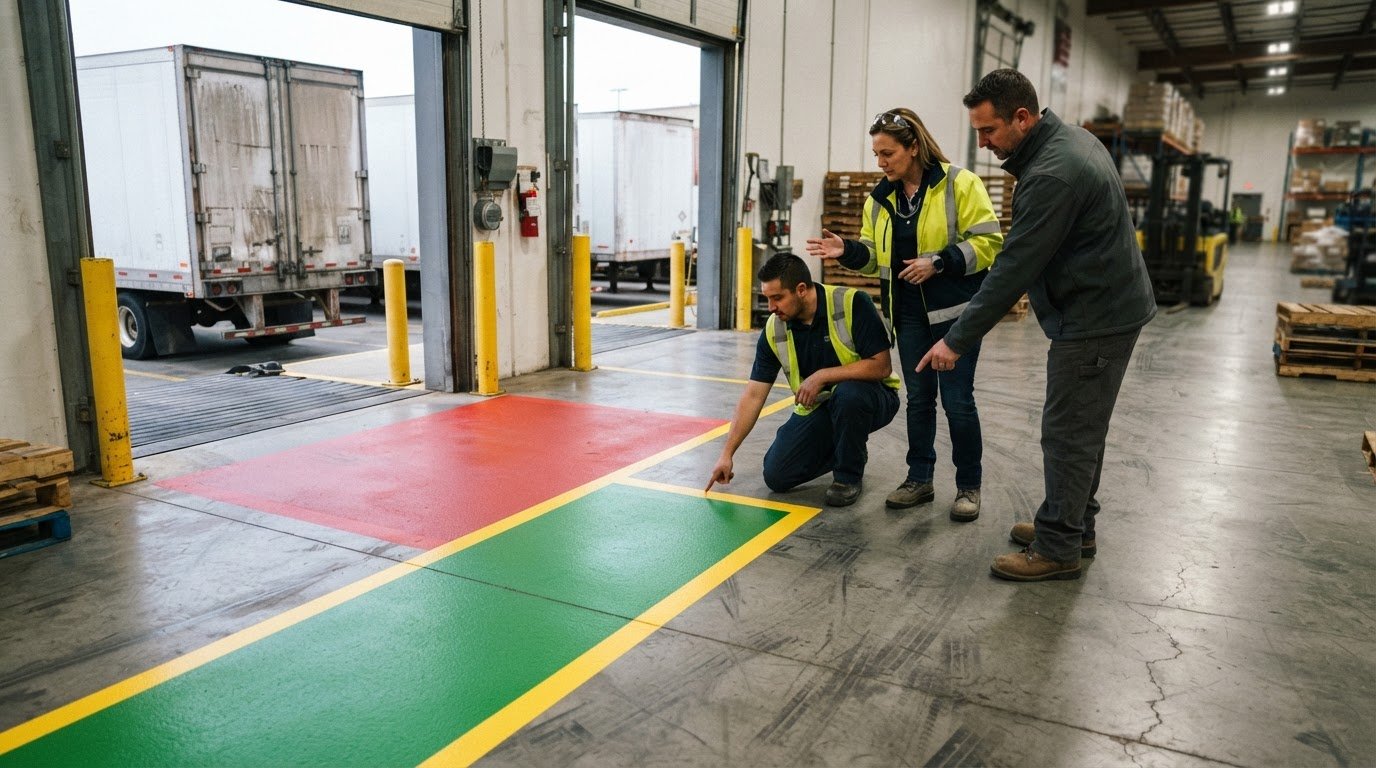
- Yellow: This is the workhorse of the facility. It identifies traffic lanes, aisleways, and work cells where regular operations occur.
- Red: Reserved exclusively for fire-related equipment, emergency exits, and “Red Tag” zones where scrap materials are held for evaluation.
- White and Black: These colors mark equipment and fixtures that aren’t otherwise color-coded, such as workstations, racks, or static machinery.
- Green and Blue: Green identifies safety equipment like eyewash stations, while blue is often used to delineate raw materials from finished goods.
- Orange and Yellow/Black Stripes: These high-contrast patterns highlight physical hazards or areas where workers must exercise extreme caution.
OSHA Compliance vs. Lean Efficiency
While lean focuses on flow, safety is the non-negotiable foundation. Understanding OSHA Standard 1910.22 is essential because it mandates safe access and egress for all walking-working surfaces. To stay compliant, your line widths should typically range from 2 to 6 inches. This ensures maximum visibility for high-speed forklift traffic. You don’t have to sacrifice operational flexibility for safety; a well-planned layout uses these standards to create a predictable environment where speed and security coexist.
Designing for Maximum Visibility
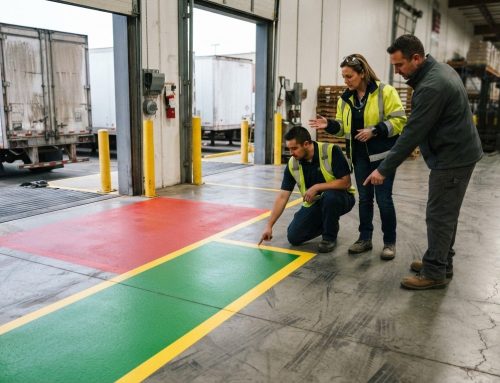
The effectiveness of your markings depends heavily on the floor’s finish. For light-colored or polished concrete, you must choose contrast colors that pop against the surface. Stenciling for pallet positions and dock numbers is a smart way to augment basic line markings, providing specific data points that lines alone cannot convey. It’s why warehouse floor striping must be logically planned before the first drop of paint hits the floor. If you need assistance defining a compliant layout, speak with a facility specialist to review your site requirements.

Material Selection: Why Industrial Epoxy Outlasts Temporary Tapes
Choosing the right material is a critical decision in lean manufacturing floor marking best practices. Many facility managers opt for heavy-duty floor tape because it’s fast to apply, but this often leads to a cycle of constant repair. In high-traffic environments, professional epoxy line painting offers a lifespan that tape simply cannot match. While tape relies on pressure-sensitive adhesives, epoxy creates a permanent mechanical bond with the concrete, ensuring the lines remain intact despite constant operational stress.
The “Forklift Test” is the ultimate decider for material durability. When a forklift carries a heavy load and pivots its tires in a staging area, the sheer force shreds temporary tape markings almost instantly. This failure creates a visual mess that compromises your 5S standards and requires immediate maintenance. Beyond physical impact, areas like battery charging stations require specialized chemical and acid resistance. Standard tapes will curl and dissolve when exposed to leaked electrolytes or aggressive industrial cleaners, whereas high-performance coatings remain impervious.
Budgeting for longevity requires looking past the initial invoice. When you calculate the Total Cost of Ownership (TCO) over a 5-year lean cycle, epoxy is significantly more cost-effective. Tape might be cheaper on day one, but the labor and material costs of replacing it every three to six months add up quickly. A single professional application of epoxy provides years of service, allowing your team to focus on production rather than floor maintenance.
The Science of Surface Preparation
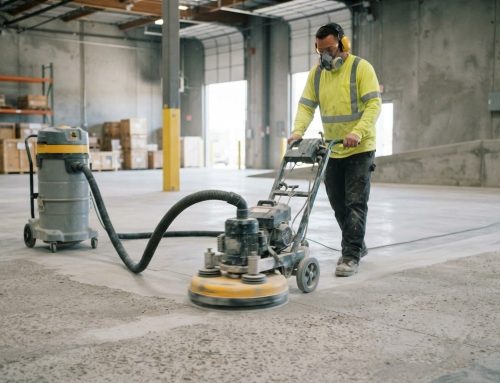
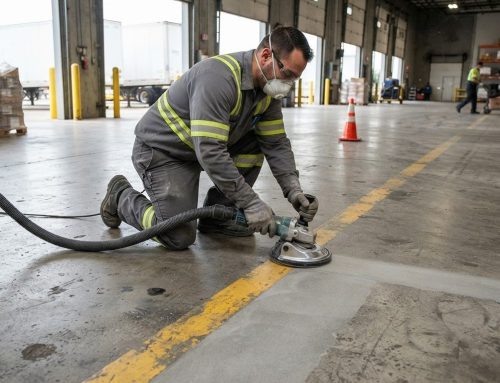
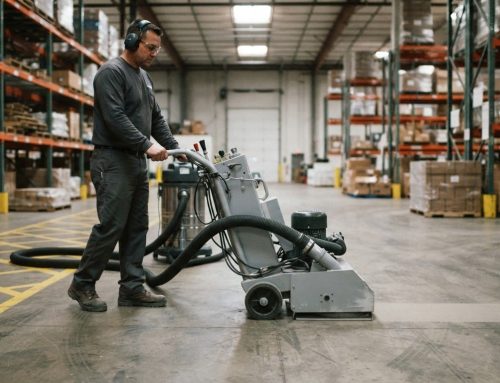
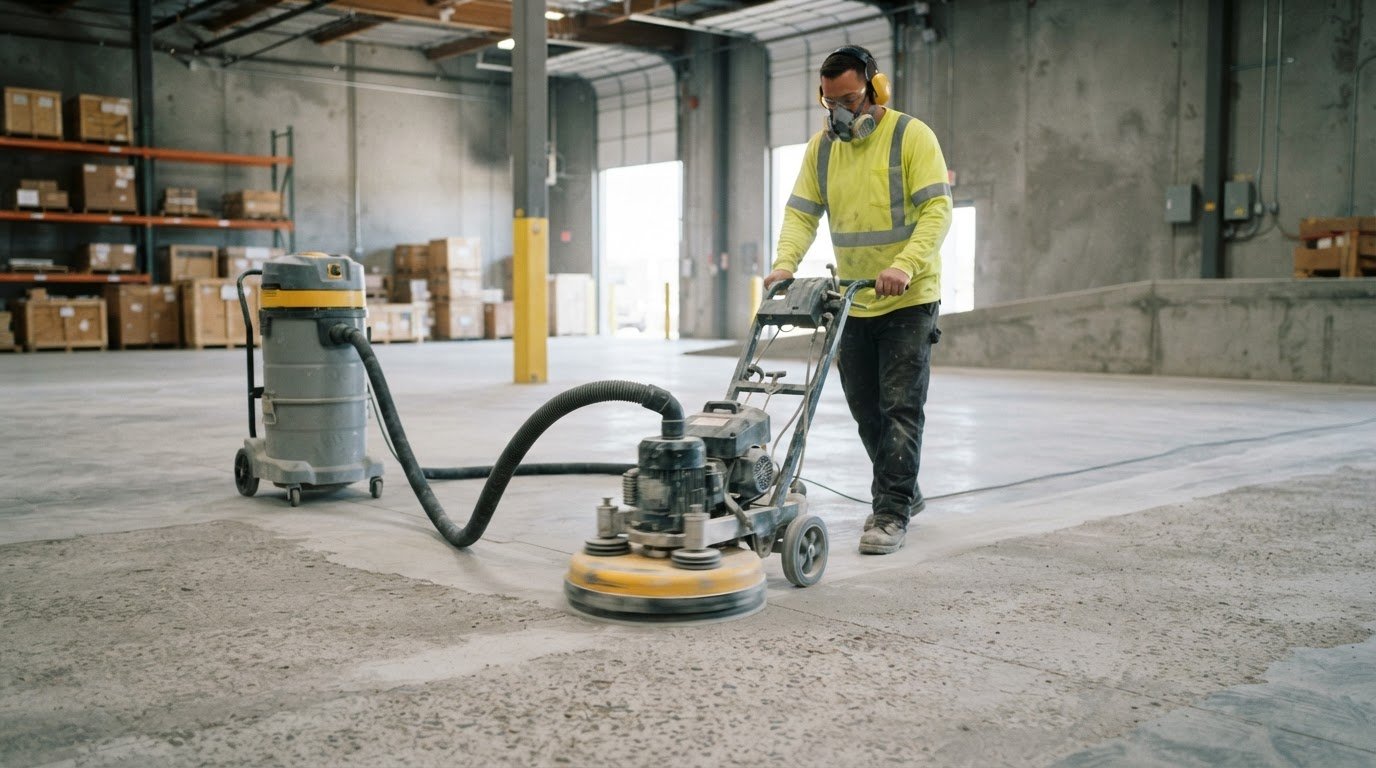
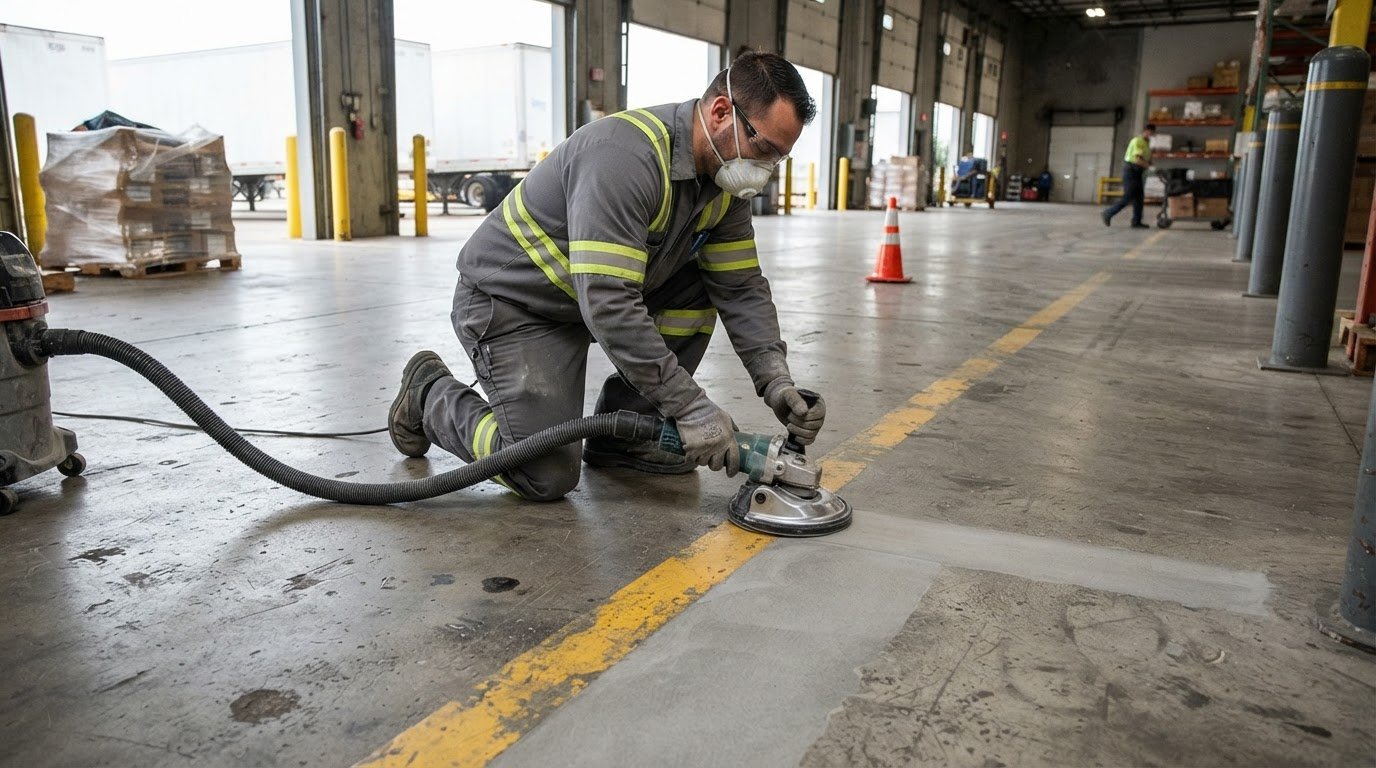
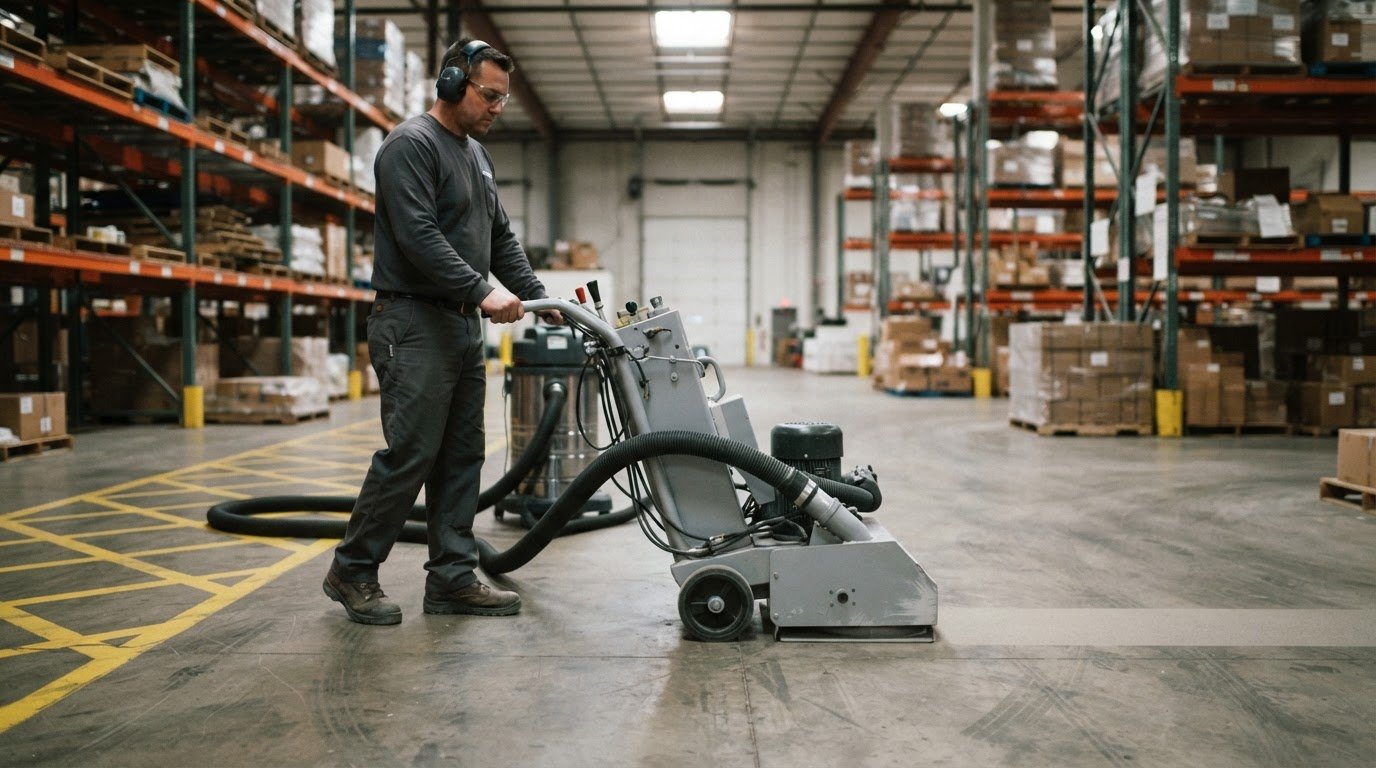
New epoxy fails without proper mechanical preparation. We use shot blasting or grinding to remove laitance (the weak, brittle layer on top of new concrete) and deep-seated contaminants. This process opens the pores of the concrete to ensure a permanent bond with the substrate. If you’re updating an old layout, professional warehouse line removal is necessary to clear away previous markings and create a clean slate for your new 5S system. Without this step, even the highest quality paint won’t adhere properly.
Industrial Epoxy and Polyurethane Systems
High-solids epoxy is the standard for high-traffic zones because of its superior impact resistance and build thickness. For facilities with significant natural light or those that prioritize a high-gloss finish, we apply polyurethane topcoats to prevent UV-related yellowing and maintain color clarity. It’s clear that epoxy warehouse striping is the gold standard for 5S durability because it withstands the daily abuse of heavy machinery without fading or peeling. If your current markings aren’t holding up to your operational demands, contact our team for a durability assessment.
Implementing a Scalable Marking System for Large-Scale Facilities
A truly integrated safety strategy doesn’t stop at the warehouse door. It’s essential to connect your indoor visual cues with parking lot and truck court striping to create a seamless safety environment from the loading dock to the facility perimeter. This end-to-end site safety ensures that incoming logistics and outgoing shipments follow the same rigorous standards as your internal production lines. By treating the entire site as a single operational unit, you eliminate the safety “blind spots” that often occur at the transition points between the yard and the warehouse floor.
Managing Downtime During Installation
Large-scale facilities often operate 24/7, making traditional long-term shutdowns impossible. We address this logistical challenge by offering fast-cure epoxy options that allow for rapid return-to-service, sometimes in as little as a few hours after application. Phased implementation strategies are also highly effective; we mark one specific zone or aisle at a time to keep the rest of the facility active. Professional contractors bring a level of precision and speed that in-house maintenance teams can’t match, primarily because we use specialized equipment designed for high-volume application. This efficiency ensures your project stays on schedule without compromising your daily throughput targets.
Maintaining Your Lean Markings
The final pillar of 5S is Shitsuke, or “Sustain.” To keep your facility compliant, you need a regular schedule for cleaning and inspecting your floor lines. Dirt and tire rubber can obscure even the brightest safety colors, so we recommend using specialized coatings that resist tire mark buildup. When lines eventually show wear, you must decide between a simple re-stripe or a full removal and replacement. A re-stripe is often sufficient for low-impact areas, but high-traffic staging zones usually benefit from a fresh start to maintain the integrity of the bond with the concrete substrate.
Optimizing Your Facility for Long-Term 5S Success
With over 29 years of industrial striping experience, we understand the complexities of managing large-scale logistics hubs. Our team provides nationwide coverage and deep expertise in OSHA-compliant epoxy applications and precision line removal. We’re ready to help you eliminate waste and protect your workforce with markings that actually last under heavy forklift traffic. Get a Professional Quote for Your Nationwide Warehouse Striping Project to secure your facility’s operational flow today. Your team deserves a workspace that works as hard as they do.
Frequently Asked Questions
What are the OSHA requirements for warehouse floor marking widths?
OSHA requires that permanent aisles and passageways be clearly marked, and industry standards typically dictate a line width between 2 and 6 inches. While a 2-inch line meets the minimum visibility threshold, most high-traffic facilities utilize 4-inch lines to ensure forklift operators can identify boundaries from a distance. Proper width is essential for maintaining the safe means of access and egress mandated by OSHA 1910.22(c).
Which floor marking color should be used for forklift traffic lanes?
Yellow is the universal standard for forklift traffic lanes and work cell boundaries according to ANSI Z535.1 guidelines. This high-visibility color alerts both pedestrians and operators to active machinery zones. Implementing lean manufacturing floor marking best practices involves using yellow for primary aisleways to create a predictable flow that reduces the risk of struck-by accidents in busy logistics hubs.
Is floor tape or epoxy paint better for lean manufacturing environments?
Epoxy paint is significantly better for lean manufacturing environments that prioritize long-term durability and low maintenance. While tape offers a fast initial application, it frequently fails under the stress of pivoting forklift tires and heavy pallet drags. Professional Epoxy Line Painting creates a permanent bond with the concrete substrate, ensuring your 5S visual cues remain intact during rigorous daily operations without the need for constant re-application.
How often should warehouse floor markings be replaced in high-traffic areas?
Marking lifespan varies by material, but high-traffic areas typically require a refresh every few years when using professional-grade coatings. Temporary tapes often need replacement every 3 to 6 months due to adhesive failure or physical tearing. By contrast, a high-solids epoxy system can withstand heavy industrial use for much longer, providing a more stable foundation for your facility’s 5S efficiency and reducing your long-term maintenance costs.
Does lean floor marking require professional installation?
Professional installation is highly recommended for large-scale facilities to ensure nationwide consistency and proper surface preparation. DIY applications often skip mechanical grinding or shot blasting, which leads to premature coating failure. Experienced contractors use specialized equipment to deliver precise lines at a scale that in-house teams can’t match. This expertise is vital when implementing lean manufacturing floor marking best practices across 500,000 square feet or more.
What is the best way to remove old warehouse floor lines without damaging the concrete?
Shot blasting and professional grinding are the most effective methods for Warehouse Line Removal without compromising the concrete’s structural integrity. These mechanical methods physically strip away old paint and contaminants, leaving a clean, profiled surface that is ready for a new bond. Avoiding aggressive chemical strippers is important because they can leave residues that interfere with the adhesion of your new 5S marking system.