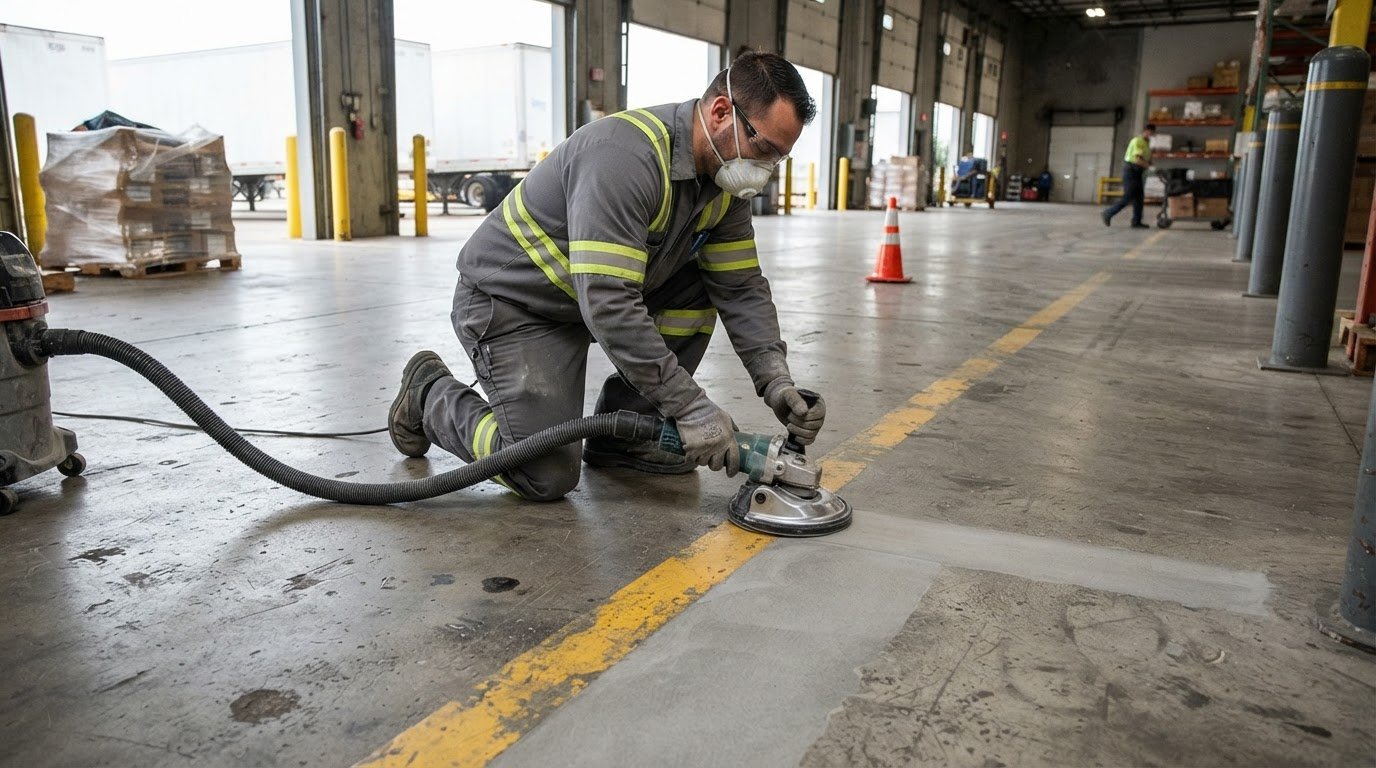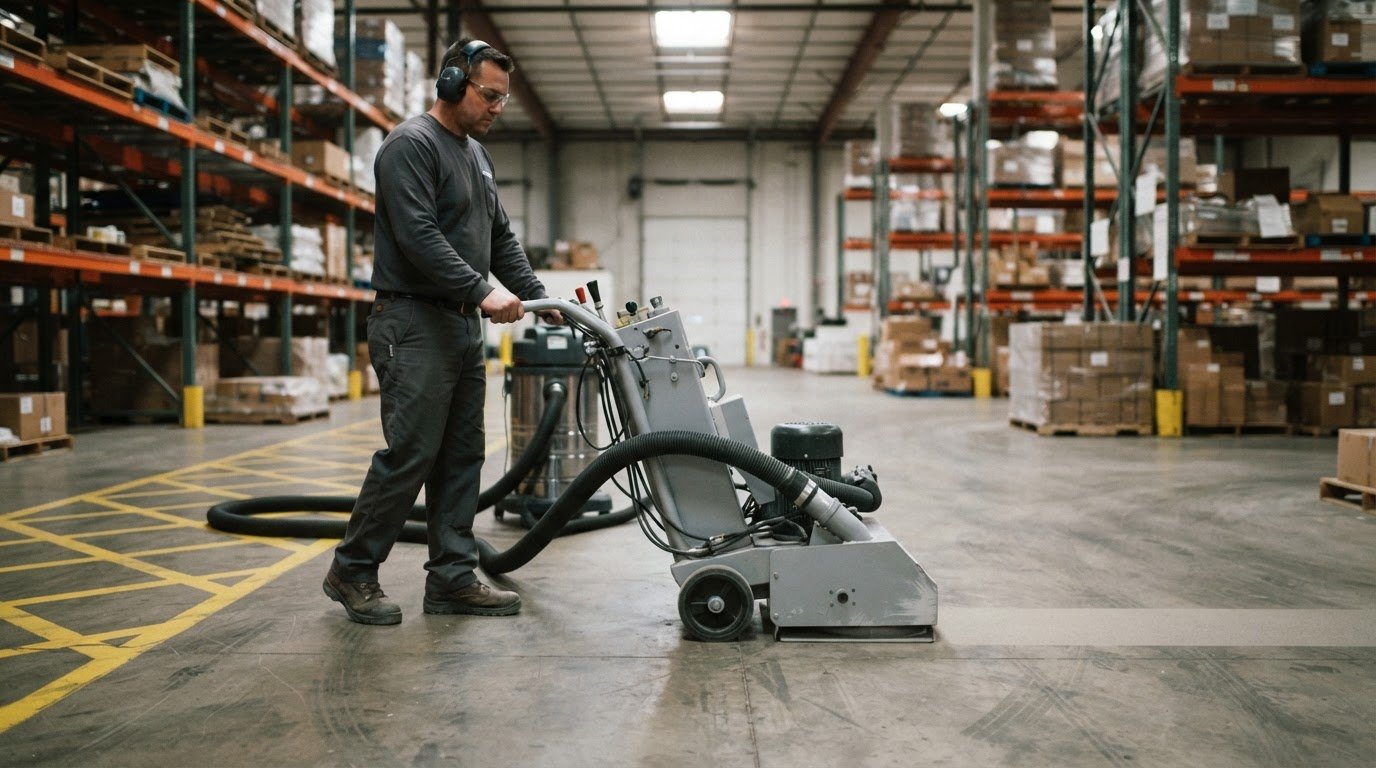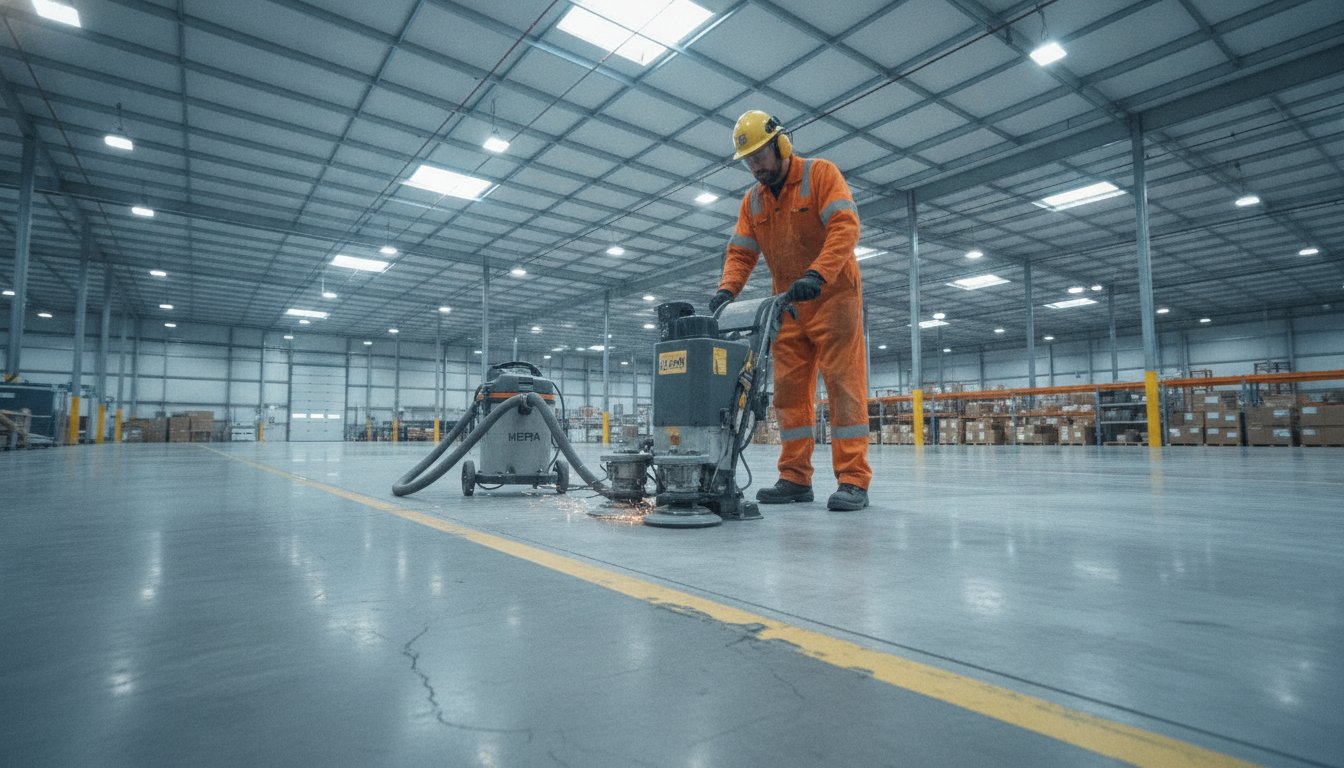
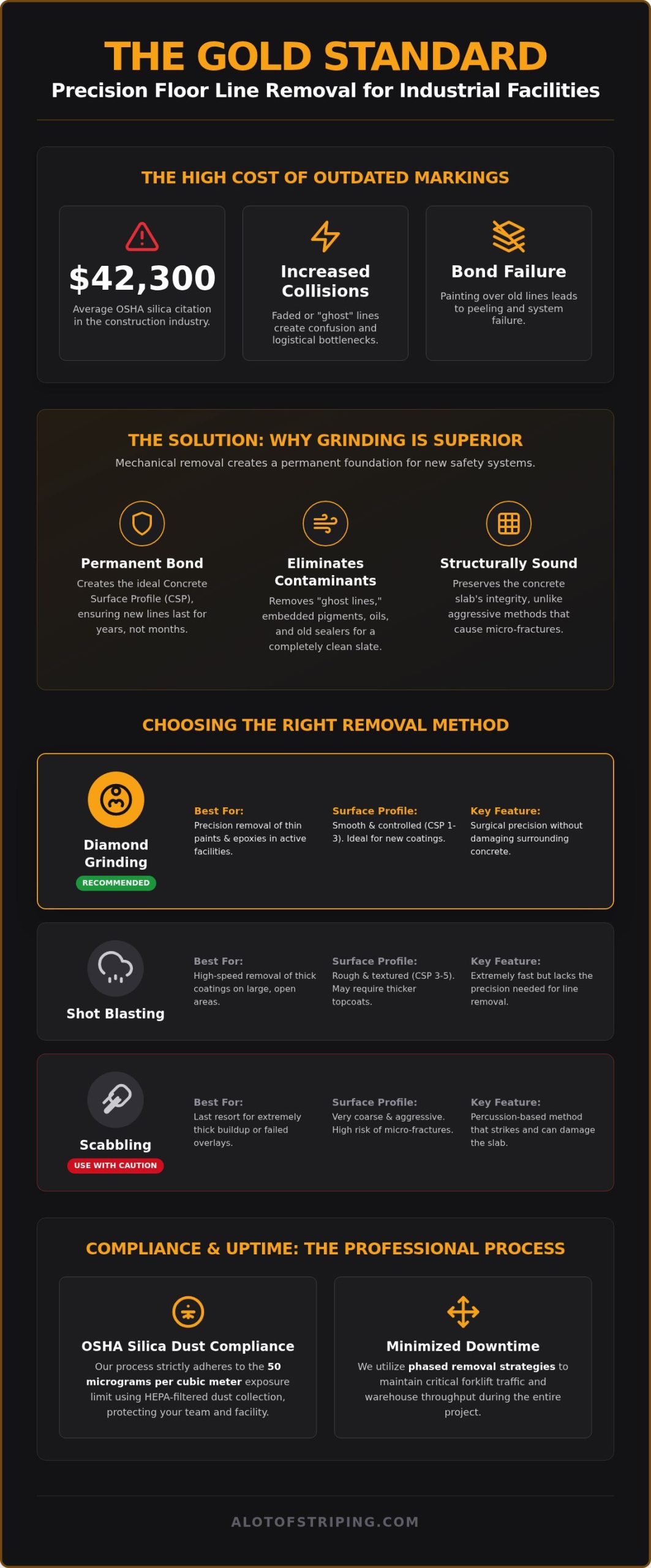
An average OSHA silica citation in the construction industry reached approximately $42,300 in fiscal year 2025, which is a steep price for a simple maintenance oversight. You’ve likely seen how outdated warehouse markings become more than just an eyesore; they’re a logistical bottleneck that can lead to forklift collisions and failed safety audits. When you’re managing a high-volume distribution center or a sensitive pharmaceutical plant, “good enough” removal isn’t an option. Precision floor grinding for line removal is the only way to eliminate “ghost” marks and prepare the substrate for a permanent bond.
We understand the pressure of maintaining operational uptime while meeting the strict 50 micrograms per cubic meter silica exposure limit. This guide helps you master the technical requirements, safety standards, and operational logistics of mechanical removal. You’ll learn how to achieve a clean, profile-ready surface that ensures your new safety systems actually stick. We’ll walk through the essential equipment choices, such as planetary grinders with HEPA filtration (the industry standard for dustless operation), and the planning steps needed to keep your forklifts moving safely throughout the process.
Key Takeaways
- Identify why mechanical removal is essential for preventing bond failure, a common issue when painting over old lines, and ensuring a clean substrate.
- Compare the technical differences between grinding, shot blasting, and scabbling to select the most efficient method for your specific coating thickness.
- Learn how professional floor grinding for line removal uses HEPA-filtered dust collection to keep your facility OSHA-compliant and operational.
- Master operational logistics like phased removal, which allows you to maintain forklift traffic and warehouse throughput during the project.
- Select the right high-durability materials for your new safety markings to ensure long-term performance on a properly profiled concrete surface.
Why Floor Grinding is the Gold Standard for Industrial Line Removal
Industrial facilities require permanent solutions. Painting over old stripes is a temporary fix that often results in bond failure. We use floor grinding for line removal to ensure a clean, level surface by mechanically abrading the concrete with diamond-segmented tools. This process doesn’t just scrape the surface; it removes the top layer of the slab to eliminate contaminants and prepare the floor for a long-term safety system. Achieving the right Concrete Surface Profile (CSP) is the difference between a line that lasts five years and one that peels in six months.
The Physics of Mechanical Removal vs. Chemical Stripping
Chemical strippers create significant logistical hurdles in active environments. They produce toxic fumes and leave behind slippery residues that can interfere with new coatings. A mechanical concrete grinder provides a cleaner alternative by physically cutting into the substrate. This creates a “toothed” surface profile that is essential for the mechanical bond of epoxy warehouse striping. By selecting specific diamond grit levels, we control the final texture. This ensures the surface is optimal for the specific viscosity of the replacement material without compromising the structural integrity of the slab.
Eliminating Ghost Lines and Surface Contaminants
One of the biggest challenges in warehouse re-layouts is the “ghosting” effect. This happens because paint pigments leach deep into the concrete pores over time. Simply covering these marks doesn’t work. The old shadow often bleeds through or causes the new layer to peel. Precision floor grinding for line removal eliminates this embedded pigment along with deeply ground-in oils, tire marks, and old sealers. This leaves a neutral, uniform finish. It allows for a completely fresh organizational layout without the visual clutter of past configurations. It’s the only way to guarantee that new lines are the only ones your forklift operators see, which directly improves facility safety and navigation efficiency.
Mechanical Methods Compared: Grinding vs. Shot Blasting vs. Scabbling
Selecting the right mechanical approach is critical for preserving the slab’s integrity while ensuring a clean removal. Each method creates a different Concrete Surface Profile (CSP), which is a standardized rating of surface roughness ranging from nearly smooth to extremely coarse. Choosing the wrong method can lead to excessive pitting or poor adhesion for your next safety system. We prioritize methods that balance speed with the long-term health of your facility’s floor.
When to Choose Diamond Grinding
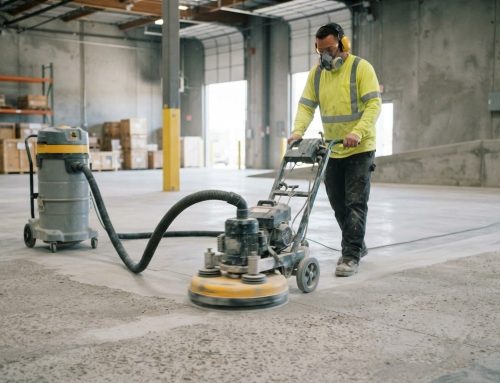
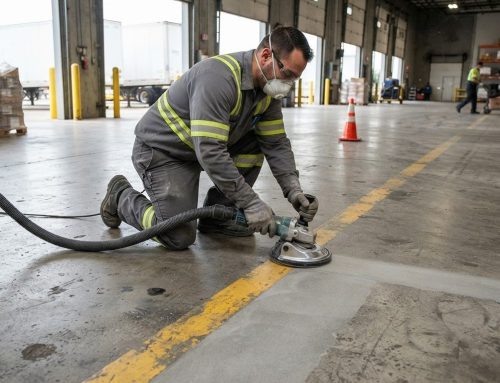
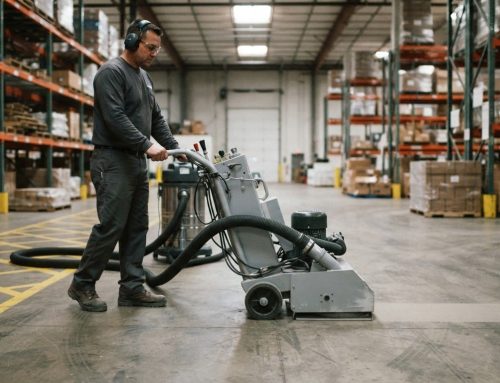
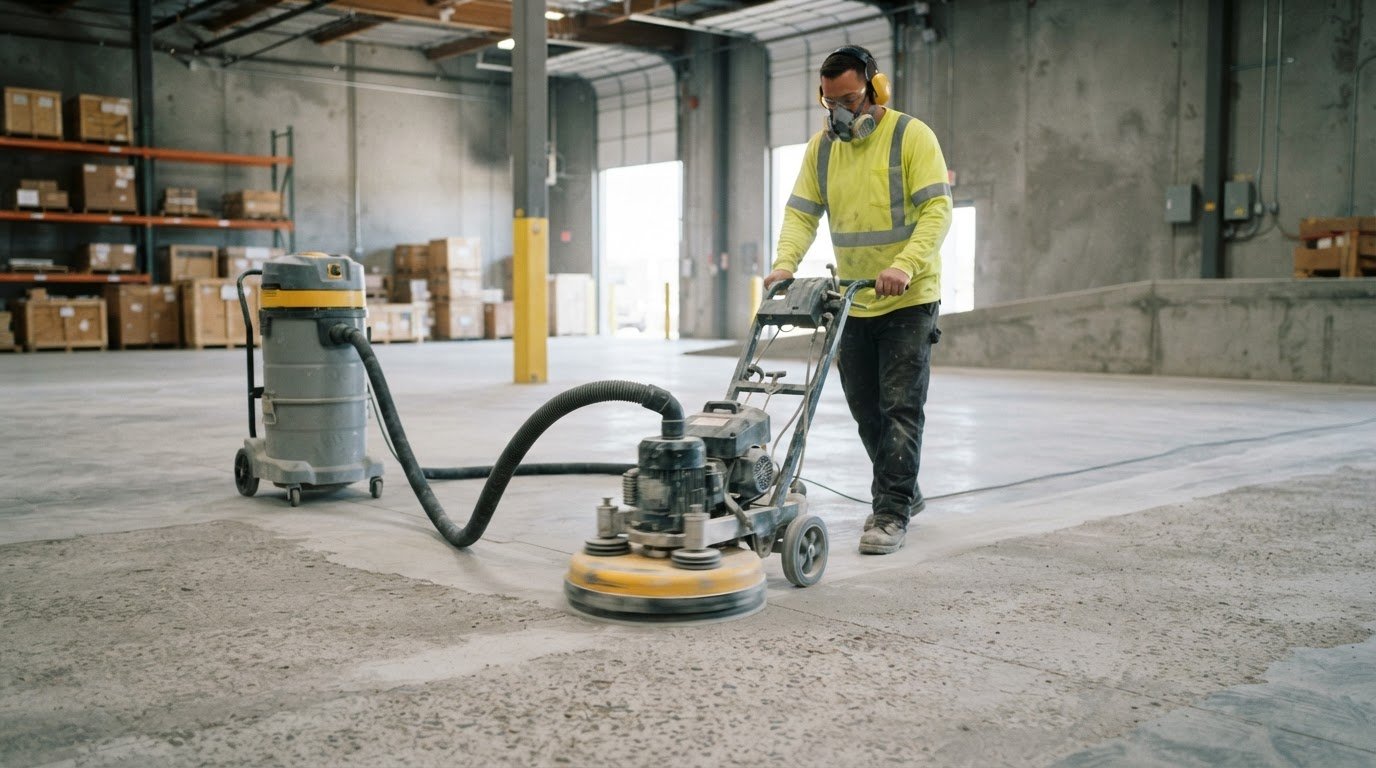
Floor grinding for line removal is the preferred choice for precision work in active warehouses. This method utilizes a planetary diamond system (a machine with multiple rotating heads) to shave away thin-film paints and cured epoxy. It’s ideal because it doesn’t damage the surrounding concrete, leaving a smooth surface that can easily be polished or repainted. Because this process generates fine particulate, we strictly adhere to OSHA regulations for silica dust by using industrial HEPA-filtered vacuums to maintain air quality and prevent contamination in food or pharma environments.
The Role of Shot Blasting in Large-Scale Removal
Shot blasting is a high-production method that fires steel grit at the floor to “blast” away heavy coatings. This is often used for thick epoxy systems or outdoor truck courts where speed is the priority. While efficient, it leaves a much rougher texture (typically CSP 3 to 5), which may require a thicker replacement coating to level the floor. It’s a powerful tool, but it lacks the surgical precision of diamond grinding for intricate indoor layouts. It’s best reserved for projects where the entire surface is being prepared for a new floor system rather than just specific line removal.
Scabbling: For Heavy-Duty Buildup Only
Scabbling is an aggressive, percussion-based technique used only as a last resort for failed floor overlays or extremely thick buildup. The equipment uses piston-driven heads to strike the concrete, which can cause micro-cracking (tiny structural fractures) if handled by inexperienced teams. We generally recommend avoiding this method unless the slab is already severely compromised and requires deep resurfacing. If you aren’t sure which method fits your facility, you can request a technical site assessment from our team of industrial veterans.
Operational Logistics: Minimizing Dust and Downtime During Removal
Maintaining high-volume warehouse throughput is the primary concern for any facility manager during a maintenance cycle. We understand that shutting down a distribution center is rarely an option. Our phased removal approach allows us to isolate specific forklift lanes, completing the work in segments so your operations remain active. We leverage our 29 plus years of experience to coordinate with your logistics team, offering around-the-clock availability to ensure floor grinding for line removal happens during your lowest traffic windows.
Silica dust contamination is a significant risk in environments housing sensitive inventory, such as food, beverages, or pharmaceuticals. Beyond the risk to products, the health of your workforce is paramount. The current OSHA Permissible Exposure Limit (PEL) for respirable crystalline silica is 50 micrograms per cubic meter of air (50 µg/m³) as an eight-hour time-weighted average. Failing to control dust doesn’t just threaten air quality; it can lead to serious regulatory penalties. We utilize specialized engineering controls to mitigate these risks at the source.
Dustless Grinding and HEPA Filtration Systems
Integrated vacuum systems are the standard for modern industrial projects. These units capture dust at the point of contact, preventing fine particulates from becoming airborne and settling on racking or machinery. By following OSHA’s Table 1 requirements, we provide a simplified path to compliance that often eliminates the need for constant air monitoring. For food-grade and pharmaceutical facilities, these dustless systems are non-negotiable because they protect the integrity of the supply chain while maintaining a clean, professional workspace.
Coordinating Removal with New Line Application
The Prep-and-Paint workflow is essential for long-term durability. Once the floor grinding for line removal is complete, the concrete is at its most receptive state for bonding. We manage environmental factors like moisture and surface temperature to ensure the transition to professional warehouse line striping services is seamless. This tight window of execution prevents the newly profiled slab from becoming re-contaminated with warehouse oils or tire marks. If you need to schedule a project that minimizes operational disruption, contact our project management team for a detailed logistics plan.
Restoring Your Facility: From Removal to New Safety Markings
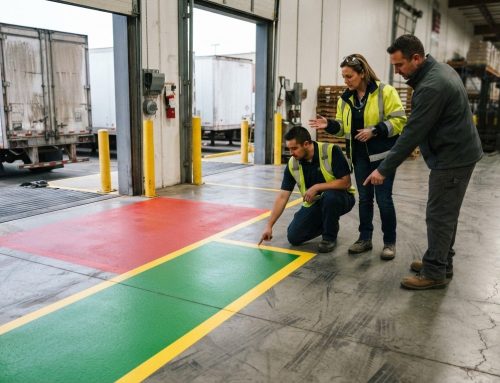
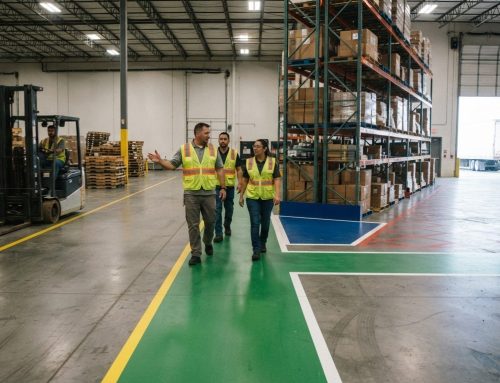
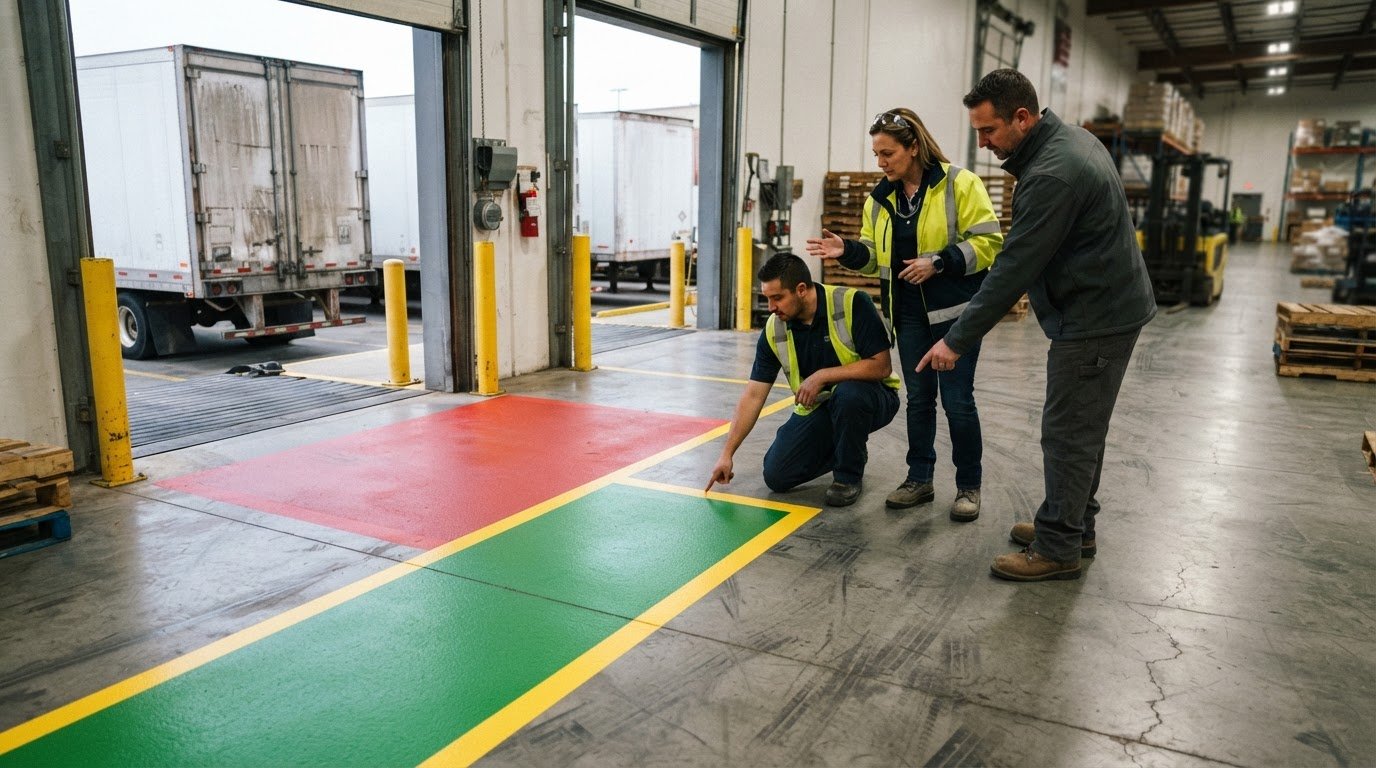
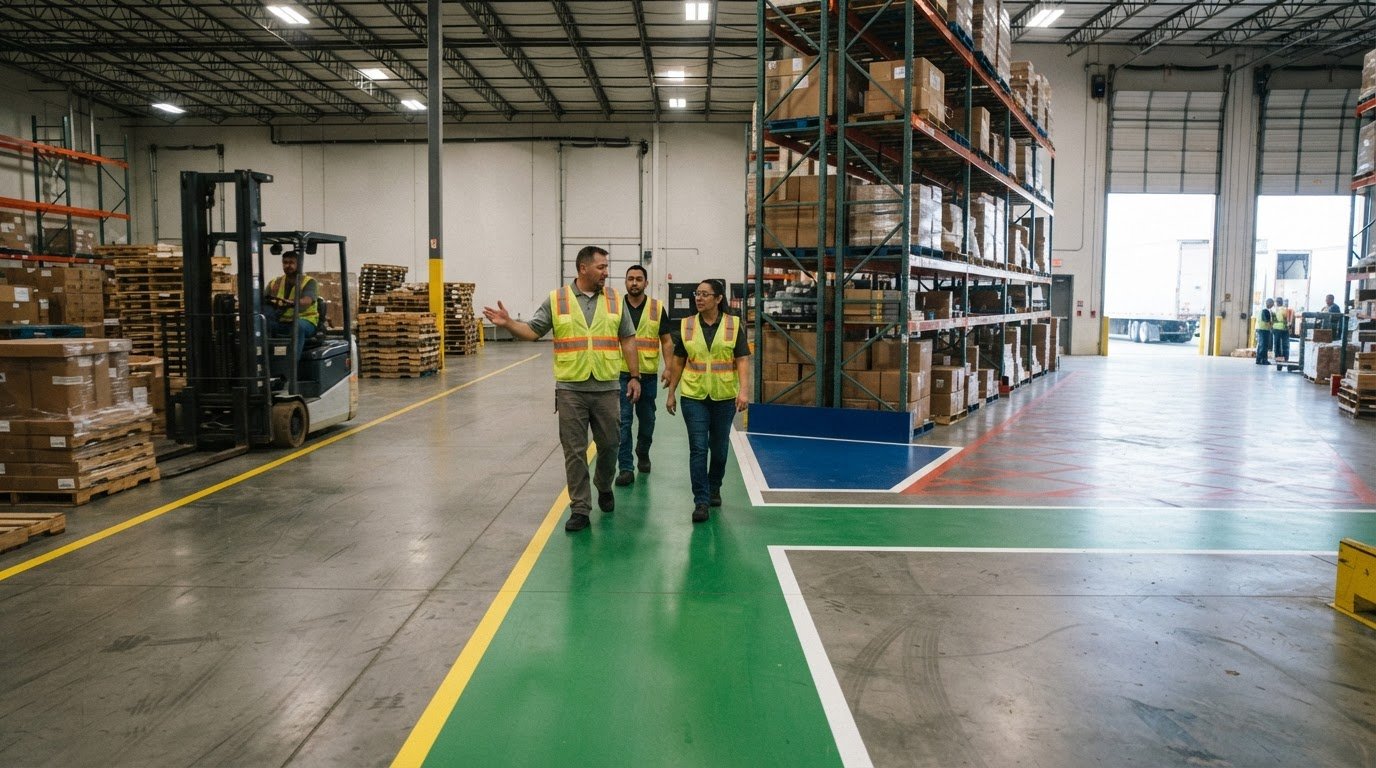
Removing old stripes is only half the battle. True facility restoration involves transitioning from the “taking away” phase to the “building” phase. Much like the professional restoration work done by Sealwerx, after completing the floor grinding for line removal, your concrete is a blank canvas. This is the optimal time to re-evaluate your traffic flow and pedestrian safety aisles. With 29 plus years of industrial experience, we help you design a layout that separates human traffic from heavy machinery. This proactive planning significantly reduces the risk of workplace injuries and improves overall efficiency.
The success of your new markings depends on selecting a material that matches your operational environment. While standard traffic paint is cost-effective for low-impact areas, we recommend epoxy warehouse striping for high-traffic forklift lanes. This material provides superior impact resistance and won’t flake off under heavy loads. In specialized zones, such as forklift battery charging stations, we apply acid-resistant coatings to protect the slab from electrolyte spills. Every marking we install adheres to current OSHA and ANSI color standards. This ensures your facility remains compliant during safety audits and internal inspections.
Long-Term Maintenance of Ground and Striped Floors
A properly executed floor grinding for line removal process creates a “toothed” profile that prevents the “peeling” often seen on unprepared concrete. This mechanical bond is the foundation of a long-lasting safety system. To preserve this investment, you should implement specific cleaning protocols. Harsh chemicals or abrasive brushes can mar the surface prep. It’s better to use pH-neutral cleaners and soft-bristled scrubbers. Regular inspections are also vital. We suggest quarterly walk-throughs to check for visibility and adherence. This disciplined approach ensures your safety markings remain sharp and functional. It protects your workforce and your bottom line at the same time.
Secure Your Facility’s Operational Efficiency
Precision is the foundation of a safe and organized warehouse. By choosing professional floor grinding for line removal, you ensure your facility is free from confusing ghost marks and properly prepared for high-durability epoxy systems. Mechanical preparation is the only reliable way to achieve the necessary Concrete Surface Profile (CSP) for permanent adhesion. Our OSHA-compliant dustless systems protect your inventory and air quality, maintaining the high standards required in food and pharmaceutical environments.
With 29 plus years of industrial expertise and nationwide service capability, we manage the technical logistics so you don’t have to. We coordinate around your specific production schedule to minimize downtime and keep forklift traffic flowing safely. A properly ground and striped floor is a long-term investment in your facility’s safety and organizational clarity. We position ourselves as your safety-conscious consultant, ensuring every project meets budgetary and regulatory constraints.
Take the first step toward a cleaner, more compliant workspace today. Get a Professional Line Removal Quote from StripeGuys and let our veteran team restore your warehouse floor to peak operational condition. We’re ready to help you optimize your industrial workspace.
Frequently Asked Questions
Does floor grinding create a lot of dust in the warehouse?
Modern floor grinding for line removal is virtually dustless when integrated with high-efficiency particulate air (HEPA) filtration systems. These industrial vacuums connect directly to the grinder’s shroud, capturing silica dust at the point of contact. This prevents fine particulates from contaminating your inventory or violating OSHA air quality standards. We prioritize these engineering controls to maintain a clean environment, which is especially critical in food-grade or pharmaceutical facilities where air purity is non-negotiable.
How long does it take to grind and remove 1,000 linear feet of lines?
A standard crew can typically remove 1,000 linear feet of thin-film paint in a single eight-hour shift. However, heavy epoxy buildup or multiple layers of old markings may require more time to ensure a clean concrete surface profile. We coordinate our removal schedule to match your facility’s low-traffic windows. This efficiency is backed by our 29 plus years of experience managing large-scale industrial projects across the country without disrupting forklift operations.
Can you grind lines off of an epoxy-coated floor without removing the whole coating?
Yes, precision floor grinding allows for the targeted removal of safety lines without stripping the entire epoxy floor coating. We use specialized diamond-segmented abrasives to shave away the specific stripe while leaving the surrounding substrate intact. This method is ideal for facility re-layouts where only specific aisles need adjustment. It saves significant time and material costs compared to a full floor resurfacing project, provided the existing coating remains structurally sound and well-bonded.
Is floor grinding better than shot blasting for removing warehouse tape?
Floor grinding is generally superior to shot blasting for removing industrial warehouse tape and its stubborn adhesive residue. Shot blasting can sometimes “bounce” off flexible tape surfaces or drive the adhesive deeper into the concrete pores. Grinding physically shears the tape and glue away from the slab, leaving a clean, profile-ready surface. This ensures that your new safety markings won’t suffer from bond failure caused by leftover sticky contaminants or old tape fragments.
How much does professional floor grinding for line removal cost?
The cost of professional floor grinding for line removal depends on the linear footage, the thickness of the existing material, and the required concrete surface profile. Projects involving heavy epoxy or multiple paint layers require more diamond tooling and labor time than thin-film removal. We provide comprehensive technical site assessments to evaluate these variables. This approach ensures an accurate project scope that respects your budgetary constraints while delivering a high-quality, OSHA-compliant finish for your facility.
Will floor grinding damage my concrete slab or leave permanent marks?
Floor grinding removes a micro-layer of the concrete surface, usually less than 1/16th of an inch, to eliminate pigment and contaminants. While this creates a visible change in the floor’s texture, it doesn’t compromise the structural integrity of the slab. In fact, this process is necessary to remove “ghost lines” and prepare the concrete for a permanent bond. We select specific diamond grit levels to ensure the final finish is smooth and level for forklift traffic.