With the paints and coatings sector representing 59.28% of the global market in 2025, industrial epoxy resin is now a foundational safety component rather than a simple floor covering. You’ve probably dealt with the logistical headache of floor markings that peel after just three months or DIY coatings that can’t handle heavy machinery. Since 1994, our team has seen how improper surface preparation leads to total system failure, costing facilities thousands in rework and lost productivity.
We agree that your facility cannot afford to sit idle while waiting for a floor to dry. This guide promises to help you master the technical specifications and curing requirements needed to ensure long-term durability and worker safety. We will preview the May 19, 2026, OSHA Hazard Communication Standard updates, explain the growth of waterborne epoxy systems, and detail the ASTM standards required for high-traffic environments. You’ll gain the specific knowledge needed to plan your next project without the stress of unexpected failures or safety hazards.
Key Takeaways
- Differentiate high-solids industrial systems from retail kits to prevent floor markings from peeling under the weight of heavy machinery.
- Master the timing of epoxy resin curing cycles, which includes understanding pot life and full chemical hardening, to minimize operational downtime.
- Learn how to achieve the proper Concrete Surface Profile (CSP), or “roughing up the smooth surface,” to eliminate the primary cause of industrial coating failure.
- Evaluate ASTM D695 compressive strength requirements to ensure your selected floor system can withstand the daily rigors of a high-volume logistics hub.
Understanding Industrial Epoxy Resin for High-Traffic Environments
Industrial epoxy resin isn’t just a thick paint. It’s a chemical bond. While standard floor paint dries through simple evaporation, industrial epoxy cures through a specific chemical reaction between a resin and a hardener. This process creates a thermosetting polymer that physically fuses to the concrete substrate. Since 1994, we’ve helped facility managers move away from standard paints that flake under forklift traffic, providing a surface that stands up to 24/7 operations. Standard paints sit on top of the surface, but industrial epoxy becomes part of the floor itself.
Maintaining OSHA-compliant safety boundaries requires more than just a visible line. It requires a durable one. When safety markings peel, they create hazards and confusion in high-traffic zones, potentially leading to accidents. Our approach follows a specific safety, quality, and communication triad. We prioritize the safety of your paths of egress (exit routes), ensure the quality of the bond through technical precision, and maintain open communication to minimize your facility’s downtime. This no-nonsense strategy ensures your floor remains compliant and your budget remains intact.
The Chemistry of Industrial Durability
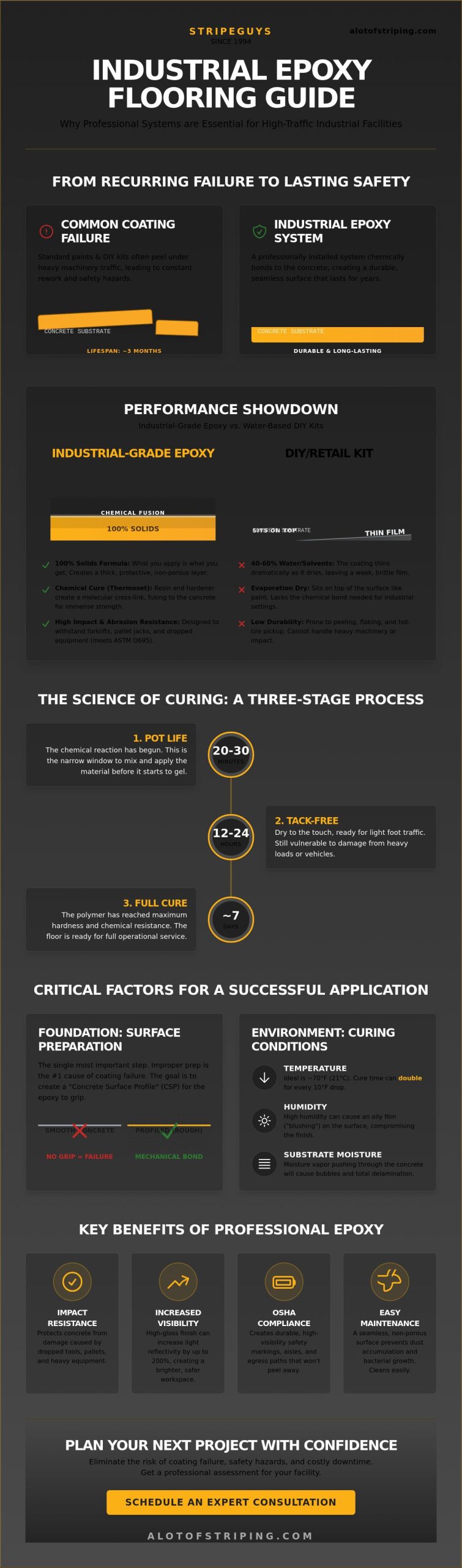
The strength of an industrial floor depends on the molecular cross-linking of the materials used. When you mix the resin with the curing agent, they form a tight, non-porous structure. For a comprehensive overview of epoxy chemistry, you’ll find that these epoxide groups are specifically designed for high-strength adhesion. In a professional setting, we utilize 100% solids epoxy. This means that 100% of the product applied to the floor stays on the floor after it cures. Water-based DIY kits often contain 40% to 60% water or solvents that evaporate, leaving behind a thin, brittle film that can’t handle heavy pallet jacks.
Benefits of Epoxy for Large-Scale Facilities
Impact resistance is the primary benefit for manufacturing hubs. High-solids epoxy resin systems protect the underlying concrete from the shock of dropped pallets or heavy equipment. These systems act as a shock absorber for your slab. Additionally, these surfaces are seamless. This prevents dust accumulation and bacterial growth in the cracks of the concrete, making the facility much easier to clean with standard industrial scrubbers.
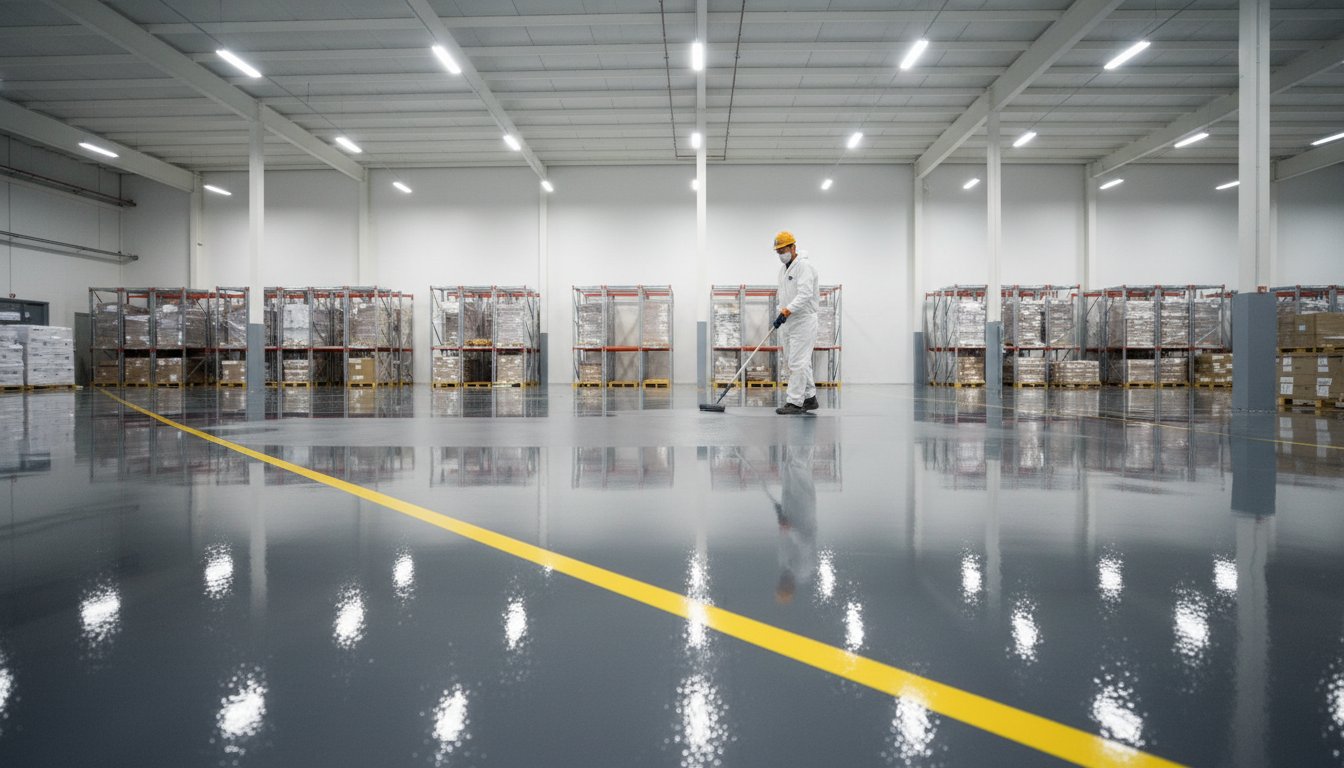
Visibility also sees a major boost. A high-gloss resin system can increase light reflectivity by up to 200%. This makes your warehouse brighter and safer for forklift operators without increasing your monthly energy bill. By choosing a system that meets ASTM D695 standards for compressive strength, you ensure your floor remains a functional asset rather than a recurring maintenance liability.
The Science of Curing and Hardening Cycles
Understanding the difference between drying and curing is vital for facility managers. While household paint dries through evaporation, industrial epoxy resin hardens through an exothermic chemical reaction. This process involves three distinct stages: pot life, tack-free time, and full cure. Pot life is the narrow window, often only 20 to 30 minutes, where the material remains workable in the mixing bucket. Once applied, the floor reaches a tack-free state (dry to the touch), but it hasn’t yet achieved its structural integrity. Since 1994, we’ve seen many projects fail because teams rushed back onto the floor before the chemical cross-linking was complete.
Premature loading is the most common cause of aesthetic and structural damage. If you drive a 10,000-pound forklift over a floor that is only 24 hours old, you risk “blushing” or leaving permanent tire indentations in the soft polymer. To minimize operational downtime, we often coordinate applications during holiday weekends or scheduled plant shutdowns. Our team works day and night shifts to ensure your facility returns to service without compromising the bond. If you’re planning a tight turnaround, consulting with specialized line painting experts can help you align your production schedule with these chemical realities.
Factors Affecting Return-to-Service Timelines
Ambient conditions dictate the speed of the reaction. We consider 70°F the “sweet spot” for industrial curing; however, for every 10-degree drop in temperature, the curing time can double. High humidity is equally dangerous, as it can cause a “carbureted” finish or oily film on the surface. We also test for substrate moisture (moisture vapor transmission) because trapped water will push the resin off the concrete, leading to bubbles and delamination. Full cure is defined as the state where the polymer reaches its maximum shore hardness and chemical resistance.
Traffic Readiness Milestones
We use a strict timeline to protect your investment and ensure safety. While every epoxy resin formulation varies, these general milestones prevent early-stage damage:
- Foot traffic: Usually safe after 12 to 24 hours. Staff can walk on the surface to inspect the work, provided they wear clean footwear.
- Light vehicle traffic: Electric pallet jacks and small carts can typically resume after 48 hours.
- Heavy forklift traffic: A minimum of 72 hours is the industry standard for safety. This ensures the floor can handle the high point-load pressure of solid forklift tires without deforming.
By respecting these technical windows, you ensure the durability of your paths of egress and heavy-duty work zones. Rushing the process might save eight hours today, but it can lead to weeks of repair work later.
Industrial-Grade vs. DIY Resin: Performance Differentiators
Retail epoxy kits found in “big box” stores are designed for residential garages with light foot traffic, not 100,000 square foot logistics centers. Since 1994, we’ve seen facility managers attempt to save on initial costs by using these consumer-grade products, only to watch them peel under forklift tires within 180 days. The failure usually happens because these kits are water-based or solvent-thinned, leaving behind a brittle film once the liquid evaporates. In contrast, a high-solids industrial epoxy resin creates a thick, resilient wear layer that physically reinforces the concrete surface.
Industrial systems are categorized as “high-build” coatings. While a DIY kit might result in a dry film thickness of only 3 mils (three-thousandths of an inch), professional applications often range from 20 to 30 mils for high-traffic paths of egress. This extra thickness isn’t for looks. It provides the necessary material volume to absorb the kinetic energy of heavy machinery. Additionally, we specify UV-stable topcoats for facilities with large skylights to prevent ambering (yellowing), which can degrade the visibility of safety markings over time.
Chemical Resistance and Novolac Epoxies
Standard Bisphenol A resins work well for general warehouse use, but they often fail in battery charging stations or chemical storage rooms. For these extreme environments, we utilize Novolac epoxy. This specialized resin features a higher cross-link density, allowing it to withstand prolonged exposure to sulfuric acid and aggressive solvents. We also prioritize “non-blushing” formulas. These prevent the oily, white surface film that often forms when standard resins are applied in humid industrial environments, ensuring the bond remains clean and professional.
Compressive Strength and Forklift Traffic
The ability of a floor to handle weight is measured by ASTM D695 compressive strength standards. While standard concrete might have a compressive strength of 3,000 to 5,000 PSI, an industrial-grade epoxy resin can exceed 10,000 PSI. This is critical for managing the point loads of high-reach trucks and heavy racking systems. At StripeGuys, our standard for industrial-grade thickness ensures the coating doesn’t just sit on the floor but acts as a structural reinforcement. We focus on the physical realities of your facility, ensuring that every line we paint survives the constant friction and weight of your daily operations.
Surface Preparation: The Foundation of Epoxy Success
Statistics from industrial coating inspections show that 90% of all epoxy resin failures are the direct result of inadequate surface preparation. Since 1994, we’ve focused on the technical reality that a coating is only as strong as its bond to the concrete substrate. If you apply high-performance resin over a floor that hasn’t been properly prepared, the system will eventually delaminate under the stress of forklift traffic. This failure typically occurs because the resin was unable to achieve a mechanical “anchor” into the pores of the concrete.
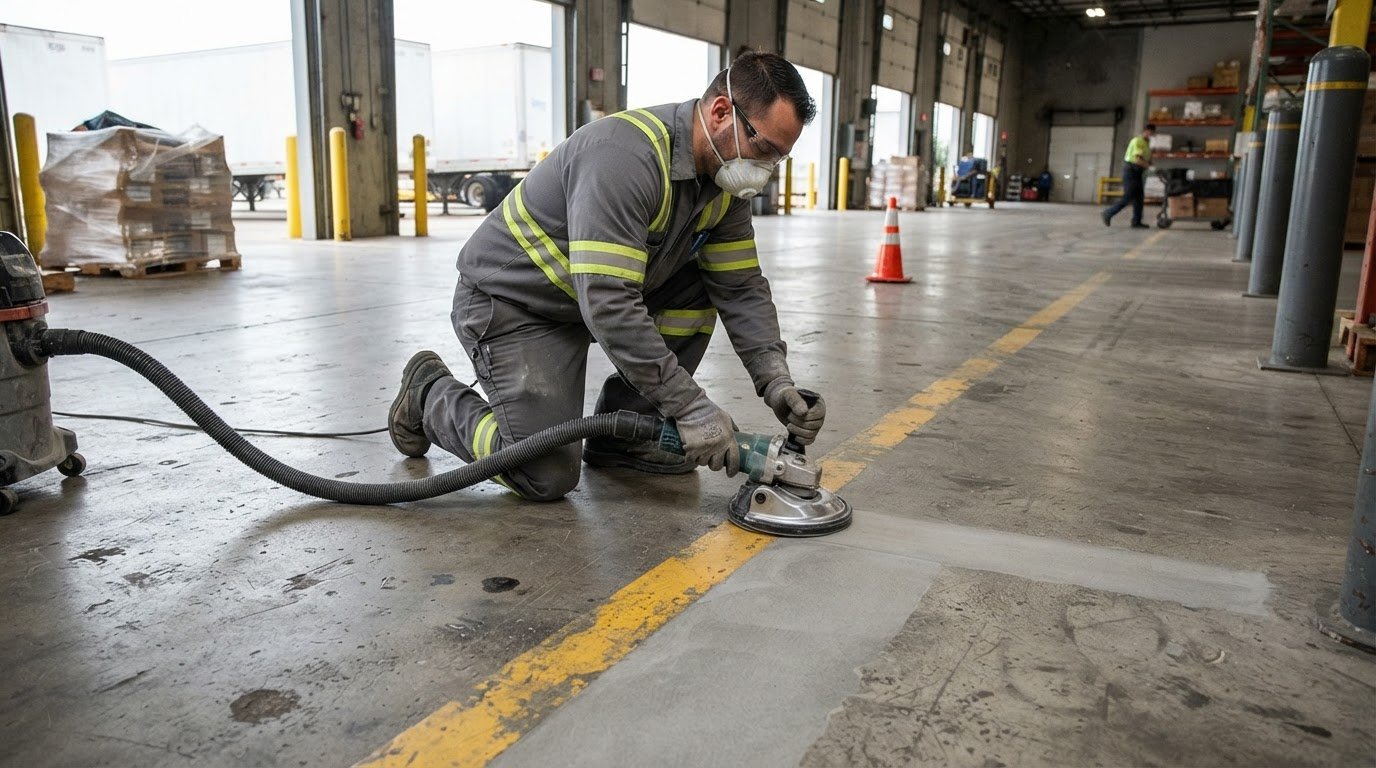
One major obstacle is concrete laitance, which is a weak, milky layer of cement and sand that rises to the surface during the curing of new concrete. If this layer isn’t removed, your expensive industrial coating is merely bonding to a powdery residue rather than the structural slab. Similarly, you cannot apply industrial epoxy over existing oil-based paints or old floor markings. The chemical bond will fail, leading to peeling and safety hazards. For a clean start, we utilize professional shot blasting line removal to ensure every square inch of the application area is stripped to bare, sound concrete.
Mechanical Profiling: Shot Blasting vs. Grinding
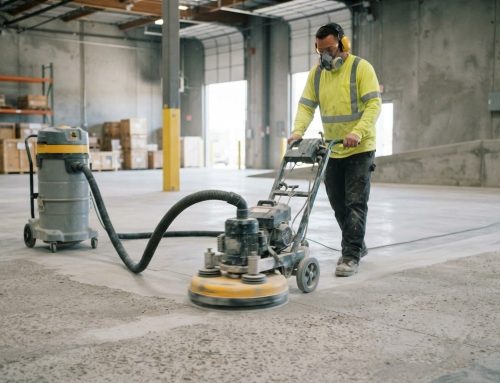
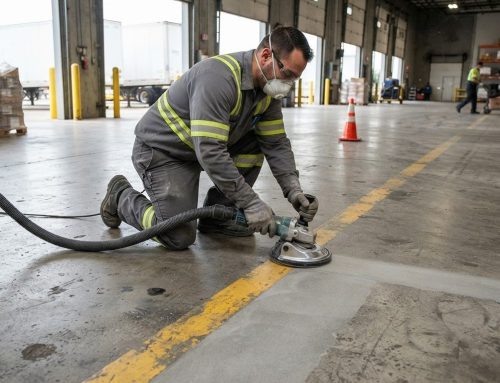
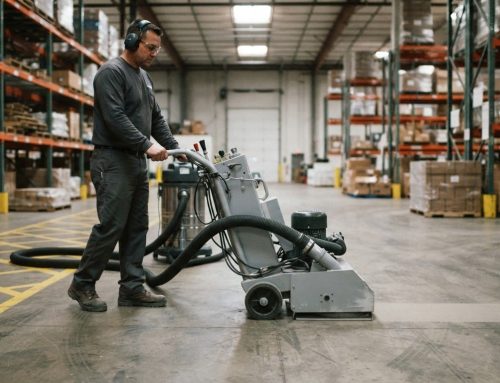
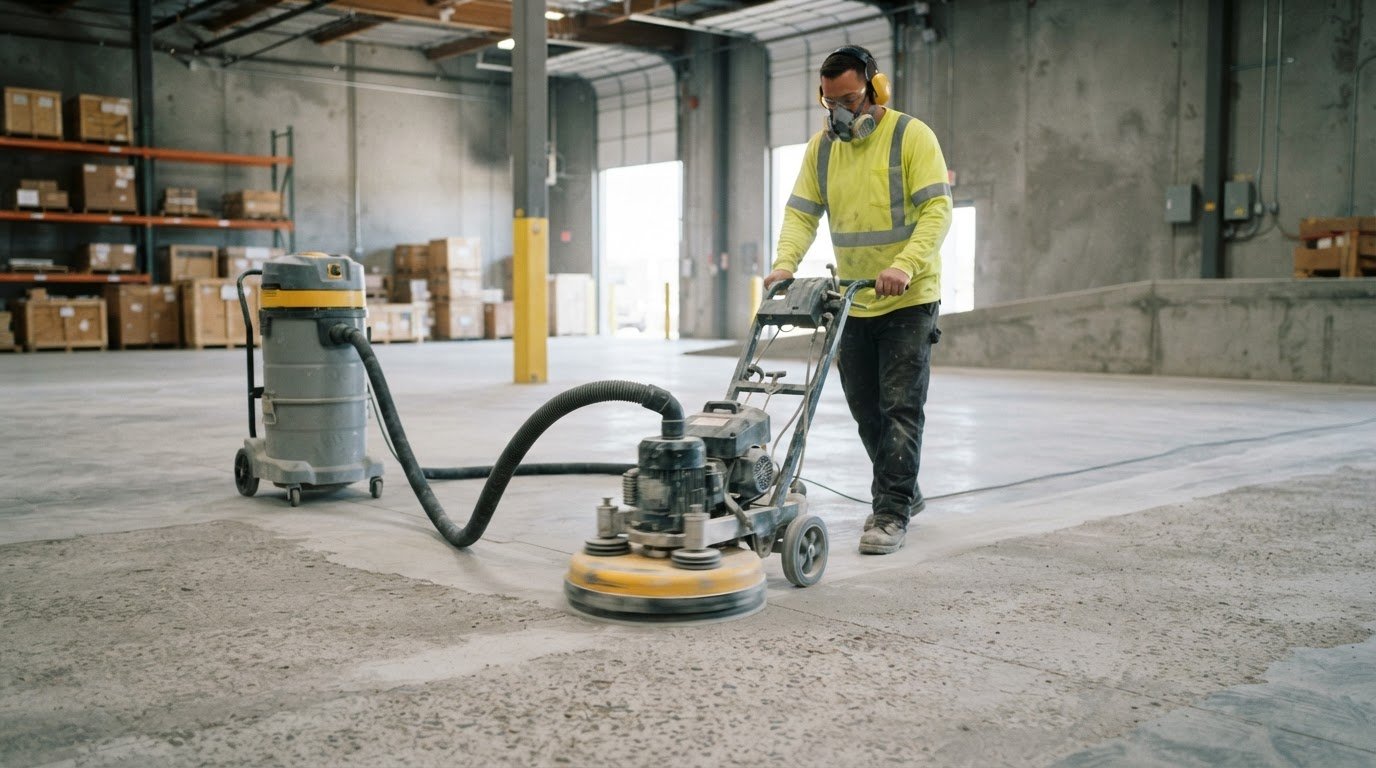
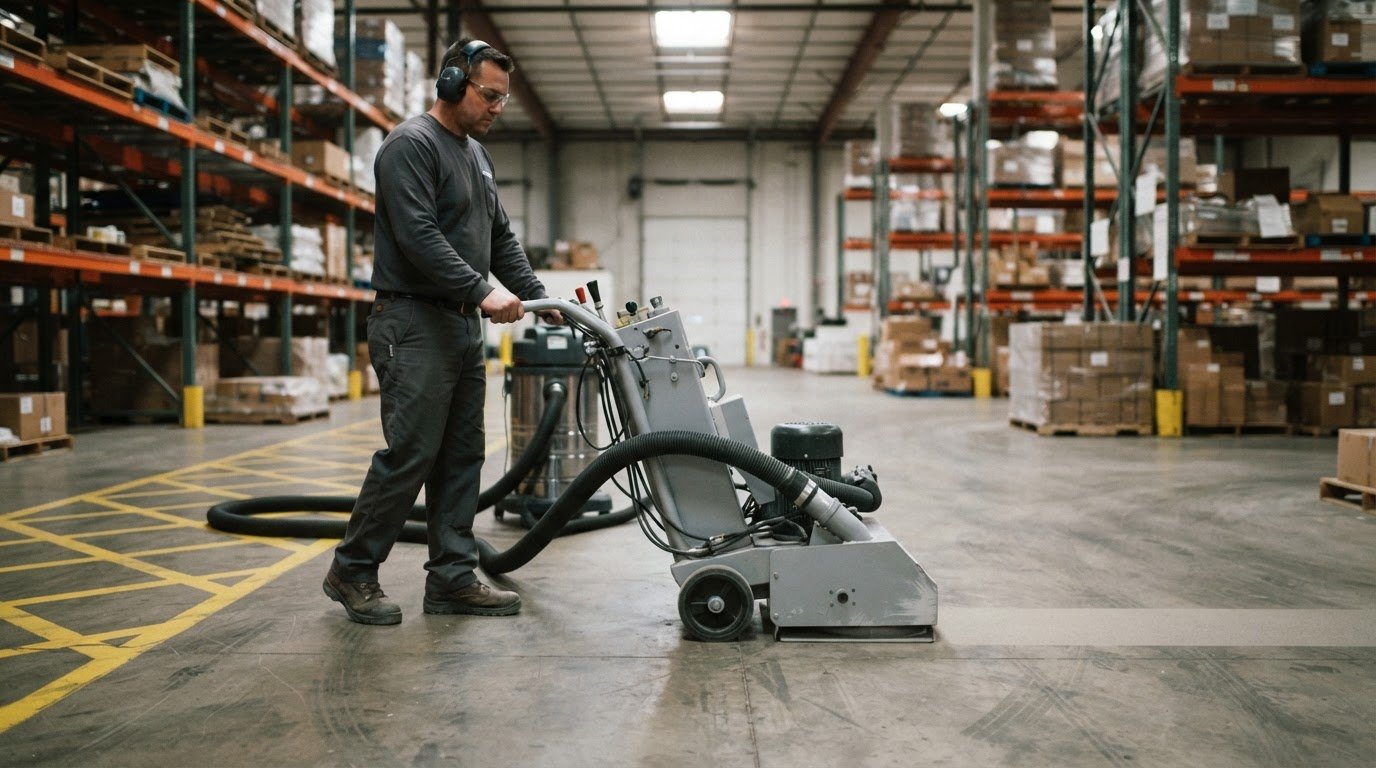
To ensure a permanent bond, we utilize the Concrete Surface Profile (CSP) scale, which ranges from 1 (nearly smooth) to 9 (very rough). Shot blasting is the “gold standard” for heavy-duty applications because it achieves a CSP of 3 to 5 by firing small steel spheres at the floor. This process is essential for mechanical profiling (roughing up the smooth surface) so the resin has a “toothy” texture to grip. Diamond grinding is an alternative used for thinner coatings, utilizing industrial-grade diamonds to shave away the top layer of concrete and open the pores for better penetration.
Moisture Testing and Vapor Barriers
Substrate moisture is a silent killer of industrial floors. We perform the ASTM F1869 Calcium Chloride test to measure moisture vapor emission rates before any epoxy resin is mixed. If the emission rate is too high, hydrostatic pressure will eventually push the coating off the floor, causing it to “bubble” and crack. In facilities where moisture is a known issue, we install a moisture-mitigating primer. This specialized barrier blocks the upward movement of water vapor, protecting the main resin coat and ensuring the long-term integrity of your paths of egress and work zones.
Selecting the Right Epoxy System for Your Facility
Choosing the correct epoxy resin system requires a detailed analysis of your facility’s daily workflow. You must match the resin viscosity to your desired floor texture. Low-viscosity resins penetrate deeper into the concrete pores for a superior bond, while high-viscosity resins are better for vertical surfaces or creating thick safety boundaries. Anti-slip additives are another critical consideration for facility managers. While a rougher texture increases worker safety in wet environments, it also makes the floor harder to clean. We often recommend a balance, using aluminum oxide or quartz broadcast to provide traction without trapping excessive dirt or debris.
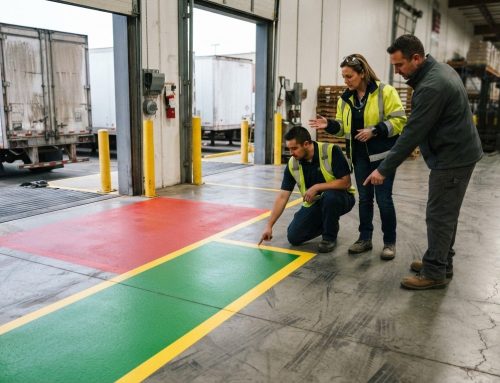
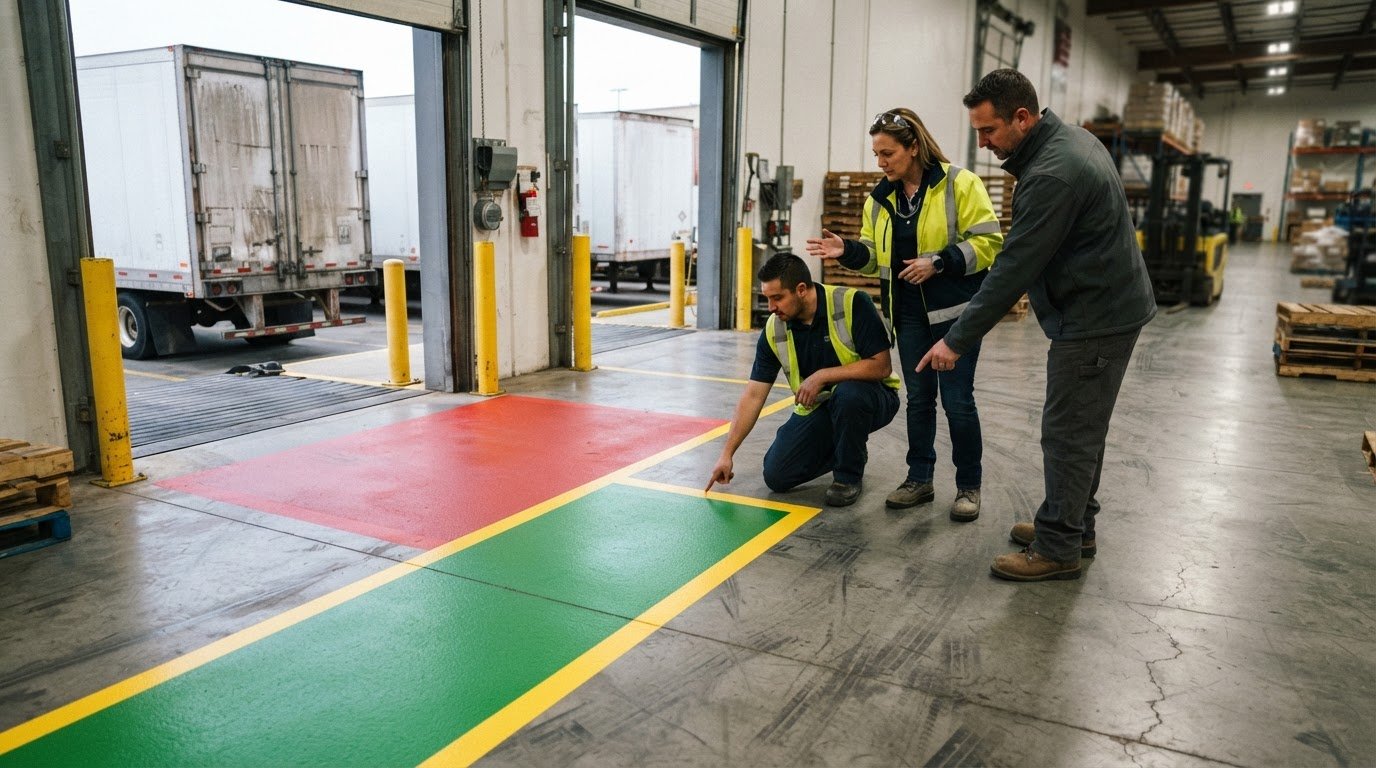
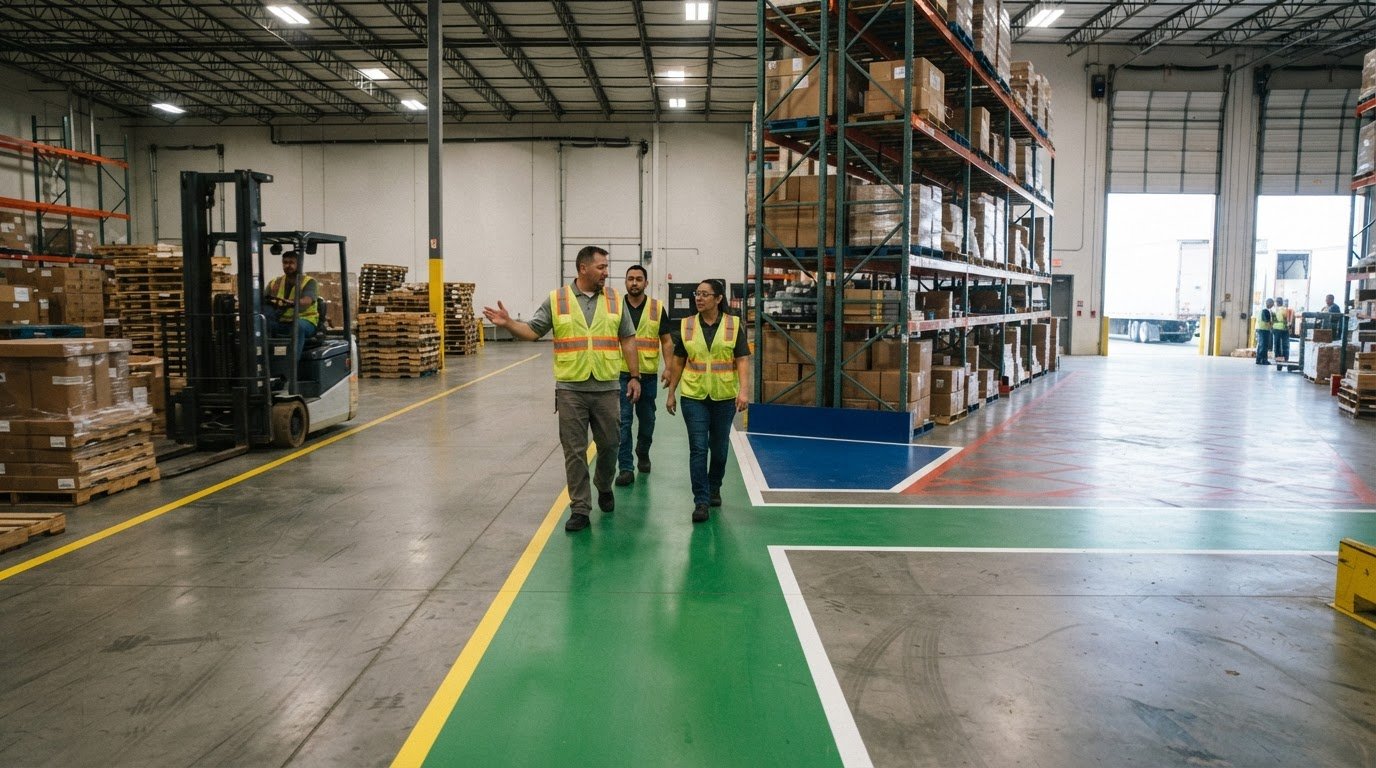
Color coding serves as a permanent 5S organizational tool. Instead of using temporary tape that peels and creates trip hazards, we use industrial-grade epoxy for permanent line painting. This creates clear, durable boundaries for equipment parking, pallet storage, and hazardous zones. Since 1994, our team has applied these systems across millions of square feet of industrial space. We ensure that safety markings remain visible and intact for years rather than months, even in high-traffic forklift environments. This long-term reliability is why we focus on functional outcomes that protect your staff and your bottom line.
Specialized Epoxy Solutions
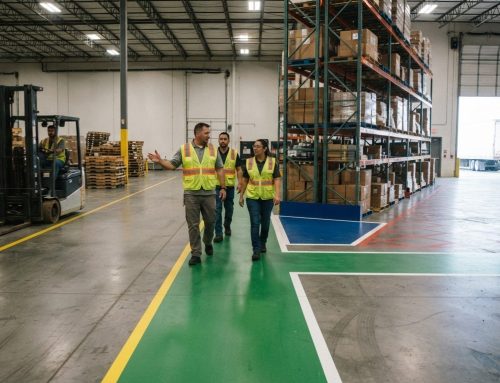
Certain industrial environments require specific chemical properties beyond basic impact resistance. For electronics manufacturing, Electrostatic Dissipative (ESD) flooring is mandatory to prevent static discharge from damaging sensitive components. In food processing or pharmaceutical labs, we utilize antimicrobial resins that inhibit the growth of mold and bacteria. We also specialize in high-visibility safety yellow for permanent pedestrian walkways. These designated paths of egress keep foot traffic separated from forklift zones, significantly reducing the risk of workplace collisions. These specialized systems are designed to meet the rigorous demands of high-profile industrial projects.
The StripeGuys Professional Approach
Our service model is built on the triad of safety, quality, and communication. We provide national coverage for large-scale industrial projects, managing everything from shot blasting line removal to the final epoxy resin application. We understand that your operations don’t stop, which is why we offer day and night availability to minimize your facility’s downtime. Our crews have navigated the complexities of industrial flooring since 1994, delivering results that prioritize functional outcomes over aesthetic flair. We position ourselves as a safety-conscious consultant invested in your organization’s efficiency. You can text us directly for a consult on your industrial resin needs and find out how we can secure your facility’s future.
Securing Your Facility’s Operational Safety
A durable floor system isn’t a luxury; it’s a structural necessity for high-volume logistics. You now understand that successful epoxy resin application depends on precise mechanical surface profiling and respecting the 72-hour curing window for heavy forklift traffic. Since 1994, our team has applied these technical standards to high-profile manufacturing projects across the country. We prioritize functional outcomes that eliminate the stress of peeling lines and safety hazards.
Our specialized approach to shot blasting and diamond grinding (roughing up the smooth surface) ensures your floor markings bond permanently to the concrete. We’ve spent nearly three decades refining the safety, quality, and communication triad to help facility managers maintain OSHA compliance without exceeding their budgets. If you’re ready to upgrade your facility with a system designed for the physical realities of your environment, we’re available day and night to assist.
Get a Professional Industrial Epoxy Consultation from StripeGuys
We look forward to helping you organize a safer and more efficient warehouse today.
Frequently Asked Questions
How long does industrial epoxy resin take to cure for forklift traffic?
Industrial floors require a minimum of 72 hours to reach a full chemical cure at 70°F before they can support heavy forklift traffic. While the surface may feel dry to the touch (tack-free) within 12 to 24 hours, the internal cross-linking hasn’t reached its maximum Shore D hardness. Rushing this process can lead to permanent tire indentations or delamination. Since 1994, our team has coordinated with facility managers to schedule these applications during 3-day holiday weekends to ensure the floor is ready for heavy loads.
What is the difference between 100% solids epoxy and water-based epoxy?
100% solids epoxy resin contains no evaporative solvents, meaning the wet film thickness is identical to the dry film thickness after curing. Water-based systems often lose 40% to 50% of their volume as the water evaporates, leaving a thin, brittle coating. Industrial-grade solids provide a high-build wear layer that physically reinforces the concrete. This thickness is what allows the floor to absorb the kinetic energy of heavy machinery without cracking.
Can I apply new epoxy resin over old warehouse floor markings?
You shouldn’t apply new resin over existing oil-based paint or old markings because the new coating will only be as strong as the failing bond underneath. To ensure a permanent result, we utilize shot blasting line removal to reach the bare concrete substrate. This process removes all contaminants and old coatings, allowing the new resin to anchor deeply into the pores. Proper preparation prevents the new lines from peeling when forklifts perform tight turns on the surface.
Does industrial epoxy resin smell during the application process?
Professional 100% solids epoxies have very low odor because they contain few volatile organic compounds (VOCs). However, some specialized primers or chemical-resistant topcoats may have a distinct scent during the pot life (workable window) and curing phase. We prioritize the safety, quality, and communication triad by coordinating with your facility’s safety officer to manage ventilation. We often perform applications during off-shifts to minimize any impact on your staff.
How much does a professional industrial epoxy floor cost per square foot?
Professional installation costs vary based on the required Concrete Surface Profile (CSP) and the total square footage of the project. Industry data from 2025 suggests that high-build industrial systems typically range from $3.00 to $12.00 per square foot. This price includes mechanical surface preparation (roughing up the smooth surface) and the application of multiple resin layers. We don’t provide final estimates without a site walk to assess the condition of your concrete slab.
What is a Novolac epoxy and when is it required?
Novolac epoxy is a specialized epoxy resin with a higher cross-link density designed for extreme chemical resistance. It’s required in environments like battery charging stations, chemical storage rooms, or pharmaceutical labs where the floor faces exposure to sulfuric acid or aggressive solvents. If your facility handles corrosive materials, a standard resin will etch and fail. Novolac systems provide a durable barrier that protects the structural integrity of your concrete substrate.
How do I maintain an epoxy floor to ensure it lasts 10+ years?
Maintaining a resin floor requires a daily sweep and a weekly mechanical scrub using a soft-bristled brush and a pH-neutral cleaner. Sand and grit act like sandpaper under the weight of a 10,000-pound forklift, so removing abrasive debris is the most effective way to extend the floor’s lifespan. Since 1994, we’ve seen well-maintained industrial floors exceed a decade of service by simply following a consistent cleaning schedule that prevents surface scratching.
Is epoxy resin floor marking better than floor tape for 5S systems?
Epoxy line painting is the superior choice for permanent 5S organizational systems because it doesn’t peel or create trip hazards. While floor tape is useful for temporary setups, it quickly degrades under the friction of forklift tires and industrial scrubbers. Resin markings become an integrated part of the floor surface. This ensures your paths of egress and safety boundaries remain visible and OSHA-compliant for years, reducing the long-term cost of maintenance and replacement.