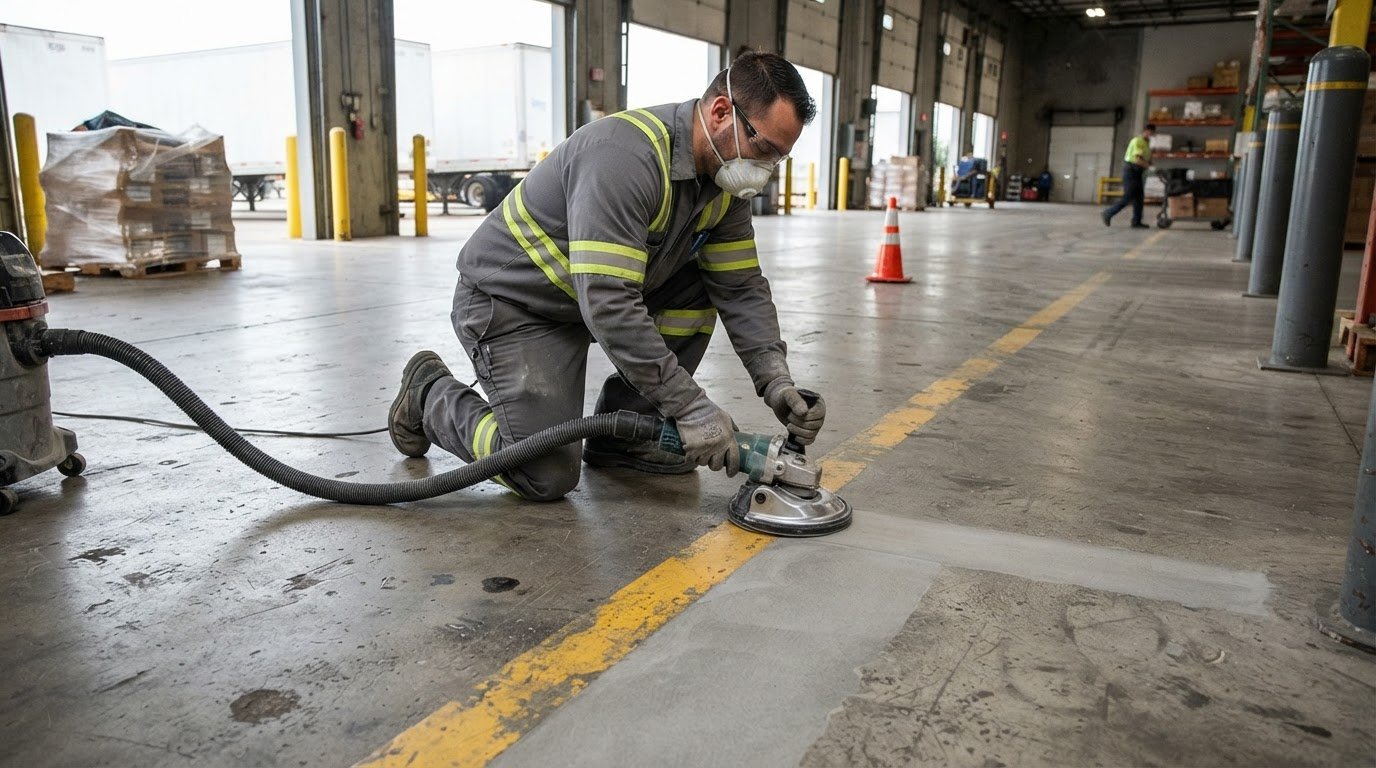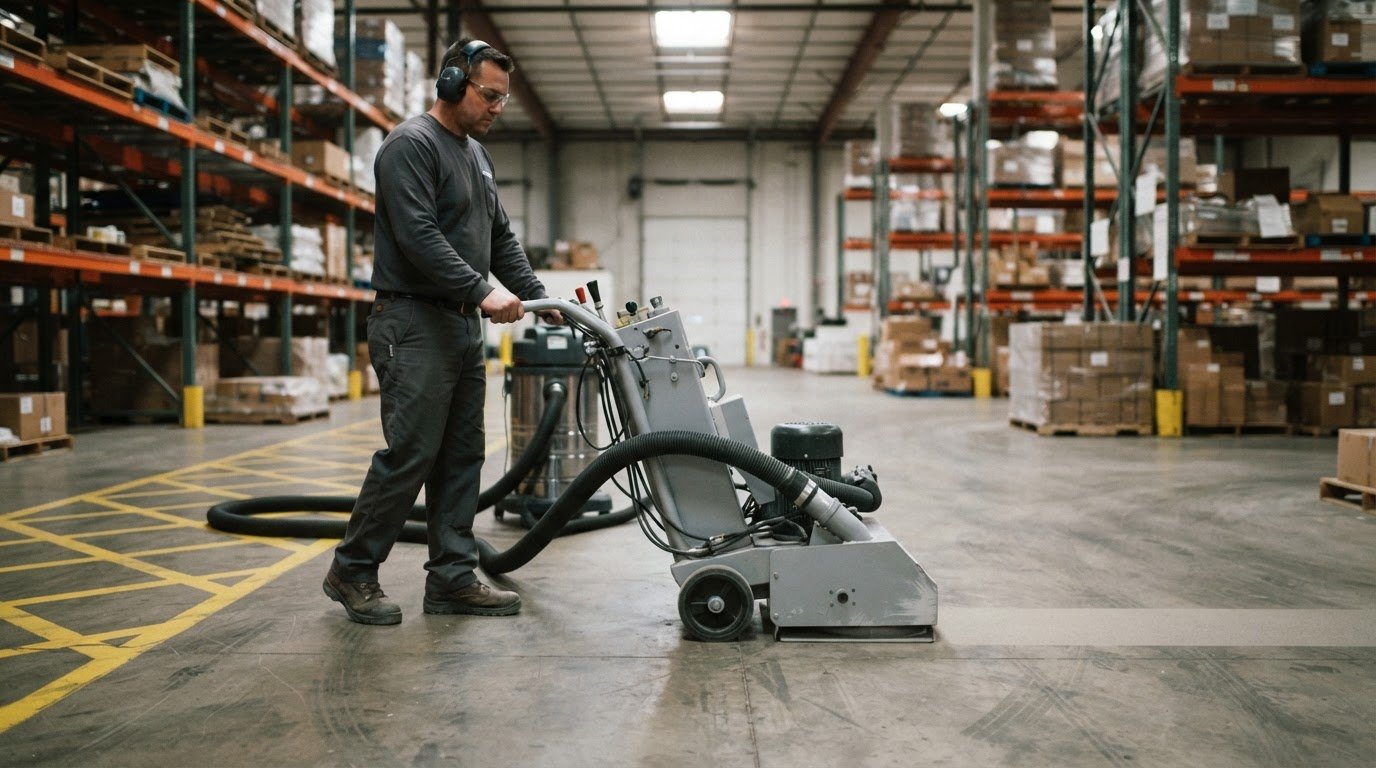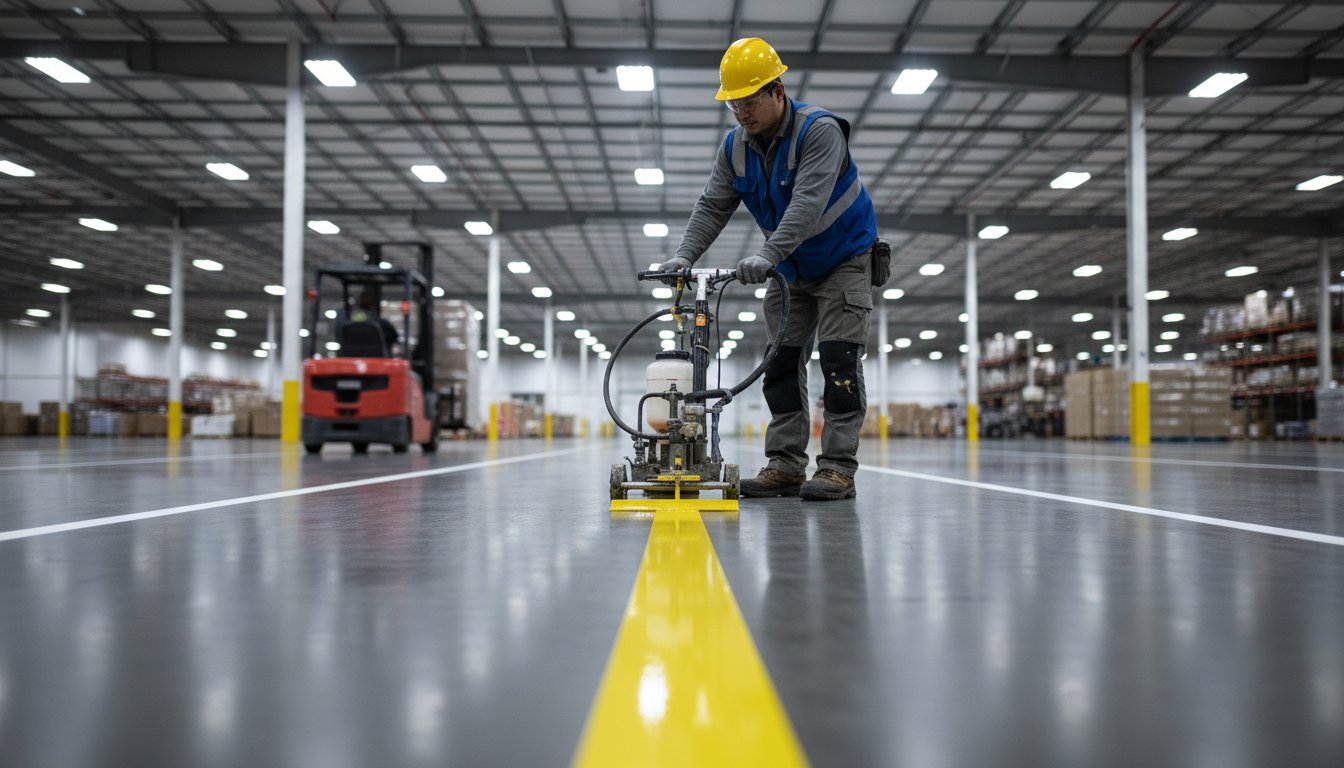
In 2022, the Bureau of Labor and Statistics reported 5,486 fatal work injuries, representing a 5.7 percent increase from 2021. For facility managers, these numbers highlight the high stakes of maintaining clear paths of egress and safe traffic zones through industrial epoxy line painting. You likely understand that standard traffic paint often fails within six months under heavy forklift use, leading to constant maintenance cycles and potential OSHA violations. It’s a common frustration to see your safety investment peel away shortly after the contractor leaves the site.
This guide explains why professional epoxy applications are the gold standard for facilities that prioritize long term durability over temporary fixes. You’ll learn how to implement a permanent marking system that withstands the physical realities of high traffic environments. Our team has focused on the triad of safety, quality, and communication since 1994 to solve these logistical headaches. We’ll walk you through the essential steps of mechanical surface preparation, such as diamond grinding (roughing up the smooth concrete), to ensure a lasting bond. We also cover the 2026 cost benchmarks for safety coatings and the specific ANSI color standards required to keep your facility organized and efficient.
Key Takeaways
- Understand how industrial epoxy line painting creates a permanent bond with the concrete substrate to prevent peeling and shearing in high-traffic zones.
- Learn why mechanical surface preparation, such as diamond grinding (roughing up the smooth surface), is the essential foundation for any marking system that must survive heavy forklift traffic.
- Compare the long-term durability of high-solids resins against traditional tape and paint to see how epoxy resists tire burn and chemical exposure.
- Discover strategic layout techniques for separating paths of egress from mechanical equipment lanes to improve overall facility safety and organizational efficiency.
- Identify ways to minimize operational downtime by utilizing phased installations and night or weekend scheduling to keep your production lines moving.
The Role of Industrial Epoxy Line Painting in Facility Safety
Industrial epoxy line painting is a specialized safety infrastructure investment rather than a simple maintenance task. Unlike standard latex or acrylic traffic paints that sit on the surface, this system utilizes high-solids Epoxy resins to create a permanent chemical bond with the concrete substrate. Since 1994, we’ve observed that the primary reason floor markings fail is the distinction between “coating” and “bonding.” Standard paint acts as a film that rests on top of the floor. When a 10,000 pound forklift executes a tight turn, the shearing force easily rips that film away. A professional epoxy system penetrates the concrete pores to become part of the floor itself, resisting the “tire burn” and friction that destroys cheaper alternatives.
The return on investment for permanent markings is significant. While standard paint may require reapplication every 6 to 12 months, high-quality epoxy systems often last 2 to 3 years or longer in heavy manufacturing environments. This longevity eliminates the constant cycle of facility downtime and labor costs associated with frequent re-striping. Beyond durability, clear markings directly impact staging area efficiency. When pallet positions and equipment zones are defined by crisp, high-contrast lines, operators spend less time searching for materials and more time moving product. This organization reduces the risk of forklift-pedestrian near-misses, which is critical considering that forklift accidents resulted in 73 work-related deaths between 2021 and 2022.
Meeting OSHA and Safety Requirements
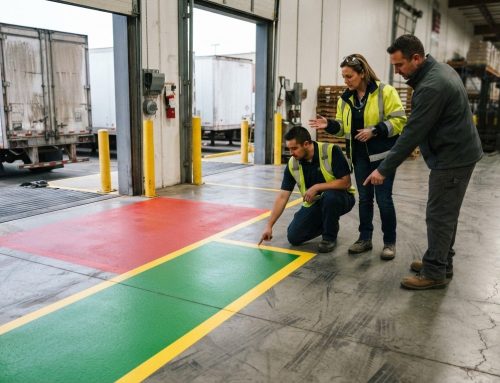
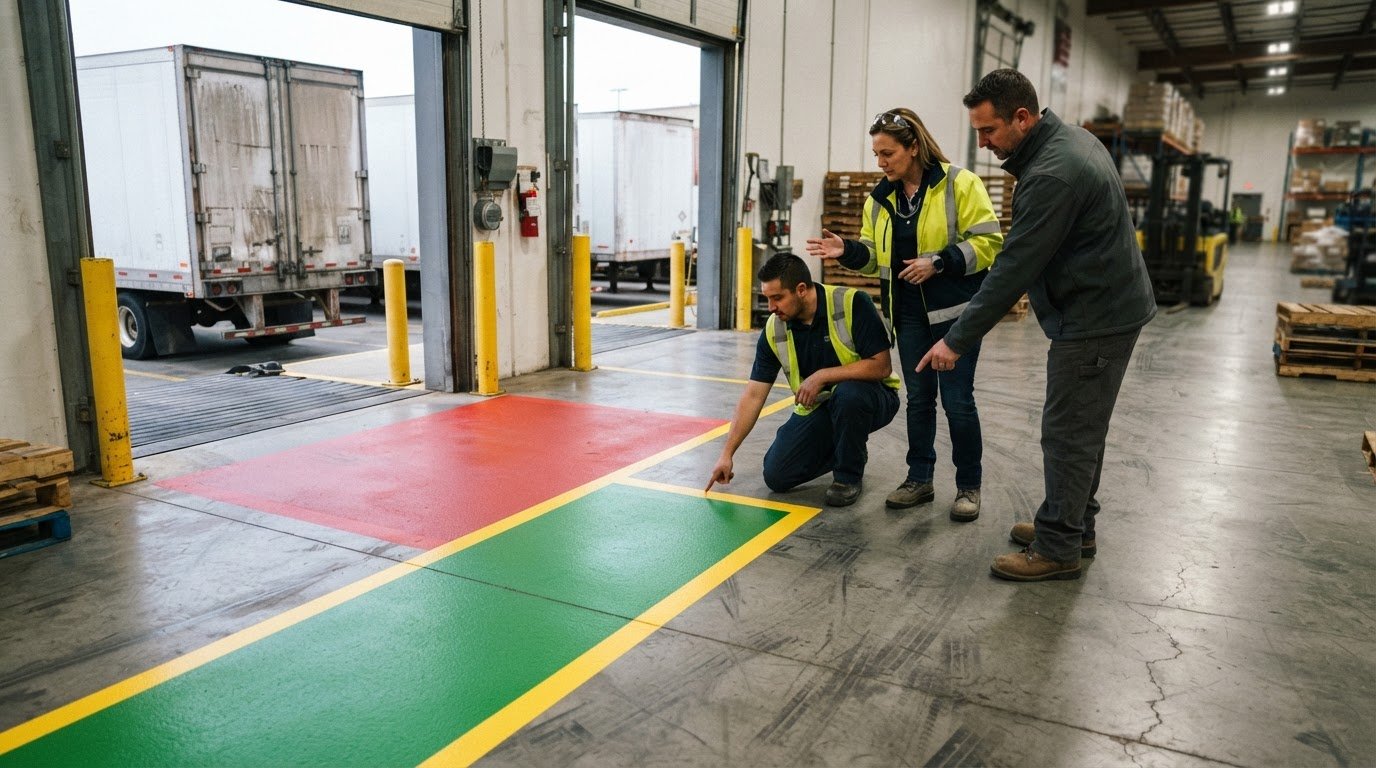
Adhering to safety standards requires more than just drawing lines. We follow the ANSI Z535 voluntary standard to ensure your facility remains compliant and intuitive. This includes using specific color codes: Yellow for traffic lanes and aisles, Red for fire protection equipment or emergency stops, and Green for first-aid locations. We pay particular attention to “paths of egress,” which are the unobstructed exit routes required for emergency evacuations. Under OSHA 1910.176, aisles and passageways must be kept clear and appropriately marked wherever mechanical handling equipment is used. Our high-pigment resins maintain visibility even in low-light conditions, ensuring these routes remain identifiable during power failures or smoky conditions.
The Psychology of Floor Markings
Clear boundaries do more than satisfy inspectors; they subconsciously influence worker behavior. High-contrast boundaries improve spatial awareness and reduce “facility blindness,” a condition where employees stop noticing safety signs due to visual clutter. By using hatching (diagonal lines) at high-risk forklift intersections and custom stencils for “keep clear” zones, you create a visual language that directs movement without constant supervision. This structured environment improves productivity by 15 percent in some logistics settings because it removes the guesswork from daily operations. Our approach ensures that every line serves a functional purpose, prioritizing safety and communication across your entire floor plan.
The Science of Adhesion: Why Surface Preparation is Non-Negotiable
The primary reason industrial epoxy line painting fails is not the quality of the resin, but the lack of mechanical adhesion. Many contractors attempt to apply high-performance coatings to smooth, power-troweled concrete. This creates a weak bond that shears off under the weight of a 10,000-pound forklift. To comply with OSHA’s general requirements for safe walking-working surfaces, the markings must remain intact and visible. Since 1994, we’ve emphasized that chemical preparation, like acid etching, is insufficient for industrial environments. Acid etching only cleans the surface; it doesn’t create the deep mechanical tooth needed for a permanent bond.
We use the Concrete Surface Profile (CSP) scale to measure the texture of the floor. For standard line painting, we typically target a CSP-2 or CSP-3. This involves “roughing up the smooth surface” to ensure the epoxy can penetrate the concrete pores. Before we begin, we also conduct moisture testing. If a slab has more than 4 percent moisture content, the epoxy can delaminate or bubble as vapor pressure builds beneath the coating. If you’re dealing with peeling lines, you can text us for a professional assessment of your floor’s current condition.
Shot Blasting and Diamond Grinding
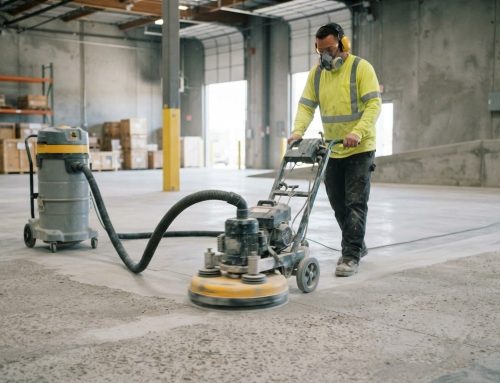
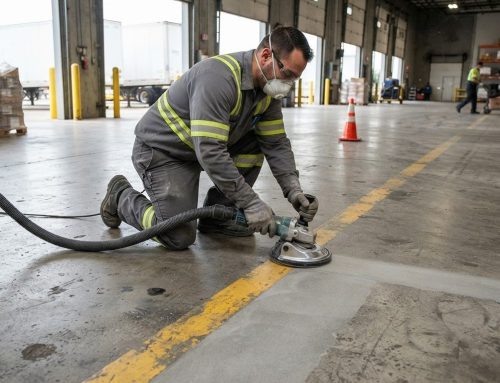
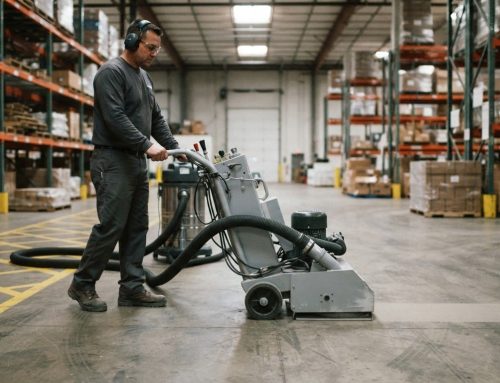
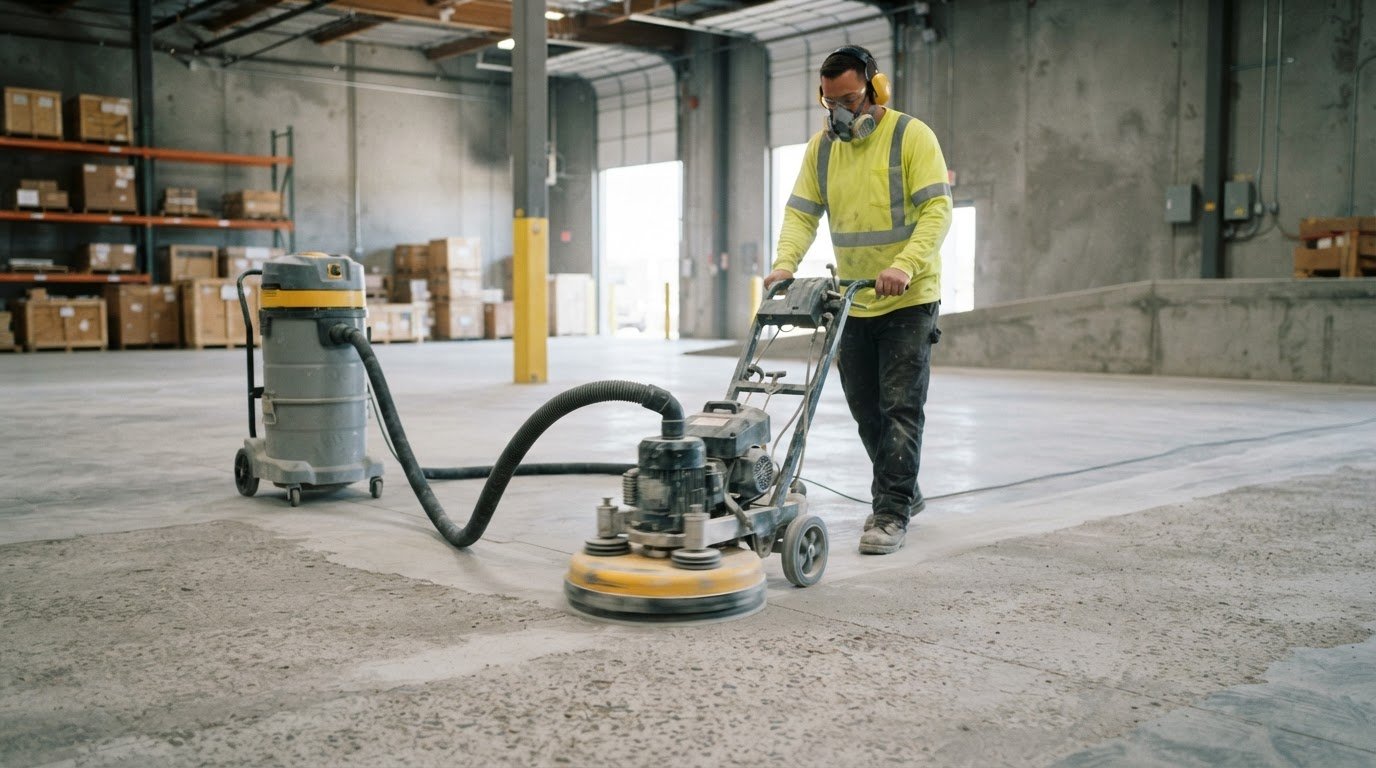
Shot blasting is the gold standard for heavy-duty preparation. It involves firing small steel spheres at the floor to strip away the top layer of concrete. This creates a high-grip surface that allows the resin to anchor deeply. Diamond grinding is an alternative that uses industrial-grade diamonds to level the substrate and remove old contaminants. Both methods are performed using HEPA-filtered vacuum systems. This ensures a dustless removal process that protects your inventory and sensitive machinery from airborne concrete particles.
Removing Old Markings and Contaminants
Old markings must be 100 percent removed to prevent “ghosting,” where shadows of previous lines remain visible and cause uneven wear patterns. We also prioritize degreasing. Hydraulic fluids and oils are common in manufacturing zones, and they act as a bond-breaker for epoxy. We use specialized surfactants to pull these oils out of the concrete pores. Finally, we repair concrete pitting and cracks. Filling these voids before the industrial epoxy line painting begins ensures a flush, professional finish that won’t chip at the edges when equipment passes over it. This meticulous attention to detail is how we’ve maintained our reputation for nearly three decades.
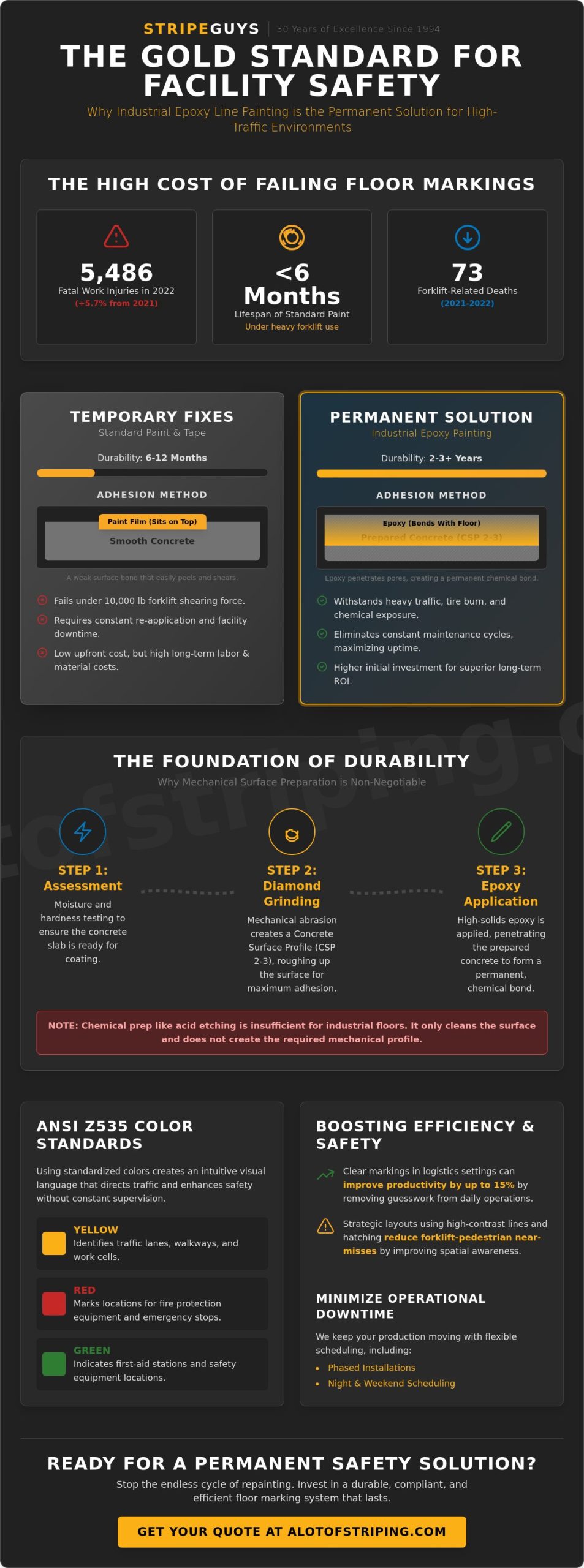
Epoxy vs. Tape and Traditional Paint: A Performance Comparison
Choosing the right material for facility markings depends on the specific traffic load of your environment. While basic traffic paint costs between $2 and $3 per linear foot, it lacks the polymer density to withstand modern logistics operations. In contrast, industrial epoxy line painting is engineered to resist “tire burn,” which occurs when forklift tires generate heat and friction during sharp turns. This friction easily delaminates standard paint or peels the edges of adhesive tape. By following the ACI Guide for Surface Preparation, we ensure the epoxy bonds at a molecular level, preventing the shearing forces that cause traditional markings to fail within six months.
The life-cycle cost analysis favors epoxy for any facility planning a five year horizon. Although the cost of goods for industrial epoxy is approximately $350 per unit (nearly double the $180 per unit for architectural white paint), the reduction in maintenance labor provides a clear advantage. A facility using standard paint often requires re-striping twice a year to maintain OSHA visibility standards. Over five years, that is ten separate installation events involving downtime and labor. A single application of industrial epoxy line painting can last three years or more. This cuts your total operational disruption by 60 percent while maintaining high-pigment brightness that tape cannot match.
When to Use Heavy-Duty Floor Tape
Floor tape serves a specific, limited purpose in the industrial landscape. It’s an excellent choice for temporary staging areas or seasonal layout changes where you might need to reconfigure pallet positions within 90 days. Tape also works well in low-traffic zones where only pedestrian foot traffic is present. However, tape poses a significant trip hazard in high-tonnage forklift zones. Once a pallet drags across a tape line, the edge lifts, creating a snag point for equipment and a liability for workers. For permanent safety infrastructure, resin-based systems are the safer choice.
Comparing Resin Chemistries
- 100% Solids Epoxy: This is the industry standard for high-build lines. It contains no solvents, meaning the thickness you apply is the thickness that remains after curing.
- Novolac Epoxy: We use this specialized resin for environments with extreme chemical exposure, such as battery charging areas or chemical processing labs. It offers superior resistance to acids and corrosive materials.
- Polyurethane Topcoats: While epoxy provides the bond, a polyurethane topcoat adds UV resistance. This prevents yellowing in facilities with large skylights and offers an extra layer of abrasion protection against fine grit and dust.
Strategic Layout Planning for Industrial Facilities
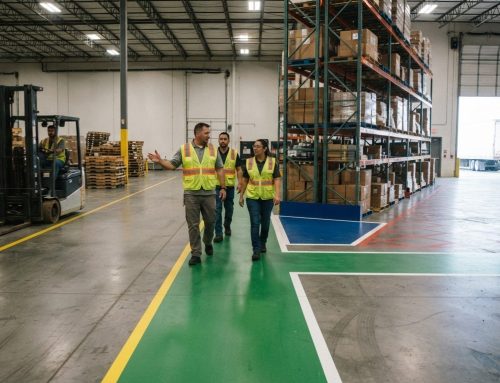
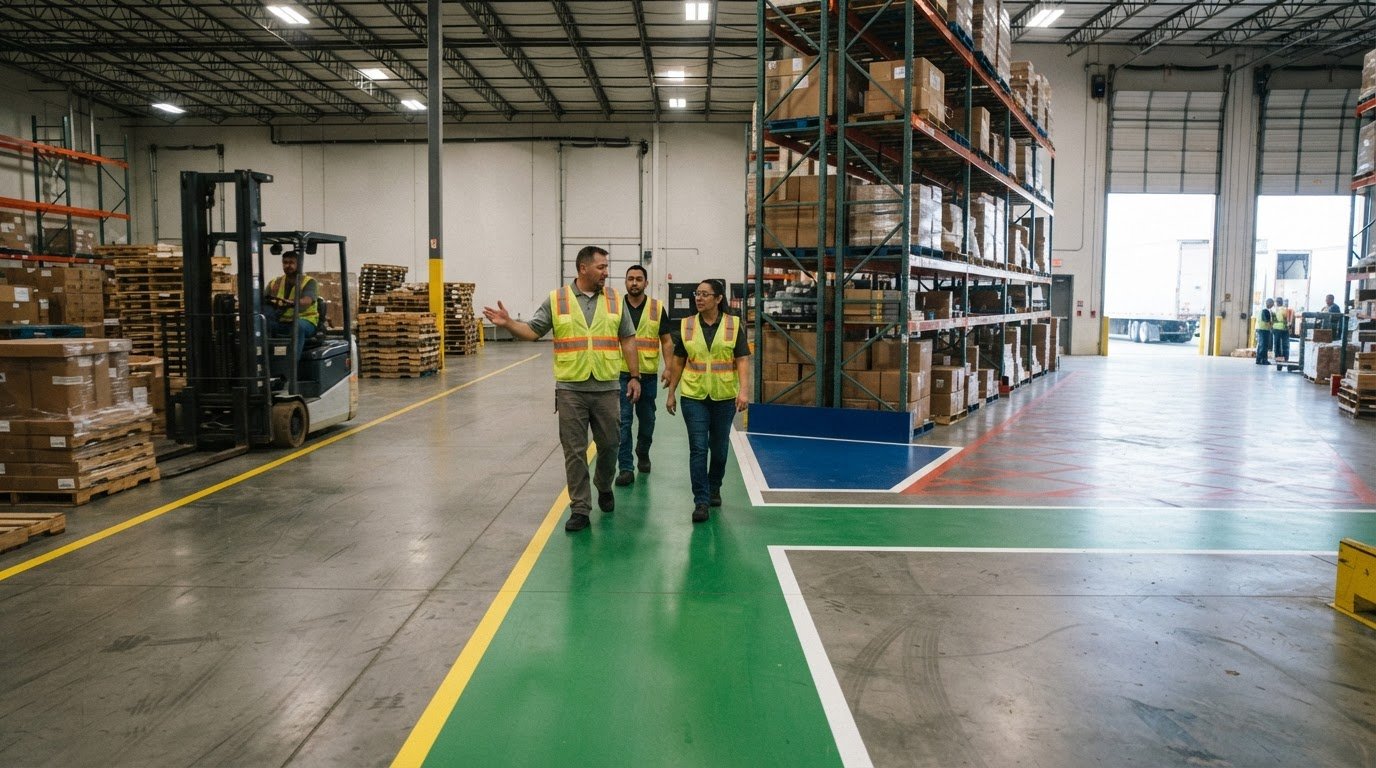
Strategic layout planning is the blueprint for an efficient facility. Without a logical flow, even the most durable industrial epoxy line painting loses its value. We utilize 5S methodology to create a place for everything. This includes color-coded zones that signal specific functions. For example, yellow lines typically define traffic lanes, while red indicates fire equipment or danger zones. Since 1994, we’ve helped managers reduce operational clutter by designating specific staging areas for pallets and “keep clear” zones for loading docks. This organization ensures that materials don’t encroach on paths of egress, maintaining a safe environment for both workers and equipment.
Effective warehouse organization relies on standardized stencils. Professional numbering and lettering allow for precise inventory tracking and clearer communication. We use high-build resins to ensure these stencils remain legible under the constant friction of pallet jacks. If your current layout is confusing or outdated, you can request a facility layout consultation to optimize your floor space. We help you design a system that prioritizes functional outcomes over aesthetic flair, ensuring your floor remains a tool for productivity.
Forklift Safety and Traffic Management
Safe forklift maneuvering requires precise aisle width calculations. OSHA mandates that aisles must provide sufficient clearance for mechanical handling equipment. We often recommend aisles that are at least 3 feet wider than the largest vehicle to prevent collisions. At blind intersections, we install “Stop” and “Caution” stencils to force operator awareness. For battery charging stations, we apply acid-resistant Novolac epoxy in designated safety zones. This protects the concrete from electrolyte spills while clearly marking the hazardous area to prevent unauthorized access.
Pedestrian Protection Systems
Protecting personnel from heavy equipment is a priority. We design “safe walk” paths using high-visibility safety green or yellow resins. These paths are often integrated with physical barriers such as bollards or guardrails to provide a secondary layer of protection. Our layout plans also ensure ADA compliance within the industrial workspace, providing accessible routes that remain unobstructed. By separating pedestrian traffic from forklift lanes, you significantly reduce the risk of accidents. This systematic approach to industrial epoxy line painting ensures that safety is built into the floor itself, not added as an afterthought.
Executing the Project: Minimizing Operational Downtime
Executing a large-scale industrial epoxy line painting project in an active 24/7 environment requires a surgical approach. We understand that stopping production is rarely an option for high-volume distribution centers. To solve this logistical stress, we utilize phase-based installation. This involves isolating and completing one specific zone at a time, allowing your facility to remain 80 to 90 percent operational while we work. Our crews leverage night and weekend execution to align with your lowest traffic periods, ensuring the most disruptive work happens when it impacts your revenue the least.
Innovation in material science has introduced rapid-cure technology that drastically reduces return-to-service times. As of 2026, many specialized fast-cure epoxies can dry in 10 minutes or less at 75°F. This is a significant improvement over traditional resins that often required 24 to 48 hours of downtime before allowing forklift traffic. We prioritize aggressive communication between our team and your facility managers to ensure a smooth handoff. This prevents accidental lane incursions during the critical curing window and keeps your project on schedule and within budget.
The Professional Installation Timeline
Every successful project begins with a comprehensive pre-project walkthrough. We finalize the layout and identify hidden hazards like expansion joints or deep oil saturation that could compromise the bond. The surface preparation phase is the most time-intensive but critical step. We use diamond grinding or shot blasting to “rough up the smooth surface,” creating the mechanical tooth necessary for industrial epoxy line painting to succeed. Finally, we monitor temperature and humidity during the application and curing phase to ensure optimal chemical cross-linking for a permanent finish.
Why 30 Years of Experience Matters
Navigating the complexities of industrial flooring has been our core focus since 1994. Having served the industry for nearly three decades, we’ve seen every type of concrete failure point and know how to prevent them. This longevity serves as a shorthand for reliability. Our national reach allows us to provide consistent quality across multiple distribution centers, maintaining a unified safety standard for your entire organization. The StripeGuys promise is built on the triad of safety, quality, and communication. We’re aggressively accessible; you can even text us directly for immediate project updates. If you’re ready to upgrade your facility’s safety infrastructure with a partner who understands the high stakes of your operation, you can get a professional quote for your facility from the StripeGuys team today.
Secure Your Facility’s Safety Infrastructure
Maintaining a safe and efficient warehouse requires a commitment to permanent solutions. You’ve learned that the success of any floor marking system depends on mechanical surface preparation, such as diamond grinding (roughing up the smooth surface), to ensure a lasting bond. Choosing industrial epoxy line painting over temporary tape or standard paint reduces your long-term maintenance costs and prevents the frequent operational downtime associated with re-striping. These high-performance resins withstand the shearing forces of heavy forklift traffic while keeping your paths of egress clearly defined for OSHA compliance.
StripeGuys has served as a trusted industrial marking specialist since 1994. We provide national coverage for high-profile logistics hubs, ensuring that every project meets our rigorous standards for safety and communication. Our team understands the high stakes of your environment and provides the expertise needed to implement complex, color-coded safety systems. You can Request a Professional Industrial Striping Quote to begin optimizing your facility today. Let’s build a durable foundation that protects your personnel and your bottom line.
Frequently Asked Questions
How long does industrial epoxy line painting take to cure before forklifts can drive on it?
Standard epoxy systems typically require 24 to 48 hours for a full cure before they can withstand heavy forklift traffic. However, we utilize rapid-cure technology that allows for a return-to-service in as little as 10 minutes at 75°F. This significantly reduces facility downtime and allows your production to resume almost immediately after application. We coordinate these timelines with your facility managers to ensure a smooth handoff without disrupting your 24/7 operations.
Can epoxy lines be applied over existing paint or tape?
No, we never recommend applying epoxy over existing paint or adhesive tape. The bond of the new coating is only as strong as the layer beneath it; if the old paint peels, the new industrial epoxy line painting will fail along with it. We always remove old markings through shot blasting or diamond grinding to ensure the resin bonds directly to the concrete substrate. This creates the permanent safety infrastructure our clients have trusted since 1994.
Is shot blasting or diamond grinding better for industrial floor prep?
Both methods serve specific functional outcomes depending on the condition of your floor. Shot blasting is superior for creating a deep mechanical tooth (roughing up the smooth surface) required for heavy-duty resins in high-tonnage environments. Diamond grinding is better for removing thin-film contaminants and leveling the substrate for a flush finish. We choose the method that ensures your specific floor profile meets CSP-2 or CSP-3 standards for optimal adhesion.
What are the OSHA color requirements for warehouse floor markings?
OSHA does not mandate a specific color code, but they require aisles and passageways to be clearly marked under regulation 1910.176. We follow ANSI Z535 best practices, which use yellow for traffic lanes, red for fire protection equipment, and green for safety instructions. Standardizing your facility with these high-visibility colors ensures safety-conscious communication and helps prevent accidents. This systematic approach reduces forklift-pedestrian near-misses, which contributed to 73 work-related deaths between 2021 and 2022.
How much does professional epoxy line painting cost per linear foot?
In 2026, the average cost for warehouse floor striping ranges between $2 and $4 per linear foot. Basic traffic paint sits at the lower end of this range, while durable industrial epoxy line painting options are priced at approximately $3 to $4 per linear foot. These costs reflect the specialized polymer requirements and the level of surface preparation needed for a permanent bond. While the upfront cost is higher, the long-term savings in maintenance labor are substantial.
How often do industrial epoxy lines need to be refreshed?
High-quality epoxy coatings typically last 2 to 3 years or longer, even in heavy-duty manufacturing environments. This is a significant improvement over traditional traffic paint, which often requires reapplication every 6 to 12 months. By investing in professional resin-based systems, you reduce the frequency of maintenance cycles and minimize logistical stress for your facility management team. Our nearly three decades of experience ensures we apply a system that survives the physical realities of your specific environment.
What is the best way to clean and maintain epoxy floor lines?
Use a neutral-pH cleaner and a soft-bristle floor scrubber or non-abrasive pad to maintain the brightness of your lines. Avoid using harsh acidic or solvent-based cleaners that can dull the resin finish over time. Regular cleaning prevents the buildup of fine grit and dust. This grit acts like sandpaper under forklift tires and can prematurely wear down the coating. Maintaining clean surfaces also helps you stay compliant with OSHA 1910.22 requirements for orderly walking-working surfaces.
Does industrial epoxy work in cold storage or freezer environments?
Yes, specialized cold-cure epoxy resins are designed to bond and harden in temperatures as low as -20°F. These systems are essential for maintaining safety markings in freezer environments and cold storage logistics hubs without requiring the facility to warm up the space. We select resins specifically formulated for these thermal challenges to prevent delamination or cracking. This ensures your paths of egress remain visible and durable in even the most extreme industrial conditions.