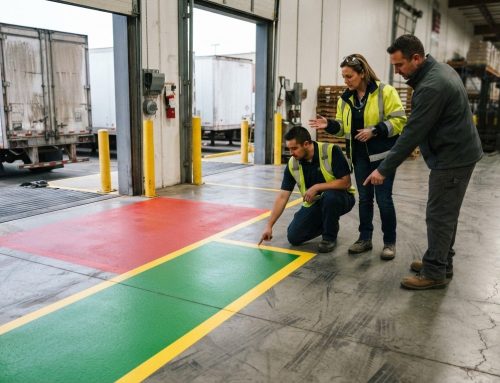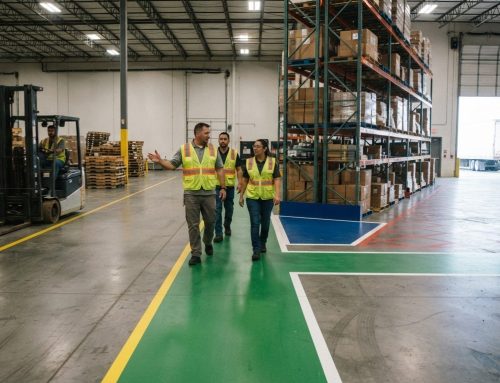
If you saved a few thousand dollars on your warehouse floor markings today, how much will it actually cost you when your facility has to shut down for a week of repainting just three months from now? It is a common dilemma for facility managers who are under constant pressure to reduce overhead while maintaining a safe, organized workspace. You likely agree that clear boundaries are essential for productivity, yet the lowest bid for line painting often feels like the most responsible choice for the budget.
The reality is that the hidden costs of cheap floor striping go far beyond the initial invoice. Budget-grade materials and improper surface preparation (the technical process of cleaning and profiling concrete to ensure a mechanical bond) lead to frequent peeling, OSHA compliance anxiety, and expensive operational downtime. Drawing on our decades of experience in high-traffic industrial environments, we’ll help you identify the financial traps of low-cost options. You will learn how to invest in markings that actually last under heavy forklift traffic, reducing your long-term maintenance spend while ensuring your facility remains fully compliant with safety standards like OSHA 29 CFR 1910.176.
Key Takeaways
- Understand the critical difference between a low initial quote and the Total Cost of Ownership (TCO) to avoid budget-draining repaints every few months.
- Learn why high-traffic environments require epoxy that bonds deep into the concrete rather than standard traffic paint that simply sits on the surface.
- Uncover the hidden costs of cheap floor striping, including lost pallet moves and significant operational downtime during frequent re-application cycles.
- Identify specific OSHA standards for aisle marking and hazard color-coding to protect your facility from costly citations and preventable workplace injuries.
- Discover why mechanical surface preparation, such as shot blasting (a process that cleans and profiles the concrete), is the non-negotiable foundation for long-lasting markings.
The Illusion of Savings: Defining the Real Cost of Floor Striping
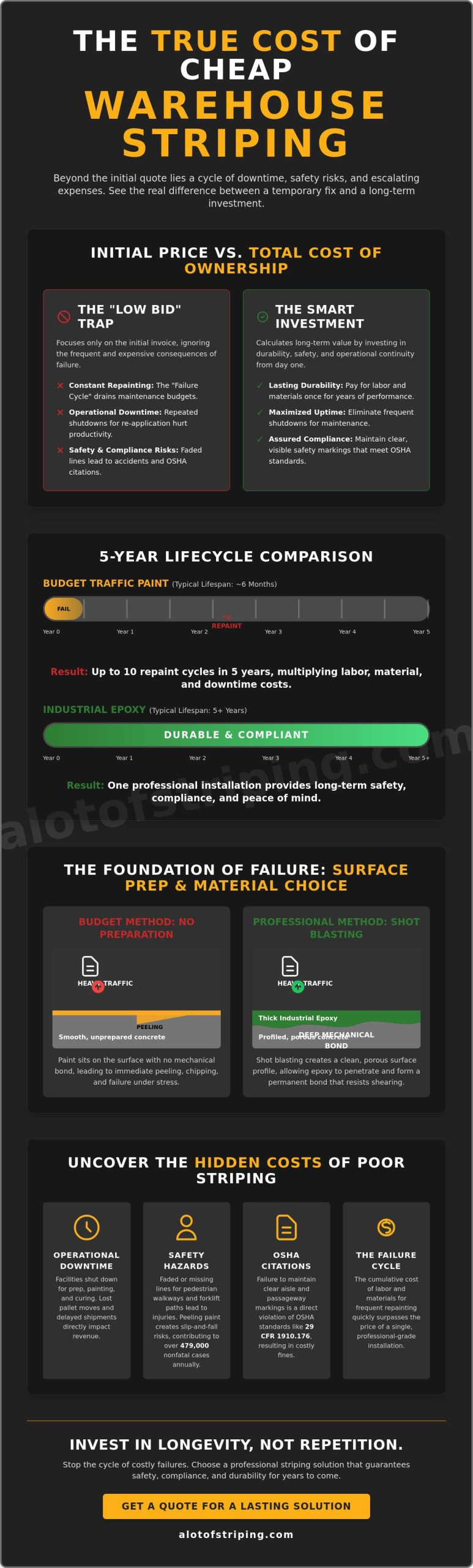
When you receive a low-cost bid for warehouse markings, it’s tempting to view those savings as a win for the bottom line. However, the initial quote price is a deceptive metric that ignores the Total Cost of Ownership (TCO). Professional facility managers understand that the hidden costs of cheap floor striping accumulate every time a forklift drags a pallet across a brittle line. While a standard traffic paint might look crisp on day one, it is often pulverized into dust within six months of heavy-duty operation. This creates a ‘Failure Cycle’ where the facility is trapped in a loop of constant re-application. These cumulative expenses far exceed the price of a professional industrial installation.
The Price vs. Value Disconnect
Low-cost contractors typically achieve their margins by utilizing inferior materials and bypassing critical surface preparation steps. The cheap paint trap is a cycle of constant re-investment that drains maintenance budgets while providing only temporary compliance. Beyond the direct financial drain, poor line visibility compromises warehouse organizational efficiency. If operators cannot clearly see safety boundaries or pedestrian paths, the rhythm of the entire floor slows down. Even alternatives like floor marking tape can fail if the adhesive isn’t industrial-grade or the floor isn’t properly cleaned, leading to peeling edges that become trip hazards.
Lifecycle Comparison: Budget Paint vs. Industrial Epoxy
The durability gap between budget options and industrial epoxy is stark. Water-based paint typically lasts about six months in high-traffic zones, whereas a professional epoxy application can remain functional for five years or more. Consider the logistics of your facility. If you choose the budget route, you will likely pay for labor, materials, and prep three to four times in the same span that a single epoxy application would cover. Choosing a professional warehouse line striping partner ensures you pay for the labor once, rather than financing a recurring maintenance headache. Investing in longevity isn’t about aesthetics; it is a safety-first industrial strategy that protects your operational uptime.
Technical Failures: Why Budget Materials Compromise Safety and Durability
Industrial environments subject floor markings to extreme mechanical stress that residential or light-commercial paints simply cannot withstand. A standard 10,000lb forklift exerts immense pressure, particularly during tight turns or sudden stops. When budget-grade paint is applied, it merely sits on the surface of the concrete. This lack of a mechanical bond means the marking is susceptible to shearing. In contrast, professional-grade materials are designed to penetrate the concrete pores, creating a unified structure that resists delamination. One of the hidden costs of cheap floor striping is the “dusting” effect, where failing paint pulverizes into fine airborne particles. This doesn’t just look unprofessional; it creates slippery surfaces that contribute to the 479,480 nonfatal injury cases involving slips, trips, and falls reported by employers in 2024. These failures often lead to direct violations of OSHA’s general requirements for walking-working surfaces.
The Failure of Adhesion in High-Traffic Zones
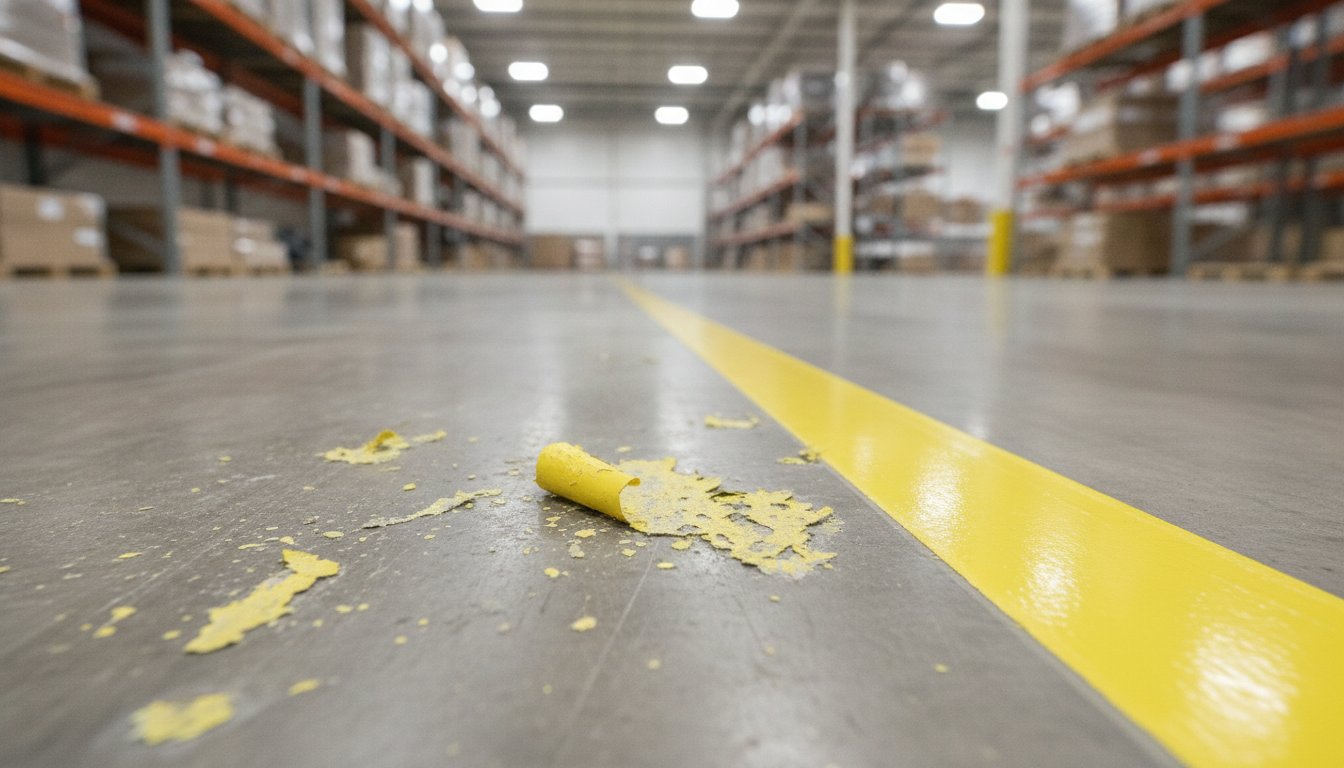
Peeling is rarely a material defect; it is usually a symptom of zero surface preparation and poor material selection. Budget contractors often skip the essential step of profiling the concrete (the mechanical process of roughening the surface), leaving the paint to struggle for a grip on smooth or oil-slicked floors. Mil-thickness, which is the measurement of a coating’s depth, is also critical. Thin-mil markings are easily scraped away by pallet edges and heavy machinery. Switching to epoxy warehouse striping provides a thicker, more resilient barrier that absorbs impact rather than shattering under it. If you are tired of seeing your safety lines disappear after a single busy shift, you can speak with an industrial flooring expert about more durable alternatives.
Environmental Factors in Industrial Facilities
Logistics hubs are rarely climate-controlled, meaning floor markings must endure significant temperature fluctuations. Low-quality paints lack the elasticity to expand and contract with the concrete, leading to cracking and brittle failure. UV stability is another overlooked factor. Markings near dock doors and loading bays are exposed to constant sunlight, which causes budget pigments to fade and lose their safety-critical visibility. Additionally, standard paints have zero chemical resistance. In battery charging zones, even a small spill can dissolve budget striping instantly. Utilizing acid-resistant coatings for battery charging areas ensures that your safety markings remain intact despite exposure to harsh cleaning agents or sulfuric acid.
Calculating the Operational Impact of Poor Execution
The most significant hidden costs of cheap floor striping often manifest as lost productivity rather than material expenses. When a staging area is closed for 48 to 72 hours of drying time, the throughput of your entire distribution center drops. In a high-volume facility, every hour of restricted access translates to hundreds of missed pallet moves. While a low-cost contractor might use standard paint that requires multiple days to cure, professional industrial systems often utilize fast-cure technologies that minimize this disruption. Re-routing forklift traffic every six months because of failed lines creates a logistical nightmare that quickly eats any initial savings.
The True Cost of Facility Downtime
Estimating the hourly cost of closing a critical lane is essential for an accurate budget. If a budget application requires eight days of total downtime (including surface preparation, painting, and sealing), the operational loss can be staggering. Professional contractors prioritize functional outcomes by using specialized equipment that allows for faster application without sacrificing durability. Choosing a higher-quality system means you avoid the recurring labor costs and the headache of re-organizing your workflow three times a year. Efficiency on the floor depends on the clear, permanent boundaries that only high-performance materials provide.
Regulatory Fines and OSHA Standards
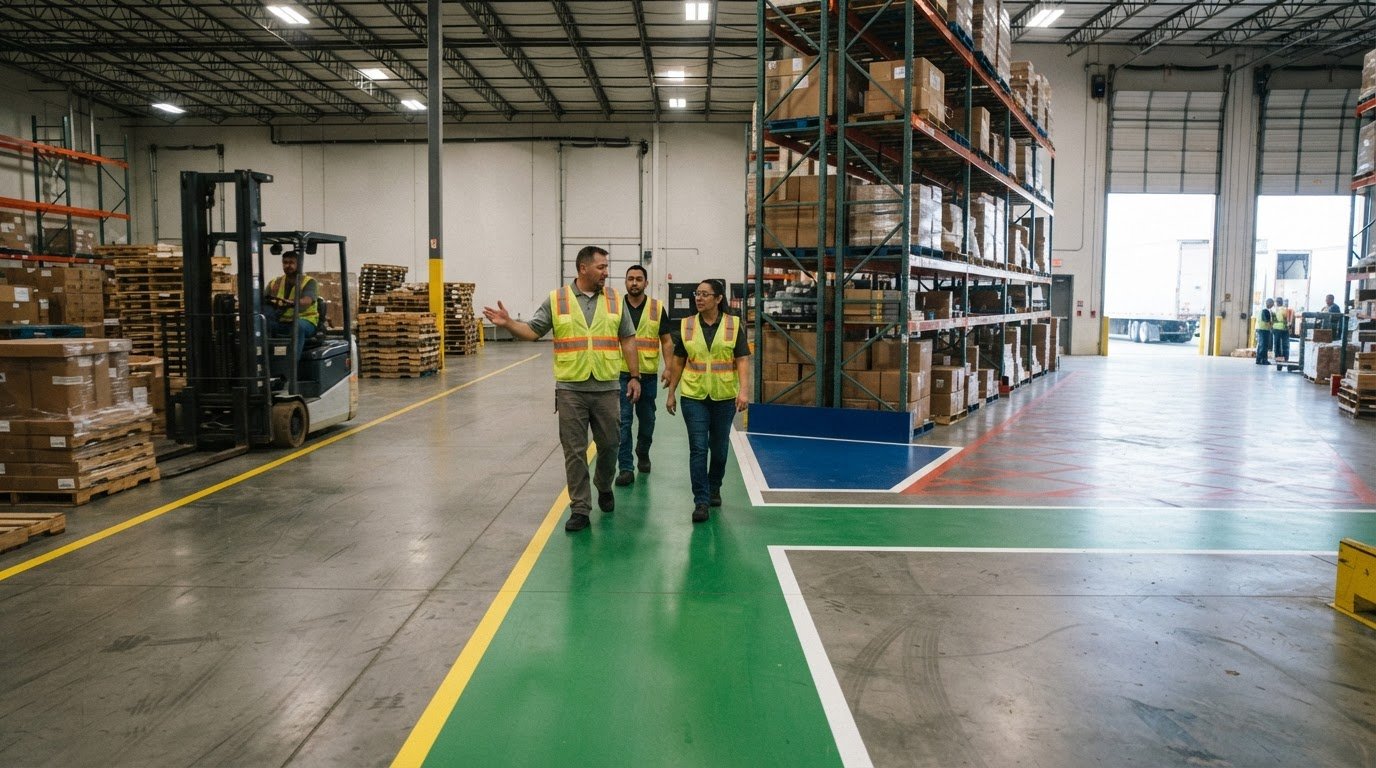
Faded out or non-compliant safety lines are more than just an eyesore; they are a direct financial liability. OSHA requires “permanent” and “clearly visible” markings to define aisles and passageways according to standard 29 CFR 1910.176. Inadequate pedestrian walkways and safety aisles are among the most common citations during facility inspections. If an accident occurs in an area with degraded markings, your insurance provider may question the facility’s commitment to safety standards, potentially complicating claims or increasing premiums.
A facility with peeling, messy lines signals a lack of operational discipline. This environment negatively impacts employee morale and can lead to a “broken window” effect where safety protocols are taken less seriously. Professional markings establish clear boundaries that reduce the mental load on operators, allowing them to focus on moving freight safely. If you want to stop the cycle of constant re-striping and protect your bottom line, you can request a professional facility assessment from our team.
Investing in Longevity: The Professional Standard for Floor Markings
To eliminate the hidden costs of cheap floor striping, you must shift your perspective from “painting lines” to “installing an industrial flooring system.” A professional installation is a multi-stage engineered process designed to survive the daily grind of a high-throughput facility. This standard is built on a non-negotiable three-part foundation: Prepare, Prime, and Protect. By following this industrial protocol, you ensure that your safety markings become a permanent part of your facility infrastructure rather than a recurring maintenance headache.
The Necessity of Mechanical Surface Prep
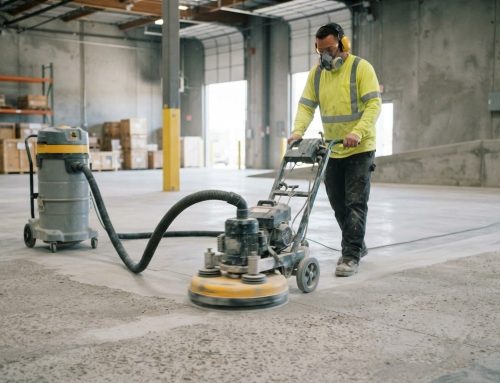
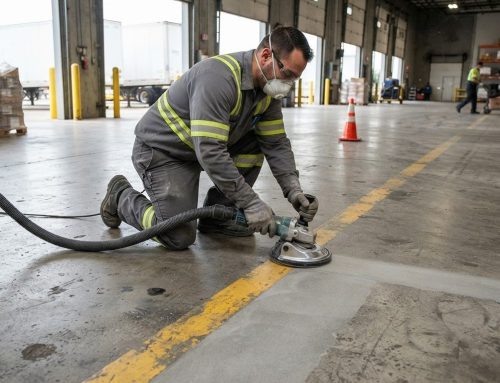
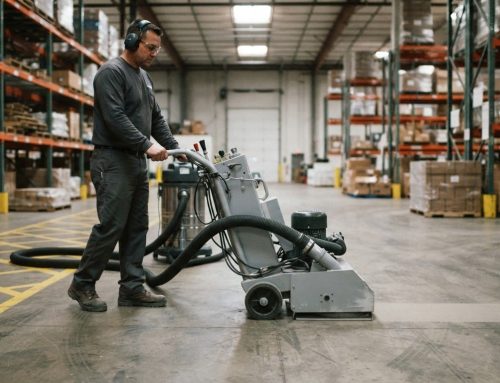
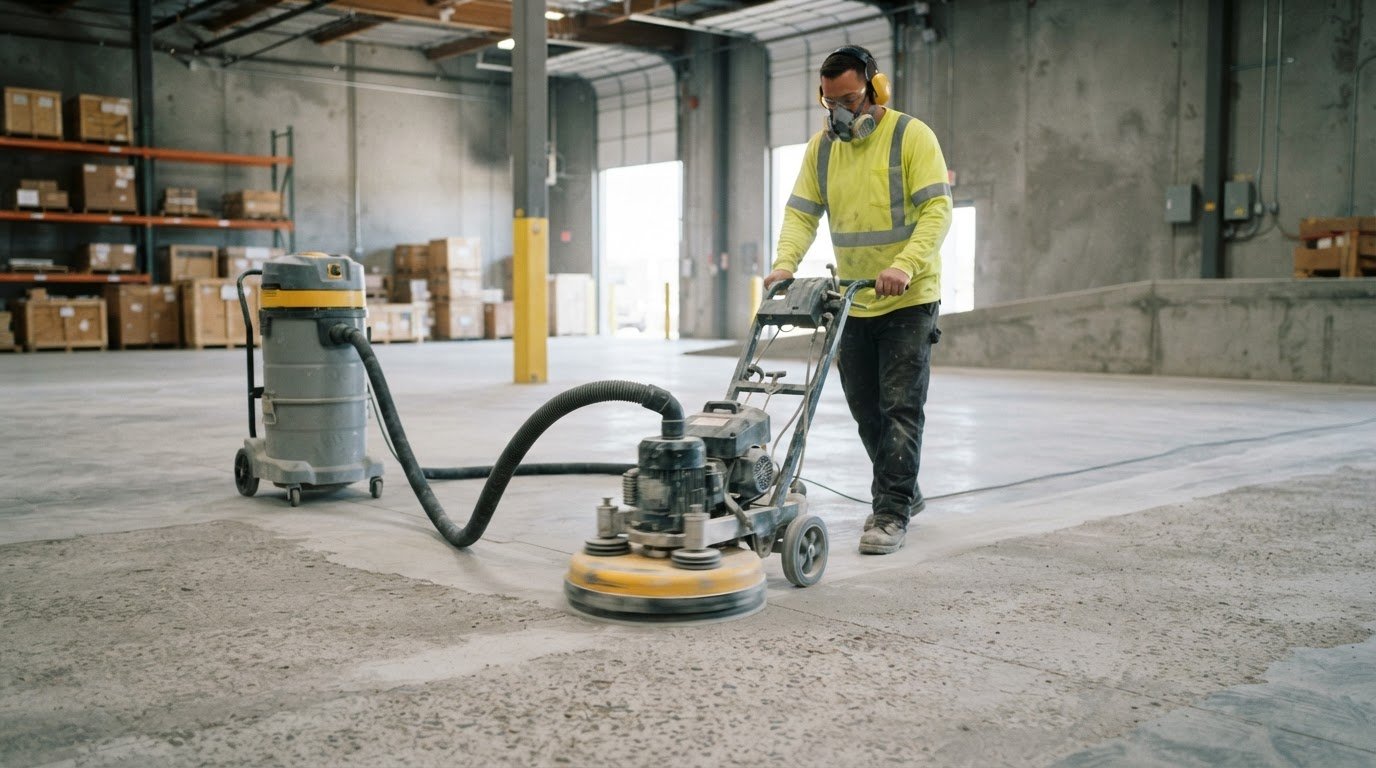
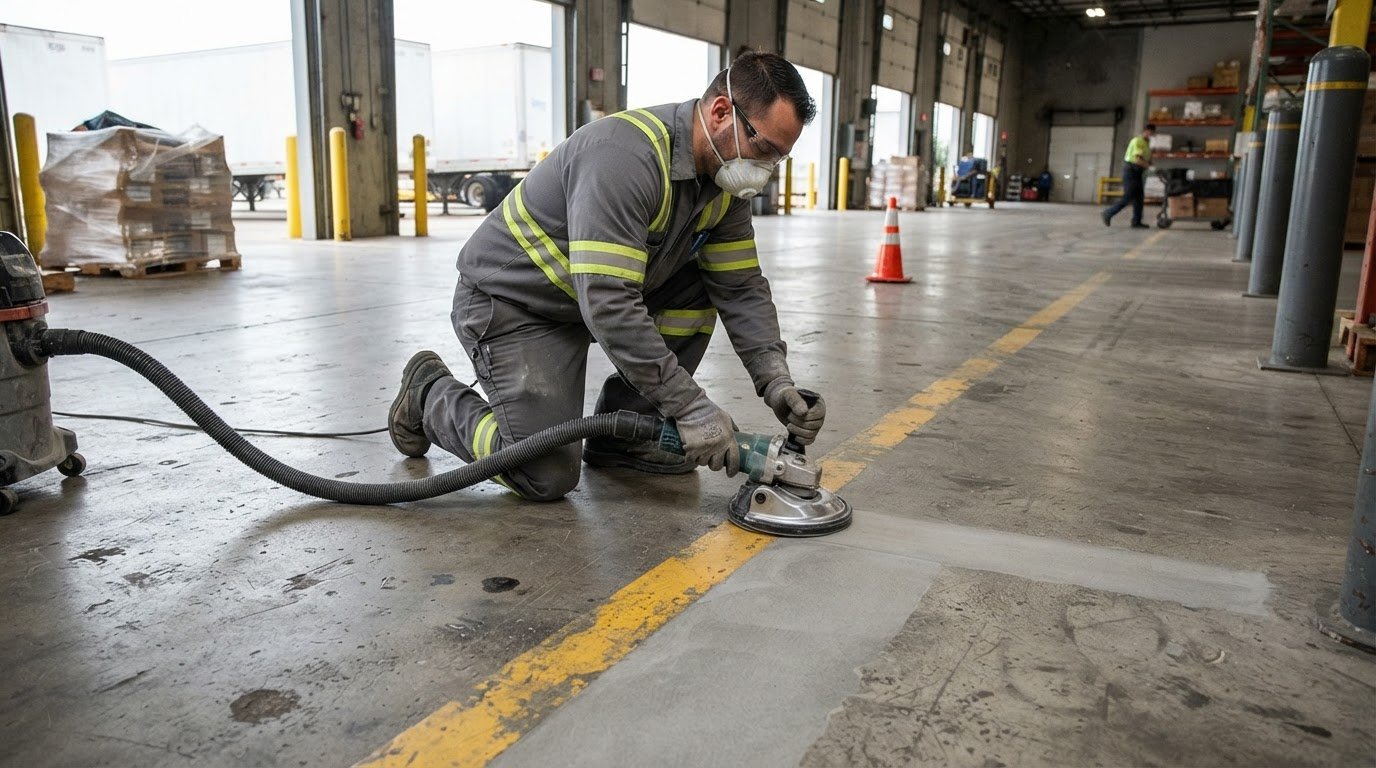
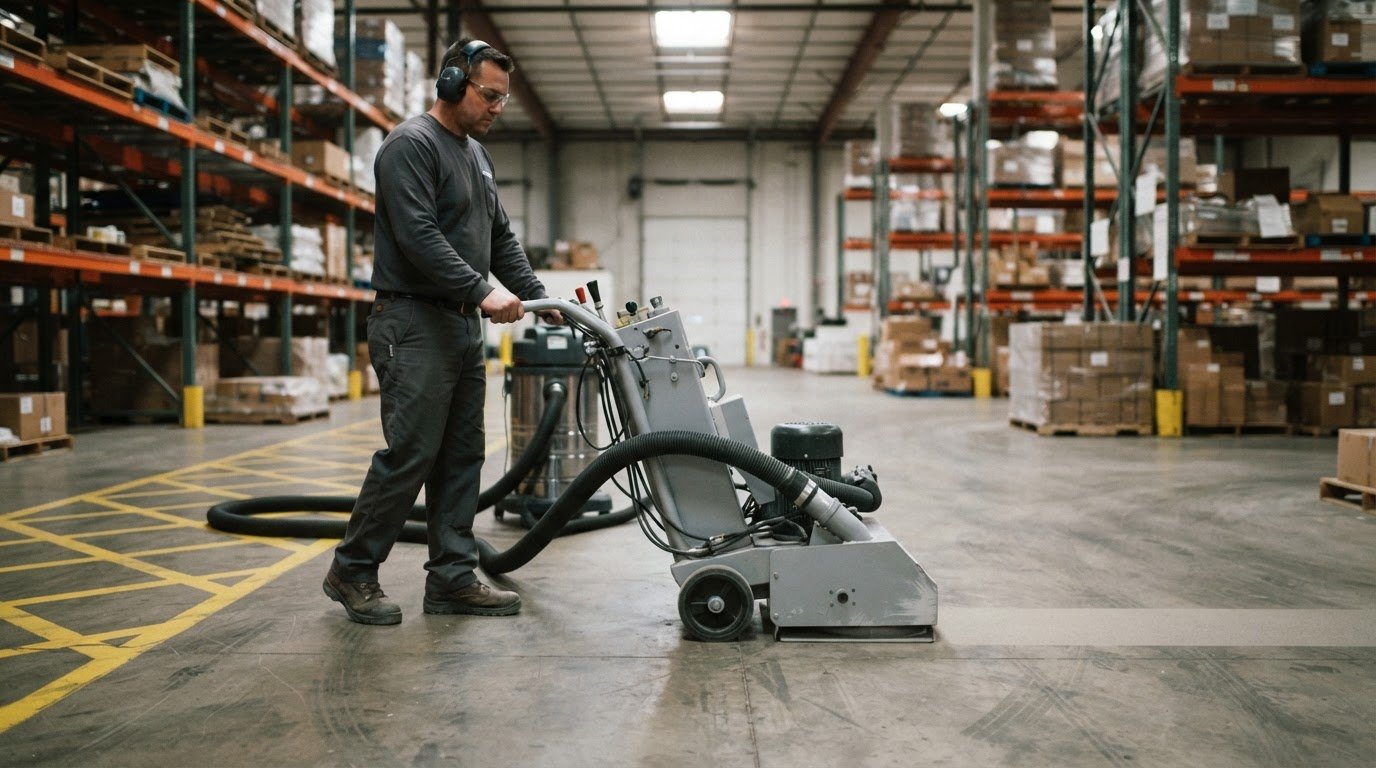
Mechanical surface preparation is the single most important factor in the longevity of warehouse markings. All concrete has a layer of “Concrete Laitance” (a weak, brittle mixture of cement and sand that rises to the surface during the curing process). If you apply paint directly to this layer, the marking will eventually flake off as the laitance fails. Professional contractors use shot blasting (a process that fires steel shot at the floor to remove the top layer) or diamond grinding to create a specific surface profile. This mechanical roughening allows the coating to “root” into the concrete. If a contractor suggests “cleaning with a mop” as their primary preparation method, they are a budget-focused painter, not an industrial professional.
Professional Material Selection for 2026
Selecting the right material requires an understanding of your facility’s specific traffic patterns and chemical exposure. High-solids epoxy remains the workhorse of the industry for epoxy warehouse striping because of its exceptional bond strength and impact resistance. For facilities that prioritize scratch resistance or need to maintain visibility near loading docks, adding a polyurethane topcoat provides a shield against UV fading and abrasive wear. In environments that operate 24/7, we often recommend polyaspartic coatings because they offer a rapid cure time, allowing for a full return-to-service in a fraction of the time required by traditional systems.
When vetting a warehouse line striping company, your focus should be on their technical process rather than just the bottom line. Ask specifically about their mechanical prep equipment and the mil-thickness of their finished product. After 29 years in the industrial sector, we have found that transparency regarding these technical details is the hallmark of a reliable partner. Investing in a professional standard protects your operational rhythm and ensures that the hidden costs of cheap floor striping never compromise your facility’s safety or efficiency.
Protect Your Facility with Industrial-Grade Standards
Maintaining a safe and efficient warehouse requires more than just a fresh coat of paint every few months. By shifting your focus from the lowest initial bid to the total cost of ownership, you can eliminate the hidden costs of cheap floor striping that drain maintenance budgets and disrupt production. A professional approach ensures that your lines withstand the mechanical stress of heavy forklift traffic while keeping you in full compliance with safety regulations. Functional markings are a critical part of your facility infrastructure, not a temporary aesthetic choice.
Choosing a partner with 29+ years of industrial experience means you benefit from specialized mechanical line removal and precision surface prep (the essential process of profiling concrete for a permanent bond). We provide nationwide coverage for large-scale facilities, delivering reliable outcomes that protect your bottom line. It’s time to stop the cycle of constant repainting and invest in markings that serve as a durable foundation for your operations. Our team prioritizes your operational uptime by using high-performance materials designed for long-term durability in high-traffic environments.
Get a professional quote for long-lasting warehouse striping from StripeGuys to secure your facility’s future. We are ready to help you optimize your workspace today.
Frequently Asked Questions
Why do my warehouse lines start peeling after only a few months?
Peeling is almost always caused by a failure to perform mechanical surface preparation, such as shot blasting or diamond grinding, before the material is applied. When markings are placed on a smooth or contaminated concrete surface, they cannot achieve a permanent mechanical bond. This is one of the primary hidden costs of cheap floor striping, as the material quickly delaminates under the constant stress of forklift tires. Professional systems require profiling the concrete to ensure the coating integrates with the floor structure.
How much does professional warehouse floor striping cost per linear foot?
The cost of professional striping is determined by the required durability of the material, the total linear footage, and the complexity of the surface preparation. While basic single-coat water-based paints represent the lowest initial investment, high-traffic industrial environments often require traffic-grade or epoxy materials that offer a much lower total cost of ownership over time. It is important to note that labor and freight are currently the primary drivers of project costs in 2026, making long-lasting solutions more financially attractive.
What is the difference between parking lot paint and industrial epoxy?
The main difference lies in the chemical composition and the way the material adheres to the concrete substrate. Parking lot paint is typically a thin, air-drying acrylic designed for porous asphalt and light vehicle traffic. Industrial epoxy is a two-part resin system that creates a dense chemical bond with the concrete. This results in a much harder, abrasion-resistant finish that can withstand the intense pivoting and weight of heavy machinery without shattering or wearing away into dust.
How long does a professional epoxy floor striping project take to cure?
Cure times vary based on the specific resin chemistry and the environmental conditions, such as temperature and humidity, within your facility. Standard industrial epoxy systems generally require 24 to 72 hours of drying time before they can support heavy forklift traffic. However, modern polyaspartic coatings (fast-curing industrial alternatives) can often be returned to service in just a few hours. Selecting the correct material involves balancing the need for long-term durability with the operational costs of facility downtime.
Can I use floor tape instead of paint to save money in a warehouse?
Floor tape can be an effective solution in some areas, but it is rarely a budget-friendly choice for high-traffic zones. While tape eliminates drying time, premium industrial rolls can cost nearly $381 USD as of late 2024, and they still require significant floor preparation to prevent failure. If the edges lift or curl due to improper cleaning, they create new trip hazards and replicate the hidden costs of cheap floor striping. Professional epoxy remains the standard for permanent, high-durability markings.
What are the OSHA requirements for warehouse floor marking visibility?
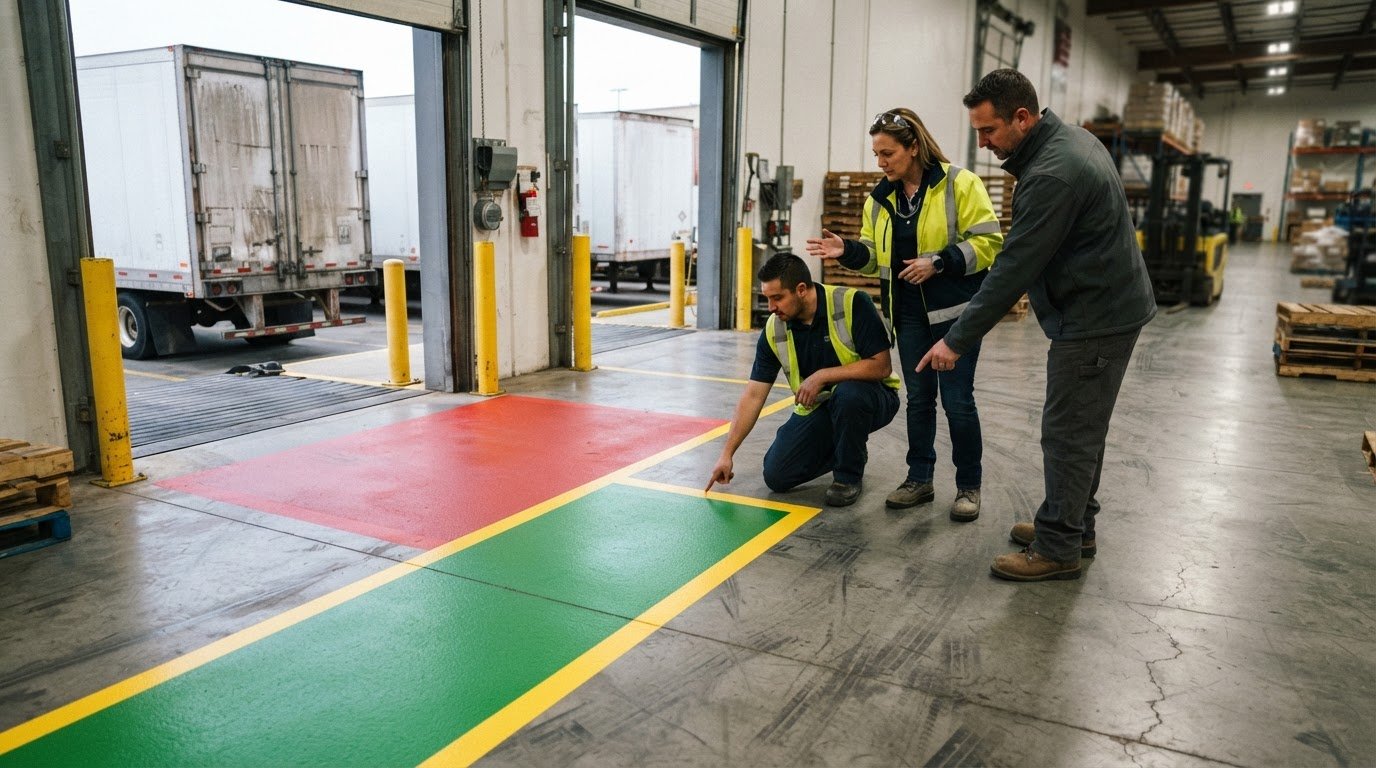
OSHA standard 29 CFR 1910.176 requires that all permanent aisles and passageways be appropriately marked and kept clear. For visibility, safety lines should be at least 2 inches wide, though a width of 2 to 6 inches is the recommended industry standard. While OSHA allows flexibility in aisle colors, they mandate yellow for physical hazards (tripping or falling) and red for fire-related equipment. The markings must remain clearly visible to ensure the safety of both pedestrians and vehicle operators.