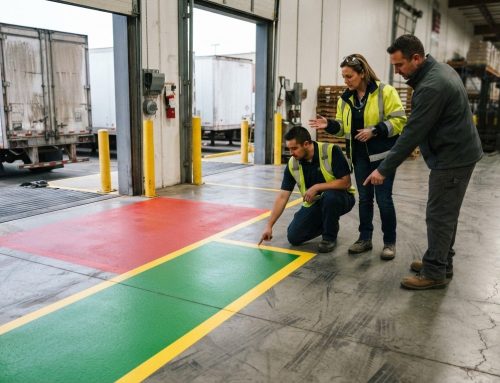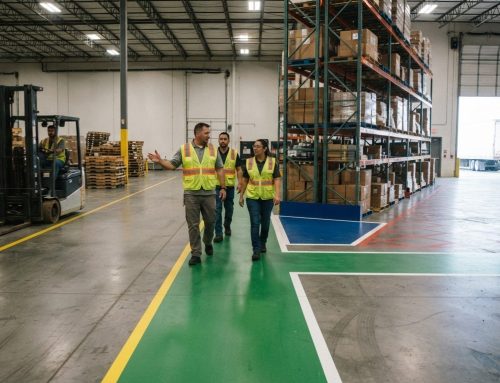
If you treat floor markings as a simple painting project, you are planning for failure. Most facilities settle for standard paint that peels under heavy forklift traffic, contributing to a warehouse injury rate of 4.8 recordable cases for every 100 workers. You already know the logistical headache of frequent re-striping, which creates unnecessary operational downtime and constant safety hazards for your staff. Our heavy duty warehouse floor striping service moves beyond aesthetics to focus on industrial durability through mechanical concrete profiling (a process that ensures a permanent chemical bond).
We understand that your primary goal is a safe, compliant environment that doesn’t require constant maintenance interruptions. This guide explains how to implement high-traffic markings that withstand 24/7 machinery use while adhering to the strict requirements of OSHA 29 CFR 1910.176(a). With over 29 years of experience, we’ve refined the process of shot blasting and epoxy application to ensure your lines stay visible for years rather than months. You will learn about the critical role of surface preparation and the specific material systems that keep your facility organized, safe, and efficient for the long term.
Key Takeaways
- Analyze how forklift tire friction and pivot points destroy standard paint to stop the cycle of frequent, costly re-striping.
- Understand why mechanical surface preparation, such as shot blasting, is the only way to create the necessary profile for a permanent chemical bond.
- Compare the impact resistance of 100% solids epoxy with the chemical stability of polyurethane when selecting a heavy duty warehouse floor striping service.
- Learn how to utilize phased scheduling and night-shift execution to keep at least 50% of your facility operational during installation.
- Leverage 29 years of industrial experience to achieve long-term OSHA compliance and high-visibility safety in high-traffic environments.
Why Standard Floor Markings Fail in High-Traffic Warehouses
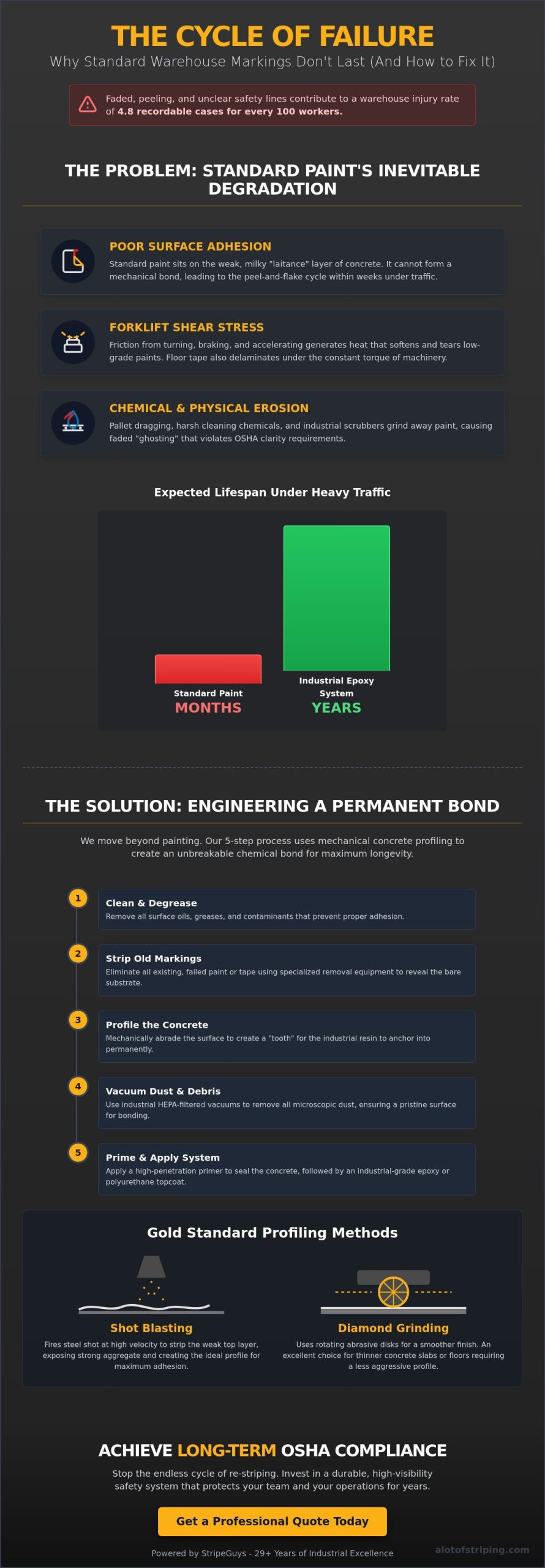
Standard traffic paint is engineered for outdoor asphalt, not the dense, power-troweled concrete found in modern industrial hubs. In these environments, the slab is often so smooth that paint cannot find a mechanical “tooth” to grab onto. This results in poor surface bonding and initiates the “peel-and-flake” cycle. Within weeks of application, high-traffic areas begin to show signs of delamination as the coating loses its grip. Investing in a professional heavy duty warehouse floor striping service is the only way to break this cycle, as it replaces topical paint with industrial-grade resins that penetrate the concrete surface. Without this deep-level adhesion, your markings are merely a temporary cosmetic fix that will fail under the first sign of mechanical stress.
The Impact of Forklift Shear Stress
Shear stress occurs when parallel internal surfaces of a material slide past each other. On your warehouse floor, this happens every time a forklift accelerates, brakes, or turns. The friction generates localized heat that softens low-grade acrylic or latex resins, making them gummy and prone to tearing. While Floor marking tapes offer a quick fix for low-traffic zones, they can’t withstand the constant torque of heavy machinery. For safe operation, floors must maintain a specific coefficient of friction to prevent skidding while ensuring the marking stays anchored to the slab. High-performance systems are engineered to handle these mechanical loads without losing adhesion, ensuring your safety lines remain intact during 24/7 operations.
Environmental and Chemical Degradation
Industrial environments are hostile to standard coatings. Pallet dragging acts like heavy-grade sandpaper, physically grinding away thin layers of paint during every shift. Daily cleaning with harsh degreasers or high-pressure industrial scrubbers further erodes the chemical binder in standard markings, leading to faded, brittle lines that eventually turn to dust. This degradation often causes “ghosting,” where the remnants of old, failed lines remain visible even after a new coat is applied incorrectly. This creates visual clutter and directly violates OSHA 29 CFR 1910.176(a) requirements for clear, permanent aisle markings. Temperature fluctuations in cold storage or loading docks also cause the concrete to expand and contract, which snaps the bond of inflexible, low-cost paints. Faded or obscured pedestrian boundaries are more than a maintenance nuisance; they’re a primary contributor to the high injury rates seen across the warehousing sector. Utilizing a heavy duty warehouse floor striping service ensures your facility remains organized and compliant despite these constant environmental stressors.
The Science of Adhesion: Mechanical Surface Preparation
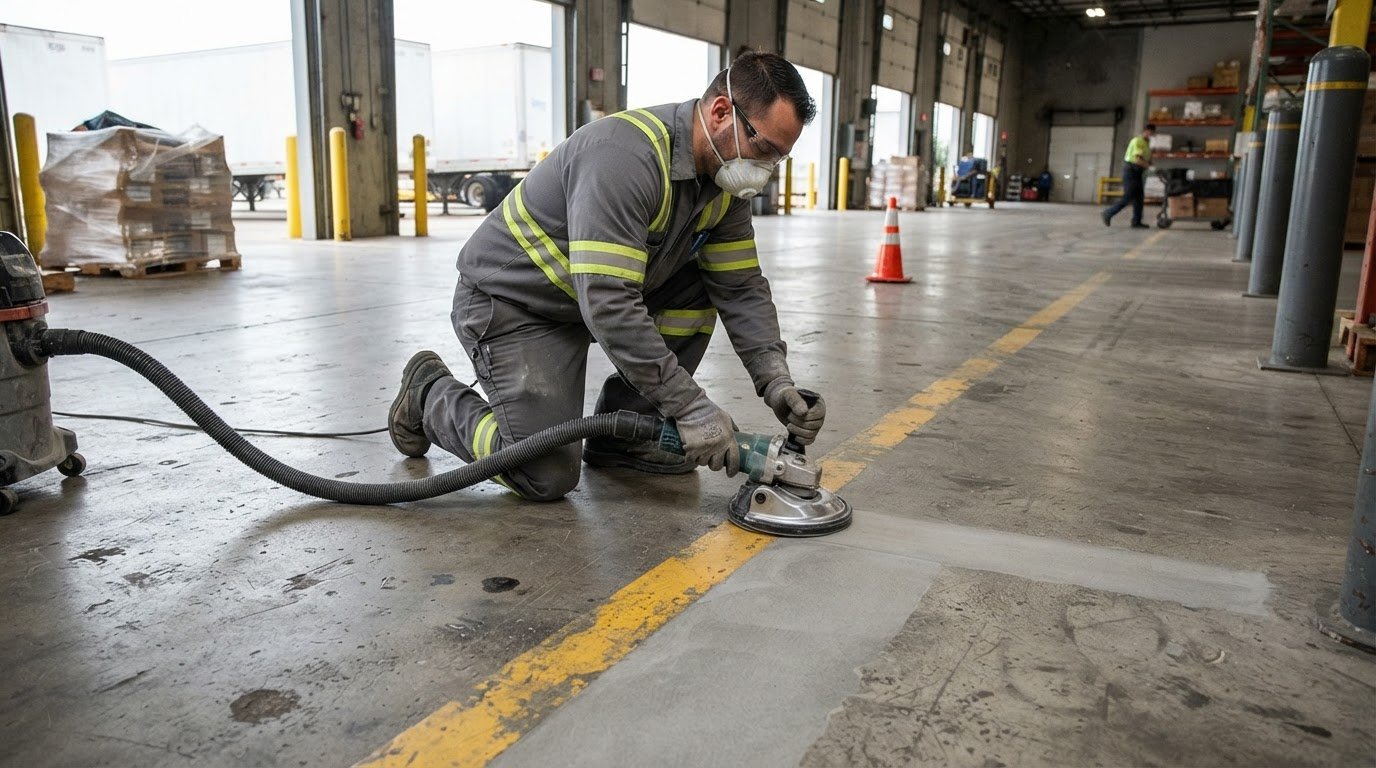
Real durability begins beneath the surface of the concrete. Mechanical profiling creates a “tooth” (a roughened surface area) that allows industrial resins to anchor deep into the concrete slab. Topical applications fail because they sit on top of the laitance (the weak, milky layer of cement paste that rises to the top during curing). A professional heavy duty warehouse floor striping service prioritizes this mechanical bond over simple painting. We follow a strict 5-step preparation sequence to ensure maximum longevity:
- Clean: Remove all oils, greases, and surface contaminants that inhibit bonding.
- Strip: Eliminate existing, failed markings using specialized removal equipment.
- Profile: Mechanically roughen the concrete substrate to a specific texture.
- Vacuum: Use industrial HEPA-filtered systems to remove all microscopic dust.
- Prime: Apply a high-penetration resin to seal the pores and prepare for the base coat.
Chemical etching (the use of acid to roughen concrete) is often insufficient for industrial-grade epoxy because it doesn’t provide the uniform depth required for heavy forklift traffic.
Shot Blasting vs. Diamond Grinding
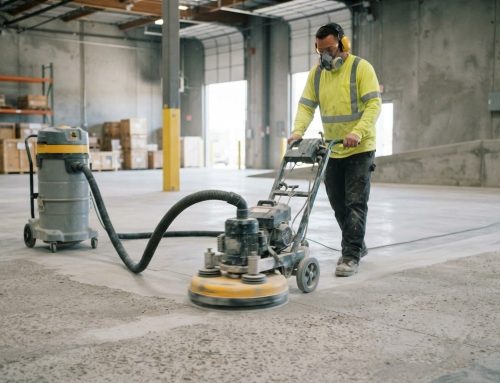
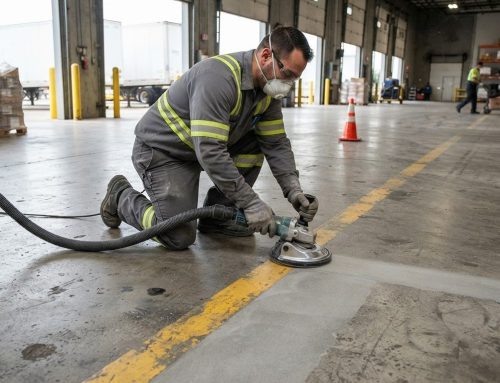
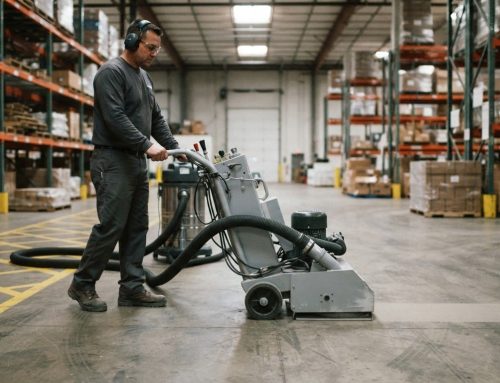
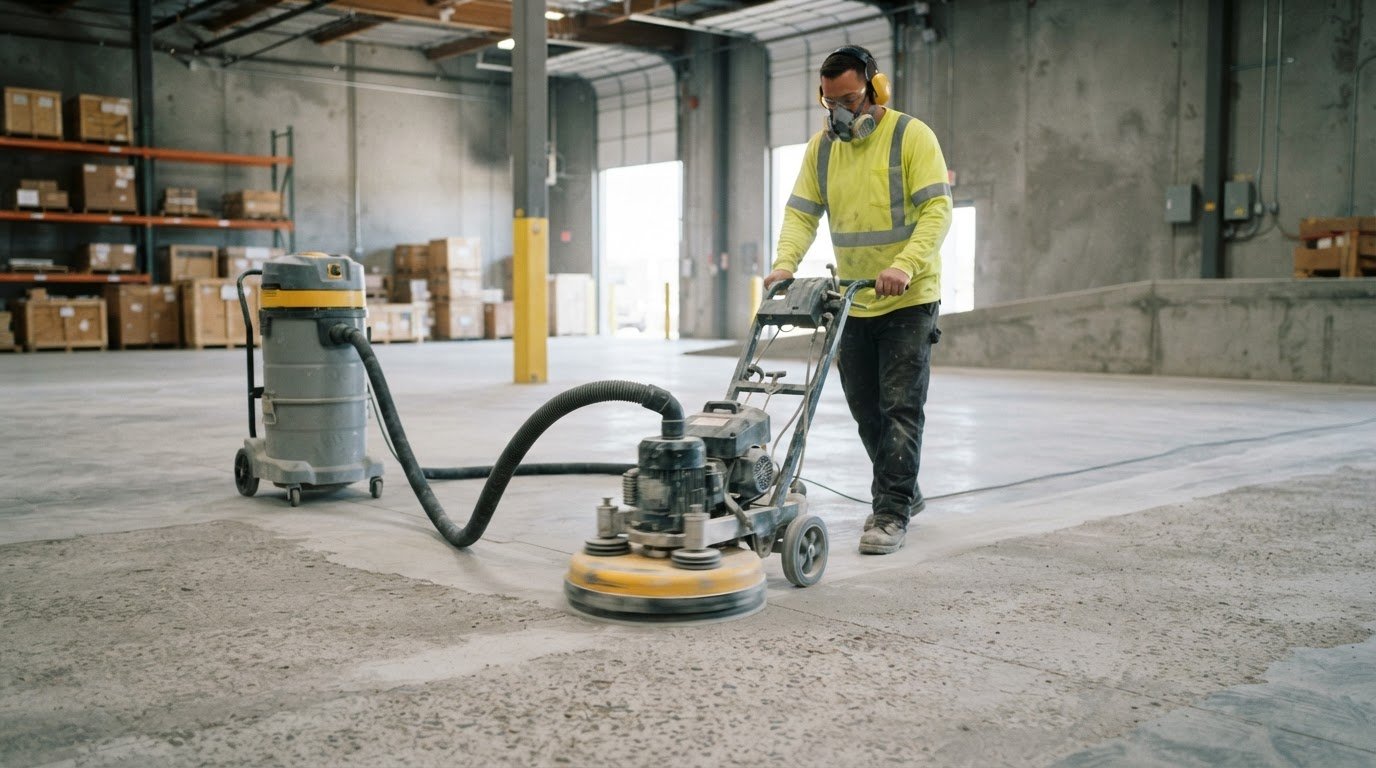
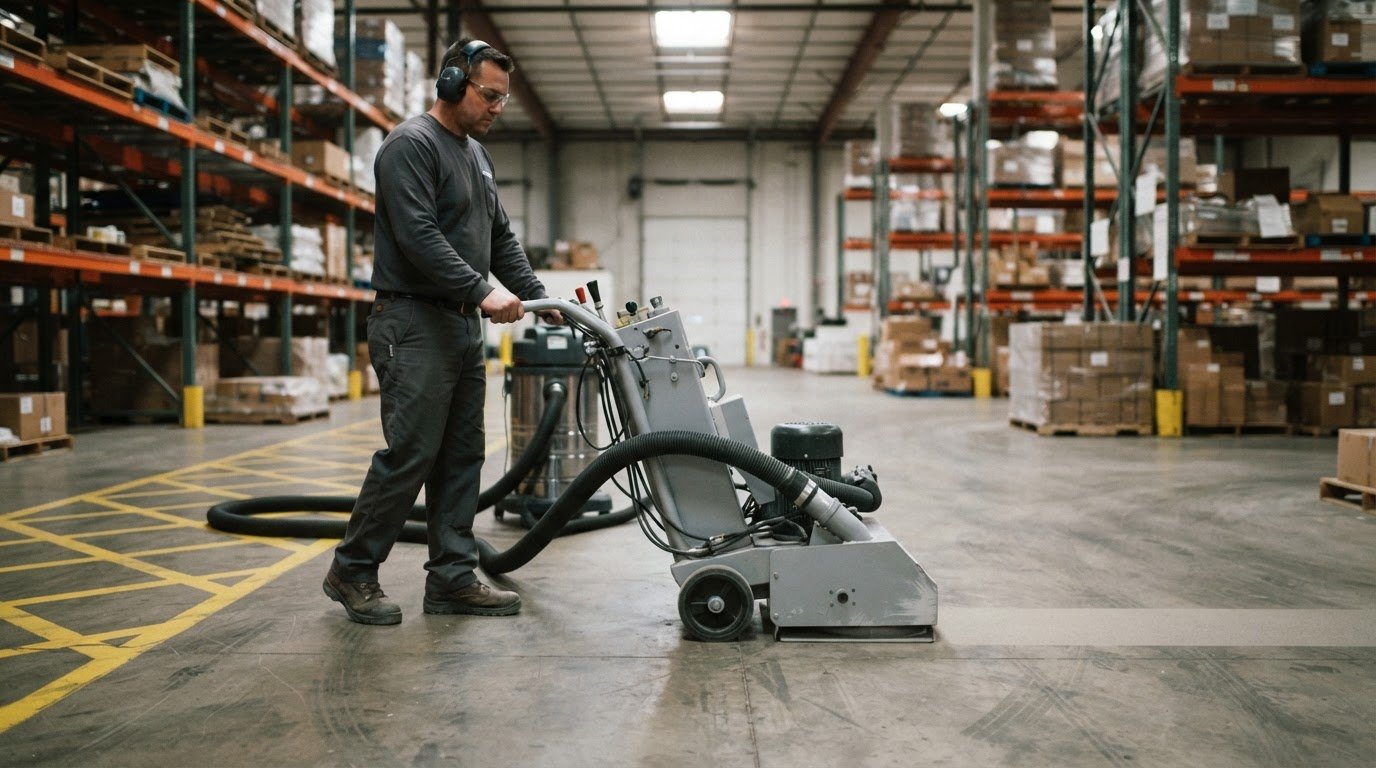
Shot blasting is the gold standard for industrial preparation. It fires steel shot at the floor to strip away the laitance and old coatings, exposing the strong aggregate underneath. Diamond grinding uses rotating abrasive disks and is often the superior choice for floors that are too thin for blasting or require a smoother aesthetic finish. Both methods utilize vacuum-sealed systems to maintain air quality (ensuring your facility remains safe for workers and inventory). If you have existing lines that are peeling, our shot blasting line removal ensures a clean slate without contaminating your workspace.
Achieving the Optimal Concrete Surface Profile (CSP)
The International Concrete Repair Institute (ICRI) defines surface roughness through the CSP scale (a standardized 1 to 10 rating system for concrete texture). For high-traffic areas, we target a CSP of 3 or 4. This level of texture creates the surface area needed for heavy-duty epoxy to anchor deep into the pores of the concrete. Adhering to these engineering standards is essential for meeting OSHA regulations for floor markings, which require permanent and visible boundaries in all walking-working areas. Before any material is applied, we perform “pull-off” tests or use digital surface profile gauges to verify that the slab is ready to receive the coating. This technical precision is what separates a long-term industrial safety solution from a temporary paint job that will fail under pressure.
Heavy Duty Material Comparison: Epoxy vs. Polyurethane
Choosing the right material determines the total cost of ownership for your facility. Low-cost, solvent-based paints often fail because they lose volume during the drying process, leaving behind a thin and brittle film. A professional heavy duty warehouse floor striping service utilizes high-performance resins that maintain 100% of their volume from application to full cure. This ensures the lines remain thick, visible, and bonded to the substrate long after standard traffic paint would have pulverized into dust. Selecting the correct chemical composition is a technical decision based on your specific traffic patterns and environmental stressors.
100% Solids Epoxy: The Industrial Workhorse
This material is the gold standard for high-impact environments. Unlike traditional paints that dry through evaporation, 100% solids epoxy cures through a chemical cross-linking reaction between a resin and a hardener. This process creates a dense, non-porous structure that is exceptionally resistant to the heavy point-load pressure of loaded forklifts. Because it is a high-build material, it naturally levels out minor concrete imperfections to create a smooth, consistent finish. For industrial workspaces, we specify materials that achieve a Shore D hardness of at least 80 (a measurement of a material’s resistance to permanent indentation). This hardness is critical for preventing “plowing” or gouging when heavy pallets are dragged across the surface.
When to Use Specialized Coatings
While epoxy provides the foundation, specialized topcoats and alternative resins solve specific operational challenges. Polyurethane topcoats are frequently applied over epoxy to provide superior UV stability and chemical resistance. Polyurethane is more flexible than epoxy, which allows it to better resist scratches from grit and debris trapped under forklift tires. For facilities that cannot afford long curing windows, we utilize MMA (Methyl Methacrylate). This resin cures in less than an hour, allowing for a rapid return to service without sacrificing durability.
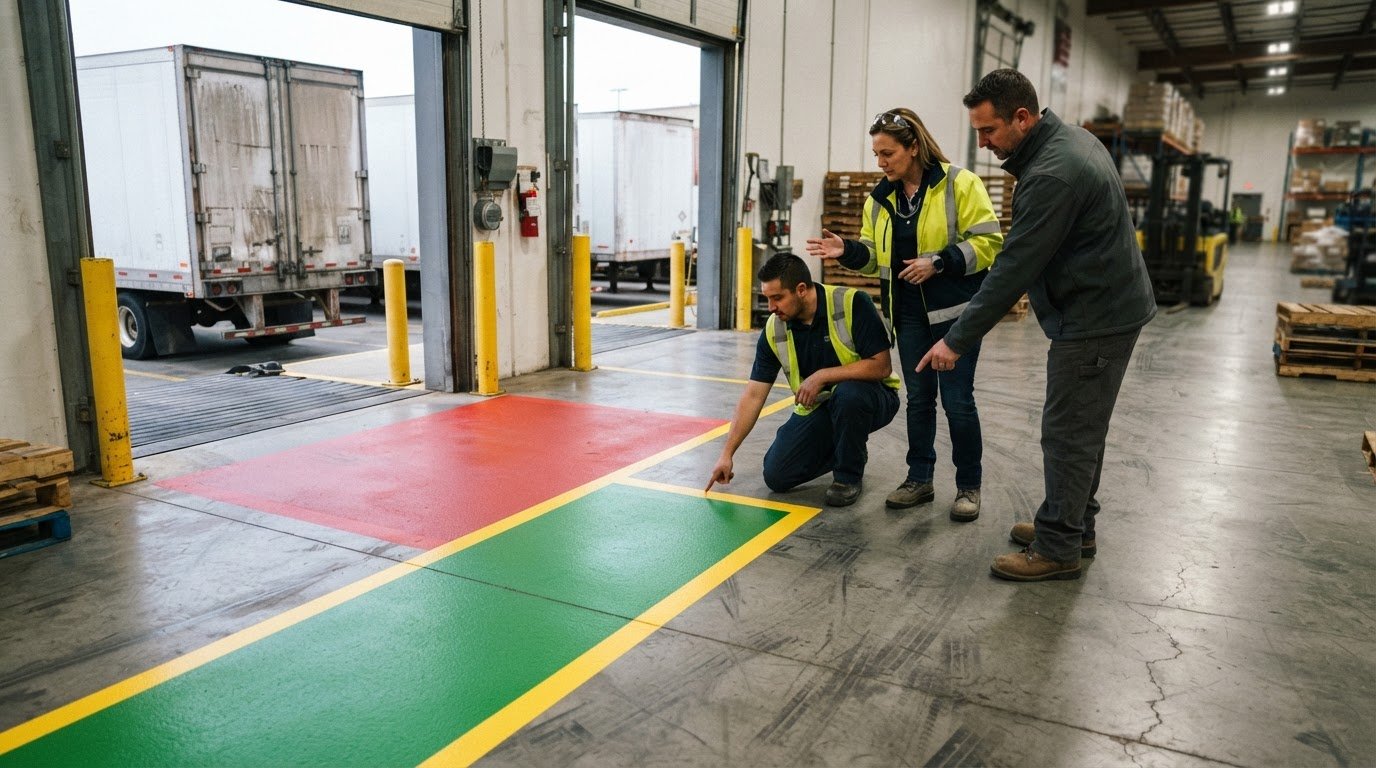
Compliance is the driving force behind these material choices. According to OSHA regulations for aisle markings, permanent aisles and passageways must be appropriately marked wherever mechanical handling equipment is used. To maintain these standards in challenging conditions, we offer:
- Cold Storage Coatings: Specialized low-temperature resins designed to cure in sub-zero environments without cracking.
- Anti-Slip Additives: Integrated aggregates that provide extra traction in high-moisture or oily zones.
- High-Visibility Pigments: Enhanced color concentrates that remain vibrant in low-light racking aisles or during emergency power loss.
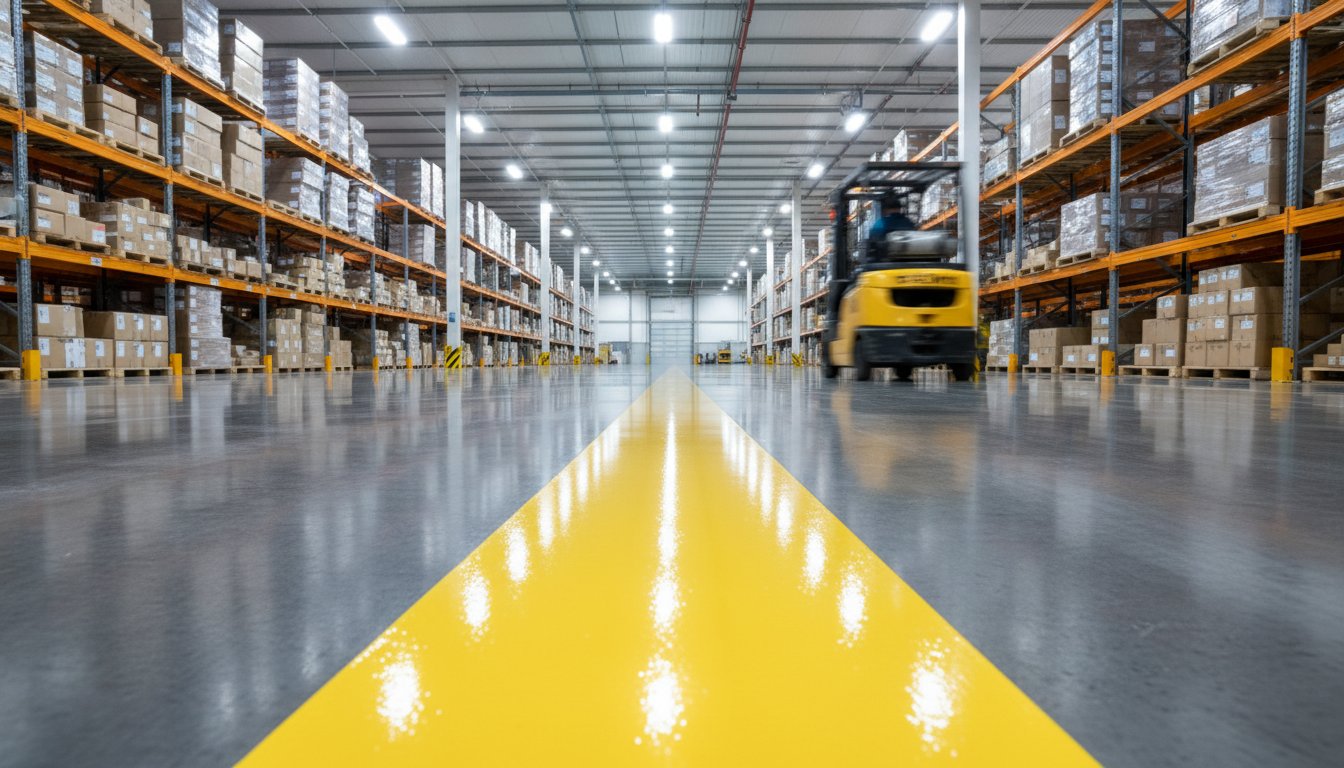
Utilizing a heavy duty warehouse floor striping service ensures that your markings don’t just meet the minimum legal requirements today, but remain visible and effective for years of 24/7 operation.
Operational Planning: Minimizing Facility Downtime
Maintaining production throughput while upgrading safety infrastructure is a logistical challenge that requires precise coordination. Our heavy duty warehouse floor striping service integrates directly with your facility’s workflow to ensure that safety improvements never result in missed shipments or stalled lines. We recognize that every hour of downtime has a measurable cost. We prioritize a business-as-usual approach that keeps your team moving while we work. This often involves executing projects during nights, weekends, or holiday windows when traffic is at its lowest point.
Phased Installation Strategies
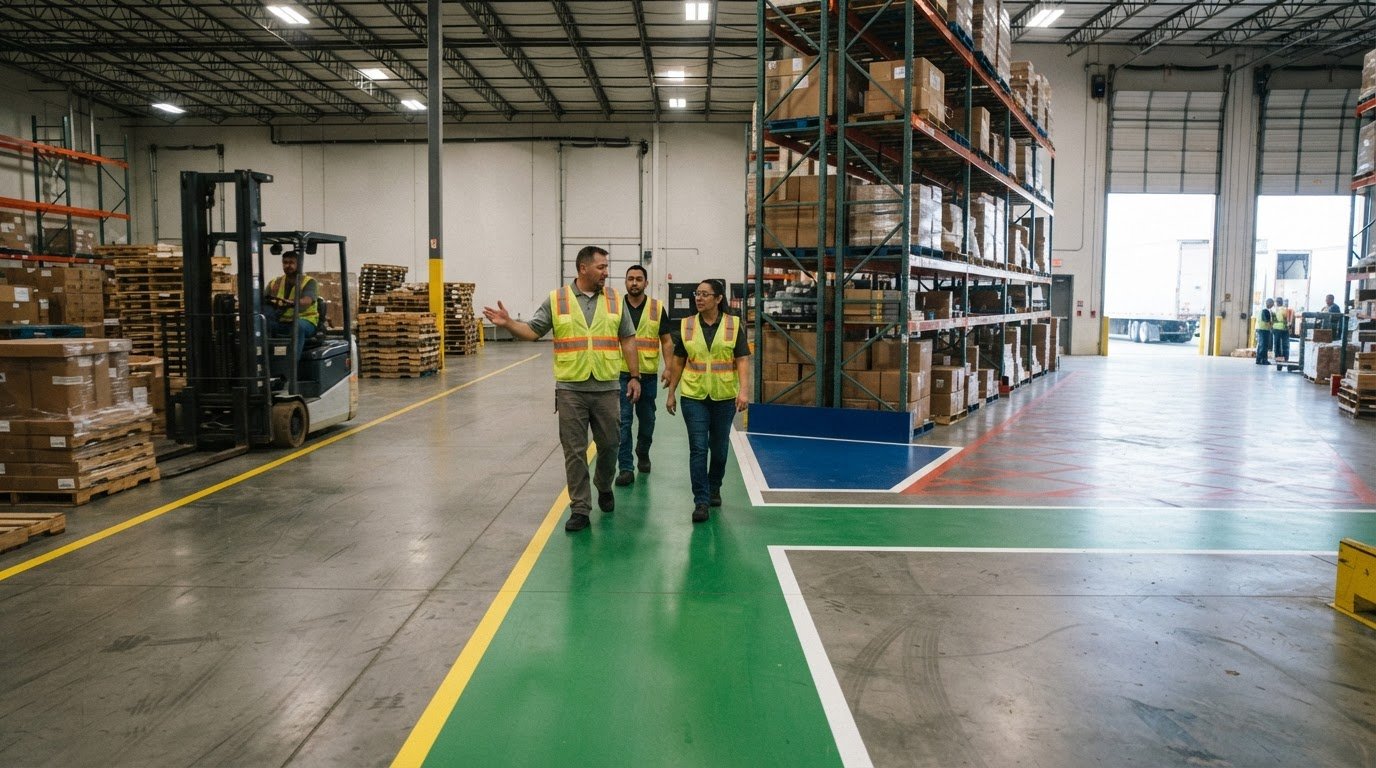
We utilize a phased execution model that allows us to section off specific high-traffic zones while keeping at least 50% of the facility operational. This “leapfrog” method involves moving equipment and inventory in stages, ensuring that forklift drivers always have a clear path to active racking. Clear communication between our project leads and your warehouse staff is the foundation of this process. We use high-visibility temporary barriers and floor-to-ceiling dust partitions to define work zones and prevent cross-contamination during the curing phase. This allows for a seamless transition from warehouse line removal to fresh application within a single shift, keeping your facility compliant with OSHA 29 CFR 1910.176(a) without halting the supply chain.
Rapid Cure Technologies
Traditional epoxy systems often require 24 to 72 hours of cure time before they can withstand heavy forklift traffic. For facilities with 24/7 operations, we offer rapid cure technologies such as polyaspartic coatings. These systems are often fully cured in just 1 to 2 days, providing a significantly faster return to service than standard industrial resins. While these systems may carry a higher material cost, the reduction in operational downtime typically provides a superior return on investment. Successful fast-curing depends heavily on environmental control. We monitor humidity and temperature levels throughout the application to ensure the chemical reaction occurs within the specified window. For the most demanding environments, UV-cured coatings provide an almost immediate return to service, allowing machinery to roll over the lines seconds after the curing light passes over them. If you are ready to modernize your safety markings without sacrificing productivity, you can schedule a logistics consultation to develop a customized installation plan.
Partnering with StripeGuys for National Industrial Excellence
Selecting a contractor for industrial safety markings is a decision that impacts your facility’s operational efficiency and long-term maintenance budget. StripeGuys provides a heavy duty warehouse floor striping service rooted in nearly three decades of field-tested results. We position ourselves as safety-conscious consultants rather than just service providers, ensuring that every project aligns with the physical realities of your workspace. Our team prioritizes transparency and extreme accessibility, offering around-the-clock availability to meet the urgent requirements of high-volume distribution hubs. We understand that in an industrial environment, reliability is the only metric that truly matters.
The Veteran Advantage in Large-Scale Logistics
With over 29 years of experience, our teams have refined the technical preparation and application methods required for high-profile projects. This historical tenure allows us to identify and prevent common application errors (such as insufficient mechanical profiling or improper resin mixing) before they lead to coating failure. We own and operate a fleet of specialized equipment, including industrial shot blasters and diamond grinders, to ensure every slab reaches the optimal Concrete Surface Profile. Our portfolio includes complex installations at major international airports and national distribution centers, where precision and durability are non-negotiable. This seasoned expertise ensures that your floor markings can withstand the constant torque of heavy machinery without peeling or fading.
National Consistency for Corporate Standards
For multi-site logistics providers, maintaining uniform safety standards across a national network is a significant challenge. StripeGuys provides nationwide coverage, ensuring that your facility in California meets the exact same safety and durability specifications as your site in New Jersey. We offer streamlined billing and centralized project management for national accounts, which reduces the administrative burden on your procurement and operations teams. This consistency ensures that your corporate safety protocols and OSHA compliance standards are executed flawlessly at every location. Our modern approach to communication includes direct, instant messaging channels, providing you with real-time updates on project progress regardless of your time zone.
We are committed to delivering functional outcomes that prioritize your facility’s safety and your organization’s bottom line. If you are ready to implement a permanent solution for your high-traffic aisles, Contact StripeGuys for a heavy-duty facility assessment. Our team is available 24/7 to discuss your specific logistical needs and develop a phased installation strategy that keeps your business moving forward.
Securing Your Facility’s Future with Industrial Precision
You’ve seen how mechanical surface preparation and advanced resin selection transform floor markings from a maintenance burden into a long-term safety asset. By prioritizing a chemical bond through shot blasting and utilizing 100% solids epoxy, you eliminate the constant peel-and-flake cycle that plagues high-traffic hubs. Successful implementation requires more than just high-grade materials; it demands a phased logistics plan that protects your operational throughput while ensuring full compliance with federal safety standards. Investing in a professional heavy duty warehouse floor striping service is the most effective way to reduce long-term maintenance costs and improve site safety across your entire network.
As OSHA-compliant safety marking specialists with 29+ years of industrial experience and nationwide project coverage, we understand the high stakes of your environment. We provide the technical expertise and 24/7 accessibility needed to manage complex, multi-site logistics projects without disrupting your daily workflow. It’s time to replace temporary paint with a permanent engineered solution that withstands constant forklift traffic and heavy machinery use. Get a Professional Industrial Striping Quote Today and establish a durable, high-visibility foundation for your warehouse operations.
Frequently Asked Questions
How long do heavy-duty epoxy lines typically last?
Professionally applied epoxy striping typically lasts between 5 and 10 years in heavy industrial environments. This lifespan depends on the volume of forklift traffic and the quality of the initial surface preparation. Unlike standard traffic paint that requires annual touch-ups; our heavy-duty systems use 100% solids resin to maintain a thick, durable bond that resists the friction of constant machinery movement.
Can you stripe a warehouse floor without stopping operations?
We can complete your project without halting your facility’s operations by utilizing a phased installation strategy. This approach allows us to section off specific high-traffic zones while keeping at least 50% of your floor space active for forklift movement. We also offer night, weekend, and holiday scheduling to execute the work during your lowest traffic windows; ensuring your supply chain remains uninterrupted.
What is the difference between shot blasting and diamond grinding for floor prep?
Shot blasting uses steel shot to physically remove the weak laitance layer of concrete, creating a deep profile for the strongest possible bond. Diamond grinding uses rotating abrasive disks to smooth the surface or remove thin coatings. While shot blasting is the preferred method for our heavy duty warehouse floor striping service; diamond grinding is a better choice for facilities with thinner slabs or those requiring a flatter finish.
How soon can forklifts drive on new epoxy lines?
Return-to-service times vary based on the specific material system used for your facility. Standard 100% solids epoxy typically requires 24 to 72 hours to achieve a full cure for heavy forklift traffic. If your operation requires a faster turnaround, we utilize polyaspartic coatings that are ready for use in 1 to 2 days or UV-cured systems that allow for immediate machinery travel.
Are these floor markings compliant with OSHA safety standards?
All of our industrial markings are designed to meet or exceed OSHA standard 29 CFR 1910.176(a), which mandates that permanent aisles and passageways be appropriately marked. We act as safety-conscious consultants to ensure your layout provides clear pedestrian boundaries and vehicle lanes. This reduces the risk of accidents in an industry that averages 4.8 recordable injury cases for every 100 workers.
Do you provide services for cold storage or freezer facilities?
We provide specialized striping services for cold storage and freezer environments using low-temperature cure resins. These materials are engineered to bond and harden in sub-zero conditions where standard epoxy would fail to cure. This ensures that your refrigerated zones maintain the same high-visibility safety standards and durability as the rest of your ambient-temperature warehouse.
What information do you need to provide an accurate estimate?
To provide an accurate estimate, we require the total linear footage of the markings and a description of the current floor condition. It’s helpful to know if there are existing lines requiring shot blasting line removal and what your typical daily forklift traffic volume looks like. We also consider your facility’s operational hours to determine if night or weekend scheduling is necessary for the project.
Why should I choose epoxy over heavy-duty floor marking tape?
You should choose epoxy because it creates a permanent chemical bond with the concrete substrate that adhesive tapes cannot match. While heavy-duty tapes are a quick solution for low-traffic areas; they often peel or shift when forklifts perform tight turns or skid. Our heavy duty warehouse floor striping service provides a flush, impact-resistant finish that won’t become a trip hazard or catch on pallet jacks.