Choosing the lowest-priced traffic paint for your facility often results in the highest long-term expense because of constant re-striping and operational shutdowns. You likely deal with safety lines that peel under heavy forklift scrubbing or fade just months after application, creating confusion and increasing the risk of OSHA fines. With the Warehouse National Emphasis Program active through July 2026, maintaining clear, high-visibility demarcations is a functional necessity to avoid citations and protect your workforce.
This guide provides a technical comparison of epoxy vs paint for warehouse lines to help you select a system that withstands industrial wear for five years or more. We understand that your priority is a marking solution that ensures safety without halting your 24/7 operations. You will learn how to match material chemistry to specific traffic zones and why professional surface preparation (the process of cleaning and profiling the concrete) is the deciding factor in coating longevity. We preview the durability, initial costs, and total operational impact of both systems so you can make an informed decision for your infrastructure.
Key Takeaways
- Identify the chemical differences between standard acrylic paints and two-component epoxy resins to match the right material to your facility’s specific traffic patterns.
- Analyze the total cost of ownership for epoxy vs paint for warehouse lines, factoring in the long-term labor expenses associated with frequent re-striping.
- Understand why mechanical surface preparation (the process of using shot blasting to open concrete pores) is essential for achieving a 5-year service life.
- Learn to audit your forklift traffic volume and floor condition to prevent premature line failure in high-stress distribution zones.
- Minimize operational downtime by utilizing a marking partner with national mobilization capabilities and nearly three decades of industrial experience.
Comparing Epoxy vs. Paint for Warehouse Floor Striping
Facility managers face a critical choice when designating safety zones and traffic lanes. The decision between epoxy vs paint for warehouse lines isn’t merely about color; it’s about material chemistry and how it interacts with your concrete floor. OSHA standard 1910.176(b) mandates that permanent aisles and passageways must be appropriately marked (meaning clearly visible and maintained) to prevent workplace accidents. Achieving this standard requires selecting a material that can withstand your specific daily traffic volume.
Standard industrial paint typically consists of water-based or solvent-based acrylics. These coatings sit on the surface of the concrete and rely on a simple physical bond. In contrast, industrial epoxy resins are two-component systems that create a cross-linked chemical bond with the concrete substrate. This difference in chemistry dictates how well the lines will hold up under modern LED warehouse lighting. High-gloss epoxy finishes tend to maintain their reflective properties longer, ensuring safety demarcations remain bright even in deep storage rows where light levels might fluctuate.
Standard Warehouse Paint: The Low-Cost Entry Point
Acrylic-based paint is a practical choice for facilities with low-traffic staging areas or temporary seasonal layouts. We often utilize these materials for areas where floor configurations change frequently. It offers a lower upfront cost and exceptionally fast drying times, often curing in 30 to 60 minutes. However, the trade-off is durability. Standard paint is highly susceptible to “forklift burn” (permanent black tire marks) and can begin peeling within months if subjected to heavy scrubbing or frequent pivoting by material handling equipment.
Industrial Epoxy: The High-Durability Standard
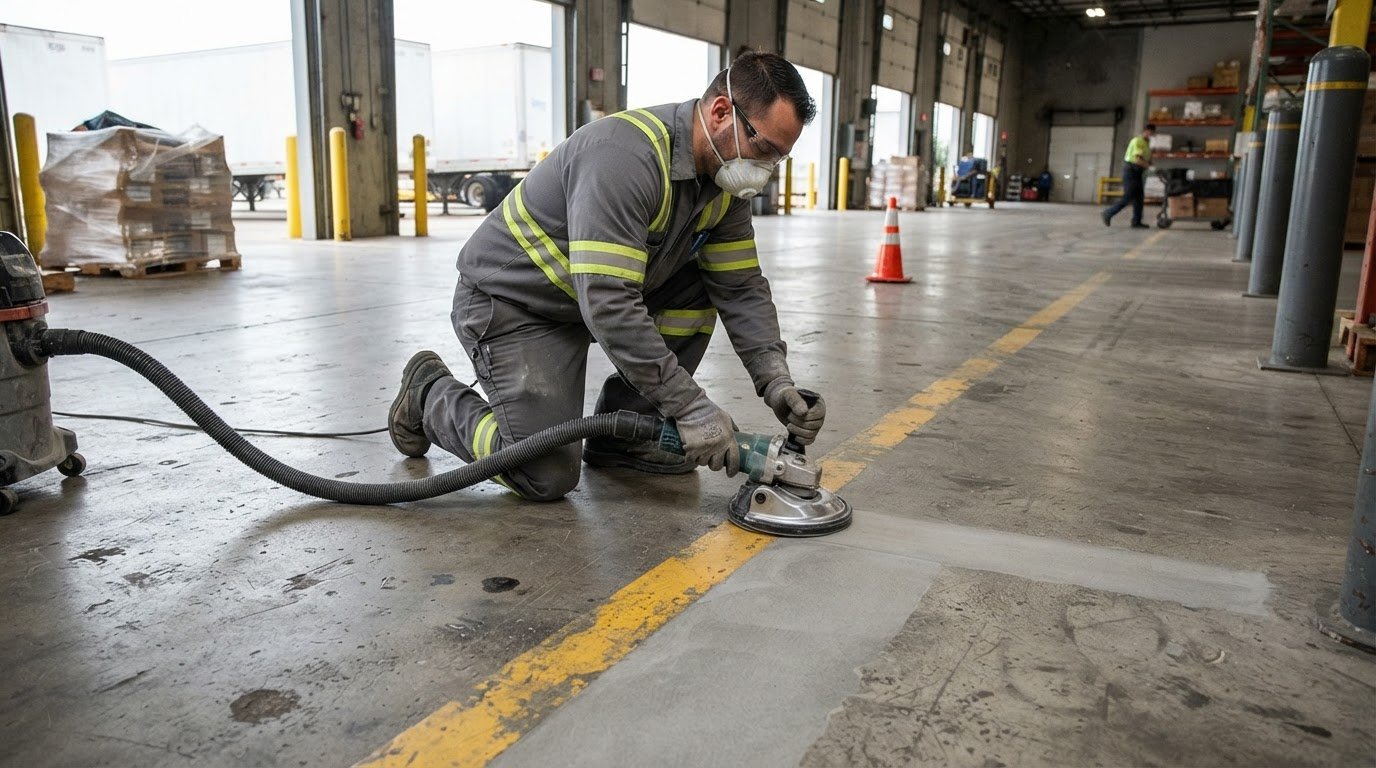
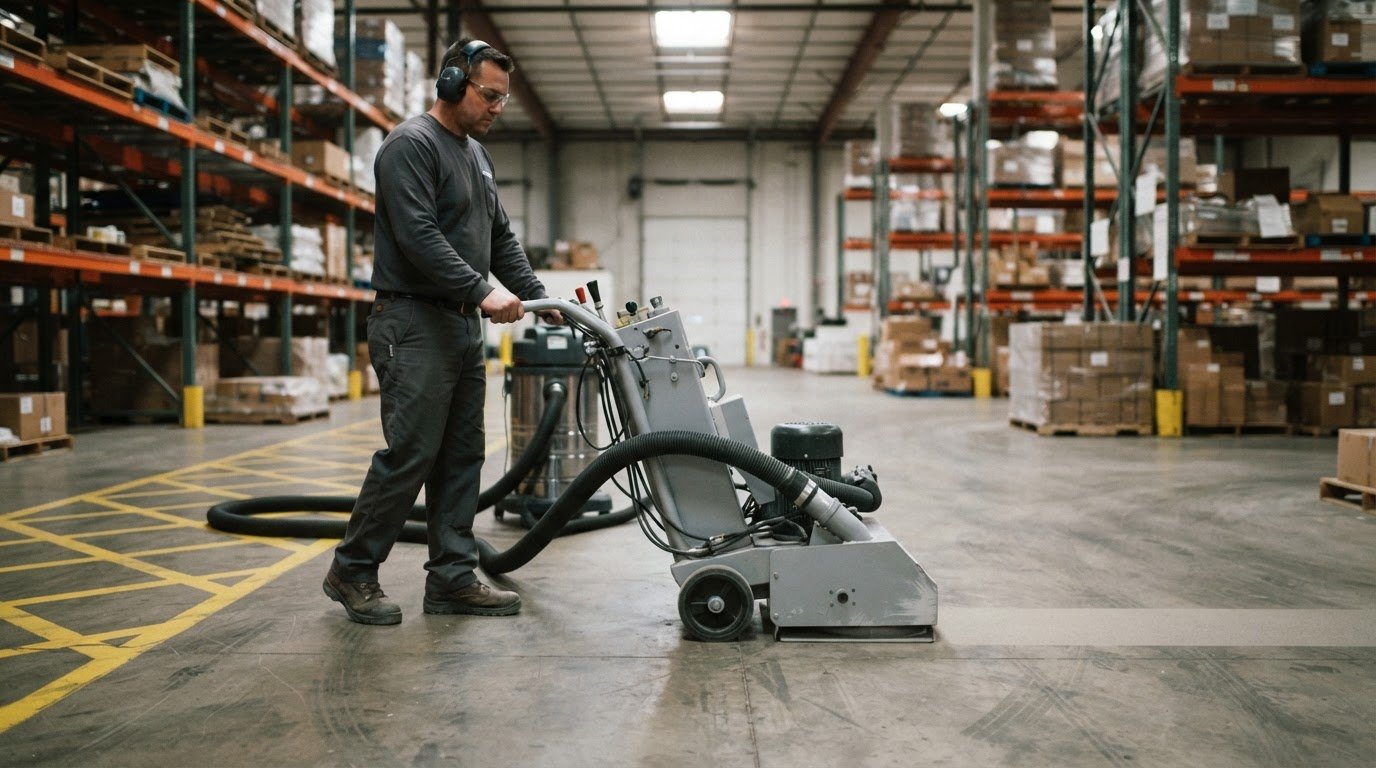
For 24/7 fulfillment centers and high-traffic forklift aisles, Epoxy Line Painting is the industrial standard. These systems provide extreme impact resistance and protection against chemical spills, which is vital in battery charging or chemical storage zones. A professionally applied epoxy system can last between 5 and 10 years. This longevity is only possible through mechanical surface preparation (using shot blasting or grinding to open the concrete pores), which allows the resin to anchor into the floor. While the initial material cost is higher, the extended lifespan eliminates the frequent operational downtime required for re-striping.
Durability and Total Cost of Ownership (TCO) Analysis
The true cost of a marking system isn’t found on the initial estimate; it’s revealed over a five-year operational cycle. While standard traffic paint is inexpensive to purchase, it often requires re-application every 6 to 12 months in high-traffic zones. These “hidden costs” include repeated labor charges and the logistical headache of clearing racks and stopping forklift traffic for each re-striping event. Total Cost of Ownership (TCO) in warehouse maintenance represents the cumulative expense of a marking system throughout its functional lifespan, encompassing initial material costs, recurring labor for re-striping, and the revenue lost during operational shutdowns.
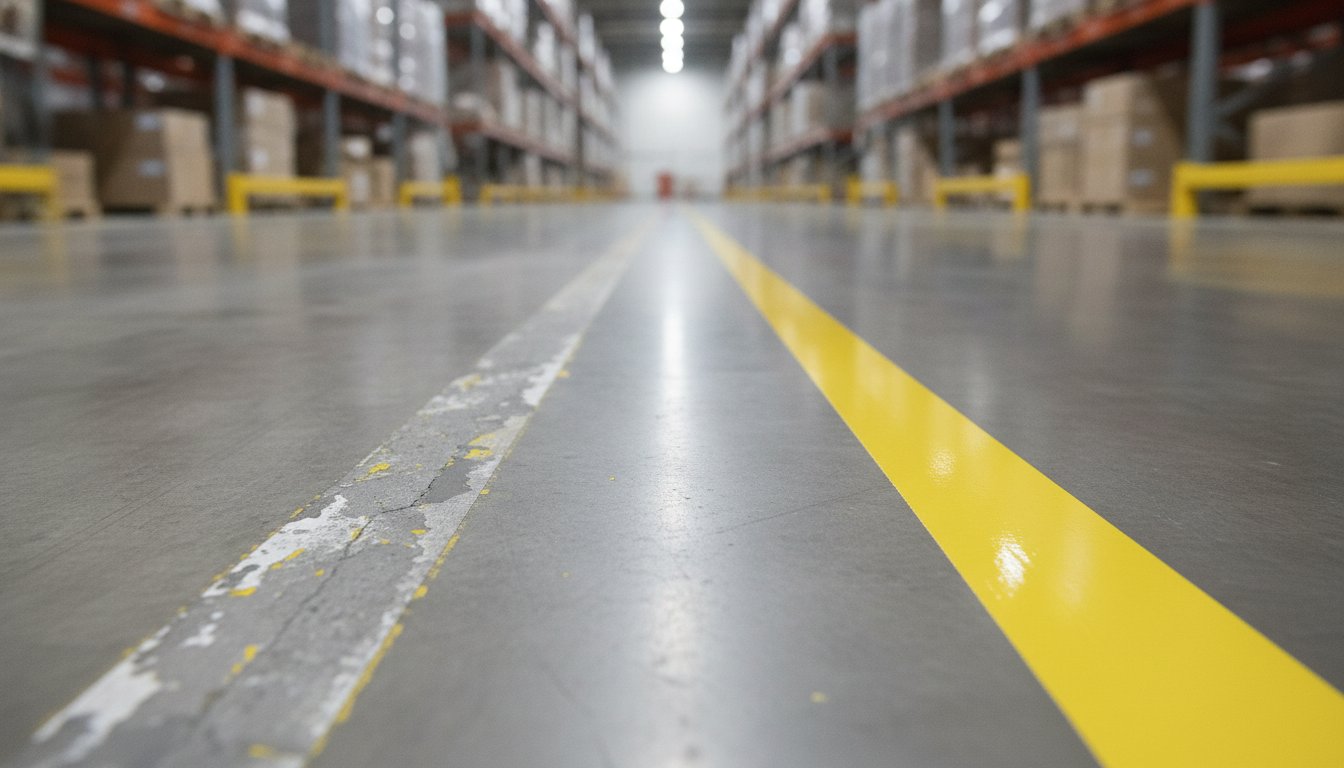
Durability is largely a matter of impact resistance and bond strength. High-performance epoxy systems are designed to withstand the extreme shear forces generated by 10,000-pound forklifts and heavy-duty pallet jacks. Unlike paint, which can flake off when tires pivot, epoxy chemically anchors to the concrete. This bond ensures that your facility remains compliant with OSHA safety color standards for years rather than months. Maintenance for epoxy is also more efficient; the non-porous surface resists dirt and oil, allowing for simple mechanical scrubbing rather than the total replacement required for faded paint.
Why Surface Preparation Dictates Your ROI
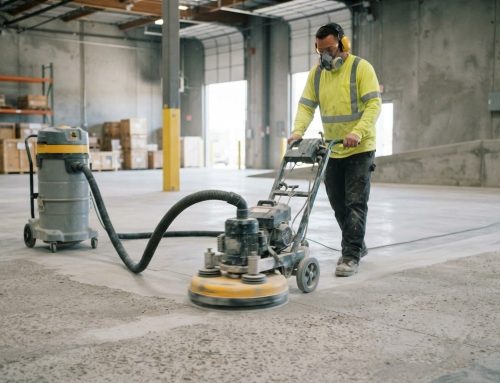
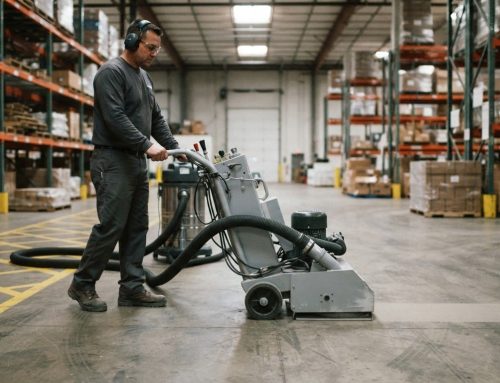
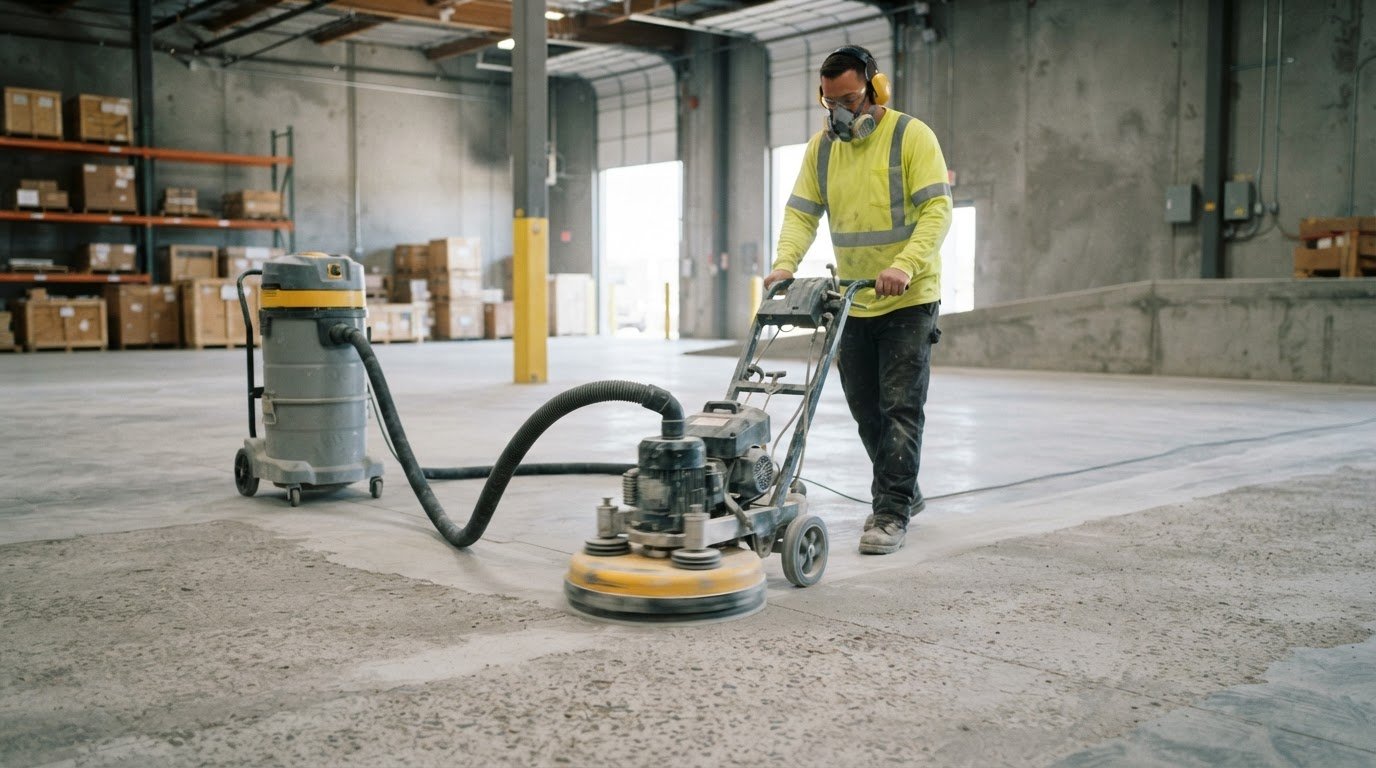
The longevity of epoxy vs paint for warehouse lines depends entirely on the “mechanical bond” created during installation. We use shot blasting (a process that fires steel grit at the floor to strip away contaminants and open concrete pores) to ensure the coating can anchor deeply into the slab. In contrast, diamond grinding uses abrasive discs to smooth and level the surface, which is often better for thinner coatings. Without this professional warehouse line removal and prep, even the most expensive epoxy will eventually delaminate and fail.
The 5-Year Financial Comparison
When you analyze the numbers over half a decade, the financial gap between materials widens significantly. A standard paint system may require 5 to 8 re-striping cycles to maintain visibility and safety compliance. Each cycle involves clearing the floor and pausing production, which compounds your total expenditure. A single professional epoxy application eliminates these recurring disruptions. If you aren’t sure which system fits your current budget and traffic volume, you can request a facility audit to compare long-term savings for your specific square footage.

Selection Criteria: Choosing the System for Your Facility
Selecting the right marking system requires a data-driven approach to your facility’s unique environmental stressors. You don’t want to over-engineer a low-traffic storage corner, but under-specifying a high-volume shipping dock leads to premature failure. Evaluating epoxy vs paint for warehouse lines starts with a four-step audit of your facility’s physical and operational realities. Each factor influences the bond strength and visibility of the final product.
First, quantify your traffic volume by calculating forklift passes per hour in your primary aisles. High-frequency zones (areas with constant mechanical handling equipment) require the impact resistance of epoxy to prevent “forklift burn.” Second, assess the condition of your concrete slab. Oil-saturated floors or old slabs with failing coatings require aggressive mechanical removal (shot blasting) before any new material is applied. Third, determine your allowable downtime. While standard epoxy requires a 12 to 24-hour cure window, modern 2026-grade fast-cure systems can often support foot traffic in just 4 hours. Finally, identify areas of chemical exposure, such as battery charging stations, where standard coatings will quickly blister and fail.
High-Traffic and Specialized Zones
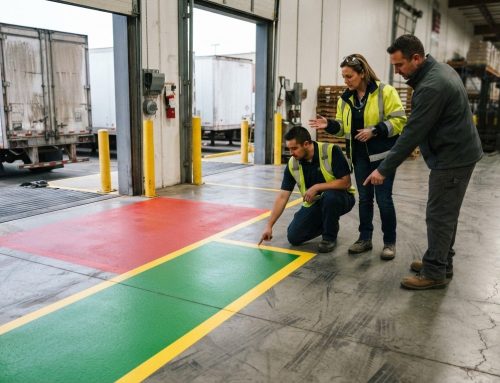
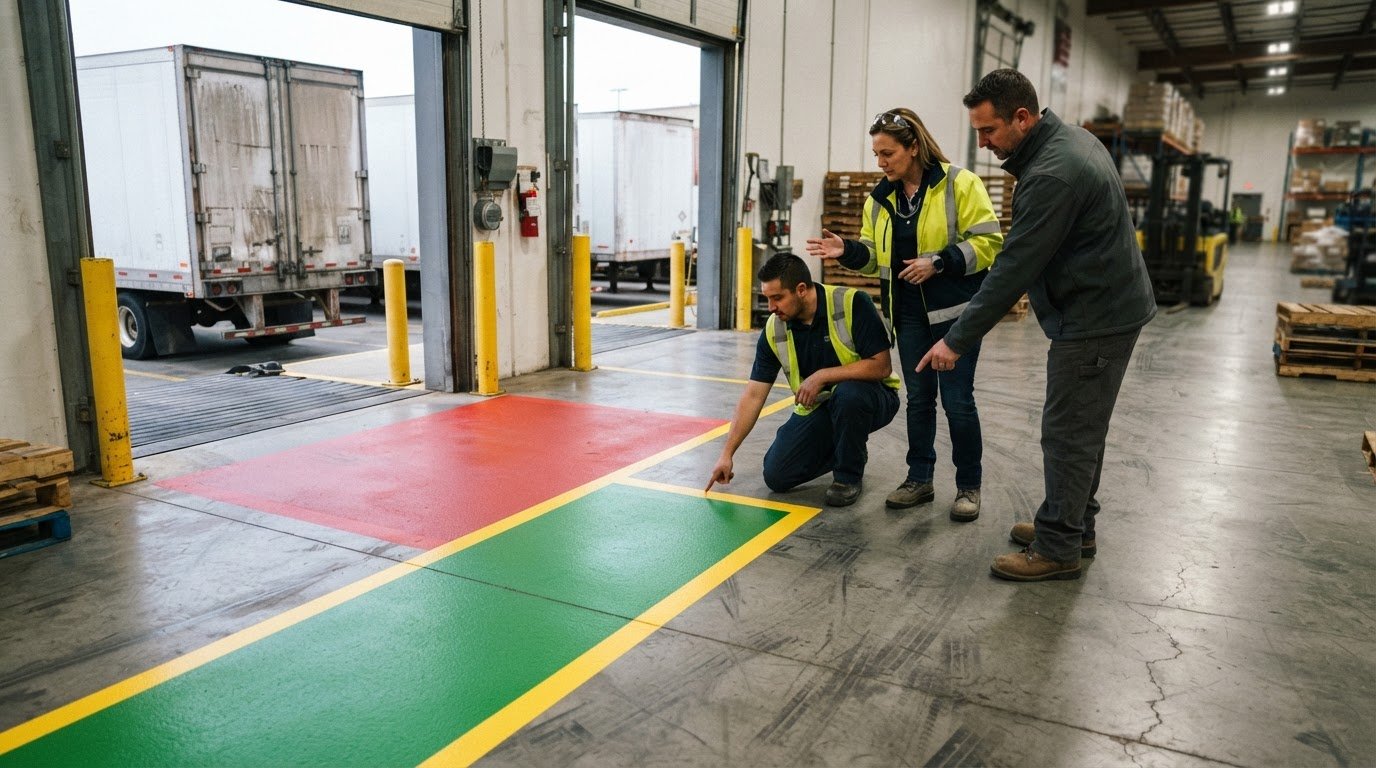
Battery charging areas represent one of the most aggressive environments in a warehouse. Acid spills from lead-acid batteries will quickly eat through standard industrial paint and even basic epoxy resins. To maintain compliance and floor integrity, you should explore our acid-resistant Novolac coatings for charging stations. These specialized resins provide a dense cross-linked barrier that resists corrosive fluids. For pedestrian walkways, the focus shifts to high-visibility safety colors that meet industrial safety flooring standards. Clear demarcations in these zones are non-negotiable for protecting workers from mechanical traffic.
Downtime Management: Curing Times and Logistics
Operational disruption is often the biggest barrier to facility upgrades. We mitigate this through phased installation (the process of striping one section of the warehouse at a time) to keep your production moving. If your facility operates 24/7, we utilize fast-cure polyurea or polyaspartic options that allow for rapid return-to-service. These modern systems significantly reduce the 24-hour wait time associated with traditional epoxies. If you need to upgrade your safety markings without halting your logistics chain, request a facility assessment to discuss a customized installation schedule that fits your shift patterns.
The StripeGuys Professional Approach to Industrial Marking
Executing a durable floor marking project requires more than just high-grade materials; it demands a deep understanding of industrial concrete and logistics. With 29+ years of specialized experience, we’ve refined a process that prioritizes functional outcomes and long-term reliability. Our team doesn’t just apply lines; we serve as safety-conscious consultants who evaluate your facility’s specific operational needs. Whether you’re deciding between epoxy vs paint for warehouse lines or need a complete floor overhaul, our tenure in the market serves as a shorthand for dependable results that satisfy both safety auditors and facility managers.
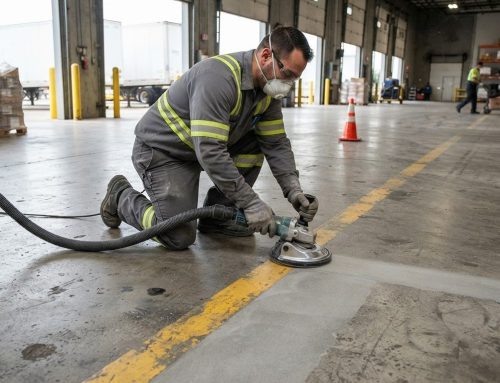
We provide national mobilization capabilities for multi-site logistics providers, ensuring that your standards remain consistent across every hub in your network. Our comprehensive service model handles the entire project lifecycle, from mechanical line removal (using shot blasting to strip old, failing coatings) to the final application of high-performance resins. This end-to-end approach ensures that every square foot of your facility meets OSHA standard 29 CFR 1910.176(a), which requires permanent aisles to be clearly marked and maintained for safety.
Why Experience Matters in Industrial Environments
Inexperienced contractors often overlook technical variables like moisture vapor transmission (the movement of water through the concrete slab) or improper chemical mixing, both of which lead to immediate coating failure. Our veteran crews understand how to identify these risks during the initial site assessment. By partnering with a national contractor, you benefit from standardized application methods and materials across all your locations. You can see our specialized epoxy warehouse striping solutions to understand how we tailor material chemistry to withstand high-volume forklift traffic and scrubbing.
Ensuring Long-Term Safety and Compliance
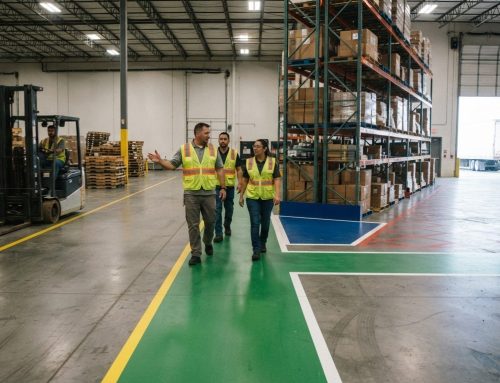
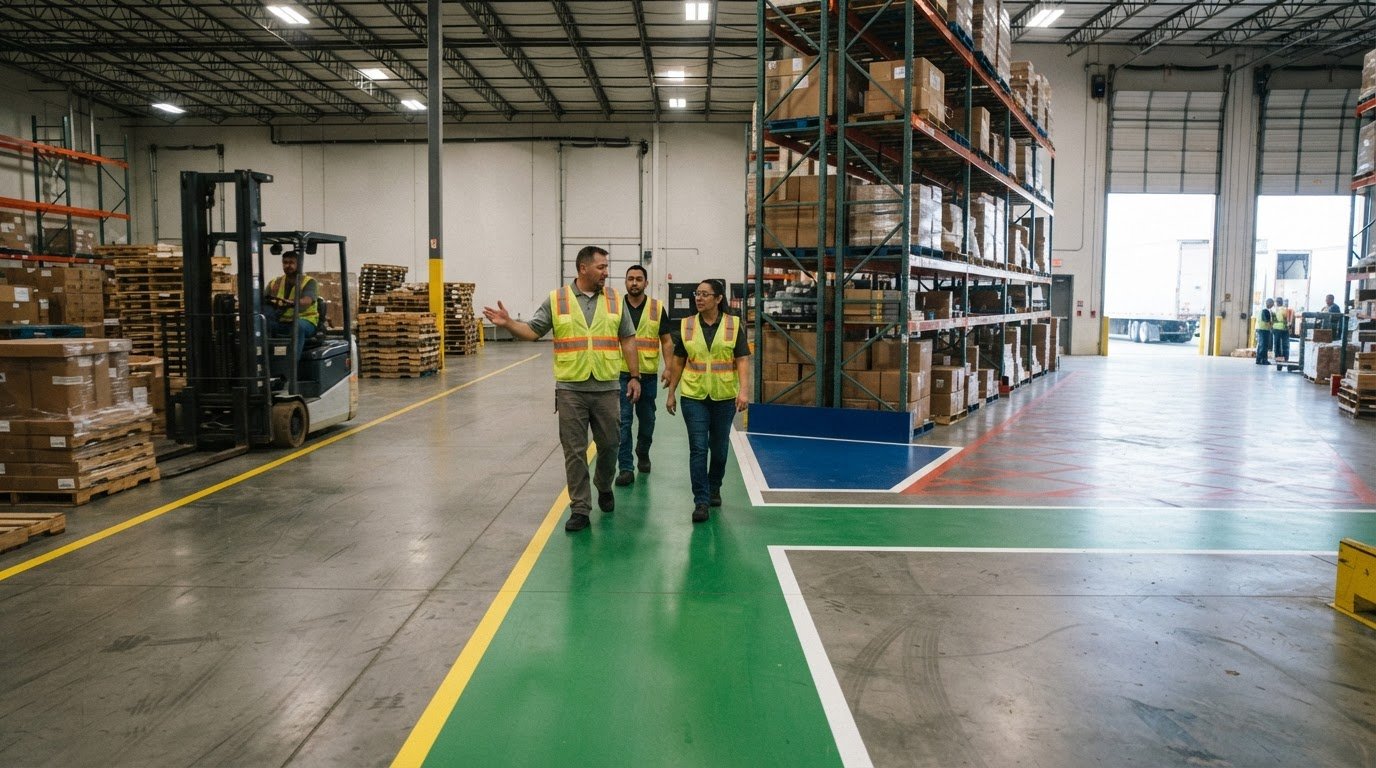
A successful marking system does more than meet a regulation; it optimizes the flow of your facility. We design layouts that minimize conflict between heavy-duty forklifts and employees on foot, creating clear boundaries that reduce the risk of workplace injuries. Our commitment to 2026 industrial standards means we only use materials proven to maintain their brightness and bond strength in 24/7 environments. For facilities looking to enhance their safety culture, we offer professional pedestrian walkway and safety aisle installation that stands up to years of heavy use. We prioritize your operational needs and budgetary constraints to deliver a marking system that doesn’t just look professional but performs under pressure.
Optimizing Your Facility for Long-Term Operational Safety
Maintaining a safe and efficient industrial floor requires moving beyond short-term fixes. When evaluating epoxy vs paint for warehouse lines, your primary consideration must be the total cost of ownership over a multi-year period. While standard paint offers a fast initial application, professional epoxy systems provide the impact resistance and chemical durability necessary for high-volume logistics hubs. Success depends on specialized mechanical surface preparation (the process of using shot blasting to open concrete pores) to ensure a permanent bond that withstands heavy forklift traffic.
Our team brings over 29 years of industrial striping expertise to every project, offering national reach for large-scale commercial facilities. We prioritize functional outcomes that ensure OSHA compliance while minimizing the logistical stress of operational downtime. By matching the right material chemistry to your specific traffic zones, you’ll secure a marking system that performs for years. Ready to upgrade your facility’s safety aisles and traffic lanes? Get a Professional Quote for Your Warehouse Striping Project today. We’re ready to help you establish a cleaner, safer, and more productive workspace.
Frequently Asked Questions
How long do epoxy warehouse lines typically last compared to paint?
Professionally applied epoxy striping typically lasts between 5 and 10 years in heavy industrial environments. In contrast, standard traffic paint often requires re-application every 6 to 12 months, while high-quality industrial paints may last 3 to 5 years. Selecting epoxy vs paint for warehouse lines ensures that your facility remains compliant with safety standards without the constant logistical disruption of frequent re-striping cycles.
Can epoxy lines be applied over existing warehouse floor paint?
No, you cannot apply epoxy over existing paint because the paint prevents the resin from forming a mechanical bond with the concrete substrate. If the underlying paint peels or flakes, the new epoxy will fail immediately regardless of its quality. We perform mechanical removal (using shot blasting or grinding) to strip away old coatings and open the concrete pores, ensuring a permanent anchor for the new system.
What is the typical curing time for industrial epoxy line painting in 2026?
Standard industrial epoxy systems generally require 12 to 24 hours to cure before they can support heavy forklift traffic. However, 2026-grade fast-cure systems, such as polyurea or polyaspartic coatings, allow for a much faster return to service. These advanced materials can often support foot traffic in as little as 2 hours and full mechanical traffic within 4 hours, which is ideal for 24/7 fulfillment centers that cannot afford long shutdowns.
Is shot blasting necessary for every warehouse epoxy project?
Shot blasting is the gold standard for surface preparation because it creates the specific surface profile (CSP 3 or higher) required for epoxy to anchor into the slab. While diamond grinding is sometimes used for thinner coatings, shot blasting is essential for high-durability projects to prevent delamination. Skipping this critical step is the primary reason why industrial floor coatings fail prematurely under the shear stress of heavy-duty pallet jacks.
Does OSHA require specific colors for warehouse floor markings?
OSHA standard 29 CFR 1910.176(a) requires that aisles be “appropriately marked” but does not mandate specific colors. Most facilities follow safety color standards where yellow designates caution and physical hazards, while red indicates fire-related hazards or emergency stops. Using these established industry standards helps satisfy auditors and ensures that your workforce recognizes safety demarcations instantly across different zones of the facility.
What is the most cost-effective way to mark lines in a cold storage facility?
Standard epoxy vs paint for warehouse lines comparisons often change in sub-zero environments because traditional resins cannot cure at low temperatures. The most efficient solution for cold storage is Methyl Methacrylate (MMA) or specialized polyaspartic coatings designed for low-temperature application. These materials cure rapidly in freezing conditions, allowing you to mark safety aisles without having to raise the temperature of your refrigerated storage space.