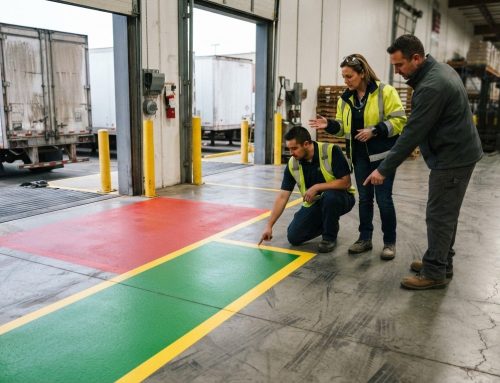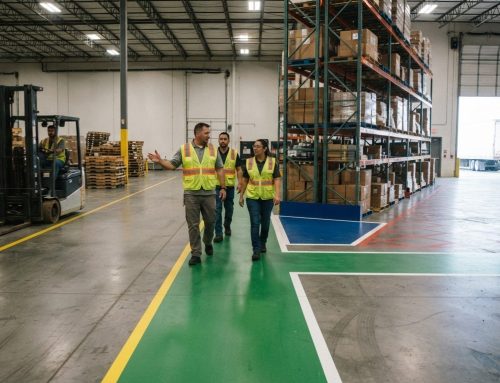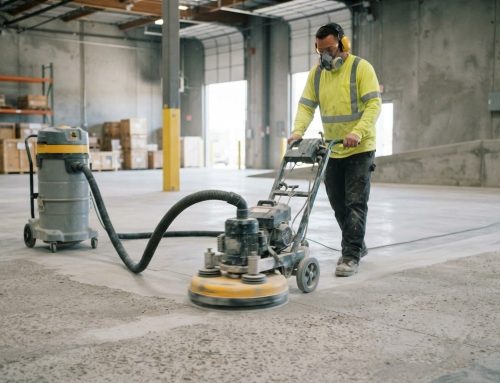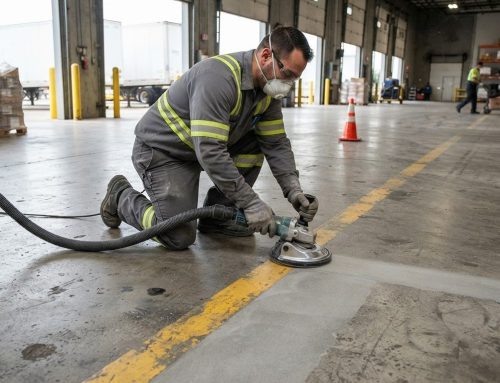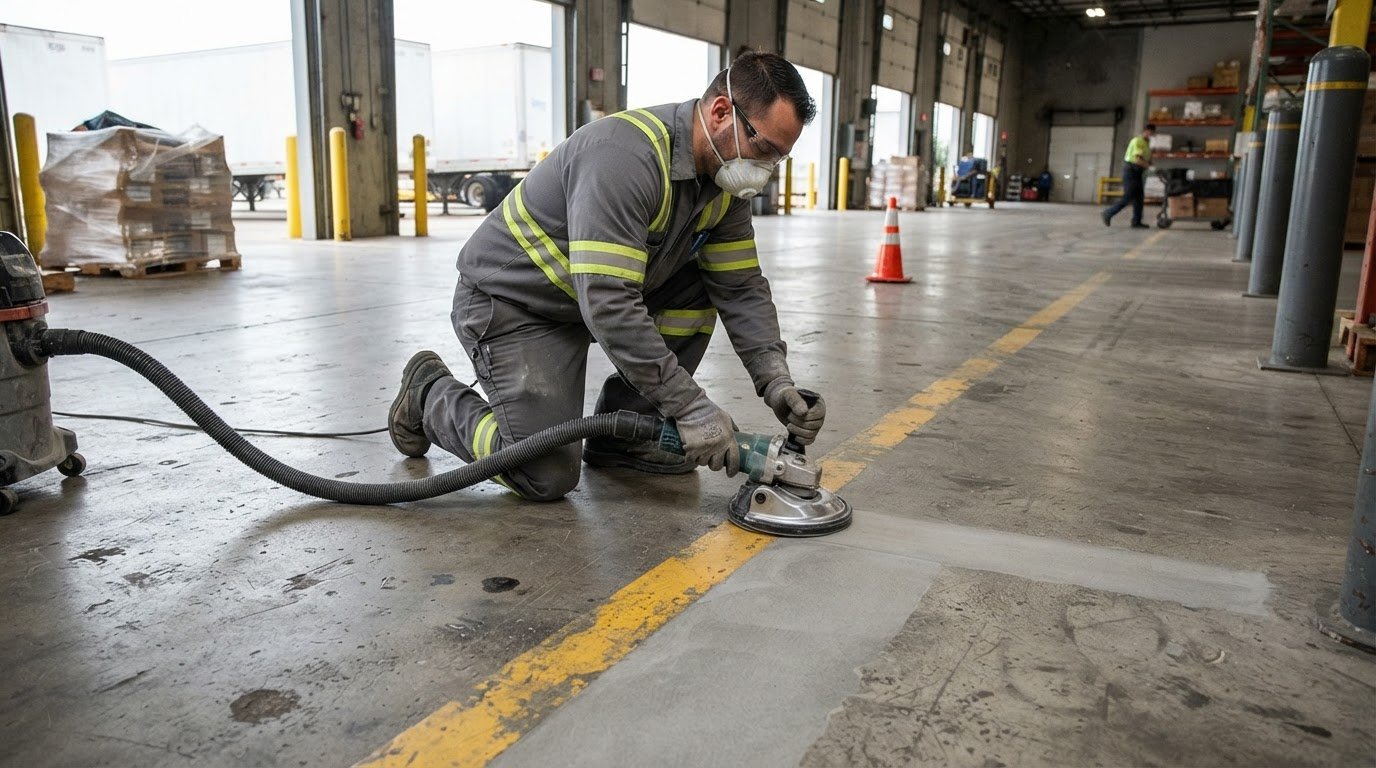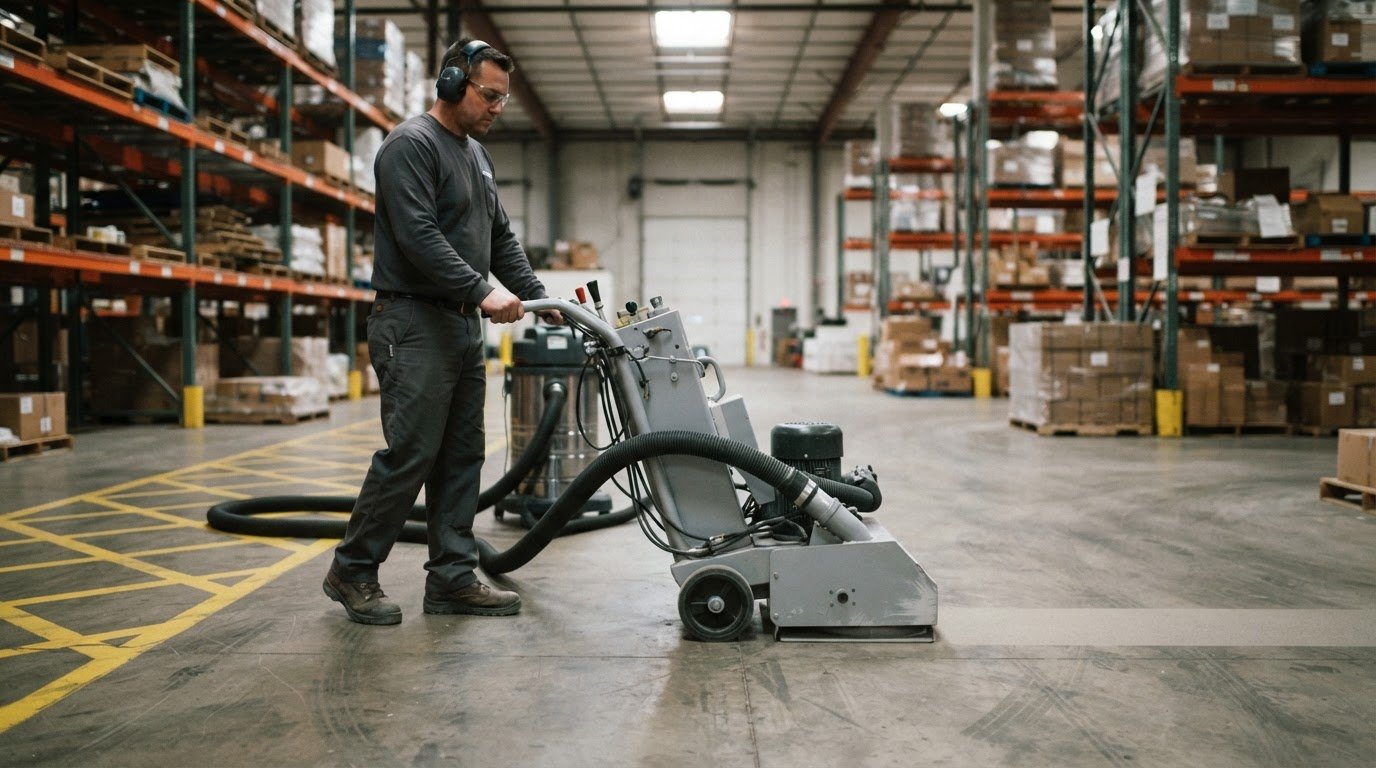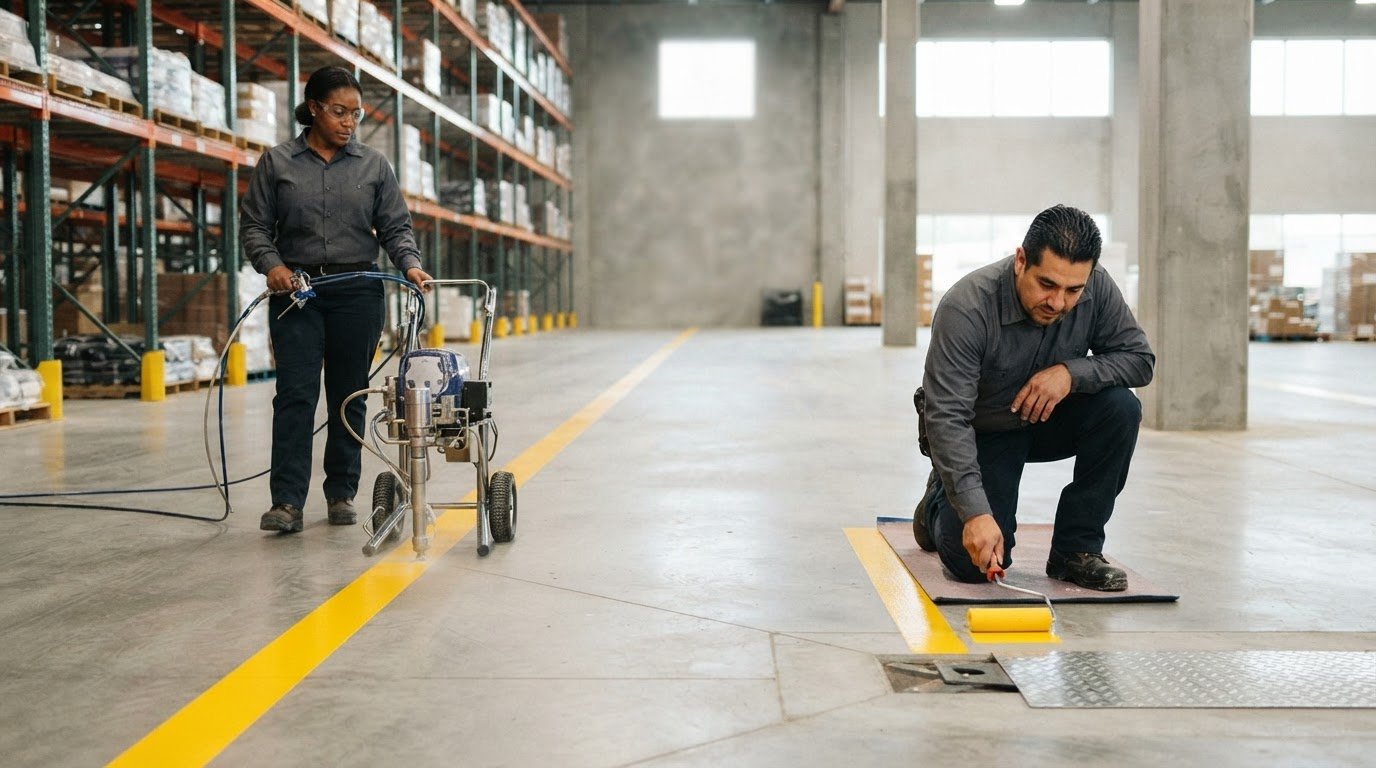
The faster application method can be the wrong choice if the coating isn’t compatible with it. For the airless sprayer vs roller for floor lines decision, use a sprayer for larger areas when the coating can be sprayed and overspray can be controlled; choose a roller for detail work, touch-ups, or coatings that call for back-rolling. Sprayers can apply paint quickly and evenly, but they generally use 20-30% more paint than rollers and take longer to clean.
It makes sense to compare speed, paint use, and cleanup before choosing an application method. But start with the coating’s instructions: the wrong method can create extra work instead of saving time. This guide to airless sprayer vs roller for floor lines compares application, waste, cleanup, and coating compatibility, then explains how to choose for your project.
Key Takeaways
- Match the application method to the line layout and work area: broad, continuous runs favor a different approach from tight details and touch-ups.
- For a consistent sprayed finish, adjust the equipment until the spray fan is even and overlap each pass.
- Keep surrounding surfaces protected when spraying; rollers give you more control where overspray is a concern.
- Check the coating instructions before choosing a tool, since application requirements can determine whether back-rolling is needed.
- For warehouse floor marking projects, professional striping can help apply clear, functional lines across an industrial space.
Is it Better to Use a Brush and Roller or Paint Sprayer?
For long, open floor lines, an airless sprayer can apply coating consistently; a roller offers closer control around details. Project costs vary, so request a quote. The line layout, surface preparation, coating, masking, and cleanup all affect the work.
Airless Sprayer Finish
An airless sprayer atomizes coating into a fan, which can produce a smooth, even finish across expansive surfaces when properly adjusted. That consistency depends on a steady application technique and settings that produce an even spray pattern. On porous or textured surfaces, such as concrete block, back-rolling while the coating is wet can help work paint into the texture.
For floor lines, a sprayer’s broad, continuous application can suit long runs where a consistent coating matters. However, the finish is less forgiving if the spray pattern varies or nearby areas aren’t protected from overspray. Uneven coverage can show clearly on a smooth floor, so inspect the line under the site’s lighting before the coating dries.
Roller Finish
A roller transfers paint through direct contact, giving the operator control over short sections, corners, and touch-ups. The finish can vary with pressure, roller movement, and how much coating is loaded onto the roller. Unlike a properly adjusted sprayer, it may leave a visible roller texture, especially when application technique changes between passes.
Rollers can work well on textured masonry and concrete block, where the nap can press coating into surface irregularities. They also avoid the broad spray pattern that can reach nearby equipment or floor areas. On a smooth floor, consistent pressure and straight passes help keep the finish even from one section to the next.
Surface type affects the comparison. On a smooth, prepared floor, either tool can produce a suitable line when used according to the coating’s directions. On uneven or textured concrete, a roller contacts raised and recessed areas directly; sprayed coating may need back-rolling before it dries. Let the manufacturer’s instructions guide the choice, not speed alone.
Finish texture affects appearance and coverage. A sprayer can leave a smooth finish, while a roller may leave a subtle stippled pattern. With a roller, applying two coats can help build coverage when the coating directions call for them. Surface preparation matters either way: remove contamination and address rough spots so defects don’t show through the finished line.
| Option | Consistency | Surface fit | Finish texture |
|---|---|---|---|
| Airless sprayer | Uniform when properly adjusted | Expansive, smoother areas | Can be smooth |
| Roller | Depends on operator technique | Textured concrete or detail work | May show roller texture |
Choose a sprayer for continuous lines across open, smooth areas. Choose a roller when surface texture, close control, or back-rolling instructions matter most.
Airless sprayer and roller application methods
Choose a method based on line length, access, masking needs, and the coating’s instructions. A sprayer suits continuous floor-line runs; rolling gives direct control over shorter sections.
Airless Sprayer Application
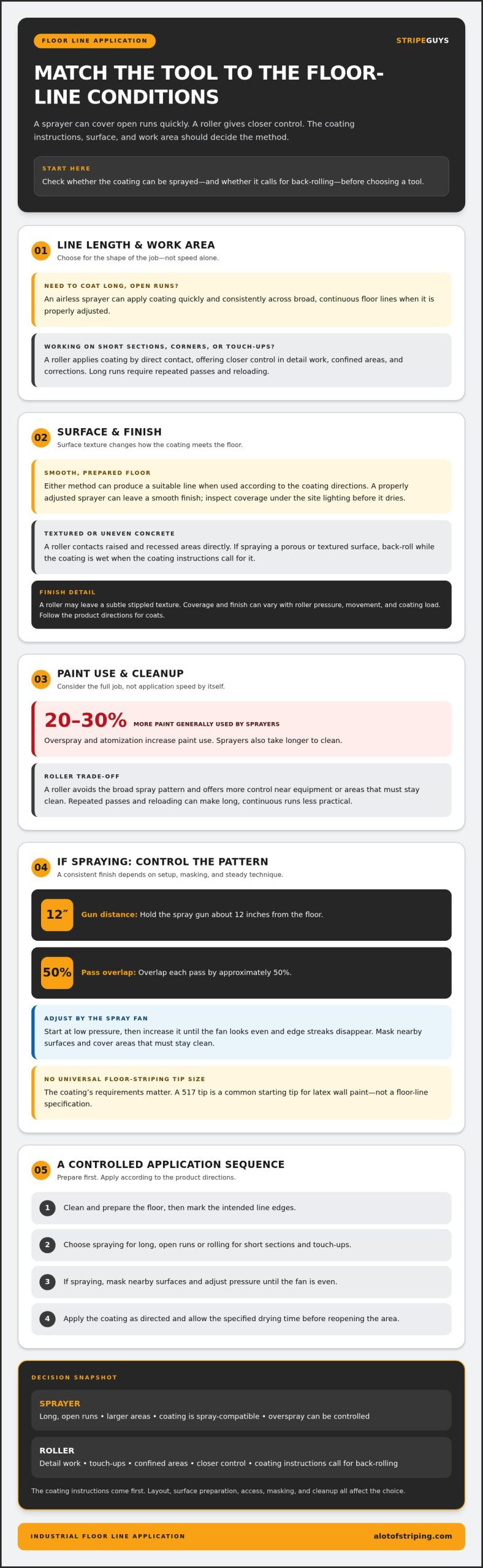
For straight lines, mark the edges, mask beyond them, and cover exposed areas that must stay clean. Hold the gun about 12 inches from the floor and overlap each pass by approximately 50%.
Start at low pressure, then increase it until the spray fan looks even and edge streaks disappear. No universal tip size is established for floor striping: the coating’s requirements matter. A 517 is a common starting tip for latex wall paint, not a floor-line specification.
Likewise, don’t transfer wall-paint settings automatically to a floor coating. Roller application guidance recommends at least two coats; follow the coating manufacturer’s directions for floor-line coats and drying time.
Roller Application
Rolling applies coating through direct contact, making it useful for short lines, confined areas, and corrections. Use a suitable roller, load it evenly, and move along the marked line with consistent pressure. A roller avoids the spray fan, but long, continuous runs require repeated passes and reloading.
Project size affects the practical choice. A commercial sprayer can cover large areas quickly, while a roller may be easier to control around small work zones. Masking and setup still take time, so compare the full project rather than application speed alone.
Access can influence the method, as it does when painting cabinets and doors. A sprayer can coat broad, exposed faces evenly, but hinges, edges, and nearby surfaces need protection from overspray. A roller suits a single door or cabinet panel when control matters more than speed. For either method, prepare the surface and follow the coating directions.
Use this sequence to keep floor-line application controlled:
- Clean and prepare the floor, then mark the intended line edges.
- Choose spraying for long, open runs or rolling for short sections and touch-ups.
- With a sprayer, mask nearby surfaces and adjust pressure until the fan is even.
- Apply the coating as directed, allowing the specified drying time before reopening the area.
The right method depends on the layout, surface, access, and product instructions. For a warehouse floor marking project, discuss your striping project with a team familiar with industrial floor applications.
Paint waste and cleanup
Before painting floor lines, clear debris and remove contaminants that could interfere with adhesion. Follow the coating manufacturer’s preparation instructions, since the required steps depend on the product and floor condition.
Sprayer Setup and Cleanup
An airless sprayer atomizes coating, so overspray and atomization increase paint use. Sprayers generally use 20-30% more paint than rollers. That difference matters when estimating material for long lines, especially if nearby floor areas need masking.
Setup includes protecting adjacent surfaces and preparing the sprayer for the selected coating. Cleanup takes longer than cleaning a roller because the sprayer’s fluid path and components need attention. Follow the equipment and coating manufacturers’ cleanup directions to avoid leaving material in the system.
Roller Setup and Cleanup
A roller transfers coating directly to the floor, limiting overspray and often reducing waste compared with spraying. Setup is simpler for a short line or touch-up: prepare the roller and tray, then keep the coating within the marked area.
After application, remove excess coating from the roller and clean it according to the product instructions. A roller has fewer parts to clean than an airless sprayer, so equipment cleanup is usually more direct. Handle used materials and leftover coating as the product directions specify.
Compare the full work sequence, not just application time. Spraying may require masking beforehand and longer equipment cleanup afterward. Rolling avoids a spray fan, but still requires repeated loading and steady movement. On a smooth floor, a narrow marked line helps define the work area before coating starts.
Use these preparation steps before either method:
- Clear the line area of loose debris that could become trapped in the coating.
- Remove residue that could interfere with paint adhesion, using the method specified for the coating and floor.
- Mark the line edges and protect nearby surfaces before applying paint.
- Keep the coating and cleanup instructions available so equipment and leftover material are handled correctly.
Waste also depends on how well the application is controlled. With a sprayer, overspray can land outside the intended line, so masking and steady passes help limit avoidable loss. With a roller, coating can collect on the tool or tray if it’s overloaded. Load the roller evenly and work within the marked boundaries.
Choose based on the project’s total setup, material use, and cleanup demands. For a short floor line, simpler roller cleanup may offset slower application. For extensive work, weigh a sprayer’s faster coverage against paint use, masking, and longer equipment cleanup.
Paint compatibility with sprayers and rollers
For floor lines, choose the coating first and the application method second. Use a sprayer only when the coating instructions allow it; a roller is appropriate when the manufacturer specifies back-rolling.
Coatings differ in consistency and application requirements, so the word “paint” alone doesn’t determine compatibility. For example, don’t assume a product intended for an interior wall is suitable for a concrete floor line. Check the coating label and technical directions for the approved surface and application method. Follow those instructions over a tool’s general capabilities.
Sprayer compatibility matters because material must pass through the equipment. In one reported experience, deck paint clogged the sprayers being used and couldn’t be sprayed with them. That example shows why a coating that looks spreadable may still be unsuitable for a particular paint sprayer. Follow equipment and coating instructions together rather than assuming one sprayer handles every product.
Rollers avoid a sprayer’s fluid path, but that doesn’t make every coating suitable for rolling. Some coatings call for back-rolling after spray application, while others specify a particular process. Back-rolling means passing a roller over freshly sprayed coating while it’s still wet. When the product instructions require it, this works coating into porous or textured surfaces such as concrete block.
Before selecting a tool, use this compatibility check:
- Read the coating manufacturer’s directions for approved surfaces and application methods.
- Confirm the chosen method matches the coating instructions, including any back-rolling requirement.
- Check the sprayer instructions against the coating before loading the equipment.
- Use the product’s stated coverage guidance to plan application and material needs.
Coverage depends on the coating, surface, and application directions. A rough or porous floor can absorb material differently from a smooth, prepared surface, affecting how much coating is needed for a marked line. That doesn’t change the manufacturer’s method instructions. Don’t try to compensate for poor compatibility by altering the product or forcing it through equipment.
For a floor-line painting project, compatibility is the deciding question when the coating specifies one application method. If spraying is permitted, use the sprayer instructions and coating directions together. If the manufacturer calls for back-rolling, include that step. For industrial marking work, discuss your floor-line application needs with a team experienced in commercial floor marking.
StripeGuys Warhouse Line Striping: Warehouse Floor Striping
StripeGuys provides warehouse floor striping for facilities that need clear, organized floor markings. The right application method depends on the coating, floor surface, line layout, and surrounding operations, so comparing spraying and rolling is only one part of planning the work.
For projects requiring epoxy markings, StripeGuys also provides epoxy line striping. If existing markings need to be cleared before new lines are applied, warehouse line removal addresses that step. Matching the service to the floor’s current condition helps define a practical plan.
Contact StripeGuys to discuss warehouse floor striping or visit alotofstriping.com to request a free quote.
Plan the Next Floor Marking Project
Before work begins, record the line layout, floor condition, coating requirements, and areas that must remain clear. This gives the application plan a practical starting point and helps align the work with facility operations. Choose between an airless sprayer and a roller for floor lines based on site requirements, not the other way around.
StripeGuys handles warehouse floor striping, epoxy line striping, and parking lot striping. Whether you’re planning new markings or coordinating work around an active facility, defining the project scope is a useful next step. Clear requirements help focus the conversation on the work area and intended markings.
Contact StripeGuys Warhouse Line Striping to discuss your floor marking project and move forward with a clear plan.
Frequently Asked Questions
Is a roller ever the better choice on a commercial job?
Yes. A roller can be a better choice for a commercial job with short line segments, confined work areas, or nearby equipment that must stay paint-free. It also suits touch-ups when setting up a sprayer would add unnecessary work. For example, a small correction near shelving may be rolled while a different method is used for broader floor marking. The coating’s instructions still determine which tools are suitable.
Is an airless sprayer or roller better for painting floor lines?
Neither method is best for every floor line. Choosing between an airless sprayer and a roller depends on the coating instructions, line layout, and work area. A sprayer can suit long, open runs, while a roller offers control for short sections or corrections. If the coating requires back-rolling, include that step in the plan. Match the tool to the product and site conditions.
What are the pros and cons of spraying versus rolling floor line paint?
Spraying can apply coating efficiently across long runs, but it requires overspray control and more involved equipment cleanup. Rolling gives direct contact with the floor and can be convenient for touch-ups, though long lines require repeated passes. A small repair beside an existing marking may favor rolling, while a continuous line across an open area may favor spraying. Coating instructions and setup demands can change the choice.
How do you apply floor lines with a roller for clean, sharp edges?
Mark the line edges with suitable tape, press it firmly against the floor, and make sure the work area is clean before painting. Load the roller evenly, then apply coating in controlled passes without pushing it beneath the tape. Keep the roller within the marked boundary and remove the tape as directed by the coating process. Test the technique on a small section first if the surface is uneven.
What type of paint works best for airless-sprayed or rolled floor lines?
Use a coating intended for the floor surface and compatible with the chosen application method. Check the manufacturer’s directions to see whether it can be sprayed or rolled and whether back-rolling is required. Match the coating to the concrete condition and demands of the marked area. For example, don’t assume paint intended for interior walls is suitable for floor lines simply because it can pass through a sprayer.
What are the risks of overspray, bleeding, and uneven coverage when painting floor lines?
Overspray can leave coating beyond the intended line, especially if nearby surfaces aren’t protected or the spray pattern isn’t controlled. Bleeding occurs when coating slips beneath an edge, often because masking tape doesn’t sit firmly against the floor. Uneven coverage can result from inconsistent passes, roller loading, or surface variation. Define line edges carefully, prepare the floor, and apply coating steadily to reduce these problems.