A single faded line in your facility isn’t just a maintenance oversight; it’s a direct threat to your operational safety and a magnet for legal liability. When traffic flow breaks down or an accessible stall doesn’t meet the mandatory 96-inch width requirement, the resulting confusion slows down your team and puts the organization at risk. Professional parking lot striping Nashville TN requires more than just a fresh coat of paint. It demands a strategic understanding of the Tennessee Department of Commerce & Insurance standards and the specific fire hydrant clear zones mandated by local ordinance.
You likely already know that keeping your pavement markings sharp is essential for a professional appearance, but the technical stakes are much higher than aesthetics. We’ll show you how to master the requirements for ADA stall dimensions and fire lane clearances while selecting materials that actually last. This article breaks down the industrial standards for high-durability epoxy and thermoplastic markings, ensuring your facility remains compliant and efficient. You’ll learn how to reduce long-term maintenance costs and create a layout that stands up to the heavy-duty demands of a high-traffic commercial environment.
Key Takeaways
- Identify how precision markings manage vehicle and pedestrian interactions to mitigate on-site accident risks and insurance liability.
- Master the current ADA standards for accessible stall dimensions and access aisles to maintain strict regulatory compliance.
- Compare the cost-efficiency of standard traffic paint with the long-term durability of industrial epoxy coatings for parking lot striping Nashville TN.
- Maximize your facility’s operational efficiency by selecting a strategic layout that balances stall capacity with safe vehicle maneuverability.
- Understand the critical role of industrial surface preparation in ensuring maximum material adhesion and extending the service life of your markings.
Beyond Aesthetics: The Role of Striping in Commercial Safety and Liability
Professional facility managers recognize that pavement markings are more than just paint on asphalt. They are the primary visual communication system for a site. In high-stakes industrial environments, clear lines manage the complex dance between heavy logistics vehicles and foot traffic. Effective parking lot striping Nashville TN ensures that drivers know exactly where to stop, turn, and park, which directly reduces the frequency of on-site collisions. When traffic flow is predictable, the risk of human error drops significantly.
Viewing striping as a cosmetic cost is a mistake that leads to increased liability. When accidents occur, insurance adjusters and legal teams look for documented safety measures. Crisp, compliant markings prove that a property owner is proactive about risk management. For distribution centers, organized layouts aren’t just about safety; they’re about throughput. A confusing lot slows down truck turn-around times and creates bottlenecks that hurt the bottom line. High-quality parking lot line striping is a functional tool that keeps operations moving at full capacity.
First Impressions and Operational Authority
Visibility is the first line of defense against litigation. Property owners must define clear pedestrian walkways to physically separate foot traffic from vehicle paths. Following established Pavement Marking Standards is essential for 24/7 operations where low-light conditions increase the risk of incidents. We recommend using highly reflective materials to maintain visibility through heavy thunderstorms and nighttime shifts. This isn’t just about following rules; it’s about providing a safe environment for every person on your site. Professional markings serve as a permanent, visual record of your commitment to facility safety.
Essential ADA Compliance and Pavement Marking Standards
Compliance with federal accessibility standards is a non-negotiable requirement for any commercial facility. It’s a matter of legal necessity that impacts both safety and liability. Achieving Essential ADA Compliance during your next project for parking lot striping Nashville TN prevents costly fines and reduces the risk of accessibility-related lawsuits. Professional markings ensure that your facility remains open and accessible to all visitors without logistical friction.
Calculating Required Accessible Stalls
Federal law dictates a specific ratio for accessible parking based on your total lot capacity. For lots with 1 to 25 total spaces, you must provide at least one accessible space, increasing to two spaces for lots between 26 and 50. One out of every six accessible spaces must be van-accessible. These stalls require specific dimensions to function correctly; a standard accessible space must be at least 96 inches wide with a 60-inch access aisle. Van-accessible spaces are either 96 inches wide with a 96-inch aisle or 132 inches wide with a 60-inch aisle. Additionally, a minimum of 98 inches of vertical clearance is required for these routes.
Regulatory Markings: Fire Lanes and Loading Docks
Safety standards extend beyond parking stalls to critical emergency access zones. Standard fire codes require fire apparatus access roads to maintain a minimum of 20 feet of unobstructed width and 13 feet 6 inches of vertical clearance. We use standardized red curb painting and “No Parking” stenciling to clearly define these zones. Additionally, parking is prohibited within 15 feet of either side of a fire hydrant to ensure emergency response teams have immediate access to water supplies. These clear boundaries prevent delays during an emergency response.
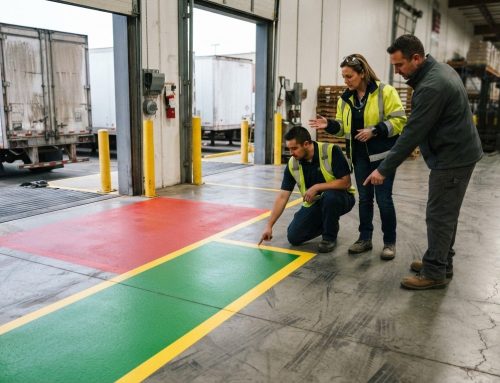
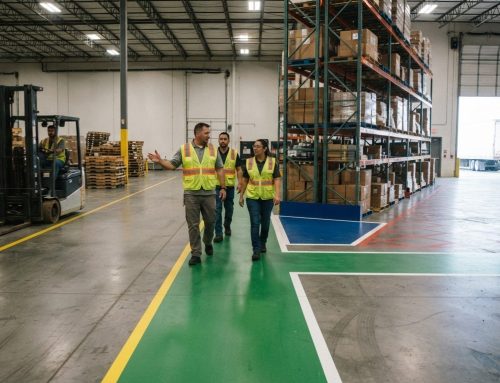
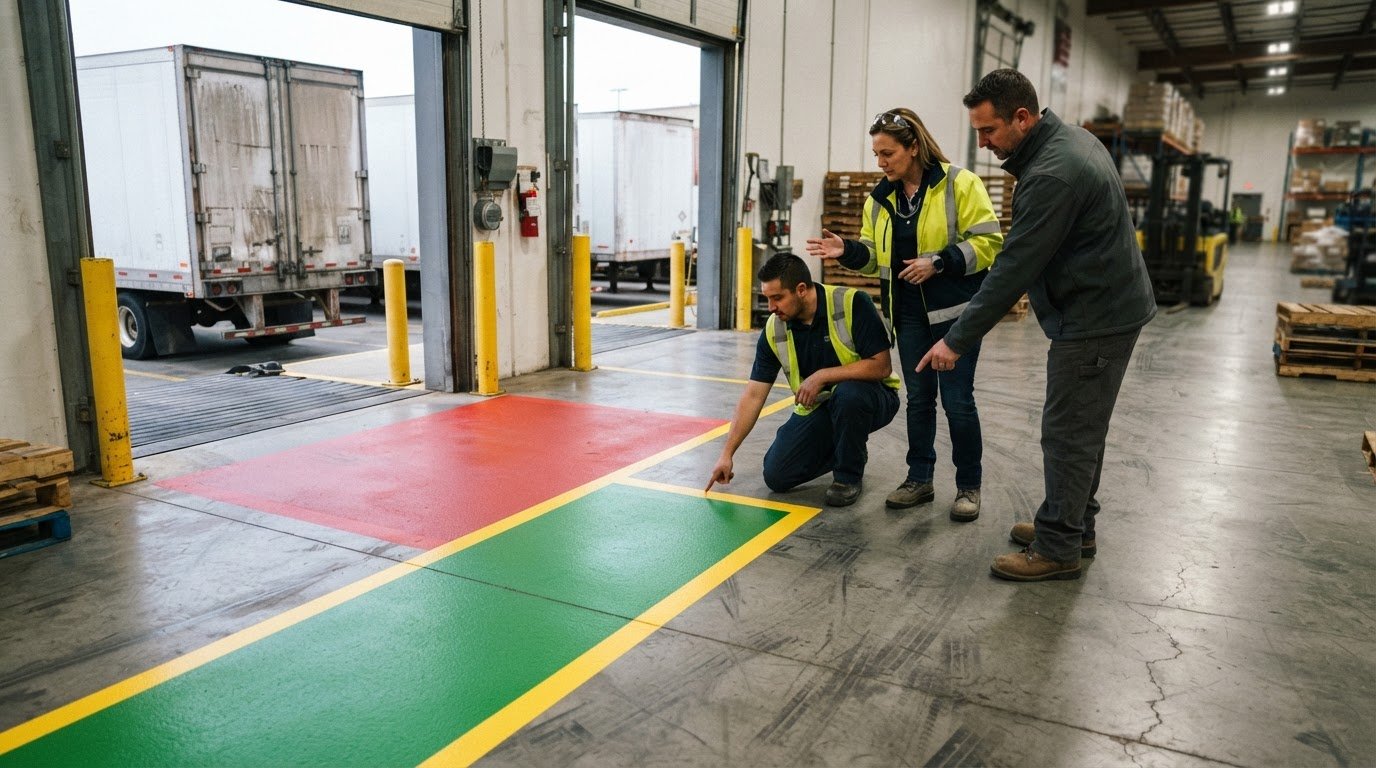
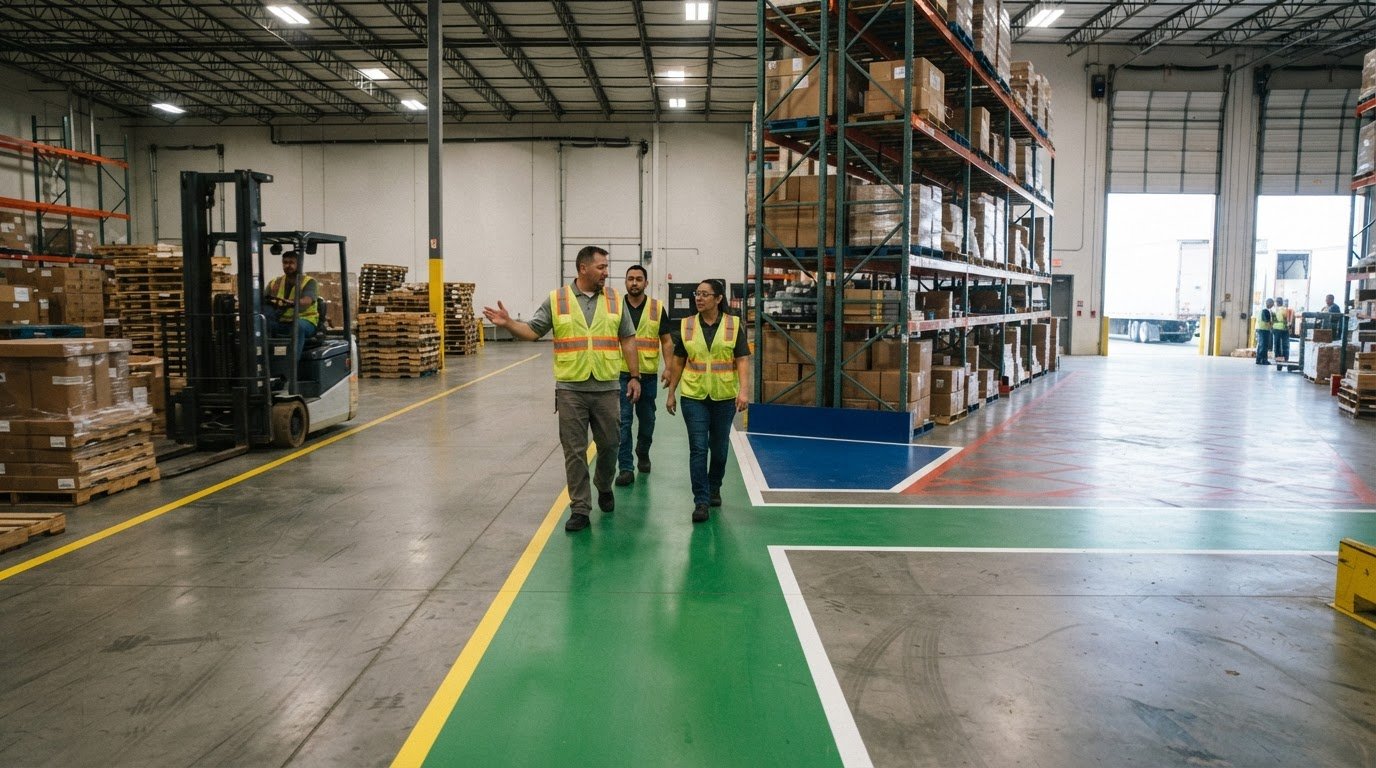
For industrial facilities, OSHA-aligned truck court line striping is essential for loading dock safety. These markings prevent trailers from encroaching on pedestrian paths and ensure drivers have clear visual cues for backing and staging. If you’re unsure about your current lot’s compliance, you can request a professional layout assessment to identify potential gaps in your facility’s safety design. Professional stenciling and color coding create a logical, safe environment that protects your workers and your bottom line.

Material Selection: Comparing Traffic Paint and Industrial Epoxy Coatings
Selecting the correct marking material is a technical decision based on traffic volume, surface composition, and environmental exposure. In the humid subtropical climate of Tennessee, materials must withstand heavy thunderstorms and freeze-thaw cycles that often cause inferior paints to peel. Standard water-based traffic paint is a cost-effective solution for low-traffic areas, but it typically only lasts one to two years before requiring a full restripe. For high-stakes commercial environments, relying on basic paint often leads to higher long-term maintenance costs and frequent operational disruptions.
Heavy-duty facilities require more resilient options. Thermoplastic markings are a high-visibility choice for roadways and crosswalks, offering a service life of six to eight years. While the initial application cost for thermoplastic is approximately two to four times higher than standard paint, the extended durability provides superior value for high-wear zones. For indoor applications and specialized outdoor surfaces, industrial epoxy remains the gold standard for warehouse floor striping and high-traffic loading areas. Our team leverages 29 years of experience to help you select the material that balances your budget with your facility’s specific mechanical demands.
The Durability Factor: Epoxy vs. Acrylic
Industrial epoxy coatings provide exceptional adhesion and chemical resistance, making them mandatory for forklift battery charging zones and chemical storage areas. Unlike standard acrylic paint, epoxy creates a rigid, high-build film that resists the scrubbing action of heavy machinery tires. Acrylic water-based paints remain the preferred choice for standard outdoor asphalt because they allow the pavement to “breathe” and flex without cracking. Curing time refers to the specific duration required for the marking material to reach its full chemical hardness and bonding strength before it can support vehicle traffic. Managing this window is critical to minimizing facility downtime during parking lot striping Nashville TN.
Surface Preparation: The Secret to Longevity
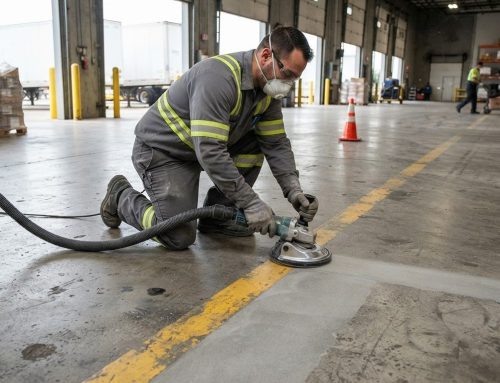
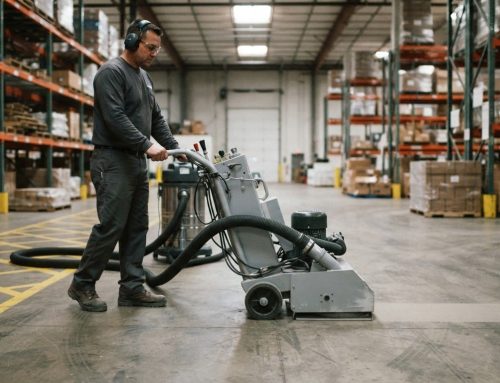
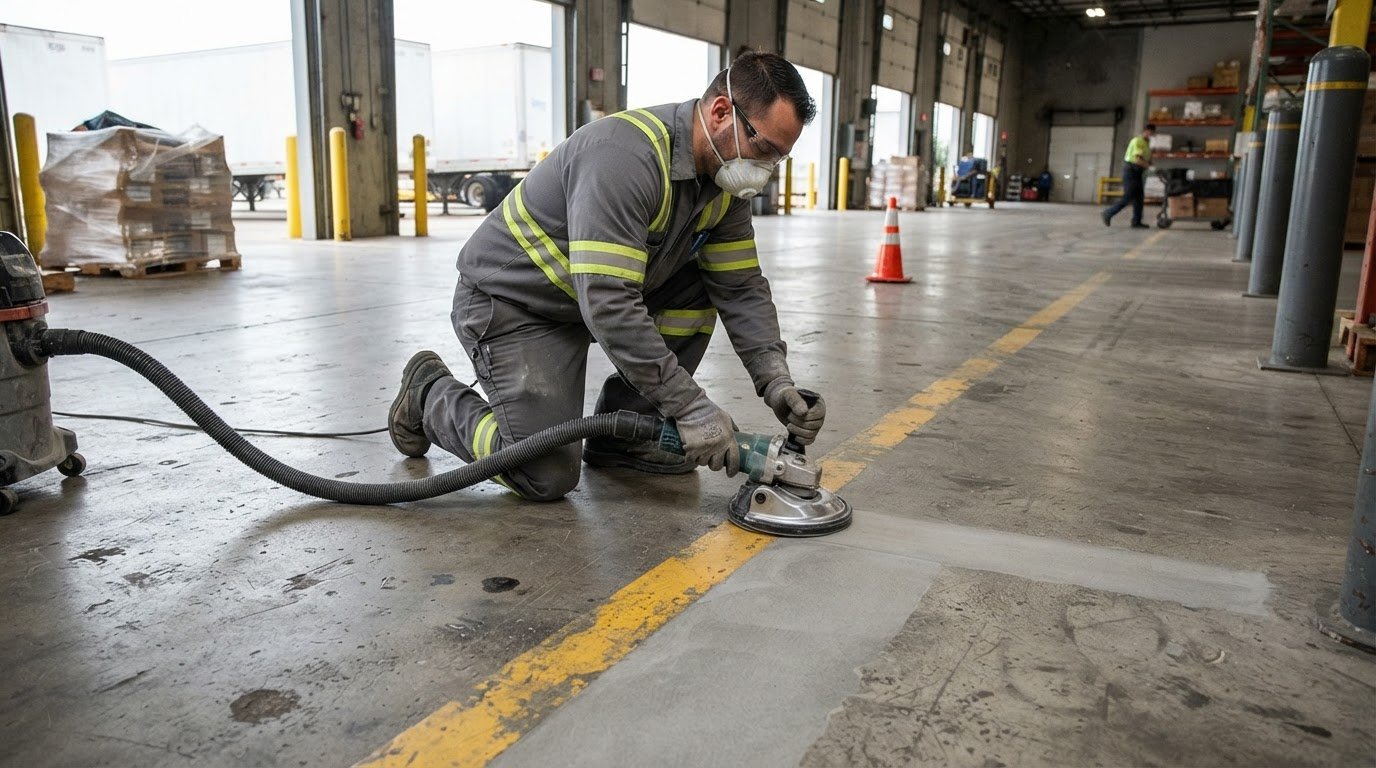
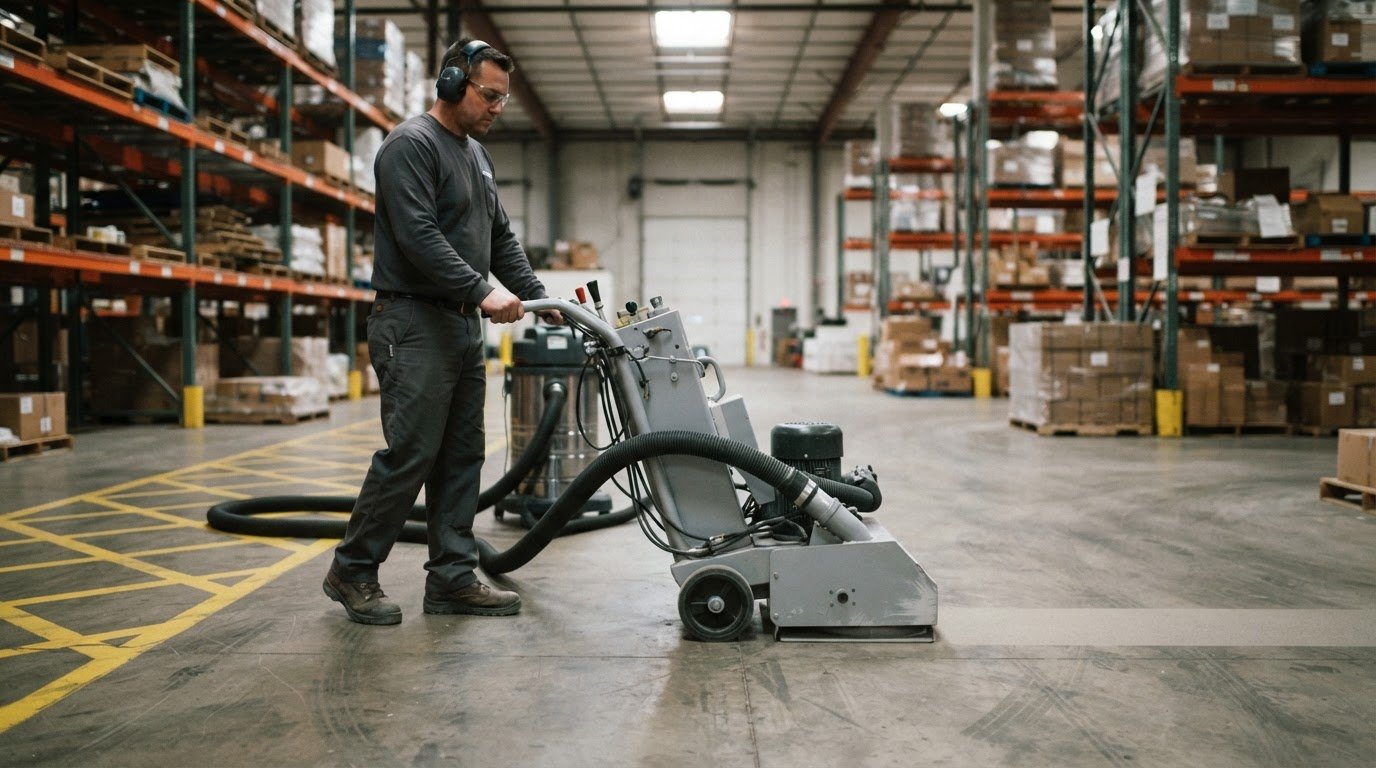
The most advanced materials will fail if the surface isn’t properly prepared. We emphasize mechanical removal methods, such as shot blasting or grinding, to strip away old, failing lines and expose a clean substrate. This process ensures maximum material bonding and prevents the premature peeling often seen with “over-painting” strategies. Proper cleaning removes oils and debris that act as bond-breakers. At StripeGuys Warhouse Line Striping, we’ve spent nearly three decades refining our preparation techniques to deliver industrial-grade results that stand up to the toughest conditions. If your current markings are failing prematurely, contact our technical team for a surface evaluation to determine the best preparation and material path for your site.
Strategic Layout Design for High-Traffic Commercial Facilities
A high-performance layout balances maximum stall density with the physical realities of vehicle maneuverability. Designing for parking lot striping Nashville TN requires a technical approach to space utilization that accounts for the specific turning radii of delivery trucks and emergency vehicles. If a lot is too cramped, you risk constant property damage; if it’s too loose, you waste valuable real estate. We treat the pavement as a functional grid where every line serves a specific logistical purpose.
Effective facility management often involves integrating outdoor surface lots with parking garage striping to create a unified wayfinding system. This ensures that drivers transitioning from open-air areas to multi-level structures follow a consistent logic of directional arrows and speed limit stencils. Modern facilities must also plan for the future by designating specific bays for EV charging and dedicated zones for curbside logistics. These specialized areas require distinct color-coding and high-contrast stenciling to prevent standard traffic from blocking essential services.
Optimizing Traffic Flow and Stall Angles
The choice between 90-degree and angled parking depends entirely on your traffic volume and lane direction. We often recommend 60-degree angled parking for retail or high-turnover environments because it allows for smoother, faster entry and exit in one-way lanes. Conversely, 90-degree “head-in” parking is the space-saving standard for large employee lots where maximizing capacity is the priority. Regardless of the angle, you must maintain drive aisle widths that comply with standard fire safety codes to ensure emergency access at all times.
Specialized Stenciling and Wayfinding
Clear wayfinding eliminates driver hesitation and reduces the likelihood of “wrong-way” incidents. We use professional stencils to mark directional arrows, loading zones, and critical forklift crossings where industrial equipment interacts with standard vehicles. This crossover between warehouse-style safety and public parking is where our 29 years of experience provides the most value. Integrating painted layout elements with physical safety bollards and clear signage creates a complete safety system that protects your infrastructure and your people. Consistent, high-visibility markings ensure that even first-time visitors can navigate your site with confidence.
Secure Your Facility’s Operational Future
Effective facility management requires a shift from viewing pavement markings as a recurring expense to seeing them as critical safety infrastructure. By prioritizing high-durability materials and adhering to strict ADA and fire code standards, you protect your organization from liability while improving daily throughput. Whether you’re managing a complex distribution center or a high-traffic commercial lot, the precision of your layout determines the safety of every person on your site.
StripeGuys brings over 29 years of industrial striping experience to every project, offering the national reach and technical expertise required for large-scale commercial infrastructure. We specialize in OSHA and ADA compliance, ensuring your facility meets all federal and local mandates with industrial-grade precision. Don’t let faded lines compromise your operational efficiency or safety standards. We understand the high stakes of industrial environments and prioritize your budgetary constraints without sacrificing quality.
Take the first step toward a safer, more organized facility today. You can Request a Professional Striping Estimate from StripeGuys to ensure your next project for parking lot striping Nashville TN is handled with seasoned expertise. We look forward to partnering with you to secure your facility’s long-term success.
Frequently Asked Questions
How often should a commercial parking lot be re-striped?
Most commercial lots require a restripe every 12 to 24 months to maintain visibility and safety standards. High-traffic industrial facilities often schedule annual service to ensure fire lanes and loading zones remain compliant. If your markings are faded or the substrate is visible through the paint, it’s time for a refresh. Regular maintenance prevents traffic confusion and reduces the risk of on-site accidents caused by poor wayfinding.
What is the difference between water-based and solvent-based traffic paint?
Water-based acrylic paint is the modern industrial standard because it offers excellent flexibility on asphalt surfaces. It’s environmentally safer and dries quickly in most conditions. Solvent-based paints were traditionally used for their durability in cold weather, but they contain higher levels of volatile organic compounds. Most professional contractors now utilize high-build water-based paints for parking lot striping Nashville TN because they provide superior color retention and bond strength on outdoor pavement.
Are there specific ADA requirements for parking lot stall width?
Federal ADA standards require a minimum width of 96 inches for standard accessible parking stalls. Van-accessible spaces must be even wider, typically measuring 132 inches across or utilizing a larger adjacent access aisle. Don’t ignore these specific dimensions, as they provide the necessary clearance for wheelchair lifts and ramps. Maintaining these precise measurements is essential for legal compliance and ensures that your facility remains accessible to all visitors and employees.
Can you stripe a parking lot over old, faded lines?
While you can paint over existing lines, it often leads to premature failure if the old layers are chipping or unstable. For the best results, we utilize shot blasting or grinding to remove old material before applying new markings. This process creates a clean surface for maximum adhesion. Starting with a prepared substrate ensures your investment lasts longer and prevents the thick, uneven buildup that causes paint to peel away.
How long does it take for parking lot paint to dry before vehicles can drive on it?
Most water-based traffic paints dry to a no-track state within 30 to 60 minutes under ideal conditions. However, you shouldn’t allow heavy vehicle traffic on the new lines for at least 4 hours to ensure they’ve set correctly. Colder temperatures or high humidity will extend this window significantly. For high-durability epoxy applications, the curing process can take up to 24 hours before the surface is ready for industrial forklift traffic.
Does cold weather affect the application of parking lot striping?
Cold weather significantly impacts the curing process and bond strength of pavement markings. Most materials require a minimum surface temperature of 50°F for proper application. If the pavement is too cold or damp, the paint won’t adhere to the substrate, leading to rapid flaking and failure. Planning your parking lot striping Nashville TN during the spring or fall ensures the temperature stays within the safe range for industrial-grade results.