A single OSHA violation or a forklift collision caused by faded floor markings can cost your facility more than an entire year of maintenance. In the intense heat and high-traffic environments of the Southwest, standard traffic paint often fails within months, leading to peeling lines and compromised safety zones. If you are managing a large-scale warehouse, investing in professional epoxy striping Arizona services isn’t just about aesthetics; it is a critical operational decision. You need markings that bond permanently to the substrate (the base floor material), even on difficult surfaces like polished concrete that typically reject standard coatings.
We understand the logistical stress of trying to maintain a safe, organized floor while avoiding the nightmare of operational downtime during re-striping. This article explains why high-performance epoxy striping has become the industrial standard for durability and shows you how to implement a safety-first marking system that stands up to heavy machinery. We will examine the technical chemistry behind long-term adhesion, the necessity of mechanical surface preparation like shot blasting, and how to achieve full OSHA compliance under the current Warehouse National Emphasis Program while keeping your facility running at peak efficiency.
Key Takeaways
- Learn why high-solid resin systems are the industrial standard for maintaining OSHA compliance and preventing forklift-pedestrian accidents in active facilities.
- Discover the chemical advantages of professional epoxy striping Arizona and how these high-performance markings create a permanent bond with your concrete substrate.
- Understand the necessity of mechanical surface preparation and the specific mechanical profile required to ensure your floor markings never peel or flake under heavy use.
- Identify why selecting a national contractor with 24/7 availability is essential for completing large-scale projects without disrupting your critical daily operations.
Why Industrial Facilities Choose Epoxy Striping in Arizona and Beyond
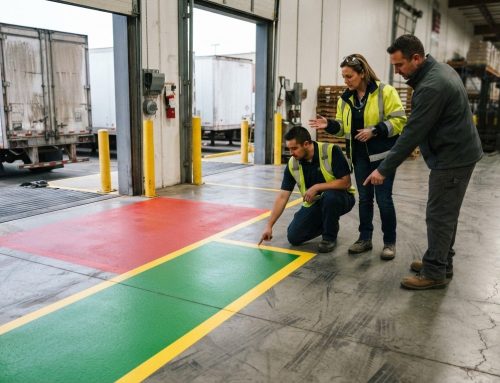
Industrial epoxy striping is a high-solid resin system designed to withstand the rigorous demands of heavy logistics. Unlike standard traffic paint, which simply sits on the surface, this coating is engineered for permanence. In large-scale distribution centers, epoxy striping Arizona provides a durable solution for facilities that cannot afford frequent maintenance or safety lapses. Clear, high-visibility markings are the primary defense against forklift-pedestrian accidents. In high-volume environments where machinery moves at a constant pace, these lines provide the visual cues necessary to prevent catastrophic collisions and maintain a smooth workflow.
The Functional Necessity of Floor Markings
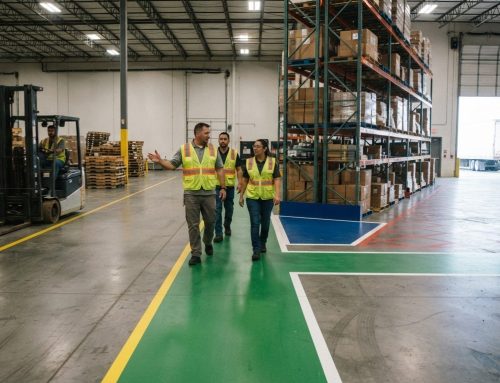
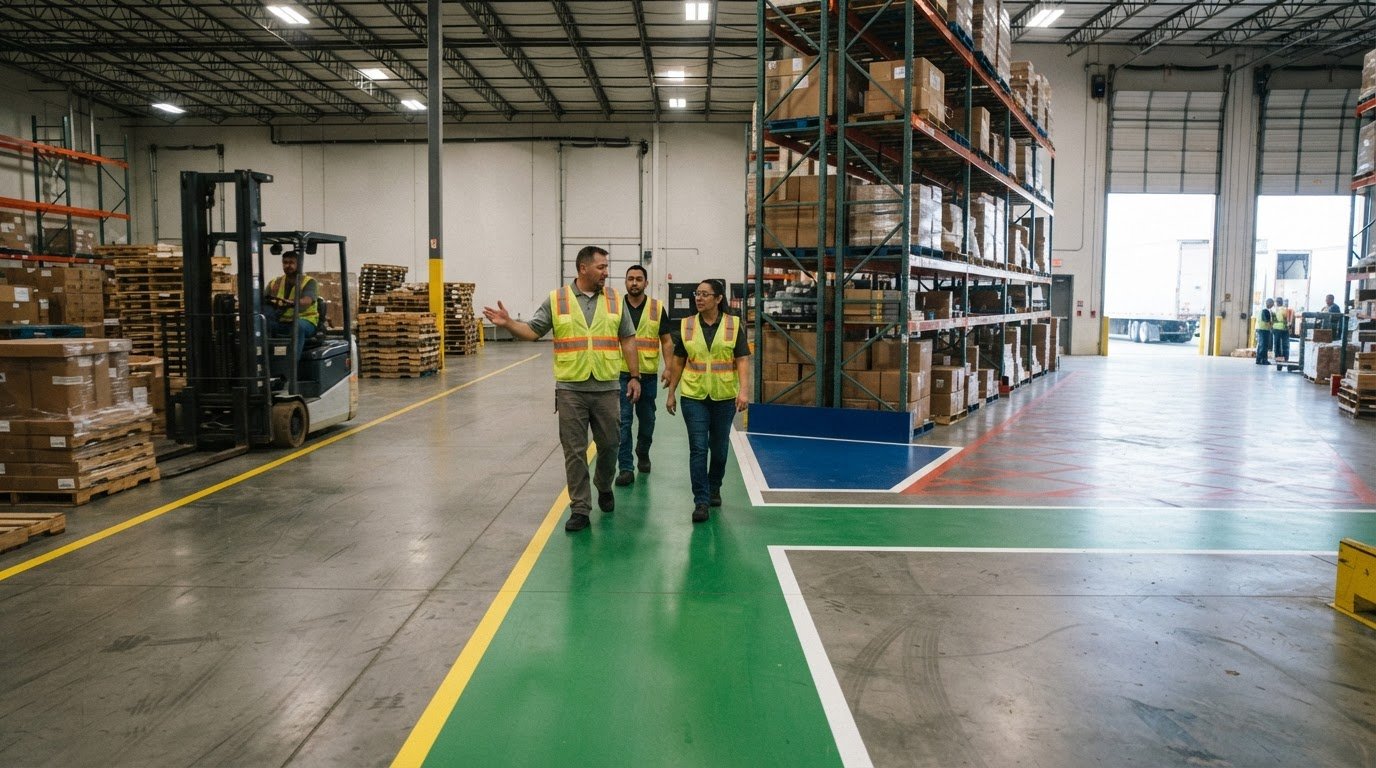
Large facilities exceeding 100,000 square feet often face operational chaos without precise organization. Establishing clear traffic patterns for heavy material handling equipment ensures drivers know exactly where to travel, reducing the risk of blind-spot accidents. Designated staging areas and pallet positions improve organizational efficiency by eliminating guesswork for warehouse staff. These markings transform a sprawling floor into a structured grid, allowing managers to maximize every square foot of storage while maintaining a safe environment for personnel.
Epoxy vs. Standard Paint: The Durability Gap
Standard traffic paint usually fails on non-porous industrial concrete because it lacks the chemical bond required for long-term adhesion. In contrast, epoxy resins create a thicker, more resilient film that actually locks into the concrete substrate. This material is specifically formulated to resist tire “burn” from heavy forklifts and the aggressive chemicals used in industrial floor scrubbers. While the initial application requires more technical expertise, it significantly lowers the total cost of ownership. You won’t have to deal with the constant expense and operational downtime associated with frequent re-striping cycles.
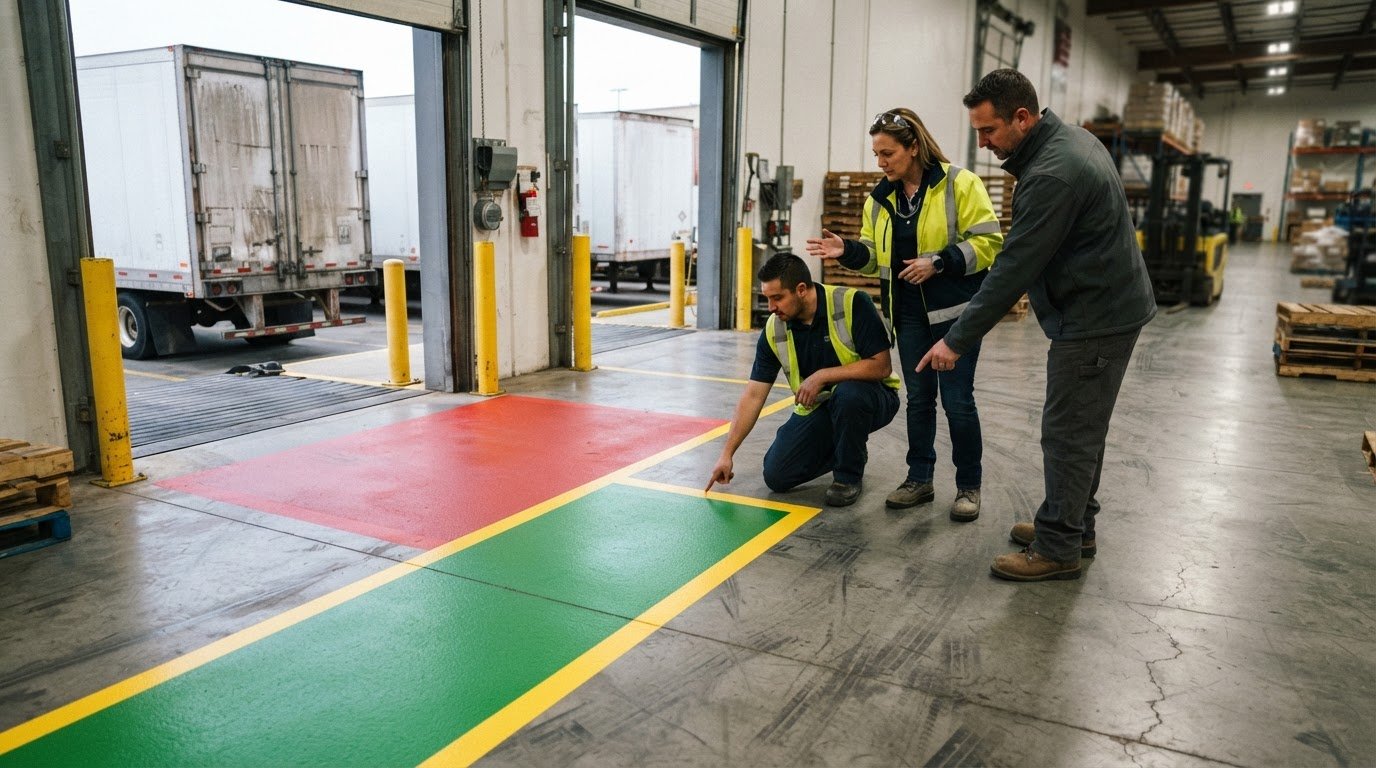
Adherence to regulatory standards is non-negotiable for modern industrial operations. Implementing professional pedestrian walkways and safety aisles is essential for OSHA compliance, particularly under the current Warehouse National Emphasis Program. These markings create a clear physical separation between human workers and mechanical equipment. In the intense Arizona climate, where high surface temperatures can cause inferior paints to bubble or peel, the chemical stability of epoxy ensures your safety zones remain crisp and compliant for years, not just months.
The Technical Advantages of Industrial Epoxy Line Painting
A high-performance marking system begins with the right chemistry. Industrial-grade epoxy is a two-component thermosetting polymer. When resin and hardener mix, a chemical reaction creates a cross-linked structure that is far superior to air-dried paints. This process is why epoxy striping Arizona is the preferred choice for high-traffic logistics hubs. The material doesn’t just dry; it cures. This curing process allows epoxy warehouse striping to develop an incredibly strong mechanical bond with the concrete substrate, effectively becoming part of the floor itself.
Abrasion and Impact Resistance
Forklift traffic creates constant shearing forces on floor markings. When a five-ton machine turns its wheels while stationary, it exerts massive torque on the surface. Epoxy resins are engineered to withstand this abrasion without delaminating or “ghosting.” This resistance extends to pallet dragging and the movement of heavy racking systems. In high-frequency pivot zones, where equipment makes repetitive turns, epoxy striping Arizona maintains its line integrity long after standard coatings have worn away.
Chemical and Acid-Resistant Coatings
Safety markings must remain visible even in harsh environments. In battery charging stations, standard paint can be dissolved by sulfuric acid spills. We utilize specialized acid-resistant coatings, such as Novolac epoxies, to protect the concrete and ensure safety lines stay intact. These systems provide a barrier against oils, coolants, and aggressive industrial cleaners. Maintaining these markings is a technical process that requires strict adherence to safety protocols during the application phase to protect both the installers and the facility’s air quality.
The high-gloss finish of industrial epoxy also serves a functional purpose. It reflects overhead light, which improves overall facility visibility and reduces the energy required for illumination. This clarity is vital for pedestrians navigating active aisles and crossing zones. If your facility requires a marking system that combines chemical durability with high-impact resistance, you can request a technical consultation to determine the best resin formulation for your specific environment.

Surface Preparation: The Foundation of Long-Term Adhesion
Shot Blasting vs. Diamond Grinding
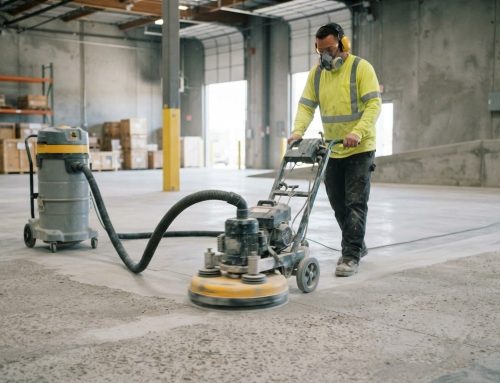
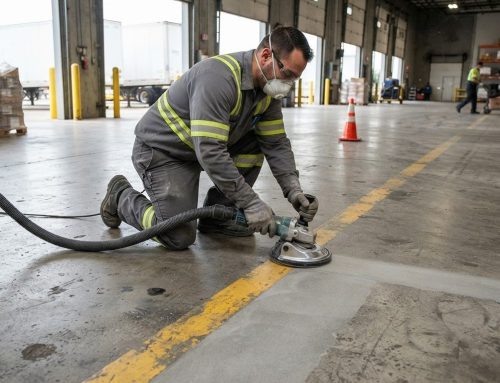
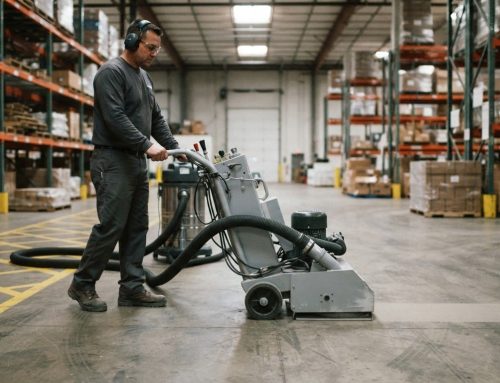
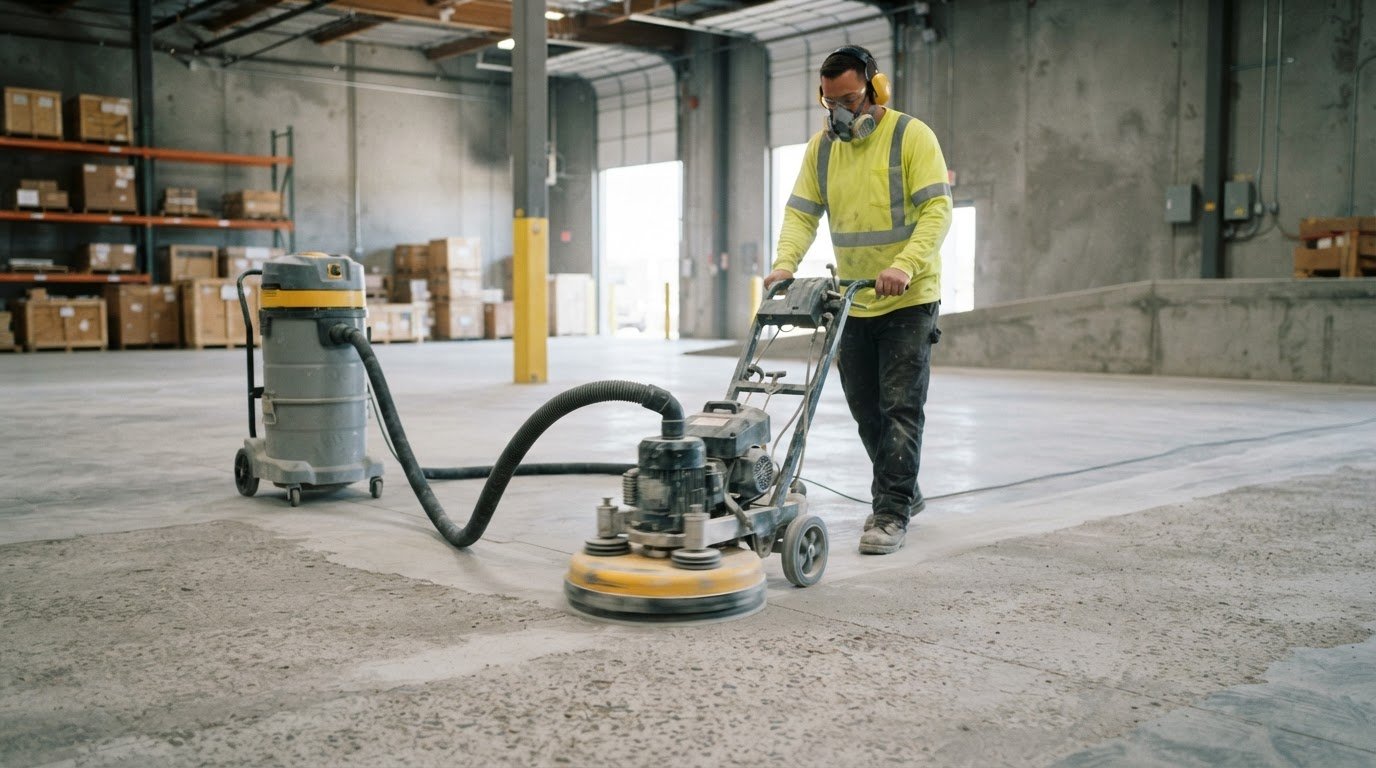
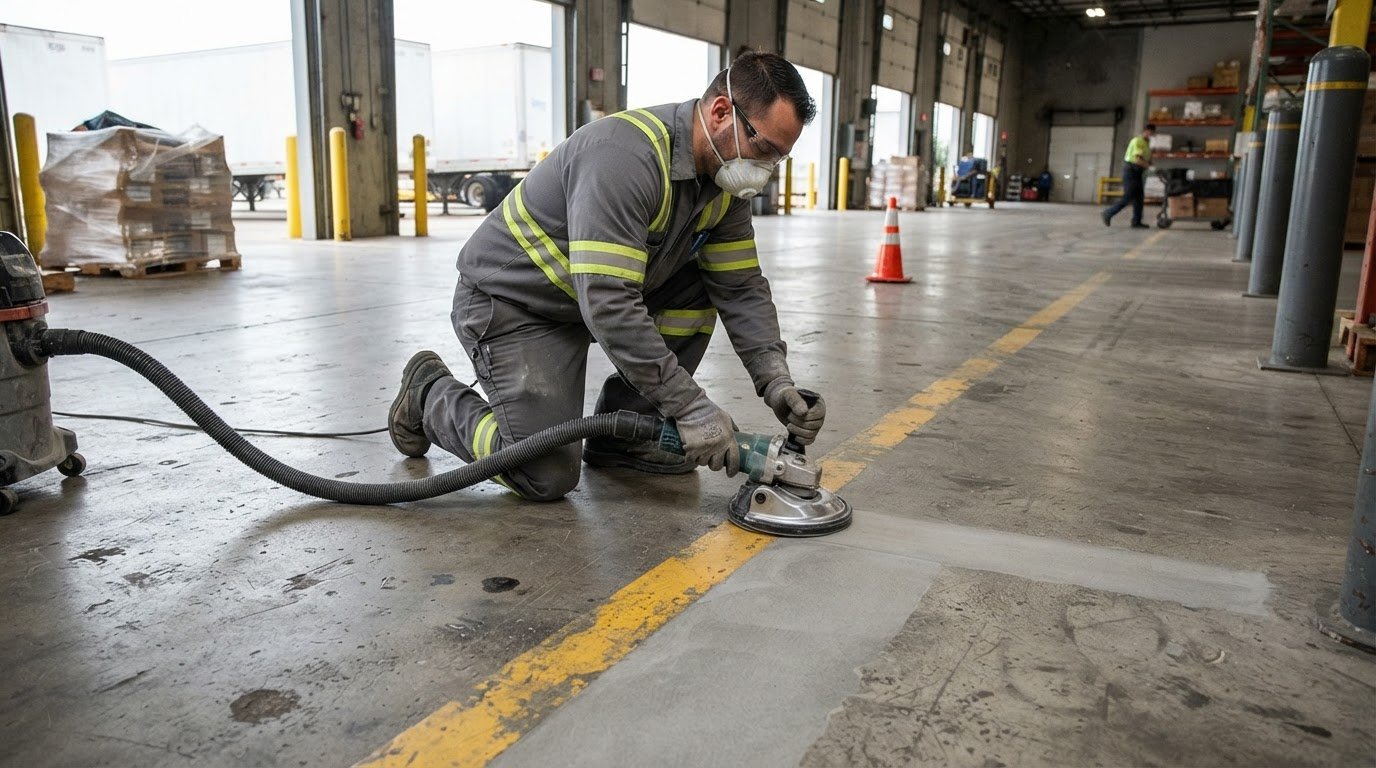
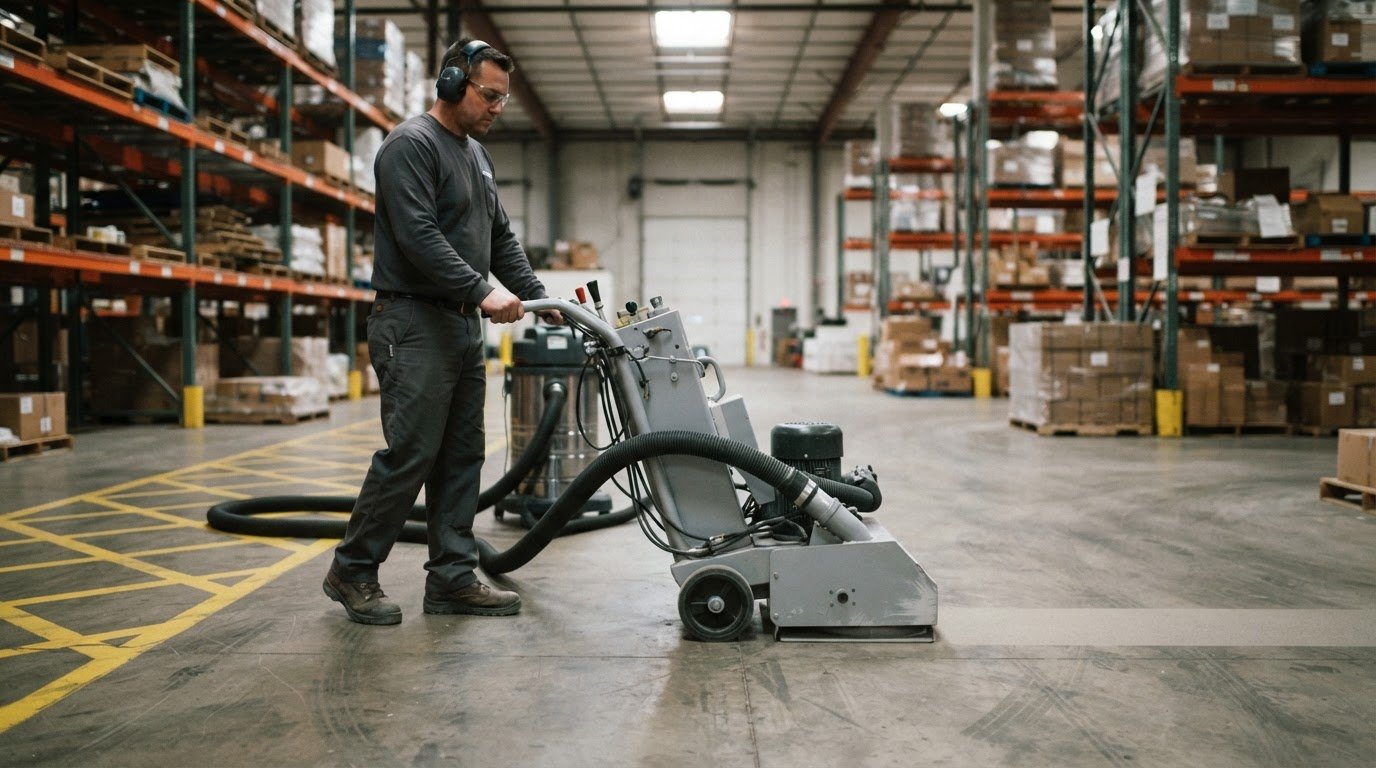
We utilize two primary mechanical methods to prepare industrial floors. Shot blasting is the industrial gold standard for creating a deep CSP (Concrete Surface Profile). This process involves firing small steel spheres at the floor to strip away contaminants and open the concrete’s pores. For facilities with thin existing coatings or those requiring a smoother finish, diamond grinding is often the better choice. It removes surface imperfections without damaging the structural integrity of the slab. In food-grade or sensitive manufacturing environments, we employ strict dust containment protocols using HEPA-filtered vacuums to ensure air quality remains within regulatory limits.
Mechanical Removal of Existing Lines
Attempting to “paint over” old markings is one of the most common mistakes in facility maintenance. For a new system to last, comprehensive warehouse line removal is mandatory. This process ensures a clean, dry, and sound substrate that meets OSHA safety color standards for long-term visibility. We use specialized industrial vacuums during the removal process to capture particulates at the source. This prevents concrete dust from settling on inventory or sensitive machinery. Ensuring the floor is structurally sound and free of loose debris is the only way to guarantee your safety markings won’t flake or fade prematurely.
Skimping on preparation might save time initially, but it doubles your costs when the lines fail within six months. If you need a marking system that actually sticks to your substrate, contact our technical team to schedule a site evaluation and surface bond test.
Selecting a National Contractor for Industrial Striping Projects
For large-scale logistics providers with multiple hubs, local painters often lack the resources to handle the volume and complexity of high-performance markings. Choosing a partner with a proven nationwide track record ensures consistency across your entire supply chain. With 29+ years of specialized industrial marking experience, we act as a safety-conscious consultant rather than just a contractor. This tenure allows us to navigate the unique challenges of epoxy striping Arizona facilities, where climate and facility scale require a seasoned perspective that understands the high stakes of industrial environments.
Evaluating Technical Capability and Fleet
Reliability in industrial environments depends on the quality of the equipment and the people operating it. We own and maintain a dedicated fleet of specialized preparation equipment, including shot blasters and diamond grinders. This internal control eliminates the delays often caused by rental availability or equipment failure. By utilizing in-house crews rather than sub-contracted labor, we maintain strict quality control over every linear foot of epoxy. Our teams have the capacity to handle massive projects exceeding 1 million square feet, ensuring that even the largest distribution centers receive a uniform, high-durability finish.
Safety Compliance and OSHA Standards
A consultative approach to safety layout design is essential for minimizing facility liability. We align your facility markings with current federal safety regulations, using standardized color coding for walkways, hazards, and fire lanes. This systematic organization reduces the risk of accidents and ensures your facility is prepared for OSHA inspections under the National Emphasis Program. Our safety plans are designed to create clear boundaries between pedestrian zones and heavy machinery, which is the foundation of a modern, efficient workspace.
Operational downtime is a significant budgetary concern for high-volume facilities. Our 24/7 availability allows us to perform epoxy striping Arizona projects during off-peak hours or weekend shifts. This schedule ensures that your marking system is implemented with minimal operational disruption, allowing your team to maintain peak productivity while we secure your facility’s safety infrastructure. We prioritize functional outcomes that protect your personnel and your bottom line simultaneously.
Securing Your Facility’s Operational Future
Maintaining a safe and efficient warehouse requires more than just visible lines; it demands a marking system that can withstand constant mechanical stress. High-performance epoxy provides the chemical bond necessary to resist tire burn and heavy abrasion in busy logistics hubs. By prioritizing mechanical surface preparation like shot blasting, you ensure that your investment remains a permanent part of your floor rather than a temporary fix. Implementing professional epoxy striping Arizona services allows you to meet strict OSHA safety standards while reducing the long-term costs associated with frequent re-striping cycles.
To further enhance your facility’s durability with advanced industrial coatings and linings, check out BIS Group for expert service solutions.
With over 29 years of industrial marking expertise and nationwide service capabilities for large-scale facilities, we specialize in delivering functional, high-durability solutions. Our team focuses on mechanical surface preparation to guarantee maximum adhesion and operational longevity. Don’t let faded or peeling lines compromise your facility’s safety or organizational efficiency. We are ready to help you optimize your traffic flow with a marking system built for the high stakes of industrial environments.
Request a Professional Quote for Your Industrial Striping Project today to secure a durable, compliant, and well-organized workspace.
Frequently Asked Questions
How long does industrial epoxy striping typically last?
Industrial epoxy striping typically lasts between 5 and 10 years in most high-traffic environments. This longevity is significantly higher than standard traffic paint, which often requires annual reapplication. When investing in professional epoxy striping Arizona services, the actual lifespan depends on the volume of forklift traffic and the quality of the initial surface preparation. High-solid resins bond chemically with the concrete to resist the abrasive force of heavy machinery and industrial cleaning chemicals.
What is the curing time for epoxy lines before forklifts can drive on them?
Most industrial epoxy systems require a curing period of 24 to 48 hours before they can withstand heavy forklift traffic. While the lines may feel dry to the touch within a few hours, the chemical cross-linking process needs time to reach full hardness. Curing times can vary based on temperature and ventilation levels within your facility. We often schedule applications during weekend shifts to ensure the material cures completely without disrupting your facility’s operational schedule.
Can epoxy striping be applied to polished or sealed concrete?
Yes, epoxy striping can be applied to polished or sealed concrete, but it requires specialized mechanical preparation first. Polished surfaces are too smooth for resin to form a secure bond (the mechanical “grip” needed for adhesion). We use shot blasting or diamond grinding to remove the existing sealer and create a specific mechanical profile. This allows the epoxy to lock into the concrete substrate, preventing the markings from peeling or flaking under heavy use.
Does epoxy line painting meet all OSHA warehouse safety requirements?
Professional epoxy line painting is a primary method for achieving compliance with OSHA standard 29 CFR 1910.176(a), which requires permanent aisles to be appropriately marked. Using high-durability epoxy striping Arizona systems ensures that these safety boundaries remain visible even under heavy wear. We align our layouts with federal safety color standards to designate pedestrian walkways, hazardous areas, and fire lanes, which helps your facility pass inspections and reduces overall liability during daily operations.
What is the difference between epoxy striping and floor marking tape?
The main difference lies in durability and bonding. Floor marking tape is a temporary solution that often peels, cracks, or catches on forklift pallets, leading to frequent replacement costs. Epoxy striping is a permanent resin system that bonds chemically to the concrete floor. While tape is easier to install initially, epoxy provides a much lower total cost of ownership because it withstands the shearing forces of heavy machinery and aggressive industrial cleaners for years.
Is shot blasting necessary for every epoxy striping project?
Shot blasting is considered the gold standard for surface preparation in industrial environments. It is necessary for almost every high-durability project because it removes surface contaminants and opens the concrete’s pores for maximum adhesion. While diamond grinding is an alternative for thinner coatings, shot blasting provides the deep mechanical profile required for heavy-duty epoxy systems. We evaluate each slab to determine the most effective removal method to ensure the new lines don’t fail prematurely.