Approximately 7% of forklift accidents involve a vehicle going off a dock edge, a statistic that underscores the thin margin for error in high-volume logistics hubs. You already know that when markings fade, drivers struggle with trailer spotting and pedestrian safety risks skyrocket. Adhering to professional truck court line striping standards is not just about aesthetics; it’s a critical engineering requirement for managing the 45-foot outer turning radius of a standard 53-foot trailer. At StripeGuys Warhouse Line Striping, we leverage over 29 years of industrial experience to help facility managers transition from chaotic layouts to precision-engineered traffic systems.
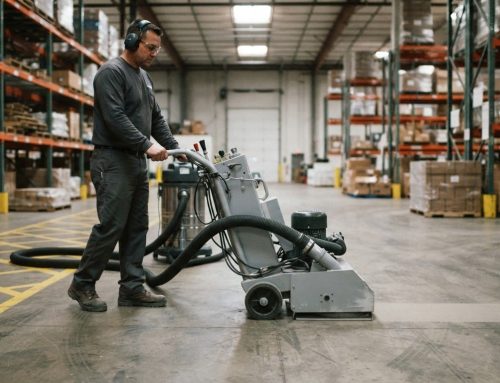
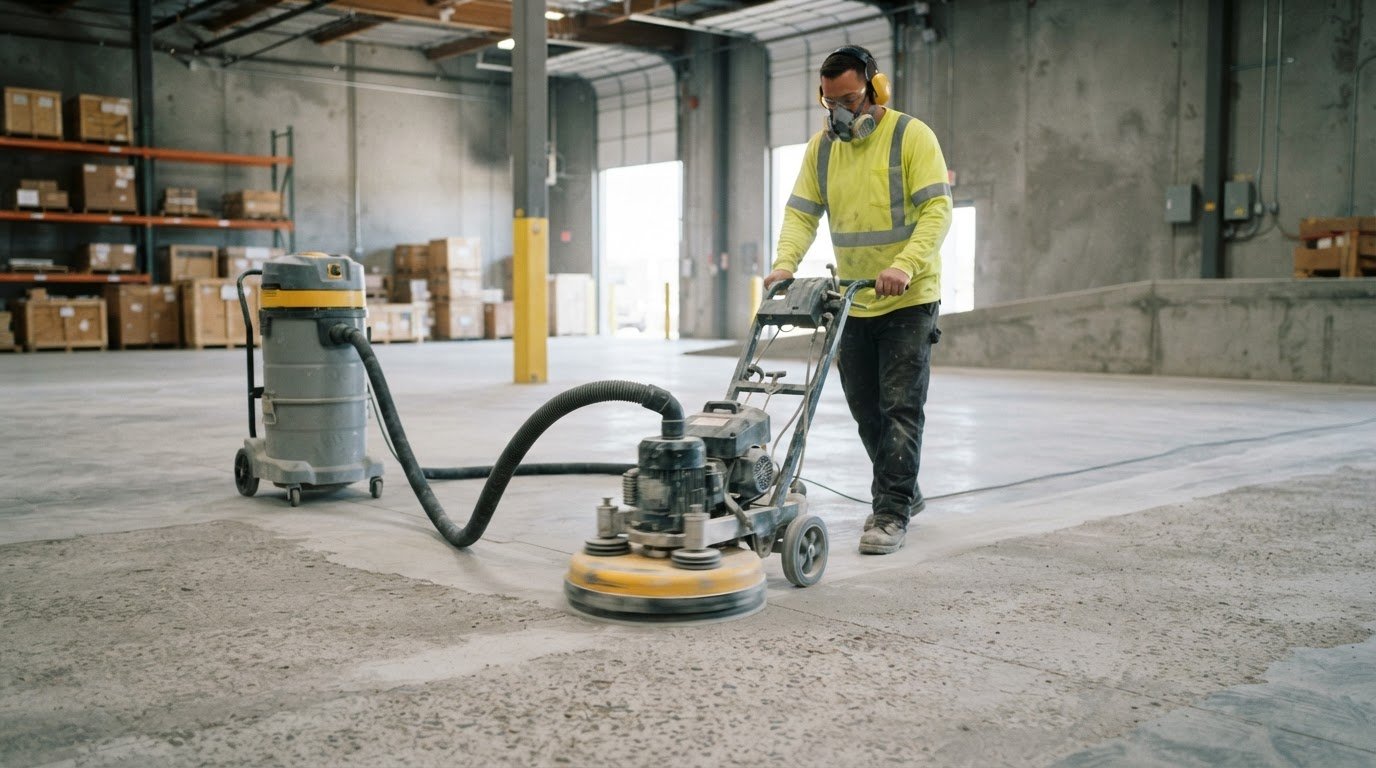
This guide provides the technical dimensions, safety regulations, and material specifications required to optimize your distribution center. You’ll learn how to select high-durability paints that withstand heavy trailer scrubbing and why professional surface preparation (using shot blasting to remove failing lines) is essential for long-term paint adhesion. We will cover everything from OSHA-compliant dock guarding to the 80-foot aisle widths needed for 90-degree approaches, giving you a clear roadmap for a safer, more efficient facility.
Key Takeaways
- Learn the exact layout dimensions for 53-foot trailers, including 12-foot stall widths and 75-foot clearance lengths required to prevent yard congestion.
- Understand how to implement truck court line striping standards to maintain compliance with OSHA 1910.176(a) and ANSI safety color protocols.
- Identify the specific high-solids paints and epoxy materials that offer the durability needed to survive constant trailer scrubbing.
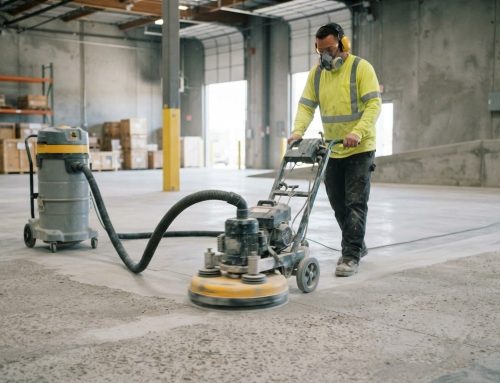
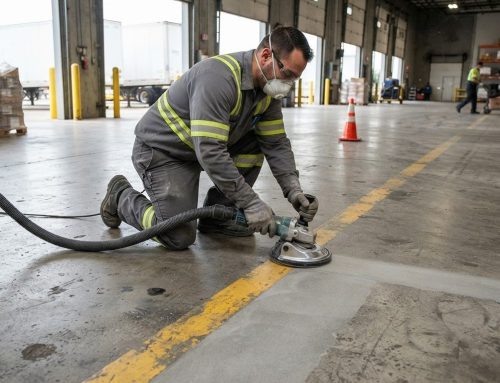
- Explore why mechanical surface preparation through shot blasting is the only reliable way to ensure long-term paint adhesion in heavy-traffic environments.
- Optimize your operational flow by using clear dock stenciling and directional markings to eliminate trailer spotting delays and yard gridlock.
Essential Truck Court Dimensions and Layout Standards
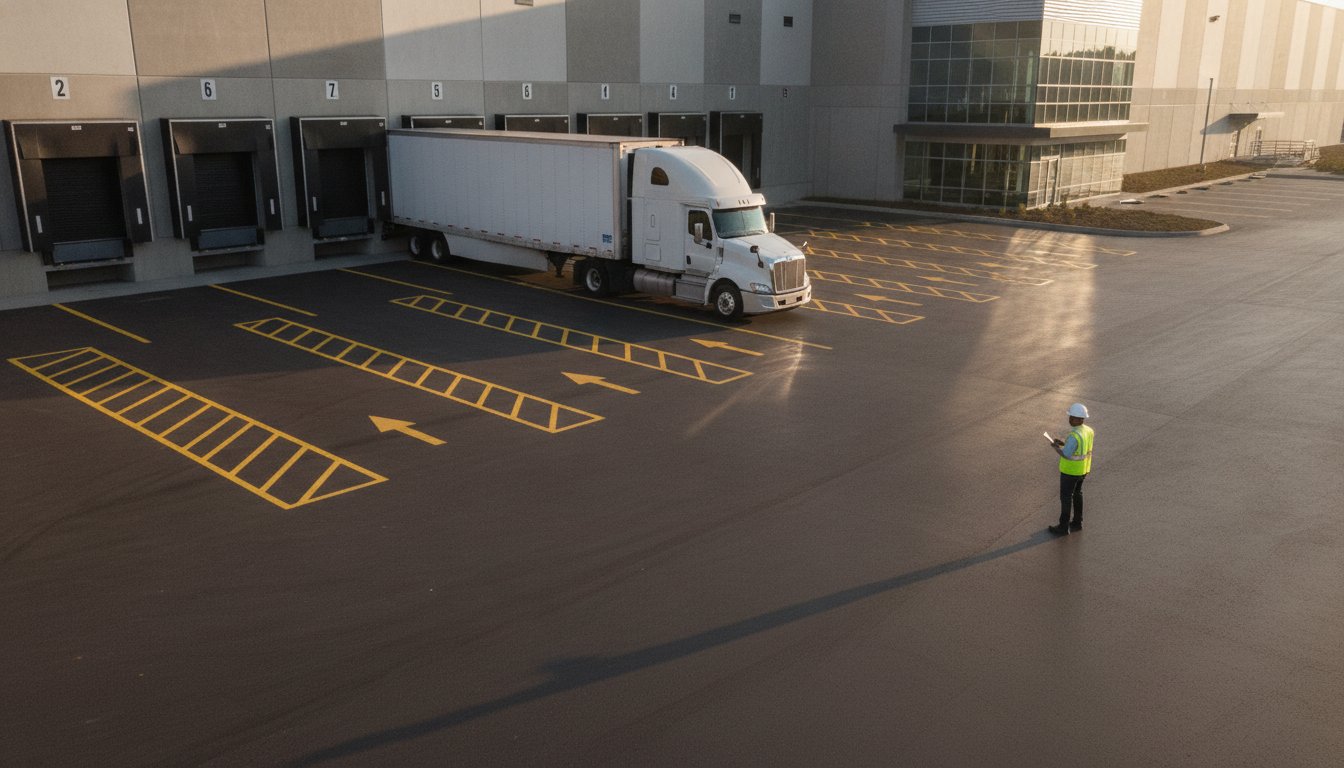
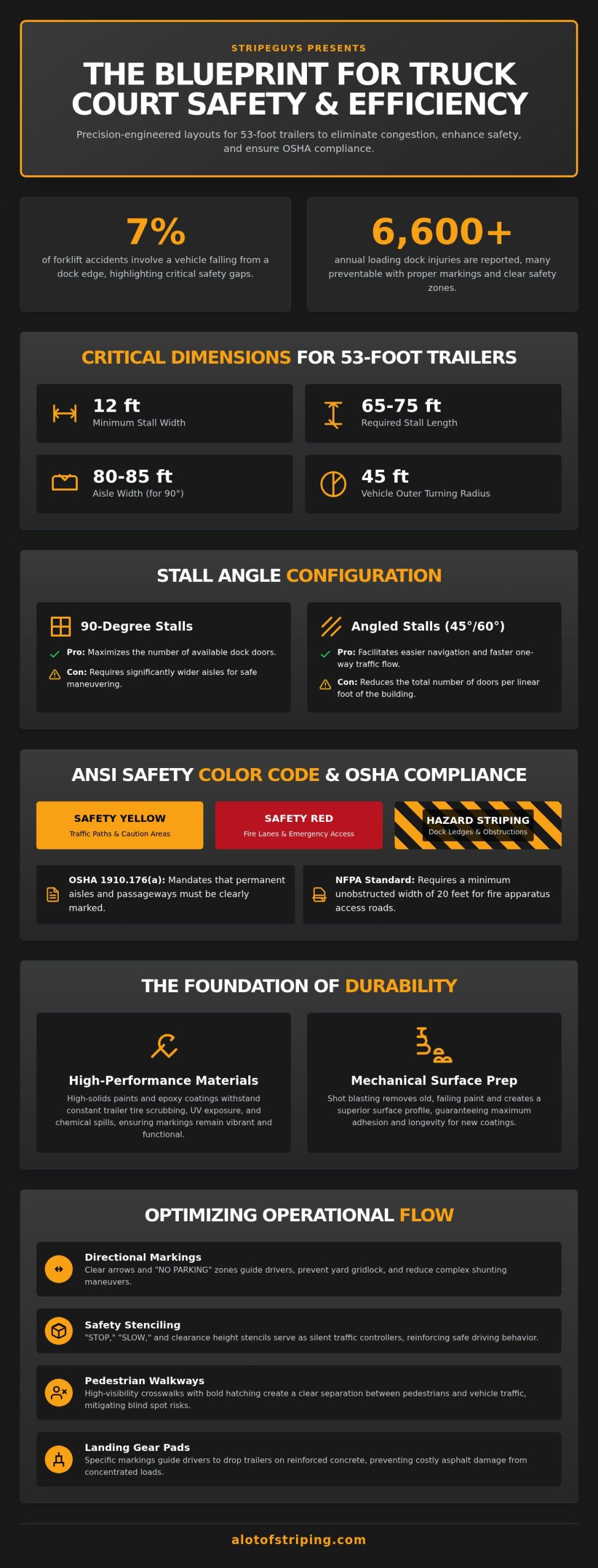
Professional truck court line striping standards differ significantly from standard commercial parking lot layouts. While a passenger vehicle stall might only be 9 feet wide, a heavy-duty truck court requires a minimum stall width of 12 feet to allow for safe trailer positioning and driver egress. For 53-foot trailers, you must calculate a total stall length of 65 to 75 feet to accommodate both the trailer and the tractor clearance. This ensures that the cab doesn’t protrude into the active drive aisle, which is a primary cause of yard congestion and accidents. Unlike standard parking lot line striping, these dimensions are engineered for the extreme scale of logistics vehicles.
We also recommend specific striping for landing gear pads. These markings guide drivers to drop trailers on the reinforced concrete apron rather than the asphalt (which can fail under the intense point-load pressure of a loaded trailer). Maintaining a turning radius of 100 to 120 feet is critical to accommodate the 45-foot outer turning radius of modern logistics vehicles. Proper layout planning prevents premature pavement failure and keeps your fleet moving without unnecessary shunting maneuvers.
Determining the Optimal Stall Angle
Choosing between 90-degree and angled stalls depends on your available yard depth and throughput needs. 90-degree stalls maximize the number of dock doors but require wider drive aisles (typically 80 to 85 feet for optimal maneuvering). Angled stalls (45 or 60 degrees) facilitate one-way traffic flow and are easier for drivers to navigate, though they reduce the total number of doors per linear foot of the building. In extremely tight logistics yards, a herringbone pattern can save space while maintaining a logical flow for high-volume trailer spotting.
Aisle Width and Maneuvering Clearance
Efficiency dies in narrow aisles. For safe trailer backing, you need to account for the “blind-side” backing hazards where the driver’s visibility is significantly limited. We use clear “No Parking” zone markings to keep critical path clearways open, ensuring that tractor swing isn’t obstructed by staged trailers or equipment. This organization directly impacts dock throughput by reducing the time spent on complex shunting maneuvers. Clear boundaries mean your yard remains fluid even during peak shift changes or seasonal surges.
Safety Standards: Compliance with OSHA and ANSI Guidelines
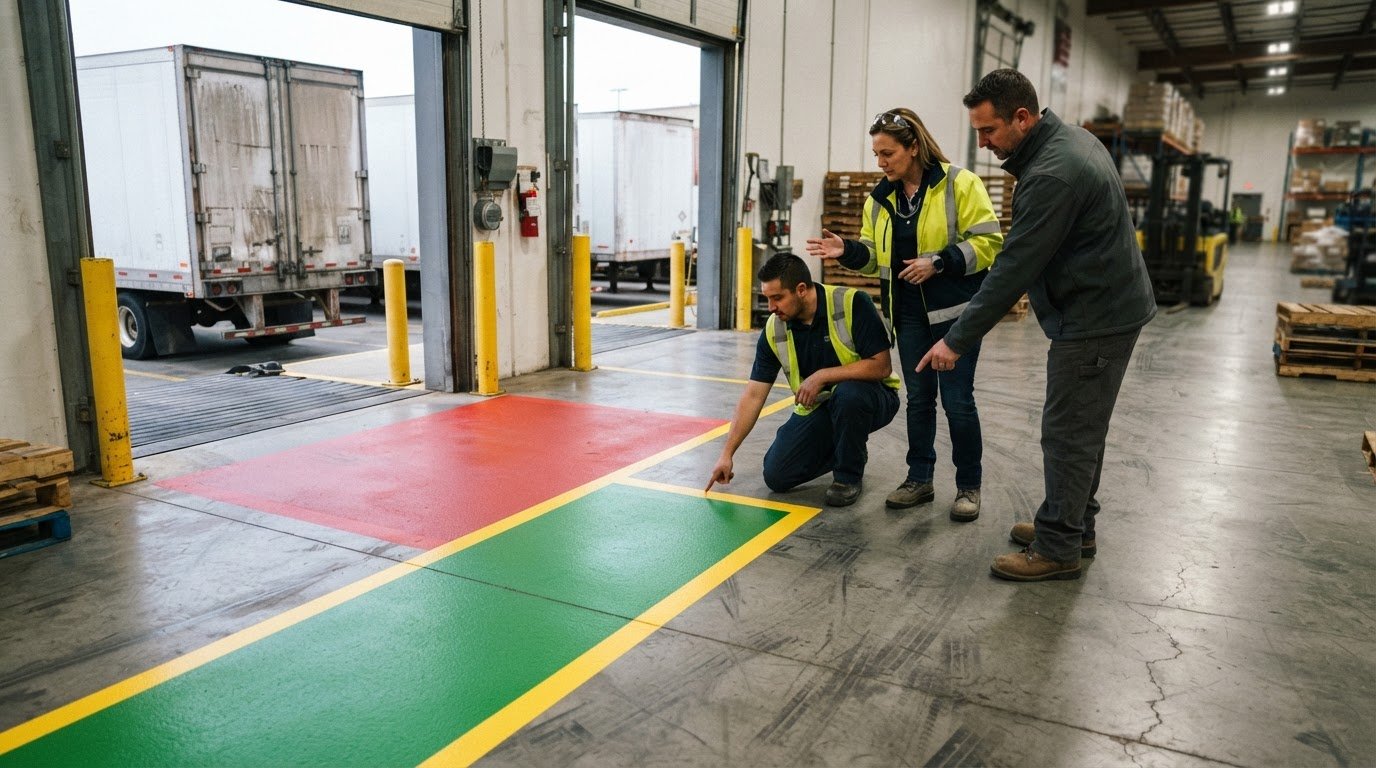
OSHA 1910.176(a) mandates that permanent aisles and passageways must be appropriately marked to prevent hazards. In a high-volume logistics yard, this means defining exactly where 80,000-pound vehicles move and where pedestrians are permitted. We strictly adhere to ANSI Z535 safety color codes to provide instant visual recognition for drivers and ground staff. Safety yellow is utilized for traffic paths and physical hazards, while red is reserved for fire lanes and emergency equipment access. Adhering to these truck court line striping standards is a proactive measure against the 6,600 annual loading dock injuries reported by the Bureau of Labor Statistics.
Emergency access is another critical compliance factor. The National Fire Protection Association (NFPA) recommends a minimum unobstructed width of 20 feet for fire apparatus access roads. We ensure these zones are marked with high-visibility coatings that resist fading from UV exposure and heavy tire wear. This prevents yard blockages that could lead to significant liability or fines during a fire marshal inspection. Clear, compliant markings act as a legal and physical shield for your operation.
High-Visibility Pedestrian Safety Zones
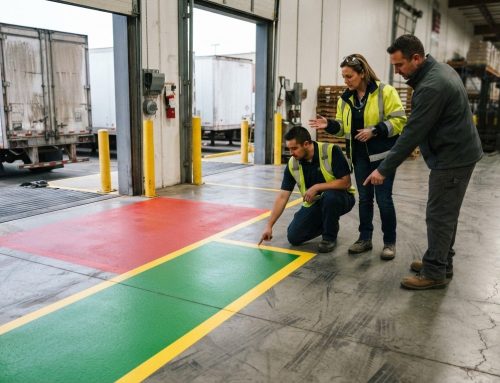
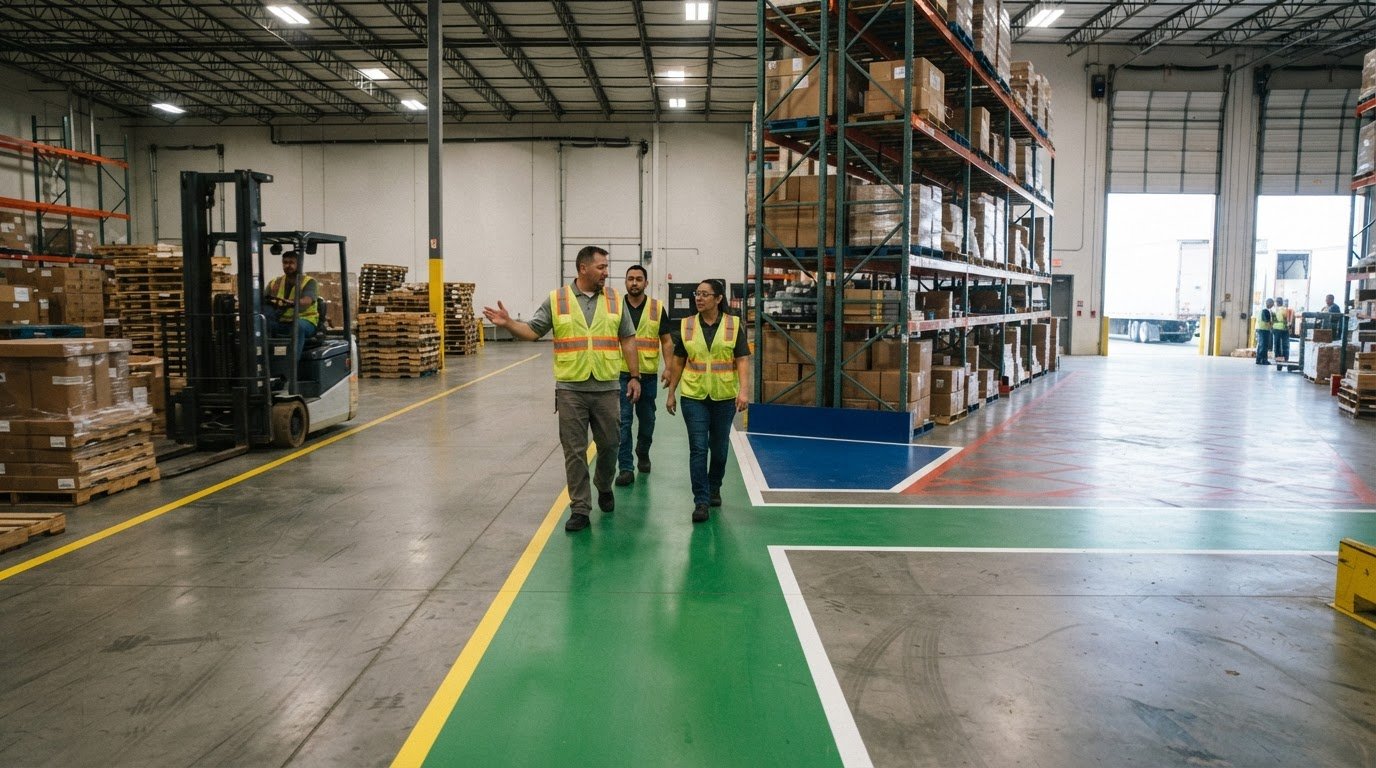
Drivers in high-seated tractor cabs face significant blind spots, particularly during complex backing maneuvers. Effective crosswalk design requires more than simple parallel lines; we use bold hatching or solid color fills to designate “Danger Zones” near active dock doors. Integrating pedestrian walkways and safety aisles into your court layout creates a clear physical boundary. This separation keeps workers away from the 45-foot outer turning radius of swinging trailers, which is vital for maintaining a zero-incident environment.
Critical Safety Signage and Stenciling
Standardized stenciling serves as your yard’s silent traffic controller. We apply “STOP” and “SLOW” stencils at key intersections to manage internal speed and flow. Marking clearance heights and weight limits at entry points protects your facility infrastructure from costly overhead damage. Furthermore, OSHA requires hazard striping (alternating yellow and black lines) for loading dock ledges that create a drop of four feet or more. If you’re concerned about your current compliance levels, you can consult with our safety specialists for a detailed facility layout review.
Material Selection and Surface Preparation for Durability
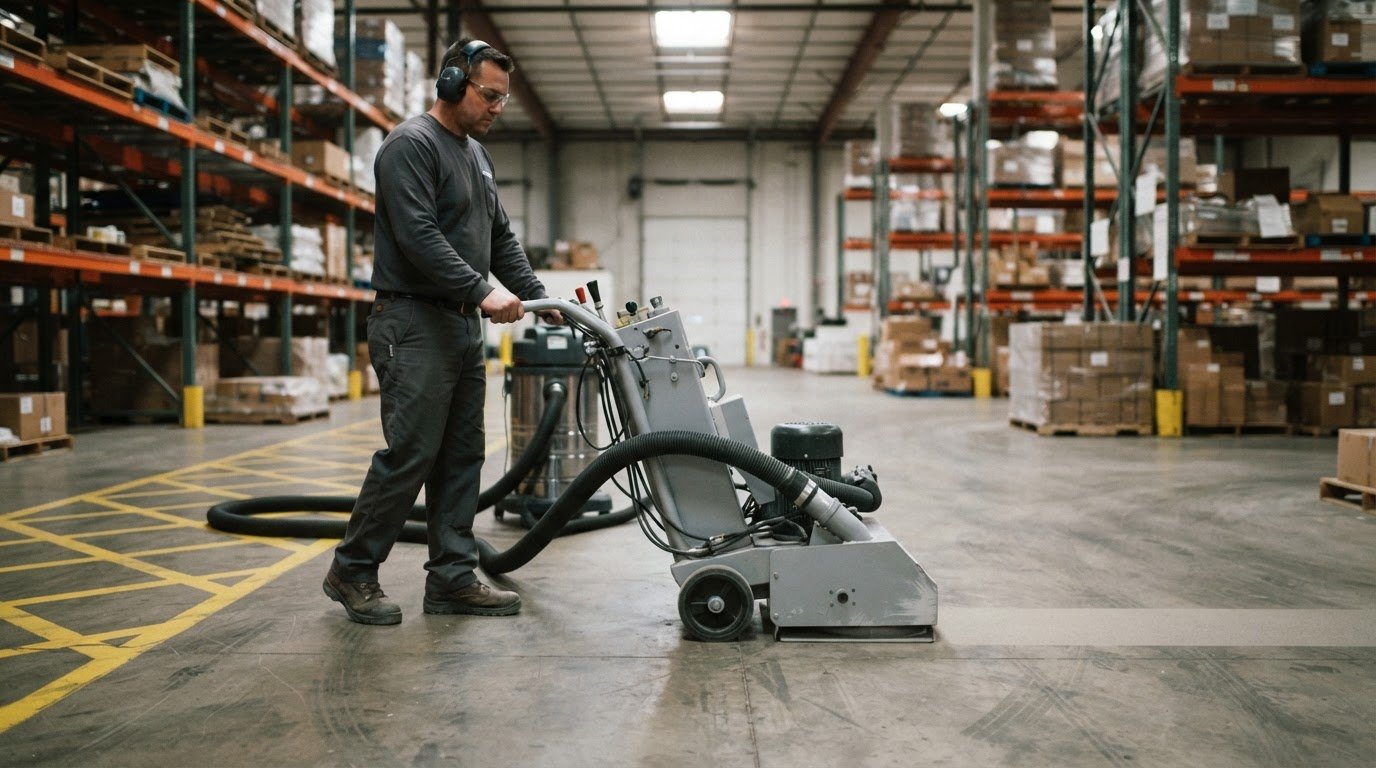
Standard water-based traffic paints, which often range from $20 to $40 per gallon, are sufficient for passenger car lots but fail rapidly under heavy industrial loads. Truck courts face “scrubbing,” a mechanical process where heavy 53-foot trailer tires twist and grind against the surface during tight shunting maneuvers. To meet truck court line striping standards, we utilize higher-solids paints and high-performance solvent-based coatings that offer superior adhesion to asphalt. For facilities operating 24/7, we integrate retro-reflective glass beads into the wet binder. This ensures that drivers can navigate safely during overnight operations when visibility is lowest.
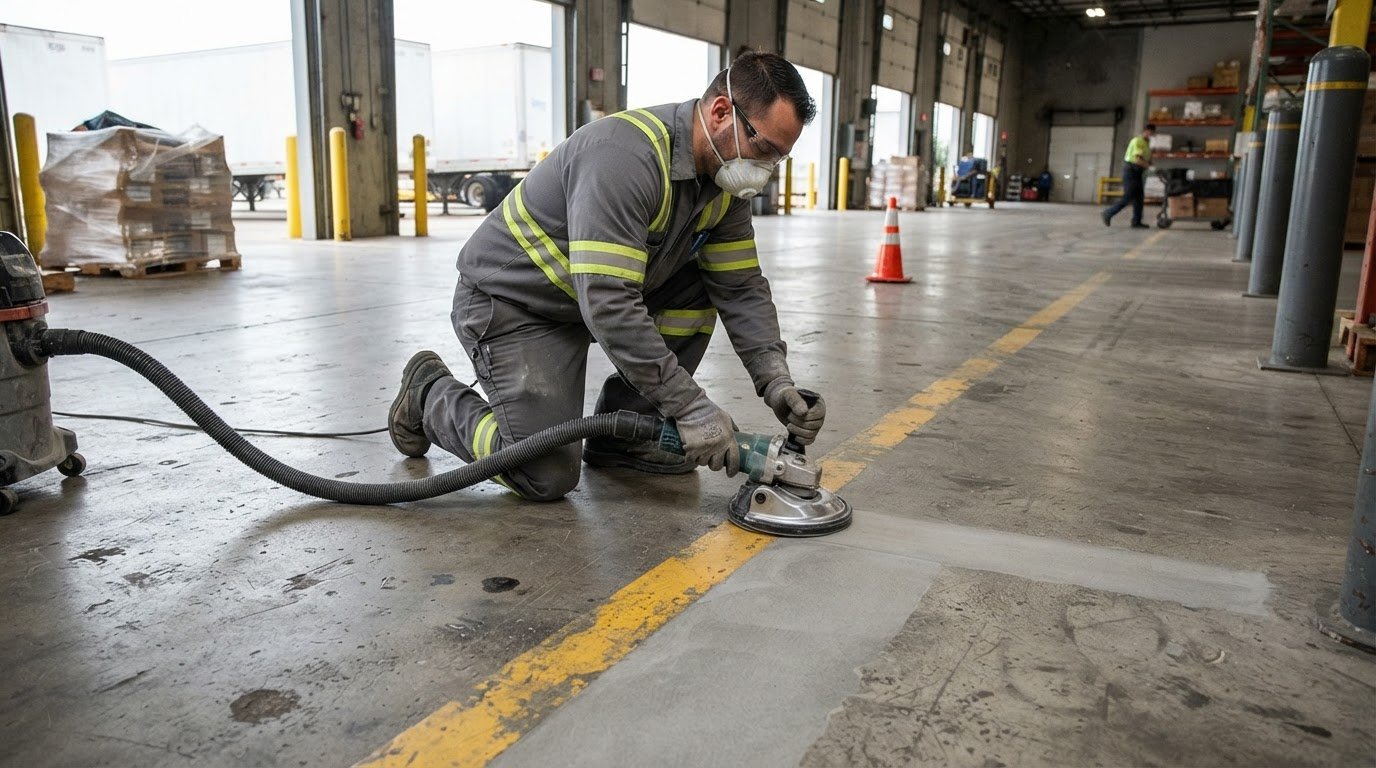
Transition zones between the yard and the loading dock often require specialized solutions. In these high-traffic areas, epoxy warehouse striping provides the impact resistance needed to withstand constant forklift and trailer traffic. While water-borne acrylics are common, solvent-based paints provide better durability against the oil and fuel leaks typical in tractor idling zones. Selecting the right chemical composition prevents premature line failure and reduces your long-term maintenance budget. Fast-drying options, such as the Sherwin-Williams Setfast line, can be ready for traffic in as little as 15 to 30 minutes, minimizing operational downtime.
The Necessity of Mechanical Surface Preparation
Specialized Coatings for High-Stress Areas
Certain zones within a logistics hub demand more than standard traffic paint. Near forklift maintenance or battery stations, we apply acid-resistant coatings to protect the slab from corrosive spills. In high-scrub zones where trailers pivot frequently, thermoplastic markings offer a significantly longer lifespan than traditional paint. This results in a lower cost per year of service despite a higher upfront investment. If your current markings are failing prematurely, request a technical site assessment to identify the right material for your specific traffic patterns.
Optimizing Operational Flow with Precision Stenciling
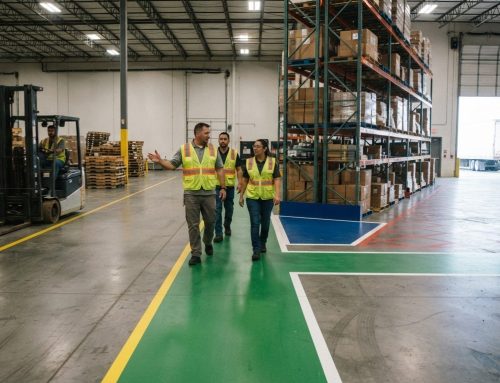
Operational efficiency in a high-volume logistics yard depends on the clarity of your visual communication system. Precision stenciling acts as the final layer of your truck court line striping standards, ensuring that once a driver navigates the 75-foot clearance aisles, they can identify their assigned dock without hesitation. Clear identification reduces the time spent shunting trailers and prevents the “where do I go?” confusion that leads to yard gridlock. By integrating these exterior markings with your internal warehouse line striping, you create a seamless traffic system that guides goods from the trailer to the rack with zero friction.
We also emphasize the importance of “Staging Area” markings for inbound and outbound queue management. These designated zones allow you to organize trailers before they hit the dock, keeping the primary drive aisles clear for active maneuvers. This level of organization is essential for facilities moving over 55 million tons of freight daily, as reported by the Department of Transportation. When every square foot of your court is clearly defined, your facility can handle higher throughput without increasing the risk of accidents or logistical bottlenecks.
Dock Management and Identification
Visibility is the primary requirement for effective dock numbering. We utilize large-format stencils, typically ranging from 12 to 24 inches, to ensure numbers are legible in tractor mirrors even during overnight shifts. Color-coding dock bays (using specific ANSI-compliant colors to distinguish between inbound and outbound doors) provides an extra layer of visual shorthand for drivers and yard spotters. Additionally, we apply “Target Lines” (parallel alignment guides) that help drivers center 53-foot trailers against the dock seal. This precision protects your building envelope from impact damage and ensures a tight seal for climate-controlled environments.
Yard Traffic Control Systems
A well-ordered yard requires clear boundaries for non-active vehicles. We design “Wait Zones” near check-in kiosks to prevent idling tractors from obstructing fire lanes or pedestrian paths. Marking specific speed limits and directional flow arrows reduces your facility’s liability by establishing a predictable traffic pattern. Professional parking lot line striping and stenciling prevent the operational downtime caused by minor yard collisions or blocked access points. This systematic approach to yard management ensures that your facility remains safe, organized, and fully compliant with industrial standards.
Future-Proofing Your Logistics Infrastructure
Transitioning from a reactive to a proactive maintenance strategy is the key to managing a high-throughput logistics hub. By prioritizing clear layout engineering and durable materials, facility managers can eliminate the daily friction caused by haphazard trailer spotting and yard congestion. Implementing professional truck court line striping standards ensures your facility remains compliant with safety regulations while protecting your pavement from the aggressive scrubbing action of heavy trailers. This guide has detailed how precision dimensions and specialized coatings work together to create a safer, more efficient workspace.
Long-term reliability depends on a partner who understands the physical realities of the industrial yard. StripeGuys Warhouse Line Striping brings over 29 years of industrial expertise and specialized shot blasting technology to national distribution centers. We focus on functional outcomes that reduce liability and maximize dock throughput. If you are ready to upgrade your yard with markings that survive the most demanding traffic patterns, get a professional truck court striping quote from StripeGuys Warhouse Line Striping. A precision-marked court is a safer, more productive court.
Frequently Asked Questions
What is the standard width for a truck parking stall in a logistics court?
The standard width for a heavy-duty truck parking stall is 12 feet. This dimension provides enough clearance for 53-foot trailers to be positioned accurately without encroaching on adjacent spaces. In high-volume logistics courts, this 12-foot standard ensures drivers can safely exit their cabs. Narrower stalls increase the risk of side-swipe accidents and structural damage to dock seals. Maintaining this width is a core component of professional truck court line striping standards.
How often should truck court lines be re-striped in high-volume facilities?
High-volume facilities typically require re-striping every 12 to 24 months. The frequency depends on total daily trailer counts and the specific traffic patterns of your fleet. Heavy trailer scrubbing (the grinding action of tires during tight turns) accelerates paint wear significantly. Regular inspections are essential to maintain truck court line striping standards and ensure that safety markings remain visible for 24/7 operations and facility compliance.
Are there specific OSHA requirements for truck court markings?
OSHA standard 1910.176(a) requires that permanent aisles and passageways be appropriately marked to prevent hazards. Additionally, OSHA 1910.28(b)(1)(i) mandates that any dock ledge creating a drop of four feet or more must be guarded or clearly marked. While OSHA doesn’t dictate specific colors, they rely on the General Duty Clause to ensure facilities provide a workplace free from recognized hazards like faded or confusing traffic markings.
Why does paint peel faster in truck courts than in standard parking lots?
Paint fails in truck courts primarily due to mechanical scrubbing and poor substrate adhesion. When heavy 53-foot trailer tires twist on the surface, they exert immense lateral force that shears standard traffic paint away from the asphalt. If the surface wasn’t prepared using shot blasting to remove old, oxidized layers, the new coating can’t anchor properly. This results in premature peeling that standard parking lot paint simply isn’t designed to withstand.
What is the best type of paint for heavy-duty truck court striping?
High-performance solvent-based acrylics or thermoplastic markings are the best choices for heavy-duty environments. These materials offer the chemical resistance and physical durability needed to survive constant exposure to fuel, oil, and heavy tire friction. For high-traffic transition zones, epoxy line painting provides a superior bond to concrete. Choosing higher-solids materials ensures the lines remain vibrant and visible for a longer service life compared to standard water-borne options.
How much space does a 53-foot trailer need to turn in a truck court?
A standard 53-foot trailer has an outer turning radius of 45 feet and an inner radius of 28.5 feet. To accommodate these maneuvers, a truck court typically requires a concrete apron and maneuvering zone of at least 100 to 120 feet. Providing this clearance prevents drivers from having to perform multiple shunting maneuvers, which reduces yard congestion and protects your asphalt from the extreme stress of stationary tire twisting.