A single faded line in your truck court is more than a minor maintenance oversight; it is a liability waiting for an OSHA inspector or a costly equipment collision. Many facility managers view asphalt striping as a cosmetic touch-up, yet in high-volume industrial environments, these markings function as a critical safety system that dictates the flow of multi-ton vehicles and pedestrian traffic. We understand the frustration of seeing fresh paint disappear after just one season of heavy use or facing the logistical stress of a surprise ADA compliance audit.
You need markings that endure the rigors of heavy traffic while shielding your business from regulatory penalties. This guide will help you master the technical and regulatory requirements of asphalt striping to ensure your commercial facility remains safe and operationally efficient through 2026. We draw on our 29 years of industrial experience to show you how to select high-performance materials (coatings designed for heavy-duty friction) and schedule maintenance to avoid costly downtime. We will examine current federal standards, material durability, and the specific logistics required to keep your facility’s boundaries clear and compliant without interrupting your primary business flow.
Key Takeaways
- Reframe facility markings as a functional safety system-not a cosmetic upgrade-to mitigate liability and prevent traffic collisions in high-volume zones.
- Identify the specific performance benefits of epoxy line painting to ensure your markings survive the heavy friction common in industrial environments.
- Master the 2026 ADA and fire lane dimension requirements to maintain full regulatory compliance and avoid significant non-compliance penalties.
- Understand why mechanical line removal is the only reliable method for surface preparation (preventing the adhesion failure common with “paint-over” techniques).
- Develop a strategic plan for professional asphalt striping that maximizes facility efficiency by minimizing operational downtime during the application process.
The Strategic Role of Asphalt Striping in Commercial Infrastructure
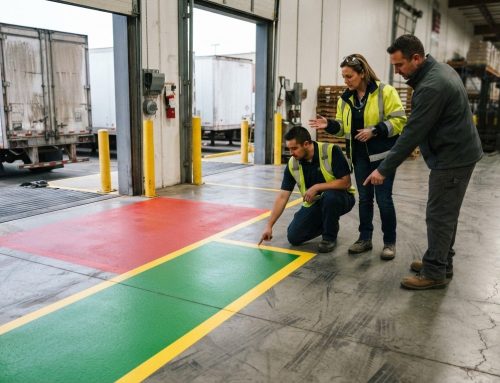
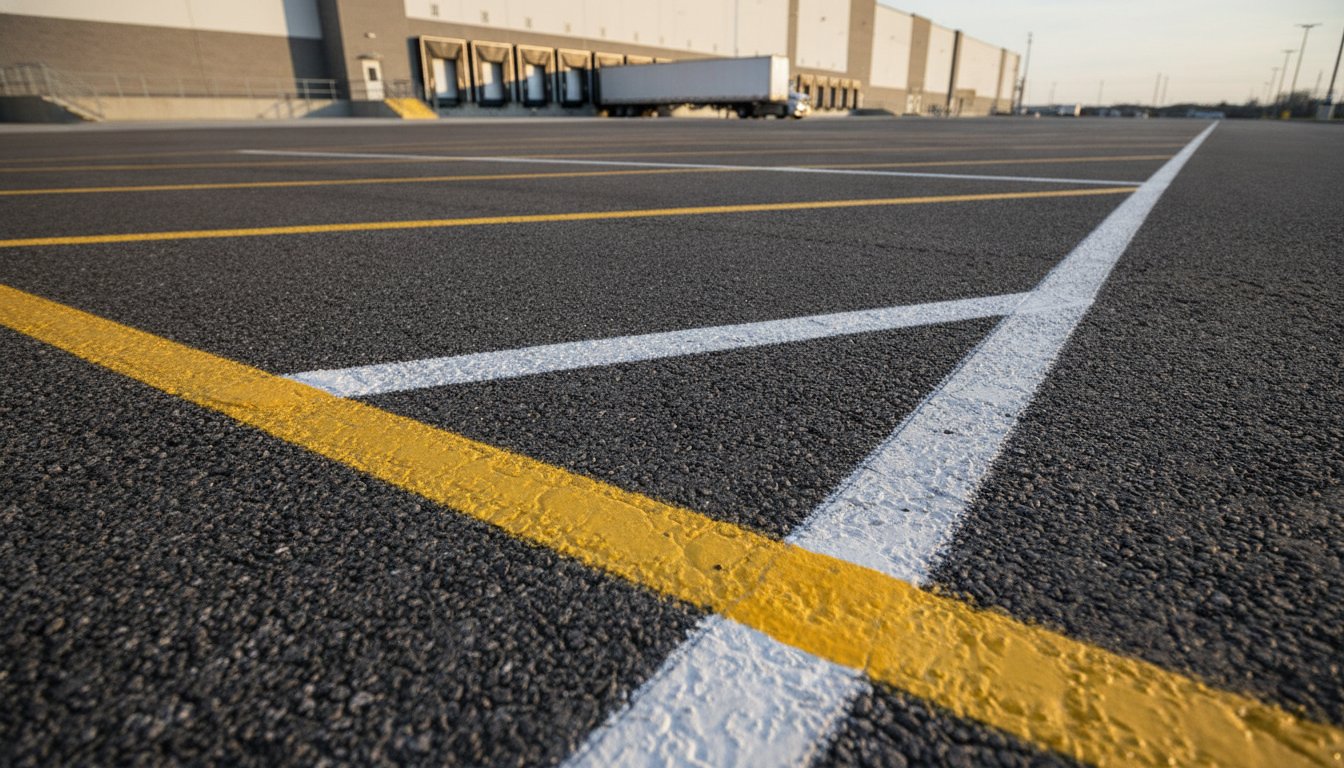
Professional asphalt striping serves as the primary communication tool between a facility’s management and its visitors. It’s a mistake to view these markings as a simple aesthetic upgrade or a recurring maintenance chore. In reality, a well-engineered layout functions as an active safety system (a set of visual instructions that govern movement and behavior). Clear markings establish the first impression of your property, signaling to clients and tenants that the facility is managed with industrial precision. This level of organization reflects a commitment to operational standards that protects both pedestrians and the physical assets of the site.
Effective design leverages traffic psychology to dictate driver behavior without verbal instruction. When lines are crisp and strategically placed, drivers naturally slow down and adhere to designated paths. This reduces the cognitive load on operators and pedestrians alike, creating a predictable environment that minimizes logistical friction. A disorganized lot suggests a lack of oversight, whereas a clearly marked facility reinforces authority and order.
Safety and Liability Mitigation
Faded or poorly planned markings represent a significant legal and operational risk. In pedestrian-heavy zones, the absence of clear boundaries leads to traffic confusion and increased liability in the event of an accident. Following general road surface marking standards ensures that every directional arrow and crosswalk is visible under various lighting conditions. Clear directional arrows are essential for preventing vehicle-on-vehicle collisions, while high-visibility boundaries for loading zones protect staff from active traffic. Proper striping ensures that drivers don’t have to guess where they should be, which is the first step in preventing costly industrial accidents.
Operational Efficiency and Traffic Flow
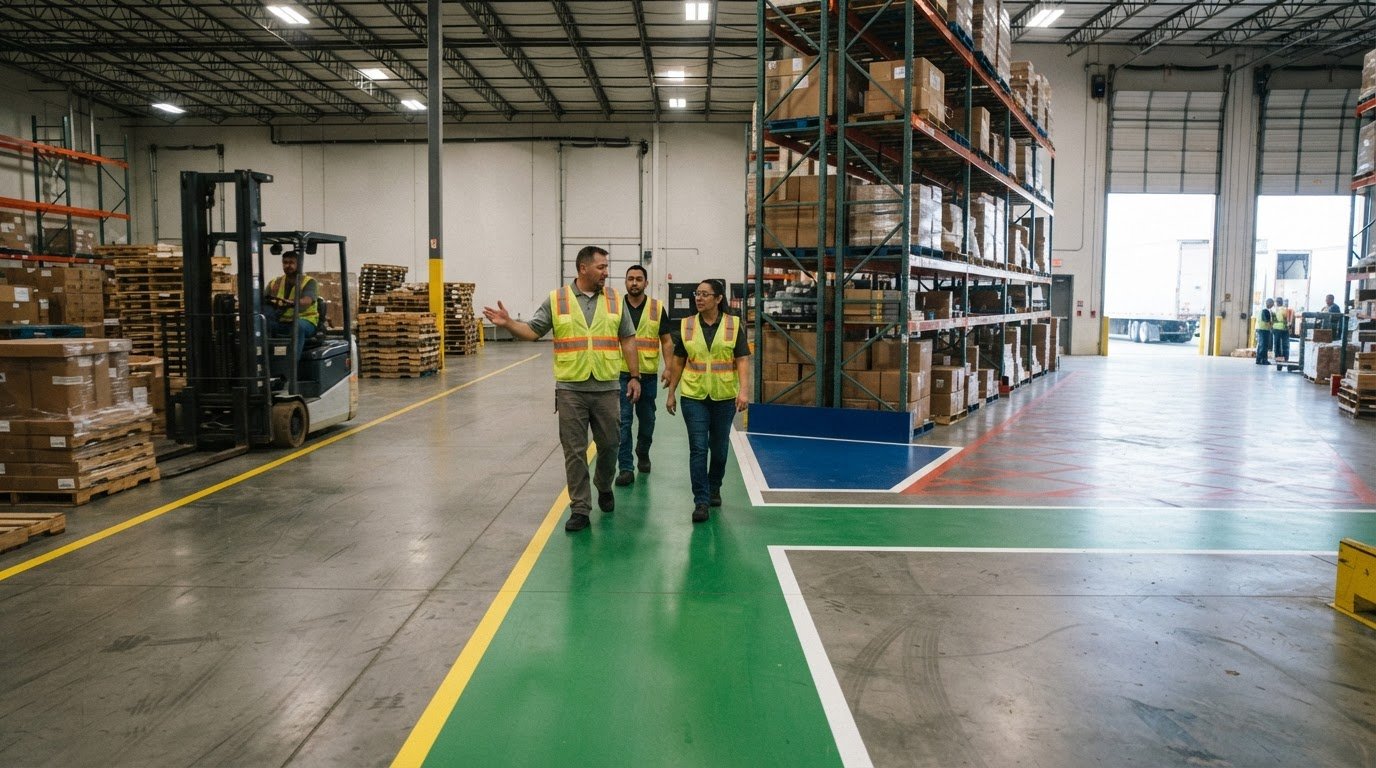
Strategic planning directly impacts your bottom line. A professional parking lot line striping layout can increase stall capacity by up to 10% simply by optimizing the angles and dimensions of the spaces. Because we maintain 24/7 availability, these upgrades can be executed during off-peak hours to prevent operational downtime. In distribution centers, clear lane markings reduce bottlenecking at ingress and egress points, allowing for faster turnaround times.
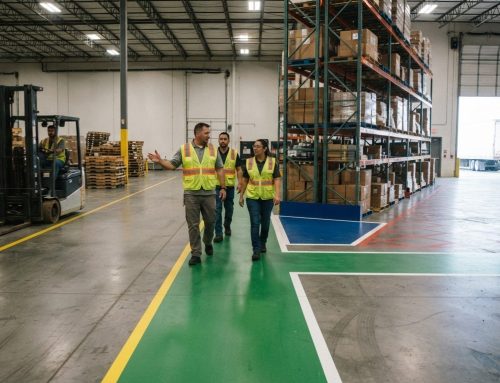
- Lane Delineation: Separates high-speed transit lanes from staging areas to prevent congestion.
- Machinery Guidance: Guides forklifts and heavy equipment through tight corridors to prevent racking damage.
- Stenciling: Provides immediate identification for truck court numbers and emergency access points.
By treating striping as an infrastructure investment rather than a cost center, you ensure that your facility operates at peak capacity while maintaining the highest safety standards. This proactive approach to asphalt striping keeps your facility compliant and your traffic moving without hesitation.
Industrial Materials and Durability: Choosing the Right Coating
Material selection dictates the return on investment for any asphalt striping project. Retail-grade water-based paints often fail prematurely under industrial stress, leading to ghosting and rapid pigment loss. We prioritize high-performance solvent-based coatings or thermoplastics for areas subject to constant heavy-duty friction. These materials align with the official MUTCD pavement marking standards, ensuring that your markings remain visible and compliant for longer cycles. Choosing the wrong material leads to frequent, disruptive re-striping that bleeds your maintenance budget and creates unnecessary logistical hurdles.
The durability of your facility’s markings depends on the bond between the coating and the substrate. While standard traffic paint is suitable for low-impact areas, industrial zones require coatings that can withstand the shear forces of turning tires and heavy loads. By matching the material to the specific traffic volume, we extend the life of your markings and reduce the frequency of facility maintenance interventions.
Epoxy vs. Traditional Traffic Paint
Traditional traffic paint relies on a mechanical bond (it essentially sits on top of the surface). In contrast, epoxy creates a chemical bond with the substrate, making it nearly impossible to chip or peel under consistent forklift traffic. This makes epoxy warehouse striping the industrial standard for facilities with high-volume indoor-outdoor transitions. While epoxy requires a longer curing window than fast-dry water-based paints, the extended service life justifies the initial downtime. We manage these application schedules 24/7 to ensure your facility is back in operation without delay.
Specialized Coatings for Harsh Environments
Industrial environments often present chemical challenges that standard paints can’t handle. For battery charging zones or chemical storage areas, we apply specialized acid-resistant coatings (specifically Novolac epoxies) to prevent surface degradation. In large outdoor commercial lots, we integrate reflective glass beads into the wet coating to enhance night-time visibility and safety. Standard asphalt striping often fades quickly under direct sunlight, so we use UV-resistant pigments to maintain color integrity against solar radiation. If you aren’t sure which material fits your facility’s traffic patterns, you can consult with our technical team to determine the most durable solution for your specific infrastructure.

Navigating Regulatory Compliance and ADA Standards
Compliance is the non-negotiable foundation of any professional facility layout. Missing stencils or undersized parking stalls don’t just cause traffic confusion; they invite litigation and municipal fines. We integrate local municipal codes with federal safety standards to protect your property from these liabilities. Every asphalt striping project we execute adheres to the Manual on Uniform Traffic Control Devices (MUTCD), which serves as the national benchmark for safety and visibility. By following these strict guidelines, we help you avoid the logistical stress of forced closures due to failed inspections.
ADA Parking Requirements: A 2026 Checklist
The Americans with Disabilities Act (ADA) mandates specific ratios of accessible spaces based on your total lot capacity. For a lot with 1 to 25 spaces, you’re required to provide at least one van-accessible stall. These spaces require high-contrast blue and white stenciling to ensure immediate identification by both drivers and law enforcement. Beyond the stall itself, you must maintain designated “access aisles” (typically 5 to 8 feet wide) to provide sufficient clearance for wheelchair lifts. We ensure these aisles are marked with diagonal hatching to prevent unauthorized parking and keep your facility accessible to all visitors.
Fire Lanes and Emergency Access Zones
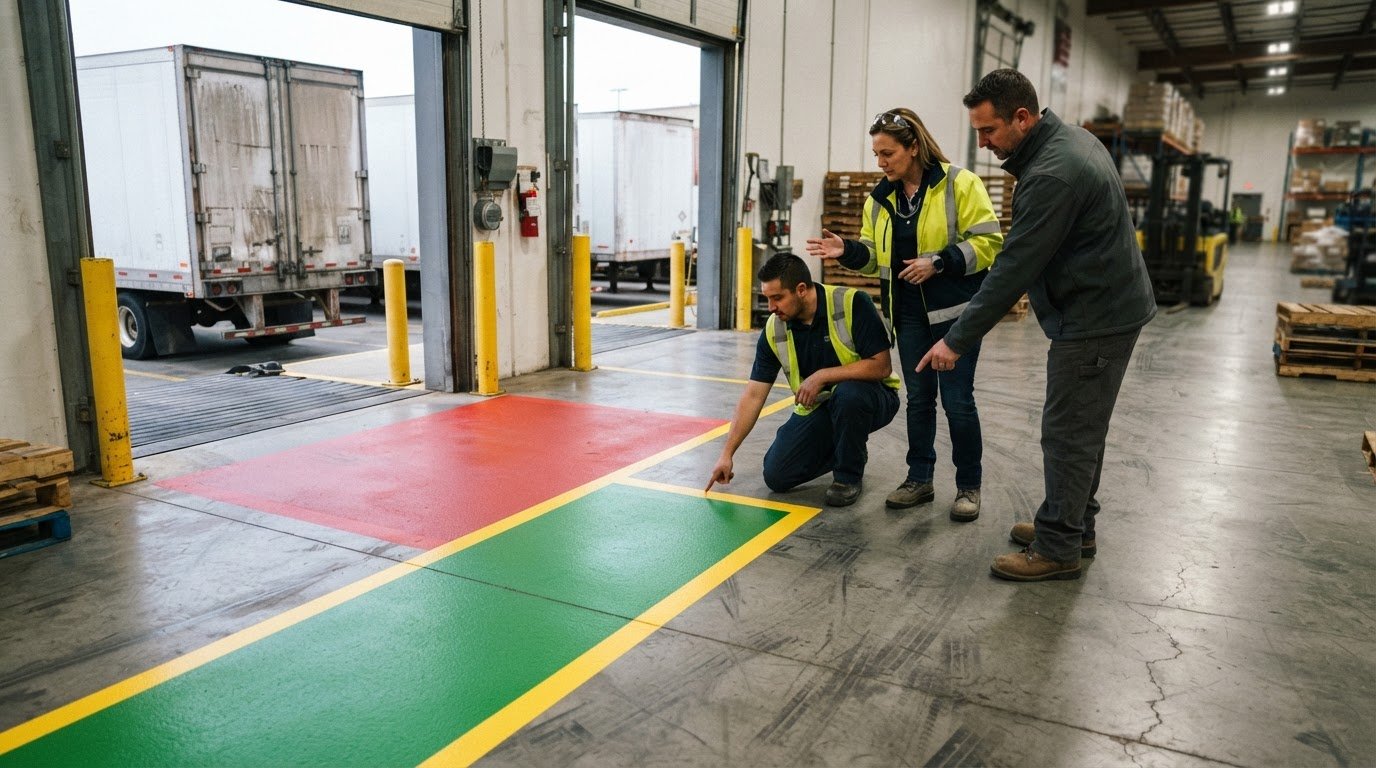
Emergency access is a critical component of professional parking lot line striping. Fire lanes require continuous red curb painting and “NO PARKING” lettering that typically stands 12 inches high for maximum legibility. These zones must remain unobstructed to allow fire engines and ambulances immediate access to your facility’s ingress points. We coordinate the placement of these floor markings with your existing directional signage to create a cohesive safety grid that protects your personnel and property.
Failure to maintain these standards can lead to significant non-compliance penalties and increased insurance premiums. If you need to verify your facility’s current compliance status or prepare for a 2026 audit, contact our compliance specialists for a technical site assessment. Our team provides the expert oversight needed to keep your facility operational and legally sound.
The Professional Striping Process: Execution and Partnership
Execution is where strategic planning meets physical reality. Even the highest-grade resins fail if they are applied to a contaminated or poorly prepared substrate. Professional asphalt striping requires more than a steady hand; it demands specialized machinery and a deep understanding of surface tension and chemical bonding. We don’t just apply paint. We engineer a marking system designed to withstand the relentless friction of industrial operations. By utilizing laser-guided layout equipment, we ensure that every line is perfectly straight and every stall matches the exact compliant dimensions required by federal law.
Surface Preparation: The Foundation of Longevity
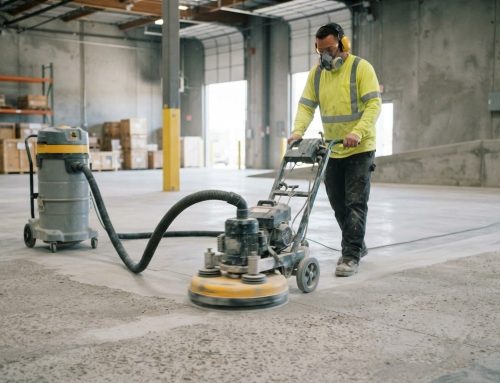
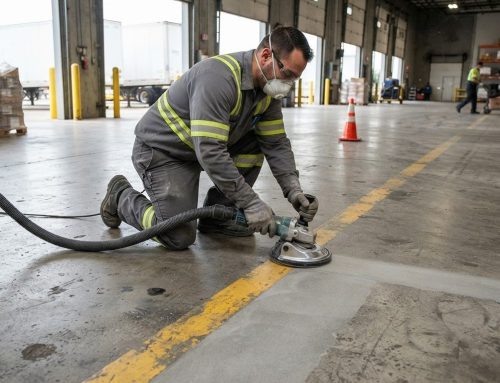
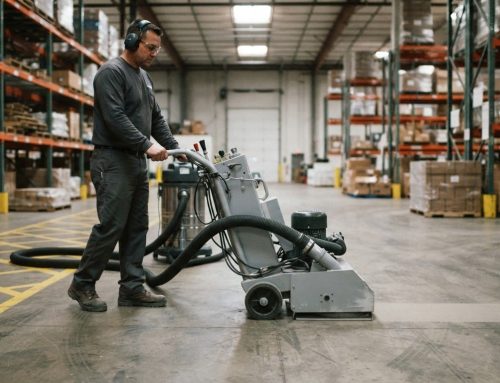
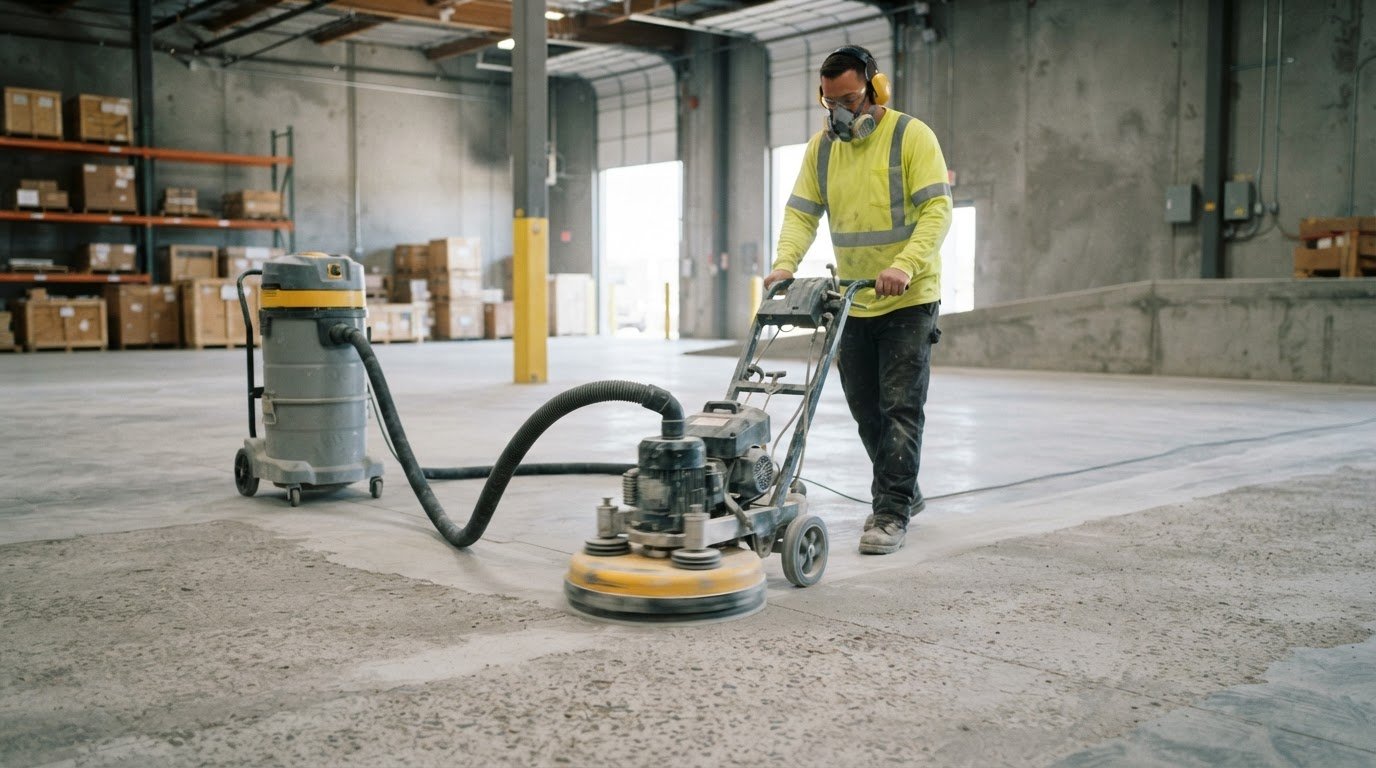
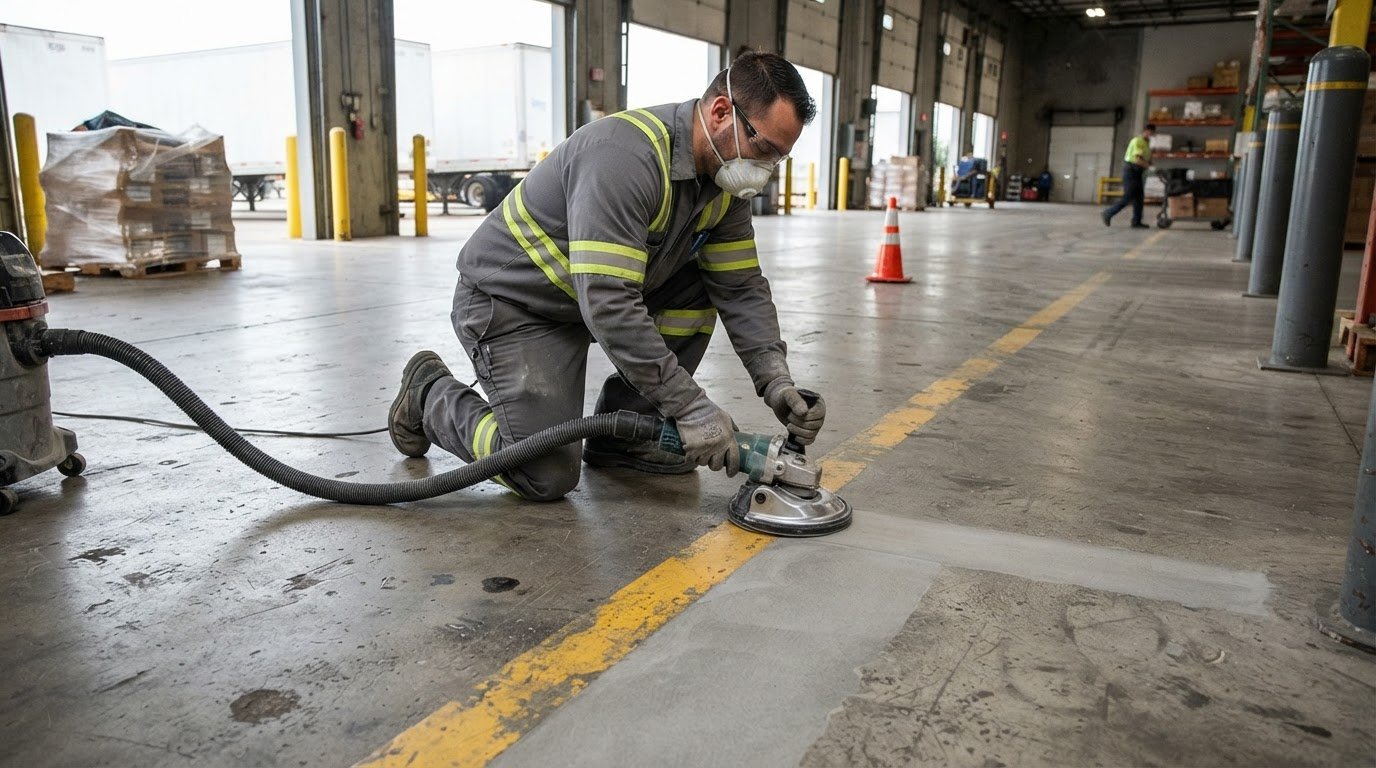
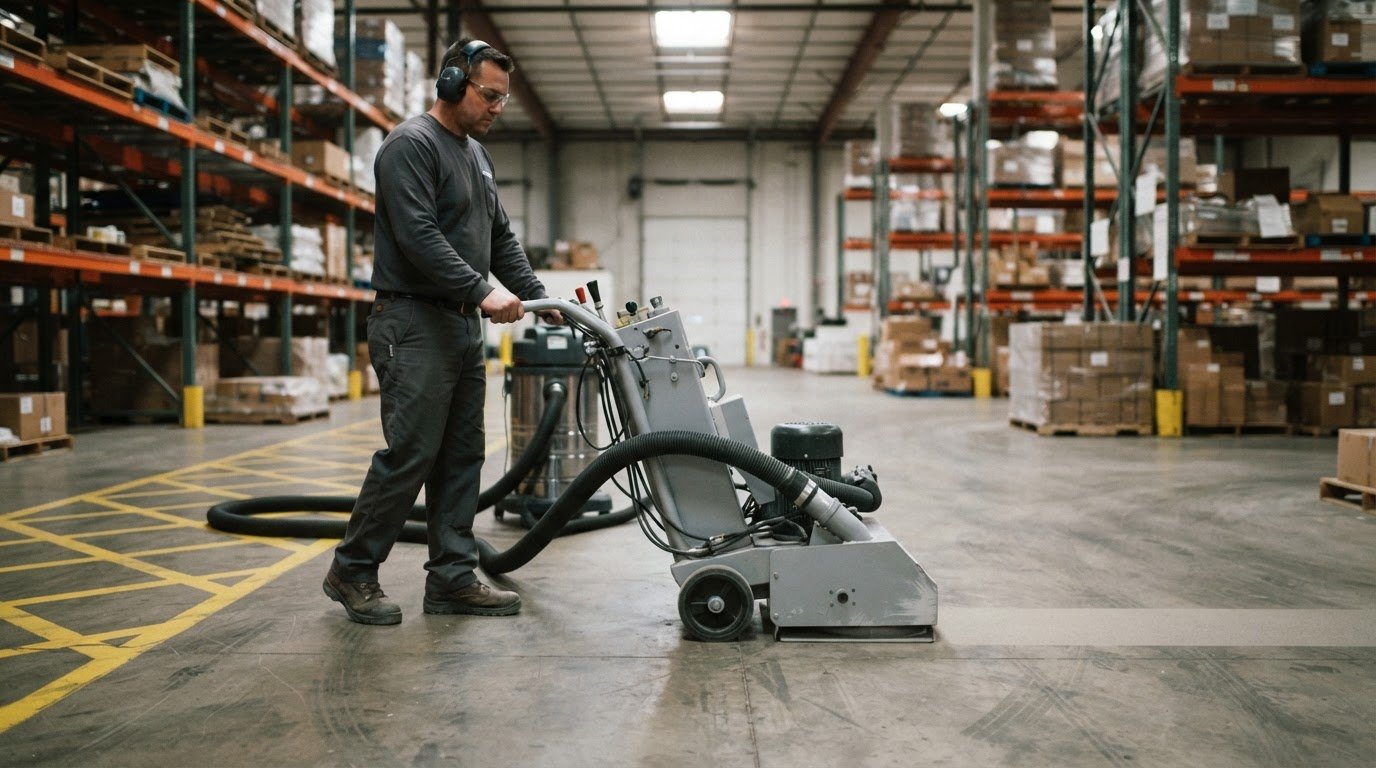
Effective adhesion begins with mechanical removal. Simply painting over old, flaking lines is a recipe for premature failure and “ghosting” (a condition where the old markings remain visible as the new layer peels away). We use shot blasting and industrial grinding to strip surfaces down to a clean, textured profile. This process ensures the new coating creates a permanent bond with the asphalt or concrete. As a seasoned warehouse line striping company, we know that skipping this mechanical preparation leads to delamination and increased long-term maintenance costs. Proper prep is the difference between a marking that lasts one season and one that lasts for years.
Choosing an Industrial Partner
Selecting a contractor is a decision that impacts your facility’s safety and your bottom line. You need a partner with a national footprint capable of managing high-profile projects across multiple states with consistent quality. Our 29+ years of industrial experience allow us to anticipate logistical hurdles before they disrupt your workflow. We maintain 24/7 availability to ensure your project is completed during off-peak hours, preventing the operational downtime that stalls your business. By acting as a single-source provider for complex pedestrian walkways and safety aisles, we provide a cohesive safety grid that simplifies your facility management and reinforces your operational standards at every turn.
This commitment to transparency and accessibility means we’re always ready to adjust to your operational needs. Whether you’re managing a single distribution center or a national portfolio, our veteran approach ensures your facility remains organized, efficient, and fully compliant with all safety regulations.
Securing Your Facility’s Operational Future
Professional asphalt striping is the foundation of a safe, high-capacity industrial environment. By prioritizing mechanical surface preparation (the process of stripping old layers for better adhesion) and selecting high-performance coatings, you ensure that your markings withstand the daily friction of heavy machinery. This proactive approach eliminates the logistical stress of non-compliance fines and prevents the traffic confusion that leads to costly on-site accidents.
Partnering with an industrial veteran ensures these critical safety systems are installed with precision. With over 29 years of industrial expertise and nationwide service coverage, we understand the high stakes of large-scale logistics hubs. We maintain 24/7 availability to execute your project without interrupting your primary business flow. This commitment to efficiency keeps your facility moving while maintaining strict adherence to safety standards and budgetary constraints.
Request a Professional Striping Quote from StripeGuys Warhouse Line Striping to secure your facility’s boundaries and optimize your operational efficiency today. We’re ready to help you maintain a safe, productive, and fully compliant workspace.
Frequently Asked Questions
How long does professional asphalt striping take to dry and cure?
Standard traffic paint typically dries to the touch in 30 minutes and can accept vehicle traffic within 4 hours under ideal environmental conditions. Humidity and temperature significantly impact these windows; high moisture levels extend drying times by preventing efficient solvent evaporation. Epoxy or thermoplastic materials require longer curing periods (often 24 to 48 hours) to achieve their full chemical bond and hardness. We coordinate these application schedules 24/7 to minimize your facility’s operational downtime.
What is the difference between water-based and solvent-based traffic paint?
Water-based paints are primarily used for their fast drying times and lower environmental impact, while solvent-based coatings offer superior durability in high-friction zones. Solvent-based options are better suited for colder climates because they are less prone to freezing during the application process. In industrial environments, solvent-based coatings resist oil and chemical degradation more effectively than water-based counterparts. We select the specific material based on your facility’s traffic volume and chemical exposure profile.
How often should a commercial parking lot be re-striped?
Most commercial facilities require professional asphalt striping every 12 to 24 months to maintain safety and compliance. High-traffic distribution centers or lots subject to harsh winters and snowplowing often need annual maintenance to ensure markings remain legible. You should initiate a site audit if markings have faded by more than 25% or if drivers are ignoring directional arrows. Regular maintenance cycles prevent the total loss of visibility that leads to traffic accidents and liability.
Does asphalt striping need to be removed before re-painting?
Mechanical removal is necessary if the existing asphalt striping is flaking, peeling, or built up too thick to allow for a smooth new application. Simply painting over degraded lines results in a poor bond (leading to rapid delamination and “ghosting” effects where old lines remain visible). We utilize shot blasting or industrial grinding to create a clean surface profile that ensures maximum adhesion for the new coating. This preparation step is essential for extending the service life of your markings.
What are the ADA requirements for handicap parking spaces in 2026?
Current ADA standards mandate that accessible spaces be at least 96 inches wide with an adjacent 60-inch or 96-inch access aisle. These spaces must be located on the shortest accessible route to the building entrance and feature high-contrast blue and white stenciling. For the 2026 cycle, facilities must ensure that at least one of every six accessible spaces is van-accessible. Proper signage must also be mounted at a height of 60 inches minimum to ensure visibility over parked vehicles.
Can striping be performed in cold or wet weather conditions?
Successful application requires a dry surface and an ambient temperature of at least 50 degrees Fahrenheit for most standard coatings. Moisture trapped in the pores of the asphalt prevents paint from bonding, which leads to immediate peeling once traffic resumes. While some specialized solvent-based paints can be applied in temperatures as low as 35 degrees, we generally recommend scheduling work during dry windows. We monitor local weather data closely to ensure every application occurs under optimal environmental conditions.