Did you know that forklift accidents lead to as many as 62,000 injuries in American factories every year? It’s a sobering figure that highlights why a precision-engineered manufacturing facility floor marking system is more than just a maintenance task; it’s a critical safety barrier. You’ve likely dealt with the frustration of lines that peel away under heavy traffic or the headache of trying to interpret vague OSHA requirements for your specific layout. We understand that it’s difficult to maintain operational flow when your visual cues are fading or non-existent.
This guide will help you master the standards, materials, and layout strategies needed to create a durable environment that ensures OSHA compliance and peak operational flow. We’ll examine specific ANSI color codes, the benefits of mechanical surface preparation like shot blasting (a process that removes surface contaminants to ensure a permanent bond), and the technical differences between epoxy paints and heavy-duty tapes. You’ll gain a clear roadmap for achieving long-lasting markings that withstand industrial cleaning and heavy machinery while keeping your team safe and your facility organized.
Key Takeaways
- Identify specific OSHA 1910.22 requirements for walking-working surfaces to maintain regulatory compliance and avoid steep per-employee penalties.
- Compare the industrial durability of epoxy line painting against standard traffic paints, especially in zones prone to chemical spills and heavy forklift pivoting.
- Master the layout strategies for a manufacturing facility floor marking system that separates pedestrian paths from high-traffic forklift lanes for improved safety.
- Evaluate the critical role of mechanical surface preparation, specifically shot blasting, in preventing line peeling and ensuring a permanent bond on oily concrete.
- Gain insights into reducing operational downtime by choosing the right installation methods that prioritize functional outcomes over simple aesthetics.
Manufacturing Floor Marking Standards and Safety Regulations
Compliance with federal safety standards is the baseline for any successful industrial operation. Under OSHA 1910.22, walking-working surfaces must be maintained in a clean and orderly state, which directly mandates the clear identification of permanent aisles and passageways where mechanical handling equipment (such as forklifts) is used. A professional manufacturing facility floor marking installation ensures that your plant remains compliant with these regulations, helping you avoid the steep regulatory costs that the National Association of Manufacturers (NAM) estimates can reach $29,100 per employee. Clear boundaries prevent the chaos of unorganized traffic, which is vital considering that forklifts contribute to approximately 35,000 to 62,000 injuries annually in industrial settings.
By installing dedicated safety aisles, you create a physical barrier between human workers and heavy machinery. This separation is a legal requirement for permanent aisles and is essential for maintaining a high-output environment. We approach every project as a safety-conscious consultant, ensuring that your layout meets the strict criteria for width and visibility required to keep your facility running without the threat of unexpected OSHA citations or costly downtime.
OSHA Color Coding Requirements for Factories
OSHA and ANSI standards provide a specific visual language for industrial safety that must be applied consistently to be effective. Yellow is the primary choice for marking traffic lanes and identifying physical hazards, such as low beams or tripping points, that could cause injury. Red indicates fire-related equipment (like fire extinguisher locations) and emergency stop buttons, while White and Green designate production zones and safety equipment such as first aid stations or emergency exits. The standard width for industrial aisle markings is typically between 2 and 6 inches to ensure maximum visibility for equipment operators and pedestrians alike.
The 5S System: Organizing for Efficiency
Beyond basic safety, floor striping is a foundational element of the 5S Lean methodology, specifically the “Set in Order” phase. By using Floor marking tapes or high-durability paint to define “a place for everything,” you eliminate the waste of time spent searching for tools or staging materials. Clear staging area borders (which prevent material overflow into transit paths) ensure that forklift operators have clear sightlines at all times. For companies with multiple national locations, standardizing these colors across every facility ensures that a worker in one plant immediately understands the safety protocols in another. This level of organization reinforces a culture of reliability and predictable performance across your entire infrastructure.
Selecting the Right Materials for Industrial Durability
Standard traffic paint is designed for public roads, not the high-torque environment of a production plant. In a manufacturing setting, forklift tires create immense shearing force during pivoting (the sharp turning of wheels while stationary), which quickly grinds low-grade paint into dust. Beyond mechanical wear, manufacturing floors often face exposure to cutting oils, hydraulic fluids, and harsh cleaning chemicals that cause standard coatings to bubble and peel. A high-quality manufacturing facility floor marking must be engineered to withstand these specific physical and chemical stressors to remain effective over the long term.
When evaluating material options, it’s vital to consider the total cost of ownership rather than just the initial quote. While a cheaper paint might save money today, the operational downtime required to repaint every six months will eventually erode your maintenance budget. Durable markings ensure consistent compliance with OSHA’s general requirements for clean and visible passageways. For environments with extreme conditions, such as foundries or cold storage facilities, specialized resins are required to maintain adhesion despite radiant heat or sub-zero temperatures. If you need assistance determining which material suits your specific floor conditions, reach out to our industrial specialists for a technical consultation.
Epoxy Line Painting vs. Industrial Floor Tape
Epoxy remains the gold standard for permanent, high-traffic manufacturing zones due to its superior bond with concrete and resistance to abrasion. While epoxy requires a specific curing window (the time needed for the chemical reaction to harden the coating), the result is a long-lasting finish that survives heavy machinery traffic. Industrial floor tape is an excellent alternative for low-impact areas or temporary layouts where flexibility is required. You can learn more about our professional epoxy warehouse striping to see which application method fits your facility’s traffic patterns and budget constraints.
Acid-Resistant and Specialized Coatings
Certain areas of a plant require protection that goes beyond simple visibility. Forklift battery charging stations and chemical processing zones are prone to acid spills that can dissolve standard concrete and paint alike. We utilize Novolac coatings (a highly cross-linked epoxy) to provide a dense barrier against corrosive substances. These specialized acid-resistant coatings for forklift areas ensure that your infrastructure remains protected from structural degradation while maintaining clear safety boundaries.

Designing an Effective Facility Layout for Traffic Flow
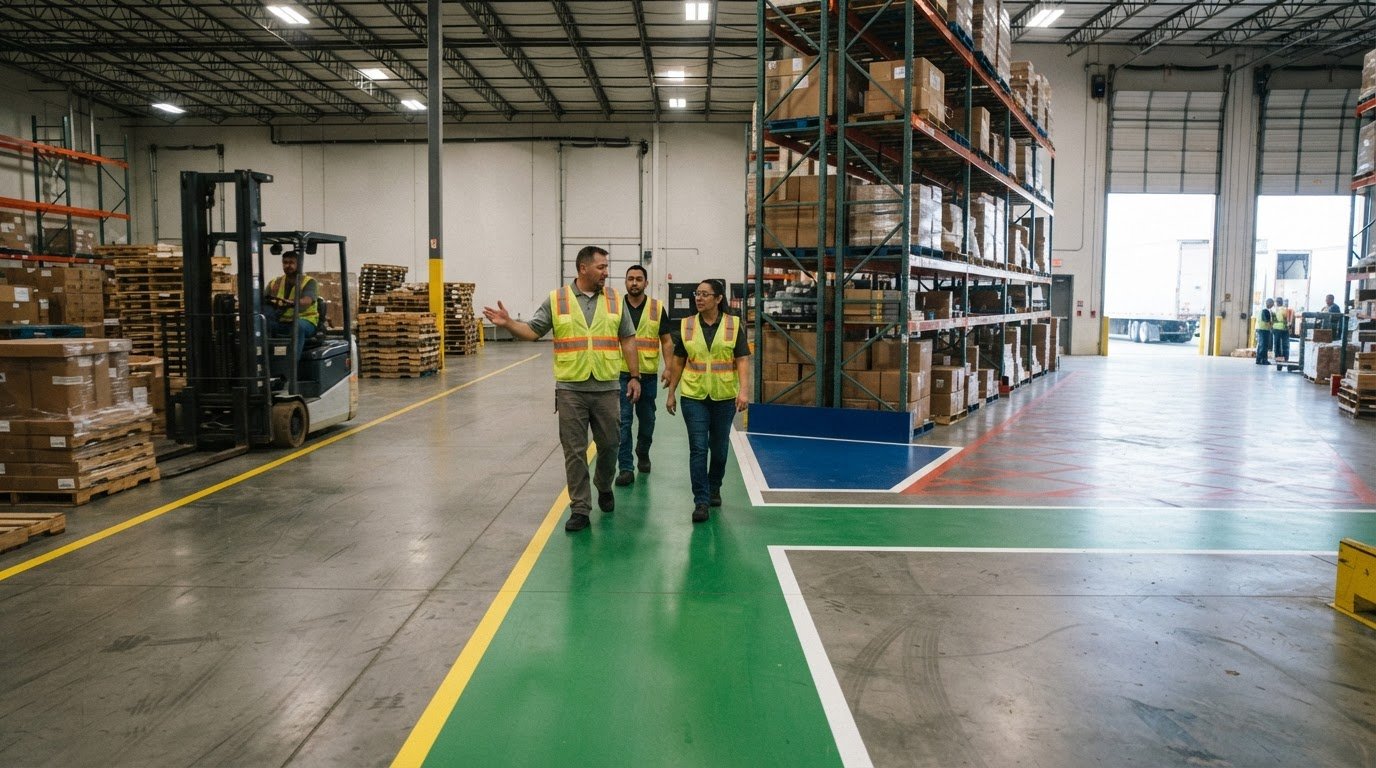
A logical floor plan is the blueprint for operational efficiency. Without a strategic manufacturing facility floor marking layout, the shop floor becomes a series of bottlenecks and safety risks. We map pedestrian walkways to ensure they never intersect with heavy machinery movement unnecessarily. This reduces the risk of collisions and keeps production moving. Forklift lanes must be designed with adequate passing widths and turning radii (the space required for a vehicle to execute a turn) to prevent damage to racking or inventory. When lanes are too narrow, drivers are forced into awkward maneuvers that lead to accidents and equipment wear.
Staging area stenciling is essential for managing the flow of raw materials and finished goods. By designating specific zones for incoming and outgoing pallets, you prevent the “creep” of inventory into transit lanes. We also mark mandatory “Keep Clear” zones around electrical panels and fire exits. These markings aren’t suggestions; they’re regulatory requirements that ensure emergency access is never obstructed. Clear stenciling provides an immediate visual cue that helps maintain order without constant management supervision.
Pedestrian Safety and Designated Walkways
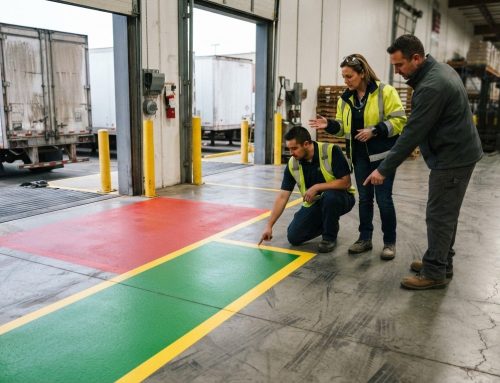
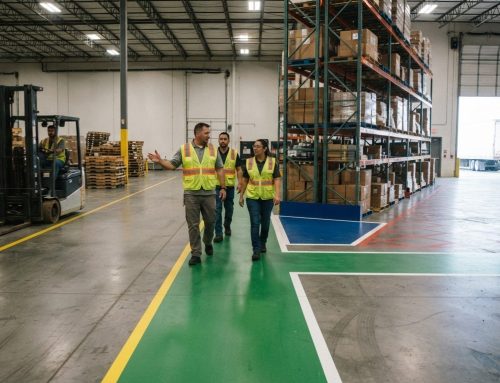
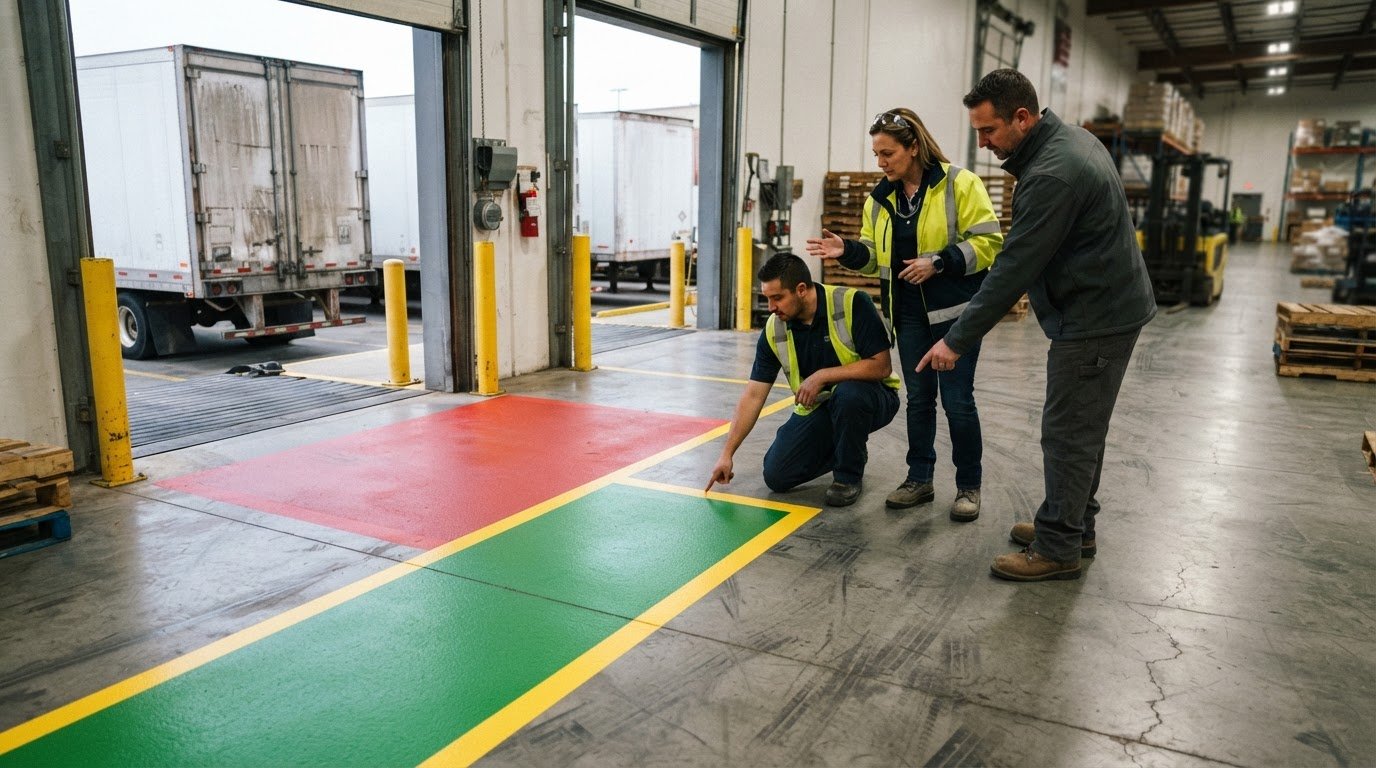
High-visibility pedestrian paths are a cornerstone of plant safety. We often recommend using solid color fills to create a distinct visual contrast between walking zones and machinery lanes. This leaves no doubt in a worker’s mind about where they should be standing. At blind intersections, we install “Stop” and “Caution” stencils to force a pause in movement. You can review our professional pedestrian walkway and safety aisle installation services for more details on these specialized layouts.
Work Cell and Equipment Bordering
Defining the footprint of stationary equipment is a practical necessity for maintenance access. By bordering work cells, you ensure that tools and materials stay within their assigned areas. We use hatching (diagonal lines) to signal “No Parking” zones, effectively keeping aisles open for through-traffic. Marking specific pallet positions also prevents aisle encroachment, ensuring that every square foot of your facility is utilized efficiently. If your current layout is causing operational friction, contact our layout design team to schedule a professional site evaluation.
The Professional Installation Process: Why Preparation Matters
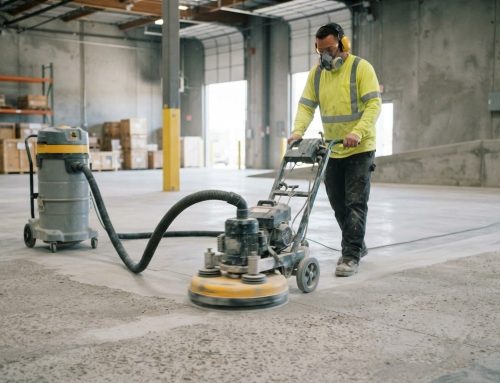
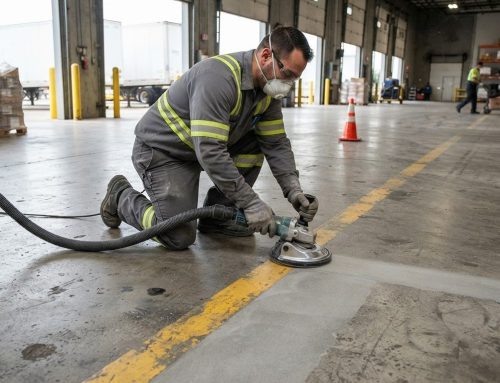
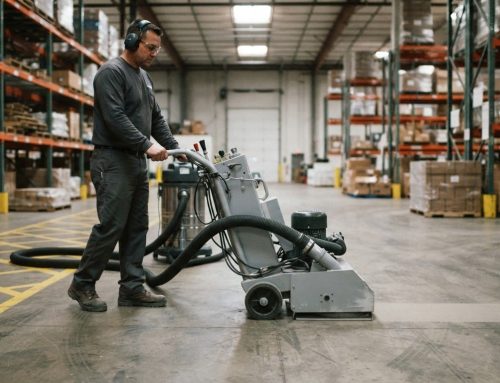
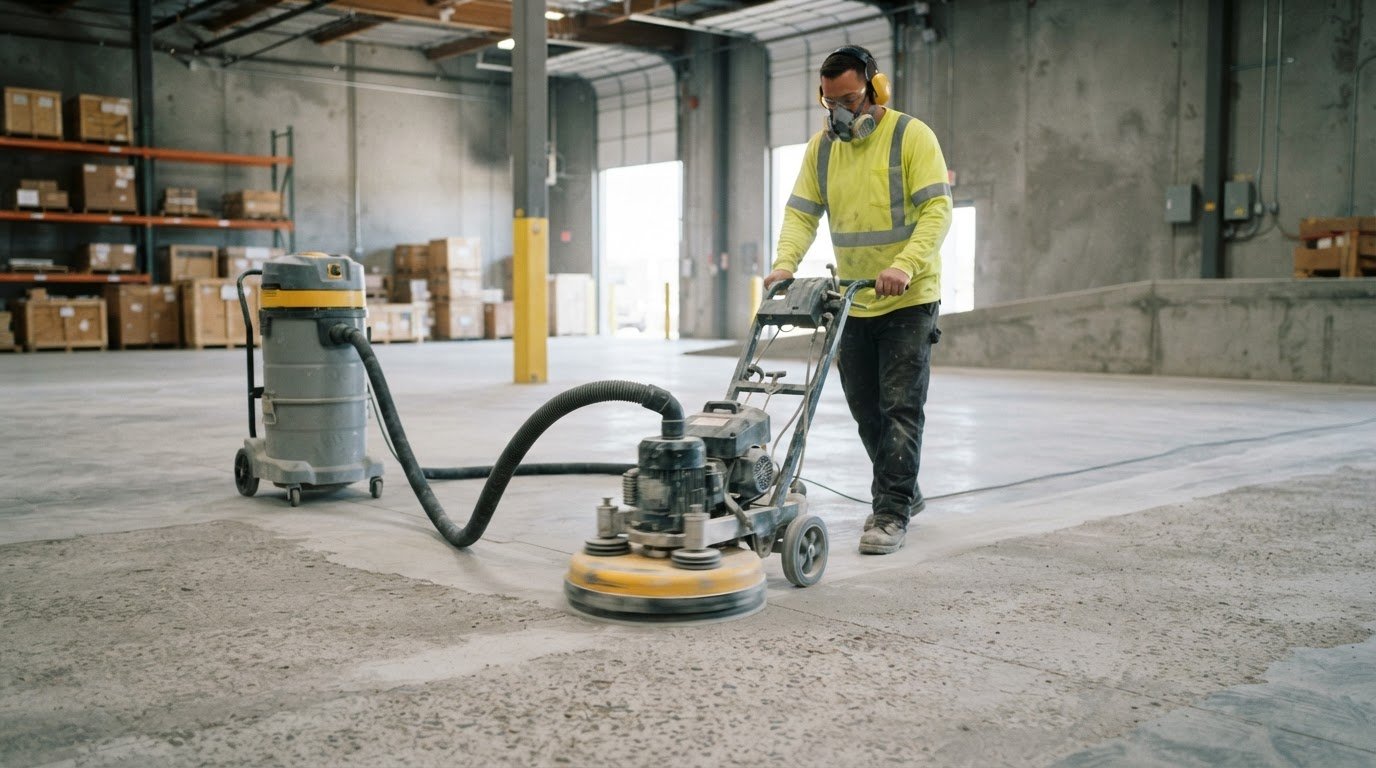
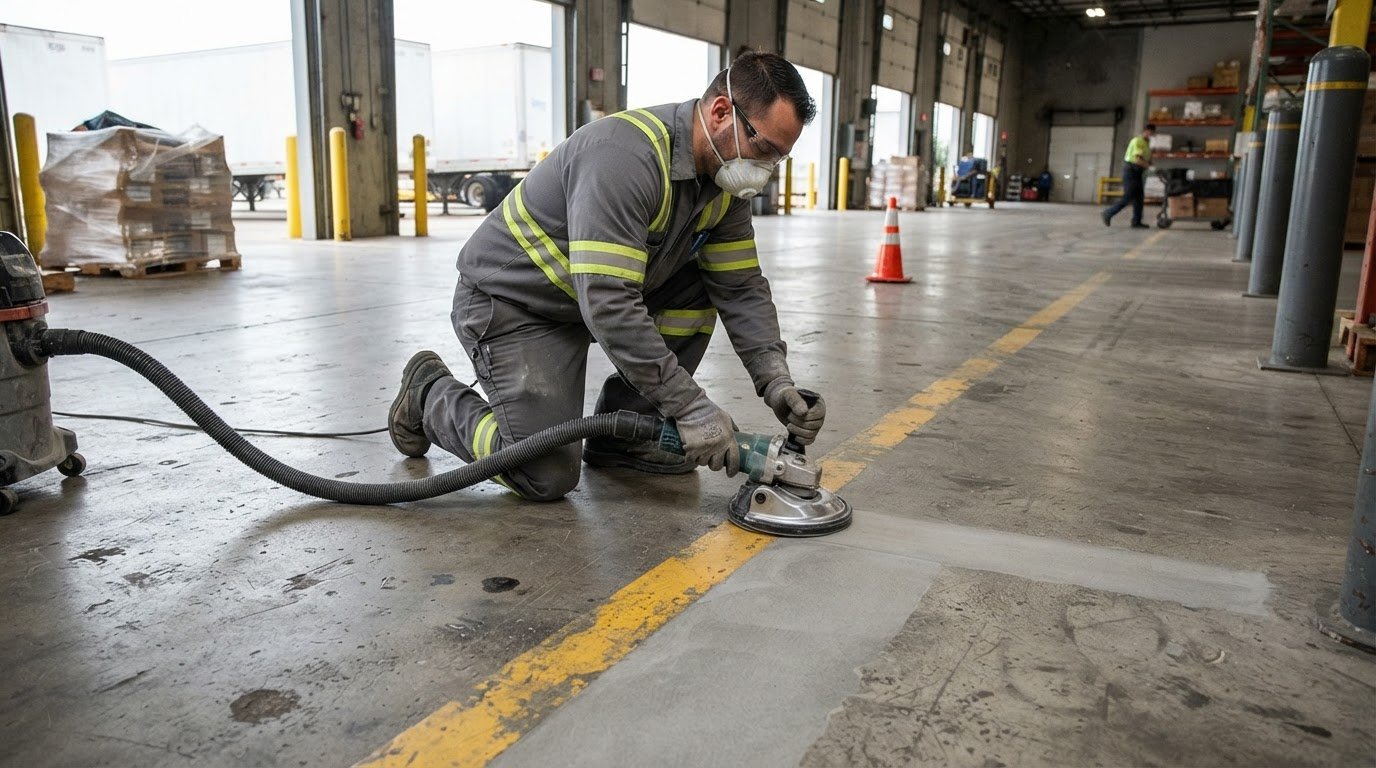
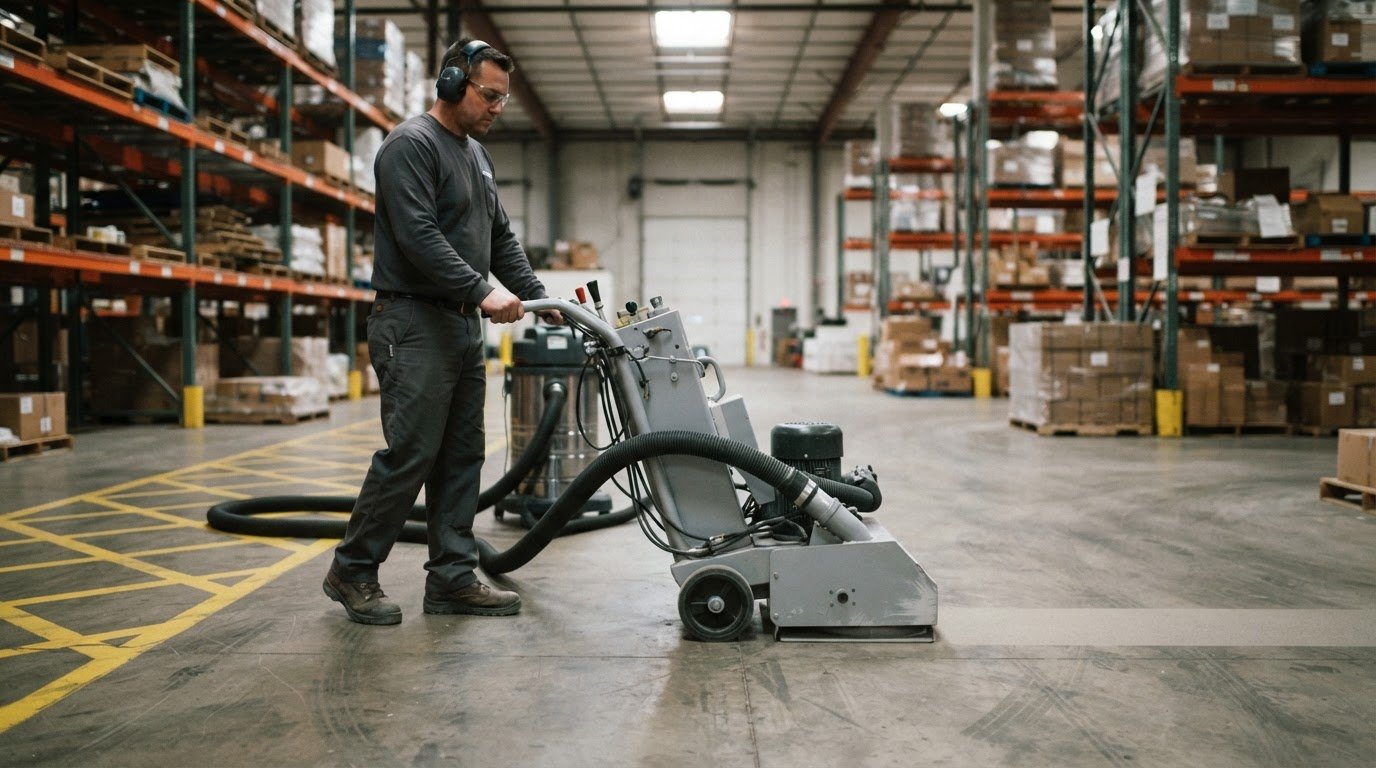
In the industrial sector, durability is determined long before the first drop of paint hits the floor. It’s a technical reality that 90% of floor marking failures are caused by poor surface preparation. If the concrete is oily, dusty, or has existing layers of failing paint, the new manufacturing facility floor marking won’t bond correctly. We’ve spent 29 years refining our industrial adhesion techniques to solve this specific problem. Our approach focuses on mechanical removal and surface profiling (the process of roughening the concrete to increase surface area) to ensure that your safety lines don’t peel under the weight of a 10,000-pound forklift.
Mechanical Surface Prep: Shot Blasting and Grinding
Choosing a National Industrial Contractor
Standardizing your safety protocols across multiple locations requires a partner with national reach and seasoned expertise. Choosing a single contractor for all your manufacturing facility floor marking needs ensures that your safety language remains consistent from one plant to the next. This level of standardization simplifies employee training and reinforces a unified safety culture across your entire organization. You can contact our expert warehouse line striping team to discuss your facility’s specific infrastructure needs and schedule a professional site evaluation.
Secure Your Operations with Professional Floor Markings
Optimizing your plant’s infrastructure requires more than just a fresh coat of paint. It demands a technical understanding of safety standards and the physical stressors unique to a high-output environment. By prioritizing mechanical surface prep and selecting high-durability epoxy, you ensure that your investment survives heavy machinery and intensive cleaning cycles. A strategic manufacturing facility floor marking system isn’t just a compliance requirement; it’s a tool for maximizing the movement of personnel and materials.
Our team brings 29+ years of industrial expertise to every project, specializing in high-durability epoxy and shot blasting (a mechanical process that creates a profile for superior adhesion). We provide nationwide service for large-scale manufacturing hubs, acting as a safety-conscious consultant for your organization. You can Get a Professional Quote for Your Facility Markings to begin standardizing your shop floor and eliminating operational friction. We’re ready to help you build a safer, more organized workspace that supports your production goals.
Frequently Asked Questions
What are the OSHA requirements for manufacturing floor marking colors?
OSHA does not mandate a specific color chart but recognizes ANSI Z535.1 as the industry best practice for safety color coding. Yellow is the standard choice for traffic lanes and physical hazards, while red identifies fire equipment and emergency stop areas. Implementing these standardized colors in your manufacturing facility floor marking plan ensures that all employees and visitors can navigate the plant safely and intuitively.
How long does epoxy floor striping take to cure in a factory?
Most industrial epoxy line painting requires 24 to 48 hours to reach full chemical cure before it can withstand heavy forklift traffic. While the lines may be dry to the touch in just a few hours, the cross-linking process (the chemical bond that provides durability) needs more time to harden completely. We often utilize phased installation schedules to minimize operational downtime while ensuring the markings reach their maximum strength.
Can floor markings be applied over oily or contaminated concrete?
Markings applied directly to oily or contaminated concrete will fail because the bond is blocked by the surface debris. We solve this through mechanical surface preparation, specifically shot blasting, which uses steel beads to strip away contaminants and old paint. This process creates a clean profile (a roughened surface) that allows the epoxy to grip the concrete substrate permanently, even in older industrial environments.
What is the best way to remove old warehouse floor markings?
Shot blasting line removal is the most effective method for clearing old markings without leaving ghost lines or damaging the floor. This mechanical technique physically removes the paint and a thin layer of the concrete surface, ensuring no residue remains to interfere with new markings. It is a cleaner, more efficient alternative to chemical strippers, which can introduce new contaminants into your facility.
How often should manufacturing facility floor markings be refreshed?
A semi-annual inspection schedule is the recommended standard for maintaining the visibility and effectiveness of your floor markings. High-traffic zones, especially areas where forklifts pivot or turn sharply, will naturally wear faster than pedestrian walkways or stationary equipment borders. Regular maintenance prevents the degradation of safety protocols and ensures your facility remains compliant with federal walking-working surface regulations at all times.
Are there specific floor marking rules for forklift battery charging areas?
Forklift battery charging areas must be clearly marked to ensure emergency access and separate the zone from general traffic flow. Because these areas are prone to acid spills, we use specialized acid-resistant coatings like Novolac epoxy to prevent concrete erosion. These markings serve a dual purpose by identifying the hazardous zone while providing a protective barrier that withstands the harsh chemicals found in industrial batteries.