With OSHA penalties for serious violations reaching $16,550 per occurrence as of January 2026, a single misplaced line in your facility is a liability you can’t afford. You likely understand that a safe workspace is about more than just checking a box; it’s about protecting your team and your bottom line. However, the confusion between general OSHA mandates and specific ANSI Z535.1 standards often leads to inconsistent markings that wear out prematurely under heavy forklift traffic. This confusion creates unnecessary risk during safety audits and daily operations.
This guide provides the definitive warehouse floor marking color code standard for 2026 to help you eliminate guesswork and ensure your facility remains compliant. We’ve compiled these insights from our 29 plus years of industrial experience at StripeGuys Warhouse Line Striping to help you master facility organization. You will learn the current safety color requirements (the specific meanings for yellow, red, and green), compare the longevity of professional epoxy over hardware-store tape, and see how a standardized visual framework can reduce forklift accidents by up to 22 percent. We’ll also explain how to bridge the gap between technical regulations and practical, high-traffic application.
Key Takeaways
- Understand the critical distinction between OSHA 1910.144 legal requirements and the broader ANSI Z535.1 safety standards used by industry professionals.
- Master the 2026 warehouse floor marking color code to ensure your traffic lanes, work cells, and equipment zones are clearly defined and compliant.
- Compare the long-term durability of professional epoxy line painting against industrial tapes to prevent premature wear in high-traffic forklift areas.
- Learn how to conduct a facility audit that identifies high-risk intersections and optimizes pedestrian flow to minimize workplace accidents.
- Establish a consistent visual framework that improves 5S organization and prepares your facility for rigorous safety inspections.
Understanding Warehouse Floor Marking Standards (OSHA and ANSI)
Compliance in a modern industrial setting is not a matter of aesthetic preference; it is a legal and operational necessity. OSHA 1910.144 establishes the baseline for marking physical hazards, specifically requiring red for fire-related equipment and yellow for caution (areas where employees might trip, fall, or be struck). While these requirements are strict, they are also limited. Relying solely on OSHA’s minimal mandates often leads to disorganized floor plans and confused traffic flow. To solve this, professional contractors utilize the ANSI Z535.1 standard to develop a comprehensive warehouse floor marking color code that addresses both safety and efficiency.
Since the 2023 safety audit updates, 74 percent of industrial sites have moved toward standardizing their floor markings to align with ANSI guidelines. This shift is driven by the need for clear communication in high-velocity environments. Standardized Color Coding Systems allow workers to process visual cues up to 60,000 times faster than written text. This speed of recognition is vital when a forklift is approaching a blind intersection or a pedestrian is entering a high-traffic zone.
OSHA vs. ANSI: Which Standard Should You Follow?
The short answer is both. OSHA provides the legal “must-haves” for hazard identification, but ANSI provides the “how-to” for a functional facility. OSHA mandates red for danger and yellow for caution. ANSI expands this palette to include green for safety equipment and blue for information. Professional epoxy line painting integrates these standards into a single, cohesive system. This approach ensures total compliance during an inspection while providing the granular detail needed for daily operations. For national facilities with multiple branches, this consistency is critical to maintaining uniform safety protocols and reducing training time for transferred personnel.
The Role of 5S Methodology in Facility Organization
The 5S methodology (Sort, Set in order, Shine, Standardize, and Sustain) is the foundation of lean manufacturing. Floor markings are the primary tool for the “Set in order” and “Standardize” phases. By defining specific zones for pallets, trash bins, and raw materials, you create a visual workplace where every item has a designated home. This organization reduces search time and improves inventory flow. When employees can see exactly where a work cell ends and a traffic lane begins, the risk of accidents drops significantly. Using high-durability materials ensures these boundaries remain visible even under the stress of heavy forklift traffic and chemical cleaning. This helps you sustain your organizational standards without constant maintenance (a common failure point in high-traffic hubs).
The Standardized Warehouse Floor Marking Color Code Breakdown
Implementing a consistent warehouse floor marking color code requires more than just picking high-visibility paint. It involves a systematic approach to facility communication. By using a standardized palette, you ensure that every employee, from new hires to seasoned forklift operators, understands the floor’s “language” instantly. This reduces the cognitive load during high-stress shifts and prevents the dangerous confusion that leads to workplace accidents. It’s about creating a predictable environment where safety is baked into the physical infrastructure.
Safety and Hazard Colors: Red, Yellow, and Orange
Yellow is the primary color for defining traffic lanes and aisleways. It serves as the visual backbone of your facility’s safety plan, separating heavy machinery from foot traffic. Integrating pedestrian walkways into your yellow-coded traffic plan creates clear boundaries that protect workers from moving equipment. Red is reserved for fire-related hazards and emergency equipment. Following OSHA’s 1910.144 Standard, red must mark fire extinguishers, fire buckets, and emergency stop buttons. Orange identifies dangerous machine parts or energized equipment that could crush or cut. In areas involving hazardous materials, orange also signals caution for chemical storage zones. If you manage battery charging stations, utilizing acid resistant coatings in these orange-coded zones provides a critical layer of floor protection against spills.
Operational and Storage Colors: White, Blue, and Green
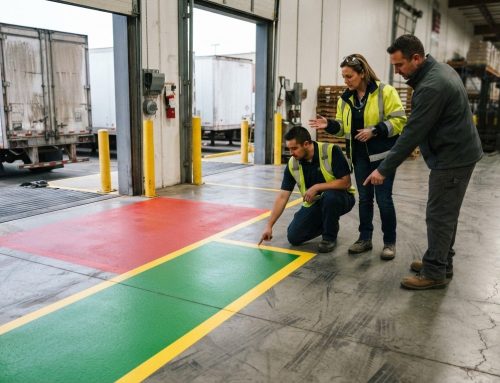
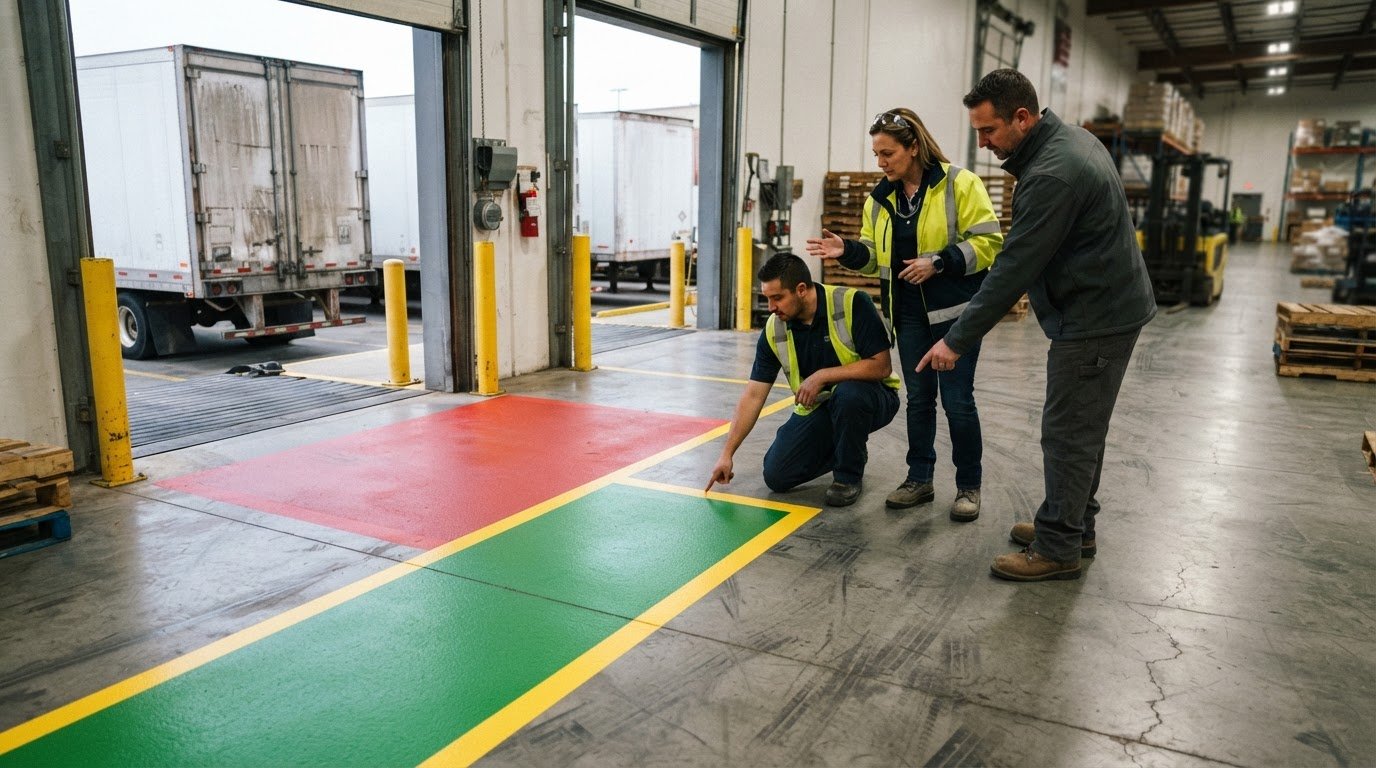
While safety colors prevent accidents, operational colors drive productivity. White is typically used for general storage and to mark the location of stationary equipment, such as workbenches or trash bins. Blue and green help manage inventory flow. Blue designates raw materials or items currently under repair, while green marks finished goods ready for shipment. Black or yellow-and-black striped patterns are reserved for physical hazards like tripping zones or low-clearance areas. Using these distinct colors prevents visual clutter and ensures that warehouse managers can spot inventory bottlenecks from across the room. This level of clarity is essential for maintaining the “Set in order” phase of your 5S program.
Every facility has unique traffic patterns and storage needs. If you aren’t sure how to best apply this warehouse floor marking color code to your specific layout, you can request a professional site assessment to ensure your striping plan meets both safety and operational goals.
Choosing Materials for Long-Lasting Floor Markings
Selecting the right material is just as important as choosing the correct warehouse floor marking color code. In a high-velocity environment, your floor lines face constant abuse from heavy forklift traffic, pallet dragging, and industrial cleaning chemicals. If the markings fade or peel, the safety system fails. You need a solution that maintains high visibility for years, not weeks. While many facilities start with basic vinyl tape, most high-traffic hubs eventually transition to more permanent solutions to reduce long-term maintenance costs and operational downtime.
Epoxy Line Painting vs. Industrial Floor Tape
The choice between tape and paint depends on your facility’s flexibility needs and traffic volume. Industrial floor tape is useful for temporary staging areas or facilities that undergo frequent layout changes. However, tape often fails in high-pivot areas where forklifts turn sharply, causing the edges to lift and create trip hazards. For permanent safety aisles and traffic lanes, epoxy warehouse striping is the industry standard. Professional epoxy bonds directly to the concrete, providing a service life of three to five years even under heavy use. This durability ensures that your facility stays aligned with the ANSI Z535.1 Safety Color Standard without the need for constant reapplications that disrupt your workflow.
Surface Preparation: The Key to Color Longevity
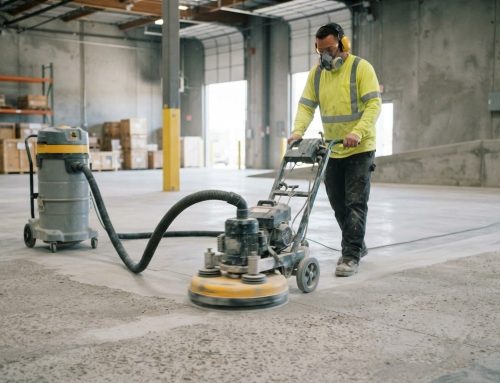
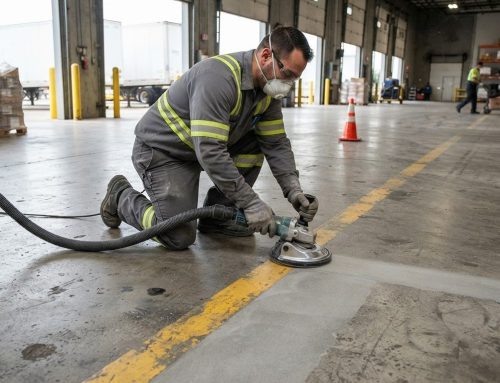
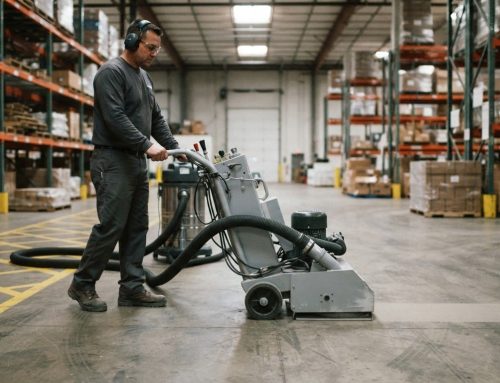
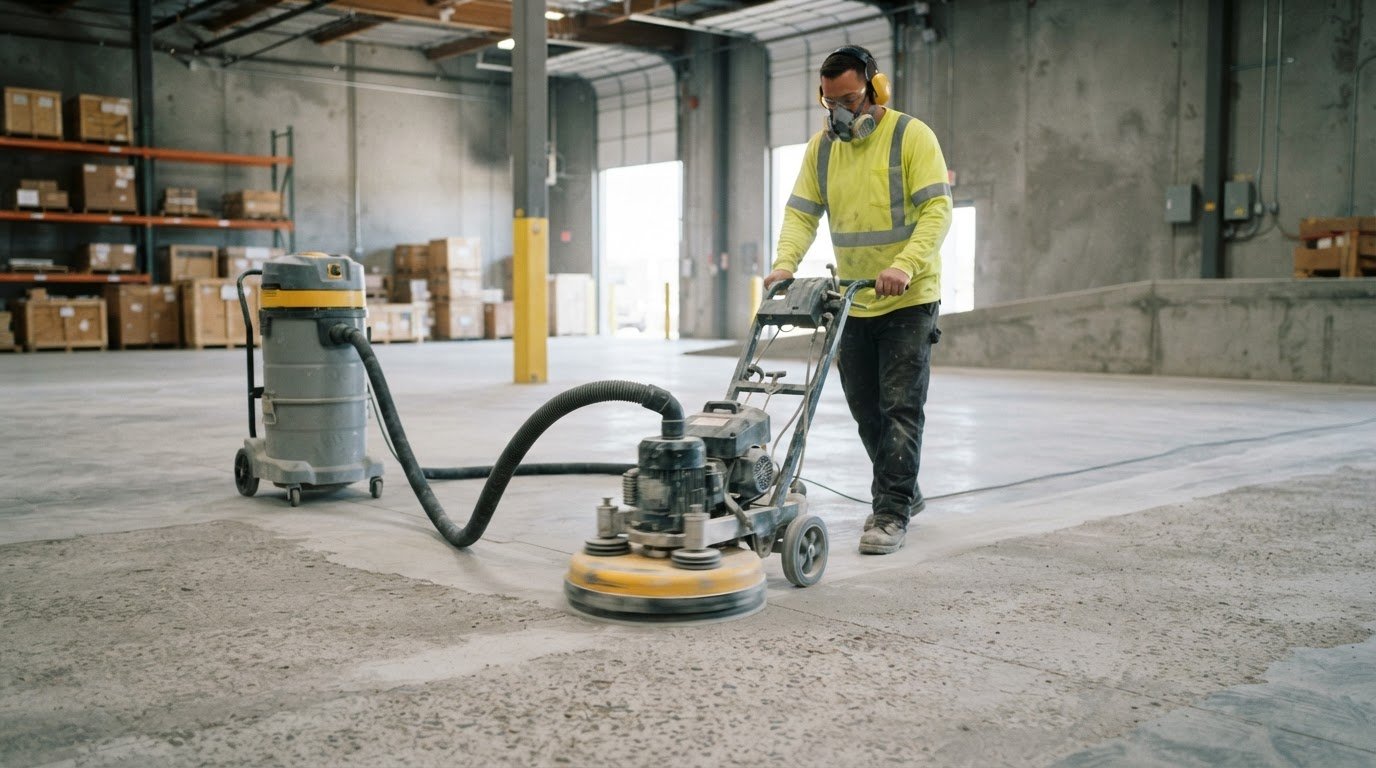
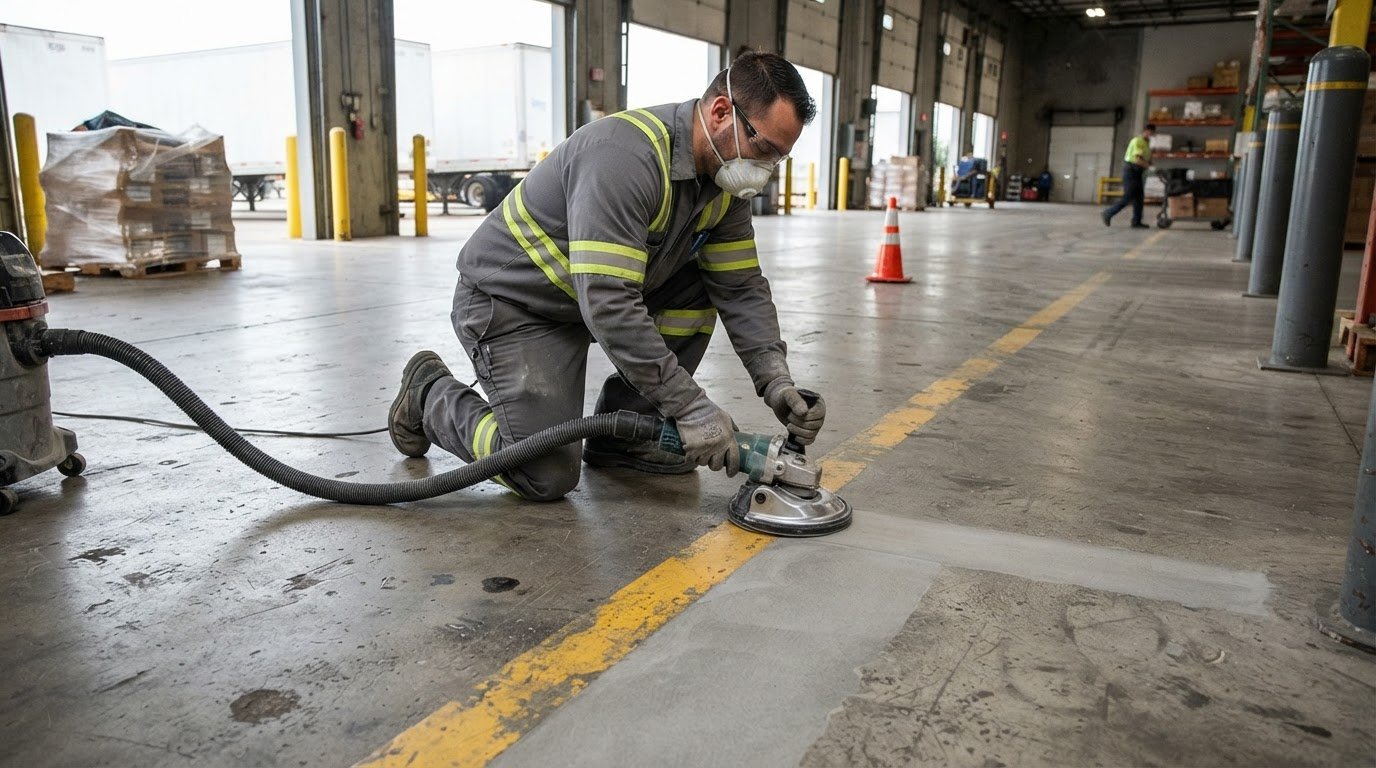
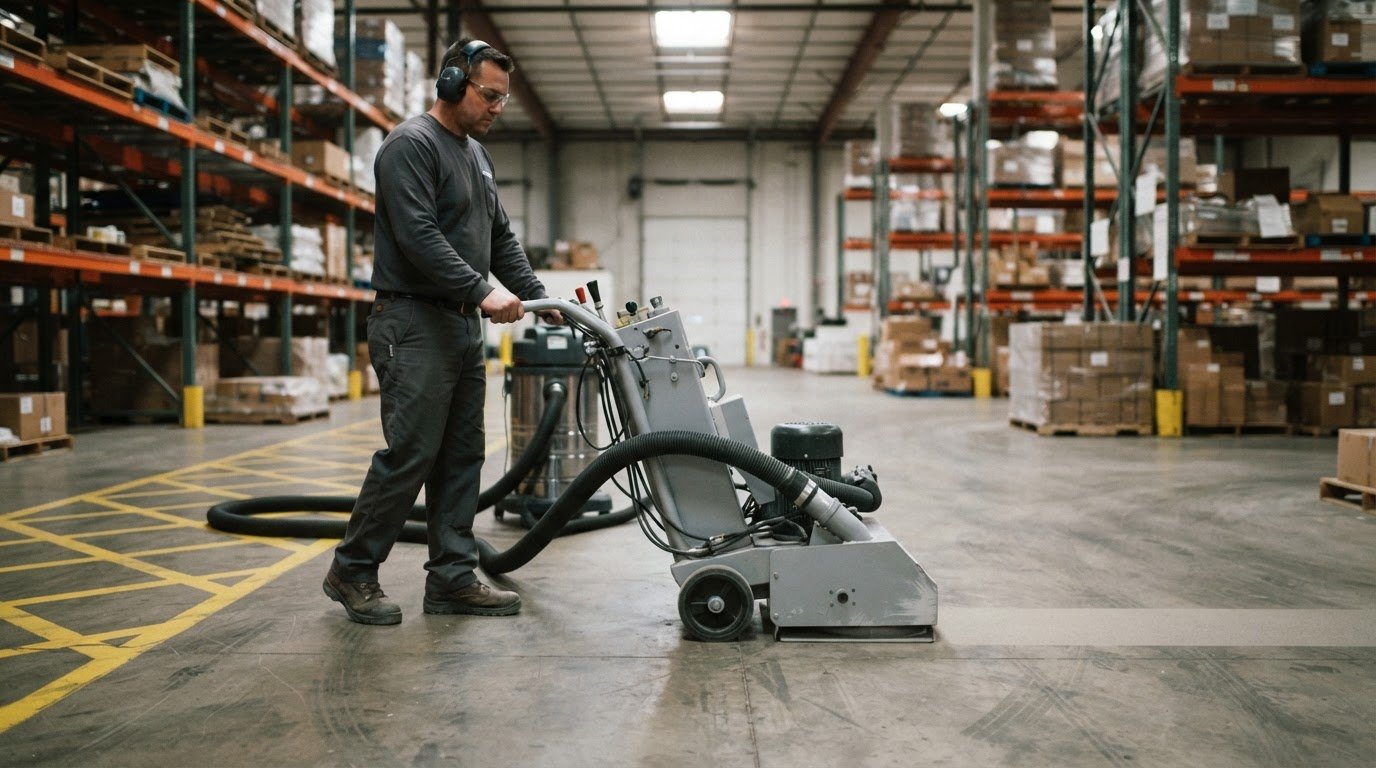
We believe that surface preparation is 90 percent of a successful striping project. Applying high-quality epoxy over a dirty or polished floor is a recipe for premature failure. To ensure a superior industrial bond, the concrete must be mechanically “profiled” (opening the pores of the slab) to accept the coating. We utilize shot blasting and diamond grinding to create a textured surface that the epoxy can grip. This process also involves professional line removal to eliminate “ghosting” (the faint outline of old, incorrect markings). Removing failing lines prevents new paint from peeling away with the old layer. Our team at StripeGuys Warhouse Line Striping brings 29 plus years of experience to this phase, ensuring that your warehouse floor marking color code remains crisp and visible through millions of forklift cycles. We also prioritize low-VOC materials and efficient curing schedules to minimize the impact on your 24/7 operations.
Don’t let peeling tape compromise your safety audit. You can contact our team today to discuss a high-durability epoxy solution tailored to your facility’s traffic patterns.
Implementing a Compliant Floor Marking System
Successful execution of a warehouse floor marking color code begins long before the first drop of paint hits the concrete. It starts with a comprehensive facility audit to identify high-risk traffic intersections and bottleneck areas. By analyzing the movement of both personnel and machinery, you can design a layout that proactively prevents collisions. This strategic planning ensures that your safety markings aren’t just decorative but serve as a functional guide for daily operations. With the OSHA Warehouse National Emphasis Program active through July 2026, having a documented and visible marking system is a critical step in avoiding costly inspections and penalties.
Planning Traffic Flow and Pedestrian Safety
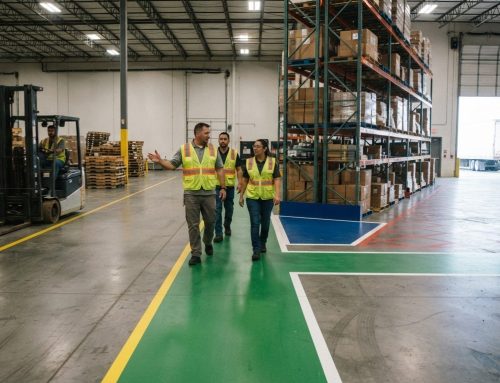
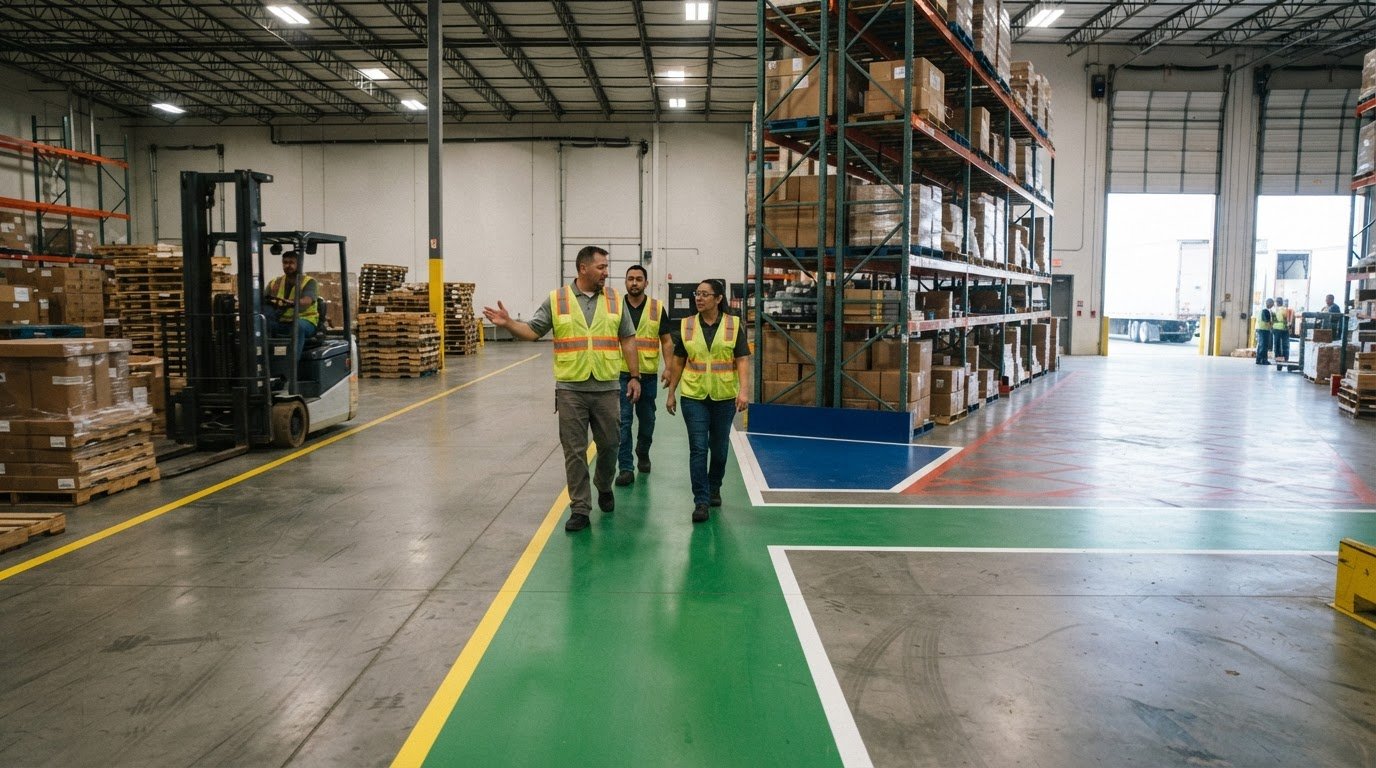
The primary goal of any floor marking project is the total separation of forklifts and foot traffic. Designing pedestrian walkways and safety aisles creates a predictable environment for your staff. At critical junctions where paths must cross, we recommend using hatching (diagonal lines) and clear cross-walk patterns to signal a high-caution zone. Integrating these markings with physical barriers, such as bollards or guardrails, provides a secondary layer of protection. This visual clarity ensures that warehouse managers can maintain high throughput without compromising the safety of their floor personnel.
Professional Striping for National Facilities
Managing a national logistics network requires a level of consistency that local contractors often struggle to provide. Large-scale projects demand warehouse line striping contractors who can ensure the exact same color standards and material quality across multiple geographic locations. This uniformity simplifies employee training and ensures that safety protocols remain identical whether a worker is in a branch in New York or California. At StripeGuys Warhouse Line Striping, we leverage our 29 plus years of industrial authority to deliver this level of precision on every project. We understand the physical realities of large-scale infrastructure and the need for durable, high-performance markings that stand up to 24/7 operational demands.
Maintaining visibility is the final, ongoing phase of a compliant system. Even the highest-quality epoxy will eventually show wear in high-pivot zones or areas where pallets are frequently dragged. We recommend scheduling a maintenance review every 24 to 36 months to identify areas that require attention. Keeping your lines crisp and bright isn’t just about aesthetics; it’s about ensuring your warehouse floor marking color code remains a reliable safety tool that protects your team and maintains your compliance status year after year.
Secure Your Facility’s Operational Future
Mastering the warehouse floor marking color code is a strategic move that pays dividends in both safety and productivity. You’ve seen how a standardized visual framework reduces pedestrian accidents and ensures your facility remains compliant with 2026 OSHA standards. By moving beyond temporary tapes and investing in professional mechanical surface preparation, you protect your facility from the premature wear that plagues high-traffic hubs. Durable markings are the foundation of a predictable, organized workspace that stands up to the rigors of modern logistics.
At StripeGuys, we bring 29 plus years of industrial experience to every project, providing nationwide service for large-scale facilities. Our specialized epoxy line painting and shot blasting techniques ensure your lines are permanent and professional. We understand the high stakes of industrial environments and prioritize functional outcomes that respect your operational needs. Don’t leave your facility’s safety to chance or low-quality materials that won’t last the quarter.
Get a Professional Quote for Your Warehouse Striping Project and let our team help you optimize your operational flow today. A well-organized warehouse is a safer, more efficient workplace for everyone.
Frequently Asked Questions
Does OSHA require a specific warehouse floor marking color code?
OSHA does not mandate a comprehensive color palette for every zone, but it does require specific colors for certain hazards. Under regulation 29 CFR 1910.144, red must be used for fire protection equipment and yellow must be used for caution. For a complete organizational system, most industrial facilities adopt the ANSI Z535.1 standard. This creates a consistent visual language that satisfies safety inspectors while improving daily operational flow.
What is the standard color for forklift traffic lanes?
Yellow is the industry standard for traffic lanes, aisleways, and work cells because it provides the highest visibility against gray concrete floors. This color choice helps separate heavy machinery from pedestrians, which is vital for safety in high-traffic hubs. Using a consistent yellow warehouse floor marking color code ensures that forklift operators and foot traffic can identify safe boundaries instantly, even in low-light conditions or busy shifts.
How wide should warehouse floor marking lines be for compliance?
OSHA guidelines generally recommend that floor marking lines be at least 2 inches wide to ensure visibility, though 4 inches is the standard for most professional applications. Lines wider than 6 inches are typically reserved for large-scale facilities with massive aisleways or special hazard zones. Maintaining a consistent width across the entire facility helps establish clear, professional boundaries that are easy for staff to follow and respect during daily operations.
Can I use any color for my 5S floor marking system?
You can customize your 5S colors for internal organization, but following the ANSI Z535.1 standard is highly recommended for long-term compliance. Using standardized colors like white for equipment and green for finished goods prevents confusion during safety audits or when training new staff. Consistency is the most critical factor. If you deviate from the industry standard, you must provide a clear, prominent color legend to ensure all employees understand the specific meanings of your markings.
How often should warehouse floor markings be repainted or replaced?
The replacement frequency depends on your material choice and traffic volume. Industrial tape often requires maintenance every few months in high-pivot areas where forklifts turn sharply. Professional epoxy line painting typically lasts between three and five years under heavy use. Regular inspections every 24 to 36 months help identify faded sections that need attention to maintain safety standards and ensure the visual workplace remains effective.
Are there specific colors required for battery charging stations?
Orange is the standard color used to identify chemical storage zones and hazardous materials, making it the appropriate choice for battery charging stations. These areas often require specialized floor treatments to prevent damage from acid spills. We recommend using orange borders combined with acid-resistant coatings to clearly define these high-risk zones. This approach protects your concrete infrastructure while alerting staff to the specific hazards present in the charging area.