The lowest bid on your pavement marking project is often the most expensive mistake a facility manager can make. In high-traffic industrial zones, a fading line is more than an aesthetic flaw; it’s a liability risk that threatens operational safety. Determining the actual cost of parking lot striping in Florida requires looking beyond the basic price per linear foot to account for material durability and strict state mandates. You need a clear budget for 2026 that balances upfront expenses with the physical realities of Florida’s harsh environment.
We recognize the frustration of navigating vague quotes that fail to account for mechanical surface preparation or complex ADA requirements. This guide provides a professional breakdown of industrial striping costs, focusing on the standards required for heavy-duty facilities. We’ll examine how material choices like high-build epoxy (a resin-based coating used for its extreme durability) affect your long-term ROI and clarify the latest Florida Statute 553.5041 requirements for accessible spaces. You’ll gain a reliable budget estimate for the coming year and the technical insight needed to maintain a compliant, safe facility that meets every state standard.
Key Takeaways
- Determine how facility size and mobilization requirements impact the total project budget for industrial pavement markings.
- Navigate the pricing differences between standard per-stall rates and industrial linear foot models to optimize the cost of parking lot striping in Florida.
- Review critical Florida-specific ADA standards, such as mandated 12-foot stall widths, to ensure your facility remains compliant and accessible.
- Evaluate the long-term ROI of epoxy line painting compared to traditional water-borne acrylics in high-stress environments like truck courts.
- Learn why mechanical surface preparation (the process of cleaning or grinding the substrate) is essential to ensure maximum material adhesion and durability.
Key Cost Drivers for Commercial Parking Lot Striping
Determining the total cost of parking lot striping in Florida involves more than a simple tally of parking spaces. For industrial facilities, the project price is a calculation of mobilization, material volume, and labor intensity. Mobilization represents the logistical cost of moving specialized equipment and crews to the site. Material costs vary based on the chemical composition of the paint, while labor is dictated by the complexity of the layout and the speed of application.
Economies of scale play a significant role in industrial budgeting. While a small retail lot might have a higher cost per stall, large-scale distribution centers benefit from high linear footage. This allows contractors to maximize machine run-time and reduce the unit price per foot. Surface condition also dictates the durability of the final product. New asphalt provides a porous, receptive substrate (the underlying surface being painted), whereas degraded concrete often requires intensive cleaning—a service often performed by specialists like Warrens Power Washing—to prevent premature peeling. Layout complexity also shifts the budget. Custom stenciling, such as numbered truck bays or specific safety warnings, requires manual labor that exceeds the speed of automated line machines.
Mobilization and Minimum Project Fees
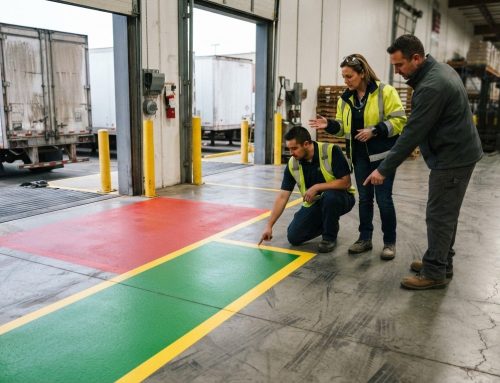
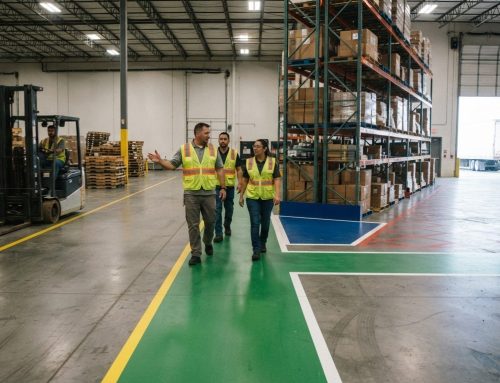
Contractors charge a base mobilization fee to cover the transportation of striping rigs and crew to your Florida location. This fee ensures that even smaller maintenance tasks are economically viable for the service provider. Scheduling impacts this rate significantly. Performing work at night minimizes operational disruptions for 24-hour facilities, though it may require a shift premium for the crew. Facility managers often find cost efficiencies by combining outdoor Parking lot line striping with internal warehouse line striping projects. This single-mobilization approach reduces the total overhead and simplifies project management.
Surface Preparation and Removal Requirements
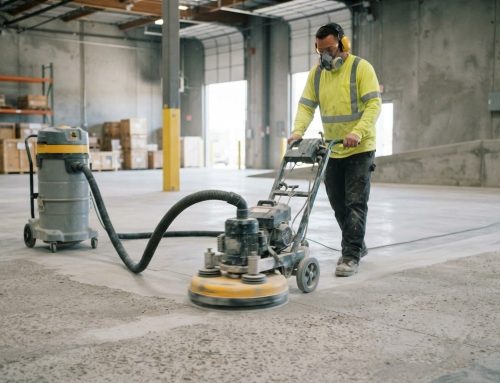
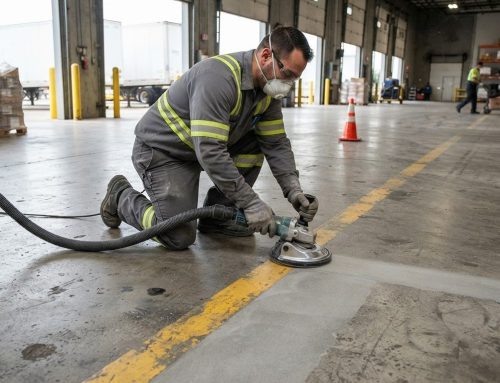
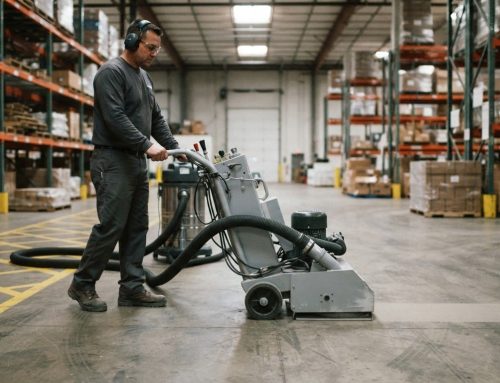
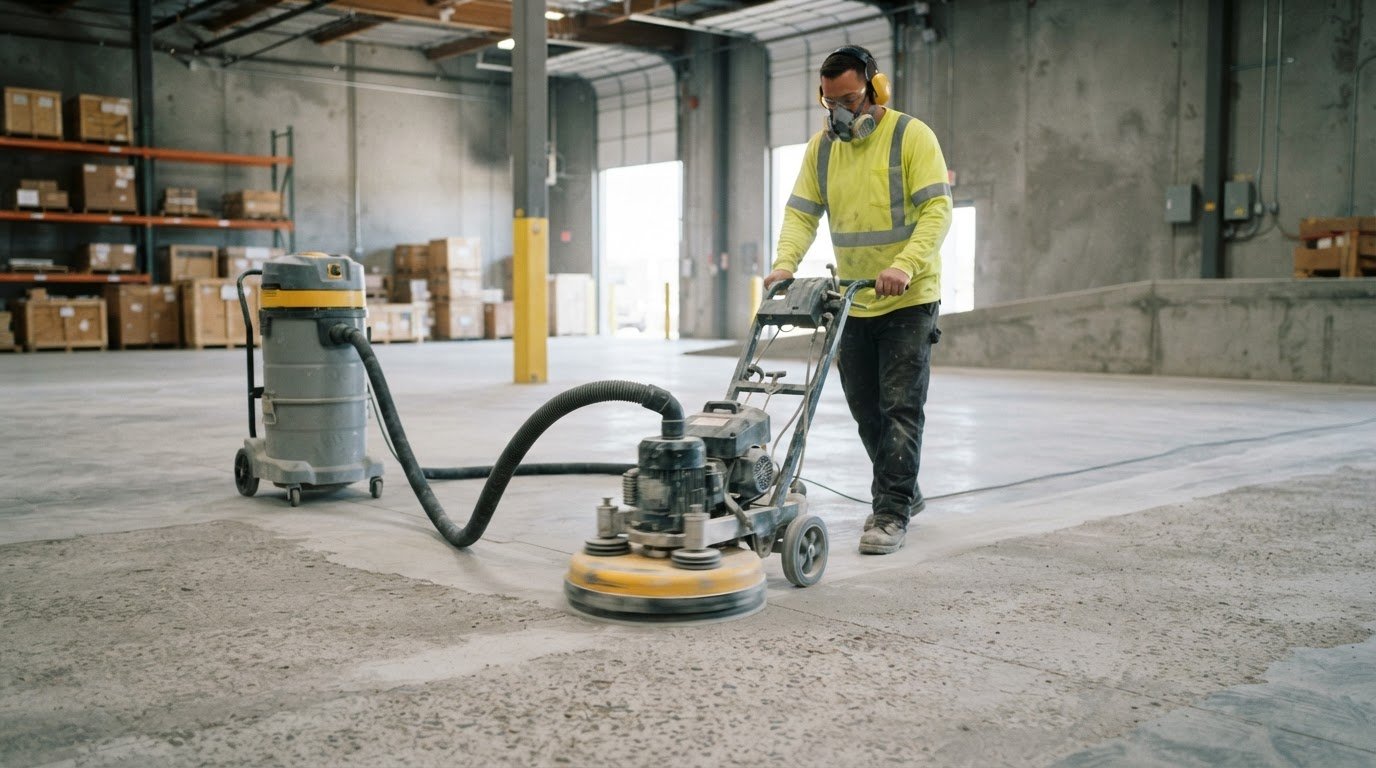
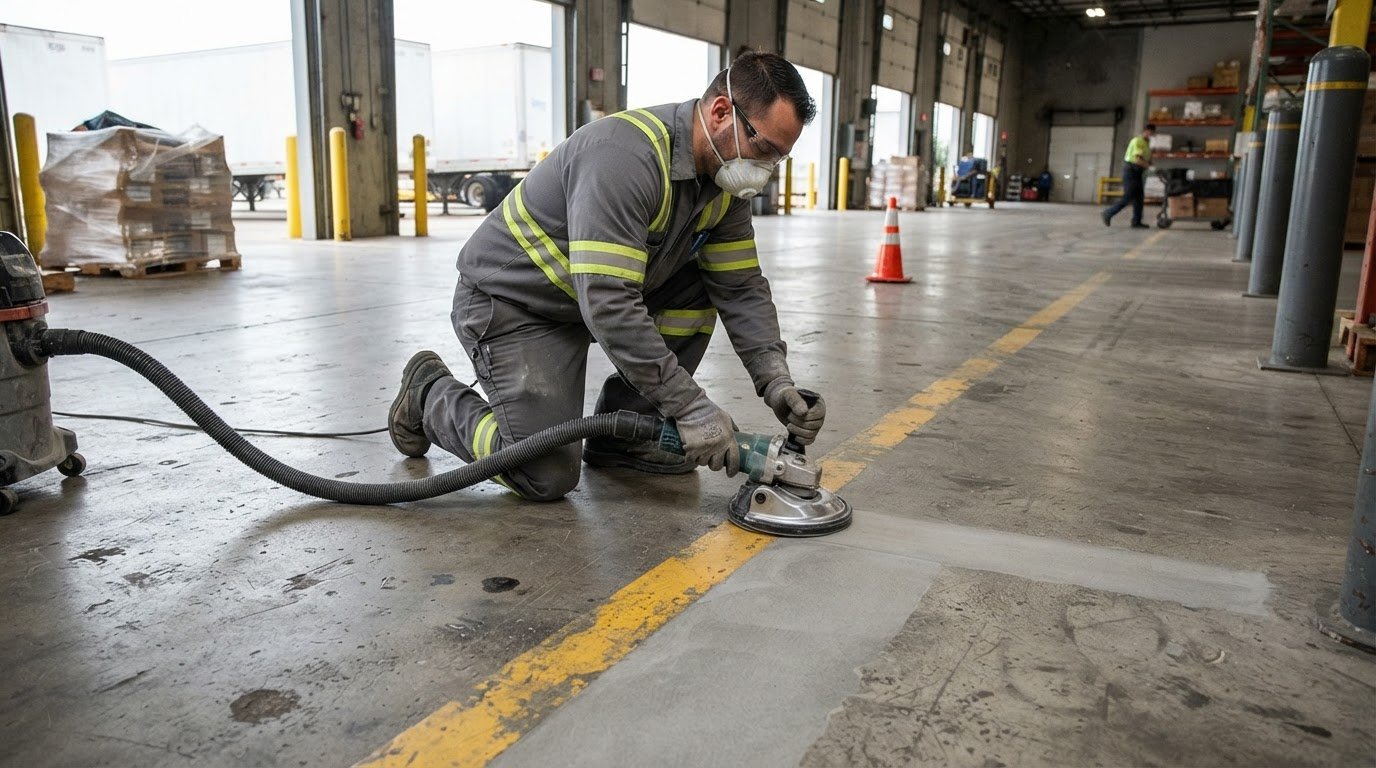
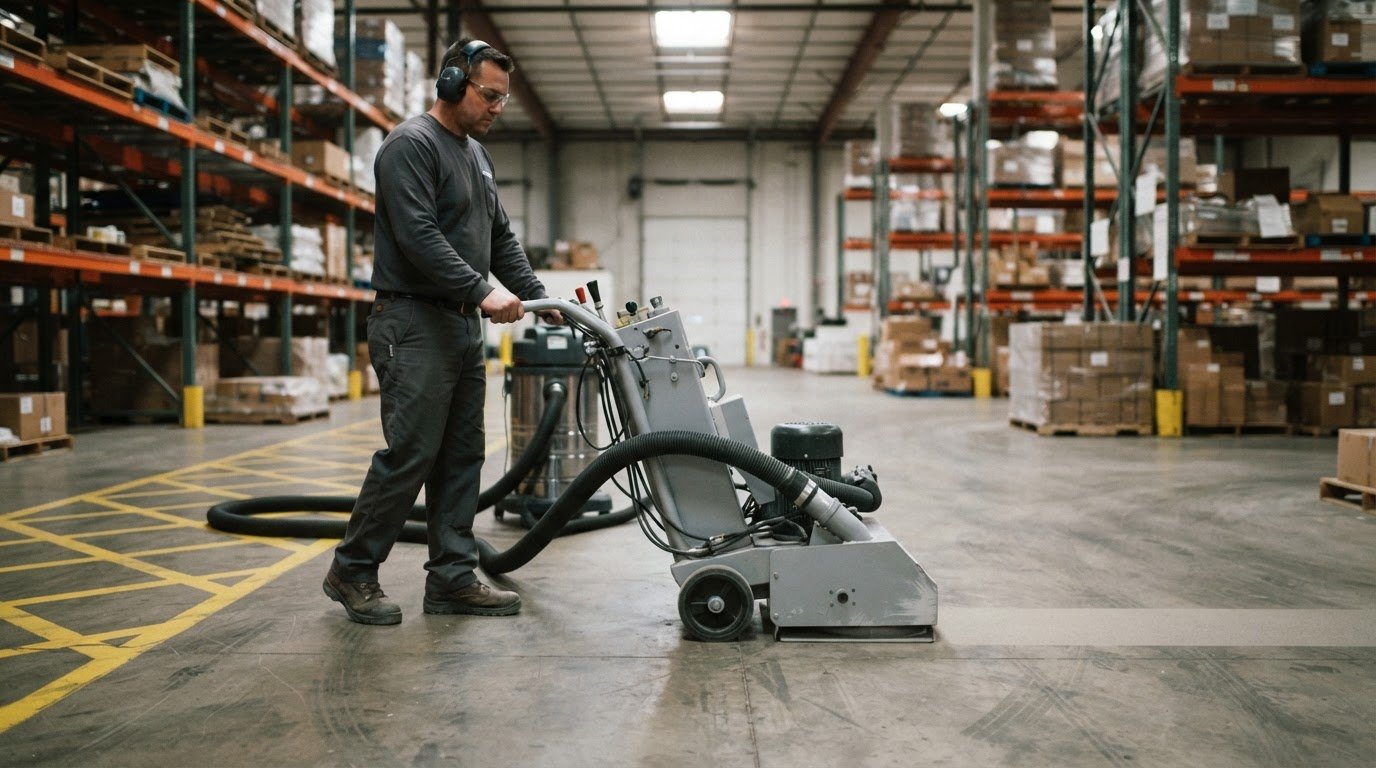
The most overlooked factor in project longevity is surface preparation. Mechanical removal (the physical grinding or blasting of old markings) is essential for industrial environments where oil and heavy tire scrub are common. We utilize shot blasting or grinding to create a clean profile for the new material to bond with. Using high-quality Road surface marking materials is useless if they’re applied over old, peeling paint. Removing failed coatings increases initial labor hours but prevents the total failure of the new application, ultimately protecting your investment and reducing the long-term cost of parking lot striping in Florida.
Florida Market Pricing Models: Stall Rates and Linear Footage
Contractors typically utilize two primary pricing models to calculate the cost of parking lot striping in Florida: per-stall rates and linear footage. Per-stall pricing is the standard for retail and commercial lots where parking spaces are uniform and easily counted. This model provides a predictable baseline for property managers overseeing standard office parks or shopping centers. However, industrial environments like truck courts and logistics hubs require linear foot pricing. Because industrial facilities often feature oversized bays, long traffic leads, and complex safety hatching, linear foot measurements ensure you only pay for the exact volume of material applied to the pavement.
StripeGuys Warhouse Line Striping brings national industrial standards to every Florida project, ensuring that regional quotes reflect the same durability benchmarks used across the country. Whether your facility requires a simple refresh or a complete redesign, understanding how these models apply to your specific footprint is the first step toward a realistic 2026 budget. If you’re unsure which pricing model fits your facility, you can request a professional site assessment to clarify your needs and avoid overpaying for unnecessary coverage.
Estimating Re-Striping vs. New Layout Costs
Choosing between re-striping and a new layout significantly impacts your budget. Re-striping existing lines is generally 20-30% more cost-effective because the “blueprint” is already visible on the asphalt, reducing the labor required for layout marking. A new layout requires additional engineering hours for measuring, chalking, and designing an efficient traffic flow from scratch. This phase is critical for maintaining compliance with the ADA Standards for Accessible Design, which dictates the precise placement of stalls and access aisles. Specialized stenciling, such as “No Parking” zones or fire lane designations, is often billed as a flat rate per stencil and should be itemized in any professional quote.
Regional Material Variables in Florida
Florida’s environment presents unique challenges for pavement markings. High UV exposure and constant humidity can cause standard water-borne acrylics to chalk (a process where paint breaks down into a powdery residue) or fade within months. For high-traffic areas, parking lot line striping specialists often recommend thermoplastic or solvent-based paints. Thermoplastic is a thick, heat-applied material that offers superior longevity but carries a higher initial cost. While the upfront investment is greater, these durable materials reduce the frequency of maintenance cycles, ultimately lowering the long-term cost of parking lot striping in Florida for facilities that experience heavy semi-truck traffic and extreme heat.

Regulatory Compliance: ADA Standards and Safety Marking Costs
Compliance isn’t an optional upgrade; it’s a legal safeguard that protects your organization from liability and expensive litigation. In the industrial sector, meeting ADA (Americans with Disabilities Act) requirements is a primary component of the cost of parking lot striping in Florida. These regulations dictate the exact dimensions of parking stalls, the placement of access aisles, and the visibility of signage. Failing to adhere to these standards can result in significant fines and increased insurance premiums, making precision a requirement rather than a preference.
Florida-specific mandates are often more stringent than federal guidelines. Florida Statute 553.5041 requires handicap parking spaces to be at least 12 feet wide with an adjacent 5-foot access aisle. If a contractor miscalculates these measurements by even a few inches, your facility could fail a municipal inspection. This leads to costly re-work and potential downtime. We prioritize technical accuracy to ensure that every line applied to your pavement serves as a functional and legal asset for your facility.
ADA Accessible Stall Requirements
The cost for accessible parking stalls is higher than standard spaces because they require multi-color paint applications and large-scale stenciling. ‘Van Accessible’ stalls are particularly critical; at least one in every six accessible spaces must meet this standard to accommodate larger vehicles. When we incorporate these into a broader parking garage striping plan, we also account for vertical clearance and signage height. Florida’s intense UV index causes “Traffic Blue” paint to fade quickly. If the contrast ratio between the paint and the pavement drops below 70%, it constitutes a violation. Selecting high-durability materials ensures these safety-critical markings remain visible and compliant for longer durations.
Fire Lanes and Directional Traffic Flow
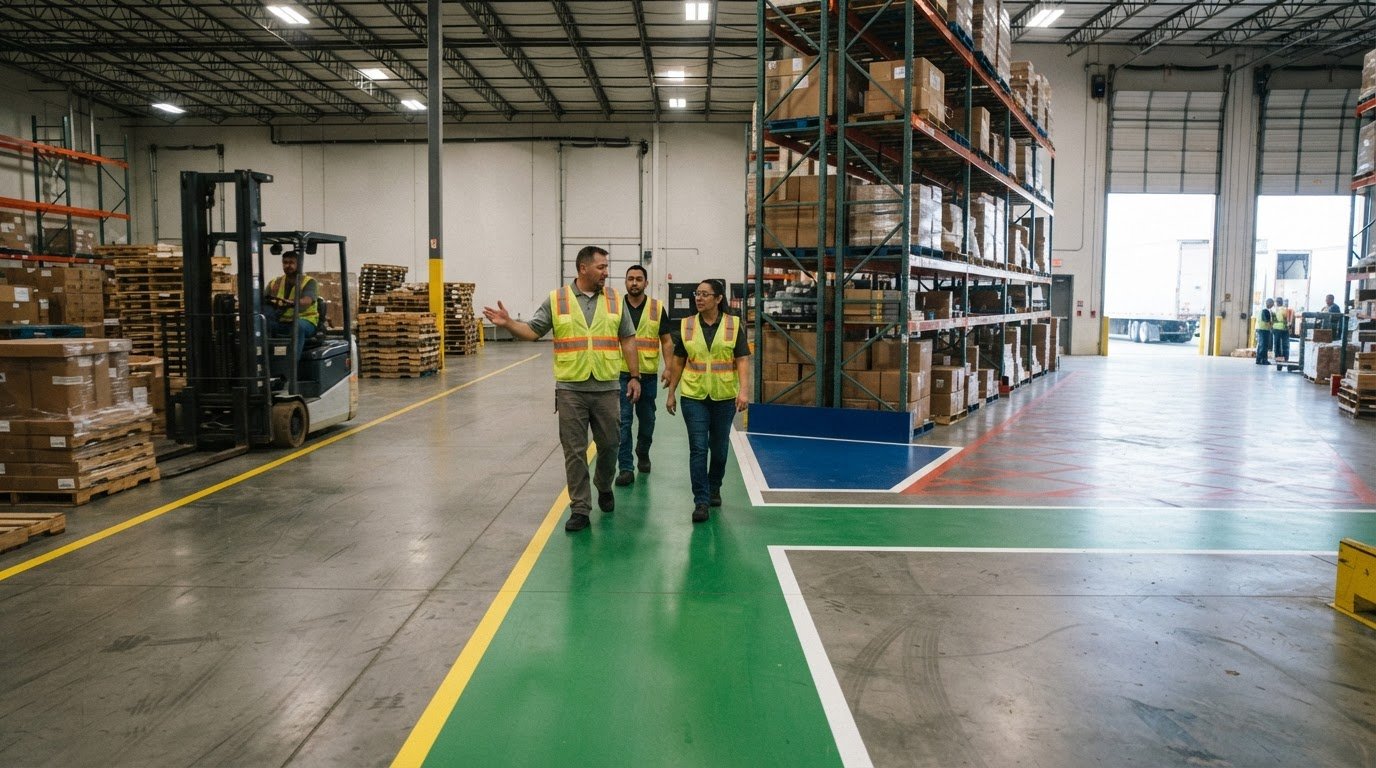
Emergency access is a top priority for industrial hubs and distribution centers. Fire lane regulations often mandate continuous red curbing and bold “No Parking” stenciling to keep corridors clear for responders. These safety markings are essential for managing the physical realities of high-traffic environments where semi-trucks and pedestrian traffic intersect. Directional arrows and speed bump markings further organize traffic flow, reducing the risk of onsite accidents. Clear pedestrian walkways act as a visible boundary, ensuring that staff can navigate busy lots without entering hazardous vehicle paths. To ensure your facility meets all current 2026 safety and legal benchmarks, contact our compliance specialists for a detailed site audit.
Long-Term Value: Industrial Paint vs. Standard Traffic Grade
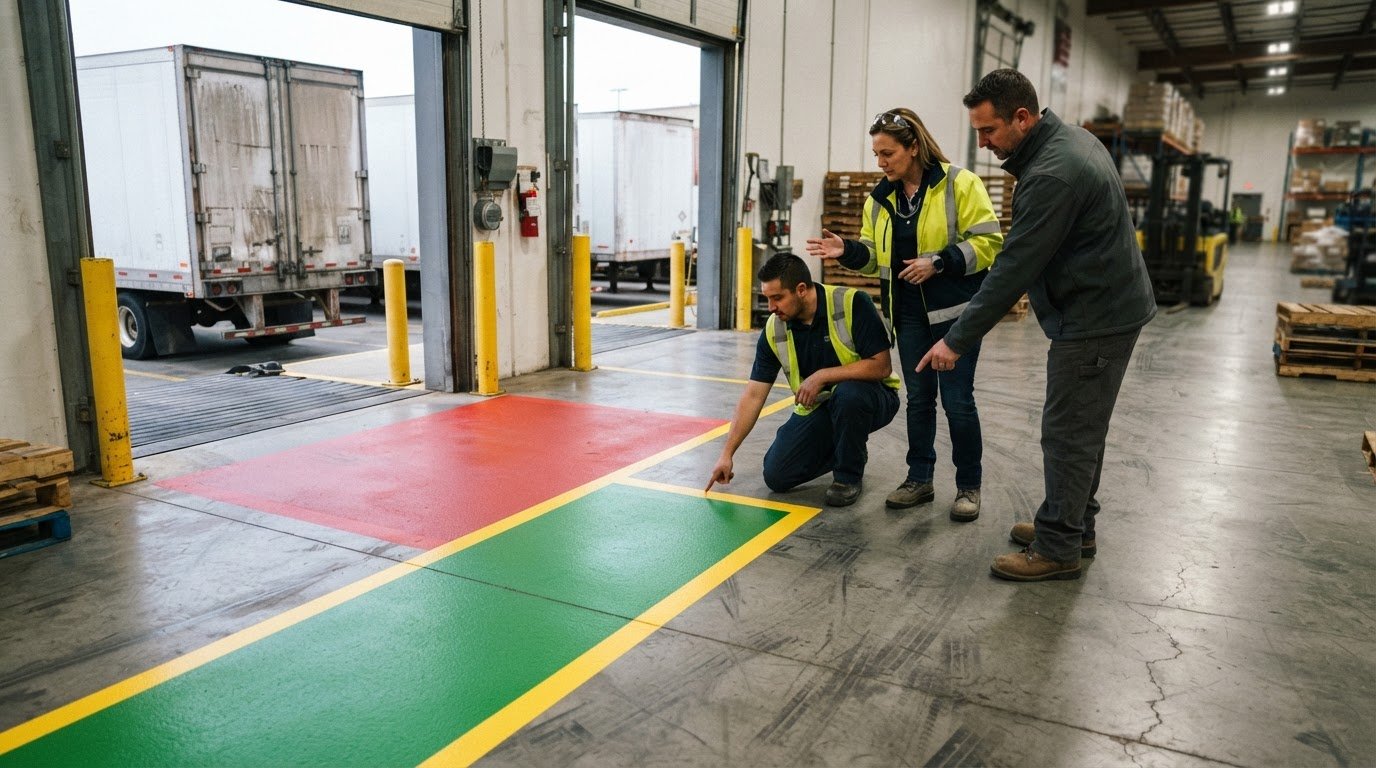
Industrial facilities benefit from epoxy warehouse striping even in outdoor loading zones. While traditionally used for indoor floor markings, high-build epoxy provides superior resistance to the heavy tire scrub and chemical leaks common in truck courts. Calculating your total cost of ownership involves looking beyond the first invoice. A five-year projection usually reveals that high-performance coatings are more economical than repeated cycles of cheap paint that peel and fade within a single season. Faster-curing materials also reduce the cost of downtime, allowing your facility to return to full operational capacity hours sooner than standard paints allow.
The Case for High-Performance Coatings
Thermoplastic is the industry standard for maximum durability under the intense Florida sun. It’s a thick, heat-applied material that bonds permanently to the asphalt substrate. Material thickness, measured in mils (one-thousandth of an inch), directly correlates with line longevity. Standard paint is often applied at 15 mils, whereas high-performance applications can reach much higher profiles. For fueling areas or truck courts, chemical-resistant coatings are a requirement to prevent pavement markings from dissolving when exposed to diesel or hydraulic fluids.
Selecting the Right Contractor for Industrial ROI
Selecting a partner with 29+ years of industry experience ensures your project follows national industrial standards rather than local shortcuts. StripeGuys Warhouse Line Striping possesses the specialized equipment, such as shot blasters for mechanical line removal, that smaller residential outfits lack. This equipment is essential for ensuring new materials bond correctly to the surface. When reviewing a striping quote in 2026, use this final checklist to ensure you’re receiving a professional industrial grade service:
- Does the quote specify material thickness in mils?
- Is mechanical surface preparation (shot blasting or grinding) included in the labor?
- Are all ADA markings guaranteed to meet Florida Statute 553.5041?
- Does the contractor provide a clear timeline to minimize facility downtime?
Prioritizing these technical factors ensures that the cost of parking lot striping in Florida remains a strategic investment in facility safety and efficiency rather than a recurring maintenance headache.
Secure Your Facility’s Operational Standards for 2026
Managing a large-scale facility requires balancing immediate maintenance budgets with long-term structural integrity. The true cost of parking lot striping in Florida is defined by the quality of your surface preparation and the durability of your chosen materials. Prioritizing mechanical removal and high-performance coatings, as discussed throughout this guide, ensures your investment survives the climate while keeping your facility compliant with current ADA and OSHA standards. This strategic approach prevents the recurring expense of frequent re-striping cycles and protects your facility from liability risks.
StripeGuys Warhouse Line Striping brings 29+ years of industrial striping expertise to every project. We provide national service for distribution centers and airports, utilizing specialized equipment that smaller contractors don’t possess. As OSHA and ADA compliance specialists, we ensure your pavement markings serve as functional assets rather than liabilities. Our team prioritizes your operational timeline to minimize downtime and maximize safety across your entire footprint.
Get a Professional Quote for Your Florida Striping Project to secure a safer, more efficient facility today. We’re ready to help you maintain a professional and compliant environment that meets the highest industrial standards.
Frequently Asked Questions
What is the average cost per parking stall for striping in Florida?
Pricing for individual stalls is generally influenced by the total volume of the project. While standard commercial lots often use a per-stall model, industrial facilities with large truck courts usually transition to linear footage calculations to ensure accuracy. The cost of parking lot striping in Florida for retail spaces reflects the number of standard stalls and the amount of stenciling required. Larger projects benefit from economies of scale, which reduces the unit price as the total number of spaces increases.
How often does a parking lot in Florida need to be re-striped?
Most Florida parking lots require a refresh every 12 to 24 months depending on traffic volume and material choice. High UV exposure and heavy humidity accelerate the degradation of standard water-borne paints. For high-traffic industrial zones, we recommend more durable materials like thermoplastic or epoxy. These professional-grade coatings extend the maintenance cycle to 2 to 5 years. This ensures your facility remains safe and compliant for a longer duration between service intervals.
Does the type of pavement (concrete vs. asphalt) affect the striping cost?
Pavement type significantly impacts the labor required for a project. Asphalt is porous and accepts paint readily, whereas concrete is non-porous and often has a smooth finish that resists adhesion. Concrete surfaces require mechanical preparation, such as shot blasting or grinding, to create a profile (a textured surface) for the paint to bond with. This additional preparation work increases the initial labor hours but is essential for preventing premature peeling and ensuring line longevity.
What are the specific ADA requirements for parking lots in Florida?
Florida Statute 553.5041 mandates specific dimensions that exceed federal minimums. Accessible stalls must be at least 12 feet wide with a 5-foot access aisle. Additionally, one in every six accessible spaces must be van-accessible. The visibility of these markings is critical; if the contrast ratio falls below 70 percent, it’s considered a violation. We utilize high-visibility blue and white stenciling to ensure your facility meets all current state and federal compliance benchmarks.
Is it cheaper to use paint or thermoplastic for parking lot lines?
Standard traffic paint has a lower upfront cost but a shorter lifespan compared to thermoplastic. Thermoplastic is a heat-applied material that offers superior durability in heavy-traffic environments. While the initial investment for thermoplastic is higher, it lasts significantly longer, often three to five times the lifespan of traditional paint. For industrial facilities, this reduces the total cost of parking lot striping in Florida by decreasing the frequency of mobilization and re-application fees over time.
Can parking lot striping be done at night to avoid business disruption?
Yes, we frequently perform striping services at night to minimize operational disruptions for 24-hour industrial facilities. Scheduling work during low-traffic hours ensures that your truck courts and loading docks remain accessible during peak business periods. This flexibility allows for a safer work environment for the crew and prevents logistical bottlenecks. Night scheduling is a standard practice for airports, distribution centers, and other high-volume facilities that cannot afford daytime closures.