The failure of your new warehouse floor markings isn’t usually a paint problem; it’s a mechanical preparation problem. If you’ve watched expensive epoxy lines peel away within months, you know the frustration of a bond that didn’t take. Deciding between shot blasting vs grinding for line removal is the most critical technical choice a facility manager makes to ensure long-term adhesion. We understand that you need a clean surface without the “ghosting” (permanent scarring) that often ruins concrete aesthetics or the excessive dust that can contaminate your inventory.
We agree that minimizing operational downtime is just as important as the final result. In this guide, you’ll learn how to select the right removal method to achieve specific Concrete Surface Profile (CSP) standards, such as the CSP 3 to 5 range required for medium film linings. We’ll examine the technical differences between these processes, including how to maintain compliance with OSHA’s respirable crystalline silica limit of 50 micrograms per cubic meter. By the end, you’ll have the expertise to choose a preparation strategy that delivers high-performance markings and a safer, more efficient facility.
Key Takeaways
- Identify the specific Concrete Surface Profile (CSP) required for your floor to prevent premature coating failure. Proper mechanical prep ensures your investment in new lines lasts for years.
- Explore the mechanics of shot blasting and why it remains the gold standard for high-build epoxy adhesion. This process creates the aggressive texture necessary for industrial-grade durability.
- Assess the benefits of diamond grinding for thin-film applications where a smoother finish is required. This precision method removes old markings without compromising the integrity of the underlying concrete.
- Compare operational impacts such as speed and noise when weighing shot blasting vs grinding for line removal. Your choice should align with your facility’s specific production schedule and environmental constraints.
- Ensure your project remains OSHA-compliant by understanding respirable crystalline silica standards. Learn how modern removal equipment manages dust to keep your inventory clean and your staff safe.
The Science of Surface Prep: Why Removal Method Dictates Coating Success
Mechanical line removal is the physical process of stripping old paint, epoxy, or tape using industrial-grade machinery. It is the single most critical factor in determining the lifespan of your new warehouse markings. Without proper preparation, even the highest quality epoxy warehouse striping will fail within months. This failure happens because liquid coatings require a “mechanical tooth” (a textured surface area that increases bondable space) to achieve a permanent grip on the concrete. Abrasive blasting and diamond grinding are the industry standards for creating this profile. Chemical strippers often fail in heavy-duty industrial environments because they leave behind oily residues that interfere with adhesion and cannot reach the required depth to remove deeply embedded contaminants.
Understanding Concrete Surface Profile (CSP) Standards
The International Concrete Repair Institute (ICRI) establishes the CSP scale, which ranges from 1 (nearly smooth) to 10 (extremely rough). Choosing between shot blasting vs grinding for line removal often comes down to the specific CSP your new coating requires to remain durable. Thin-film paints typically only need a CSP of 1 or 2 to stay in place. However, heavy-duty industrial epoxies and high-build coatings require a CSP of 3 or higher to ensure they do not delaminate under heavy forklift traffic or pallet dragging. CSP is the measure of the average distance from the peaks to the valleys of the concrete surface. Selecting the wrong removal method can lead to a surface that is too smooth, causing the new lines to peel off in sheets.
The Hidden Costs of Poor Line Removal
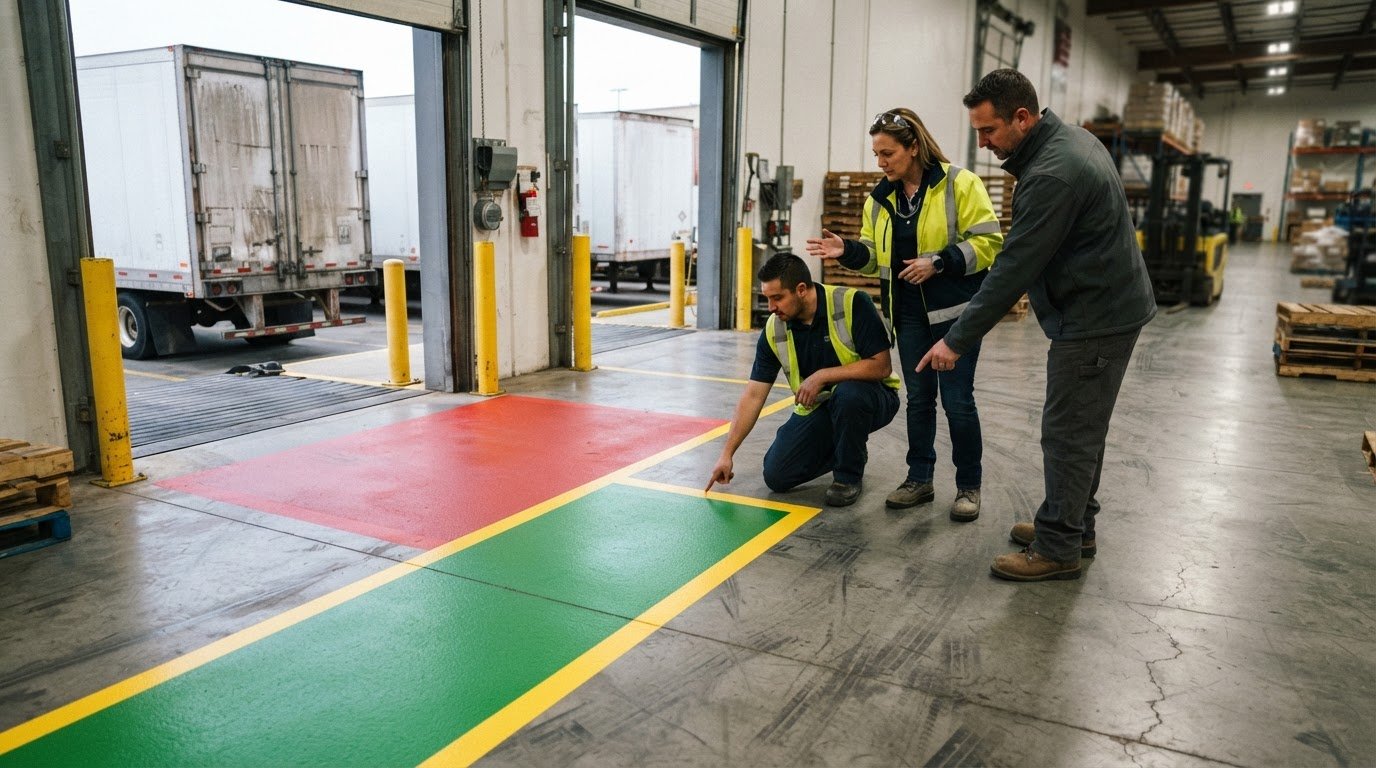
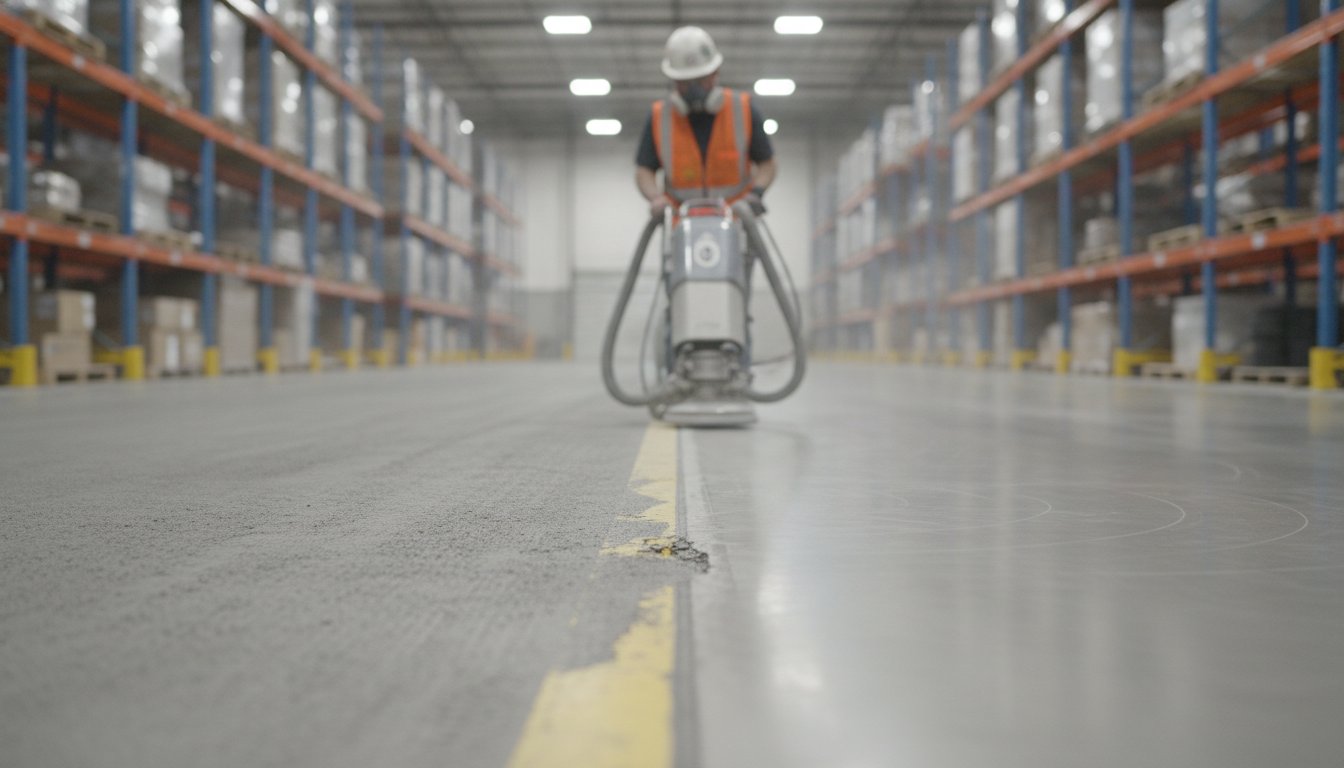
Inadequate removal leads to “ghosting,” where the faint outlines of old markings remain visible under the new lines. This creates safety confusion for operators and can lead to OSHA non-compliance during inspections if your facility boundaries are unclear. The financial impact of premature coating failure is significant; you will pay for the removal and application twice if the first attempt peels due to poor prep. Proper preparation must also remove contaminants like oil, grease, and tire rubber that have penetrated the concrete pores over time. Effective shot blasting vs grinding for line removal ensures these bond-breakers are eliminated, providing a clean slate for maximum durability. We prioritize these functional outcomes to help you avoid the logistical stress of repeated maintenance and unnecessary operational downtime.
While these technical standards ensure industrial efficiency, the same principles of organization and professional-grade space management can be applied to the home; for residential property owners, The Garage RX specializes in transforming garages into efficient, well-organized environments.
Shot Blasting: The High-Performance Standard for Industrial Adhesion
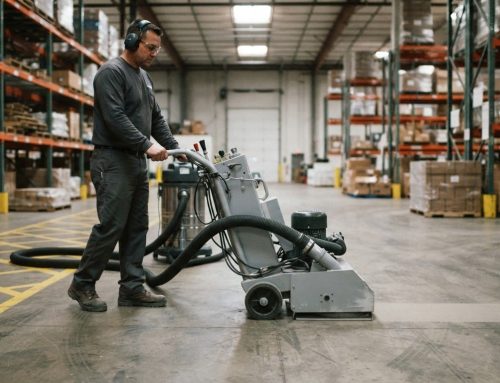
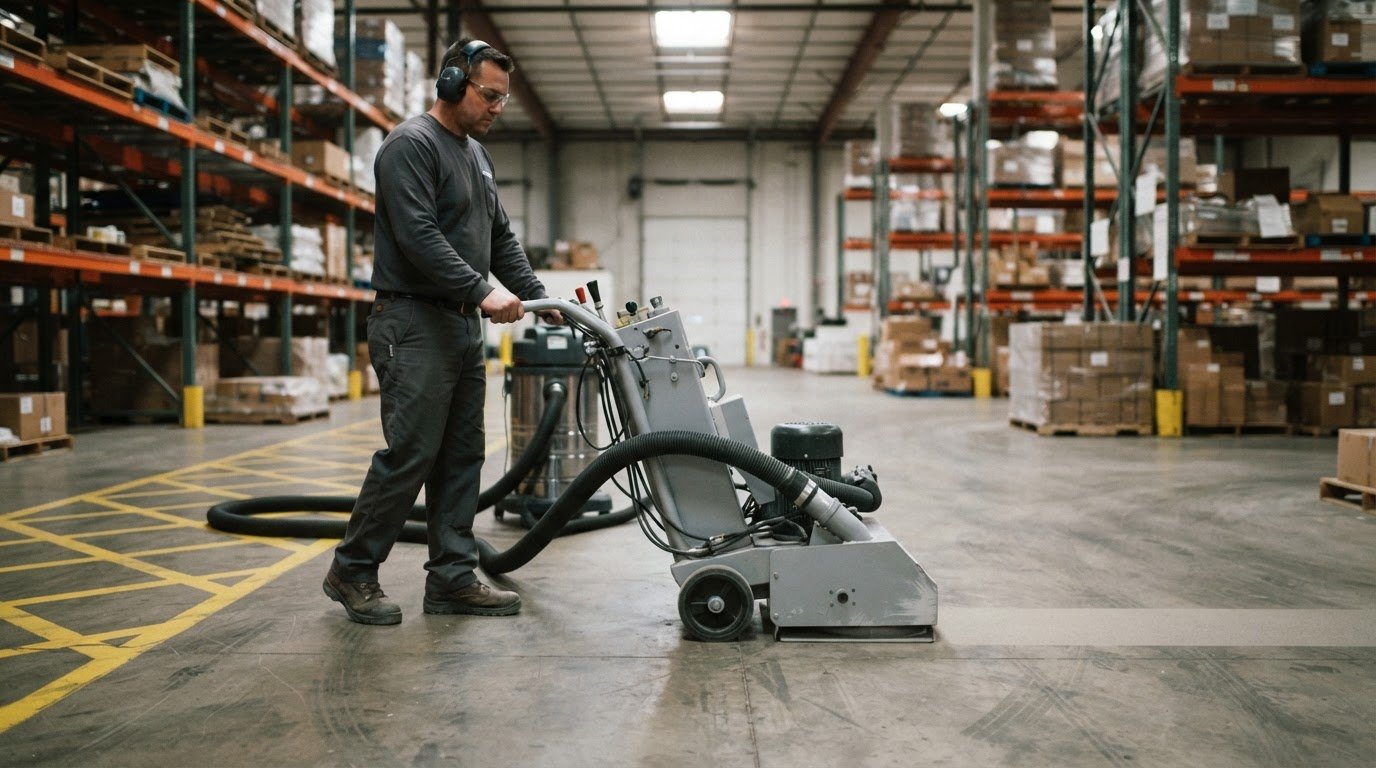
Shot blasting is a mechanical process that uses centrifugal force to propel small steel shot at high velocities onto the concrete floor. This action effectively fractures the surface, stripping away old coatings and contaminants simultaneously. It is the gold standard for epoxy warehouse striping because it creates an aggressive profile that liquid resins can easily penetrate. When evaluating shot blasting vs grinding for line removal, speed is often the deciding factor for large-scale operations. In massive distribution centers and logistics hubs, this method can cover thousands of linear feet per shift, ensuring that your operational schedule remains intact.
The machinery operates as a closed-loop system. As the steel shot hits the concrete, it bounces back into a separator chamber along with the pulverized paint and concrete dust. The machine automatically separates the heavy steel shot to be reused while a powerful vacuum pulls the lighter debris into a containment bin. This efficiency reduces material waste and keeps the workspace remarkably clean compared to open-air methods. It is a highly productive removal technique that prioritizes functional outcomes over the slower, more labor-intensive alternatives.
Advantages of Dustless Shot Blasting Systems
Modern equipment utilizes HEPA-filtered vacuum systems to ensure that dust does not escape into the facility. This is a critical requirement for food-grade or pharmaceutical environments where airborne particles can compromise inventory or contaminate sensitive manufacturing zones. Because the system is self-contained, operations in adjacent aisles can often continue without interruption. Once the machine passes over an area, the floor is immediately ready for coating. There is no need for secondary cleaning or drying time, which is a major advantage for facilities prioritizing minimal downtime.
When Shot Blasting is the Superior Choice
Shot blasting is the preferred technical choice for removing thick epoxy, urethane, or multiple layers of accumulated paint. It consistently achieves the CSP 3-5 profile (a medium-grit texture) necessary for heavy forklift traffic areas, as defined by industry standards for surface preparation. Beyond simple removal, the process acts as a diagnostic tool. It can reveal underlying concrete weaknesses like “laitance” (a weak, milky layer on the surface) or hidden soft spots that would otherwise cause a new coating to fail prematurely. If you have concerns about the structural integrity of your floor, consult with a specialist to determine if shot blasting is appropriate for your specific substrate.

Diamond Grinding: Precision and Smoothness for Thin-Film Coatings
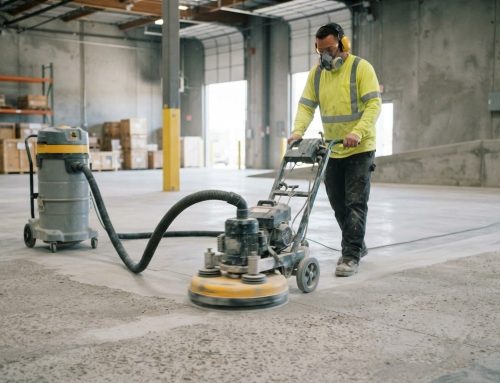
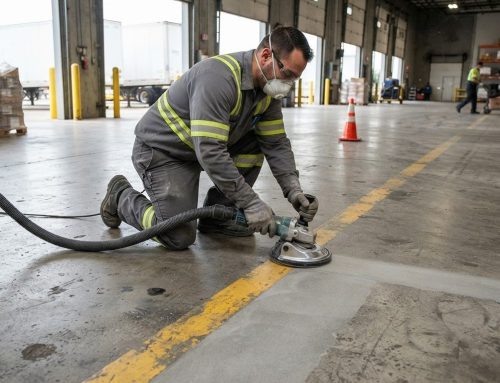
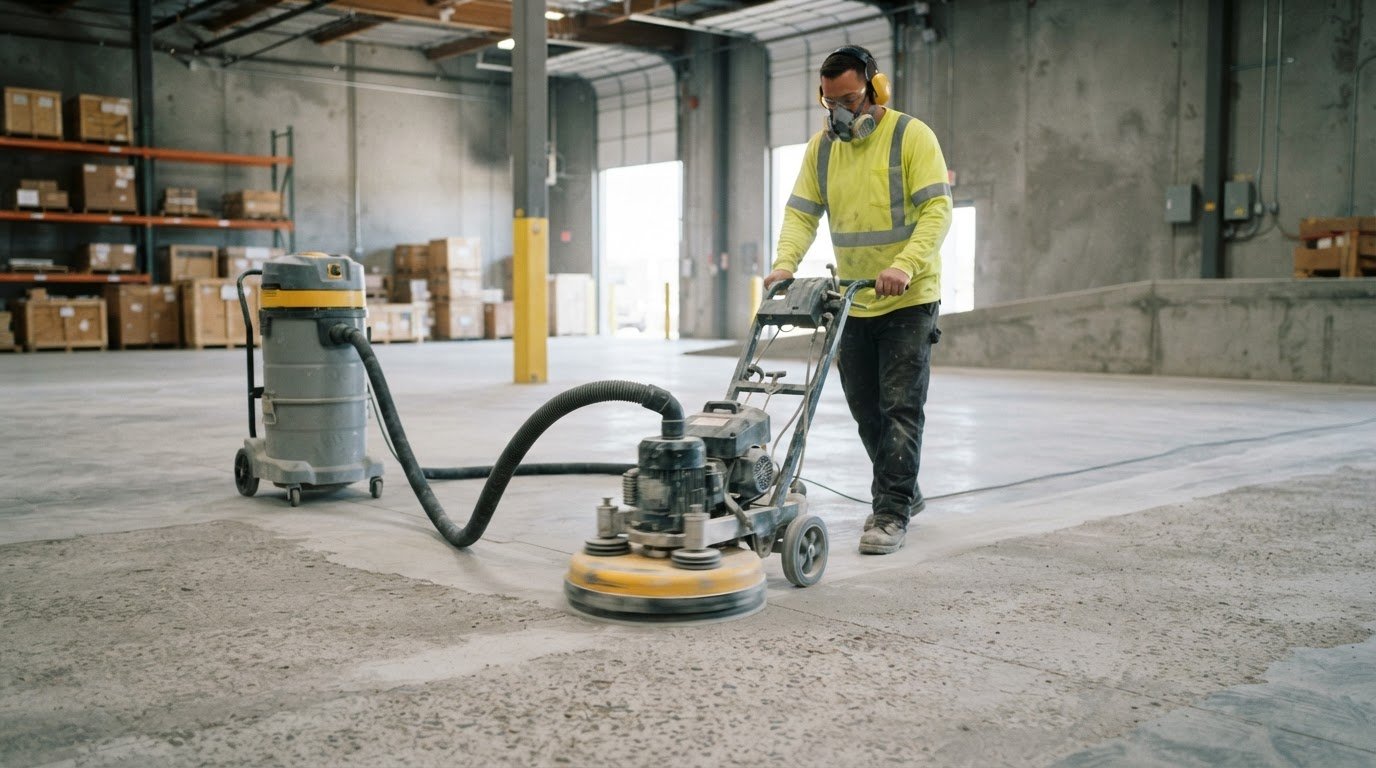
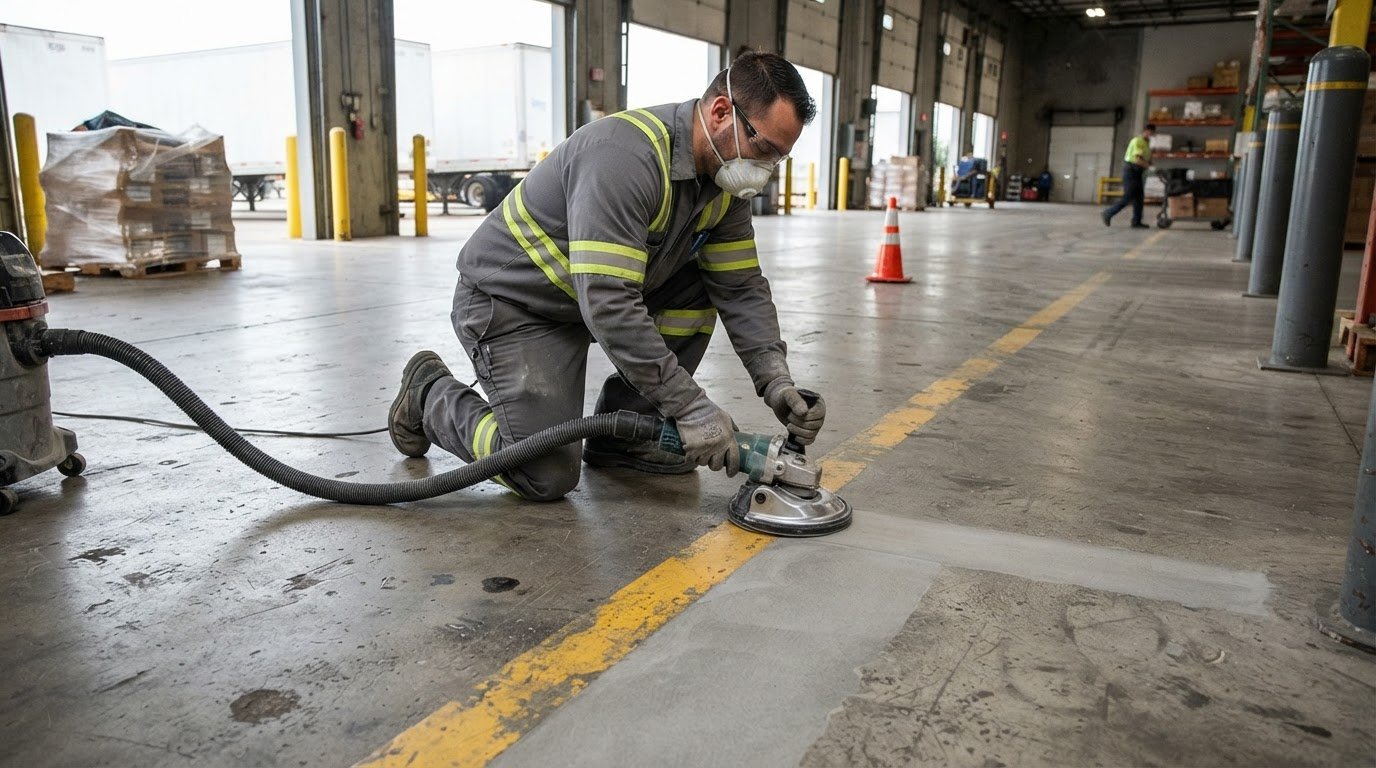
Diamond grinding utilizes rotating horizontal discs embedded with industrial diamond segments to shave the concrete surface. This method differs from the fracturing action of shot blasting by providing a controlled, level finish. It’s particularly effective for removing thin paint lines or adhesive tape residue where a high-profile “mechanical tooth” isn’t required. When weighing shot blasting vs grinding for line removal, facility managers often choose grinding for areas where aesthetic smoothness is as important as the removal itself. We distinguish between aggressive grinding (using low-grit diamonds to strip coatings) and polishing (which smooths the floor but can hinder adhesion) to ensure the surface remains bondable and receptive to new materials.
Achieving a Precise Concrete Profile with Grinding
Grinding allows for microscopic control over the Concrete Surface Profile (CSP), typically achieving a CSP 1 or 2. This is the ideal range for thin-film parking garage striping or warehouse markings that don’t face extreme heavy-duty traffic. Beyond removal, grinding serves a secondary maintenance function by leveling “curled” joints (the upward warping of concrete slab edges) or high spots in the floor. This precision is vital when working in tight spaces or near sensitive manufacturing equipment where the aggressive nature of shot blasting might be too risky.
Operational Constraints and Limitations
Grinding is a slower process than shot blasting, which can increase the project timeline for large-scale distribution centers. Technicians must also manage the risk of “glazing” the concrete (the sealing of pores caused by excessive heat and friction). If the wrong diamond bond is used, the surface becomes too smooth for any liquid coating to stick. We mitigate this by matching the diamond grit to the specific hardness of your concrete. Additionally, high-volume dust extraction is mandatory. We use specialized vacuums to maintain air quality and keep your inventory protected from fine concrete dust. If you need a precision removal strategy for your facility, contact our team for a site evaluation.
Shot Blasting vs. Grinding: Choosing the Right Method for Your Facility
Selecting the correct mechanical preparation method is a technical decision that impacts your facility’s safety and your maintenance budget for years. The final choice between shot blasting vs grinding for line removal depends on three primary factors: the thickness of the existing coating, the specifications of the new material, and your operational environment. While shot blasting offers superior speed and a deeper profile for high-build epoxies, diamond grinding provides the precision required for thin-film applications. A professional warehouse line striping company like StripeGuys Warhouse Line Striping will often employ a hybrid approach, using heavy-duty shot blasting for main traffic aisles and precision grinding for tight corners or areas near sensitive machinery.
Before any equipment hits the floor, a site survey is essential to test concrete hardness. We use the Mohs scale to determine the scratch hardness of the substrate, which dictates the type of steel shot or diamond bond required. Using the wrong diamond bond on hard concrete can lead to “glazing,” where the tool stops cutting and merely heats the surface. Conversely, using aggressive shot blasting on soft, low-PSI concrete can cause excessive pitting. Testing ensures the removal process is efficient and doesn’t cause unnecessary damage to your infrastructure.
Evaluating Your Floor Condition and Future Coating
Your future coating dictates your current preparation strategy. If you are installing high-performance epoxy, shot blasting is the industry standard because it creates the “mechanical tooth” necessary for a permanent bond. For facilities installing adhesive safety tapes or thin-film paints, grinding is often preferred to avoid the textured look that can show through thinner materials. This is particularly relevant for pedestrian walkways and safety aisles, where a smooth, easy-to-clean surface is a priority. Additionally, the age of your concrete matters; older slabs may have deep oil saturation that requires the aggressive fracturing of shot blasting to reach clean, bondable aggregate.
The StripeGuys Warhouse Line Striping Strategic Approach to Line Removal
With 29+ years of industrial experience, StripeGuys Warhouse Line Striping specializes in diagnosing the specific needs of large-scale distribution centers and manufacturing plants across the United States. We understand the high stakes of operational downtime, which is why we utilize self-contained, dustless systems that allow your facility to remain productive during the removal process. Our teams are trained to balance technical surface requirements with your specific budgetary and scheduling constraints. StripeGuys Warhouse Line Striping bridges the gap between technical surface preparation and long-term operational efficiency to ensure your facility remains safe and compliant.
Engineering Long-Term Durability for Your Industrial Facility
Effective mechanical preparation is the foundation of a safe, high-performing industrial facility. It isn’t just about removing old paint; it’s about engineering a surface that ensures your next coating investment lasts for years. By matching the removal method to your concrete’s specific hardness and your desired coating thickness, you eliminate the risk of delamination and hazardous “ghosting.” Mastering the technical differences of shot blasting vs grinding for line removal allows you to maintain OSHA compliance while minimizing operational downtime.
Beyond industrial applications, the same emphasis on surface preparation and quality coatings is essential for premium residential transformations; for specialized floor coatings and custom storage, check out Park Place Garage Co.
StripeGuys Warhouse Line Striping offers over 29 years of industrial floor experience and provides nationwide service for large-scale distribution centers and manufacturing plants. Our teams utilize specialized dustless mechanical removal systems to ensure your operations continue without environmental contamination. Don’t risk the safety and efficiency of your floor markings with improper prep. Request a Professional Line Removal Quote from StripeGuys Warhouse Line Striping to ensure your facility is prepared for maximum performance. We’re ready to partner with you on your next project.
Frequently Asked Questions
Which is faster for large warehouse line removal: shot blasting or grinding?
Shot blasting is significantly faster for large-scale projects and high-production environments. It can process thousands of linear feet in a single shift, making it the preferred choice for massive distribution centers with tight operational windows. Diamond grinding is a much slower, more deliberate process that is better suited for smaller areas or precision work near sensitive equipment where speed is less critical than surface smoothness.
Does shot blasting create a lot of dust in a warehouse environment?
Modern industrial shot blasting systems are virtually dustless because they utilize integrated HEPA-filtered vacuum systems. These self-contained units capture pulverized coatings and concrete dust at the point of impact, depositing them directly into a containment bin. This high level of dust control allows your facility to remain operational in adjacent aisles without the risk of contaminating inventory or compromising air quality for your staff.
Can I apply new epoxy lines immediately after grinding?
You can apply new lines after grinding, but the surface must be thoroughly decontaminated first. Grinding often leaves fine dust trapped within the concrete pores, which can act as a bond-breaker if not vacuumed or wiped away. We also check for “glazing,” a condition where the concrete becomes too smooth for adhesion. If the surface is clean and has the correct profile, application can proceed immediately without drying time.
Is shot blasting too aggressive for old or thin concrete floors?
Shot blasting can be too aggressive for deteriorated or thin slabs because the high-velocity steel shot can fracture weak concrete. If your floor has low PSI or visible structural damage, diamond grinding is a safer alternative. Grinding shaves the surface incrementally rather than fracturing it, which prevents deep pitting and preserves the integrity of the underlying substrate while still removing old markings effectively.
How do I know which CSP level my new floor markings require?
The required Concrete Surface Profile (CSP) is always specified on the technical data sheet (TDS) provided by the coating manufacturer. When evaluating shot blasting vs grinding for line removal, we match the method to these engineering specs. Thin-film paints typically require a CSP 1 or 2, while heavy-duty industrial epoxies need the more aggressive CSP 3 to 5 profile that only shot blasting consistently provides.
Will mechanical line removal leave permanent scars on my warehouse floor?
Mechanical removal changes the texture of the concrete, which often results in “ghosting” or visible outlines of the old markings. While we use precision equipment to minimize this effect, the contrast between the newly prepped area and the aged surrounding floor is unavoidable. If aesthetics are your primary concern, diamond grinding offers a more subtle finish that reduces the visual impact of the removal compared to the deeper texture of shot blasting.