Did you know that a single willful OSHA violation in 2026 can now result in a penalty as high as $165,514? For facility managers, these figures represent a serious threat to both the bottom line and operational continuity. You’re likely already aware that worn-out safety lines (the physical boundaries that keep pedestrians and forklifts separate) are a leading cause of workplace accidents and failed audits. It’s frustrating to manage a high-traffic environment when your visual cues are fading and the regulatory landscape is shifting beneath your feet.
We’ve developed this comprehensive warehouse safety inspection checklist 2026 to help you master your upcoming audits through a visual-first strategy. By focusing on durable infrastructure and professional floor markings, you can eliminate hazards before they lead to costly fines or employee injuries. This guide previews the essential steps for maintaining compliance, including the latest 2026 hazard communication updates and heat safety protocols. You’ll learn how a structured approach to facility organization reduces insurance premiums and keeps your warehouse operating at peak efficiency.
Key Takeaways
- Understand how updated OSHA standards for walking and working surfaces apply to 2026 trends in automation and high-density storage.
- Implement a comprehensive warehouse safety inspection checklist 2026 to proactively identify structural hazards like concrete pitting and rack upright damage.
- Audit high-risk “conflict points” where vehicle and pedestrian traffic intersect to ensure floor markings provide maximum visibility and hazard prevention.
- Prioritize repairs using risk-level assessments and durable preparation methods, such as shot blasting, to ensure long-term line painting adhesion.
- Reduce facility liability and insurance premiums by establishing a consistent framework for infrastructure maintenance and optimized organizational flow.
2026 Warehouse Safety Standards and OSHA Regulatory Focus
The 2026 warehouse environment is defined by extreme throughput and dense automation. As facilities pack more inventory into smaller footprints, the risk for human-machine collisions increases. OSHA focuses heavily on 29 CFR 1910.22, which dictates that all walking and working surfaces must be kept in a clean, safe, and orderly condition. This isn’t just about sweeping floors; it’s about the structural and visual integrity of the facility. You’re operating in a landscape where speed cannot compromise Occupational Safety and Health Standards.
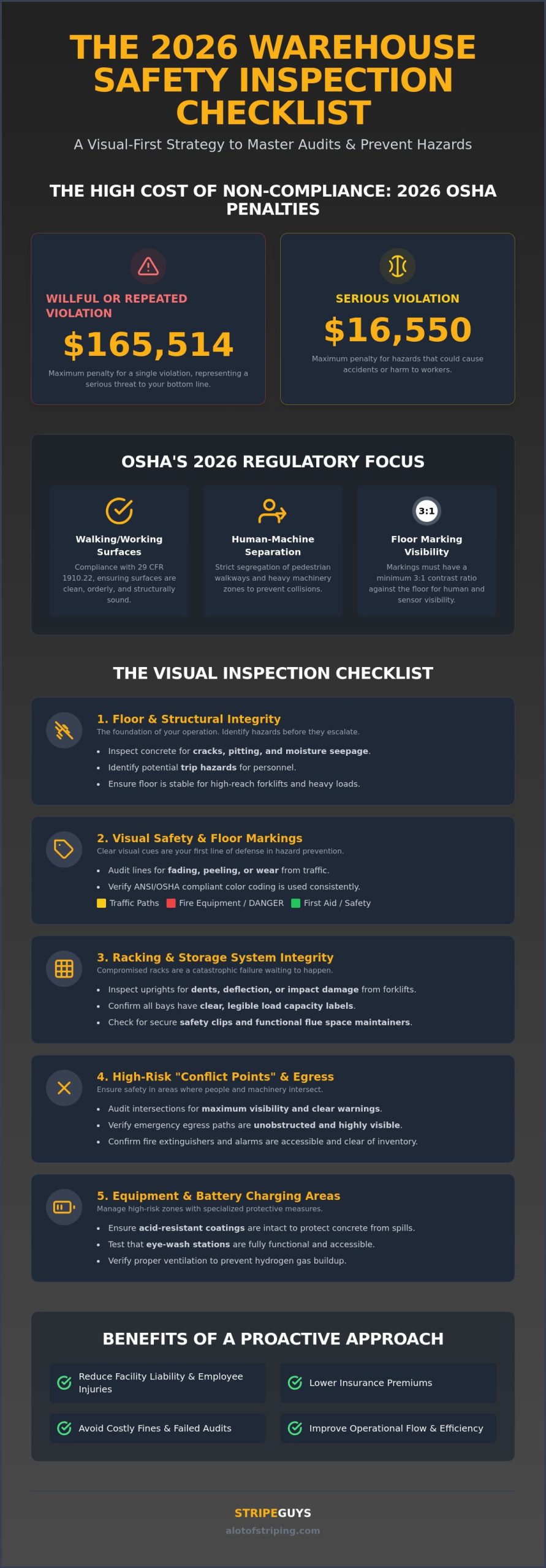
In 2026, the cost of negligence is higher than ever. A single serious violation now carries a maximum penalty of $16,550, while willful or repeated violations can skyrocket to $165,514. Proactive maintenance is a financial safeguard that protects your capital. When an inspector walks through your doors, the first thing they evaluate is your visual communication. Clear, crisp lines signal a managed environment. Faded, peeling tape or worn paint signals a lack of oversight. Using a professional warehouse line striping service ensures your facility meets these high-stakes expectations.
Evolving Safety Priorities for High-Traffic Facilities
Modern facilities require strict segregation between heavy machinery and personnel. Your internal walkways must clearly define these zones to prevent catastrophic accidents in high-velocity distribution centers. Emergency egress paths must remain unobstructed and visible at all times. In 2026, the industry standard for safety floor markings requires a minimum contrast ratio of 3:1 against the floor substrate to ensure maximum visibility for both human eyes and automated sensors. Verifying these paths is a critical component of any warehouse safety inspection checklist 2026 to ensure workers can exit safely during an emergency.
The Role of Visual Organization in Hazard Prevention
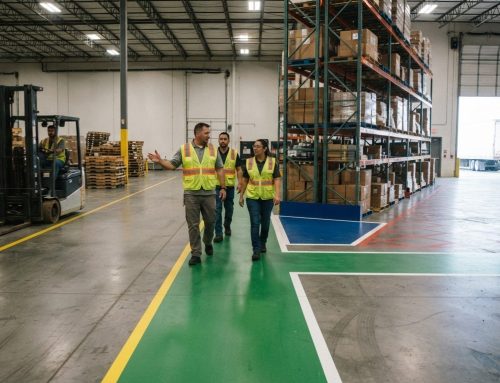
Standardized color coding isn’t for aesthetics; it’s a cognitive tool that reduces worker fatigue. Using ANSI/OSHA compliant colors (yellow for traffic paths, red for fire equipment, and green for first aid) allows workers to process safety information instantly. This visual organization is the backbone of the 5S methodology. By incorporating these standards into your warehouse safety inspection checklist 2026, you reduce the likelihood of “near-miss” incidents. Proactive infrastructure audits ensure that your pedestrian walkways remain durable enough to withstand the constant friction of forklift tires and pallet jacks.
The Comprehensive 2026 Warehouse Safety Inspection Checklist
Your warehouse floor is more than just a surface; it’s the foundation of your entire operation. A thorough warehouse safety inspection checklist 2026 begins with the structural integrity of the concrete. You must identify cracks, pitting, or moisture seepage that can destabilize high-reach forklifts or create trip hazards for personnel. Following OSHA Warehouse Safety Guidelines ensures that these minor maintenance issues don’t escalate into major liability claims. Beyond the floor, verify that fire extinguishers, alarms, and emergency exits remain completely unobstructed by pallet overflow or temporary storage.
Racking and Storage System Integrity
Industrial racking must withstand immense vertical loads while resisting lateral impacts. Inspect every upright for deflection or visible dents caused by forklift strikes, as even minor deformation can compromise the system’s total load-bearing capacity. Every bay requires clear, legible load capacity labels to prevent accidental overloading. Ensure that safety clips are securely seated and that flue space maintainers are present to allow fire sprinklers to penetrate the rack structure during an emergency. If you find significant structural damage, you should contact our consulting team for a professional infrastructure assessment.
Equipment and Battery Charging Area Safety
Battery charging zones are high-risk environments due to the presence of corrosive chemicals and potential hydrogen gas buildup. You must verify that these areas feature acid-resistant coatings for battery charging to protect the underlying concrete from electrolyte spills (which can eat through standard concrete in weeks). Check that eye-wash stations are fully functional and that spill kits are stocked and accessible. Inspect forklift charging cables for fraying or exposed wires to prevent electrical fires in these high-traffic utility zones.
Hazardous Materials and PPE Compliance
The 2026 regulatory environment includes strict updates to the Hazard Communication Standard. By the November 20, 2026 deadline, employers must have updated workplace labels and Hazard Communication programs to align with GHS Revision 7. Your inspection should confirm that Safety Data Sheets (SDS) are digital or physically accessible to all shifts. Additionally, audit the condition of personal protective equipment (PPE) like high-visibility vests and gloves. Ensure that all hazardous waste accumulation areas are clearly marked with durable floor stenciling to prevent cross-contamination or accidental disposal.
The Visual Safety Audit: Floor Markings and Pedestrian Zones
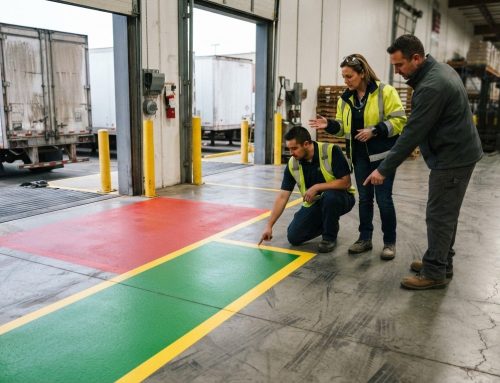
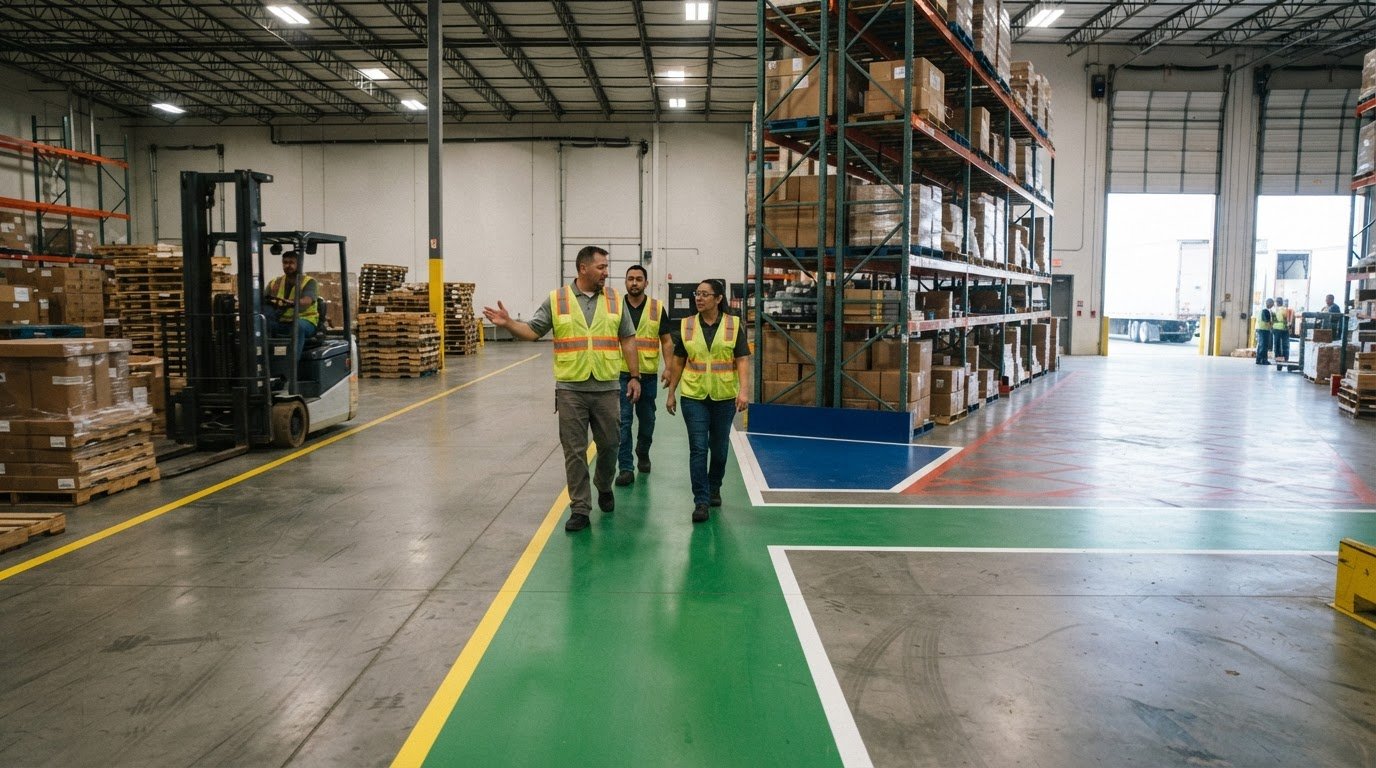
Visual communication serves as the primary defense against forklift-pedestrian collisions in high-volume facilities. A robust warehouse safety inspection checklist 2026 must treat floor markings as a critical infrastructure component rather than a secondary maintenance item. When you assess your facility, look for the “readability” of your lines. If a forklift operator cannot distinguish a pedestrian boundary from fifty feet away under standard warehouse lighting, the system has failed. According to the National Safety Council Warehouse Guidelines, clear visual boundaries are essential for managing the flow of heavy machinery and reducing human error.
Identifying “conflict points” (areas where vehicle paths and foot traffic intersect) is a priority for 2026 safety audits. You need to decide whether to restripe or perform a full removal and replacement. If the existing paint is flaking or the substrate is visible through the coating, simple restriping will fail due to poor adhesion. In these cases, we recommend shot blasting (a mechanical process that uses steel grit to strip old material and profile the concrete) to ensure your new warehouse floor striping services provide long-term durability. Schedule a professional line audit today to close the loop on your inspection findings.
Aisle Markings and Pedestrian Walkway Standards
Safe pedestrian passage requires a minimum width of 36 inches, though 48 inches is preferred for high-traffic zones. You should also implement “dead-man” zones, which are physical or visual buffers that provide a safety margin between workers and moving equipment. The 2026 standard dictates that all professional pedestrian walkways and safety aisles must feature a 2-inch high-contrast black border to ensure visibility on light-colored concrete substrates. This contrast is vital for workers with varying levels of visual acuity and for automated guided vehicles (AGVs) that rely on floor sensors.
Loading Dock and Staging Area Optimization
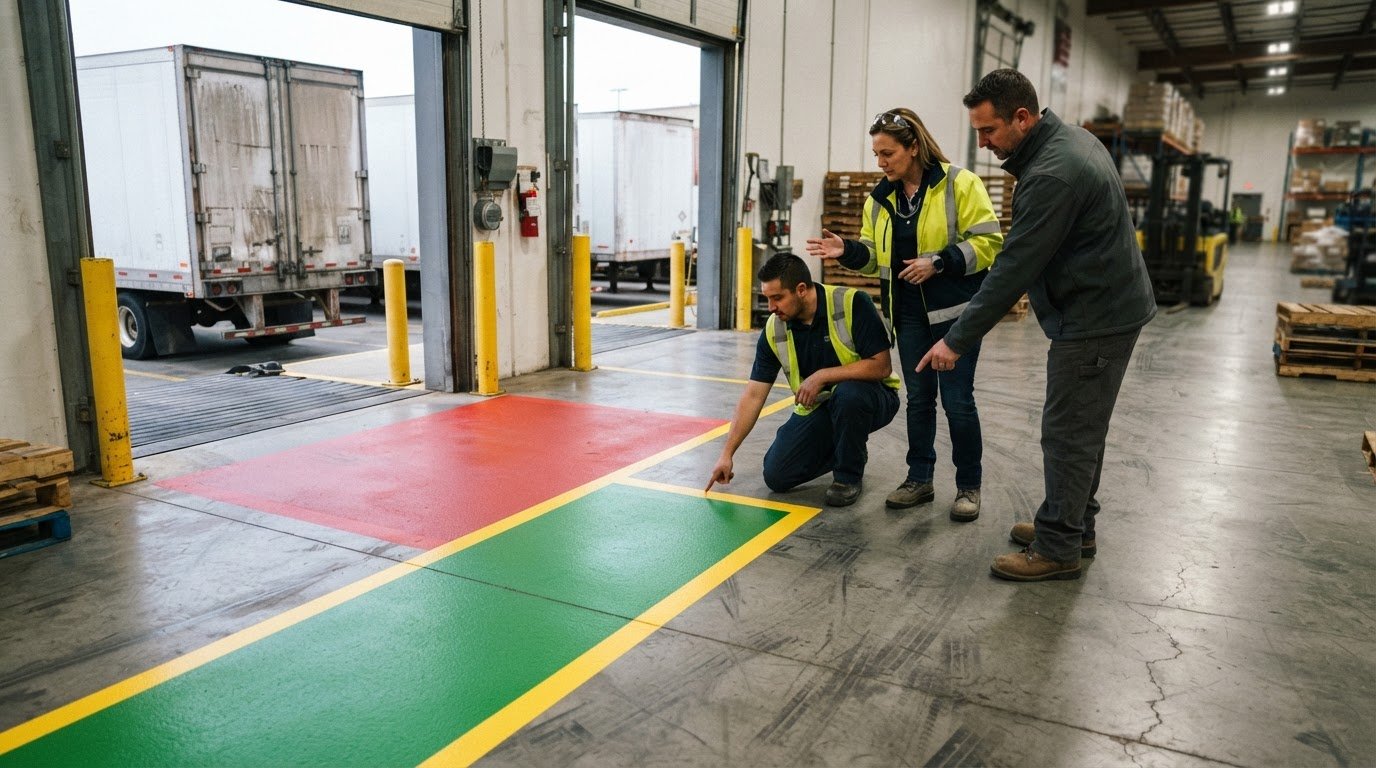
Loading docks are the most volatile areas of any warehouse. Inspect your trailer approach lines and dock bumpers to ensure they are visible to drivers during backing maneuvers. You must clearly mark “No-Go” zones (areas where pedestrians are strictly prohibited during active loading operations) using bold, diagonal hatching. This visual barrier prevents unauthorized personnel from entering high-risk zones where trailers are being coupled or uncoupled.
Beyond internal markings, managing exterior slip hazards at the loading bay is a key part of seasonal facility maintenance. For facilities facing winter weather, applying a liquid de-icer for driveways to exterior ramps and truck paths ensures that traction is maintained for both heavy vehicles and personnel.
Custom Stenciling and Directional Flow
Durable floor stencils for traffic flow, speed limits, and stop signs act as silent supervisors. By marking pallet positions and staging lanes with precision, you maximize your square footage and eliminate navigational confusion. This organizational clarity directly reduces the time spent searching for inventory, which boosts your overall throughput. Finally, ensure all shared warehouse access points maintain ADA compliance through proper stenciling and clear path-of-travel markings.
Executing Repairs: Modern Solutions for Durable Safety
Completing your warehouse safety inspection checklist 2026 is only the first step toward a compliant facility. You must categorize your findings into immediate hazards, such as obscured egress paths, and general maintenance items like fading pallet lane boundaries. Addressing these issues requires more than a quick fix; it demands industrial-grade materials that can withstand the friction of constant forklift traffic. High-build epoxy warehouse striping solutions provide the chemical bond necessary for facilities operating 24/7. By prioritizing repairs based on risk level, you ensure that your most critical safety gaps are closed before they lead to an accident or a significant OSHA penalty.
Surface Preparation and Professional Line Removal
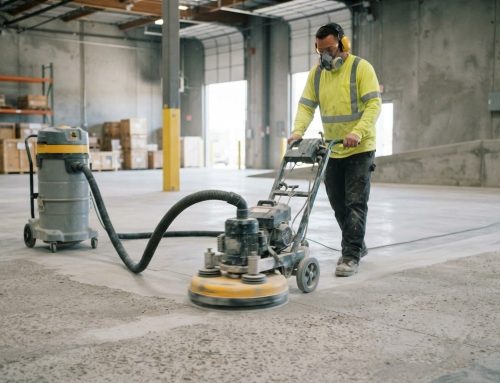
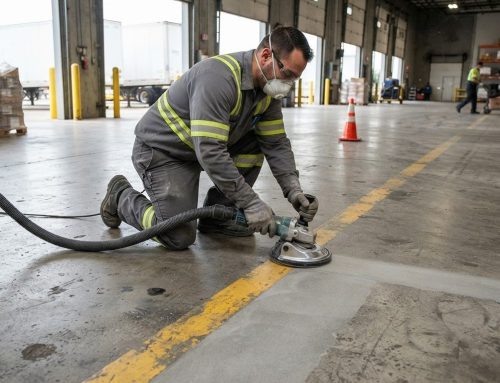
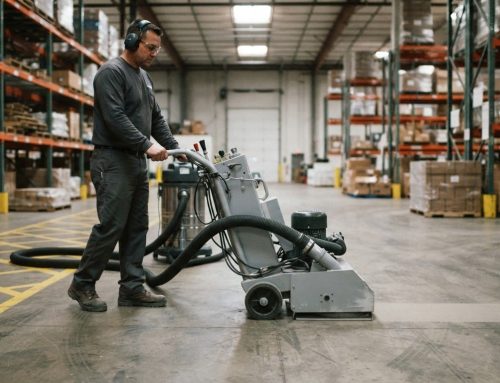
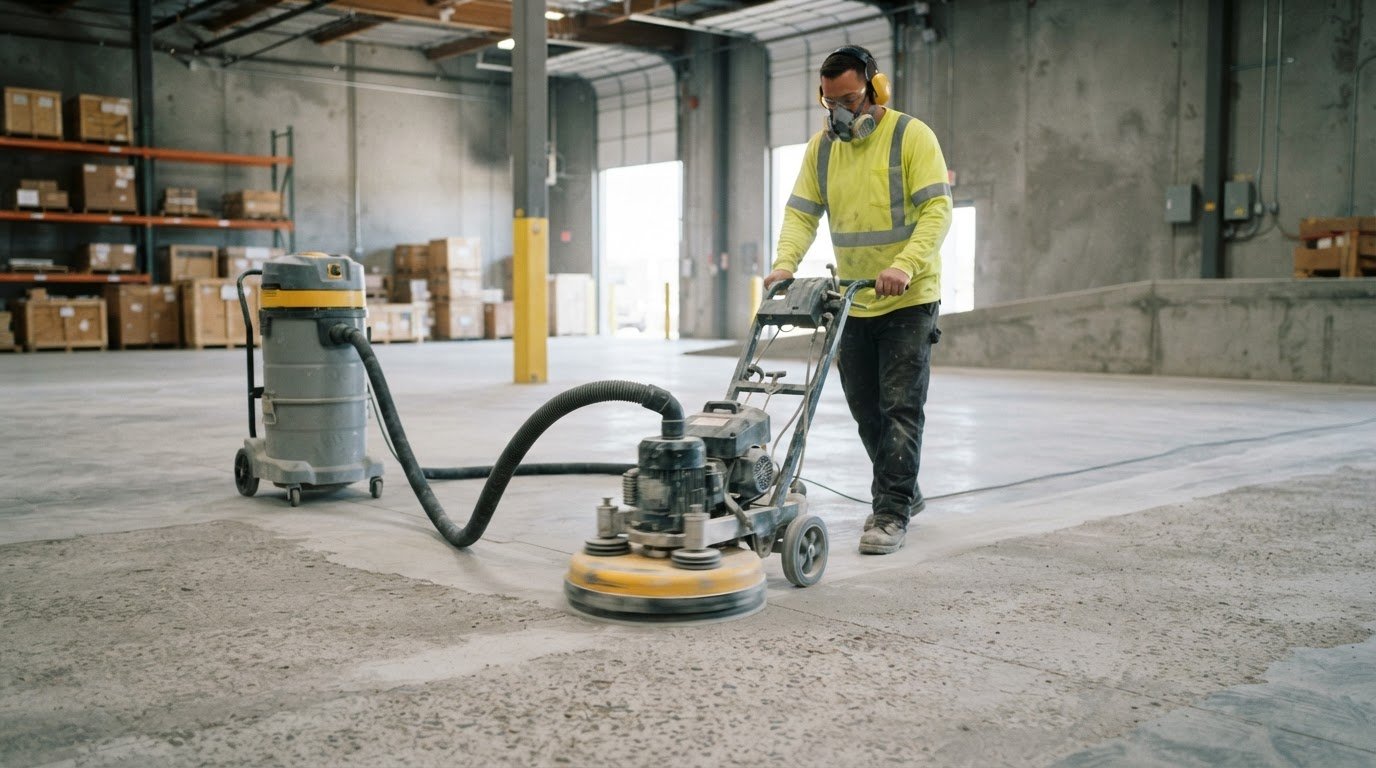
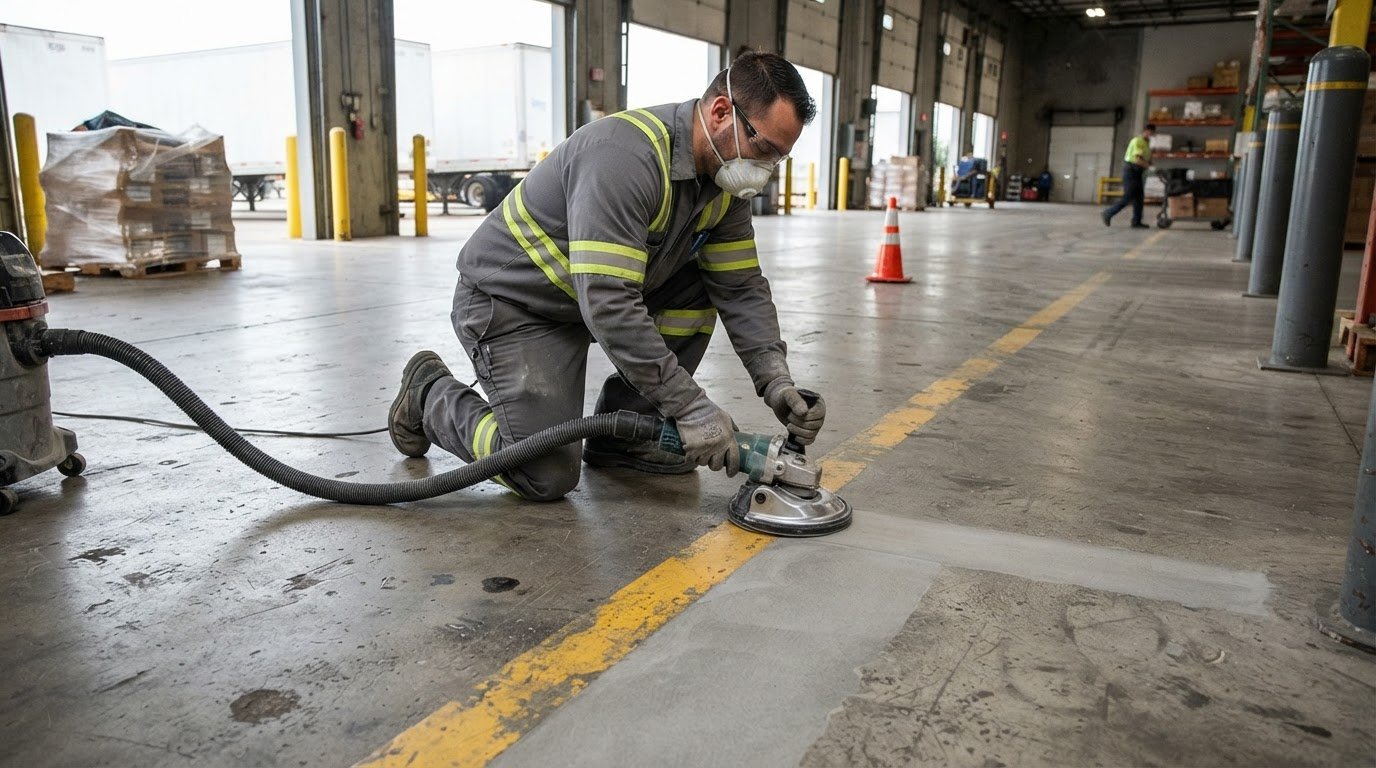
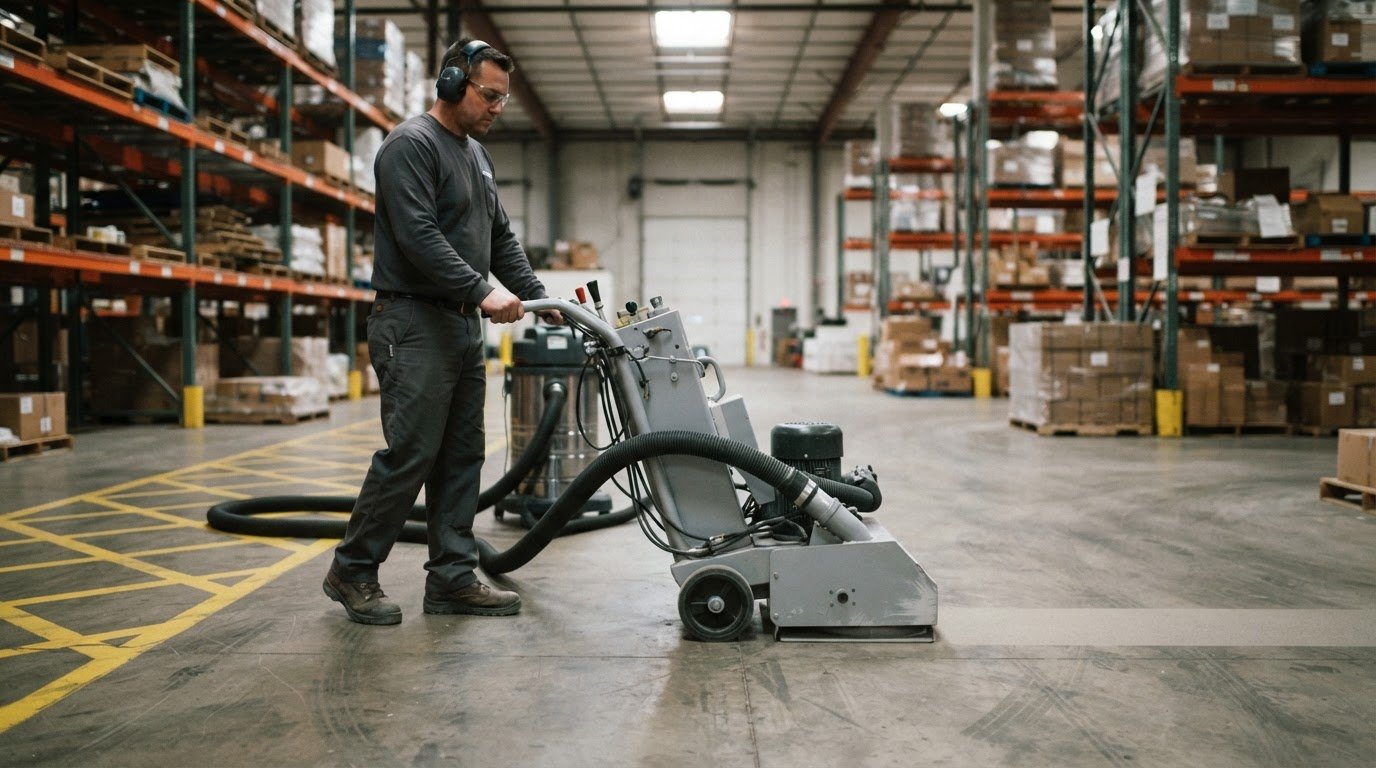
Professional line removal is a critical aspect of warehouse maintenance that many managers overlook. Painting over existing lines is a recipe for premature failure because the new coating can’t bond to a peeling or contaminated surface. We utilize shot blasting (a mechanical method that profiles the concrete substrate using steel grit) to create a clean, textured surface for maximum adhesion. This process removes old paint, tire marks, and surface oils that would otherwise cause delamination. Unlike diamond grinding, shot blasting provides a uniform profile that ensures your safety markings remain intact for years despite heavy scrubbing and traffic.
Choosing Between Epoxy and Industrial Paint
Your choice of material depends on the specific operational demands of your zones. Epoxy is the industry standard for high-traffic distribution centers because it offers superior impact and chemical resistance. For low-traffic storage areas or temporary staging zones, industrial paint serves as a cost-effective alternative. You should audit your markings every six to twelve months to identify wear patterns before they become safety violations. Maintaining a consistent maintenance schedule prevents the logistical stress of large-scale emergency repairs and keeps your facility looking organized and professional.
Scheduling Nationwide Professional Maintenance
Large-scale facilities require a partner who can manage multiple regional locations without disrupting daily operations. Coordinating with a nationwide contractor allows you to maintain identical safety standards across your entire network. We offer flexible scheduling to minimize operational downtime, ensuring that your facility remains productive while we execute your safety upgrades. Consistency in your floor markings means a worker in your Chicago hub will recognize the same visual cues as a worker in your Phoenix distribution center, which reduces training time and improves overall safety.
Secure Your Facility for 2026 and Beyond
Transitioning from a comprehensive audit to physical implementation is the most critical phase of your facility safety program. By consistently applying a warehouse safety inspection checklist 2026, you transform your workspace from a high-risk environment into a streamlined, compliant operation. Durable floor markings and clear pedestrian boundaries do more than satisfy regulatory requirements; they provide the visual structure necessary for high-throughput efficiency and long-term asset protection. These infrastructure investments ensure that your facility remains safe, organized, and ready for the demands of modern logistics.
StripeGuys Warhouse Line Striping offers nearly three decades of specialized expertise in high-traffic distribution centers. With our nationwide service coverage, we ensure that your safety standards remain uniform across every regional hub in your network. We focus on the physical realities of industrial workspaces, delivering results that withstand the rigors of 24/7 operations and heavy machinery traffic. Ensure your facility is 2026-ready with a professional safety floor audit from StripeGuys Warhouse Line Striping. We are here to help you eliminate logistical stress and maintain a secure, optimized work environment through seasoned industrial authority.
Frequently Asked Questions
How often should a warehouse safety inspection be conducted in 2026?
You should conduct daily pre-shift equipment checks and monthly facility-wide walkthroughs using your warehouse safety inspection checklist 2026. High-volume distribution centers benefit from quarterly deep-dive audits of floor marking visibility and structural rack integrity. This consistent frequency ensures that minor structural issues or fading safety lines are identified before they escalate into serious OSHA violations or workplace accidents.
What are the most common OSHA floor marking violations in industrial settings?
The most frequent violations involve obstructed emergency exits and the failure to clearly define permanent aisles and walkways. OSHA inspectors also look for “unreadable” markings where the contrast has faded below acceptable safety levels. These issues often lead to fines as high as $16,550 per serious violation, making proactive maintenance of your floor striping a financial necessity for facility managers.
Is floor marking tape better than epoxy paint for warehouse safety?
Epoxy line painting is significantly more durable than floor marking tape in high-traffic industrial environments. Tape often peels or bubbles under the constant friction of forklift tires, creating trip hazards and navigational confusion for your team. High-build epoxy provides a permanent chemical bond to the concrete substrate, ensuring your safety zones remain intact despite heavy industrial scrubbing and heavy machinery movement.
What are the specific width requirements for pedestrian walkways in a warehouse?
OSHA requires that aisles and walkways be kept clear and in good repair with no obstructions. While 36 inches is the minimum width for safe passage, high-traffic 2026 facilities should aim for 48 inches to accommodate workers carrying equipment or using high-visibility PPE. Proper width ensures that pedestrians can maintain a safe distance from moving vehicles and automated machinery operating in the same zone.
How do I prepare my warehouse floor for new safety striping?
You must use mechanical surface preparation, specifically shot blasting, to profile the concrete before applying new safety striping. This process uses steel grit to strip away old paint, surface oils, and contaminants that prevent proper chemical adhesion. Without this critical step, even high-quality epoxy will fail prematurely, leading to wasted maintenance budgets and recurring safety hazards on your warehouse floor.
Can I perform warehouse line removal myself using chemical strippers?
We don’t recommend DIY chemical stripping for industrial floor marking removal. Chemical strippers are often toxic and leave behind a residue that prevents new paint or epoxy from bonding to the concrete correctly. Professional shot blasting line removal is a cleaner, more efficient alternative that prepares the surface for immediate restriping while maintaining the structural integrity of the floor substrate.