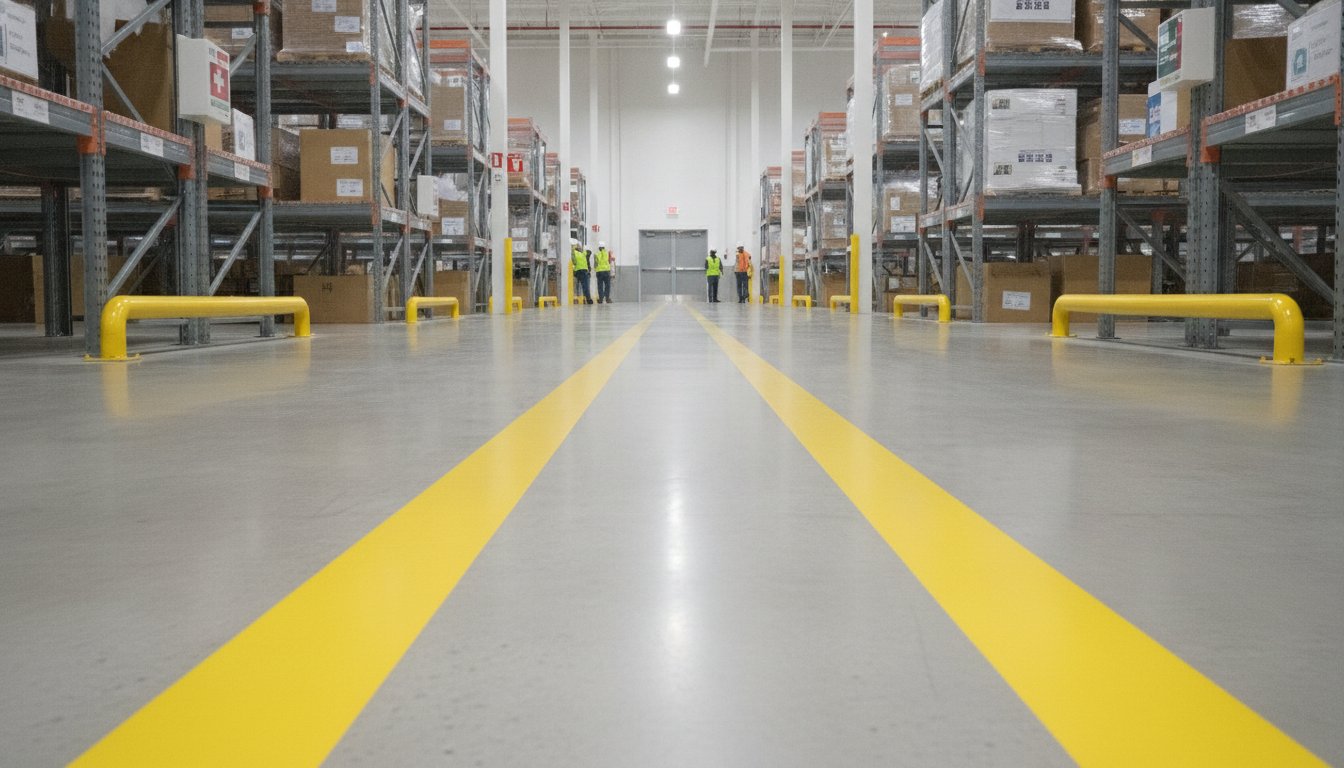
A single willful violation of fire safety standards can now cost your facility up to $170,181 in OSHA penalties. It’s a heavy burden for any warehouse manager to carry, especially when you’re trying to decipher the overlapping mandates of OSHA 29 CFR 1910.37 and the latest NFPA 101 updates. Keeping your team safe while maintaining operational flow shouldn’t feel like a legal guessing game. This guide simplifies the current fire exit and egress lane marking requirements to ensure your facility remains fully compliant and your workers stay protected during an emergency.
You need markings that don’t just pass an inspection today but remain visible after thousands of forklift cycles. We understand that safety lines are functional tools, not just aesthetic choices. This 2026 compliance guide provides a clear checklist of width, color, and placement requirements for your egress paths. You’ll learn how to bridge the gap between technical jargon and practical application, ensuring your floor striping meets the 5 foot-candle illumination standards and remains reliable during power failures. We’ll also cover the latest trends in photoluminescent materials to help you avoid costly fines and maintain a high-performance workspace.
Key Takeaways
- Determine how OSHA 1910.37 and NFPA 101 (Life Safety Code) work together to establish the legal foundation for your facility’s exit routes.
- Learn the essential fire exit and egress lane marking requirements, specifically the 28-inch minimum width standard and the “Continuous Path” rule for uninterrupted travel.
- Compare industrial epoxy line painting against standard floor tape to ensure your safety markings survive high-traffic forklift zones.
- Follow a structured framework for conducting egress audits that identify hazardous bottlenecks and map the most efficient routes to safety.
Regulatory Standards: OSHA 1910.37 and NFPA 101 Explained
Federal safety compliance rests on two primary pillars: OSHA 29 CFR 1910.37 and the NFPA 101 Life Safety Code. OSHA 1910.37 serves as the primary federal mandate for the maintenance and safeguards of exit routes, dictating that every industrial facility must provide a clear, unobstructed path of travel for employees during emergencies. While OSHA provides the legal framework, NFPA 101 offers the technical design specifications that local fire marshals use during inspections. Understanding the intersection of these rules is vital for meeting fire exit and egress lane marking requirements without risking business-stopping fines.
The Core Requirements of OSHA 1910.37
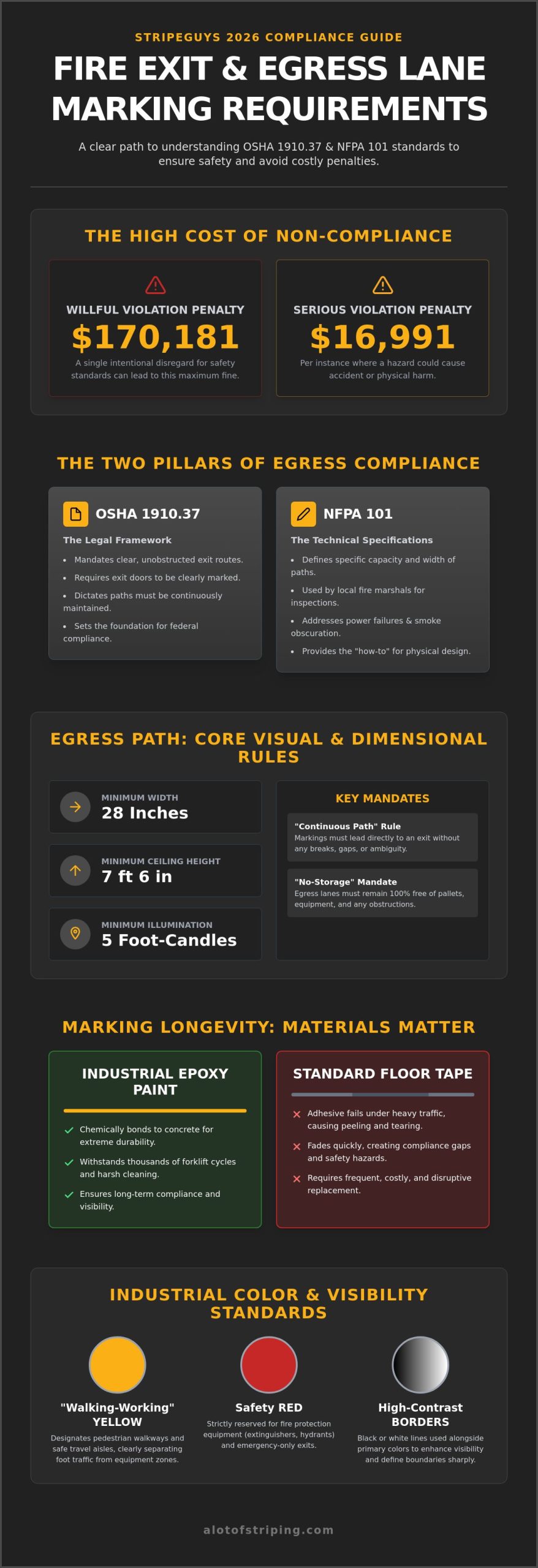
OSHA requires that exit routes remain unobstructed by materials, equipment, or inventory at all times. This includes ensuring that exit doors are clearly marked and illuminated by a reliable light source of at least 5 foot-candles (54 lux). An exit access is the portion of an exit route that leads to an exit. To maintain compliance, these paths must be visible even in low-light conditions. Failing to meet these standards carries significant financial risk; as of 2026, a serious violation can cost $16,991 per instance, while a willful violation can reach a staggering $170,181.
NFPA 101 Life Safety Code Integration
NFPA 101 goes beyond emergency exit basics by defining the specific capacity and width of egress paths. It establishes that the minimum width for any egress path is 28 inches (the absolute floor for safe passage in industrial settings). Local fire marshals often prioritize NFPA standards because they address the physical realities of smoke obscuration and power failures. This is why high-visibility epoxy warehouse striping is essential for industrial zones where visibility is a constant concern.
In high-traffic distribution centers, the legal necessity for permanent markings cannot be overstated. Temporary solutions like standard floor tape often peel or fade under heavy forklift traffic, creating a safety hazard and a compliance gap. We recommend professional warehouse floor striping using industrial-grade materials to ensure your egress lines remain legally compliant for the long term. Investing in durable markings (materials that bond chemically to the concrete) prevents the logistical stress of frequent re-striping and ensures your facility is always ready for a surprise inspection.
Visual and Dimensional Requirements for Egress Lane Markings
Meeting fire exit and egress lane marking requirements involves more than just applying paint to a floor. It requires a strategic visual system that remains intuitive during high-stress evacuations. The most critical directive is the “Continuous Path” rule. This mandate ensures that markings lead an individual directly to the exit without interruption or ambiguity. If a path disappears behind a rack or stops abruptly at a transition point, it fails the OSHA 1910.37 standard for visibility and safety. We often see facilities where general floor markings blend into emergency routes, which creates dangerous confusion when every second counts.
Standardizing Egress Width and Clearance
The absolute minimum width for any egress path is 28 inches. This is the “floor” for compliance, but high-occupancy facilities or those with complex layouts often require wider lanes to prevent bottlenecks. Along this marked path, you must maintain a minimum ceiling height of 7 feet 6 inches to ensure safe passage for all employees. Perhaps the most difficult requirement to manage is the “no-storage” mandate. Marked lanes must remain entirely free of pallets, trash receptacles, and equipment. A single stray pallet in a 28-inch lane effectively shuts down the exit route, leading to immediate citations during a surprise inspection.
Color Psychology and Visibility Standards
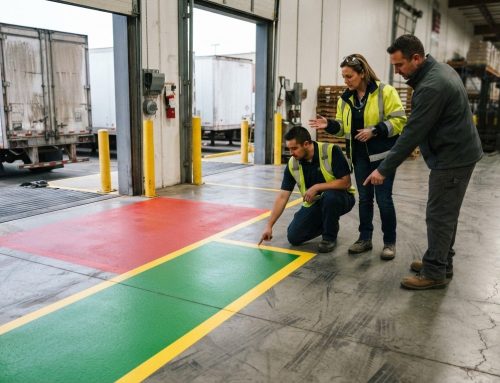
Industrial color standards rely on psychological triggers to direct movement. Safety Red is strictly reserved for fire protection equipment and emergency-only exits. For general pedestrian walkways and safety aisles, we utilize “Walking-Working Surface” yellow. This bright, high-contrast hue signals a safe zone for foot traffic. To further enhance safety, we recommend integrating high-contrast borders (typically black or white) to clearly define pedestrian zones from forklift travel lanes. This visual “barrier” helps operators recognize restricted areas immediately.
In environments where power failures or smoke might obscure overhead lighting, photoluminescent markings are becoming the 2026 standard. These glow-in-the-dark elements provide a low-level light source that remains visible when traditional systems fail. If you’re unsure if your current layout meets these dimensional standards, it’s best to consult with a compliance expert to audit your floor plan. Ensuring your markings are both durable and correctly sized is the only way to guarantee long-term facility safety.
Material Selection and Surface Preparation for Industrial Longevity
Meeting fire exit and egress lane marking requirements depends entirely on the durability of the bond between the marking material and the concrete substrate. In high-traffic distribution centers, standard floor tape is often a liability rather than a solution. Forklift tires (especially those on heavy reach trucks) exert immense shear force that can peel tape from the floor within weeks. This creates a fragmented path that violates the “Continuous Path” rule and introduces new trip hazards. We prioritize industrial epoxy line painting because it creates a chemical bond that resists the daily abuse of industrial operations.
Epoxy vs. Industrial Paint: A Durability Comparison
While standard traffic paint is cheaper upfront, its life-cycle cost is significantly higher due to frequent re-application needs. Epoxy warehouse striping offers superior longevity and chemical resistance, surviving constant exposure to pallet jack friction and harsh cleaning agents. We understand that facility managers worry about operational downtime. Our team utilizes fast-curing resins and 24/7 scheduling to ensure your egress paths are ready for traffic without disrupting your shipping windows. Learn why epoxy warehouse striping outlasts traditional methods in environments where durability is a non-negotiable safety requirement.
The Role of Professional Line Removal
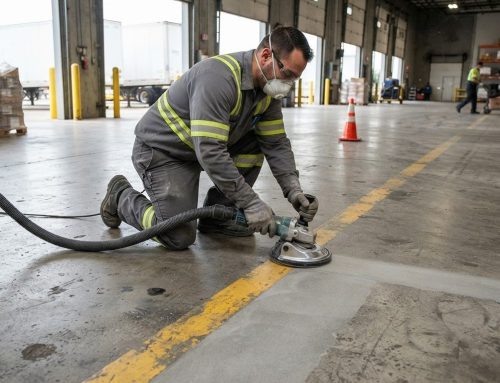
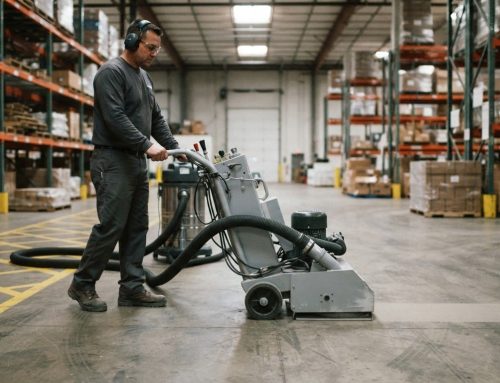
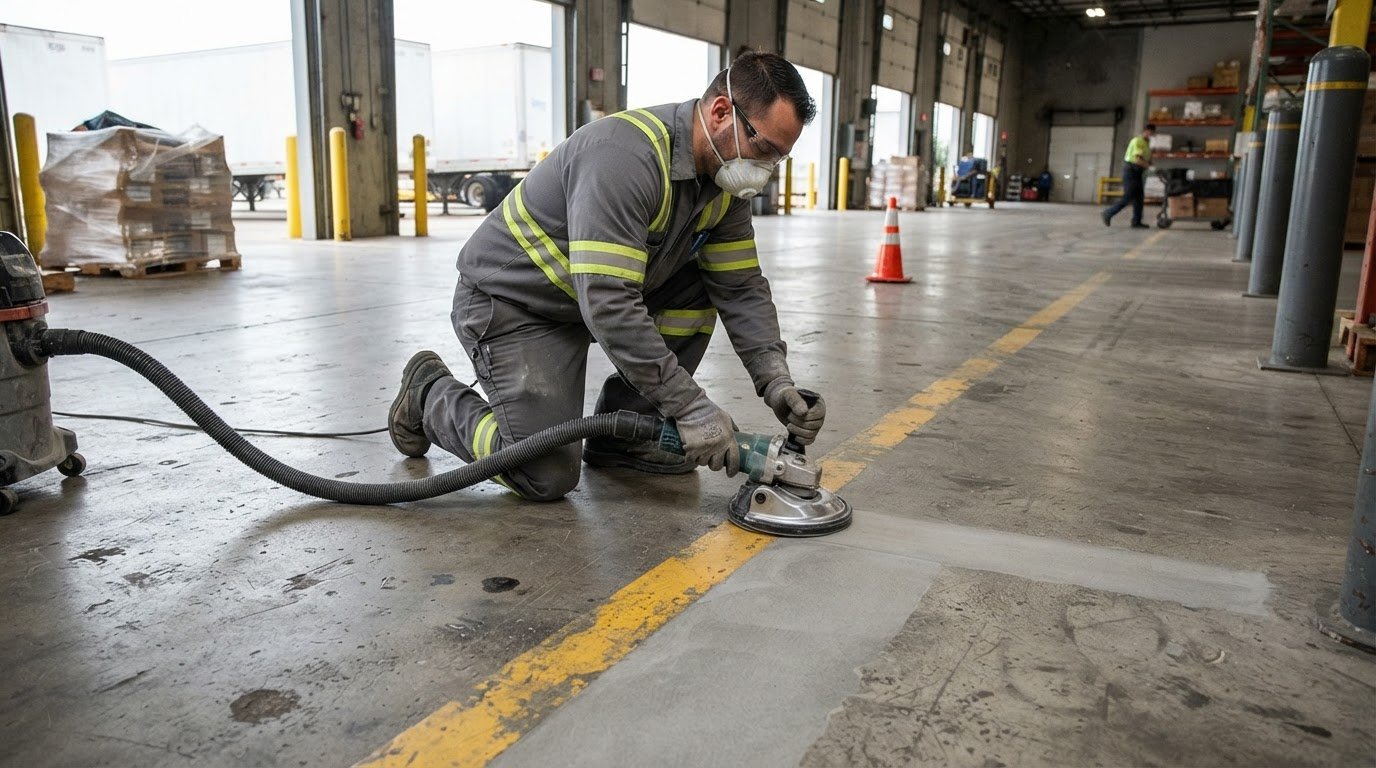
Painting over existing, peeling lines is a recipe for immediate compliance failure. The new layer will only be as strong as the failing paint beneath it. We utilize mechanical shot blasting (a dustless process that scours the concrete to a specific profile) to remove old markings and open the concrete pores. This preparation is essential for food-grade facilities or sensitive electronics environments where dust control is paramount. Our professional warehouse line removal services eliminate the “ghosting” effect of old lines, ensuring your new egress paths are clear and unambiguous for all personnel.
For facilities handling hazardous materials, we often integrate specialized acid-resistant coatings in battery charging zones. This prevents egress line degradation from chemical spills or leaks. If your current markings are peeling, faded, or difficult to see, it’s time to upgrade to a permanent solution that satisfies inspectors and protects your team. Contact our specialists for a durability audit to ensure your facility stays compliant through 2026 and beyond.
Implementing an Egress Marking Strategy: A Professional Framework
Success in meeting fire exit and egress lane marking requirements relies on a systematic approach that moves from evaluation to execution. We’ve developed a five-step framework designed to eliminate guesswork and ensure your facility is prepared for any inspection. First, conduct a facility-wide egress audit to identify “dead ends” or bottlenecks where inventory might obstruct movement. Second, map the path of travel using the shortest possible distance to exits, prioritizing intuitive routes that don’t require complex navigation. Third, integrate your daily pedestrian walkways with these fire exit routes to ensure safety is a constant part of your floor culture. Fourth, execute the professional striping using high-visibility, industrial-grade materials that bond permanently to your substrate. Finally, establish a quarterly maintenance schedule to ensure lines remain “clearly visible” as mandated by OSHA standards.
Designing Safe Pedestrian Aisle Systems
Separating human traffic from heavy machinery is a logistical necessity in high-volume distribution centers. By designing pedestrian walkways and safety aisles that utilize physical or high-contrast visual barriers, you reduce the risk of forklift-related incidents. We recommend stenciling “FIRE EXIT” directly on the floor at regular intervals to improve emergency response times. This floor-level communication remains visible even if smoke obscures overhead signage, providing a literal lifeline for employees during a crisis. It’s a simple addition that bridges the gap between basic compliance and advanced facility safety.
Partnering with Industrial Striping Experts
Managing complex safety markings across multiple sites requires a partner who understands large-scale logistics and federal law. With 29 years of industrial experience, StripeGuys Warhouse Line Striping provides the technical preparation and regulatory expertise needed for nationwide facility compliance. We manage the entire lifecycle of the project, from mechanical line removal to final epoxy application, ensuring your facility meets every 2026 standard without compromising operational uptime. Our team is available 24/7 to work around your shipping windows and minimize downtime. Don’t wait for a surprise inspection to discover a compliance gap. Request a professional egress marking audit for your facility today to ensure your team is protected and your operations remain uninterrupted.
Securing Your Facility for 2026 and Beyond
Maintaining full compliance with fire exit and egress lane marking requirements is a continuous operational responsibility that demands both technical precision and durable materials. You’ve seen how adhering to the 28-inch width minimum and establishing a “Continuous Path” of travel prevents dangerous bottlenecks during emergencies. Relying on professional-grade epoxy and mechanical shot blasting ensures your safety lines won’t peel under heavy forklift traffic, keeping your facility ready for any surprise inspection. These standards aren’t just legal hurdles; they are the foundation of a high-performance industrial environment.
StripeGuys Warhouse Line Striping brings 29+ years of industrial authority to every project, acting as your dedicated OSHA and NFPA compliance specialists. We provide nationwide service for distribution centers, managing large-scale logistics with a no-nonsense approach that respects your operational schedule. Don’t let fading lines or confusing layouts jeopardize your team’s safety or your facility’s budget. You can easily Get a Professional Egress Marking Quote from StripeGuys Warhouse Line Striping to start your compliance audit today. Investing in a clear, visible path of travel today ensures a safer and more efficient workplace for years to come.
Frequently Asked Questions
What is the minimum width for a warehouse fire exit egress path?
The absolute minimum width for any egress path is 28 inches (the legal floor for safe passage). This dimension ensures that personnel can move toward an exit without being blocked by structural elements or warehouse inventory. While 28 inches is the baseline, high-occupancy areas often require wider paths to prevent dangerous bottlenecks. Maintaining this clear width at all times is essential for meeting federal safety standards.
Does OSHA require specific colors for egress lane markings?
OSHA does not mandate a single color for all lines, but it requires that markings are “clearly visible” and distinctive. Safety Red is strictly reserved for fire protection equipment and emergency exits to provide immediate visual recognition. Most facilities utilize “Walking-Working Surface” yellow for general pedestrian aisles. Using these high-contrast colors ensures your facility satisfies fire exit and egress lane marking requirements by creating an intuitive visual system.
Can I use floor tape instead of paint for fire exit markings?
You can legally use floor tape, but it often leads to compliance failure in high-traffic industrial settings. Forklift maneuvers and heavy pallet movement quickly peel adhesive tape from the floor, creating fragmented paths and new trip hazards. We recommend industrial epoxy line painting because it bonds chemically to the concrete substrate. This provides a permanent solution that remains visible and intact after thousands of equipment cycles.
How often do egress markings need to be repainted to stay compliant?
There is no set legal timeframe for repainting, but OSHA mandates that markings must remain “clearly visible” at all times. In high-volume distribution hubs, lines often need a refresh every 12 to 24 months to maintain their high-contrast properties. Establishing a quarterly maintenance audit helps you identify fading or damage before it becomes a citation risk. Regular maintenance ensures your safety lines stay functional and legally compliant.
What happens if a facility fails an OSHA egress marking inspection?
Failing an OSHA inspection results in heavy financial penalties and mandatory corrective actions. As of 2026, a serious violation for non-compliant exit routes can cost up to $16,991 per instance. Willful violations are much more severe, reaching up to $170,181. Beyond the financial impact, a failure indicates a systemic safety risk that could lead to operational delays or temporary facility shutdowns until the paths are corrected.
Are glow-in-the-dark (photoluminescent) floor markings required by law?
Photoluminescent markings are legally required by the International Building Code (IBC) for high-rise buildings where occupied floors are more than 75 feet above fire department access. While not always mandated for low-rise warehouses, these markings are a 2026 best practice for industrial safety. They provide a reliable light source that remains visible during power failures or smoke obscuration, ensuring a safe path of travel when overhead lighting fails.