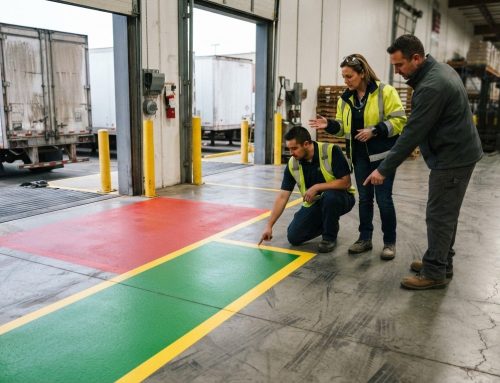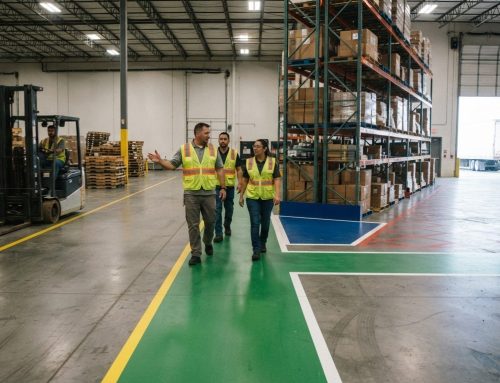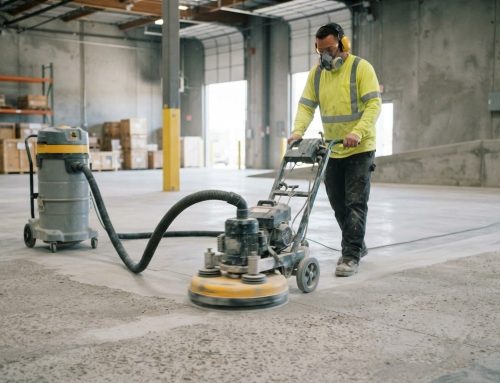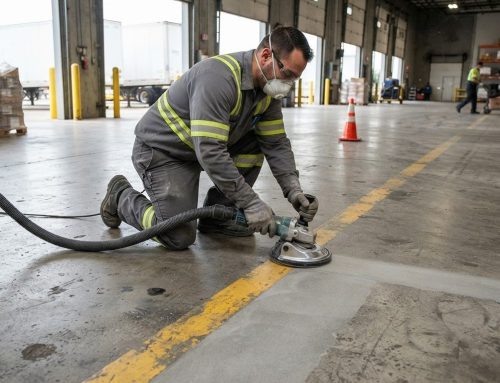
Your expensive industrial epoxy markings aren’t peeling because the product is low-quality; they’re failing because the concrete substrate wasn’t properly engineered to receive them. It’s a recurring frustration for facility managers who watch their investment flake away under heavy forklift traffic in just a few months. Understanding why epoxy floor lines fail is the first step toward breaking the cycle of constant re-striping and avoiding OSHA safety violations. In the warehousing sector, where the injury rate is 4.8 per 100 workers (a figure more than double the private industry average), durable boundaries are a functional necessity for operational safety.
We understand the logistical stress that comes with maintaining a safe workspace while adhering to strict budgetary constraints. This guide identifies the root causes of line failure and outlines the professional standards required to ensure your markings last years, not months. We’ll preview the essential technical prep work, including shot blasting (a mechanical method used to profile the concrete) and moisture testing, that ensures your floor striping remains intact. You’ll gain a clear understanding of how to achieve a high-performance system that reduces long-term maintenance costs and keeps your facility audit-ready.
Key Takeaways
- Identify the distinct differences between delamination (epoxy lifting cleanly from the slab) and chipping to accurately diagnose your facility’s marking failures.
- Gain a technical understanding of why epoxy floor lines fail when applied to smooth concrete without the proper mechanical surface profile.
- Learn why professional standards require mechanical preparation, such as shot blasting, to withstand the intense horizontal shearing forces of heavy forklift traffic.
- Select the appropriate industrial materials and topcoats to ensure your warehouse markings provide multi-year durability rather than failing in months.
Identifying the Common Symptoms of Epoxy Line Failure
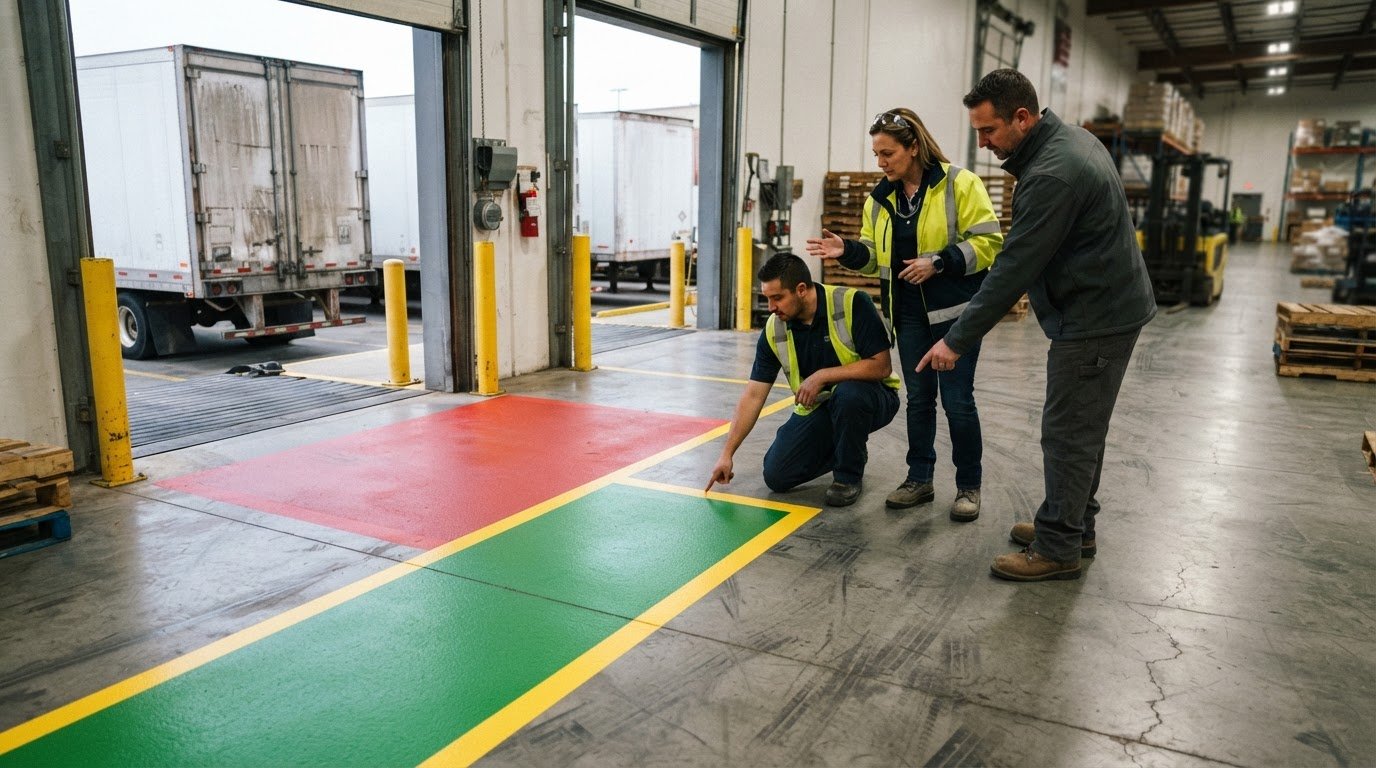
Recognizing the specific way your industrial markings degrade is the first step in diagnosing why epoxy floor lines fail. While it’s tempting to blame a “bad batch” of material, the visual evidence usually tells a different story about the bond between the coating and the slab. Identifying these symptoms early allows facility managers to address the root cause before a full-scale failure occurs. It’s a technical process that requires a keen eye for detail.
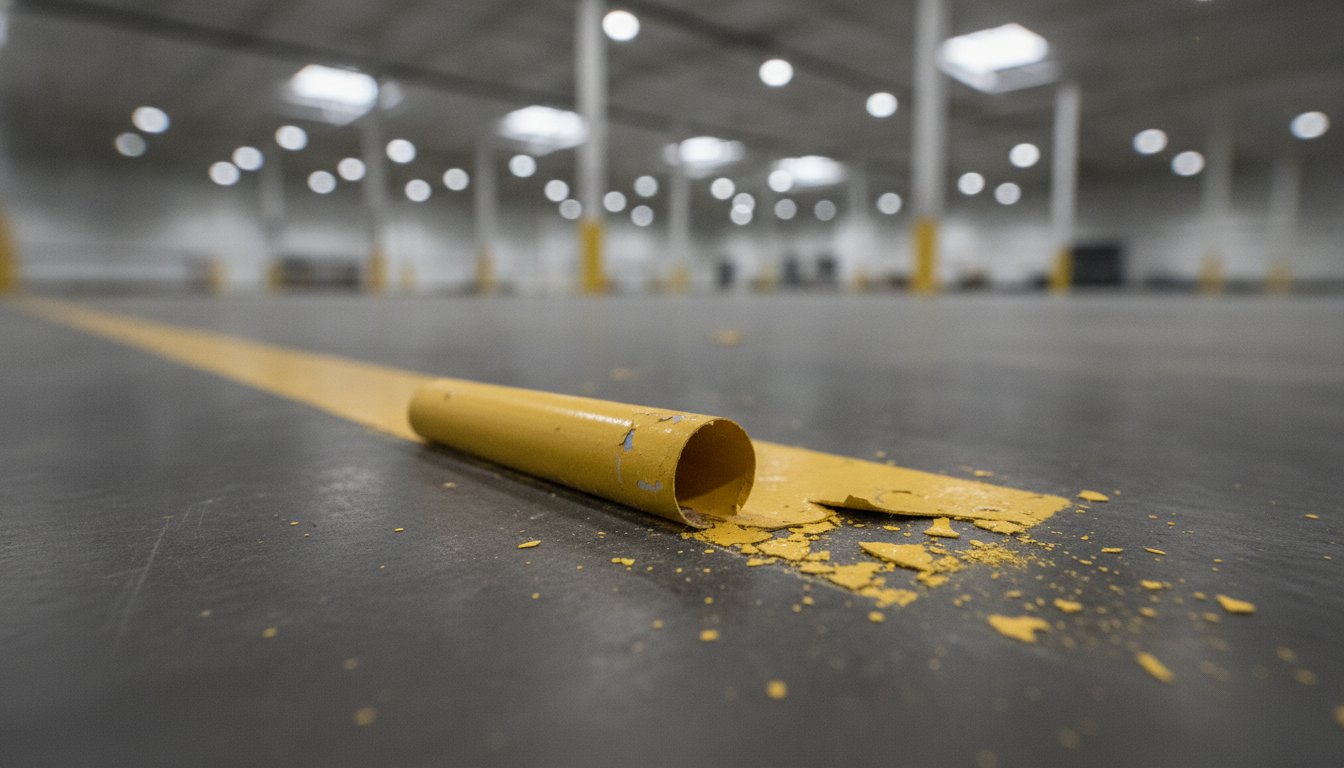
- Delamination: This is a complete bond failure where the coating lifts cleanly away from the concrete. If the underside of the failed flake is smooth and the concrete below looks untouched, the material never properly bit into the surface.
- Flaking and Chipping: In high-traffic aisles, small pieces of the line may break off under the weight of forklift tires. This often happens because the epoxy resins used were either too brittle for the environment or applied over a contaminated surface.
- Discoloration or Ambering: When lines turn yellow or lose their vibrant safety hue, it’s usually due to UV exposure or chemical reactions. This ambering effect compromises the high-visibility contrast required for OSHA compliance.
- Hot Tire Pickup: This specific failure occurs when heated tires from trucks or forklifts bond to the epoxy. When the vehicle moves, the line is literally torn from the floor, leaving bare concrete behind.
Mechanical vs. Chemical Failure Signs
Visual cues provide a roadmap to the original installation errors. If you find a layer of fine white dust under a delaminated flake, it’s a sign of poor mechanical preparation. The epoxy bonded to the dust rather than the concrete pores. Blistering, which appears as small, fluid-filled bubbles, suggests moisture-related failure. This occurs when moisture vapor transmission (MVT) creates pressure from beneath the slab. Conversely, if the line remains attached but the concrete itself is crumbling away, you’re witnessing spalling. This indicates the concrete substrate has reached the end of its functional life or was weakened by previous chemical spills.
The True Cost of Marking Failure
The financial impact of failed lines extends far beyond the price of a new bucket of paint. Every unplanned re-striping project requires operational downtime, which stalls throughput and disrupts supply chain schedules. More importantly, faded or missing lines create significant safety risks. When pedestrian walkways are no longer clearly defined, the chance of forklift-related injuries increases. Securing professional warehouse line striping from the start prevents these logistical headaches. By following a service-plus-benefit approach, we ensure your lines meet safety standards while protecting your long-term maintenance budget.
The Mechanics of De-bonding: Why Lines Lose Their Grip
Understanding the physical and chemical interactions at the bond line is essential to diagnosing why epoxy floor lines fail. While full-floor coatings often fail due to moisture, narrow safety lines face unique stresses that broad surfaces do not. The primary culprit is often a lack of mechanical tooth. Smooth, power-troweled concrete provides no anchor point for the resin, causing the line to sit on top of the slab rather than becoming part of it. This lack of “profile” makes the marking vulnerable to the slightest impact.
Surface purity is equally critical. Even trace amounts of substrate contamination, such as embedded oils, fatty acids, or old sealers, will prevent a chemical bond. These contaminants act as a microscopic barrier, ensuring the epoxy eventually delaminates. Outgassing also plays a role in early failure. As the concrete breathes, air trapped in the pores can expand during the epoxy’s curing phase, creating pinholes (tiny air craters) that weaken the structural integrity of the line and provide a starting point for chipping.
The Physics of Forklift Traffic
Industrial lines must withstand more than just the weight of a vehicle. A forklift exerts a static load (downward pressure), but the real damage comes from dynamic shearing forces. When a forklift accelerates, brakes, or turns its wheels while stationary, it applies horizontal pressure that literally tries to tear the epoxy away from the concrete. Turning wheels create a twisting motion that is far more destructive than straight-line travel. Additionally, the common practice of pallet dragging acts like a chisel, catching the edge of a poorly bonded line and lifting it in strips.
Chemical Resistance and Battery Charging Zones
Standard epoxy lacks the molecular density to survive certain environments. In forklift battery charging areas, frequent sulfuric acid spills will eat through traditional markings in weeks. This chemical degradation softens the material, making it susceptible to tire damage. For these high-risk zones, we utilize specialized acid-resistant coatings for battery zones, specifically Novolac epoxies. These systems offer higher cross-linking density (a tighter chemical structure) to prevent acid penetration. If you are seeing premature failure in your charging aisles, consult with an industrial flooring specialist to evaluate your material specifications and prevent further budget waste.

The Industrial Standard for Durable Line Installation
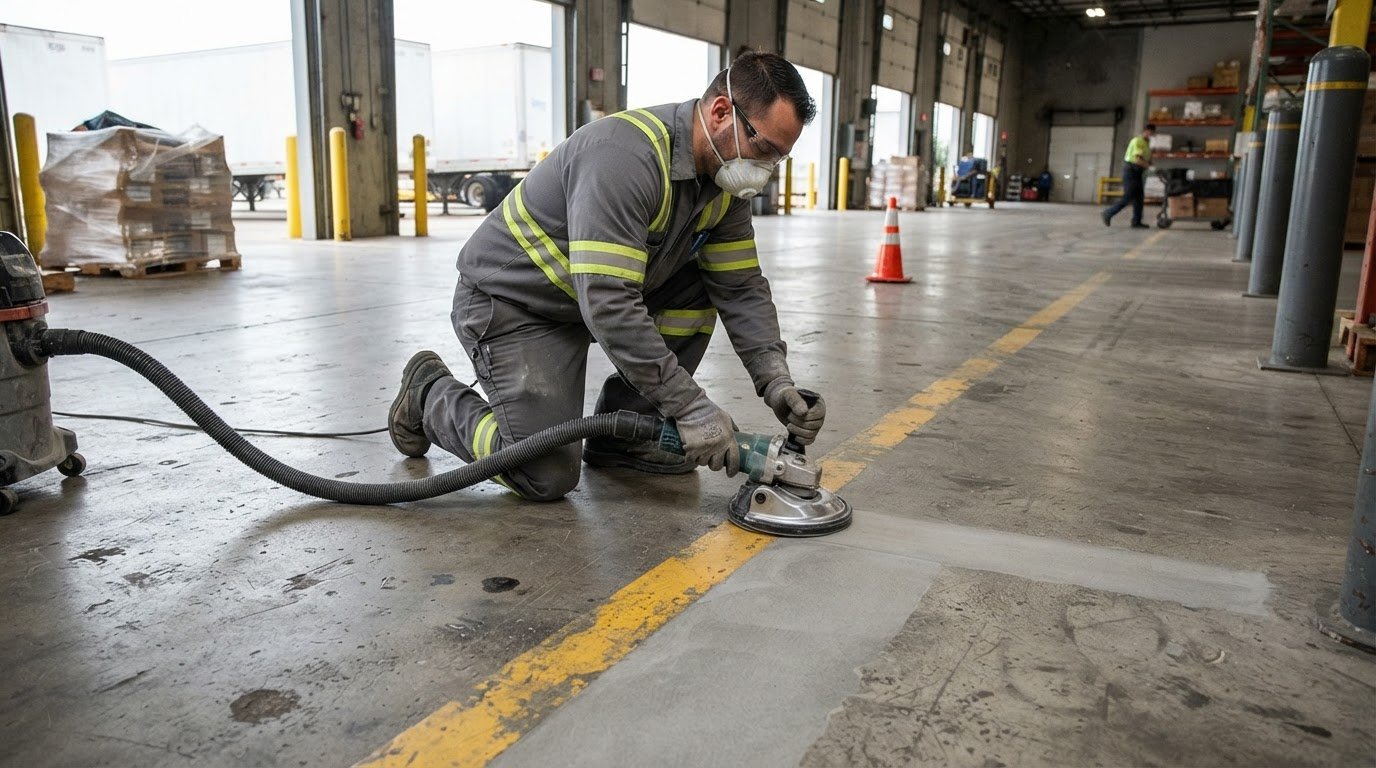
Industrial durability isn’t achieved through better paint; it’s engineered through rigorous surface preparation. When facility managers ask why epoxy floor lines fail, the answer almost always traces back to skipped mechanical steps. Acid etching (a chemical cleaning method) is an outdated practice that often leaves residues or fails to open the concrete pores sufficiently for industrial-grade resins. A professional installation requires mechanical profiling to create a permanent bond between the coating and the slab.
Before any resin touches the floor, we conduct Moisture Vapor Emission Rate (MVER) testing. This protocol measures the volume of water vapor escaping the slab. High moisture levels create hydrostatic pressure that can pop lines off the floor regardless of the product quality. Additionally, managing environmental controls (specifically air temperature and humidity) during the cure is vital. If the environment is too cold or damp, the chemical reaction stalls. This leads to a soft, tacky finish that won’t withstand traffic.
The Shot Blasting Advantage
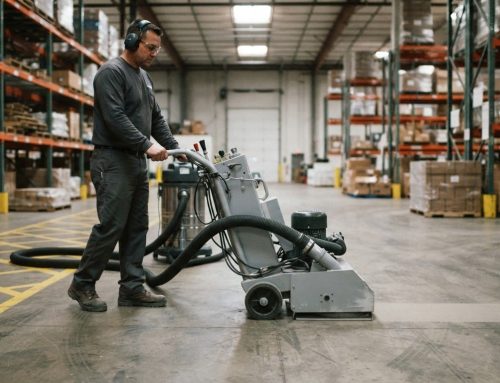
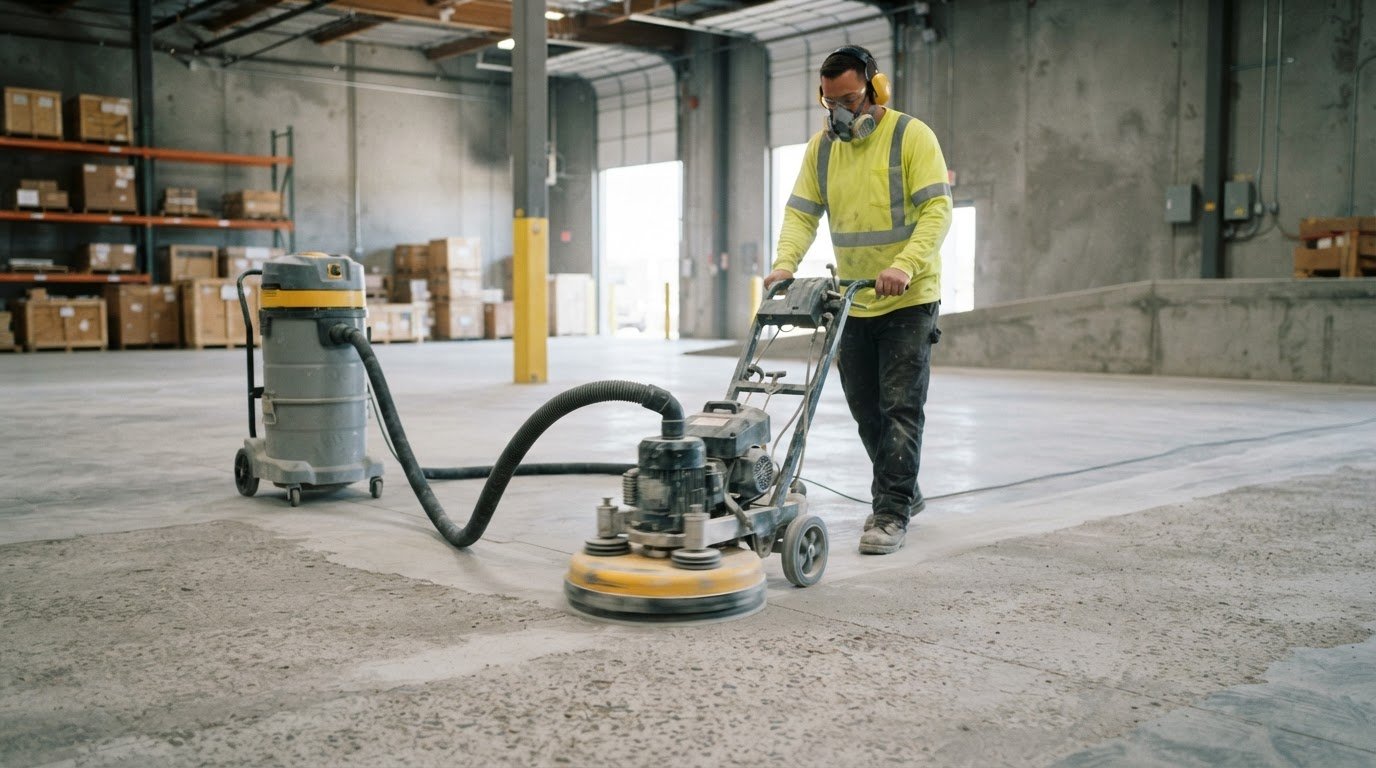
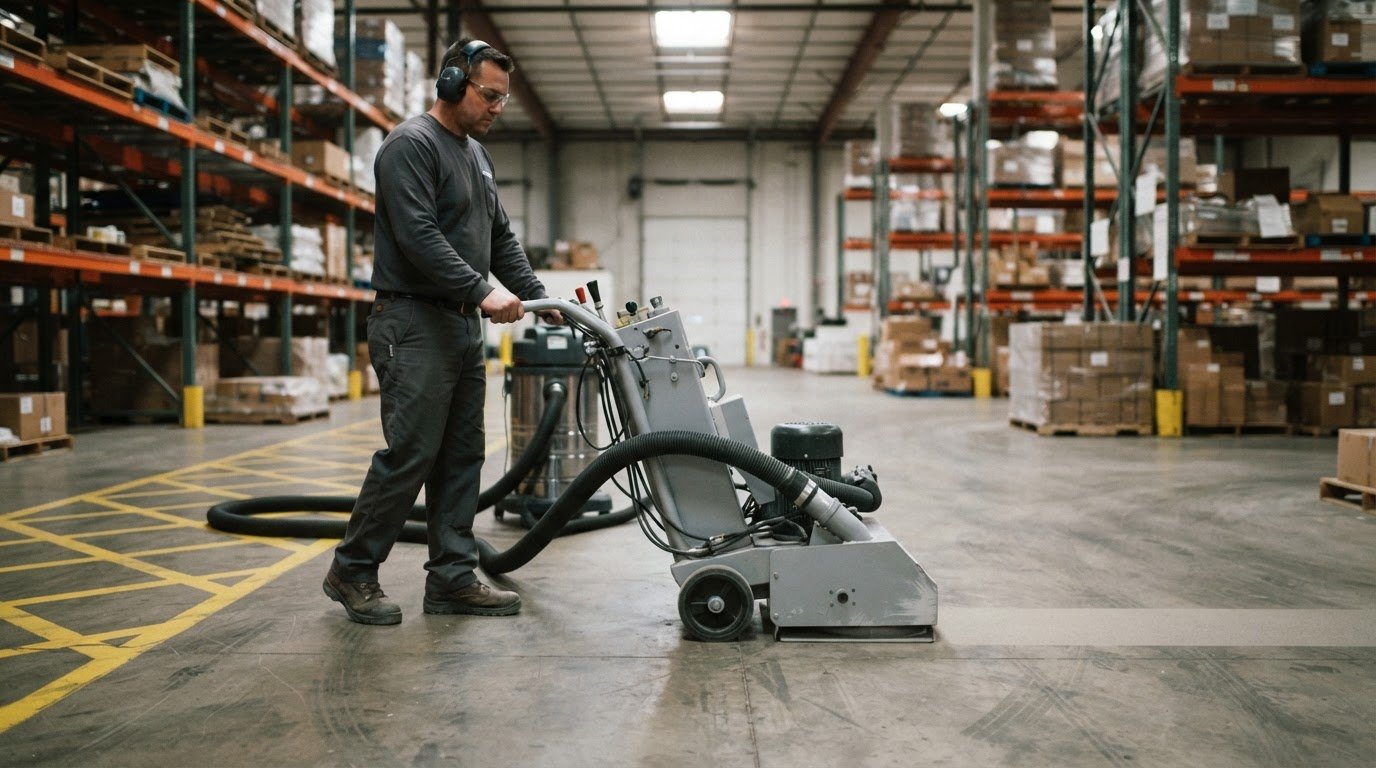
Shot blasting is the gold standard for preparing concrete for heavy-duty markings. This process fires steel shot at the floor to strip away the laitance (the weak, dusty top layer of concrete) and expose the aggregate. It creates a textured, velcro-like surface that significantly increases the surface area for the epoxy to grip. While diamond grinding is useful for smoothing, it may simply smear deep-seated oils further into the slab. Achieving a Concrete Surface Profile of 3 (CSP-3) is the target standard for ensuring industrial epoxy lines withstand the shearing forces of forklift traffic.
Application Best Practices
Once the surface is profiled, the application must be precise. Proper mixing using a low-speed drill ensures full chemical cross-linking; failing to mix thoroughly results in spots that never fully harden. We also prioritize the use of high-solids primers. These primers “wet out” the concrete, penetrating deep into the newly opened pores to create a foundational anchor for the pigmented topcoat. Implementing these high-durability epoxy warehouse striping solutions ensures your safety markings remain functional for years. To secure a marking system that doesn’t quit under pressure, contact our team for a professional assessment of your facility’s specific needs.
Maximizing ROI: Long-Term Maintenance and Selection
Achieving a high return on investment for your facility markings requires matching the material to the specific operational demands of your floor. While we’ve established that poor preparation is why epoxy floor lines fail, selecting the wrong topcoat can also lead to premature wear. Epoxy is the industrial standard for foundational bonding, but it’s often paired with polyurethane or polyaspartic coatings for enhanced performance. Polyurethane provides superior abrasion resistance and UV stability, while polyaspartic systems allow for an incredibly fast return-to-service (a cure time of often less than two hours) for high-velocity logistics centers.
Maintaining these lines is a proactive process. We recommend scheduled quarterly inspections to identify minor chipping before it leads to widespread delamination. According to industry best practices, floor markings should be replaced if more than 25% of the line is faded, peeling, or otherwise obscured. Catching these issues early prevents the “zipper effect,” where a small breach in the coating allows moisture or chemicals to get under the line and lift large sections. When the time comes for an update, professional shot blasting line removal is required to ensure a clean, profiled substrate for the next application.
Choosing the Right Marking System
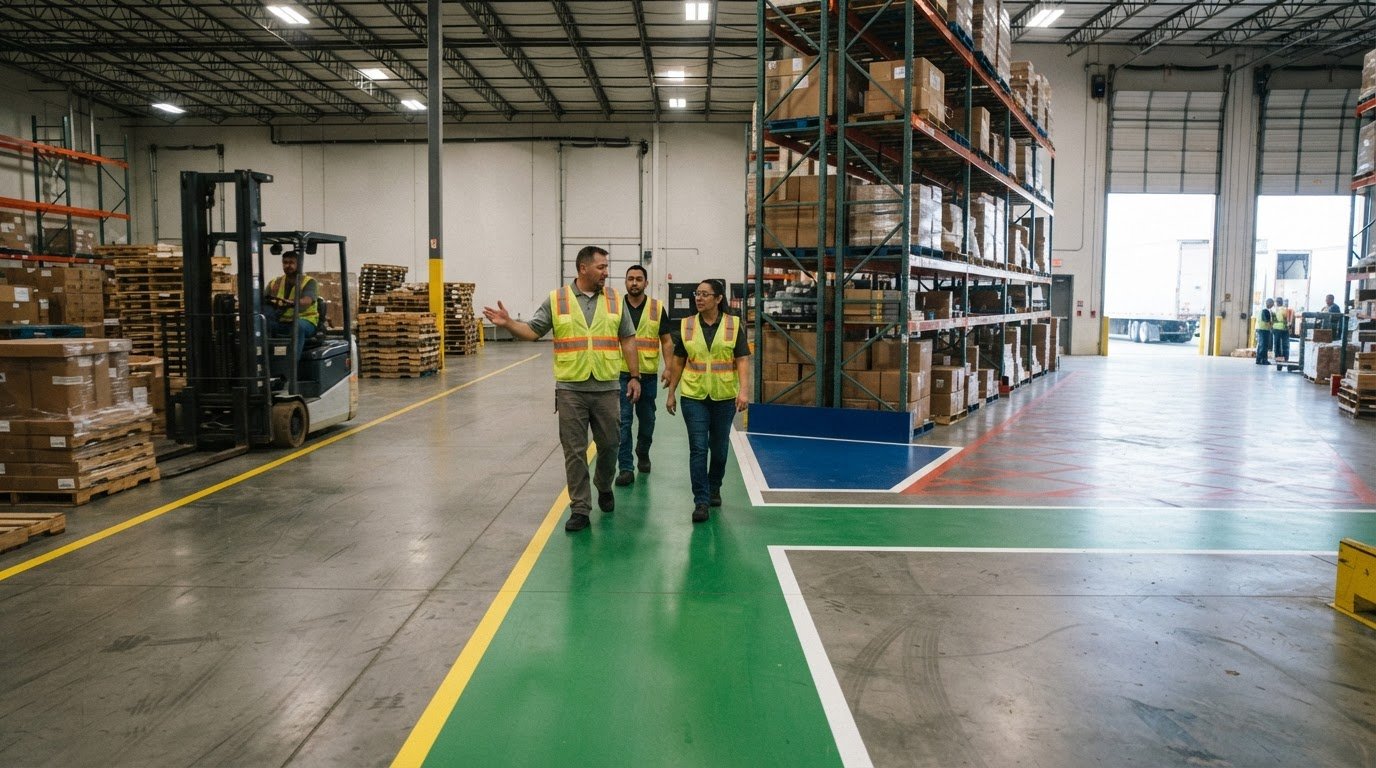
The choice between epoxy coatings and heavy-duty floor tapes depends entirely on traffic volume and the permanence of your layout. In high-traffic main aisles where forklifts operate continuously, a liquid-applied epoxy system is the only solution that provides the necessary bond strength. For temporary staging areas or low-traffic zones, tape may suffice. Integrating pedestrian walkways and safety aisle painting into your broader marking strategy ensures OSHA compliance and a clear visual language for your workforce.
Partnering with Industrial Experts
Managing the organization of a large-scale facility is a complex task that requires a partner who understands industrial infrastructure. With over 29 years of experience in the field, we provide seasoned expertise that prioritizes functional outcomes and safety over simple aesthetics. Our team offers nationwide coverage, providing a consistent standard of reliability for multi-site logistics providers. We don’t just apply paint; we act as safety-conscious consultants who ensure your facility remains efficient, compliant, and audit-ready around the clock.
Securing Your Facility’s Long-Term Operational Safety
Understanding why epoxy floor lines fail allows you to shift from reactive re-striping to a proactive, durable marking strategy that protects your bottom line. The success of your warehouse markings depends on rigorous mechanical surface profiling (achieving the correct Concrete Surface Profile) and the precise selection of industrial coatings that can withstand intense horizontal shearing forces. By prioritizing these professional standards, you eliminate the logistical stress of recurring safety violations and the costs associated with unplanned operational downtime.
Our team brings over 29 years of industrial striping experience to every project. We utilize specialized mechanical removal and surface prep equipment to ensure a permanent bond between the coating and your slab, regardless of previous contamination. We provide nationwide service for large-scale distribution centers, maintaining a consistent standard of reliability across your entire infrastructure. Request a Quote for Durable Industrial Striping today to secure a marking system built for high-traffic environments. We’re ready to help you establish clear, permanent boundaries that stand the test of time.
Frequently Asked Questions
Can you apply new epoxy floor lines over old paint?
Applying new epoxy over old paint is not recommended for industrial environments because the new coating is only as strong as the bond of the layer beneath it. If the original paint fails, your new investment will delaminate along with it. To ensure a permanent bond, we use shot blasting line removal to strip the slab back to bare concrete and create the necessary mechanical profile.
How long do I need to wait before driving forklifts on new epoxy lines?
Standard industrial epoxy typically requires 24 hours for foot traffic and 72 hours to reach full chemical cure for heavy forklift loads. If your facility cannot afford extended downtime, we utilize polyaspartic systems that allow for a return to service in as little as two hours. Following these cure schedules is vital to prevent tire marks or structural damage to the new markings.
Why is my epoxy line peeling up in chunks but the rest of the floor is fine?
This localized failure usually occurs because lines face intense horizontal shearing forces that the rest of the floor does not. When a forklift turns its wheels directly on a marking, it exerts a twisting pressure that tests the bond strength to its limit. This is often why epoxy floor lines fail even when the surrounding floor coating remains intact; the lines simply didn’t have the required mechanical tooth to resist that specific stress.
Does concrete moisture always cause epoxy failure?
Moisture doesn’t always cause immediate failure, but high moisture vapor transmission (MVT) is a leading cause of long-term delamination. If the water vapor pressure beneath the slab exceeds the bond strength of the resin, it will create blisters or pop the lines off the floor. We conduct MVER testing before application to determine if a moisture-mitigating primer is necessary for your specific slab conditions.
What is the difference between shot blasting and grinding for line prep?
Shot blasting fires steel shot to blast away the weak top layer of concrete (laitance), while diamond grinding uses rotating discs to shave the surface. Shot blasting is the superior method for line installation because it creates a deeper, “velcro-like” profile known as CSP-3. This deep texture provides more surface area for the epoxy to grip, ensuring the markings can withstand heavy industrial traffic without peeling.
Is epoxy or floor tape more durable for heavy-duty warehouses?
Professional epoxy line painting is significantly more durable than floor tape in high-traffic distribution centers. While heavy-duty tape is useful for low-traffic staging areas, it can snag, tear, or peel when subjected to the turning tires and pallet dragging common in busy aisles. Epoxy becomes a physical part of the concrete substrate, providing a flush, high-performance boundary that lasts years rather than months.