If your floor markings are peeling after only six months of forklift traffic, you haven’t invested in a safety system; you’ve bought a temporary distraction that puts your OSHA compliance at risk. Many facility managers struggle with the cycle of constant re-application and the looming threat of OSHA penalties, which can reach $16,550 for serious violations. When you’re managing a high-volume facility, you need warehouse floor striping Marysville services that prioritize a mechanical bond between the epoxy and the concrete over simple aesthetics.
We understand that your primary goals are long-term durability and minimal operational disruption. This guide will show you how to evaluate industrial epoxy painters and marking systems to ensure your floors withstand five or more years of heavy use while staying fully compliant with safety regulations. We’ll preview the critical technical preparation methods, such as shot blasting (a mechanical process that creates a porous surface for maximum adhesion), and explain how the right material selection prevents the need for frequent, costly shutdowns. You’ll learn to transition from reactive maintenance to a proactive, safety-first marking strategy that protects both your workers and your bottom line.
Key Takeaways
- Evaluate the performance hierarchy of marking materials to understand why industrial epoxy offers the highest abrasion resistance and the lowest five-year total cost of ownership.
- Understand the critical role of mechanical shot blasting (a process that removes surface contaminants and latent concrete) in preventing the 90% of striping failures caused by poor preparation.
- Identify the logistical capabilities required for warehouse floor striping Marysville projects in large-scale facilities, focusing on contractors who offer 24/7 mobilization to protect your production uptime.
- Discover how precision floor markings directly impact facility throughput by creating a standardized organizational flow that eliminates traffic confusion and safety hazards.
Why Industrial Epoxy Striping is the Standard for Modern Facilities
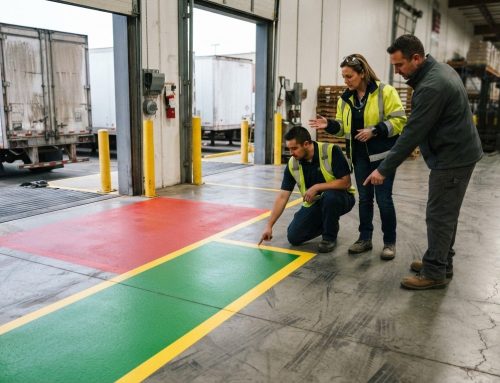
Industrial epoxy striping isn’t just paint; it’s a high-solids resin system engineered for extreme abrasion resistance. Unlike standard traffic paint that rests on the concrete surface, epoxy resins create a chemical bond with the substrate to withstand thousands of forklift passes. For facility managers seeking warehouse floor striping Marysville, this durability is the primary driver for a positive return on investment. Clear, permanent markings directly improve throughput by defining travel paths and reducing the time operators spend navigating disorganized floor space. In the 2026 industrial landscape, high-visibility markings are even more critical for automated warehouses where sensors and cameras rely on high-contrast boundaries to navigate safely.
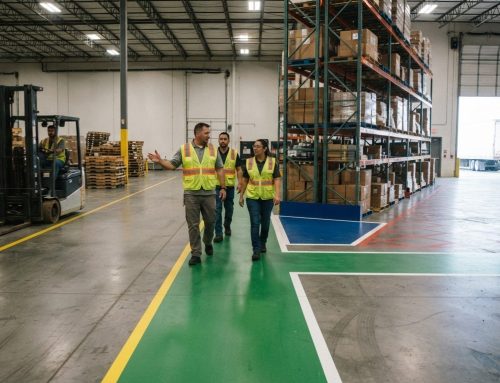
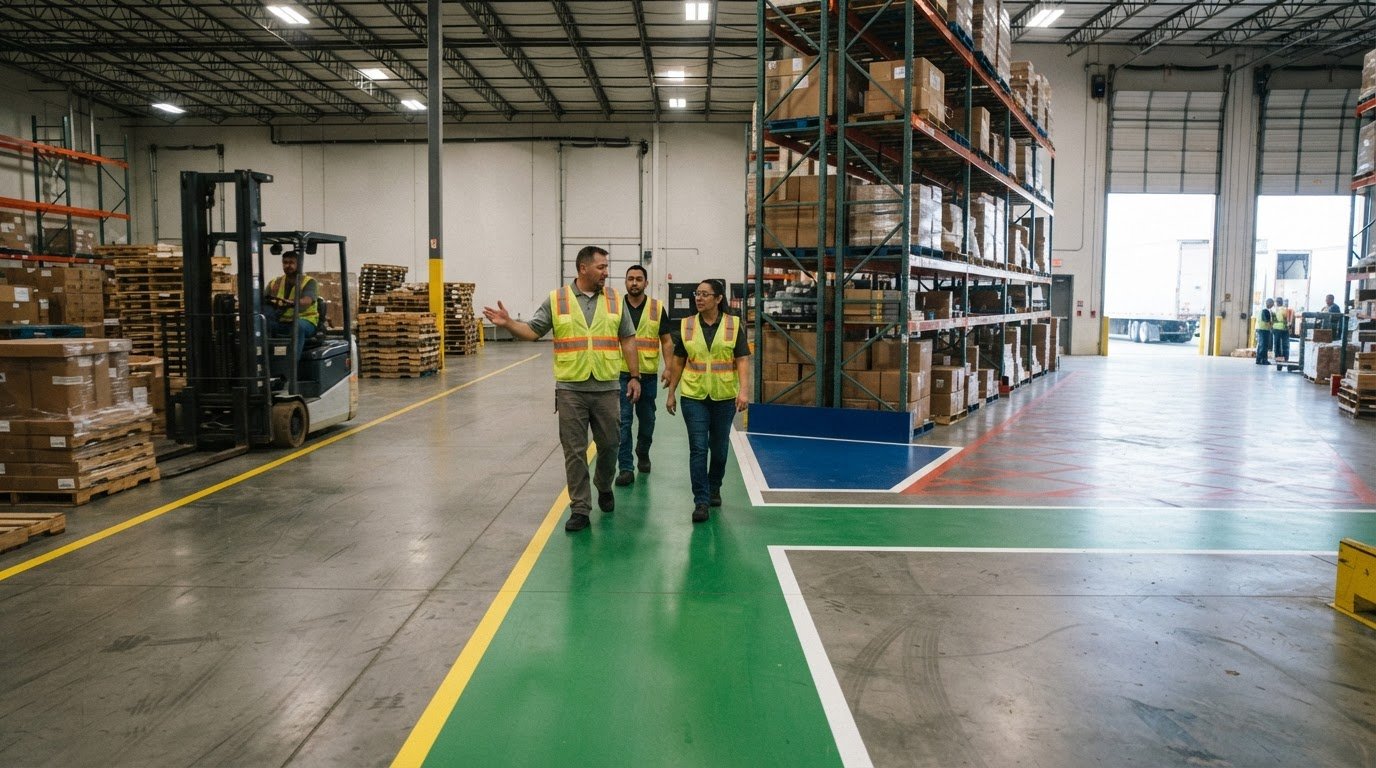
Safety is the cornerstone of any high-functioning facility. Implementing durable markings for pedestrian walkways and safety aisles drastically reduces the risk of vehicle-to-human collisions. These markings act as a physical and visual barrier, keeping foot traffic away from heavy machinery zones. Reliable markings ensure your facility remains a controlled environment, even during peak production cycles.
OSHA Compliance and Safety Standards
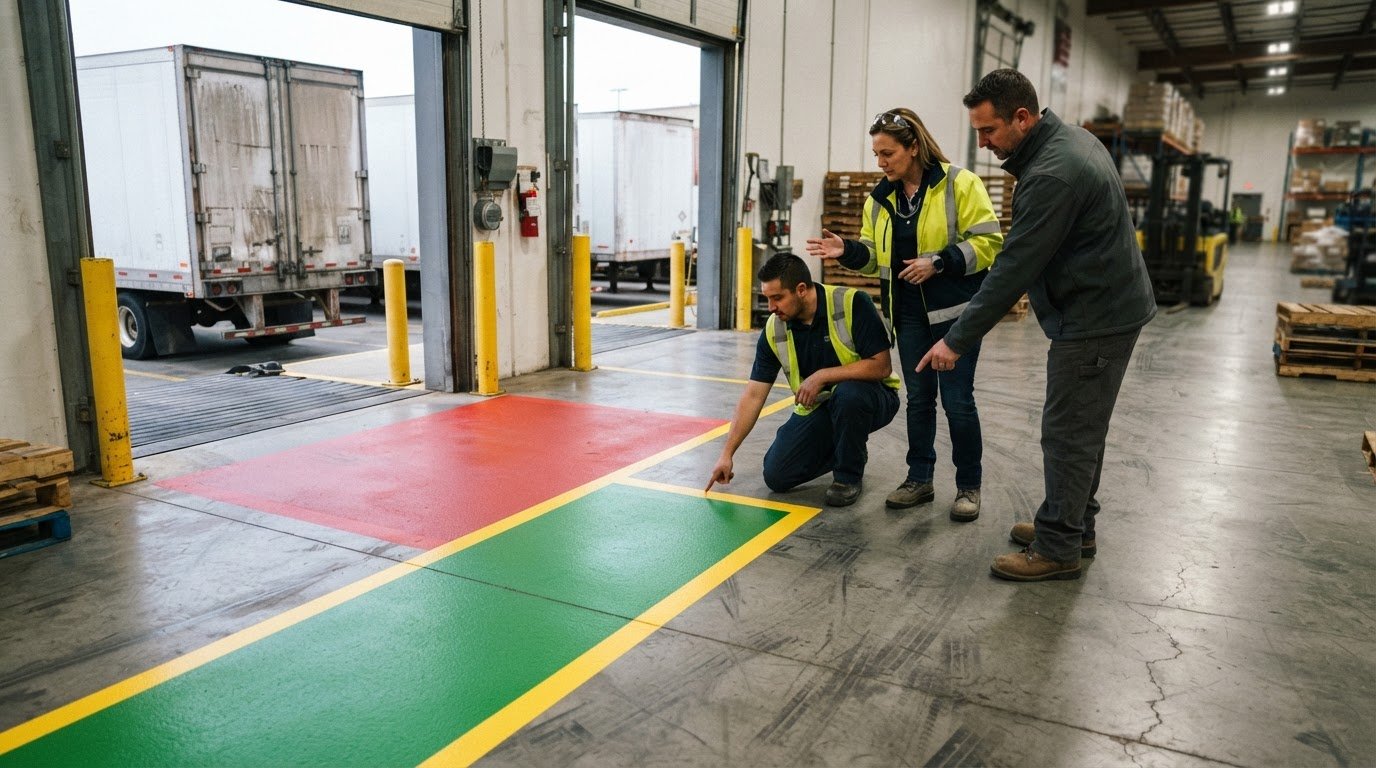
OSHA regulations are strict regarding facility organization and aisle widths. Aisles must be at least 4 feet wide, or 3 feet wider than the largest piece of equipment used in that space. We use standardized color coding, such as yellow for caution and traffic paths and red for fire hazards or emergency equipment, to ensure instant recognition. Egress path markings are also a legal necessity. They provide a clear route to exits during power outages or emergencies. Maintaining these standards helps your facility avoid OSHA fines, which can reach $16,550 for serious violations. Consistent warehouse floor striping Marysville protects your budget from these avoidable regulatory costs.
The 5S Methodology and Lean Operations
The 5S framework includes Sort, Set in order, Shine, Standardize, and Sustain. Professional striping serves as the “Set in order” phase by designating a permanent home for every pallet, rack, and piece of equipment. This organization eliminates waste and keeps the facility in a state of constant readiness. Floor markings act as a visual management tool that tells forklift operators exactly where they belong without needing verbal instruction.
Comparing Marking Systems: Epoxy vs. Paint vs. Tape
Choosing the right marking system is a matter of industrial engineering rather than simple maintenance. Standard traffic paint sits at the bottom of the performance hierarchy; it’s a thin-film coating that easily scuffs and fades. Industrial floor tape provides a medium-tier solution for areas with light traffic, while epoxy line painting represents the high-performance standard for heavy-duty environments. Adhering to OSHA general requirements for safe walking-working surfaces requires markings that don’t vanish under daily traffic. In high-stress zones, such as forklift intersections where tires make frequent pivot turns, epoxy is mandatory to prevent constant visibility loss. While paint might dissolve when exposed to leaked fluids or cleaning chemicals, high-grade epoxy remains intact and legible.
Over a 5-year period, the total cost of ownership for warehouse floor striping Marysville favors the most durable materials. Standard paint often requires re-application every 12 to 18 months in active facilities. This leads to a cycle of repeated labor costs and operational downtime. In contrast, a professionally applied epoxy system can last five to ten years. If you’re managing a 24/7 logistics hub, the cost of stopping production for a weekend of re-painting every year far outweighs the initial investment of a long-term system. You can consult with our team to determine which material grade fits your specific traffic volume.
The ROI of High-Durability Epoxy
While epoxy has a higher upfront cost, it requires approximately 70% less frequent re-striping than standard water-based or solvent-based paints. This longevity eliminates the hidden costs of downtime and the logistical headache of clearing racks for maintenance crews every year. For specialized environments, such as battery charging areas, we utilize acid-resistant coatings that protect the concrete substrate from corrosive spills. This targeted application ensures your safety markings remain compliant even in the harshest chemical conditions.
When to Use Industrial Floor Tape
Industrial floor tape is an effective tool for temporary staging areas or low-traffic pedestrian zones where layouts change frequently. It offers the benefit of immediate use without the 48-hour curing window required for epoxy. However, tape has significant limitations in heavy industrial settings. Adhesive failure and edge curling are common when pallets are dragged across the floor. Once a corner lifts, it becomes a trip hazard and can be completely ripped up by the next forklift pass. For permanent facility flow, paint or epoxy remains the reliable choice.

Surface Preparation: The Foundation of Line Durability
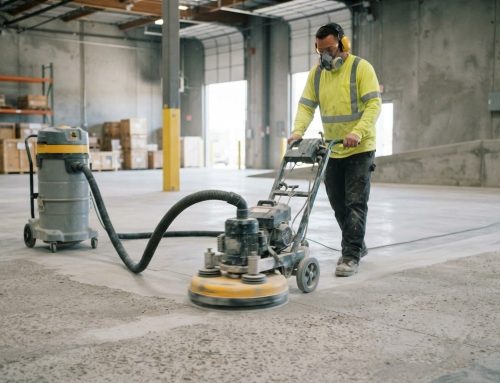
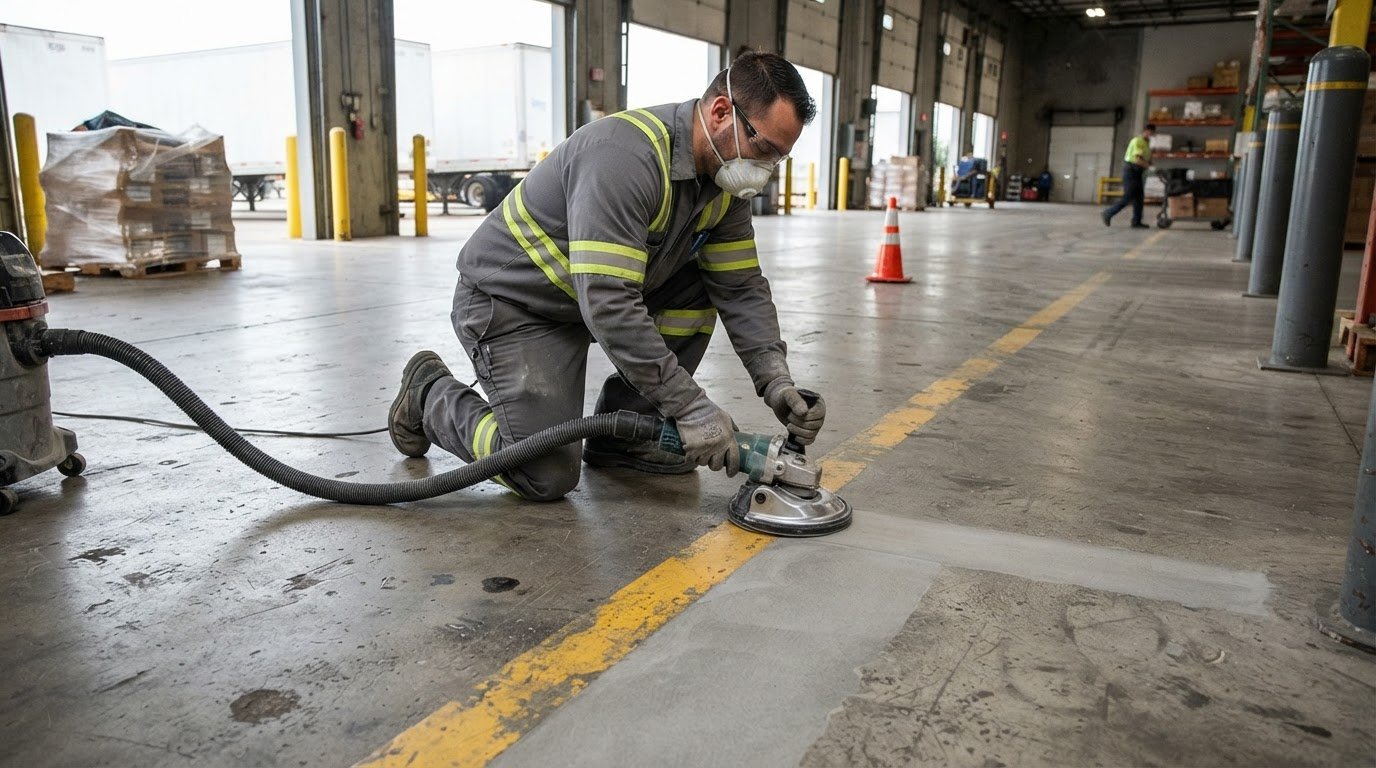
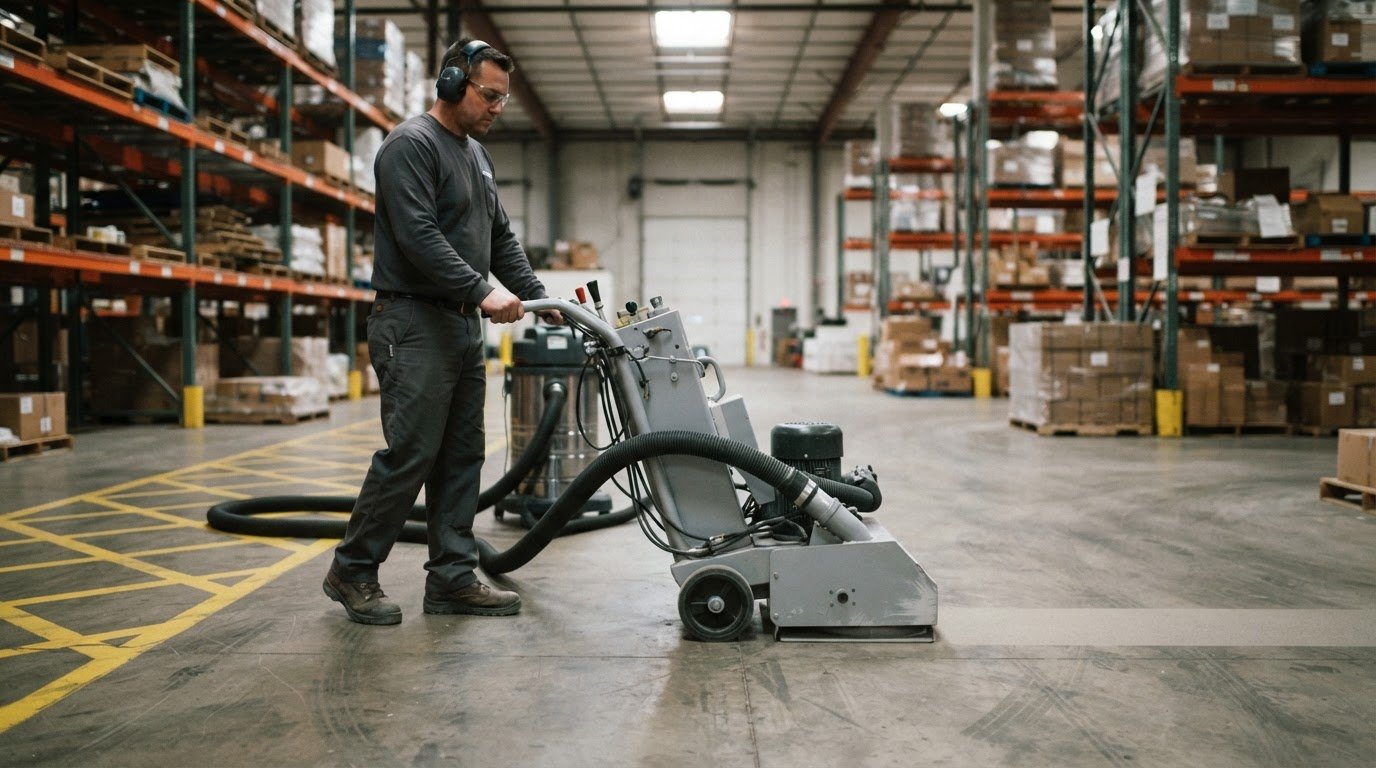
Industry data suggests that 90% of floor striping failures result from improper surface preparation rather than the quality of the resin itself. For a successful warehouse floor striping Marysville installation, the concrete must be mechanically profiled to ensure the epoxy doesn’t just sit on top of the slab. Without this step, the bond is purely superficial, leading to delamination under the weight of heavy forklifts. Professional contractors follow the AMPP standards for Surface Preparation of Concrete to achieve a Concrete Surface Profile (CSP) of 2-3. This specific profile feels like medium-grit sandpaper, providing the mechanical “teeth” necessary for a permanent bond.
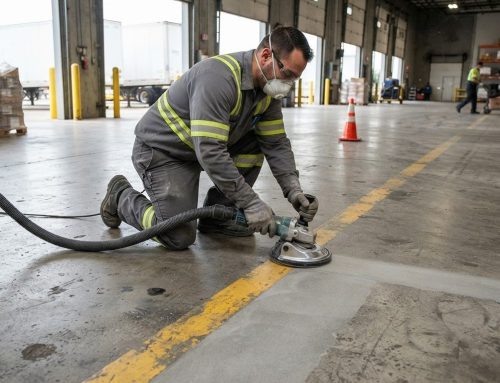
When facilities reconfigure their logistics flow, the process begins with professional warehouse line removal. We don’t simply paint over old lines, as the new coating would only be as strong as the failing paint beneath it. Instead, we remove the existing markings and the top layer of latent concrete to provide a clean slate for the new layout. This ensures that your facility organization is built on a stable foundation that won’t peel or flake during peak operations.
Shot Blasting vs. Diamond Grinding
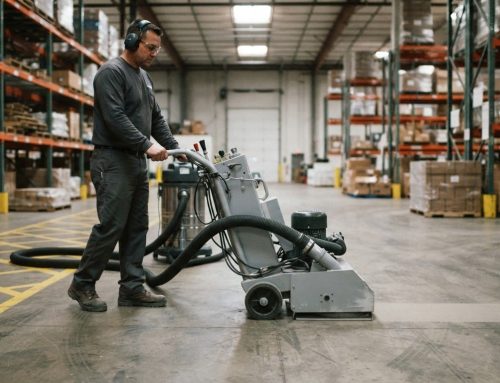
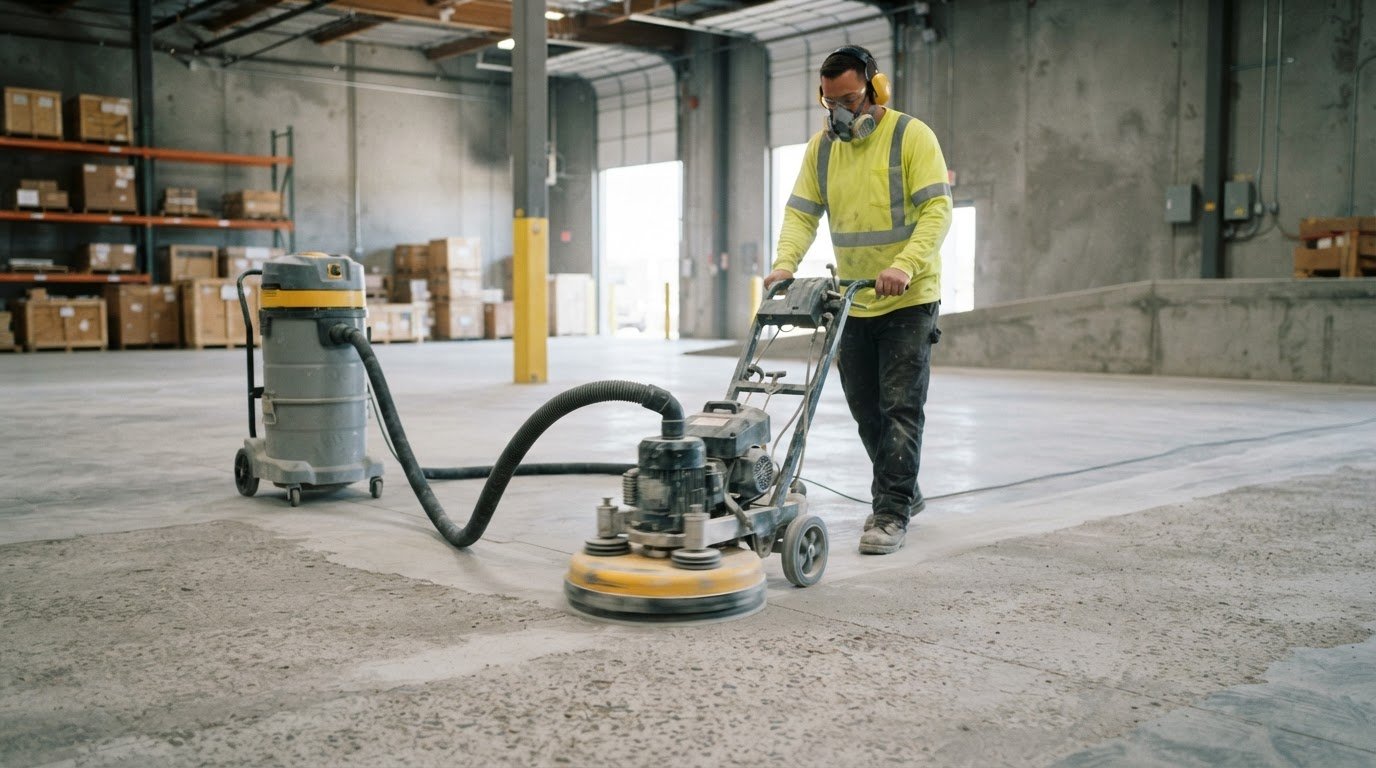
Shot blasting is an impact-based process that fires thousands of small steel spheres at the floor to fracture off the weak surface layer known as laitance. This differs from diamond grinding, which is an abrasion-based method that can sometimes “polish” the concrete and close the pores. For large-scale industrial epoxy, shot blasting is the preferred method because it opens the concrete’s internal structure for maximum resin penetration. Modern industrial shot blasters are equipped with high-efficiency vacuums, making the process virtually dustless and safe for active production environments.
Handling Contaminants and Oils
Concrete in active facilities is often saturated with forklift oils, hydraulic fluids, and rubber tire marks. These contaminants act as bond-breakers. We use industrial-grade chemical degreasers in conjunction with mechanical preparation to draw these oils out of the slab. Epoxy cannot bond to a surface it cannot touch. If your floor has seen years of heavy traffic, request a professional surface assessment to ensure your new markings are applied to a decontaminated substrate.
Selecting a National Industrial Striping Contractor
Managing a facility rollout ranging from 300,000 to 5,000,000 square feet requires more than just local labor. You need a partner capable of executing warehouse floor striping Marysville with precision across multiple regions or states. We prioritize 24/7 mobilization because we know your production schedule is the priority. By working during nights, weekends, or scheduled shutdowns, we ensure your facility remains operational while we install high-durability epoxy systems. Our 29+ years of industry tenure provides the seasoned expertise needed to navigate complex site requirements and tight production deadlines without compromising on quality.
For multi-state facility managers, a single point of contact is a logistical necessity. This centralized communication model eliminates the headaches of managing different vendors and ensures that safety standards remain consistent across your entire infrastructure. When you work with a contractor who understands the physical realities of large-scale logistics hubs, you get a partner who values your time and operational efficiency above all else.
Vetting for Safety and Insurance
Industrial sites carry significantly higher risks than standard commercial properties. You must verify that your contractor carries comprehensive General Liability, Workers Comp, and high-limit Umbrella policies specifically rated for industrial environments. Always request an EMR (Experience Modification Rate) score; this metric is a direct reflection of a company’s safety record and adherence to regulatory compliance. It’s a common mistake to hire “parking lot painters” for interior work. These crews often lack the specialized shot blasting equipment and high-spec resins required for the interior durability standards we’ve established in this guide.
Project Management and Mobilization
Efficiency in large-scale rollouts depends on a contractor that travels nationwide with their own specialized crews. Relying on local subcontractors often leads to inconsistent results and failed inspections. By maintaining internal control over every crew, we ensure that surface preparation and resin application methods are uniform at every site. We maintain strict communication standards, providing daily progress reports and clear timelines during multi-week projects. Before committing to a vendor, we encourage managers to review a detailed project gallery or case study to verify their experience with similar industrial scopes.
Securing Long-Term Operational Efficiency
Achieving a safe and organized facility requires more than a fresh coat of paint. It demands a mechanical bond through shot blasting and the application of high-solids resins that withstand the daily abuse of heavy forklift traffic. By prioritizing these engineering standards over temporary fixes, you ensure your warehouse floor striping Marysville investment lasts for years rather than months. This approach reduces long-term maintenance costs and keeps your facility in constant alignment with OSHA safety requirements.
We’ve spent 29+ years refining our process for 1M+ sq ft facilities. Our nationwide mobilization capabilities mean we bring specialized crews and industrial-grade equipment directly to your site, regardless of the location. We don’t just apply lines; we build safety systems that protect your workforce and your production uptime. You can trust that our experienced teams understand the logistical pressure of 24/7 operations and will work to minimize any impact on your throughput.
Request a Fast, Free Quote for Your National Striping Project and secure a marking system designed for the highest industrial standards. Your facility is a high-stakes environment, and it deserves a durable foundation that works as hard as your team does.
Frequently Asked Questions
How long does industrial epoxy take to cure before forklifts can drive on it?
Industrial epoxy typically requires a minimum of 48 hours to cure before it can handle light foot traffic; however, heavy forklift traffic should be restricted for at least 72 hours. A full chemical cure (the point at which the resin reaches its maximum hardness and chemical resistance) can take up to seven days. We coordinate with your logistics team to schedule these applications during low-activity windows to maximize the system’s longevity.
Is shot blasting necessary if my warehouse floor is brand new?
Shot blasting is mandatory even for brand new warehouse floors to remove laitance (a weak, brittle layer of cement that forms during the curing process). New concrete also frequently contains curing agents or sealers that act as bond-breakers for epoxy resins. By mechanically profiling the slab, we ensure your warehouse floor striping Marysville installation achieves the required adhesion to withstand years of heavy industrial use.
What is the difference between an epoxy painter and a standard commercial painter?
The primary difference lies in the equipment and the materials used for the project. An industrial epoxy painter uses specialized mechanical prep tools (like shot blasters) and high-performance resins designed for abrasion resistance. A standard commercial painter typically uses thin-film paints that lack the chemical bond necessary for industrial environments. We focus on functional safety and OSHA compliance rather than simple aesthetic coverage.
Can you apply new epoxy lines over existing warehouse floor paint?
We don’t recommend applying new epoxy over existing paint because the new system will only be as reliable as the old layer underneath. If the original paint loses its grip on the concrete, the new epoxy will peel away regardless of its quality. Our process involves a thorough line removal to expose the raw concrete substrate, ensuring the new markings are permanently anchored to the floor.
How often should a high-traffic distribution center plan for re-striping?
A high-traffic distribution center should plan for epoxy re-striping every five to ten years. This is a significant improvement over standard traffic paint, which often requires a full refresh every 12 to 18 months in active zones. By selecting a high-durability system, you minimize the logistical stress of clearing racks and stopping forklift traffic for frequent maintenance cycles.
Does industrial epoxy striping emit dangerous fumes during application?
Most modern industrial epoxy systems are formulated as low-VOC or 100% solids products, which means they produce very little odor during the curing process. These materials are safe for use in large, ventilated facilities without the risk of dangerous fumes typical of solvent-based coatings. We prioritize the safety of your personnel by selecting materials that meet strict environmental and workplace health standards.