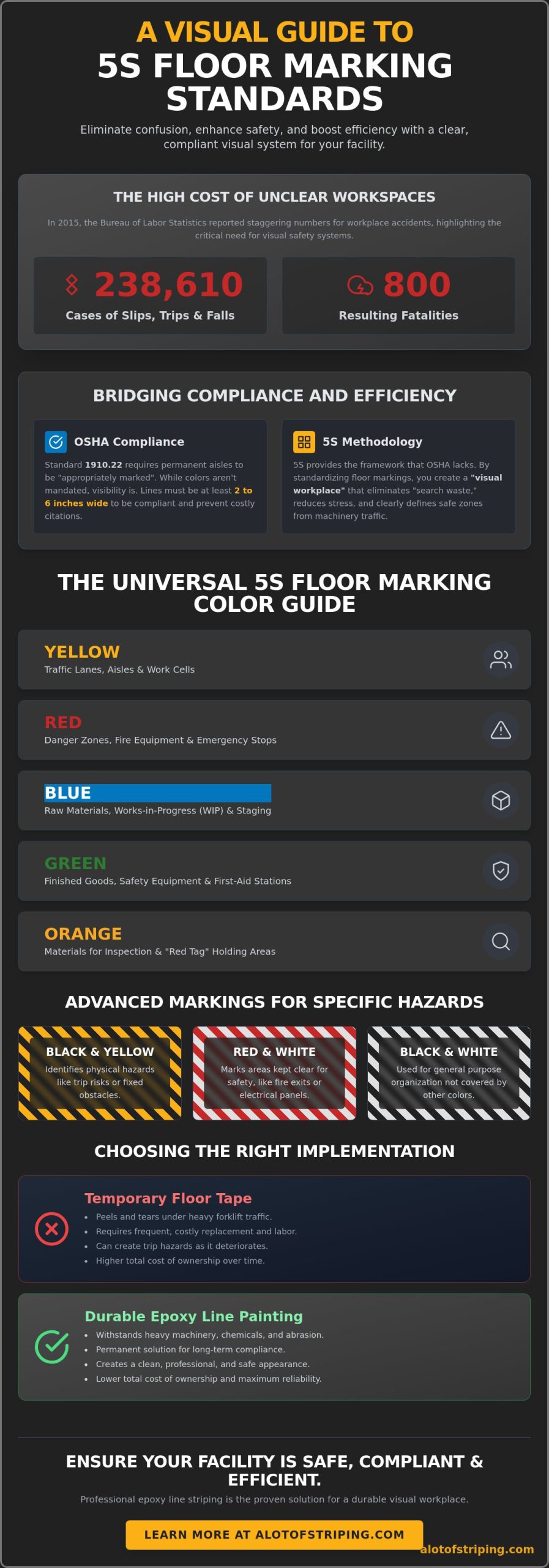
In 2015, the Bureau of Labor Statistics reported 238,610 cases of slips, trips, and falls in the workplace, with 800 of those incidents resulting in fatalities. These numbers highlight the high stakes of industrial facility management where a lack of visual clarity leads to serious accidents. This 5S floor marking color standards guide provides the framework you need to eliminate confusion and establish a clear, visual order on your production floor. While OSHA 1910.22 requires that permanent aisles are appropriately marked, it doesn’t mandate specific colors. That is why industry best practices are essential for maintaining safety and operational flow.
You probably realize that a poorly marked warehouse is a magnet for OSHA citations and forklift collisions. It’s frustrating when floor tape peels up under heavy traffic, leaving your team guessing where the safe zones end. By following this guide, you’ll master the universal color codes used to improve warehouse safety and ensure your facility remains compliant. We’ll walk through the specific meanings for each color, explain why durable epoxy line painting outperforms temporary tape, and provide a roadmap for implementing a marking system that withstands the daily rigors of heavy machinery.
Key Takeaways
- Understand how the 5S methodology transforms your facility into a visual workplace, reducing logistical stress and improving overall organization.
- Master the industry-standard color codes using this 5S floor marking color standards guide to ensure consistent communication across all work cells and traffic lanes.
- Evaluate the total cost of ownership between temporary floor tape and durable epoxy line painting to choose the most reliable solution for heavy-duty environments.
- Learn to map your facility’s workflow effectively, incorporating dedicated pedestrian walkways and safety aisles to prevent forklift collisions and improve safety ratings.
The Fundamentals of 5S Floor Marking & OSHA Standards
The 5S methodology is a Lean manufacturing framework consisting of five pillars: Sort, Set in order, Shine, Standardize, and Sustain. In a high-volume warehouse, these principles aren’t just abstract ideas; they’re the blueprint for operational efficiency. Floor marking acts as the physical foundation of the “visual workplace,” using clear boundaries to communicate where things belong and where people should walk. This 5S floor marking color standards guide helps facility managers bridge the gap between lean theory and daily practice.
Safety begins with compliance. OSHA standard 29 CFR 1910.22 mandates that permanent aisles and passageways must be “appropriately marked” to prevent accidents. While OSHA doesn’t dictate specific colors, the industry often looks to the ANSI Z535.1 Safety Color Code for guidance on hazard colors. However, ANSI Z535.1 is primarily for safety signs and equipment, not floor marking. This leaves a gap that 5S standards fill by providing a logical, facility-wide system that ensures every employee understands the floor’s “language” at a glance.
Why Visual Organization Matters in 2026
Navigating OSHA vs. 5S Requirements
Professional warehouse floor striping requires attention to specific dimensions. OSHA mandates that floor marking lines must be at least 2 inches wide to be considered visible and compliant. Most industrial facilities choose a width between 2 and 6 inches to ensure the markings are seen in low-light or high-dust conditions. Poorly marked egress paths and fire lanes carry heavy legal implications, as blocked or invisible exit routes are common sources of costly OSHA citations. Ensuring these lanes are distinct and permanent is a critical step in facility safety management.
The Universal 5S Floor Marking Color Guide
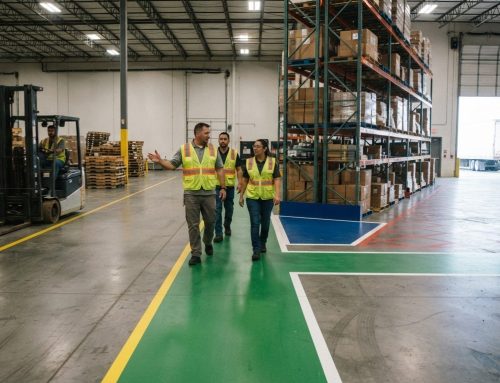
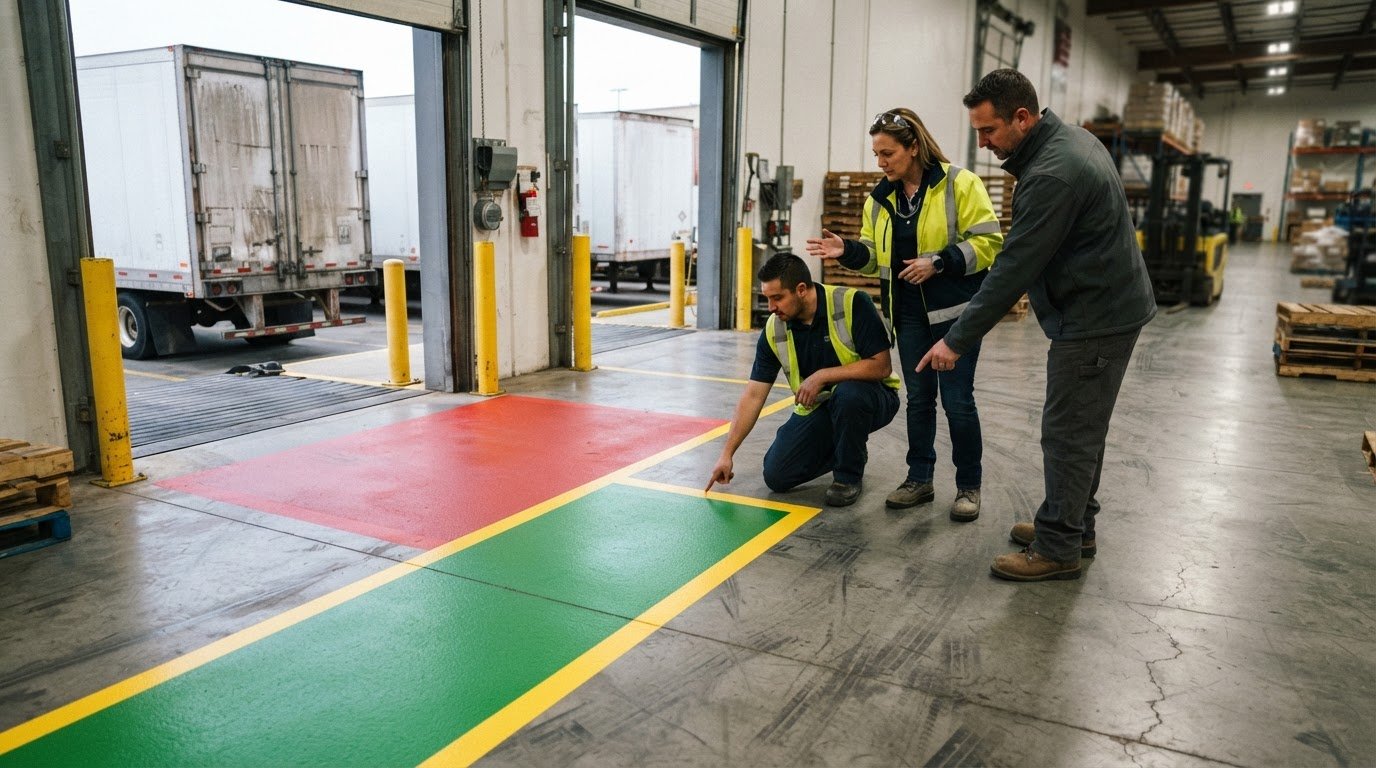
- Yellow: The standard for traffic lanes, aisles, and work cells. It defines the primary paths for both pedestrians and machinery to ensure safe passage.
- Red: Used for danger zones, fire equipment, and emergency stop areas. It signals that immediate caution or clear access is required for safety systems.
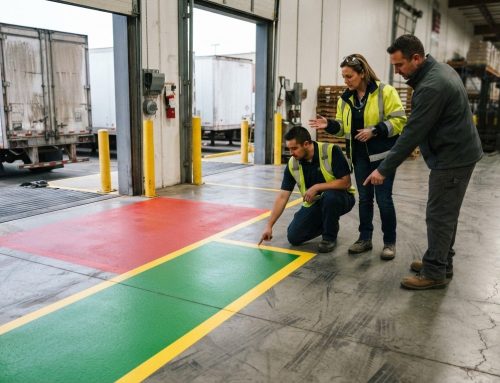
- Blue: Reserved for raw materials, works-in-progress (WIP), and staging zones. This helps distinguish unfinished items from inventory ready for shipment.
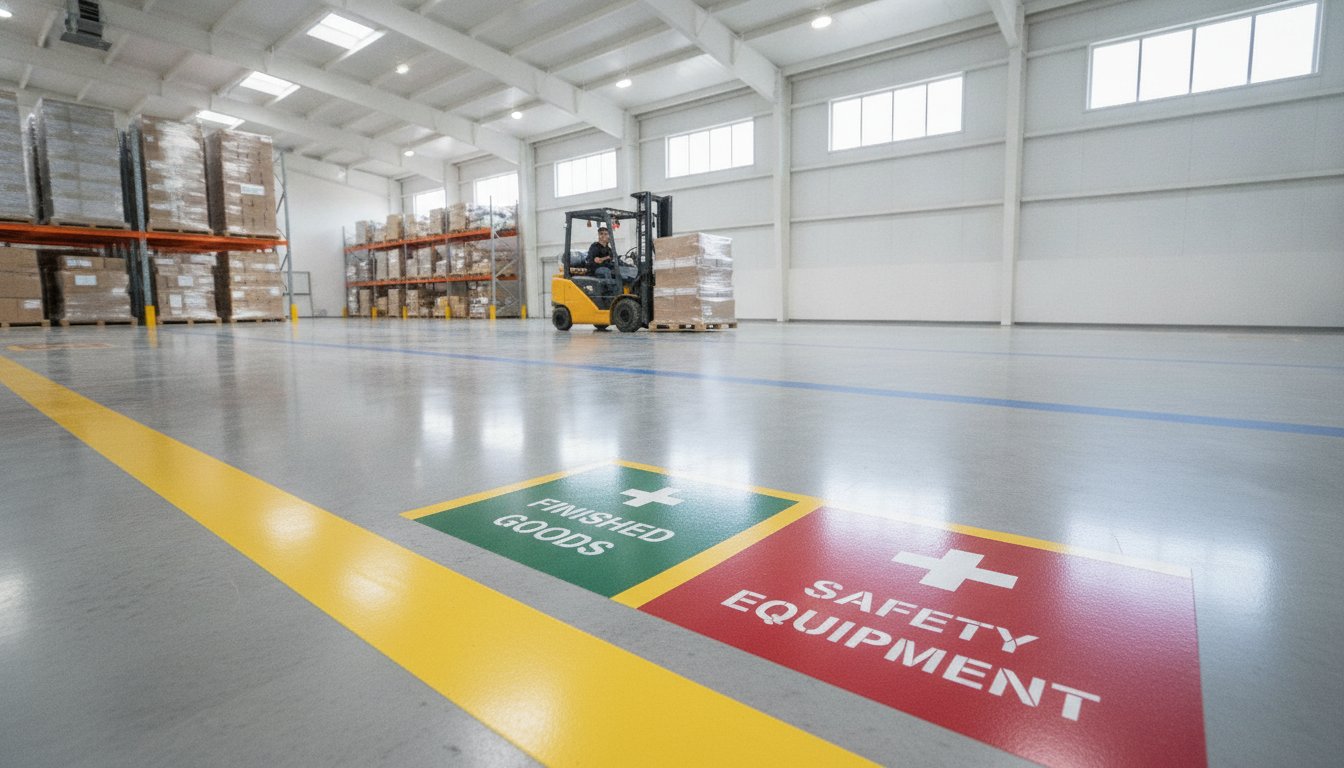
- Green: Identifies finished goods, safety equipment, and first-aid stations. It marks the “safe” end-point of the production cycle and the location of life-saving tools.
- Orange: Marks materials or areas designated for inspection or “Red Tag” holding (items that are non-conforming or require secondary review before disposal).
Advanced Color Coding for Specialized Zones
Beyond solid colors, patterned markings provide immediate visual warnings for specific physical risks. Black and yellow stripes identify physical hazard areas like fixed obstacles or trip hazards. Red and white stripes mark areas that must be kept clear for safety or access, such as fire exits or electrical panels. For general-purpose areas not covered by other 5S categories, black and white stripes are the standard choice for organization. These patterns act as a secondary layer of communication, ensuring that even in high-stress situations, the floor remains easy to navigate.
Standardizing Patterns and Stenciling
Using diagonal stripes is particularly important for high-hazard zones, such as forklift battery charging stations (where acid spills or electrical risks are present). Stenciling plays a vital role in identifying specific pallet positions and truck courts, providing the necessary instruction for drivers to drop loads accurately. This level of detail ensures that every operator knows exactly where to go, which reduces wasted time and prevents aisle blockages. Maintaining consistency across multiple regional branches ensures nationwide operational fluidity, allowing transferred employees to work safely on day one. If you need help designing a custom layout for your facility, you can contact our consulting team for a professional assessment.
Implementation: Choosing Between Floor Tape and Professional Striping
Many facility managers choose floor tape because it offers a low barrier to entry and immediate installation. However, the total cost of ownership often tells a different story once you factor in maintenance and replacement labor. In high-volume distribution centers with heavy forklift traffic, standard vinyl tape quickly shreds, peels, and loses its color. This 5S floor marking color standards guide is only effective if the markings remain visible and intact; otherwise, the visual workplace foundation collapses and safety risks increase.
For long-term 5S sustainability, industrial epoxy line painting is the superior choice for professional environments. Unlike tape, which sits on top of the concrete, epoxy creates a chemical bond with the substrate that resists the shearing forces of heavy machinery and skidding tires. While some facility leaders worry about the downtime required for professional application, we minimize operational impact by scheduling work during low-activity windows or utilizing rapid-cure systems that allow for quick return-to-service times.
Surface Preparation: The Secret to Longevity
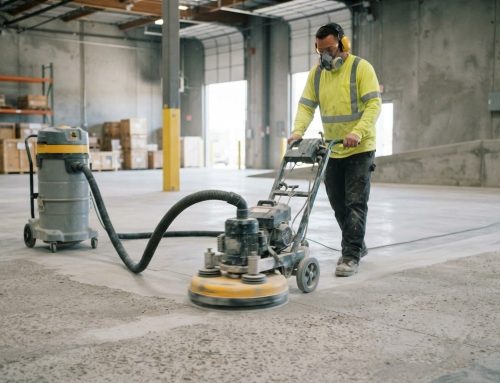
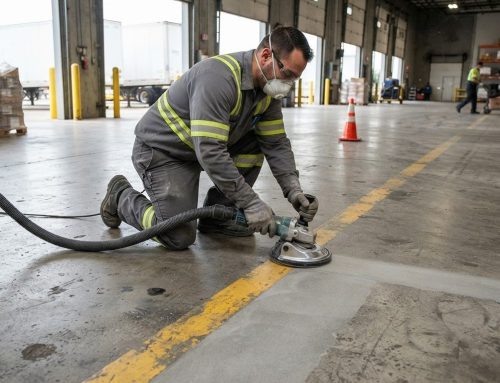
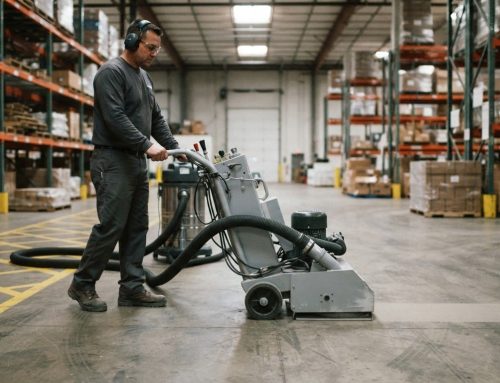
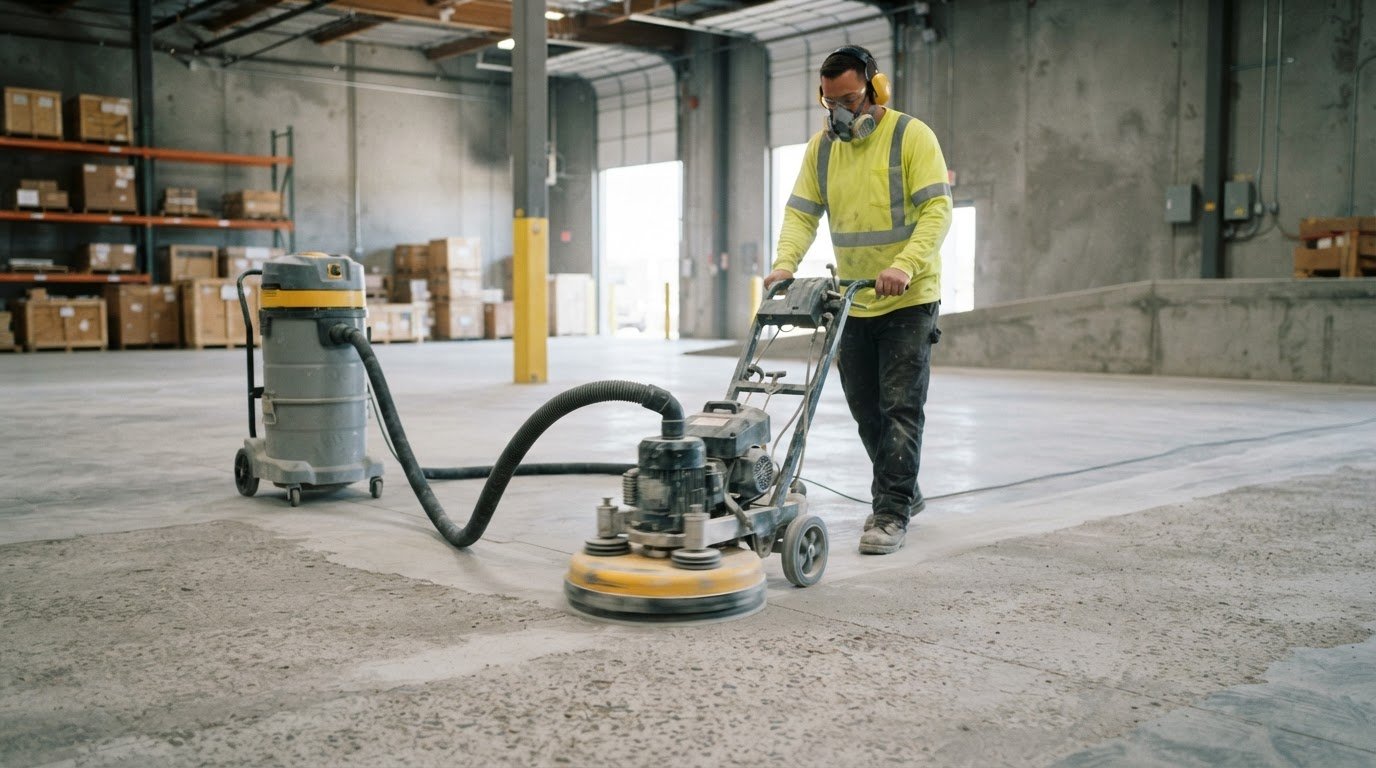
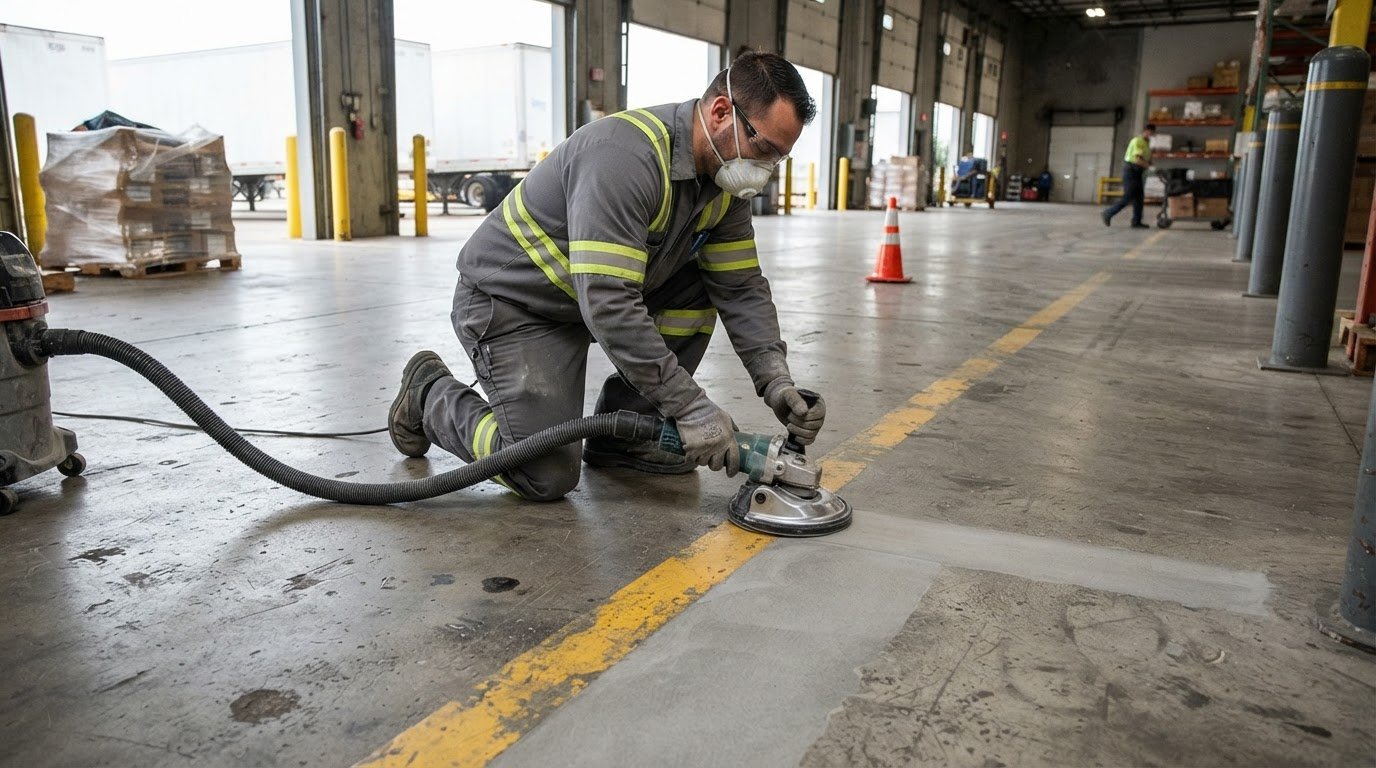
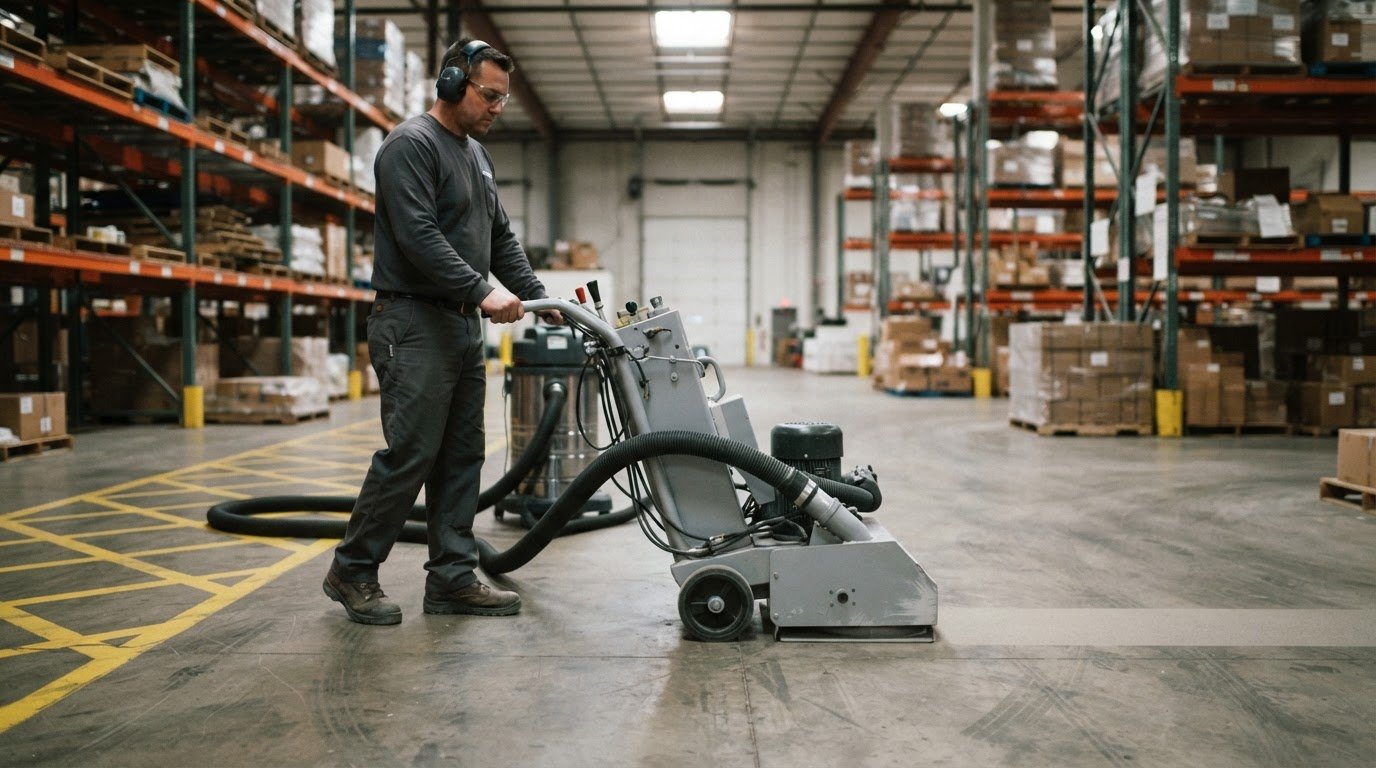
Success in floor marking depends entirely on the condition of the concrete. New paint will inevitably fail if it’s applied on top of old, dirty, or oily concrete. Effective warehouse line removal requires mechanical methods to ensure the floor is truly clean and porous. Shot blasting is the industry standard for surface preparation because it removes surface contaminants while creating a textured profile that allows epoxy and polyurethane coatings to achieve maximum adhesion. This mechanical process ensures your 5S floor marking color standards guide remains a permanent part of your facility rather than a temporary fix.
When to Use High-Performance Coatings
Certain zones in your facility demand more than just standard paint. You should select acid-resistant coatings for forklift battery charging areas to prevent floor degradation from electrolyte spills. These specialized treatments protect the structural integrity of your concrete from chemical erosion. Similarly, pedestrian walkways require the addition of slip-resistant additives to protect workers in areas prone to moisture or oil. Investing in the right material for the right zone ensures your safety ratings stay high and your maintenance costs stay low. Ready to secure your facility with permanent markings? Request a professional site assessment today to discuss your specific operational needs.
Optimizing Facility Layout with 5S Standards
Successful facility organization doesn’t start with a paint sprayer; it starts with a comprehensive workflow analysis. Before applying the principles in this 5S floor marking color standards guide, you must map your facility to identify high-traffic intersections and bottleneck zones. This mapping ensures that your “Set in Order” phase actually improves efficiency rather than just decorating the floor. By analyzing the movement of materials and personnel, you can place markings where they will have the greatest impact on operational speed.
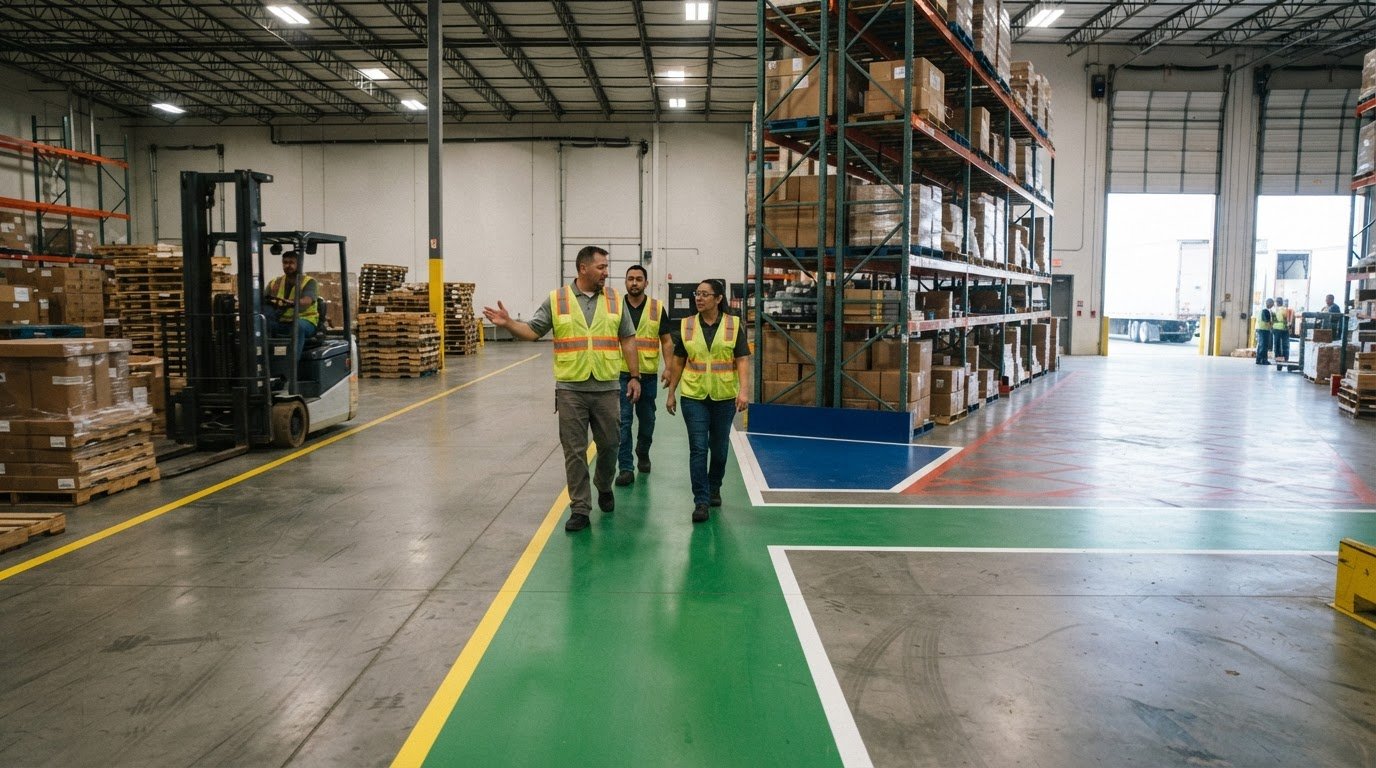
Designing pedestrian walkways and safety aisles is the most critical step in eliminating forklift collisions. These paths must be integrated with existing ADA requirements and fire safety egress routes to ensure total regulatory compliance. When you separate human traffic from heavy machinery with clear, physical boundaries, you create a predictable environment that reduces logistical stress. These safety aisles should be wide enough to accommodate workers comfortably while remaining clearly distinct from equipment staging zones.
The final pillar of the 5S methodology, Sustain, requires a plan for long-term maintenance. Even high-performance lines need regular audits to ensure they remain visible and effective. Establishing a quarterly inspection schedule allows you to identify areas where heavy abrasion might require touch-ups, keeping your safety ratings high and your facility compliant year-round. Consistent maintenance is the only way to prevent the gradual “drift” back into a disorganized and hazardous workspace.
Tactical Planning for Large-Scale Hubs
Managing traffic flow in airports, massive logistics hubs, and manufacturing plants requires a macro-level approach to organization. Coordinating parking lot line striping with indoor 5S standards creates a seamless transition for drivers and operators. Using stenciling for truck court numbering further streamlines docking operations, ensuring that the efficiency established inside the warehouse extends to the exterior infrastructure. This total site organization reduces the time drivers spend searching for the correct bay, which directly lowers idle times and fuel waste.
Partnering with an Industrial Striping Specialist
Leveraging over 29 years of experience allows us to help you avoid the common pitfalls of a DIY 5S implementation. We provide nationwide coverage for companies with multiple distribution centers, ensuring that your 5S floor marking color standards guide is applied consistently across every location. Our commitment to transparency includes mobile-first consultation and direct messaging channels, providing the rapid project execution that modern industrial operations demand. We position ourselves as safety-conscious consultants invested in the long-term organization and efficiency of your facility.
Secure Your Facility with Standardized Visual Controls
Establishing a visual workplace isn’t just about following a checklist; it’s about building a safer and more efficient operational environment. By implementing the strategies outlined in this 5S floor marking color standards guide, you can eliminate the confusion that leads to accidents and forklift collisions. Remember that the durability of your markings is just as important as the colors you choose. Transitioning from temporary tape to professional epoxy line painting ensures your safety standards remain visible even in the highest-traffic zones.
With 29+ years of industrial expertise, we understand the logistical complexities of large-scale facilities. We specialize in epoxy application and mechanical line removal, providing nationwide coverage to ensure consistency across all your distribution centers. Our team is ready to help you optimize your layout and maintain long-term compliance without the stress of frequent re-application. Request an Instant Quote for Professional 5S Floor Striping today to start your facility’s transformation. Let’s work together to create a cleaner, safer, and more productive workspace for your entire team.
Frequently Asked Questions
Is there a specific OSHA law for floor marking colors?
OSHA does not mandate specific colors for floor marking. While standard 29 CFR 1910.22 requires that permanent aisles and passageways are appropriately marked, the agency doesn’t specify a color code. Most facilities use this 5S floor marking color standards guide to establish internal consistency and avoid confusion. Following industry best practices helps you meet the general “appropriately marked” requirement while significantly improving your daily workflow.
What is the most durable material for 5S warehouse lines?
Industrial epoxy line painting is the most durable solution for high-traffic environments. Unlike floor tape that peels under the shearing force of forklift tires, epoxy creates a permanent chemical bond with the concrete substrate. For maximum longevity, we recommend mechanical surface preparation like shot blasting. This ensures the coating withstands daily heavy machinery use and chemical exposure in specialized zones without constant maintenance.
How wide should warehouse floor markings be for 5S compliance?
Warehouse floor markings should be at least 2 inches wide to comply with OSHA safety standards. Most industrial facilities opt for a width between 3 and 6 inches to ensure maximum visibility in large-scale hubs with high ceilings. Using a consistent width across your facility helps workers quickly identify boundaries from a distance. This level of standardization is a core component of any professional 5S floor marking color standards guide.
Can I use 5S floor markings in outdoor truck courts and parking areas?
You can and should extend 5S organizational standards to your outdoor truck courts and parking areas. We use specialized traffic paints and stenciling for truck court line striping to maintain order outside the warehouse. Numbering dock bays and marking trailer staging zones helps streamline arrivals and departures. This creates a unified visual system that guides drivers from the entry gate directly to the loading dock.
How often should warehouse floor lines be re-striped?
The frequency of re-striping depends on your facility’s traffic volume and the materials used for the initial application. Standard paint in high-traffic forklift zones might require annual maintenance, while professional epoxy coatings can last several years before needing attention. We recommend performing quarterly audits to check for fading or physical damage. Regular maintenance prevents the logistical confusion that occurs when safety boundaries become difficult for operators to see.
What is the difference between 5S and OSHA floor marking?
OSHA floor marking focuses strictly on safety requirements like marking exit paths and permanent aisles to prevent accidents. In contrast, 5S floor marking is an operational framework designed to improve efficiency through total organization. While OSHA ensures you meet legal safety standards, 5S uses a wider range of colors to identify raw materials, finished goods, and equipment locations. Both systems work together to create a safe, lean, and highly productive workplace.