A single ADA non-compliance fine now starts at $75,000, turning a faded parking stall or an overlooked access aisle into a significant financial liability for your facility. You understand that clear floor markings are the backbone of a safe workspace, but maintaining them shouldn’t mean shutting down operations every few months for a temporary fix. When you invest in professional commercial line painting services, you’re not just buying paint; you’re implementing an engineered safety system designed to withstand heavy forklift traffic and chemical exposure.
We recognize that frequent re-striping disrupts your workflow and complicates regulatory adherence. This guide provides an industrial perspective on achieving long-term durability through proper surface preparation, such as shot blasting, and the adoption of high-performance epoxy coatings. You’ll learn how the latest 2026 OSHA standards for aisle widths and the upcoming federal heat illness prevention requirements impact your facility layout. We’ll show you how to optimize your organizational flow and ensure total compliance without sacrificing your operational uptime.
Key Takeaways
- Learn how a systematic approach to floor marking reduces workplace accidents by establishing clear, high-visibility boundaries between pedestrian zones and heavy machinery.
- Identify the specific material chemistry—ranging from water-based acrylics to high-performance epoxy—required for durable commercial line painting services based on your facility’s unique substrate.
- Understand why mechanical surface preparation is the only way to prevent “ghosting” effects (visible remnants of old markings) and ensure a permanent bond for new lines.
- Discover how single-source contractors manage large-scale mobilization to maintain consistent safety standards and organizational flow across multiple national locations.
- Gain insights into optimizing traffic flow within truck courts and warehouses to minimize operational downtime while maximizing the lifespan of your facility markings.
The Strategic Role of Professional Line Painting in Industrial Facilities
Industrial facility managers often view floor marking as a cosmetic recurring expense, but in 2026, it serves as a critical safety engineering component. Professional commercial line painting services establish a systematic organizational framework that separates human traffic from heavy machinery. High-visibility markings provide immediate visual cues that reduce reaction times and prevent workplace collisions. Modern industrial standards now treat these markings as integrated safety systems (a combination of material durability and strategic layout) rather than simple surface applications.
Strategic layout design directly influences your facility’s bottom line by optimizing forklift efficiency and staging area throughput. When drivers have clear, unobstructed paths, they move materials faster and with fewer errors. These Road surface markings act as a non-verbal communication tool, directing the flow of goods and personnel without requiring constant oversight or verbal instruction.
Beyond Aesthetics: Enhancing Operational Efficiency
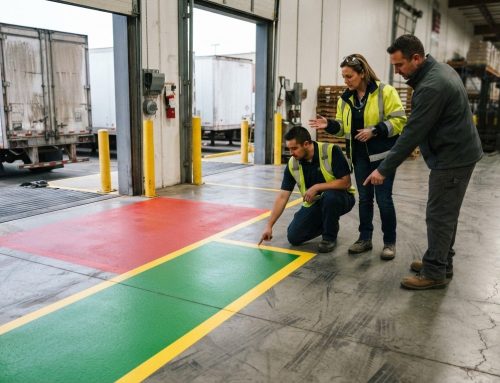
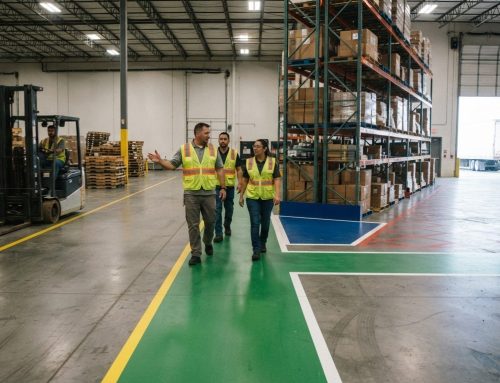
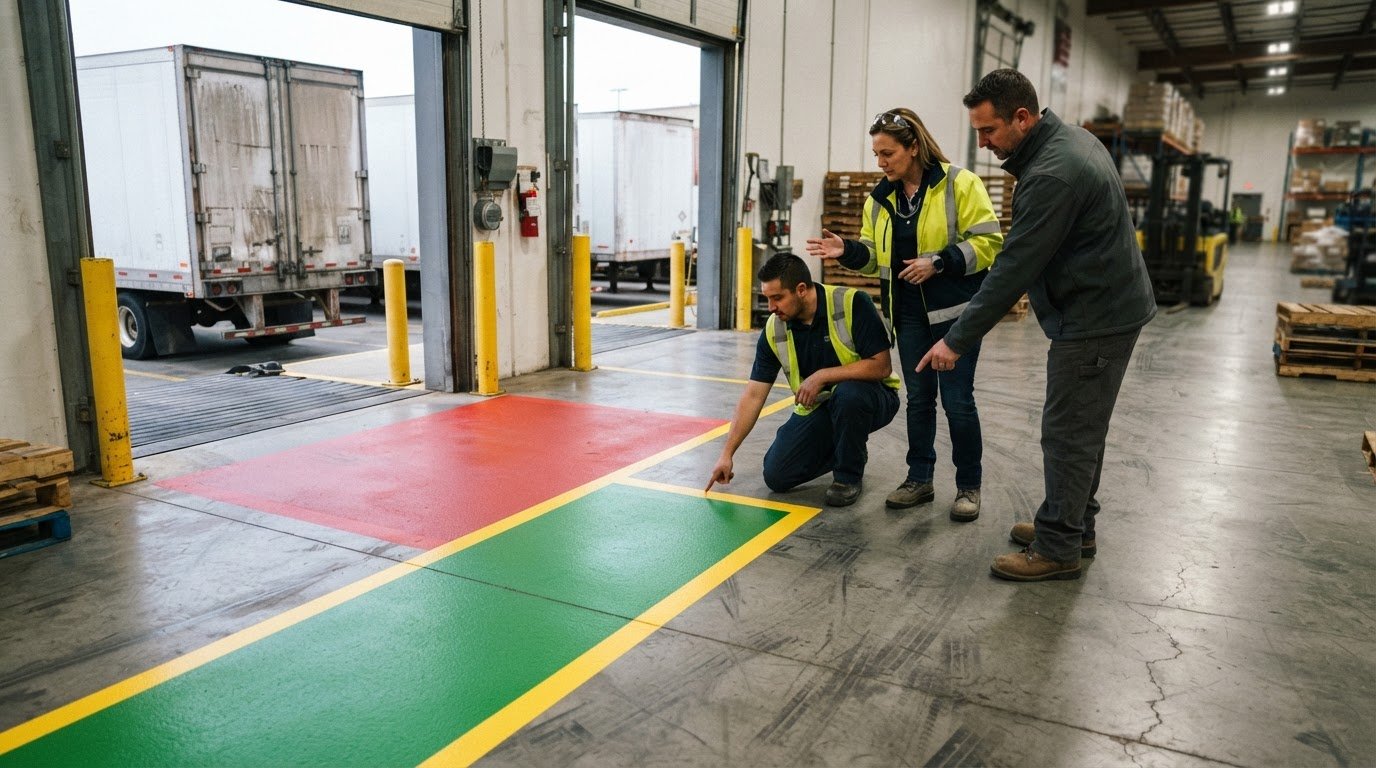
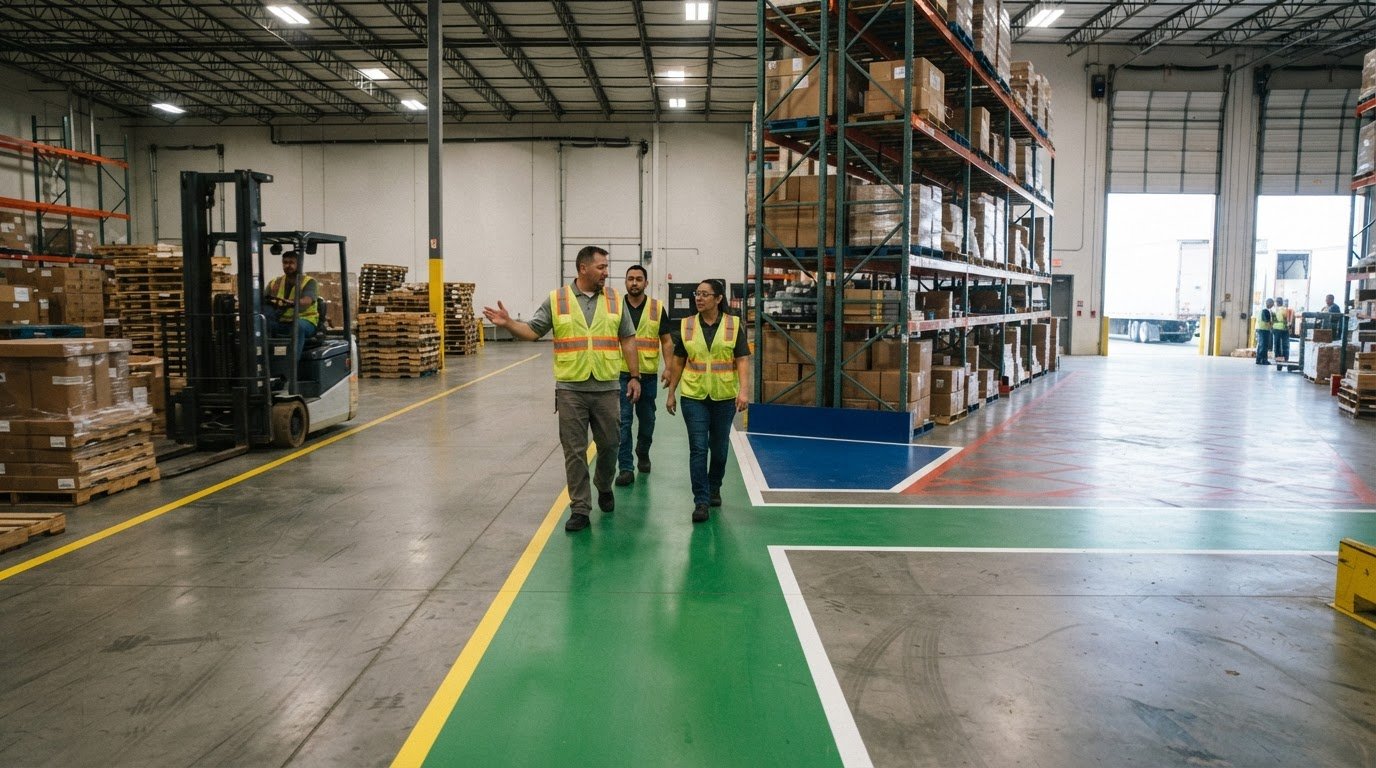
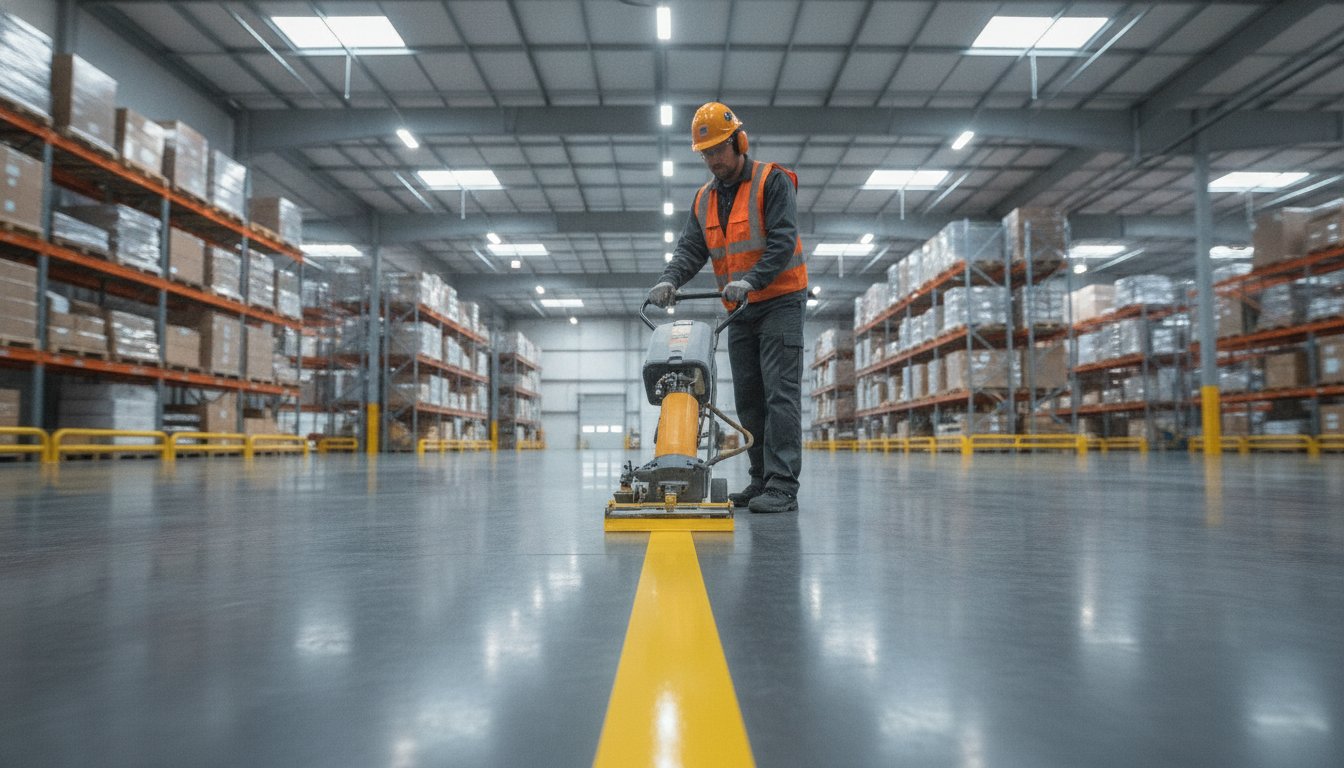
Efficiency begins with clarity. We implement color-coded zones to designate specific areas, such as red for fire protection equipment or yellow for physical hazards. Using directional arrows and custom stencils in truck courts prevents the traffic bottlenecks that delay shipping schedules and frustrate drivers. Dedicated pedestrian walkways and safety aisles ensure that employees move through the warehouse without entering active forklift lanes. This separation maintains a steady operational rhythm and protects your most valuable asset: your workforce.
Regulatory Compliance: OSHA and ADA Standards
Material Science: Selecting the Right Coating for Your Substrate
Industrial facilities are high-stress environments where standard traffic paint often fails within weeks. To achieve a durable result, professional commercial line painting services must match the coating chemistry to the specific demands of the substrate and the operational load. A “one-size-fits-all” approach leads to peeling, staining, and premature fading, which ultimately increases your long-term maintenance costs. Selecting the correct Pavement marking materials requires an understanding of how resins interact with concrete and asphalt under heavy machinery.
Environmental factors like temperature and humidity significantly impact curing times. High humidity prevents water-based paints from releasing moisture (a process known as flashing off), which results in a soft, gummy finish that picks up dirt. Conversely, extreme heat causes solvent-based materials to dry too quickly, preventing the paint from properly wetting the surface for a secure bond. We analyze these variables before every application to ensure the coating reaches its full Shore D hardness (a measure of material rigidity) before you resume operations.
Epoxy Line Painting for High-Traffic Interiors
Epoxy isn’t just a surface layer; it’s a structural coating that creates a cross-linked chemical bond with the concrete. This process, called polymerization, makes epoxy warehouse striping the most resilient choice for facilities with 24/7 forklift traffic. For specialized zones, such as acid-resistant coatings in battery charging areas, we utilize Novolac epoxies that provide a dense chemical barrier against electrolyte spills.
Outdoor Striping: Weather Resistance and Visibility
Exterior coatings must withstand UV radiation and constant thermal expansion. For parking lot line striping, we use UV-stabilized pigments that won’t chalk or grey under sun exposure. In low-light industrial yards, we integrate glass beads into the wet film to provide retro-reflectivity, ensuring boundaries remain visible during night shifts.
| Traffic Volume | Material Type | Estimated Lifespan |
|---|---|---|
| Light (Pedestrian Only) | Water-based Acrylic | 24 to 36 Months |
| Moderate (Light Forklift) | Solvent-based Paint | 12 to 18 Months |
| Heavy (24/7 Industrial) | Two-part Epoxy | 3 to 5 Years |
If you’re unsure which material fits your facility’s specific traffic patterns, you can request a technical material assessment from our team.

The Process: From Surface Preparation to Final Inspection
Industrial coatings are only as effective as the surface they bond to. In 2026, professional commercial line painting services prioritize mechanical preparation over simple cleaning to ensure a permanent anchor for every marking. Without this, new paint sits on top of surface contaminants, leading to rapid delamination (peeling) under the stress of heavy machinery. Precision begins before the first drop of paint hits the floor. We use laser-guided layout systems and chalk lines to map every aisle and zone, ensuring strict adherence to OSHA floor marking standards. This meticulous planning prevents the organizational drift that compromises safety in high-density facilities like those managed by a warehouse line striping company.
Mechanical Removal: Shot Blasting and Grinding
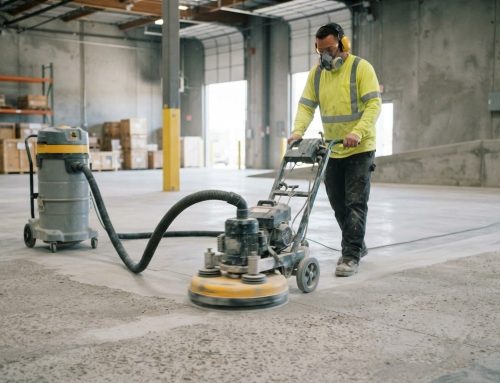
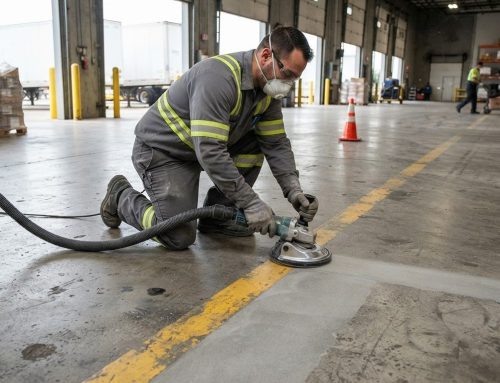
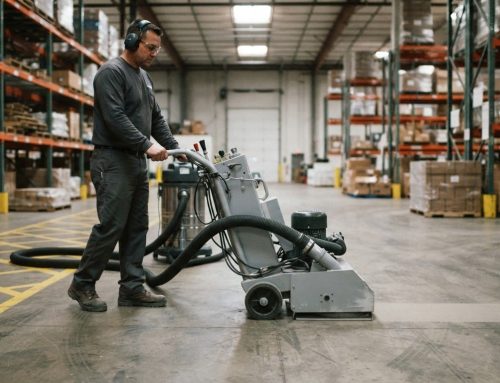
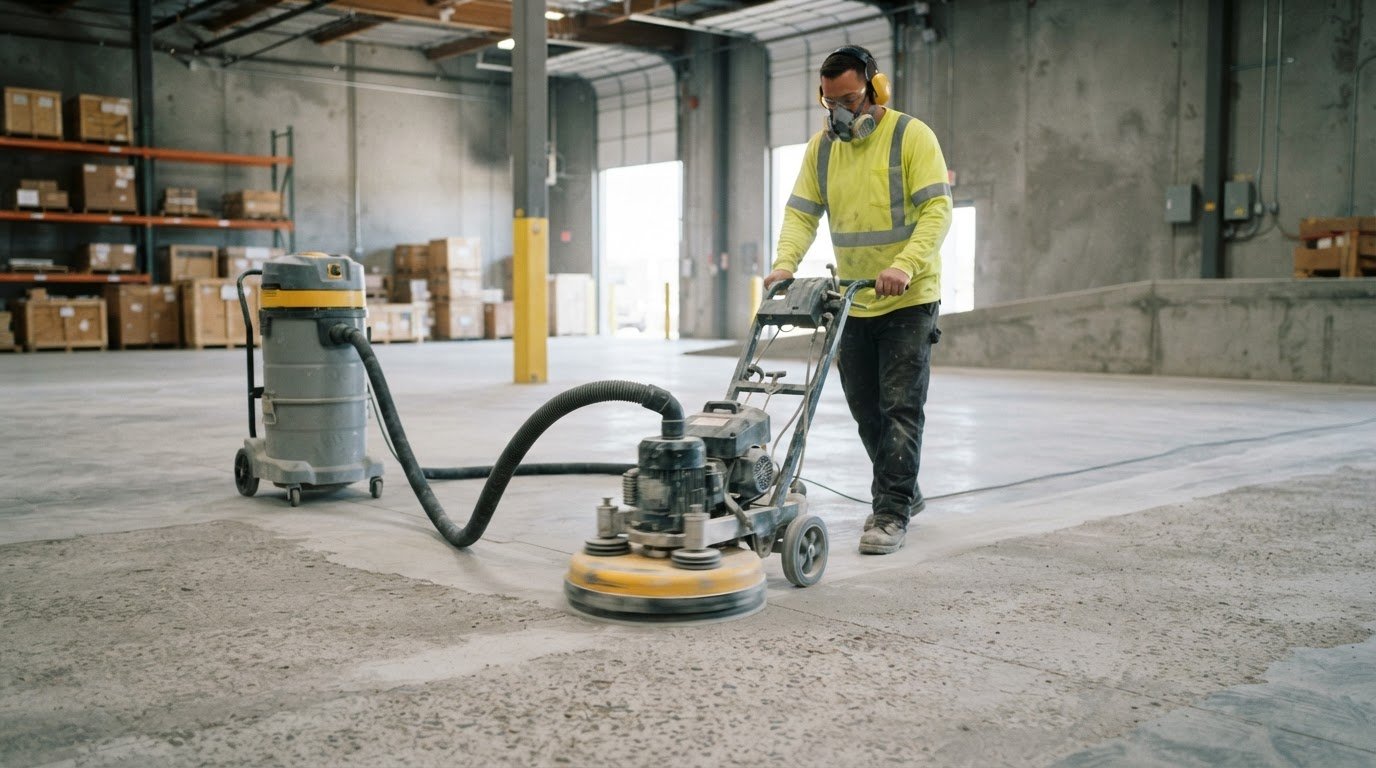
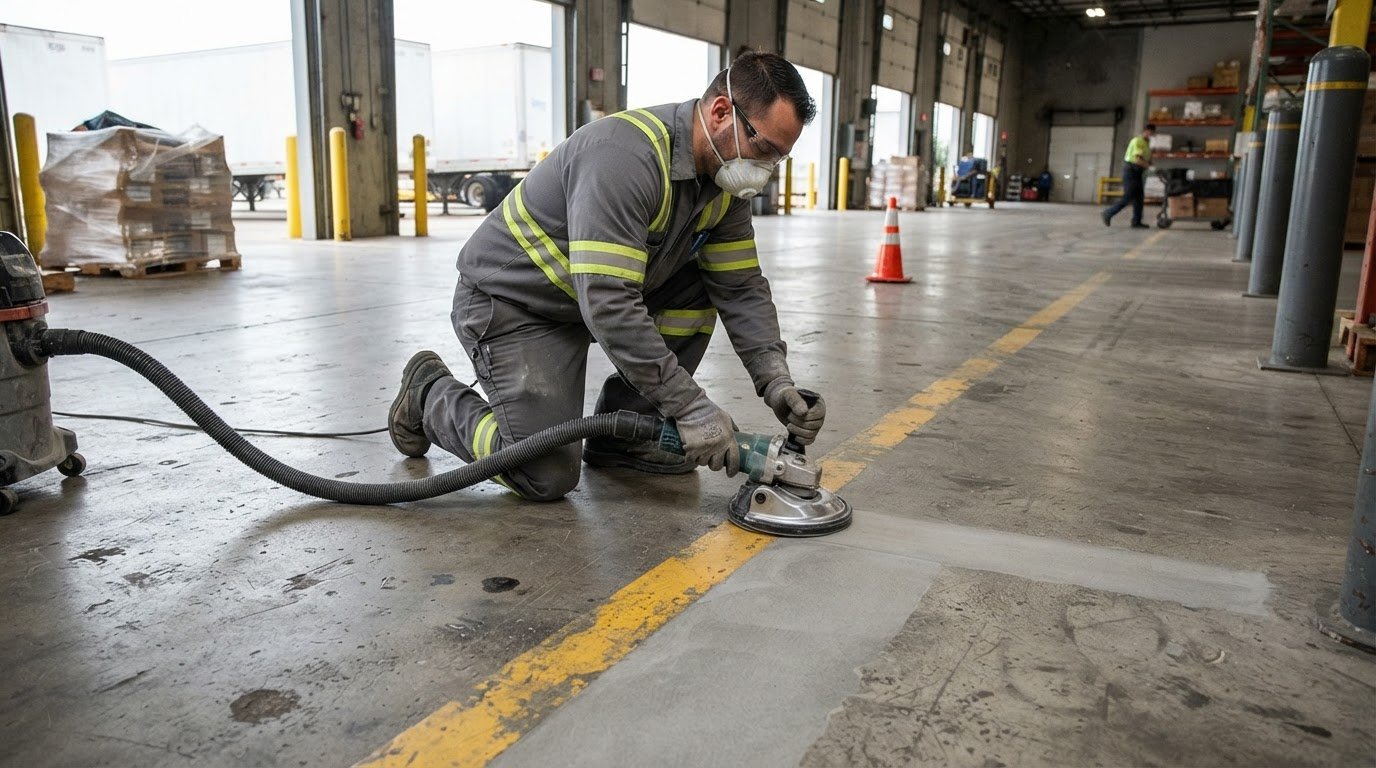
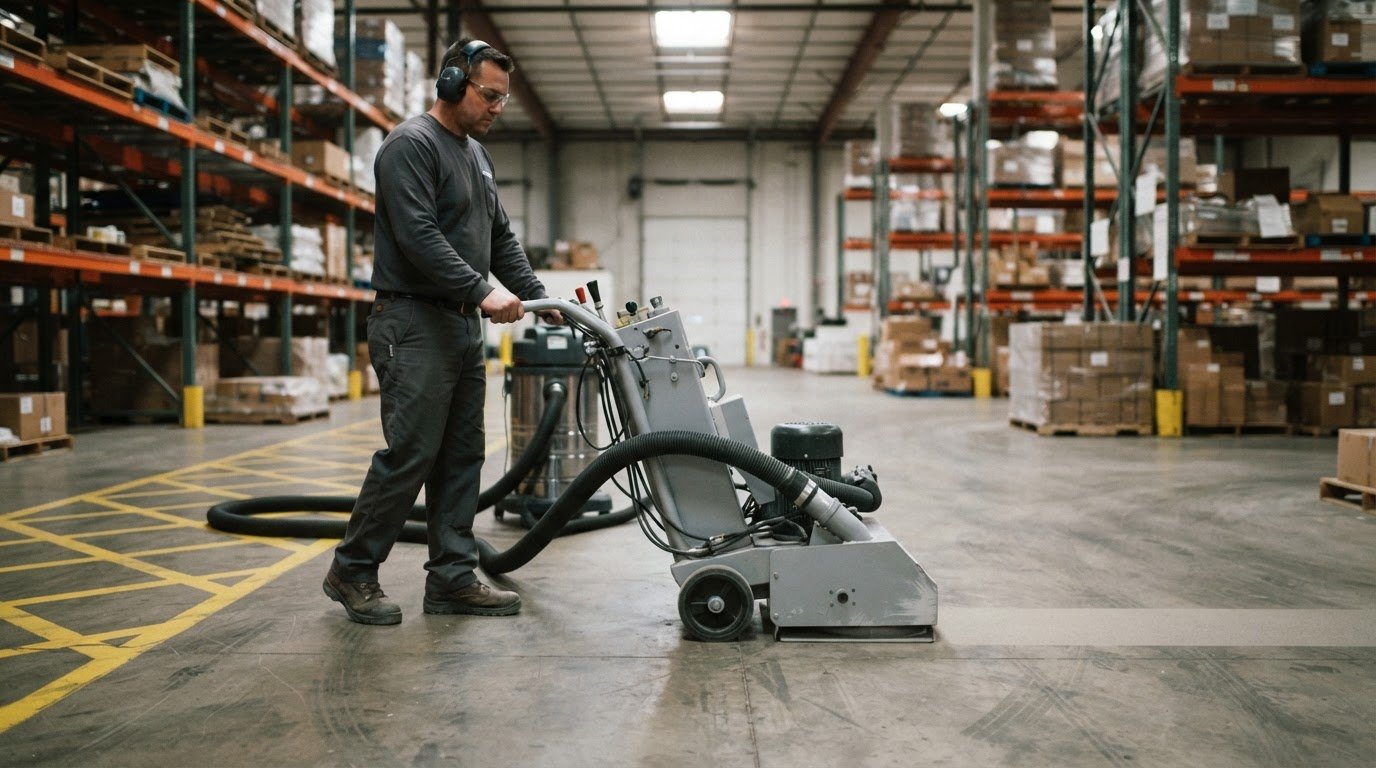
Shot blasting remains the gold standard for preparing concrete substrates for high-performance epoxy. This process involves firing small steel spheres at the floor to strip away old, flaking lines and open the concrete’s pores. It effectively eliminates “ghosting” (the distracting visible remnants of previous markings) and provides a clean, profiled surface. For food-grade facilities or delicate environments, we utilize dust-contained diamond grinding. This method uses industrial vacuums to capture particulates at the source, maintaining air quality while removing oils, greases, and old sealers that would otherwise prevent chemical adhesion.
Professional Application Techniques
We select application methods based on the specific operational load of your facility. Airless spray systems provide a smooth, consistent finish for long-range warehouse aisles, while extruded markings offer thicker, more durable boundaries for high-impact zones. Throughout the application, our technicians use Wet Film Thickness (WFT) gauges to monitor material volume in real time. This ensures the coating is thick enough to withstand heavy forklift traffic but not so thick that it becomes brittle or prone to cracking.
Professional-grade application equipment produces a crisp, calibrated edge that retail-grade striping machines simply cannot match. If your facility requires a clear, durable organizational layout, schedule a professional site preparation assessment
Evaluating National Commercial Line Painting Contractors
Selecting a provider for national commercial line painting services requires more than a local search for a general painter. Large-scale industrial operations demand a single-source contractor who can maintain uniform safety standards across multiple regional branches. This centralized approach eliminates the logistical stress of managing various independently owned franchises that often have inconsistent quality levels. A partner with 29+ years of industrial-only experience understands that your facility can’t wait for a local contractor to find the right equipment. They arrive with the mobilization capacity to handle everything from truck courts to interior safety zones simultaneously.
Operational uptime is your primary concern. We provide 24/7 scheduling to accommodate your off-peak hours, ensuring that fresh markings are cured and ready for traffic before your next shift begins. This around-the-clock availability is a hallmark of professional warehouse line striping companies that prioritize your production schedule over their own convenience. StripeGuys Warhouse Line Striping has spent nearly three decades refining these mobilization tactics to ensure your facility remains compliant without missing a single shipping window.
Scalability and Project Management
Managing a 500,000+ sq. ft. distribution center involves complex logistical coordination. We utilize centralized reporting to provide you with consistent data and project timelines across all your sites. This ensures that a facility in the Midwest follows the exact same safety protocol as one on the West Coast. Our teams are equipped to handle multifaceted parking garage and floor marking systems, integrating vertical surfaces and pedestrian boundaries into a single, cohesive project plan. This level of scalability prevents the organizational drift that occurs when using multiple vendors.
Ensuring Long-Term ROI
Industrial facility managers must look beyond the initial invoice to understand the total cost of ownership. While cheap traffic paint has a lower upfront price, it often requires total re-striping every 12 months in high-traffic environments. Investing in high-performance epoxy systems extends your maintenance cycle to 3 or 5 years, significantly reducing the frequency of operational disruptions. We recommend establishing a multi-year maintenance plan to touch up high-wear areas before they become safety hazards. This proactive approach preserves your budget and keeps your facility in a constant state of audit-readiness.
Contact StripeGuys Warhouse Line Striping for an industrial-grade quote on your national facility needs to secure a partner who values your time and operational efficiency.
Future-Proofing Your Industrial Facility Layout
When you partner with a provider for your commercial line painting services, you’re investing in a safety-conscious consultant with a multi-decade history in the field. We bring over 29 years of industrial experience and the mobilization capacity to handle large-scale distribution centers across the country. Our team specializes in mechanical removal and high-performance coatings that protect your bottom line by reducing re-striping frequency. We’re ready to help you optimize your traffic flow and meet every regulatory standard with precision. Let’s build a safer, more organized workspace together.
Request a Professional Industrial Striping Quote to secure the safety and efficiency of your national facility footprint today.
Frequently Asked Questions
How long does commercial line painting take to dry and cure?
Drying time depends on the material chemistry selected for your specific facility needs. Water-based traffic paints often dry to the touch in 30 to 60 minutes, but high-performance epoxy systems require 4 to 8 hours for foot traffic and up to 24 hours for heavy forklift loads. We coordinate our 24/7 scheduling with your production cycles to ensure the markings reach their full Shore D hardness (a measure of material rigidity) before operations resume.
What is the difference between warehouse striping and parking lot painting?
The primary difference lies in the substrate and the environmental stressors. Warehouse striping typically involves concrete floors and requires epoxy or solvent-based materials to withstand constant forklift abrasion and chemical spills. Parking lot painting involves asphalt surfaces and utilizes UV-resistant, water-based traffic paints designed to expand and contract with outdoor temperature fluctuations. Each environment requires a distinct material approach to ensure long-term durability.
Is shot blasting necessary before painting new lines on concrete?
Shot blasting is essential when applying permanent epoxy coatings to concrete surfaces. This mechanical preparation (firing steel shot at the floor) removes the weak top layer of concrete called laitance and opens the pores for a secure chemical bond. Without this step, your commercial line painting services will likely fail as the paint peels away from surface-level contaminants. It’s the only way to ensure a permanent anchor for high-traffic markings.
Can you paint safety lines in cold storage or freezer warehouses?
Yes, we utilize specialized Methyl Methacrylate (MMA) coatings for cold storage and freezer environments. These materials are engineered to cure rapidly at temperatures as low as -20 degrees Fahrenheit. This allows us to install safety boundaries and directional markings without requiring a full facility defrost. This specialized application protects your inventory and maintains your thermal efficiency while establishing clear organizational flow in sub-zero conditions.
How often should industrial floor markings be refreshed?
Most commercial parking lots require re-marking every 18 to 24 months to maintain visibility and regulatory compliance. Within industrial facilities, the frequency depends on traffic volume and material choice. High-performance epoxy lines in heavy-traffic aisles typically last 3 to 5 years, while standard paint in low-wear staging areas may need a refresh every 12 to 18 months. Regular inspections help identify fading before it becomes a safety hazard, and you can learn more about Poseidon Power Washing LLC to see how professional exterior maintenance keeps your property looking its best between applications.
What are the OSHA color requirements for warehouse floor markings?
OSHA standard 1910.144 defines specific color codes to maintain workplace safety. Red is the designated color for fire protection equipment and emergency stop controls, while yellow is used to indicate caution and mark physical hazards like stumbling risks. We ensure your layout follows these regulatory standards to minimize legal liability and maximize employee awareness. Clear, compliant colors are the foundation of an effective industrial safety system.