If you think a chemical soak is the easiest way to clear old warehouse lines, you’re likely setting your next epoxy floor up for a premature and expensive failure. When evaluating shot blasting vs chemical stripping for concrete, the decision shouldn’t be based on convenience alone. It’s about whether your new markings will still be intact after years of heavy forklift traffic. We understand the frustration of seeing fresh lines flake or peel because the surface prep didn’t bite into the slab correctly. It’s a common logistical headache that threatens facility safety and wastes your maintenance budget.
This guide explains why shot blasting is the professional standard for industrial line removal and how it ensures superior epoxy adhesion compared to liquid strippers. You’ll learn how to navigate the 2026 OSHA Hazard Communication Standard updates and silica regulations while maintaining a clean, dust-controlled environment. We’ll compare the mechanical profile requirements for industrial coatings and show you how to achieve a surface ready for 20 plus years of durability. By using equipment that can prepare up to 30,000 square feet per day, you can ensure your facility remains compliant and operational without the lingering fumes of harsh chemicals.
Key Takeaways
- Learn the mechanical mechanics of shot blasting versus the solvent-based approach of chemical stripping to determine which fits your facility’s needs.
- Compare shot blasting vs chemical stripping for concrete across four key industrial metrics: speed, adhesion quality, safety, and operational mess.
- Identify how to evaluate your current floor condition, including oil-soaked slabs or stubborn epoxies, to ensure your new markings don’t fail.
- Understand the compliance advantages of mechanical removal, focusing on updated 2026 OSHA safety standards and dust-collection requirements.
- Discover why shot blasting is the industrial standard for maximizing the lifespan of warehouse floor striping and epoxy applications.
Understanding Concrete Surface Preparation: Shot Blasting and Chemical Stripping Basics
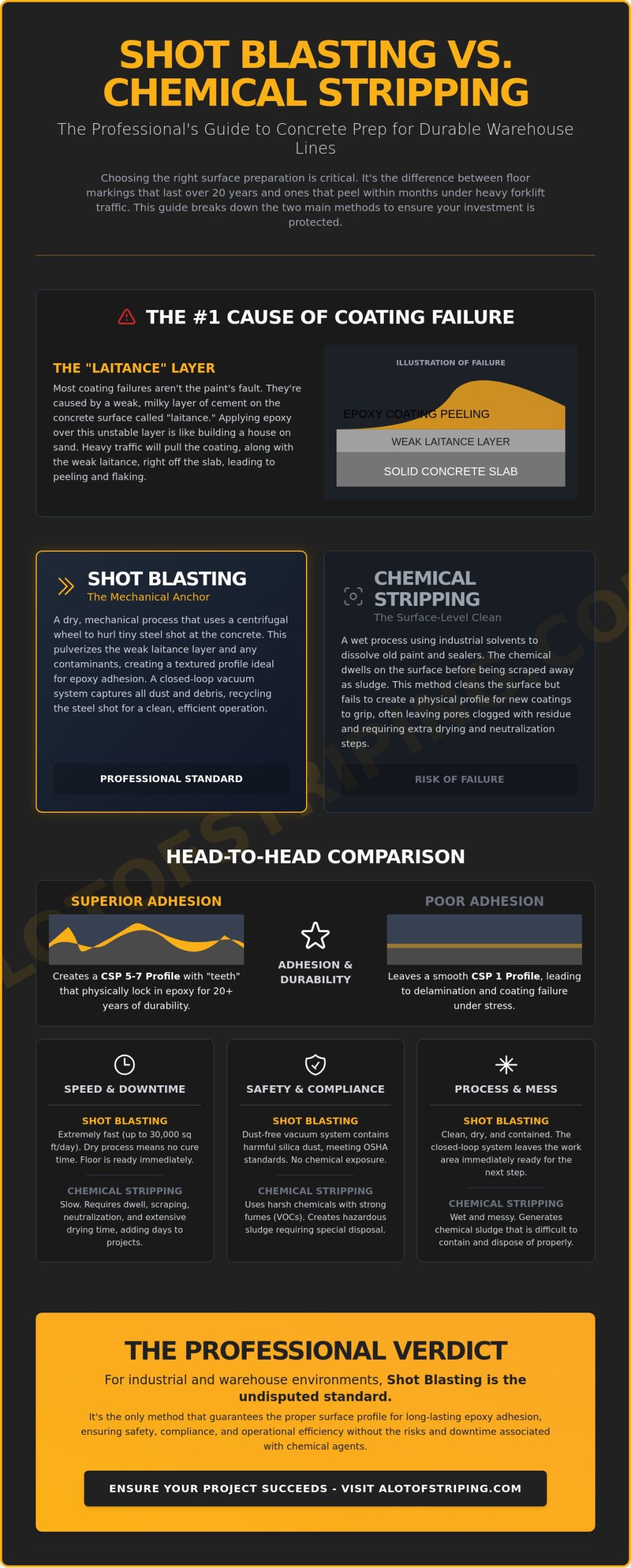
Surface preparation determines whether your warehouse line striping lasts for a decade or fails within a month. Most coating failures aren’t caused by the paint itself. They happen because the bond between the epoxy and the slab is compromised. To ensure a permanent bond, we must remove “laitance.” This is the weak, milky layer of cement paste that rises to the top during the curing process. If you apply a coating over laitance, the coating will eventually pull that weak layer right off the slab. It’s a common failure point that leads to peeling and flaking under heavy forklift traffic.
Deciding between shot blasting vs chemical stripping for concrete requires an understanding of your long-term goals. One method physically restructures the surface, while the other relies on solvents to liquefy old materials. If you need a permanent bond for heavy-duty epoxy, the mechanical approach is usually superior. We prioritize these functional outcomes to ensure your facility remains safe and operational without frequent maintenance interruptions.
What is Industrial Shot Blasting?
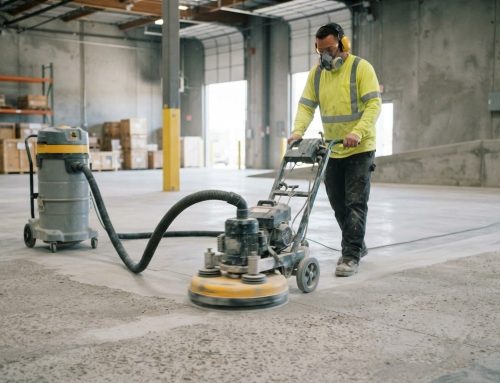
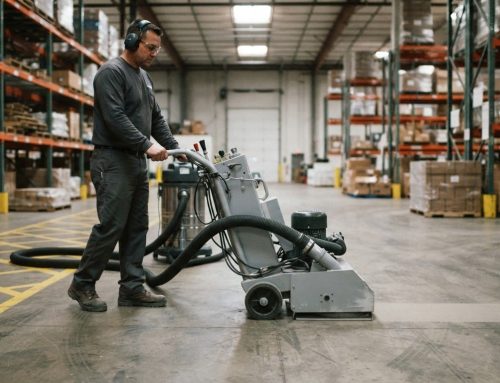
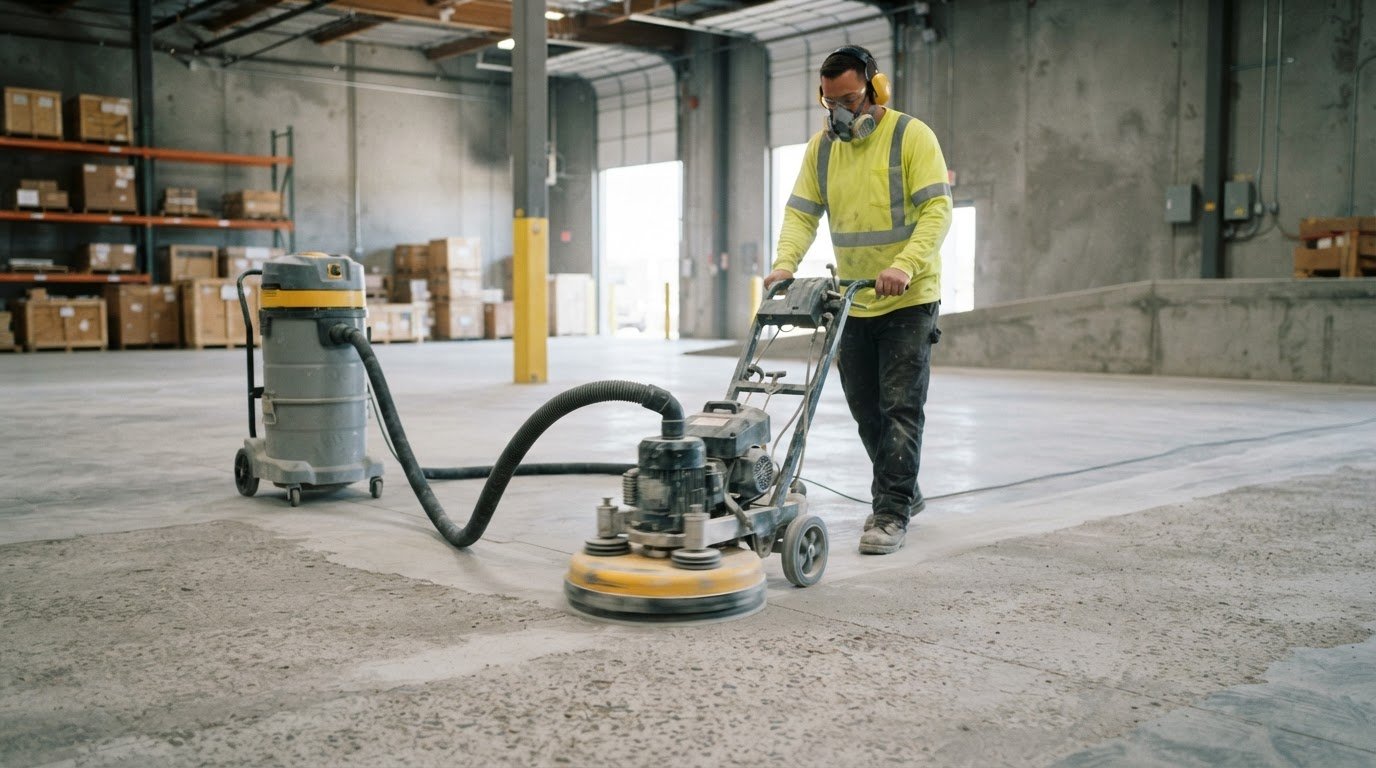
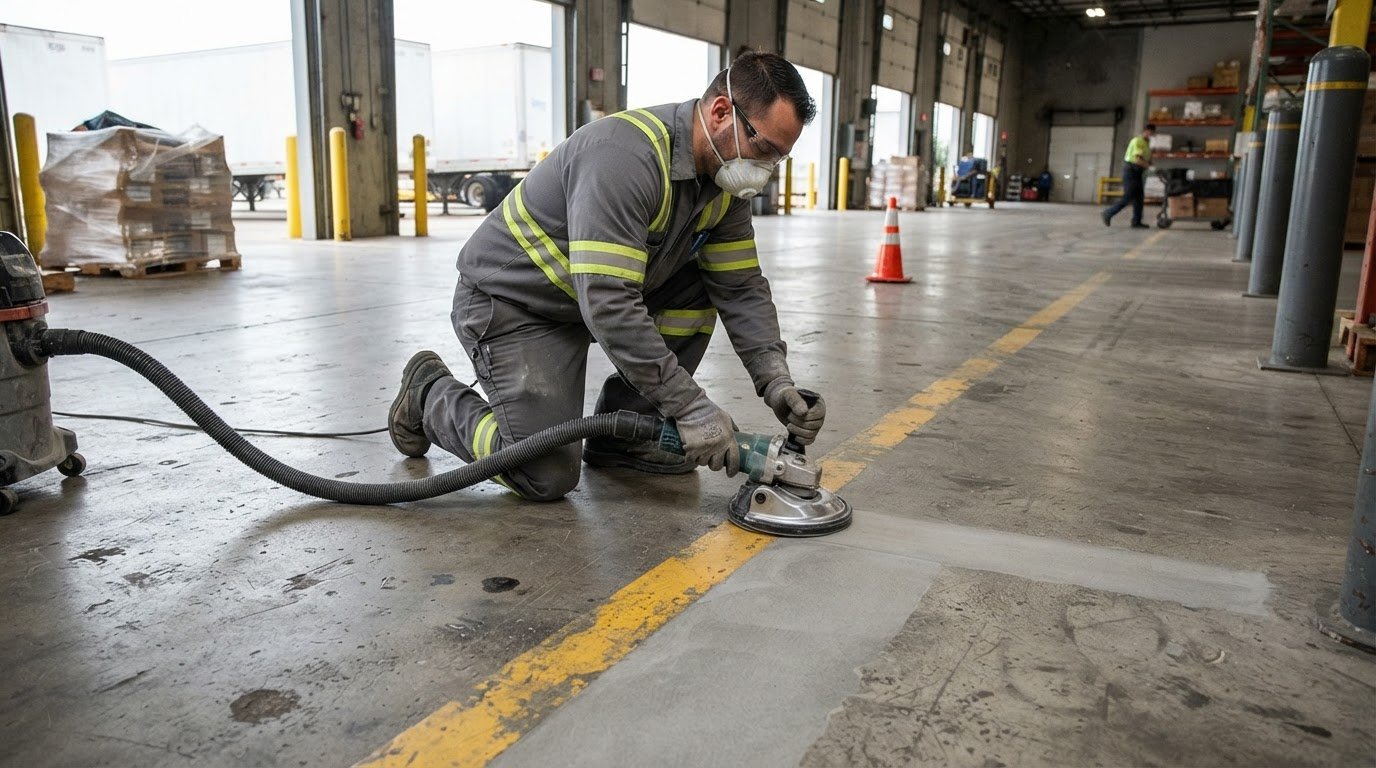
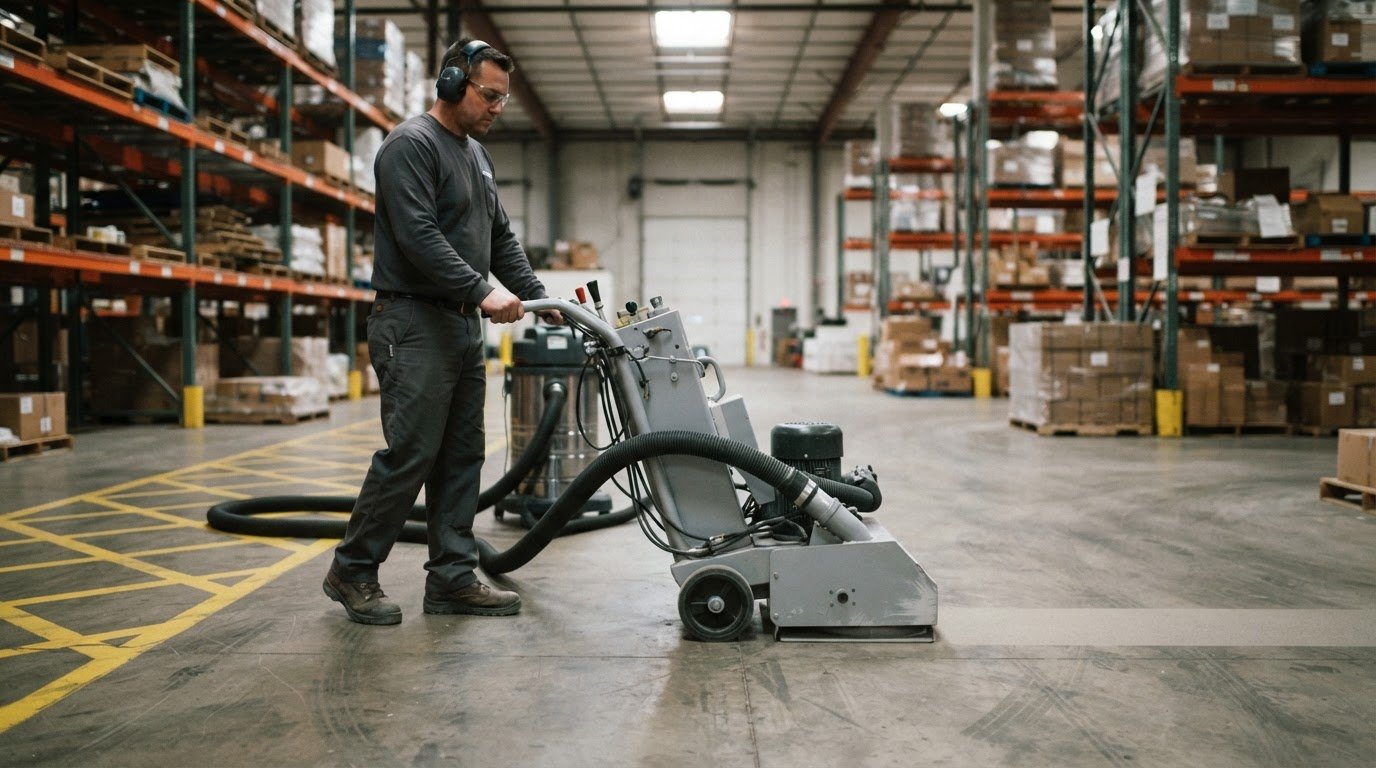
Shot blasting is a specialized form of Abrasive blasting that uses a centrifugal wheel mechanism. This wheel hurls thousands of tiny steel shots at the floor at high velocities. As the shot impacts the concrete, it pulverizes the surface layer and any existing contaminants. Our equipment uses a “closed-loop” system (a mechanism that recycles media while capturing waste). This means the machine immediately recovers the steel shot for reuse while a high-powered vacuum captures dust and debris. This process creates a Concrete Surface Profile (CSP) of 5 to 7, which is the ideal texture for thick industrial epoxies. Because it’s a dry process, there’s no waiting for the floor to dry. You can begin the next phase of work immediately.
The Role of Chemical Stripping in Floor Prep
Chemical stripping uses industrial-strength solvents to break the molecular bond of old paints, mastics, or sealers. It’s a “wet” process. You apply the chemical, let it dwell, and then scrape or pressure wash the resulting sludge away. While effective at removing the top layer of material, it often fails to open the concrete’s pores. The chemicals can actually leave the pores clogged with residue. Additionally, most strippers require a neutralization step (a process to balance the slab’s pH) to ensure the chemicals don’t interfere with new coatings. This results in a much smoother profile, which is typically only suitable for thin sealers rather than high-performance industrial coatings. This method adds significant time and moisture to your project timeline, which can delay your operations.
Shot Blasting vs Chemical Stripping: A Direct Comparison for Industrial Floors
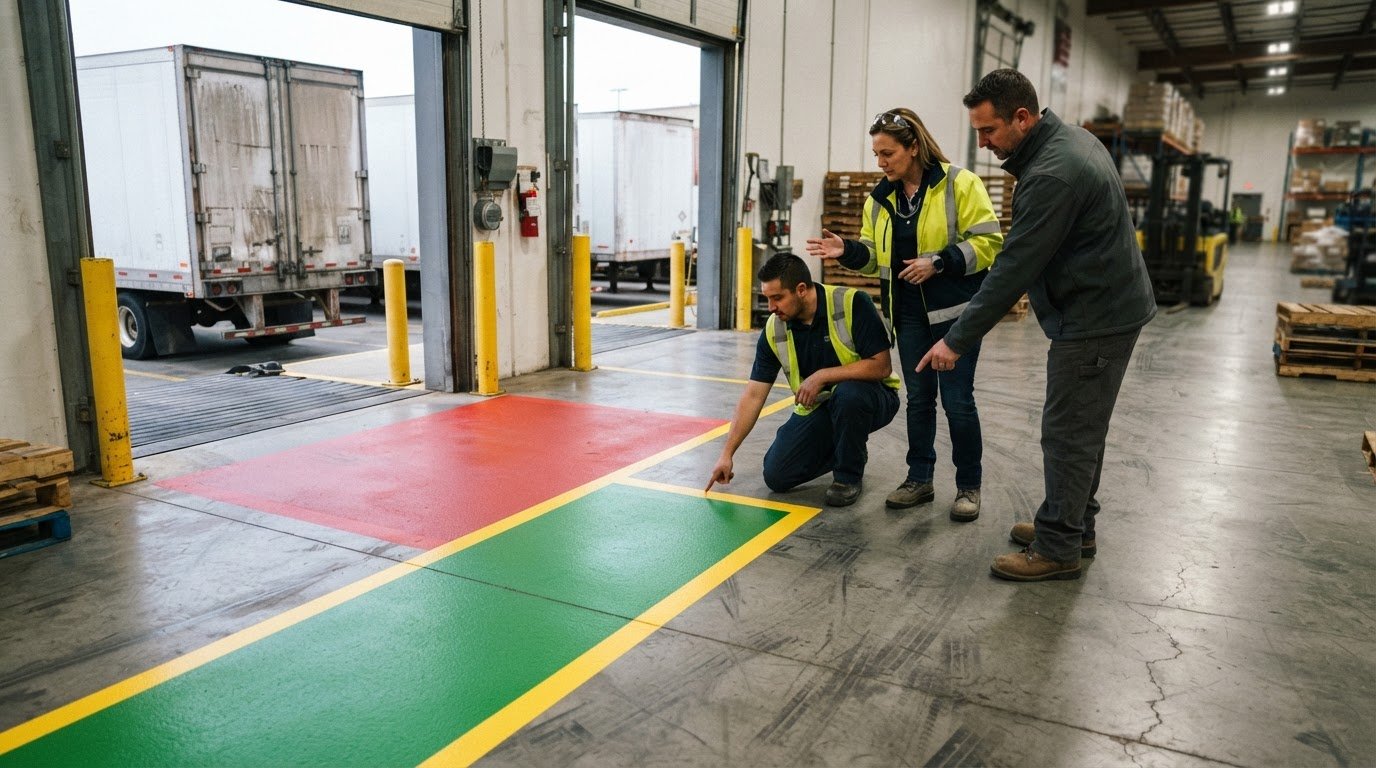
Choosing between shot blasting vs chemical stripping for concrete often comes down to the difference between a “mechanical anchor” and a “chemical clean.” For industrial facilities, a clean surface isn’t enough. You need a textured surface that allows high-build coatings to physically lock into the slab. Chemical stripping merely dissolves the top layer of paint; it doesn’t change the concrete’s physical structure. This lack of texture is the primary reason why new lines often peel within months of application. We prioritize mechanical methods because they provide the predictable, durable results required in high-traffic environments. Specialized contractors like Polished Concrete Atlanta focus on creating these precise surface profiles to ensure that epoxy and polished concrete systems achieve a permanent, industrial-strength bond.
Concrete Surface Profile (CSP) and Epoxy Adhesion
The success of epoxy warehouse striping depends entirely on the Concrete Surface Profile (CSP). CSP is the measure of the average distance from the peaks to the valleys of the surface. Most industrial epoxies and thick-film coatings require a CSP of 3 to 5 to achieve a permanent bond. Chemical stripping typically leaves a CSP 1, which is essentially smooth to the touch. According to industry standards for concrete surface preparation, a profile that is too smooth leads to delamination under the stress of heavy machinery. Shot blasting mechanically creates the necessary “teeth” in the concrete, ensuring the epoxy stays put for years.
Efficiency and Speed in Large-Scale Facilities
Time is a critical factor in 24/7 logistics environments. Shot blasting is significantly faster for large-scale warehouse footprints because it’s a single-step process. High-capacity machines can prepare up to 30,000 square feet per day, allowing for rapid turnaround. Contrast this with the multi-step “apply-wait-scrape-neutralize-dry” cycle required for chemical strippers. Chemicals often require 24 hours or more just to dry after the final rinse before you can even think about painting. If your goal is minimal operational downtime, mechanical removal is the only logical choice. If you’re planning a large-scale project, you can request a technical assessment to see how we manage these timelines.
Safety, Environmental Impact, and OSHA Compliance
Modern industrial standards prioritize air quality and worker safety. Chemical strippers often release high levels of Volatile Organic Compounds (VOCs), which can linger in a live facility and affect staff health. The updated 2026 OSHA Hazard Communication Standard places stricter requirements on chemical labeling and safety data sheets for these very reasons. Enclosed shot blasting equipment eliminates these risks by using high-efficiency vacuums to capture dust at the source. This prevents respirable crystalline silica from entering the air, keeping you in compliance with OSHA 29 CFR 1926.1153. It also avoids the problem of hazardous waste runoff, as all debris is collected in a dry state for easy, compliant disposal.
Factors to Consider When Selecting a Line Removal Method
Selecting the right removal strategy depends on more than just the square footage of your facility. It requires a detailed assessment of the existing slab condition and the specific contaminants present. When weighing shot blasting vs chemical stripping for concrete, we look at the physical reality of your “live” environment. A busy logistics hub can’t afford the lingering slip hazards or the chemical odors that come with solvent-based strippers. We prioritize methods that keep your operations moving while delivering a surface that meets industrial standards.
Evaluating Existing Coatings and Contaminants
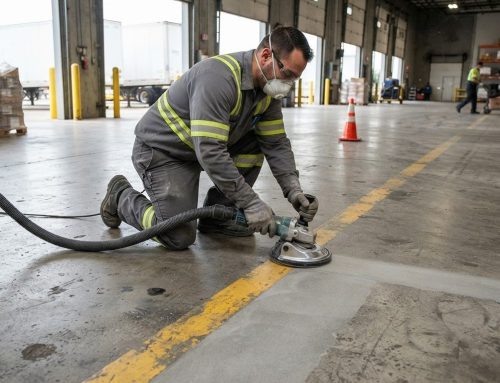
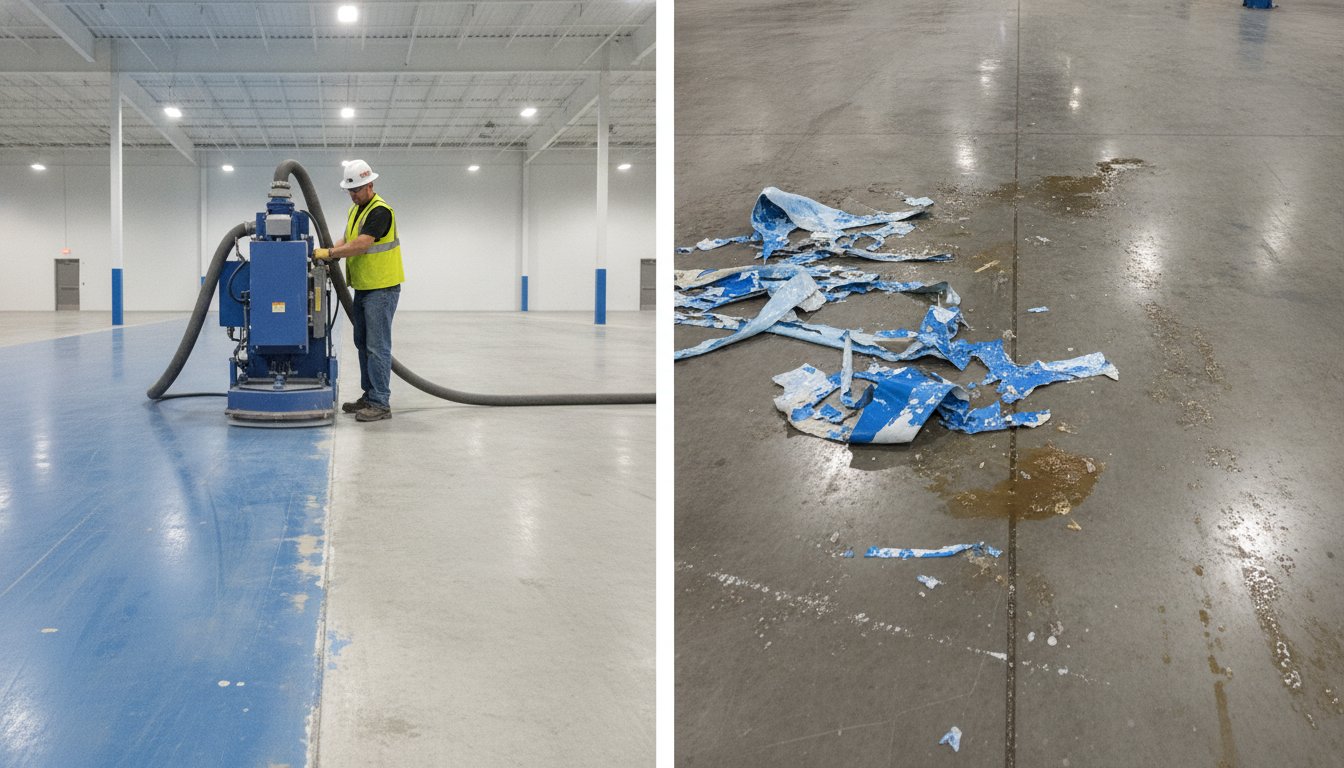
Shot blasting is the most effective way to handle stubborn materials like thick, failing epoxy or deep-seated oils. Because the process physically removes the top layer of the slab, it reaches clean, non-contaminated concrete that chemicals simply can’t access. Chemical stripping might be used as a secondary step for specific adhesives or in very tight corners where machinery can’t reach. However, relying on solvents for large-scale epoxy warehouse striping preparation often leads to bond failure if any residue remains. If your floor is oil-soaked, mechanical removal is the only way to ensure your new lines don’t peel.
Managing Facility Downtime and Dust Control
Operating in a live facility means dust control is non-negotiable. Professional shot blasting crews use high-capacity, HEPA-filtered vacuum systems that capture debris at the point of impact. This allows other sections of your warehouse to remain functional during the work. Adhering to strict environmental regulations ensures your air quality stays within safety limits. In contrast, chemical stripping requires cordoning off large areas to manage fumes and prevent slip-and-fall accidents. It’s a logistical burden that many managers prefer to avoid.
Facility managers should follow this brief checklist to prepare for a mechanical removal crew:
- Clear all pallets, racking, and equipment from the designated work zone.
- Identify areas with significant oil saturation or previous chemical spills.
- Ensure 220V or 480V power access is available for high-capacity equipment.
- Confirm that any overhead fire sensors are protected if working in extremely tight spaces.
If you’re unsure which method fits your specific slab condition, contact us for a floor evaluation to determine the best path forward.
Why Mechanical Removal is the Industrial Standard for Warehouse Striping
Industrial facilities demand a level of durability that chemical solvents simply cannot provide. When analyzing shot blasting vs chemical stripping for concrete, the mechanical method is the clear winner for high-traffic warehouse environments. It’s the only way to ensure your new lines don’t peel under the constant friction of heavy forklifts and pallet jacks. We’ve spent over 29 years refining this process to prioritize functional outcomes for our clients, moving beyond simple aesthetics to focus on the physical realities of the workspace. Our commitment to reliability, safety, and efficiency remains the verbal foundation of every project we undertake.
The StripeGuys Method: Precision and Reliability
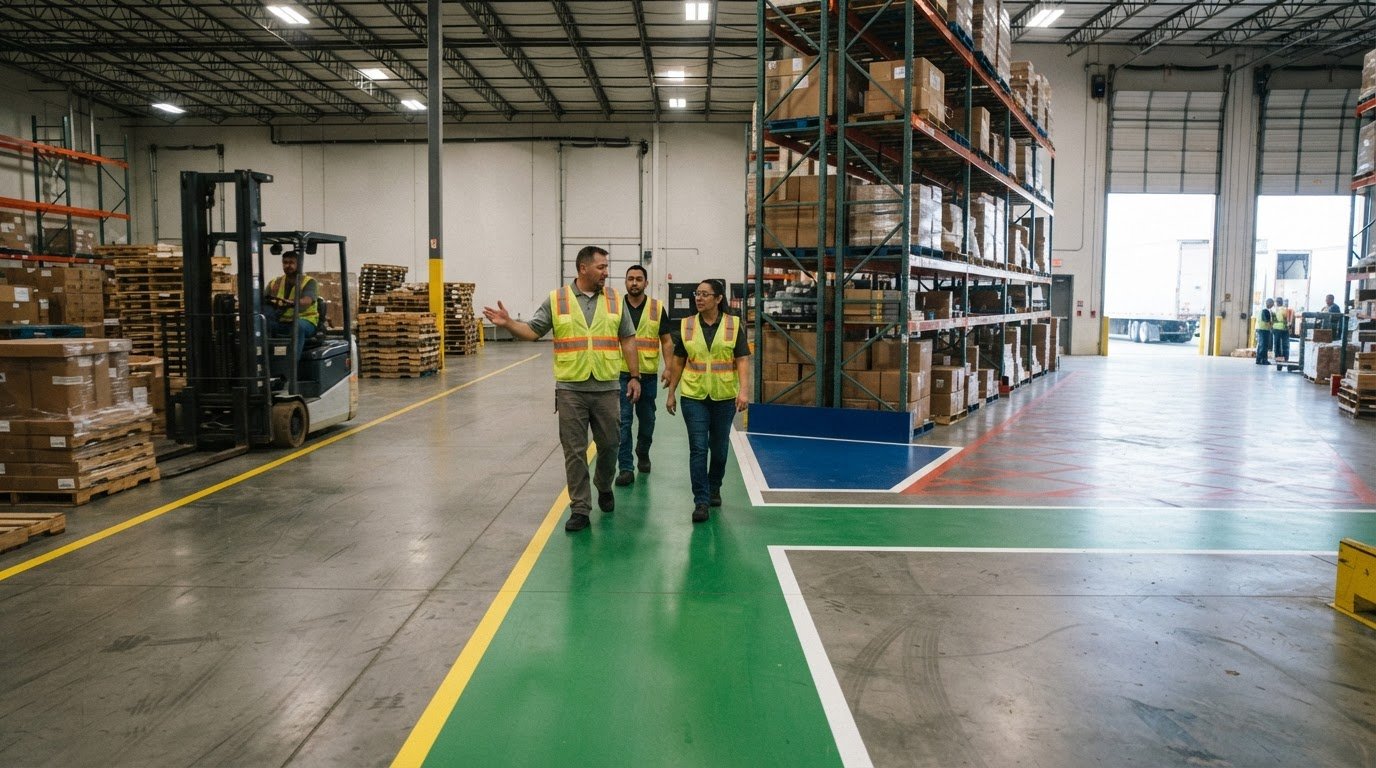
Our approach centers on using high-performance machinery to create consistent surface profiles (the measured texture of the slab) across every square foot. As a leading warehouse line striping company, we operate multiple regional branches to handle nationwide projects with the same level of precision. This specialized approach ensures that every facility, regardless of location, meets the same high operational standards. We act as a safety-conscious partner, ensuring that your floor preparation exceeds basic requirements and provides a foundation for long-term efficiency. Our multi-decade history in the field allows us to anticipate logistical hurdles before they impact your production schedule.
Preparing for Your Next Warehouse Striping Project
Don’t leave your floor prep to chance. Choosing a contractor that offers “one-stop” prep and painting services (a single-source solution for both removal and application) reduces the risk of communication gaps that lead to floor failure. We handle everything from the initial mechanical removal to the final epoxy application. This integrated service model saves you time and ensures your facility remains OSHA-compliant and safe for your team. Consulting with experts before you choose a removal method can prevent costly rework and minimize operational downtime. We prioritize your budget and operational needs, providing a no-nonsense assessment of what your specific slab requires for maximum longevity.
Get a professional quote for your warehouse line removal today and secure a surface ready for decades of heavy use.
Secure Your Industrial Floor’s Future
Establishing a durable warehouse environment requires more than just picking the right paint. It demands a surface preparation method that guarantees long-term adhesion and safety. When comparing shot blasting vs chemical stripping for concrete, the mechanical approach consistently delivers the high-profile anchor needed for industrial-grade epoxies. By avoiding the lingering fumes and moisture associated with liquid solvents, you protect both your slab and your staff while ensuring your facility remains fully operational.
We bring over 29 years of industrial striping experience to every project, utilizing dustless shot blasting technology to ensure your live environment remains clean and compliant. Our nationwide coverage supports large-scale distribution centers from coast to coast, providing a reliable partner for complex logistical needs. Don’t risk your facility’s safety or efficiency on subpar preparation methods that lead to flaking and failure. Contact StripeGuys for a nationwide warehouse floor assessment today to ensure your next project stands the test of time. We’re ready to help you optimize your workspace for peak performance.
Frequently Asked Questions
Is shot blasting too loud for a working warehouse environment?
Shot blasting produces noise levels that require hearing protection for operators, but the sound is localized and manageable within a busy facility. It’s comparable to other heavy industrial machinery already in use. We recommend that any personnel working in the immediate area follow standard OSHA hearing protection protocols. The process doesn’t produce the high-pitched screeching often associated with other grinding methods, making it easier to tolerate in large, open spaces.
Can chemical stripping damage the underlying concrete slab?
Chemical stripping doesn’t usually cause structural damage, but it can compromise the surface’s ability to accept new coatings. Solvents often leave behind a microscopic residue or alter the pH balance of the concrete. This prevents new epoxy from bonding correctly, leading to premature flaking. When you weigh shot blasting vs chemical stripping for concrete, the mechanical method is safer for the slab because it leaves a clean, pH-neutral surface ready for immediate application.
How soon can I paint or apply epoxy after shot blasting?
You can apply epoxy or paint immediately after the shot blasting process is finished. Because this is a 100% dry mechanical method, there’s no waiting for moisture to evaporate or for chemicals to neutralize. This lack of downtime is a major advantage for 24/7 logistics hubs that need to return to full operational capacity as quickly as possible. Once the vacuum system clears the area, the floor is ready for the striping crew.
What is the “CSP” level and why does it matter for my floor?
CSP stands for Concrete Surface Profile, which is a standardized rating from 1 to 9 used to measure the roughness of a concrete surface. Industrial coatings like thick-build epoxy typically require a CSP level of 3 to 5 to create a permanent mechanical bond. Chemical stripping usually results in a CSP 1, which is too smooth for heavy-duty coatings. Achieving the correct CSP ensures your warehouse lines can withstand years of heavy forklift traffic without delaminating.
Does shot blasting create a lot of dust in a distribution center?
Professional shot blasting equipment is virtually dust-free because it uses integrated, high-capacity HEPA vacuum systems. These “closed-loop” machines hurl steel shot and immediately recover both the media and the pulverized concrete debris. This prevents respirable crystalline silica from becoming airborne, which is critical for staying compliant with OSHA 29 CFR 1926.1153. You don’t have to worry about dust settling on your inventory or sensitive racking systems.
Which method is more cost-effective for removing miles of warehouse lines?
Shot blasting is the most cost-effective solution for large-scale projects because of its extreme efficiency. High-performance machines can prepare up to 30,000 square feet per day, which drastically reduces labor costs compared to the slow, multi-step process of chemical stripping. While chemical strippers might seem cheaper for small, intricate spots, the speed and superior adhesion quality of mechanical removal provide a much better long-term value for extensive warehouse footprints.