Did you know that a single serious OSHA violation in 2026 can now cost your facility up to $16,550 per occurrence? For a facility manager, the anxiety of a workplace accident causing operational downtime is often compounded by the difficulty of distinguishing between a contractor’s marketing talk and their actual field performance. You’re right to be cautious. With the average workers’ compensation claim now reaching $48,500, a single mistake during a warehouse floor striping project can devastate your quarterly budget and trigger aggressive inspections under the current National Emphasis Program for heat and safety standards.
This guide simplifies the complex process of evaluating striping contractor safety records so you can hire with total confidence. You’ll learn how to decode technical metrics like the Experience Modification Rate (EMR), where the industry average remains 1.0, and how to spot operational red flags that indicate a crew might be cutting corners. We provide a clear checklist for pre-qualifying partners for epoxy line painting and warehouse line removal. By the end of this article, you’ll have a reliable framework to reduce insurance risks and ensure your next project integrates seamlessly into your high-traffic environment without causing a safety incident.
Key Takeaways
- Understand how to interpret the Experience Modification Rate (EMR) to determine if a contractor’s insurance risk profile will impact your own liability.
- Learn a systematic approach for evaluating striping contractor safety records that prioritizes proactive Job Hazard Analysis (JHA) over simple accident history.
- Identify the technical safety protocols required for indoor environments, such as VOC management for epoxy line painting and HEPA-filtered vacuum systems for shot blasting line removal.
- Recognize the operational red flags that signal potential OSHA exposure and secondary liability for your facility during active striping projects.
- See why a contractor’s long-term tenure in the industrial sector is a reliable shorthand for consistent safety performance and operational reliability.
The Financial and Operational Stakes of Contractor Safety
Hiring a team for warehouse floor striping or epoxy line painting involves far more than comparing square-footage prices. When you’re evaluating striping contractor safety records, you’re actually protecting your facility from operational paralysis. A single trip-and-fall or chemical spill doesn’t just result in a medical claim; it can halt production lines for hours or days. These hidden costs often exceed the original contract value by a significant margin. We’ve seen projects where a simple lack of cord management led to a forklift collision, resulting in thousands of dollars in damaged rack systems and lost inventory.
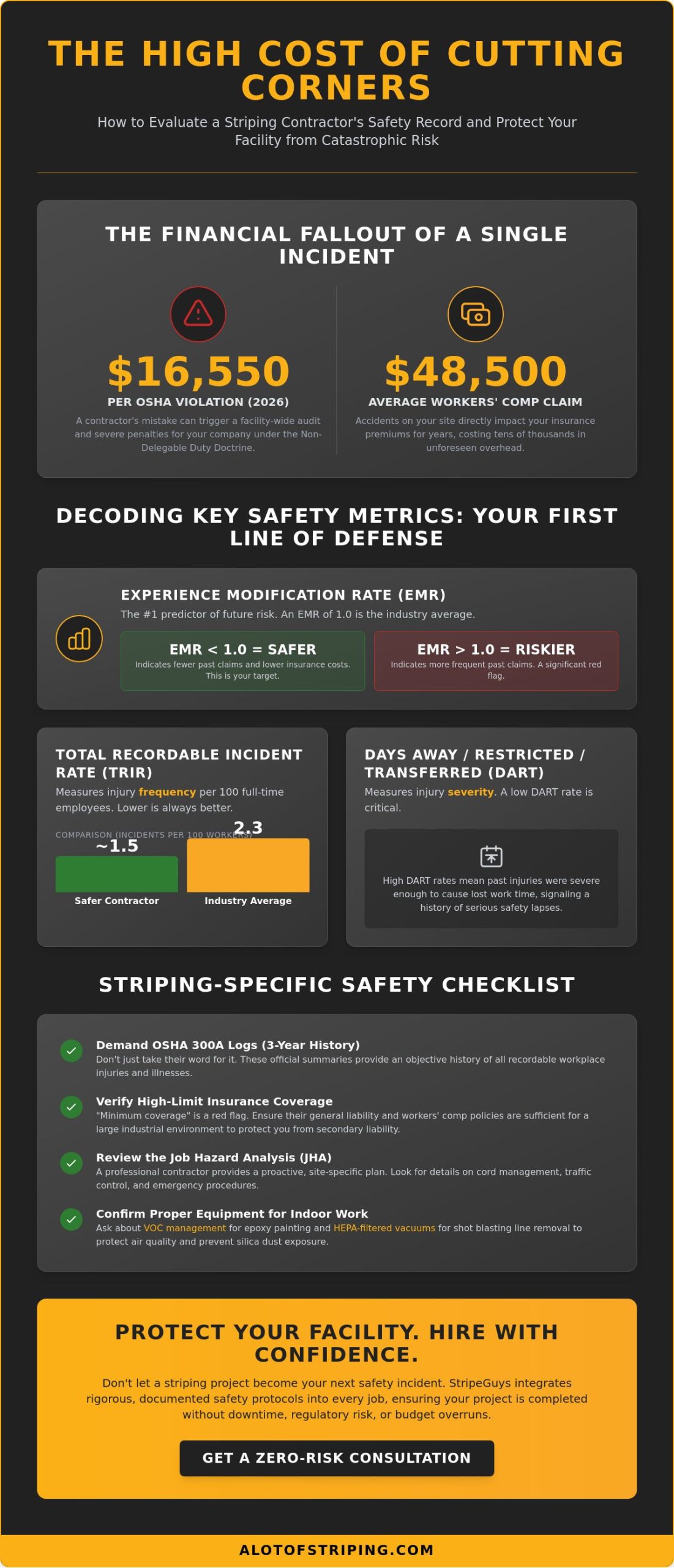
Contractor negligence often triggers immediate scrutiny from regulatory bodies. If a crew fails to follow Occupational safety and health standards while performing shot blasting line removal, your facility becomes the focus of an OSHA inspection. They don’t just look at the contractor; they look at your oversight. This can lead to serious citations for the host facility, with maximum penalties now reaching $16,550 per violation as of January 2026. OSHA inspectors often use a contractor’s mistake as a “foot in the door” to audit your entire facility’s safety program.
There is also a long-term financial ripple effect to consider. Accidents on your site can negatively impact your facility’s Experience Modification Rate (EMR), leading to increased insurance premiums that persist for years. While the industry average EMR remains 1.0, a single major incident can push that number higher, costing your company tens of thousands in additional annual overhead. Distinguishing between basic “compliance” (having a manual on a shelf) and “operational safety” (executing safe work in a high-traffic distribution center) is a critical skill for any facility manager evaluating striping contractor safety records in a high-stakes environment.
Liability and the Non-Delegable Duty Doctrine
Many managers mistakenly believe that hiring a third party shifts all risk away from the company. Under the Non-Delegable Duty Doctrine, you can still be held liable for injuries caused by a contractor’s negligence during inherently dangerous work. We recommend verifying comprehensive general liability and workers’ compensation policies before any work begins. If a contractor only carries “minimum coverage” for a large-scale industrial project, it’s a major red flag that they aren’t prepared for the physical realities of your workspace. We provide documented proof of our multi-decade history of high-limit coverage to ensure our clients are never exposed to secondary liability.
The Cost of Downtime vs. The Cost of Safety
A project stoppage due to a safety violation is an unplanned expense that destroys operational efficiency. Professional safety planning prevents these mid-project delays by identifying hazards before the first gallon of paint is opened. For example, we perform shot blasting line removal using HEPA-filtered vacuums to ensure your facility remains free of hazardous crystalline silica dust, which keeps your air quality safe and your production lines running. Choosing a contractor with a proven safety history is a strategic investment that pays dividends by eliminating the threat of multi-million dollar liability lawsuits and catastrophic operational shutdowns.
Decoding Technical Safety Metrics: TRIR, EMR, and DART
When you begin evaluating striping contractor safety records, you must look past the sales presentation and into the hard data. Technical safety metrics provide an objective window into a company’s operational history. The most common metric is the Total Recordable Incident Rate (TRIR), which calculates the number of work-related injuries per 100 full-time employees. While the construction industry saw a TRIR of 2.3 in recent years, industrial specialists should aim lower. You should also examine the Days Away, Restricted or Transferred (DART) rate. This figure is critical because it measures the severity of past incidents by tracking how many injuries resulted in lost time or modified duties. Historical Bureau of Labor Statistics (BLS) data serves as the primary benchmark for these rates, allowing you to compare a potential contractor against national averages.
We recommend requesting at least three years of OSHA 300A summary logs before signing a contract. These documents provide a verified snapshot of a contractor’s safety performance over time, preventing a single “lucky” year from skewing your perception. For high-traffic facilities, partnering with an experienced provider for warehouse floor striping ensures these metrics are backed by actual field discipline rather than just paperwork.
Understanding Experience Modification Rate (EMR)
The Experience Modification Rate (EMR) is a multiplier used by insurance companies to gauge a contractor’s risk based on past workers’ compensation claims. An EMR of 1.0 is the industry average; a number below 1.0 indicates a safer-than-average record, while a number above 1.0 suggests a higher frequency of claims. A low EMR directly reduces a contractor’s insurance overhead, which often leads to more competitive bid prices for large-scale projects like parking lot painting. Be wary of rapidly fluctuating EMR scores. Significant jumps from year to year often signal a lack of consistent safety leadership or high employee turnover, both of which increase the risk of an accident on your site.
The Limitations of Lagging Indicators
While TRIR and EMR are valuable, they are lagging indicators (metrics that record what has already happened). A “zero” TRIR isn’t always a guarantee of future safety performance. In smaller, less professional crews, a clean record might actually be a sign of underreporting or “window dressing” in safety documentation. Professional contractors emphasize transparency over perfection. When evaluating striping contractor safety records, look for companies that can explain the corrective actions they took after a past incident. This demonstrates a culture of continuous improvement (the process of refining safety protocols based on real-world data) rather than a culture of concealment.
Evaluating Leading Indicators: The Proactive Safety Audit
While lagging indicators tell you about a company’s past, Leading safety indicators provide a forward-looking view of their commitment to accident prevention. Moving from “What happened?” to “How do we prevent it?” is the hallmark of a mature safety culture. When you’re evaluating striping contractor safety records, look for a robust Job Hazard Analysis (JHA) process. A JHA (a systematic method of identifying and mitigating risks before work begins) ensures that crews account for specific facility dangers like blind corners, overhead hazards, or proximity to hazardous materials. This proactive approach prevents the incidents that lead to the high EMR scores discussed in the previous section.
A contractor’s corporate structure also signals their safety priority. A dependable industrial veteran will employ a designated Safety Director who operates independently of the production team. This ensures that safety standards are never compromised to meet a deadline. When evaluating striping contractor safety records, verify that the company conducts regular internal audits and has a formal system for reporting “near misses.” These reports allow a contractor to refine their operational standards before a minor oversight turns into a recordable injury on your warehouse floor.
Safety Training and Certifications
Professional safety starts with formal education. You should verify that all on-site supervisors hold OSHA 10 or OSHA 30 certifications, which provide foundational knowledge in construction and industrial safety standards. For specialized tasks like shot blasting line removal, operators must demonstrate proficiency in managing crystalline silica dust and operating high-pressure machinery safely. If your project involves epoxy line painting, the crew requires comprehensive Hazard Communication (HazCom) training. This ensures they understand the Material Safety Data Sheets (MSDS) for chemical resins and can implement proper ventilation and PPE protocols to protect both their team and your facility staff.
Pre-Job Planning and Communication
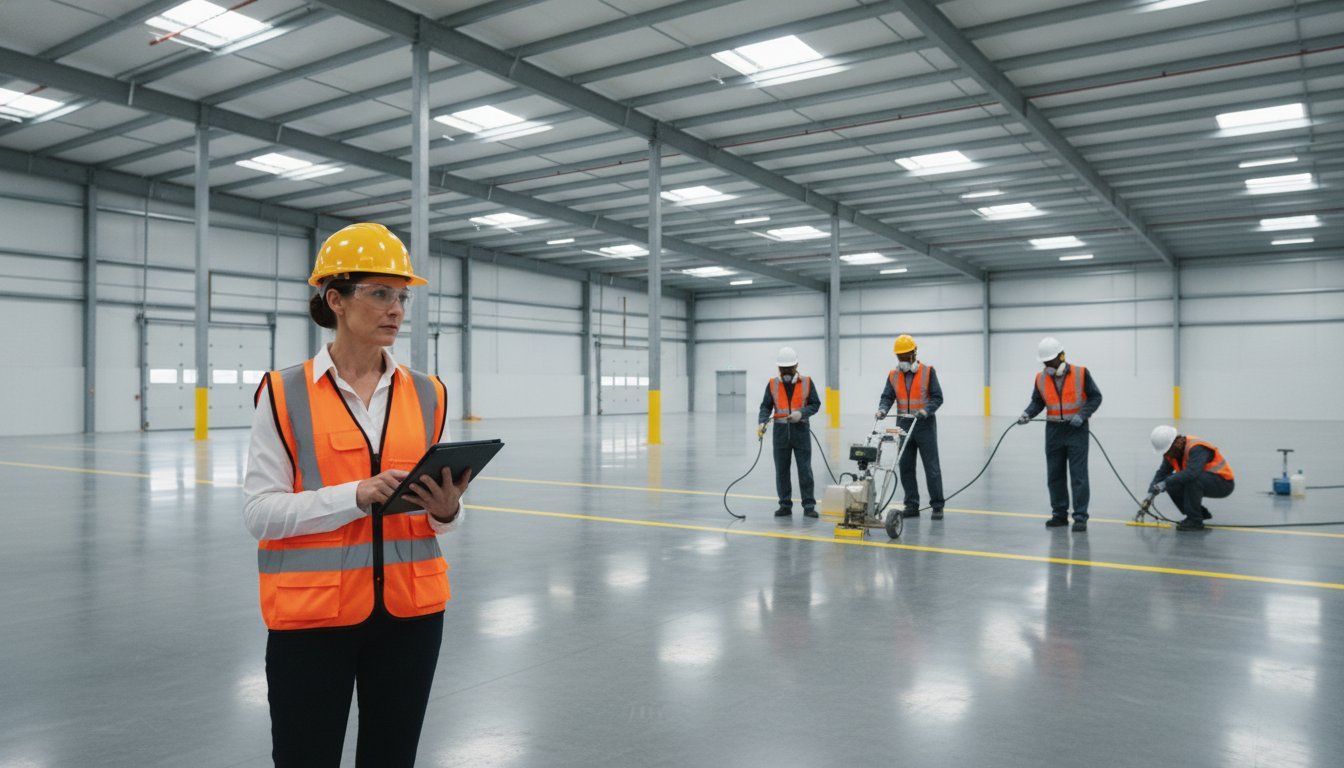
Effective safety execution relies on clear communication at the start of every shift. Safe contractors utilize a “Toolbox Talk” (a brief, focused safety meeting conducted at the work site) to review the day’s specific hazards and goals. This is especially critical in distribution centers where crews must coordinate protocols for working alongside active forklift traffic. A Site-Specific Safety Plan (SSSP) is a comprehensive document that outlines the unique hazards of your particular facility and the specific mitigation strategies the crew will employ to manage them. This high level of preparation ensures that services like warehouse floor striping are completed without disrupting your operational flow or risking a collision.
The Striping-Specific Safety Checklist
General construction safety metrics provide a baseline, but evaluating striping contractor safety records requires a deeper dive into trade-specific hazards. Industrial striping involves high-pressure machinery, volatile chemical resins, and mechanical surface preparation that can compromise your facility’s air quality if not managed correctly. You shouldn’t settle for a contractor who simply “follows the rules.” You need a partner who understands the physical realities of your workspace. This starts with a thorough inspection of their equipment and their specific protocols for indoor air quality and dust mitigation.
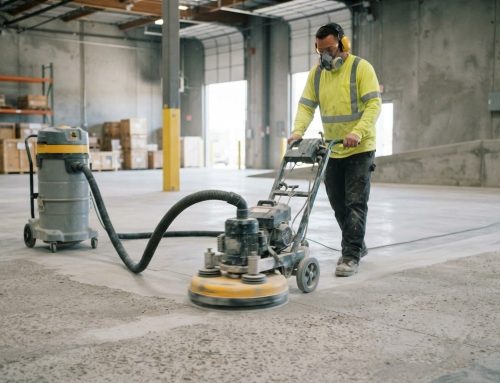
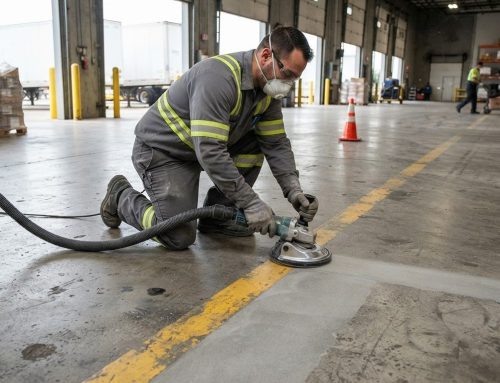
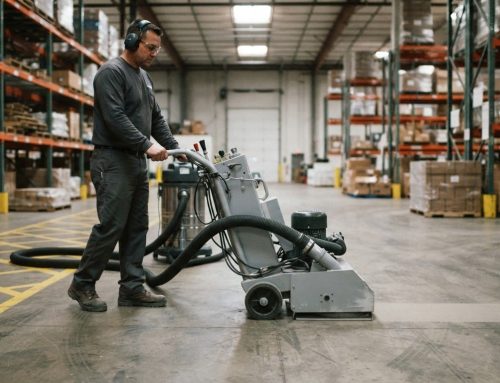
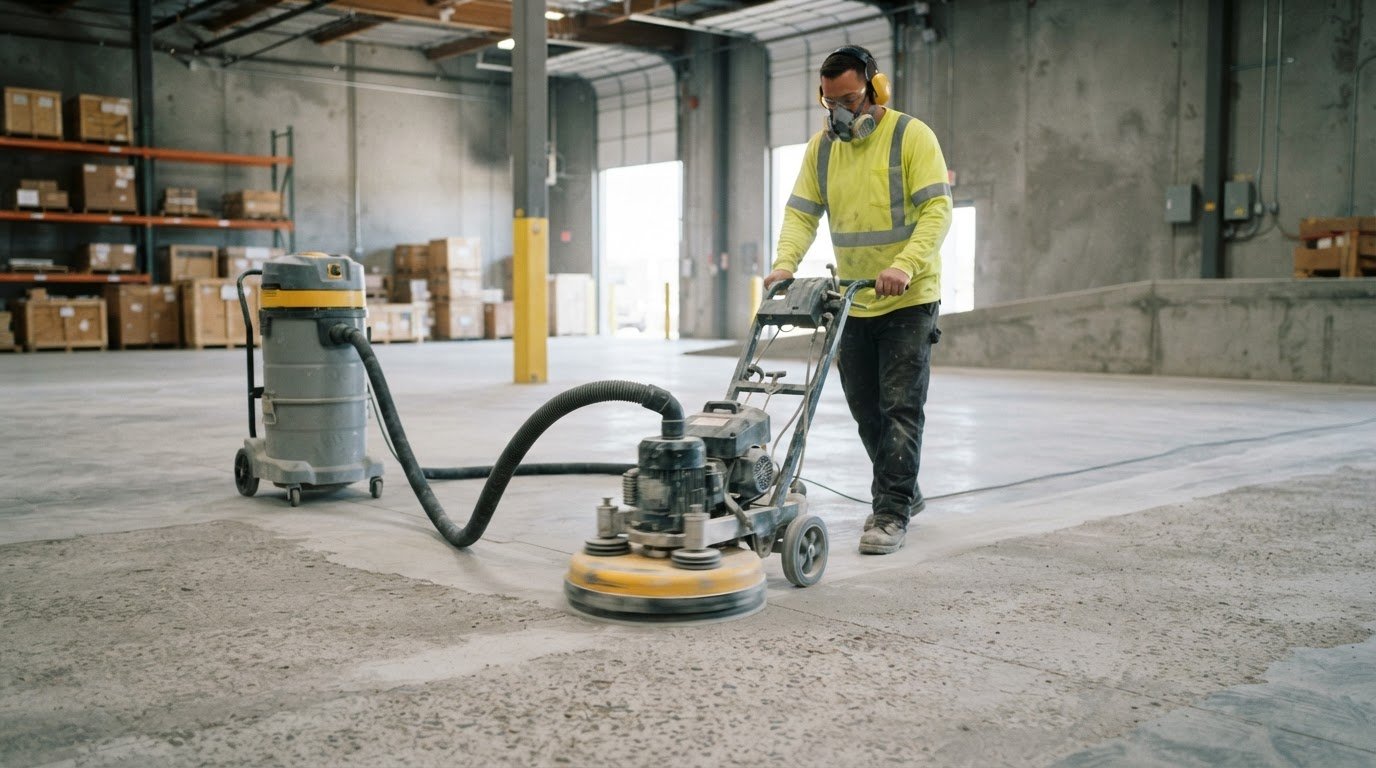
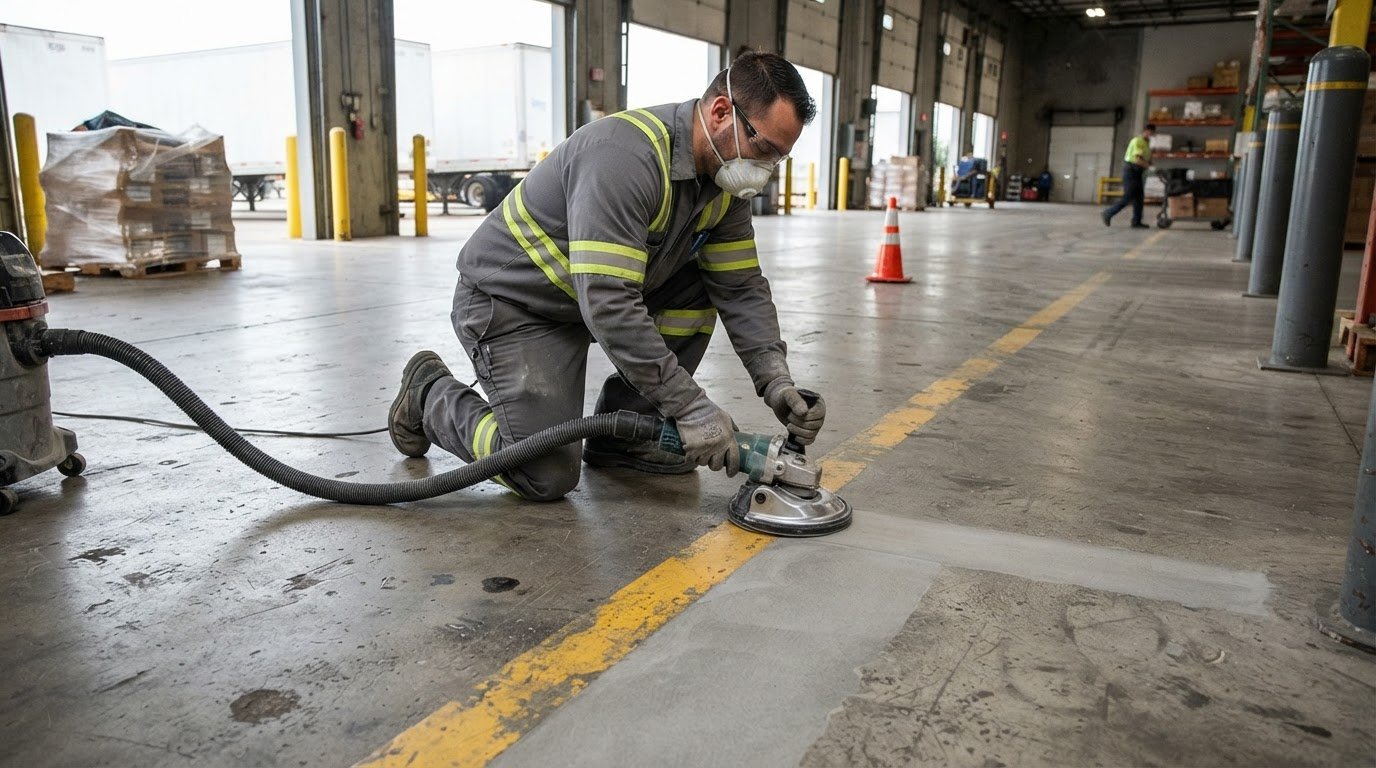
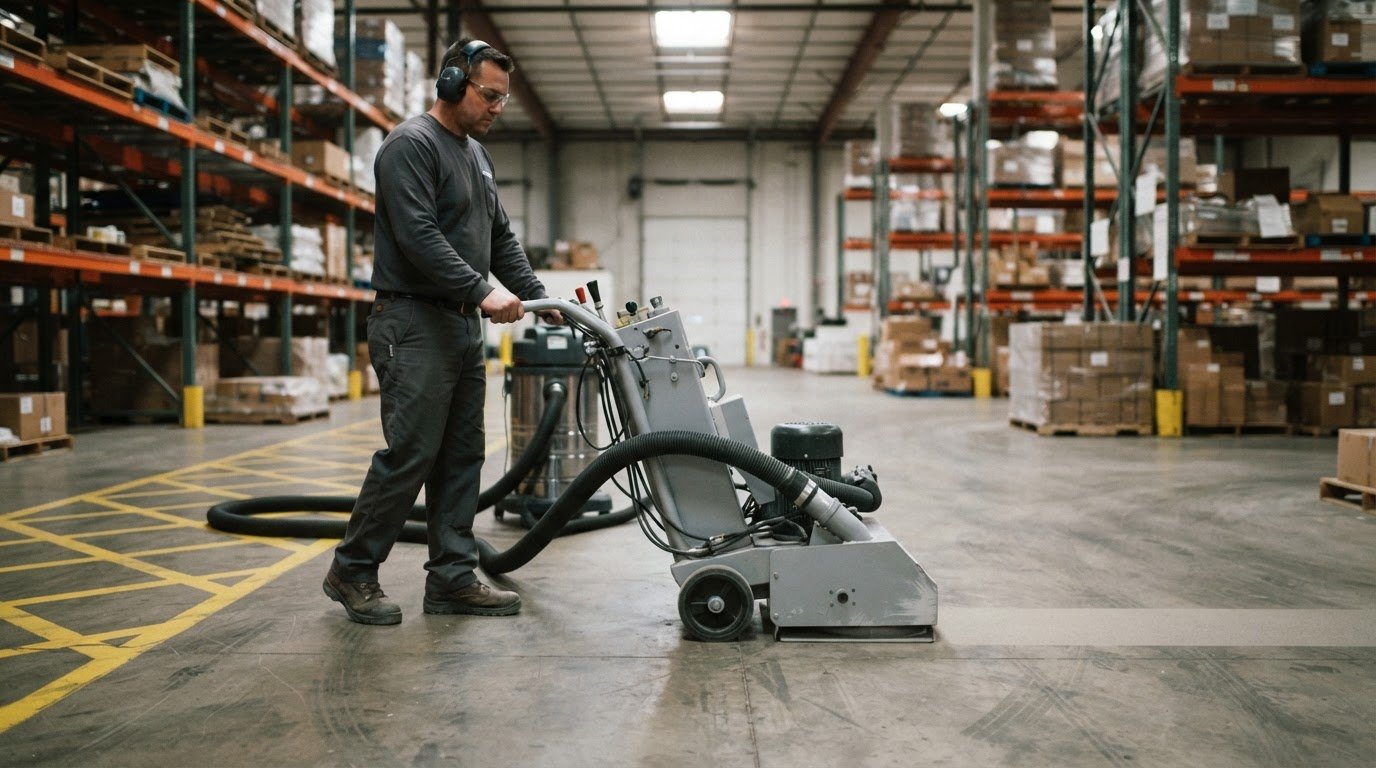
Volatile Organic Compounds (VOCs) are a primary concern during indoor epoxy line painting. A safe contractor will provide a detailed ventilation plan and use low-VOC materials whenever possible to protect your employees from respiratory distress. Similarly, mechanical preparation like shot blasting line removal or grinding generates significant amounts of dust. We utilize industrial-grade, HEPA-filtered vacuum systems (specialized filtration units designed to capture 99.97% of particles) to ensure that hazardous crystalline silica doesn’t settle on your inventory or production equipment. When vetting a crew, look for the following equipment and PPE standards:
- Equipment Maintenance: Machinery should be free of “leakers” (oil or hydraulic fluid drips) that create slip hazards on your floor.
- Dust Containment: Verification of shrouds and vacuum attachments for all grinding and shot blasting equipment.
- Specialized PPE: Crew members must use respirators during high-fume applications, along with eye protection and high-visibility gear that meets ANSI standards for high-traffic environments.
If you’re ready to upgrade your facility with a team that prioritizes these technical standards, contact us for professional warehouse floor striping and safety-first execution.
Chemical Handling and Storage
Safe chemical management extends beyond the application itself. You should review the Safety Data Sheets (SDS) for all materials, including epoxies and solvent-based paints, before they enter your building. A reliable contractor maintains strict spill containment protocols (using secondary containment trays for large-scale epoxy projects) to prevent environmental contamination. They must also have a clear plan for the proper disposal of hazardous waste and old line removal debris, ensuring your facility remains in compliance with local environmental regulations.
Managing Active Facility Risks
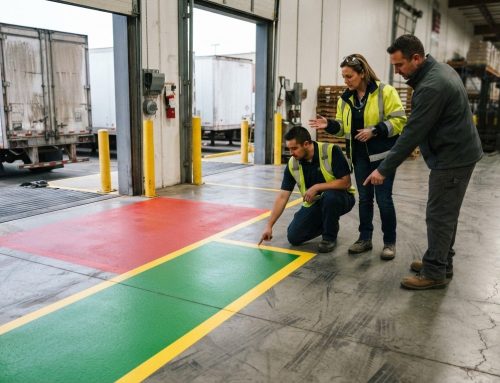
The greatest risk in a distribution center is the interface between contractor crews and your daily operations. Evaluating striping contractor safety records should include an assessment of their traffic management strategies. Physical barricading (rigid plastic or metal barriers) is often superior to simple caution tape in high-traffic forklift zones. Safe staging is also critical; a professional crew manages their equipment footprint so that aisles remain clear and emergency exits are never blocked. If your project requires night or weekend work, verify that the contractor has specific off-hours safety protocols to maintain high standards when your primary management team isn’t on-site.
The StripeGuys Standard: 29 Years of Safety-First Execution
For nearly three decades, we’ve focused on delivering functional outcomes in high-stakes industrial environments. A 29-year history isn’t just a number; it’s a multi-decade record of reliability that simplifies the process of evaluating striping contractor safety records for facility managers. While we discussed technical metrics like EMR and TRIR in previous sections, our longevity proves we can maintain those standards year after year. Our centralized safety management system ensures every crew follows the same rigorous internal audits, regardless of the project location or complexity.
We prioritize the physical realities of your workspace through a commitment to dustless shot blasting line removal and the application of low-VOC industrial coatings. These methods aren’t just about a clean finish; they’re about protecting your facility’s air quality and maintaining the health of your workforce. By integrating these technical preparation methods into our standard operating procedures, we eliminate the logistical stress often associated with large-scale warehouse floor striping projects. Our team operates as a safety-conscious consultant, ensuring that your facility remains organized and compliant from the first day on-site.
National Reach, Unified Safety
Evaluating a contractor with a broad geographic footprint can be difficult for many organizations. We solve this by implementing unified safety protocols from coast to coast. Whether you need parking lot painting in one region or epoxy line painting in another, you receive the same high-level safety execution. You benefit from a single point of contact for national safety compliance, ensuring that your corporate standards are met across all regional branches without variation. In a recent project for a high-profile distribution center, we managed a multi-state rollout where every site supervisor utilized the same site-specific safety plan, resulting in zero recordable incidents across 12 locations.
Partnering for Long-Term Safety
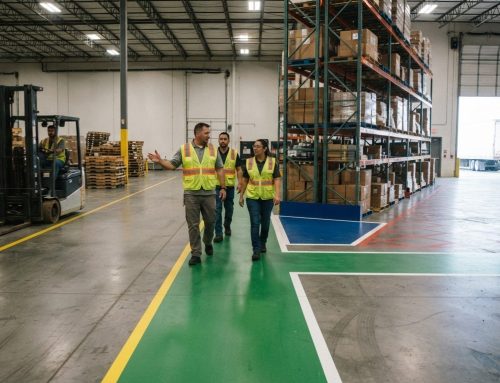
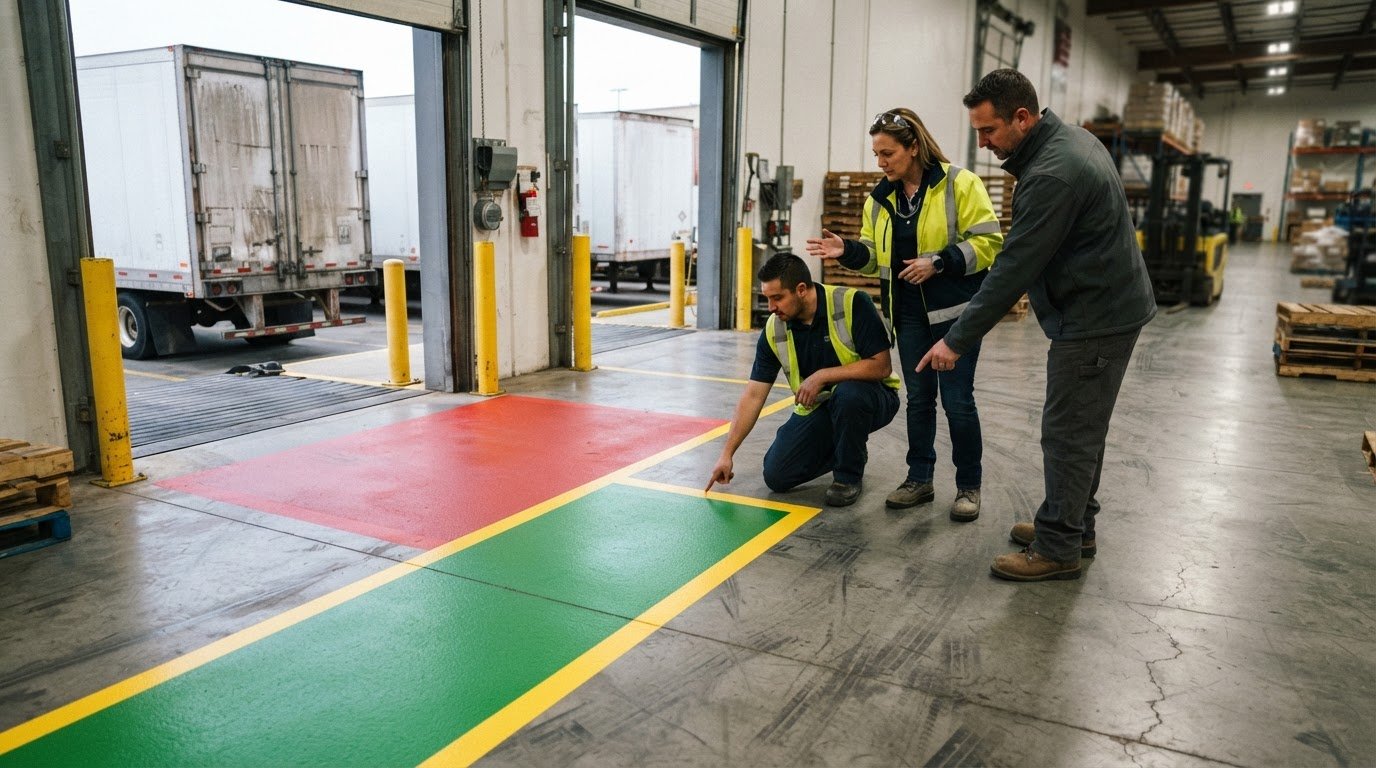
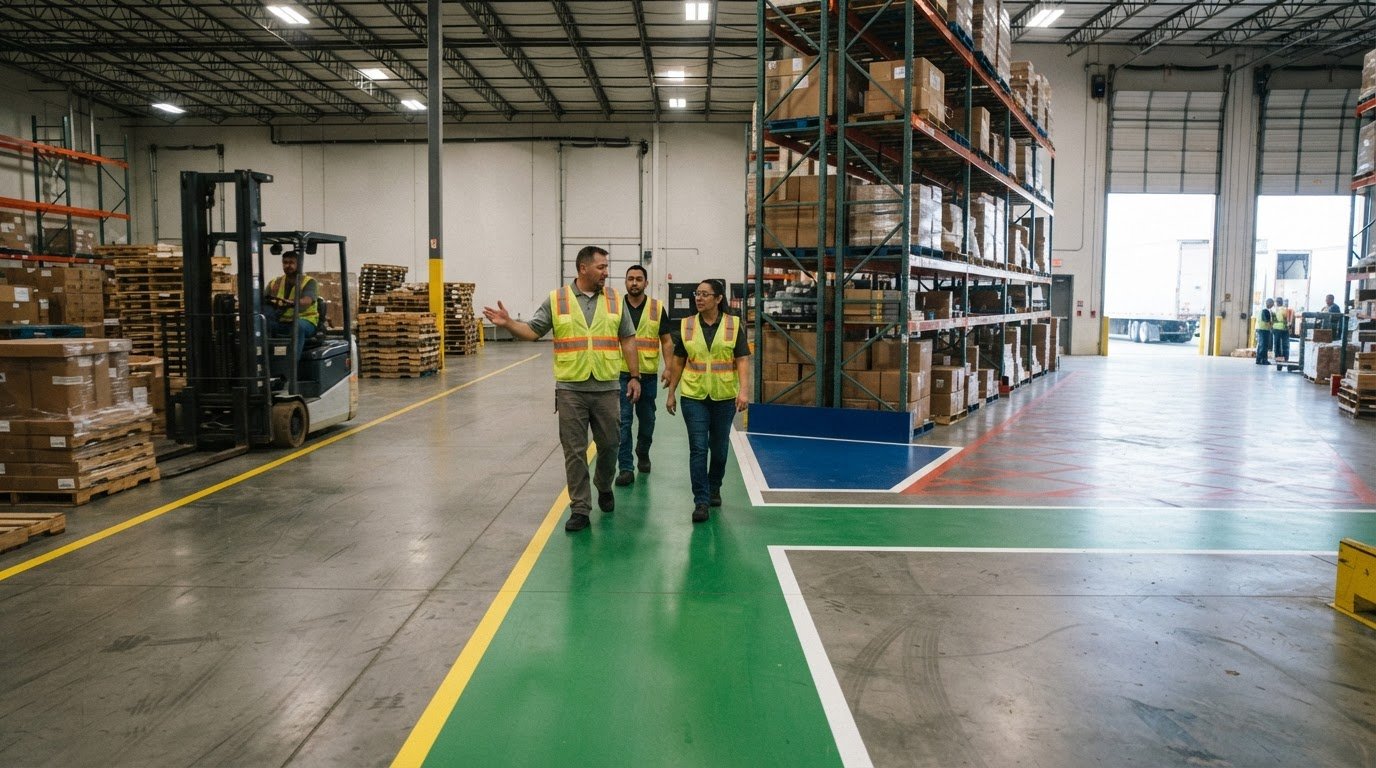
Our role as a dependable industrial veteran extends beyond the application of paint. We design striping layouts that improve pedestrian-forklift separation permanently, reducing the risk of struck-by incidents in your facility. This no-nonsense approach to facility organization ensures long-term OSHA compliance and operational efficiency. We understand that your time is valuable, which is why our communication rhythm is brisk and organized. We maintain extreme accessibility to ensure your operational needs are always the priority. If you’re ready to secure a partner who values your facility’s safety as much as you do, Request a safety-vetted quote for your facility today.
Secure Your Operational Efficiency Through Safety-First Selection
Choosing a contractor for warehouse floor striping or shot blasting line removal requires a commitment to rigorous vetting. By prioritizing technical metrics like EMR and auditing proactive leading indicators, you protect your facility from the high costs of OSHA citations and operational downtime. You now have the framework for evaluating striping contractor safety records based on physical realities rather than marketing claims. Our multi-decade history serves as a shorthand for reliability, ensuring that your pedestrian-forklift separation remains clear and effective long after we leave the site.
StripeGuys brings over 29 years of industrial experience to every project, providing national coverage with consistent safety standards across all regional branches. We specialize in OSHA-compliant safety markings and trade-specific hazard mitigation, ensuring your facility remains organized and safe. Don’t leave your facility’s liability to chance. Get a Professional Warehouse Striping Quote from the Safety Experts today. We’re ready to help you maintain a high-performance workspace that prioritizes both safety and your bottom line.
Frequently Asked Questions
What is a good TRIR for a striping contractor?
A Total Recordable Incident Rate (TRIR) below 2.0 is generally considered good for specialized industrial contractors. While the broader construction industry saw a rate of 2.3 in 2023, specialized crews should maintain lower figures through focused training and operational discipline. A lower TRIR indicates a lower frequency of recordable injuries per 100 employees. This metric is a key component when evaluating striping contractor safety records and determining the reliability of their field operations.
How do I check a contractor’s OSHA violation history?
You can verify a contractor’s history by visiting the OSHA Establishment Search website and entering the company’s legal name. This tool provides a record of all inspections and citations issued within the last five years. Look specifically for serious or willful violations, which carry maximum penalties of $16,550 and $165,514 respectively as of 2026. A clean or improving record signals a management team that prioritizes regulatory adherence and maintains high operational standards.
Does a high EMR always mean a contractor is unsafe?
An Experience Modification Rate (EMR) above 1.0 indicates a higher than average claims history, but it doesn’t always tell the full story. A single significant accident from three years ago can keep the rate elevated even if the company has since overhauled its safety protocols. You should ask the contractor for a written explanation of any rate spikes. Professional providers will be transparent about their corrective actions and how they’ve refined their safety culture over time.
What safety certifications should a striping crew have?
On-site supervisors should ideally hold OSHA 30-hour certifications, while general crew members should have OSHA 10-hour cards. These certifications ensure the team understands foundational industrial safety and hazard recognition. Additionally, verify that operators have specific training for high-pressure machinery and chemical handling. For projects involving epoxy line painting, crews must be trained in Hazard Communication (HazCom) and proper use of personal protective equipment to manage chemical exposure effectively.
How should a contractor manage dust during warehouse line removal?
Contractors must use HEPA-filtered vacuum systems attached directly to their shot blasting or grinding equipment. This setup captures 99.97% of particles, preventing hazardous crystalline silica dust from contaminating your air or settling on sensitive inventory. Proper dust containment is a non-negotiable standard for indoor floor striping removal. It protects your facility’s internal environment and ensures compliance with OSHA silica standards, which is a critical factor when evaluating striping contractor safety records.
Why is a Job Hazard Analysis (JHA) necessary for a striping project?
A JHA is necessary because it identifies facility-specific risks like blind corners, overhead obstacles, and active forklift traffic before work begins. This document outlines the exact mitigation strategies the crew will use to prevent accidents in your unique environment. It acts as a roadmap for the shift, ensuring that services like warehouse floor striping don’t disrupt your operational flow. A formal JHA process demonstrates a proactive safety mindset rather than a reactive one.
What are the risks of hiring a contractor without workers’ compensation?
Hiring a contractor without workers’ compensation coverage exposes your company to massive financial liability if an injury occurs on your site. Without this insurance, your facility may be held responsible for the contractor’s medical bills and lost wages. It can also lead to secondary lawsuits and increased premiums for your own insurance policies. Always verify a contractor’s current insurance certificates to ensure they carry adequate limits for the physical realities of your industrial project.
How does proper floor striping improve overall facility safety?
Accurate floor markings create clear boundaries that separate pedestrian pathways from heavy machinery and forklift zones. This physical organization reduces the risk of collisions and struck-by incidents, which are leading causes of workplace injuries. High-visibility markings also designate emergency exits, fire extinguisher locations, and hazardous zones. By maintaining crisp, durable lines through professional warehouse floor striping, you establish a permanent visual communication system that reinforces your facility’s safety standards daily.