In 2026, industrial floor markings are no longer simple maintenance tasks; they are critical safety systems that directly impact your legal liability and operational insurance premiums. You likely already know the logistical headache of managing a patchwork of local vendors, only to find inconsistencies in line widths across your different facilities. This inconsistency creates safety gaps and leads to premature line failure when local crews skip essential surface preparation. Understanding how to choose a national striping company is the only way to transition from managing dozens of unreliable painting crews to partnering with a single, dependable industrial consultant.
As StripeGuys, we understand the high stakes of multi-site management and the need for standardized layouts that remain OSHA-compliant across every state line. This guide provides a technical framework for vetting contractors on their 2026 regulatory knowledge, material durability, and specialized equipment like shot blasting (a mechanical method for surface profiling) for proper line removal. You will learn how to secure a single point of contact for your entire US portfolio, ensuring that your Warehouse Floor Striping and Parking Lot Striping projects deliver functional outcomes that last for years rather than months.
Key Takeaways
- Learn how to choose a national striping company that acts as a safety consultant to ensure layout consistency and regulatory compliance across your entire US portfolio.
- Understand why technical surface preparation, specifically shot blasting line removal, is the primary predictor of longevity for industrial floor markings.
- Identify the logistical standards required to support high-volume distribution centers, including the necessity for 24/7 availability to minimize operational downtime.
- Use a professional vetting framework that prioritizes historical tenure and safety metrics like EMR ratings to reduce facility liability and insurance risks.
- Discover how consolidating services like Warehouse Floor Striping and Parking Lot Striping under one experienced partner streamlines project management.
The Strategic Value of a National Striping Company for Industrial Portfolios
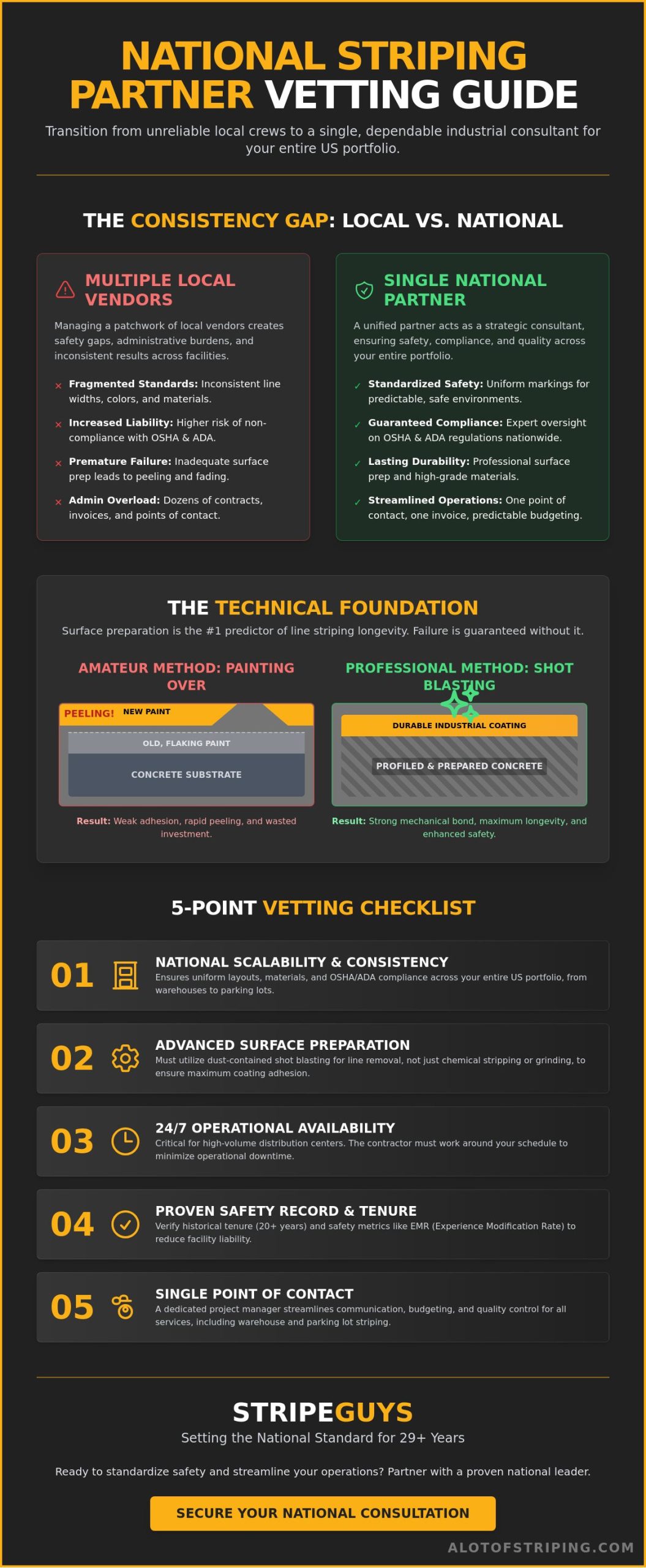
In 2026, the role of a national striping contractor has evolved from a simple service provider to a strategic safety consultant. For organizations managing multi-state industrial portfolios, the primary challenge is the “Consistency Gap.” Local vendors often operate with varying equipment and material grades, leading to fragmented facility standards that confuse employees and increase liability. Learning how to choose a national striping company requires looking beyond the lowest bid; you need a partner who ensures your Warehouse Floor Striping and Parking Lot Striping look and perform identically from coast to coast. This consistency isn’t just about aesthetics; it’s about establishing a predictable environment where safety is baked into the infrastructure.
Centralized reporting and billing streamline the procurement process for your operations team. Instead of processing dozens of invoices from disparate local crews, a national partner provides a single, transparent stream of data. This administrative efficiency allows facility managers to focus on operational throughput rather than tracking down maintenance records or verifying material safety data sheets. Adhering to professional pavement marking materials and standards ensures that every location meets the same high bar for durability and visibility, regardless of the local climate or facility type. When you consolidate your requirements, you gain a partner invested in the long-term integrity of your surfaces.
Standardizing Safety Across Your National Footprint
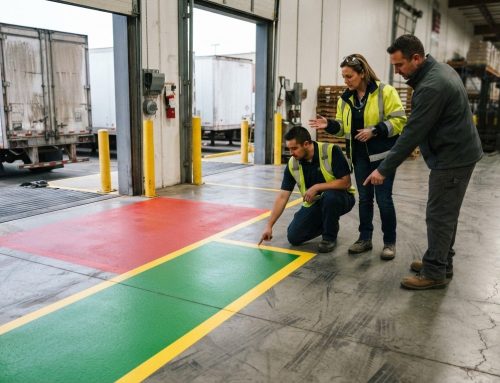
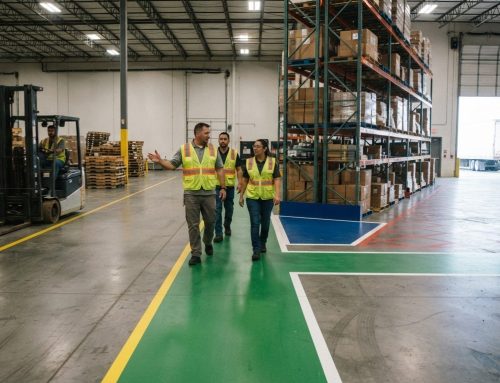
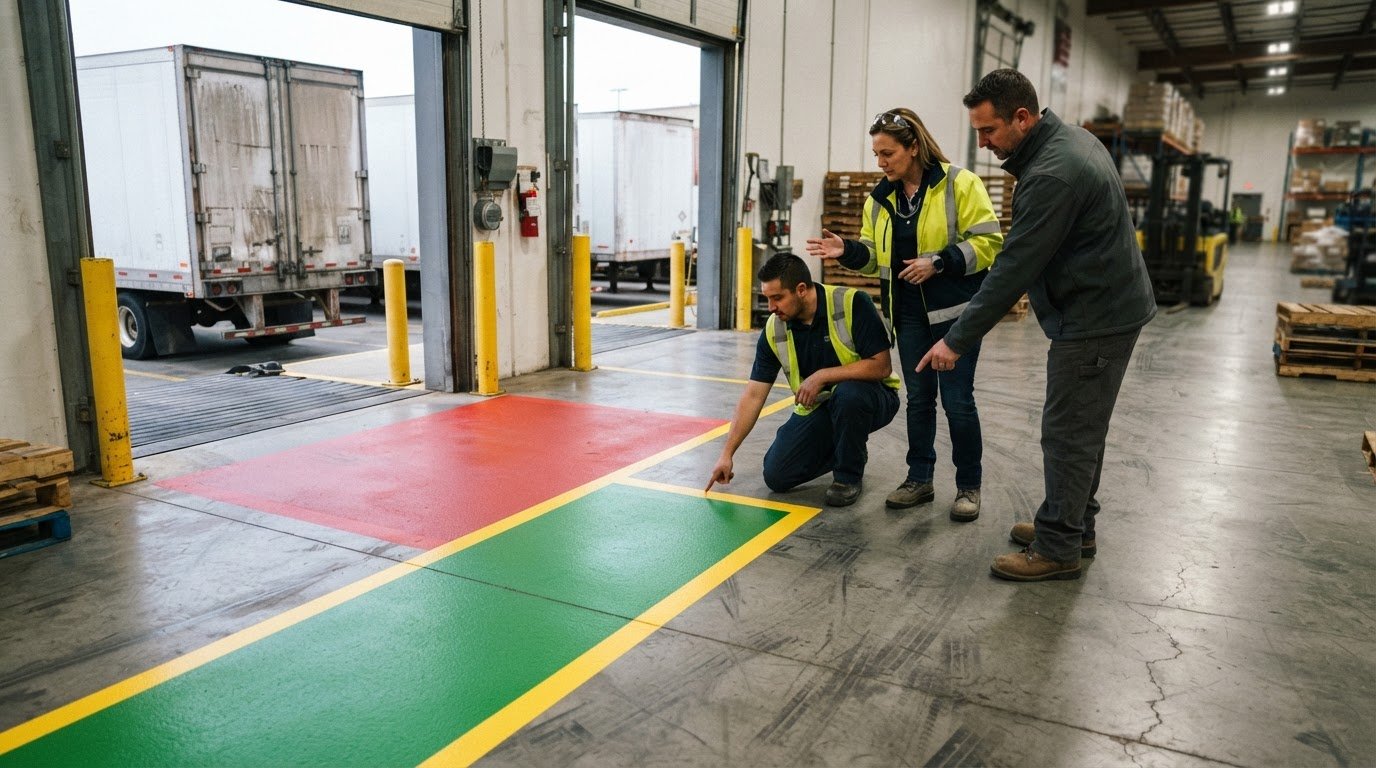
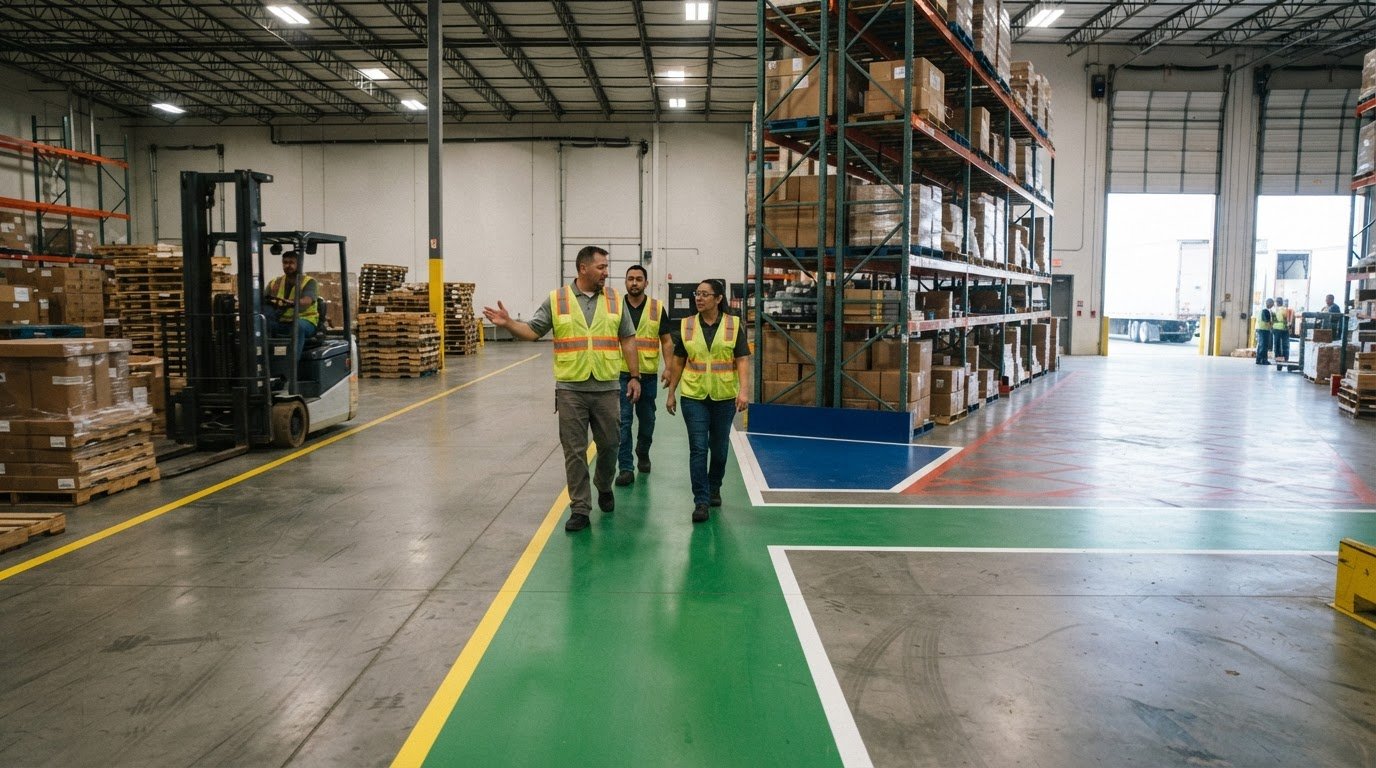
Industrial safety relies on the predictability of the environment. When pedestrian walkways, forklift lanes, and hazardous zones use uniform colors and symbols, cross-facility employees can navigate any site without additional safety training. A national contractor ensures that ADA (Americans with Disabilities Act) requirements are met with precision in every state, preventing the legal exposure that comes from non-compliant parking lot painting. This uniform OSHA compliance acts as a protective shield for your organization’s insurance profile, as standardized safety markings reduce the likelihood of workplace accidents and subsequent claims. Consistency in your safety markings is your first line of defense against operational risk.
Operational Efficiency and Reduced Administrative Burden
Managing 20 or more local striping vendors is a logistical burden that consumes hundreds of administrative hours annually. By consolidating your portfolio under one dedicated project manager, you eliminate the communication breakdowns common with local dispatchers. A national partnership also secures standardized linear footage pricing for services like Epoxy Line Painting, which makes national budgeting predictable and transparent. This approach reduces the hidden costs associated with vendor vetting and inconsistent service quality. You ensure your maintenance budget is spent on high-performance results, such as specialized shot blasting line removal, rather than administrative overhead. One point of contact means one standard of excellence for every facility you operate.
Technical Vetting: Evaluating Surface Prep and Material Durability
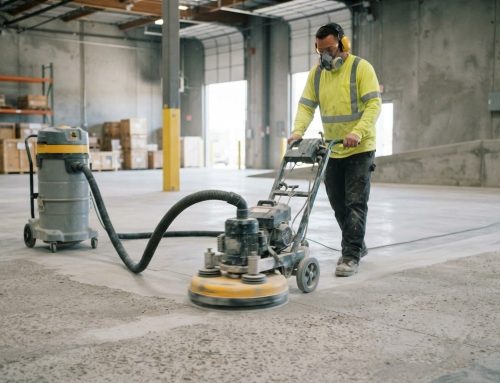
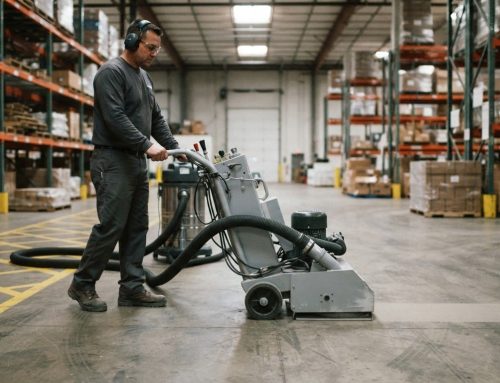
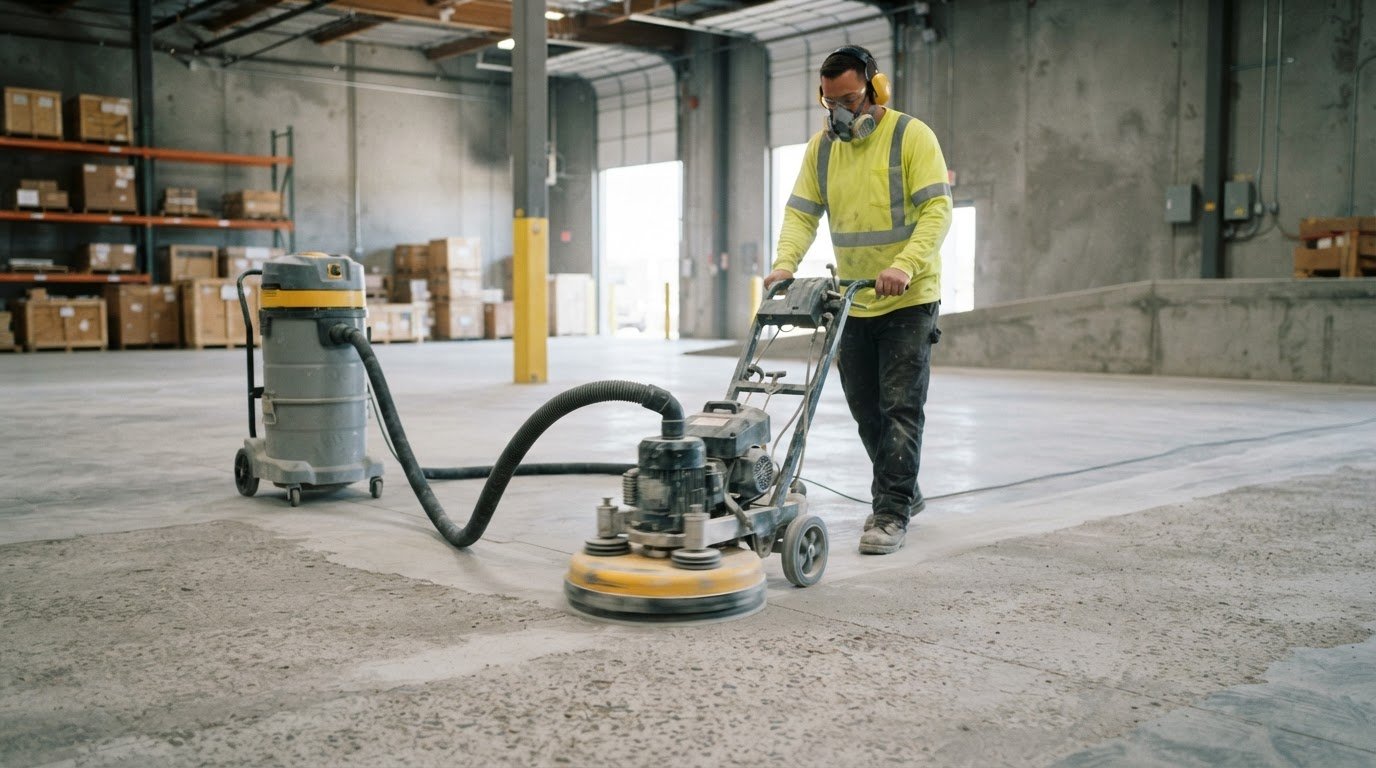
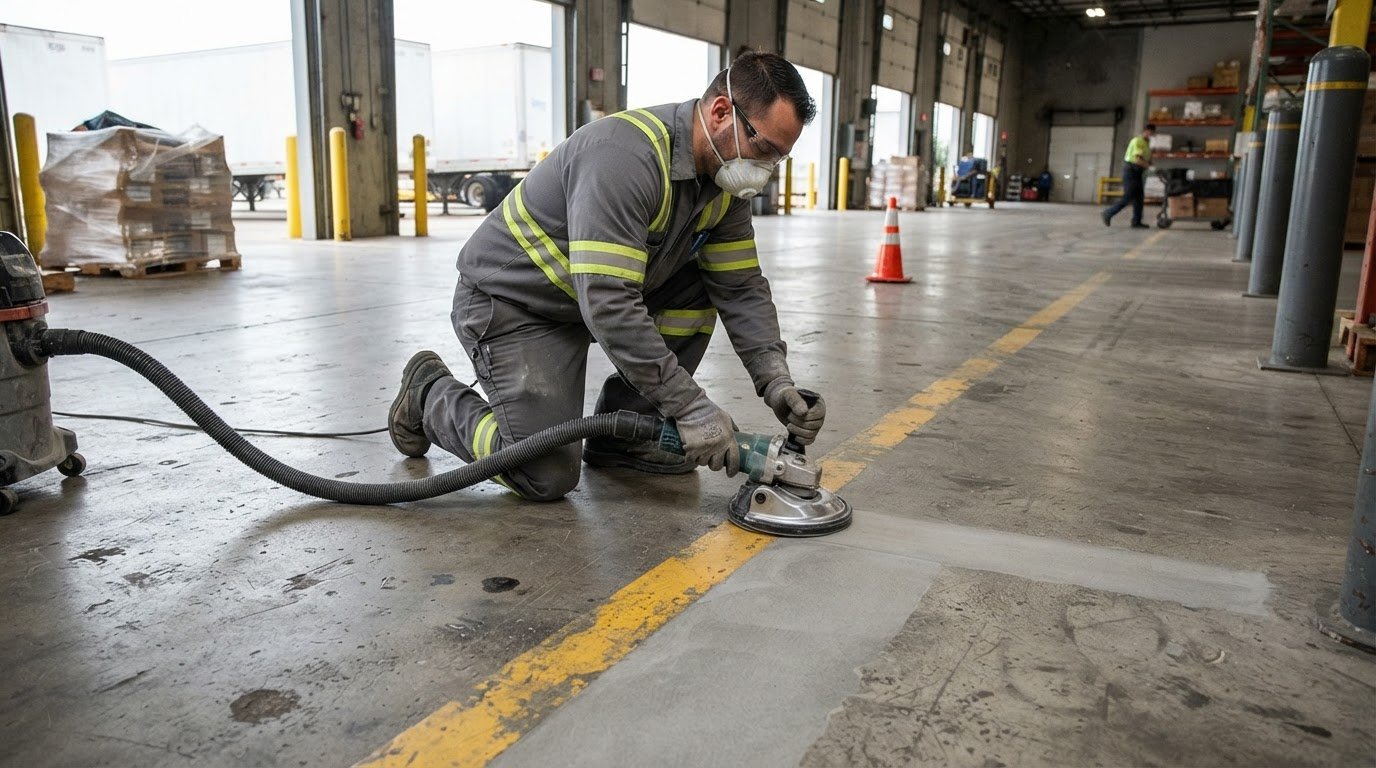
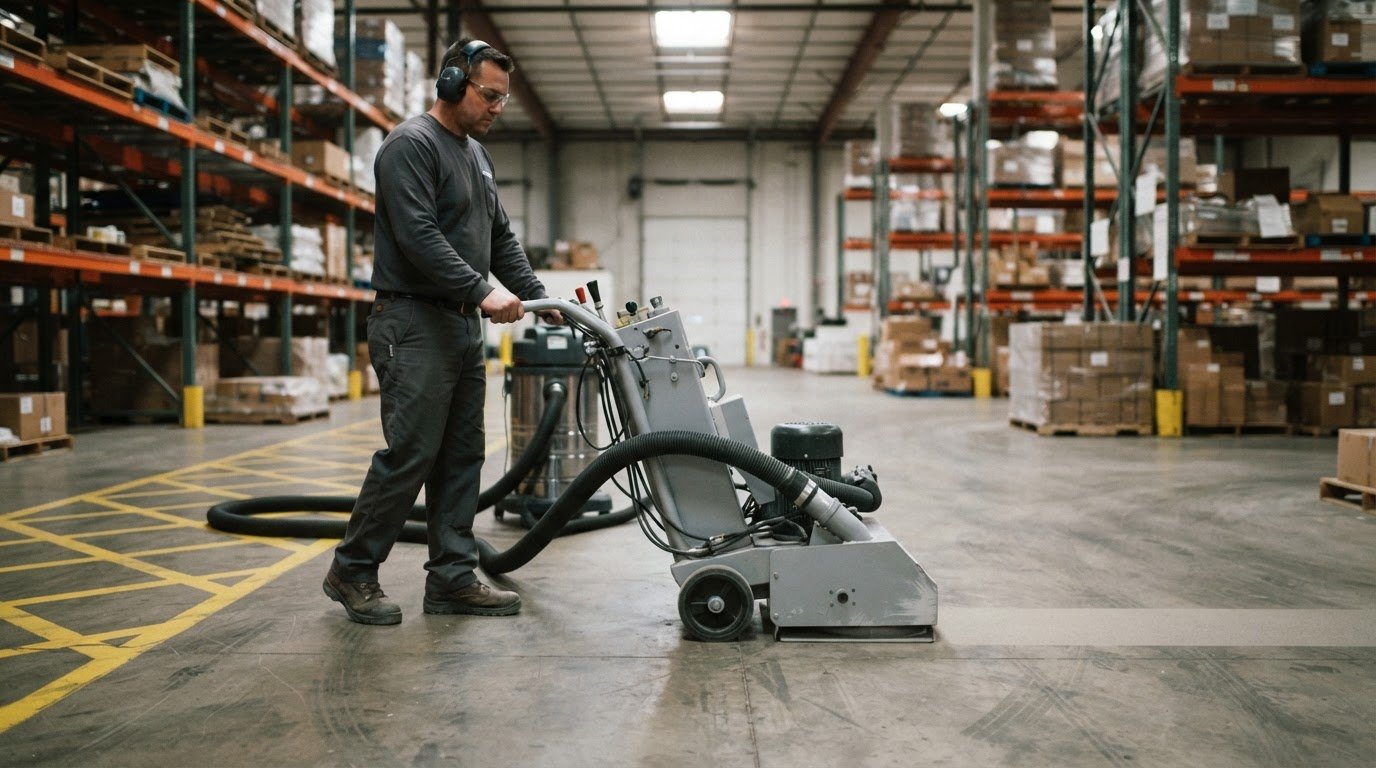
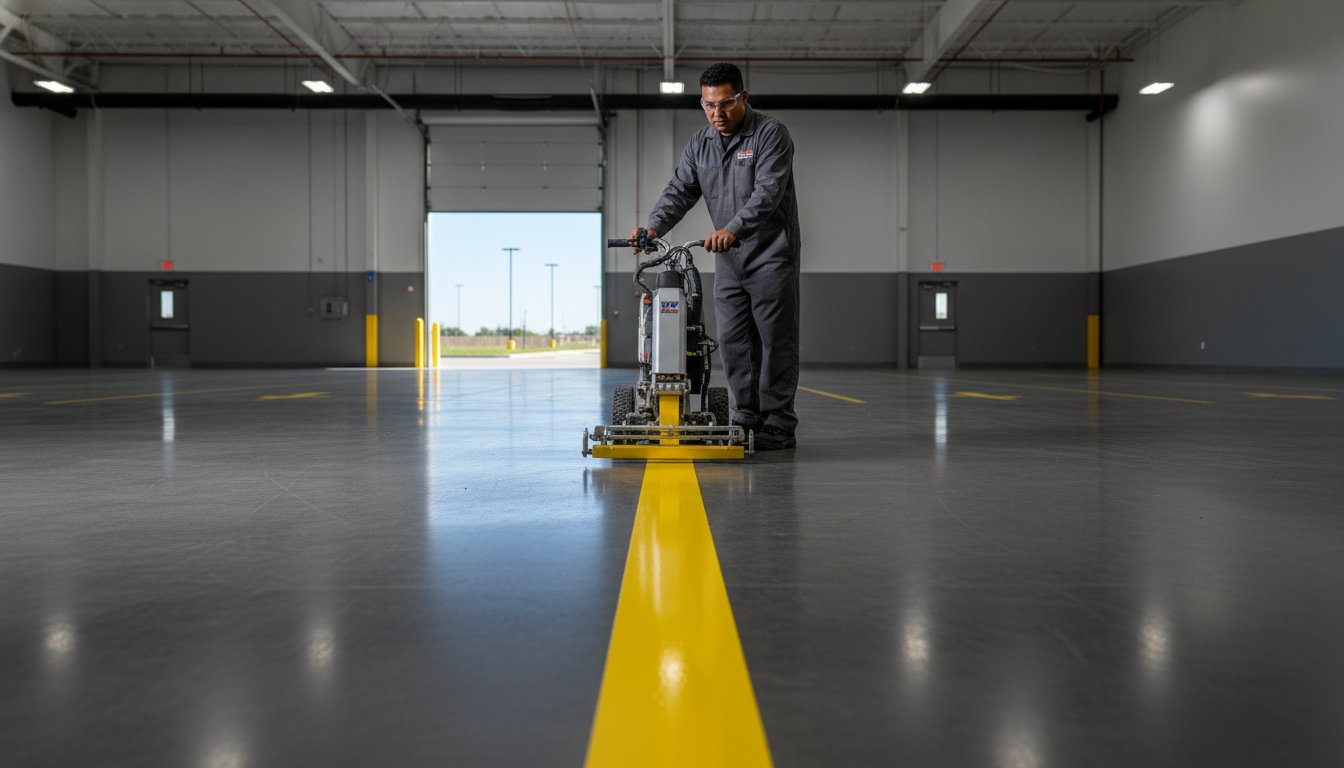
When you evaluate how to choose a national striping company, the most critical technical factor isn’t the paint itself; it’s what happens before the first drop is applied. Surface preparation is the primary predictor of line striping longevity. Without proper mechanical profiling, even the highest-grade industrial coatings will peel under the stress of heavy forklift traffic or extreme weather. You should prioritize contractors who offer mechanical removal methods rather than simple chemical stripping. Chemicals often leave behind residues that compromise new adhesion. Ask potential partners about their fleet. A professional firm uses commercial-grade, dust-contained shot blasters and ride-on application machines rather than walk-behind sprayers designed for light commercial use.
The difference between a lasting safety system and a temporary fix lies in the bond between the coating and the substrate. If a contractor suggests painting over old, flaking lines, they are selling you a failure. Professional Warehouse Line Removal creates a clean surface that allows Epoxy Line Painting to fuse with the concrete. This technical approach is essential for high-volume 3PL (third-party logistics) facilities where downtime is costly. Choosing a partner who understands these mechanical realities ensures your investment lasts for years, not months. If you are planning a facility refresh, it’s wise to start with a professional assessment of your current floor striping removal needs.
The Necessity of Professional Line Removal
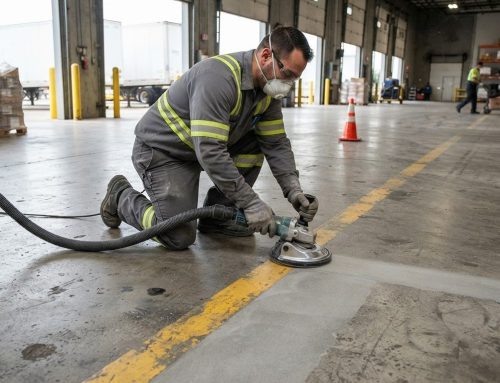
Old markings must be neutralized to prevent “ghost lines,” which are faint remnants of previous layouts that confuse drivers and operators. Shot blasting line removal is the industry gold standard because it cleans the substrate while creating a specific texture that coatings can grip. For outdoor environments, grinding or scarifying is used to remove layers of accumulated traffic paint from asphalt. This mechanical floor marking removal ensures the new layout is the only one visible, maintaining clear boundaries and reducing operational errors.
Material Science: Choosing the Right Coating for the Environment
The environment dictates the material. In manufacturing plants, high-build epoxy provides the chemical resistance needed to withstand industrial spills. For outdoor Parking Lot Striping, thermoplastic markings are a superior choice because they can last up to six times longer than traditional paint. Adhering to Federal Highway Administration standards ensures your outdoor markings meet retroreflectivity requirements for low-light safety. In 2026, many facilities are also adopting cold-plastic (MMA) coatings, which offer a high growth rate in durability for high-traffic zones. A qualified national partner will match the material to your specific facility’s wear patterns.
Assessing National Scalability and Project Management
Scaling a striping project across several states requires more than just a large map; it demands a robust infrastructure capable of handling massive footprints. When you research how to choose a national striping company, you must verify their ability to manage a 1-million-square-foot facility without compromising quality. A true national partner maintains a regional branch network that allows for rapid mobilization, ensuring that safety audits or emergency re-striping don’t wait for a crew to travel across the country. Digital project tracking is another essential marker of scalability. You should receive real-time updates and photo documentation for every site, providing a transparent view of the project’s progress without requiring your physical presence at every location.
Operational reliability is built on the contractor’s ability to self-perform. Many organizations that claim to be national are actually “brokers” that outsource your project to local crews with unknown standards. This model introduces significant risk because the broker has limited control over the final output. You should prioritize contractors who self-perform their work with in-house crews. Self-performance ensures that the same high standards for OSHA’s aisle and passageway marking requirements are met consistently across all your facilities. Owning an in-house fleet of specialized equipment, such as ride-on stripers and dust-contained blasters, is a clear indicator of a dedicated industrial player rather than a middleman.
Self-Performance vs. Subcontracting Models
Brokers often hide behind a polished sales front, but the reality on the ground is often inconsistent. When you hire a self-performing contractor, you’re hiring their specific safety culture and technical expertise. This direct relationship eliminates the communication gaps that occur when instructions are passed through multiple layers of management. In-house crews are trained on specific Epoxy Line Painting techniques and Warehouse Line Removal protocols, ensuring that the quality you see at your primary hub is replicated at your newest branch. Consistency is a byproduct of direct control.
Logistics and Scheduling for Zero-Downtime Operations
High-volume distribution centers and 3PL providers can’t afford to halt production for maintenance. A reliable national partner understands these operational pressures and offers night and weekend execution as a standard practice. They use phased installation, which involves dividing the facility into manageable zones, to ensure that your workflow remains uninterrupted while Warehouse Floor Striping or Parking Lot Striping is completed. This level of logistical coordination is what distinguishes a professional consultant from a basic painting crew. It’s about maintaining facility throughput while upgrading safety infrastructure.
A 5-Point Checklist for Selecting a Reliable National Contractor
Procurement officers often struggle with how to choose a national striping company because marketing claims frequently mask operational weaknesses. Selecting a partner for your national portfolio is a high-stakes decision that impacts worker safety and facility throughput. You aren’t just buying paint; you’re investing in a safety system that must withstand the rigors of 24/7 industrial environments. A reliable partner should be evaluated through a rigorous 5-point framework that prioritizes historical tenure and documented safety performance over aesthetic promises. Use the following criteria to vet your next contractor.
- Historical Tenure: Verify the company has at least 20 years of experience in the industrial sector. This longevity proves they’ve mastered the logistical complexities of multi-state projects.
- Safety Records: Request the contractor’s Experience Modification Rate (EMR). A rating below 1.0 indicates a superior safety record. Ensure all site supervisors hold OSHA 30 certifications.
- Insurance and Bonding: Confirm the contractor carries multi-million dollar coverage tailored for large-scale industrial sites. This protects your organization from liability during complex Warehouse Line Removal or application phases.
- Technological Integration: Professional firms use Computer-Aided Design (CAD) to plan layouts and GPS tracking to monitor fleet movements. This ensures the Parking lot line striping matches your blueprint exactly.
- Portfolio Depth: Look for experience with high-security or high-traffic environments like airports, major distribution hubs, and stadiums. If they can manage an airport’s strict requirements, they can handle your warehouse.
Critical Questions for Procurement Officers
Direct questions reveal a contractor’s true technical depth. Ask if they can provide references for past projects exceeding 100,000 linear feet of Epoxy Line Painting. You also need to know their process for managing multi-state ADA compliance updates, as regulations can vary significantly between regions. Finally, ask how they handle surface preparation on oil-saturated concrete floors. A knowledgeable contractor will discuss specific degreasing protocols and shot blasting line removal rather than suggesting they can just paint over the contaminants.
Identifying Red Flags in National Bids
Vague descriptions in a bid are a major warning sign. If a contractor uses terms like “scraping” or “cleaning” instead of professional floor marking removal, they likely lack the industrial equipment necessary for a lasting bond. Another red flag is the absence of a site-specific Health and Safety Plan (HASP). Every industrial environment has unique hazards that require a tailored approach. Finally, avoid bids that use “lump sum” pricing without breaking down the linear footage. Transparent, unit-based pricing is the standard for professional budgeting and ensures you only pay for the work performed. If you’re ready to standardize your facilities, you can request a detailed bid for your national striping project today.
StripeGuys: Setting the National Standard for 29+ Years
StripeGuys represents the industrial standard for organizations evaluating how to choose a national striping company. With nearly three decades of experience, we’ve moved beyond the role of a traditional contractor to become a safety-conscious consultant for the nation’s largest facilities. Our historical tenure is a shorthand for reliability. We understand that in high-volume distribution centers, a delay in striping is a delay in revenue. We maintain nationwide coverage that spans from complex airport taxiways to 1-million-square-foot distribution hubs. This scale is supported by a commitment to functional outcomes that prioritize your operational needs above aesthetic flair. When determining how to choose a national striping company, procurement officers must prioritize partners who offer this level of seasoned expertise.
Accessibility is a core pillar of our national account management. We provide a single point of contact and maintain 24/7 availability to accommodate the around-the-clock schedules of 3PL and logistics providers. This ensures your facility remains organized and efficient without the logistical stress of managing multiple unproven vendors. Our team operates with a no-nonsense attitude. We value your time and the physical realities of your infrastructure, ensuring that every project meets our rigorous operational standards. We don’t just paint lines; we build the visual infrastructure that keeps your workforce safe and your operations moving.
The StripeGuys Industrial Advantage
Our specialized expertise focuses on the high-wear environments of modern industry. We deliver high-performance Warehouse Floor Striping and Epoxy Line Painting using advanced surface preparation techniques. By utilizing shot blasting line removal (a mechanical process that creates a textured surface for better bonding), we ensure superior line adhesion that resists the constant friction of heavy machinery. We also provide comprehensive safety markings, including pedestrian walkways, staging areas, and Parking lot painting that adheres to strict ADA compliance standards. This technical precision is what separates a professional contractor from a local painting crew.
Partnering for Long-Term Facility Efficiency
We offer more than just material application. Our consultants work to optimize your facility layout, improving traffic flow and reducing the risk of workplace accidents. This partnership includes transparent pricing and detailed project reporting. These documents are essential for multi-site budgeting and long-term maintenance planning. We help you move from reactive repairs to a proactive safety strategy across your entire national hub network. If you’re ready to standardize your operations with a partner who understands the high stakes of your environment, Request a National Portfolio Consultation with StripeGuys to secure your facility’s safety and efficiency.
Securing Your National Infrastructure for 2026 and Beyond
Transitioning from a patchwork of local vendors to a unified national partnership is the most effective way to reduce logistical strain and operational liability across your portfolio. This guide has detailed the technical and logistical framework necessary for evaluating potential contractors. You now understand that mechanical surface preparation, specifically shot blasting, and high-performance epoxy application are the non-negotiable standards for industrial durability. Mastering how to choose a national striping company allows you to move away from reactive maintenance and toward a proactive safety strategy that protects your workforce and your budget.
StripeGuys brings over 29 years of industrial experience to every project, offering the nationwide coverage required for large-scale facilities without sacrificing the technical precision of a specialized crew. We prioritize functional outcomes and around-the-clock accessibility to ensure your operations never slow down. If you’re ready to eliminate the “Consistency Gap” and implement standardized safety markings across all your US locations, we’re here to lead the way. Get a Professional Quote for Your National Striping Project today. Your facility’s long-term efficiency starts with a partner who understands the high stakes of your environment.
Frequently Asked Questions
What is the difference between a local striping crew and a national company?
A national company provides a single point of contact and standardized results across multiple states, whereas local crews vary significantly in equipment and material quality. National partners act as safety consultants for your entire portfolio, ensuring that a facility in Texas meets the same rigorous standards as one in New York. This eliminates the logistical nightmare of vetting and managing dozens of individual vendors with inconsistent reporting methods.
How does a national striping company ensure consistent quality across different states?
Consistency is maintained through the use of self-performing crews and standardized operating procedures (SOPs) that dictate everything from paint thickness to surface preparation. When you research how to choose a national striping company, look for firms that own their equipment and employ their own technicians. This direct control ensures that every site uses the same high-performance materials and follows identical safety protocols, regardless of the geographic location.
Why is shot blasting important for warehouse floor striping projects?
Shot blasting is the industry gold standard for surface preparation because it mechanically profiles the concrete by removing the top layer of laitance (a weak, milky layer of cement dust). This process ensures that Epoxy Line Painting creates a permanent bond with the substrate. Without shot blasting, floor markings are prone to peeling and flaking under the constant stress of heavy forklift traffic and chemical exposure.
How long do epoxy floor markings typically last in high-traffic facilities?
Epoxy floor markings typically last between three to five years in high-traffic industrial environments, though longevity depends on the specific wear patterns and surface preparation. In contrast, traditional traffic paint may only last six to twelve months before requiring a complete refresh. Investing in high-build epoxy and professional Warehouse Line Removal reduces long-term maintenance costs by extending the service life of your safety markings.
Can a national striping company help with OSHA compliance audits?
Yes, a professional national contractor acts as a safety consultant to ensure your facility meets OSHA’s aisle and passageway marking requirements. They help identify necessary walkway widths, staging areas, and hazardous zone markings to ensure your site passes safety audits. This proactive approach reduces legal exposure and helps maintain a standardized safety culture across all your national locations.
What should be included in a professional industrial striping quote?
A professional quote must include detailed linear footage, specific material technical data sheets, and a clear description of the surface preparation method. Avoid “lump sum” bids that skip technical details. The quote should also outline the site-specific safety plan (HASP) and project timeline, ensuring you know exactly what materials are being applied and how the contractor intends to manage facility risks.
How do national contractors handle striping in 24/7 operating facilities?
National contractors utilize phased installation and fast-cure materials to ensure zero-downtime operations in 24/7 facilities. By dividing the workspace into manageable zones, crews can complete Warehouse Floor Striping or Parking Lot Striping without halting production. This logistical coordination often includes night and weekend execution, allowing your facility to maintain its standard throughput while safety infrastructure is upgraded.
Is there a minimum project size for national striping services?
National striping services are typically optimized for large-scale facilities or portfolios with multiple locations that require standardized maintenance. While there isn’t always a strict minimum, the value of a national partnership is most evident in projects exceeding 50,000 square feet or those involving dozens of regional branches. Understanding how to choose a national striping company involves finding a partner capable of scaling their resources to meet your specific organizational footprint.