Slips, trips, and falls account for more than 27% of all warehouse incidents, and failed floor markings are often the primary culprit. Since 1994, we’ve seen facility managers struggle with heavy duty floor tape that promised durability but failed within weeks. When a 100-foot roll of Mighty Line costs $127.00, you expect it to survive more than a few forklift turns. Most assume the tape itself is the problem, but the failure usually starts with improper concrete profiling (roughing up the smooth surface) before the adhesive ever touches the floor.
We understand that frequent replacement costs and OSHA non-compliance are logistical stresses you don’t need. This guide will help you master the technical requirements of industrial tapes, from SafetyTac 2.0 specifications to the cost-benefit analysis of tape versus $7.50 per square foot epoxy. You’ll learn how professional surface preparation ensures your markings remain intact through heavy traffic and rigorous cleaning. We’ll break down the exact steps to transform your facility into a safer, more efficient environment that meets every 2026 safety standard.
Key Takeaways
- Understand how lateral shear force from forklift pivots causes standard tapes to peel and why high-mil composite materials are necessary for high-traffic zones.
- Identify the specific technical requirements for heavy duty floor tape, including through-color composites and reinforced top-layers that resist industrial scratching.
- Learn why mechanical surface preparation, such as diamond grinding or shot blasting, is the only way to ensure industrial adhesives form a permanent bond with the concrete.
- Evaluate the total cost of ownership between immediate tape application and long-term epoxy striping to determine which solution fits your facility’s downtime constraints.
What is Heavy Duty Floor Tape and Why Does It Fail?
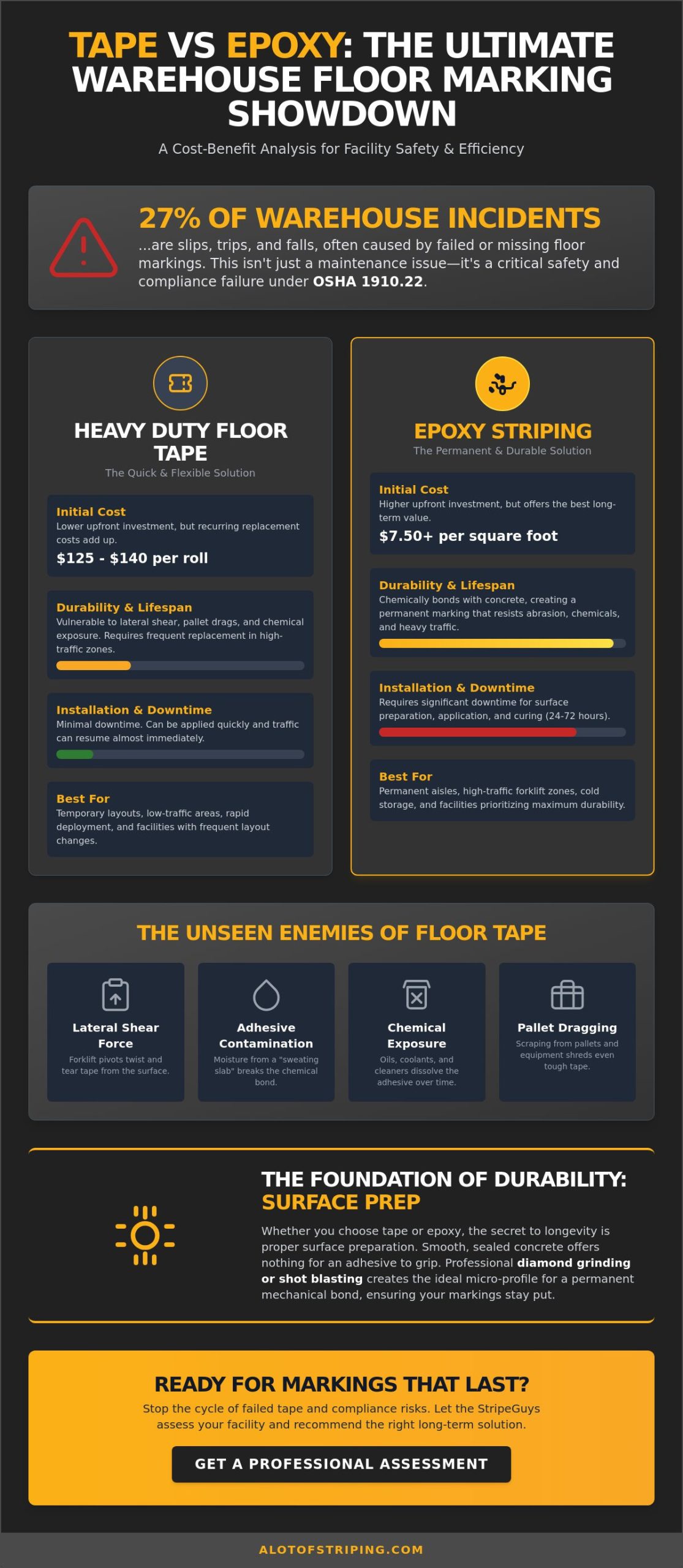
Industrial floor marking tape serves as the visual foundation for warehouse organization and safety. While standard vinyl tapes might suffice for low-traffic office corridors, high-volume industrial environments require heavy duty floor tape. These products are typically constructed from high-mil PVC or advanced composite materials designed to withstand the physical abuse of a 24/7 logistics operation. Under OSHA 1910.22, employers must maintain permanent aisles and passageways free from obstructions. Using a durable tape ensures these paths of egress remain clearly defined, which is critical since forklifts are involved in nearly 7,500 injuries annually in the U.S.
The primary difference between “heavy duty” products and standard tape lies in the construction. Standard tapes are often just 5-mil thick, which is roughly the thickness of a human hair. They tear easily under the weight of a 9,000-pound forklift. True industrial-grade tapes are significantly thicker and use reinforced top-layers to prevent scratching. This durability is essential for staying compliant and avoiding the 27% of warehouse incidents that stem from slips, trips, and falls caused by damaged or missing floor markings.
The Anatomy of an Industrial Grade Floor Tape
To survive in a warehouse, tape needs more than just a strong sticky side. We look for specific technical markers that define a professional-grade product:
- Material thickness: The industrial standard ranges from 30-mil to 50-mil. This added bulk provides the structural integrity needed to resist stretching and tearing.
- Adhesive chemistry: Manufacturers use rubber-based adhesives for high initial “tack” (the immediate stickiness) or acrylic adhesives for better resistance to temperature shifts and UV exposure.
- Beveled edges: This involves tapering the sides of the tape so they sit flush against the concrete. It prevents forklift tires from “picking up” or catching the edge of the tape during a turn.
Common Failure Points in Warehouse Environments
Even the most expensive heavy duty floor tape will fail if the environment isn’t properly managed. Since 1994, we’ve identified several recurring culprits that destroy floor markings:
- Adhesive Contamination: This often occurs due to a “sweating slab” (moisture migrating through the concrete), which breaks the chemical bond between the tape and the floor.
- Lateral Shear Force: When a forklift operator pivots the tires directly on top of a marking, it creates a twisting force that can rip the tape right off the surface.
- Chemical Exposure: Industrial oils, coolants, and cleaning agents can seep under the edges of the tape, dissolving the adhesive over time.
- Pallet Dragging: Low-clearance equipment or improperly stacked pallets that scrape the floor will eventually shred even the toughest PVC composites.
Evaluating Performance: Tape Grades and Durability Factors
Selecting the right heavy duty floor tape requires looking beyond the adhesive strength. While many manufacturers focus on how well a tape sticks, the real point of failure in a high-traffic warehouse is often the material’s internal integrity. When a forklift carrying a 5,000-pound load pivots its tires, it applies intense lateral shear force. If you’re using a surface-printed tape, that pivot will smear the ink or shred the top layer immediately. Through-color composites are the industrial solution here; the pigment is baked into the entire thickness of the material. Even if the surface is scratched or abraded, the color remains vibrant and compliant.
High-performance options like SafetyTac 2.0, which costs approximately $140.00 for a 4-inch by 50-foot roll, often feature “Armor Technology.” This refers to a reinforced, hard-shell top layer that resists the “skidding” effect common in loading docks. Beyond durability, you must consider the Coefficient of Friction (COF). With warehouse injury rates sitting at 4.8 cases per 100 workers, maintaining a high COF is a non-negotiable safety requirement for pedestrian paths of egress. If the tape becomes a slip hazard when wet, it creates more problems than it solves. If your current markings are failing these physical tests, a professional warehouse floor striping assessment can help determine if your environment requires a more permanent solution.
Standard PVC vs. Reinforced Composites
Standard PVC tapes offer flexibility, which is useful for floors with minor pits or “crazing” (fine cracks on the surface). However, reinforced composites provide the rigidity needed to bridge small gaps without stretching. You also need to verify temperature ratings. Standard adhesives may fail in cold storage environments, whereas specialized tapes are rated for temperatures as low as -20°F. Always request a sample and perform a “pivot test” with your heaviest equipment before committing to a full facility rollout.
Specialty Tapes for Specific Industrial Needs
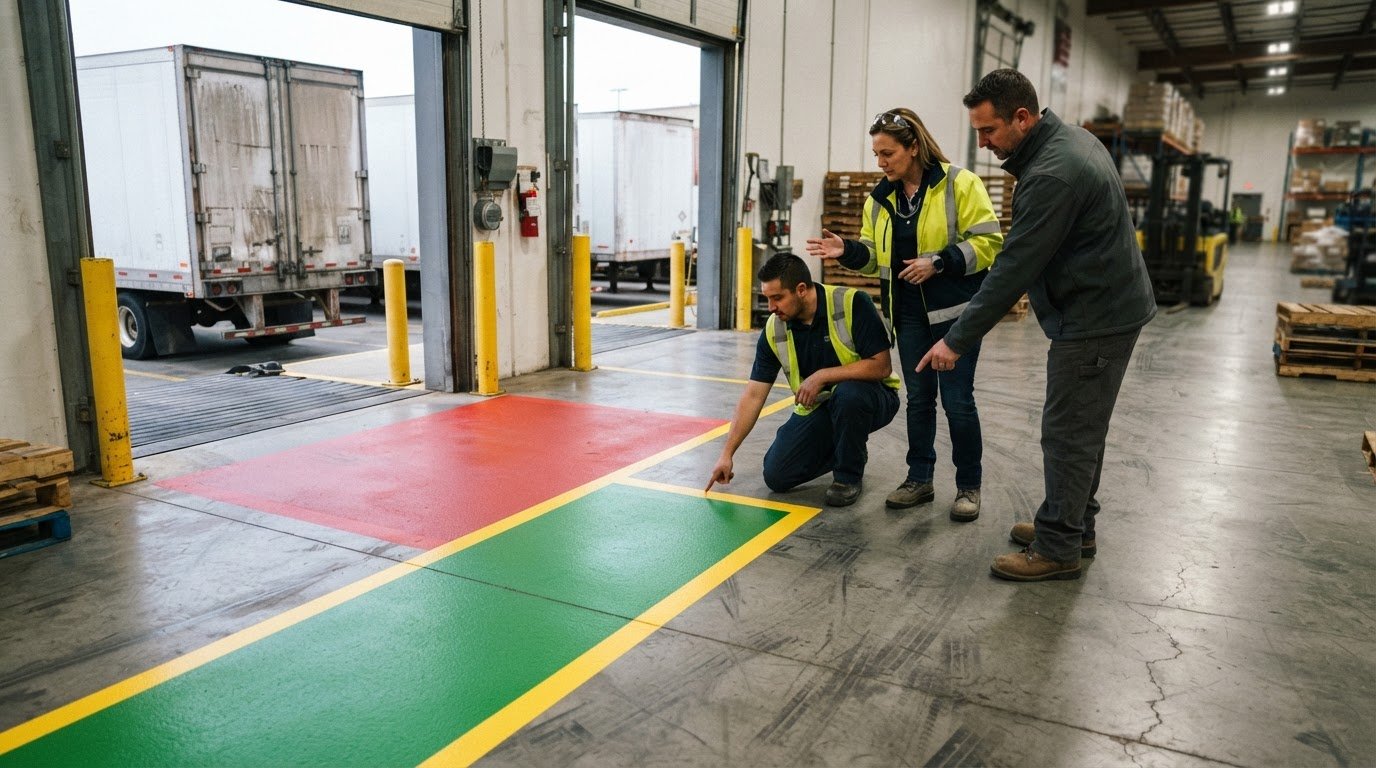
Durable marking strategies often require a mix of specialized materials to meet safety standards. Photoluminescent (glow-in-the-dark) tapes are essential for marking paths of egress during power failures, while traction-enhanced tapes are required for incline ramps and loading docks where moisture is common. When marking physical hazards or “keep clear” zones, you must adhere to OSHA’s safety color code to ensure universal recognition. For example, red always denotes fire protection equipment or danger, while yellow is the standard for caution and physical hazards like tripping. Following these standards ensures your facility remains organized, efficient, and fully compliant with 2026 safety mandates.
The Critical Role of Surface Preparation for Tape Adhesion
The promise of “peel and stick” installation is one of the most common misconceptions in the industrial marking industry. While manufacturers of heavy duty floor tape often market their products as a quick DIY fix, the reality on a warehouse floor is far more complex. Since 1994, we’ve seen thousands of dollars in high-quality materials wasted because they were applied to unprepared concrete. Without proper mechanical preparation, the adhesive simply sits on top of surface contaminants rather than bonding with the floor. This leads to premature lifting, which quickly turns a safety marking into a 27% slip and trip hazard risk.
To remain in compliance with OSHA standard 1910.22, facility managers must ensure that walking-working surfaces are maintained in a safe condition. This includes ensuring that floor markings don’t peel or become obstructed. Achieving this longevity requires more than a bucket and a mop. You must address the “ghost lines” left behind by previous markings. Professional warehouse line removal involves grinding away old paint or adhesive residue to ensure the new tape has a clean, virgin surface to grip. If you apply new tape over the remnants of the old, the bond is only as strong as the failing layer beneath it.
Mechanical vs. Chemical Cleaning
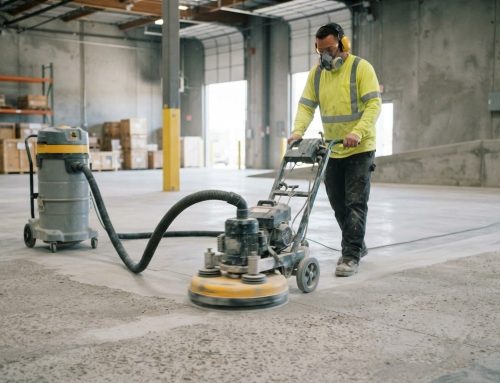
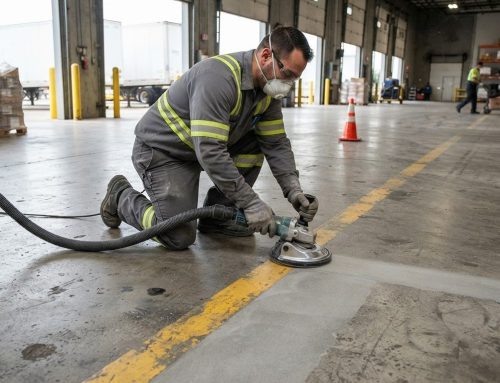
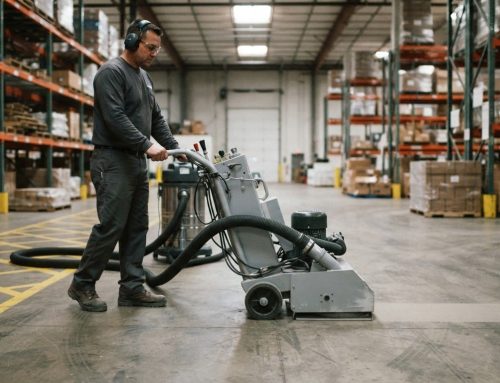
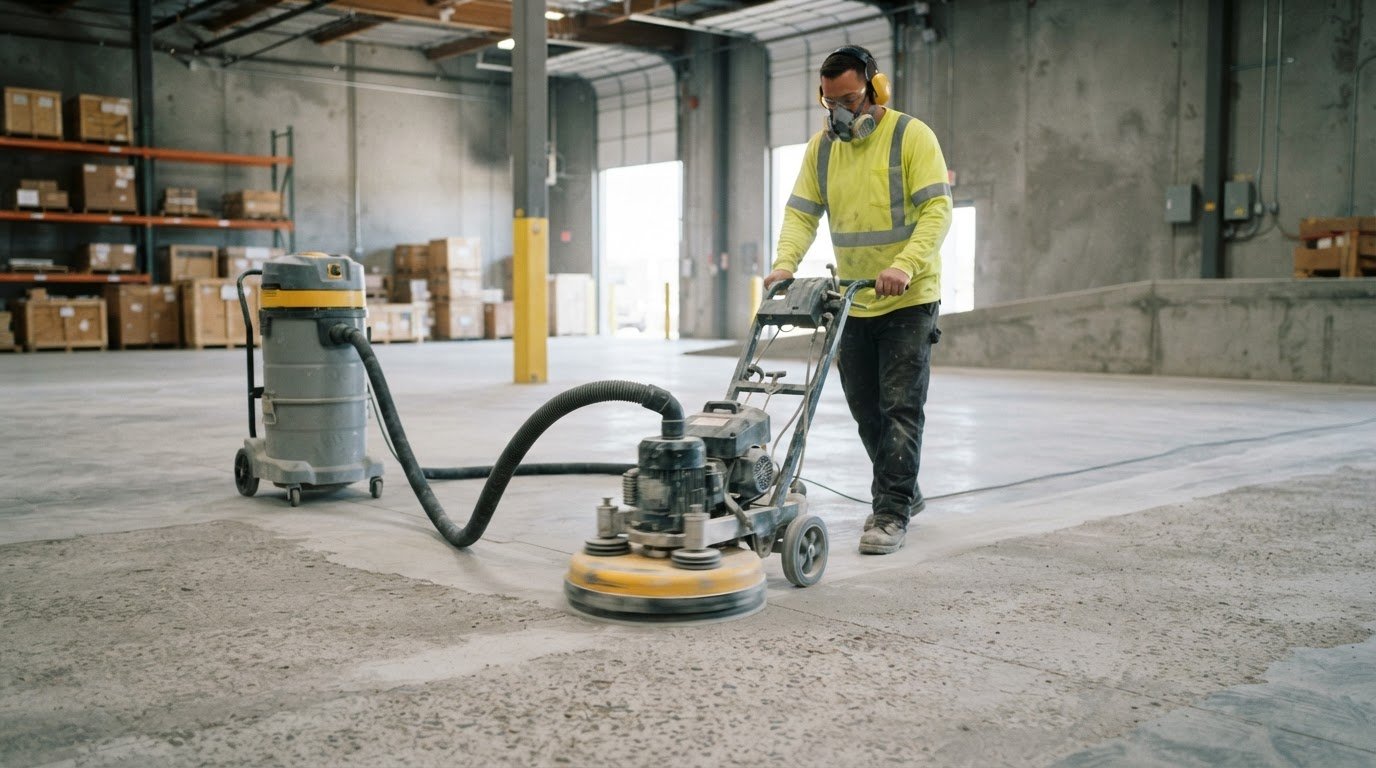
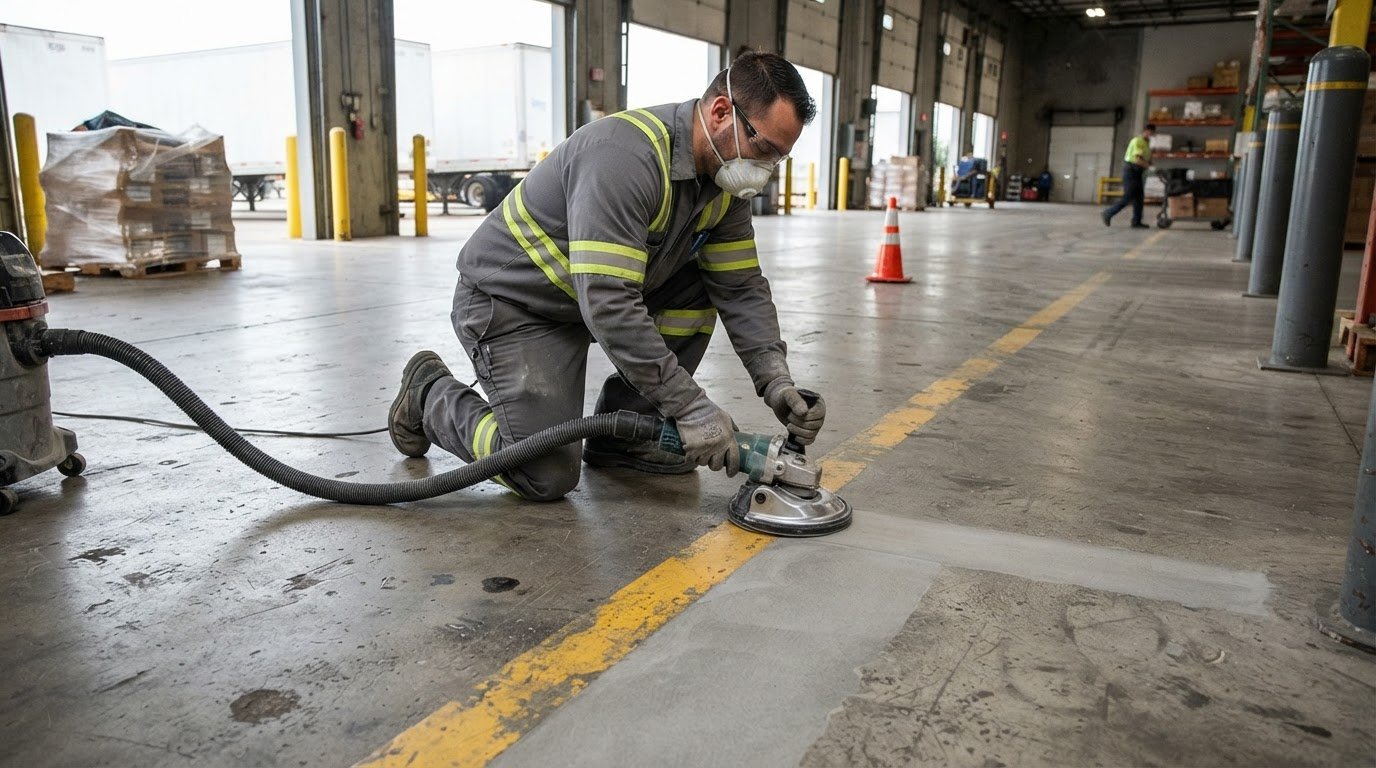
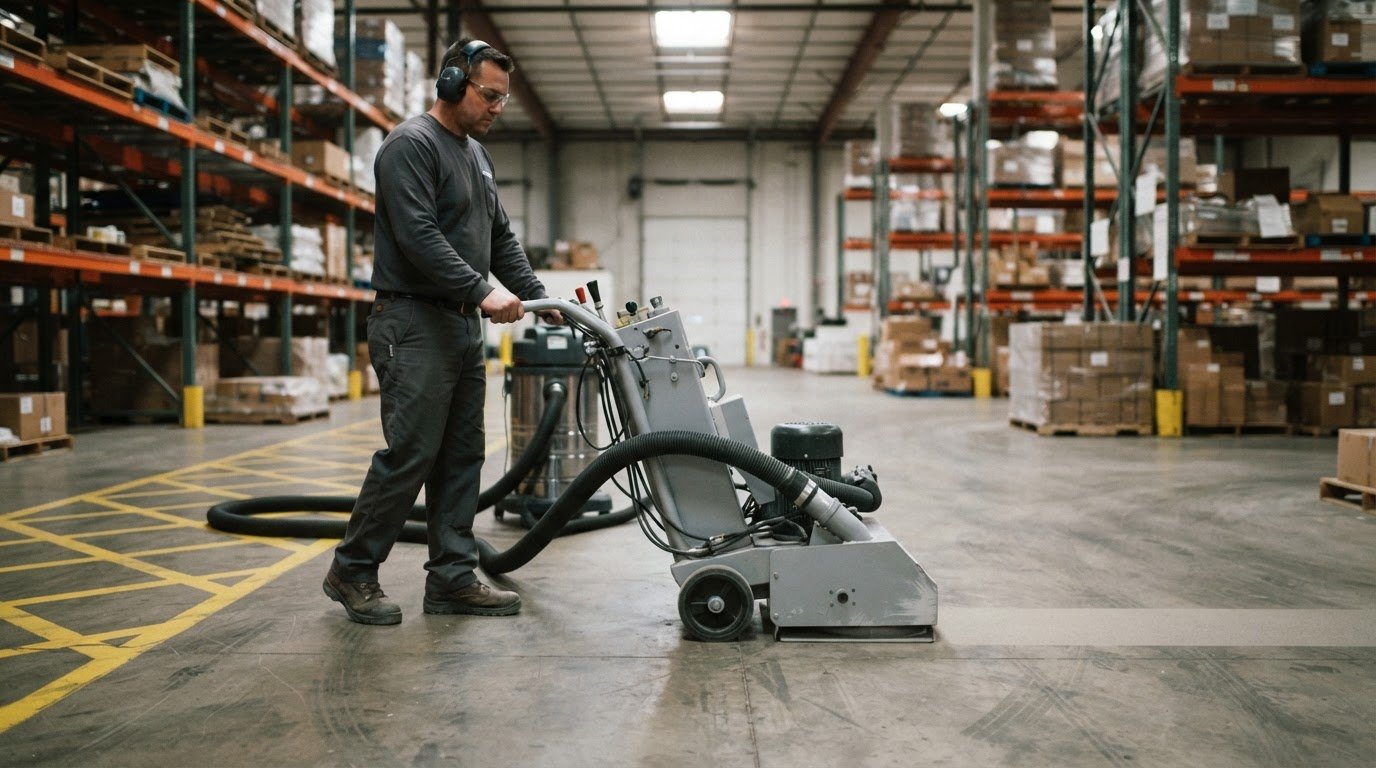
Chemical degreasers are useful for removing surface oils, but they often leave behind microscopic residues that act as bond-breakers. Mechanical preparation is the only way to ensure heavy duty floor tape survives the lateral shear of a forklift. Diamond grinding uses industrial diamonds to “open up” the concrete pores, providing a porous surface for the adhesive to penetrate. For active environments, we utilize dustless shot blasting line removal. This method fires small steel pellets at the floor to strip away contaminants and old markings, containing all debris in a vacuum system to prevent facility downtime.
The Pre-Installation Checklist
Before any tape touches the floor, you must verify the environment is suitable for adhesion. We recommend a three-step verification process:
- Moisture Testing: Use ASTM F1869 (calcium chloride test) or F2170 (relative humidity probes) to ensure the slab isn’t “sweating,” which will push the tape off the floor from underneath.
- Bond-Breaker Removal: Identify and remove densifiers, liquid hardeners, or curing compounds. These chemicals are designed to seal concrete, which also prevents adhesives from sticking.
- Concrete Profiling: This is the process of “roughing up the smooth surface” to create a mechanical anchor for adhesives.
By following these technical steps, you move from a temporary “sticker” to a permanent safety solution. Proper preparation is the difference between a marking that lasts three months and one that remains compliant for three years or more.
Heavy Duty Floor Tape vs. Epoxy Striping: A Cost-Benefit Analysis
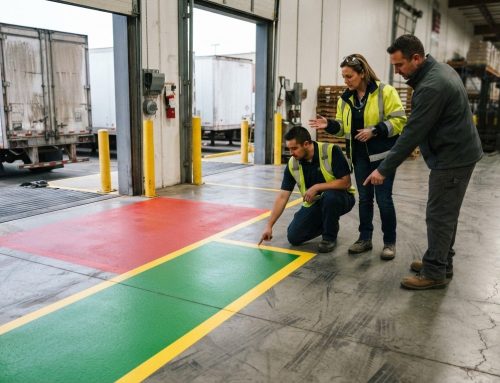
Facility managers often view the choice between heavy duty floor tape and epoxy striping as a simple matter of upfront cost. It’s actually a strategic decision about operational downtime and the long-term facility lifecycle. While a roll of premium tape might have a lower initial price point, the Total Cost of Ownership (TCO) over five years tells a different story. If your facility operates 24/7, the immediate traffic capability of tape is a massive benefit. You apply it, and the forklifts can roll over it seconds later. Epoxy requires a curing period (the time needed for the chemical bond to harden), which often results in 24 to 48 hours of restricted access.
Visual clarity also differs between the two methods. Tape provides perfectly crisp lines with beveled edges that resist lifting from lateral force. Novolac epoxy, which is a specialized high-performance coating, offers a thicker profile that bonds permanently to the concrete. For those trying to decide between these two methods, our team provides expert epoxy line painting services that balance durability with your specific budget constraints. We help you evaluate whether the flexibility of tape or the permanence of paint fits your operational goals.
When to Choose Floor Tape
Tape is the practical choice for facilities that prioritize agility over permanence. If you operate in a leased space, permanent markings might violate your contract. Heavy duty floor tape allows you to maintain OSHA compliance without permanently altering the property. It’s also the ideal solution for staging areas or 5S zones that require frequent reconfiguration as your inventory fluctuates. Since 1994, we’ve found that tape is best for environments where layout flexibility is more valuable than decade-long durability.
When Professional Epoxy Striping is Superior
In high-volume forklift aisles where tires pivot constantly, tape often fails within months. These “hot zones” require the chemical resilience of an epoxy bond. Food-grade facilities and pharmaceutical warehouses also favor epoxy because it creates a seamless, easy-to-sanitize surface that doesn’t harbor bacteria under lifted edges. Professional epoxy striping offers a 5-to-10 year lifespan compared to the 6-to-18 month lifespan of industrial tape. This “set it and forget it” approach eliminates the logistical stress of constant maintenance and re-striping projects.
Implementing a Professional Marking Strategy with StripeGuys
StripeGuys has operated as a dependable industrial veteran since 1994. We don’t just provide a service; we deliver functional outcomes that alleviate the logistical stress of facility management. Whether your facility requires heavy duty floor tape for a flexible staging area or a permanent epoxy system for high-traffic aisles, our team acts as a safety-conscious consultant. We understand that choosing between tape, paint, or a hybrid system depends on your specific operational needs and budget. A one-size-fits-all approach often leads to failed markings and wasted capital, which is why we prioritize technical expertise over aesthetic flair.
Our project management is built on the triad of safety, quality, and communication. This verbal anchor serves as our commitment to you, ensuring that every project remains transparent and efficient. We handle all the heavy lifting, from technical floor striping removal to advanced concrete profiling. We don’t expect your team to prepare the surface. We bring the specialized equipment needed to ensure your new markings have a permanent mechanical bond with the floor. This proactive approach ensures your facility remains compliant with all 2026 safety standards without adding to your internal workload.
Our Specialized Surface Preparation Process
We utilize industrial shot blasting line removal to ensure your investment stays down. This process involves firing steel pellets at the concrete to strip away contaminants, effectively “roughing up the smooth surface” to create a mechanical anchor for adhesives or resins. We offer day and night availability because we know your facility can’t afford to stop during peak production hours. Our nationwide coverage allows us to serve high-profile logistics hubs across the country, providing consistent results that meet the rigorous demands of forklift environments.
Ready to Organize Your Facility?
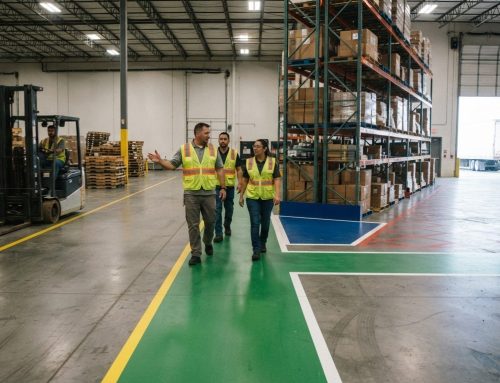
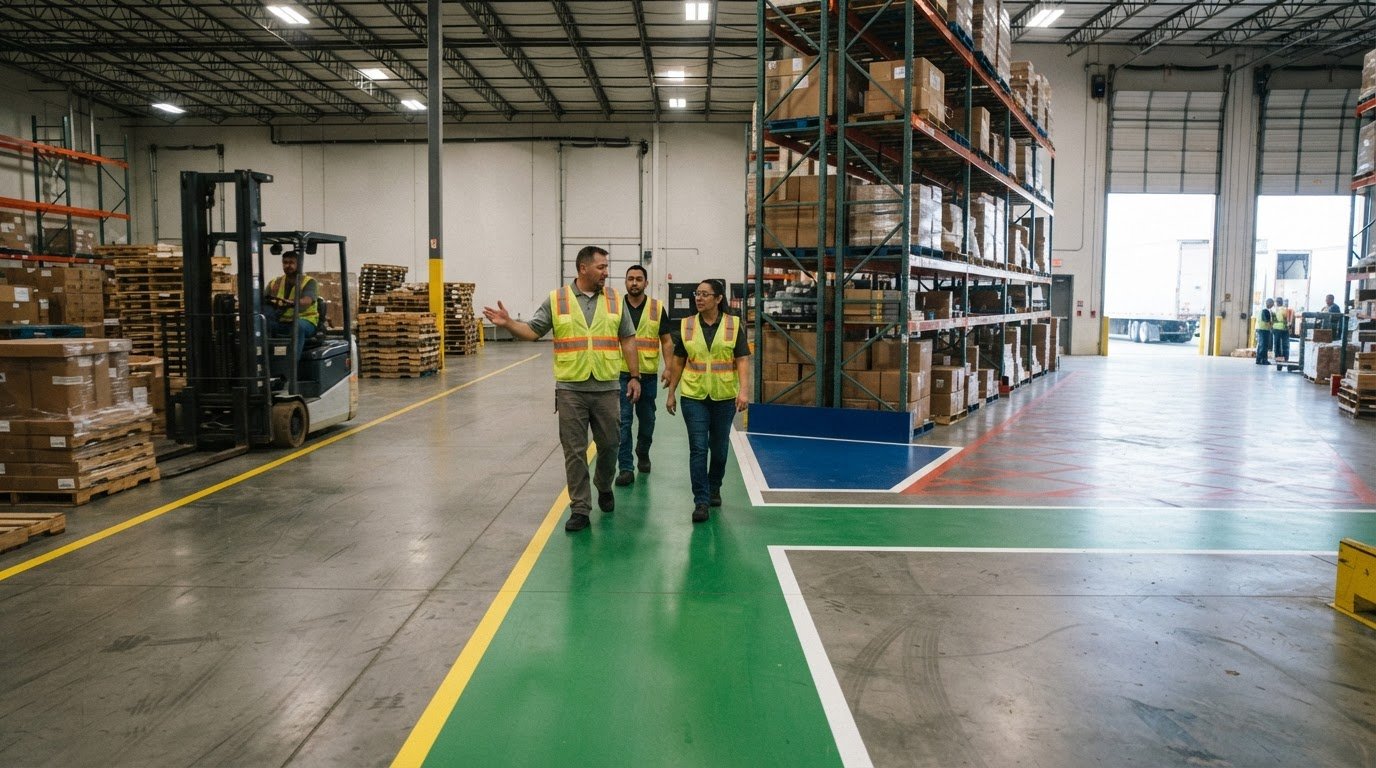
Professional warehouse organization is about more than just straight lines; it’s about optimizing workflow and protecting your workforce. Our experts understand the nuances of OSHA paths of egress and how to design a layout that minimizes the risk of forklift accidents. Don’t settle for contractors who don’t understand the physical realities of your daily operations. You can text us directly to initiate a professional layout consultation. Let us handle the technical requirements so you can focus on moving your business forward. Get a specialized quote for your warehouse marking project and experience the reliability that comes from nearly three decades of industry leadership.
Secure Your Facility with Durable Industrial Markings
Maintaining a safe and compliant warehouse environment requires a strategic approach to floor markings. We’ve established that long-term durability depends on more than just the product itself. It’s rooted in professional surface preparation like shot blasting and a deep understanding of forklift traffic patterns. Since 1994, StripeGuys has operated as a trusted industrial veteran, helping facility managers choose between the flexibility of heavy duty floor tape and the permanent resilience of epoxy systems. Our nationwide service for large-scale distribution centers ensures that your paths of egress remain clear and compliant through years of heavy use.
Don’t let peeling tape or faded lines become a logistical stress or a safety hazard for your team. Safety starts at the floor level. Our specialized process focuses on concrete profiling (roughing up the smooth surface) to ensure every marking we install has a permanent mechanical bond. We’re ready to partner with you to optimize your facility layout and improve operational efficiency. Request a Professional Warehouse Striping Quote to start your project today. We look forward to helping you achieve a safer, more organized industrial workspace.
Frequently Asked Questions
Is heavy duty floor tape better than warehouse floor paint?
Tape is the superior choice for leased facilities or areas requiring frequent layout changes because it installs with zero curing time. Professional epoxy paint is better for high-traffic forklift lanes where lateral shear forces would shred adhesives over time. We often recommend a hybrid strategy; use epoxy for permanent paths of egress and tape for staging zones that fluctuate with your inventory levels.
Can forklifts drive over floor marking tape without damaging it?
Forklifts can safely drive over heavy duty floor tape provided the product features beveled edges to prevent tire “pick-up.” Standard vinyl tapes will tear immediately under the weight of a 9,000-pound load. You should choose through-color composites to ensure that even if the surface is abraded by a tire pivot, the marking remains visible and compliant with safety standards.
How do you prepare a concrete floor before applying industrial tape?
Preparing concrete requires removing all surface contaminants and “ghost lines” left by previous markings. While degreasing helps, we recommend mechanical profiling to open the concrete pores. This involves using diamond grinding or shot blasting to create a textured surface that the adhesive can actually grip. Without this step, the tape is simply sitting on a layer of dust or sealer.
How long does heavy duty floor tape typically last in a warehouse?
Industrial tape typically lasts between 6 and 18 months in a standard warehouse environment. In low-traffic pedestrian areas, you may see a lifespan exceeding 3 years. However, in high-volume loading docks where 25% of all warehouse accidents occur, the constant friction and pallet movement may require more frequent replacement to maintain OSHA visibility requirements and ensure worker safety.
What is the OSHA requirement for warehouse floor marking colors?
OSHA standard 1910.144 dictates that red must be used for fire equipment and danger, while yellow is reserved for caution and physical hazards. While not a mandatory regulation, the ANSI Z535 standard provides a wider color code including green for safety instructions and blue for notices. Adhering to these universal standards ensures your facility is recognizable to all personnel and safety inspectors.
Can floor tape be used in cold storage or freezer environments?
Specialized tapes are designed specifically for freezer environments and can be applied at temperatures as low as -20°F. Standard adhesives will freeze and lose their “tack” in cold storage, leading to immediate bond failure. You must verify the manufacturer’s temperature rating and ensure the floor is completely free of frost or condensation before attempting the installation process.
What happens if I apply floor tape to a dirty or un-prepped surface?
Applying heavy duty floor tape to a dirty surface causes the adhesive to bond to dust particles instead of the concrete. This creates a “floating” marking that will lift the first time a forklift tire passes over it. Since slips, trips, and falls account for 27% of warehouse incidents, failed tape creates a significant liability and an unnecessary recurring replacement cost.
Is there a tape that can withstand pallet dragging?
No industrial tape is completely immune to the destructive force of a dragged pallet. However, tapes with reinforced top layers and low-profile beveled edges offer the best resistance to surface scraping. For areas where pallet dragging is unavoidable, we recommend professional epoxy striping. Its chemical bond to the concrete provides the highest level of abrasion resistance available in the industrial market.