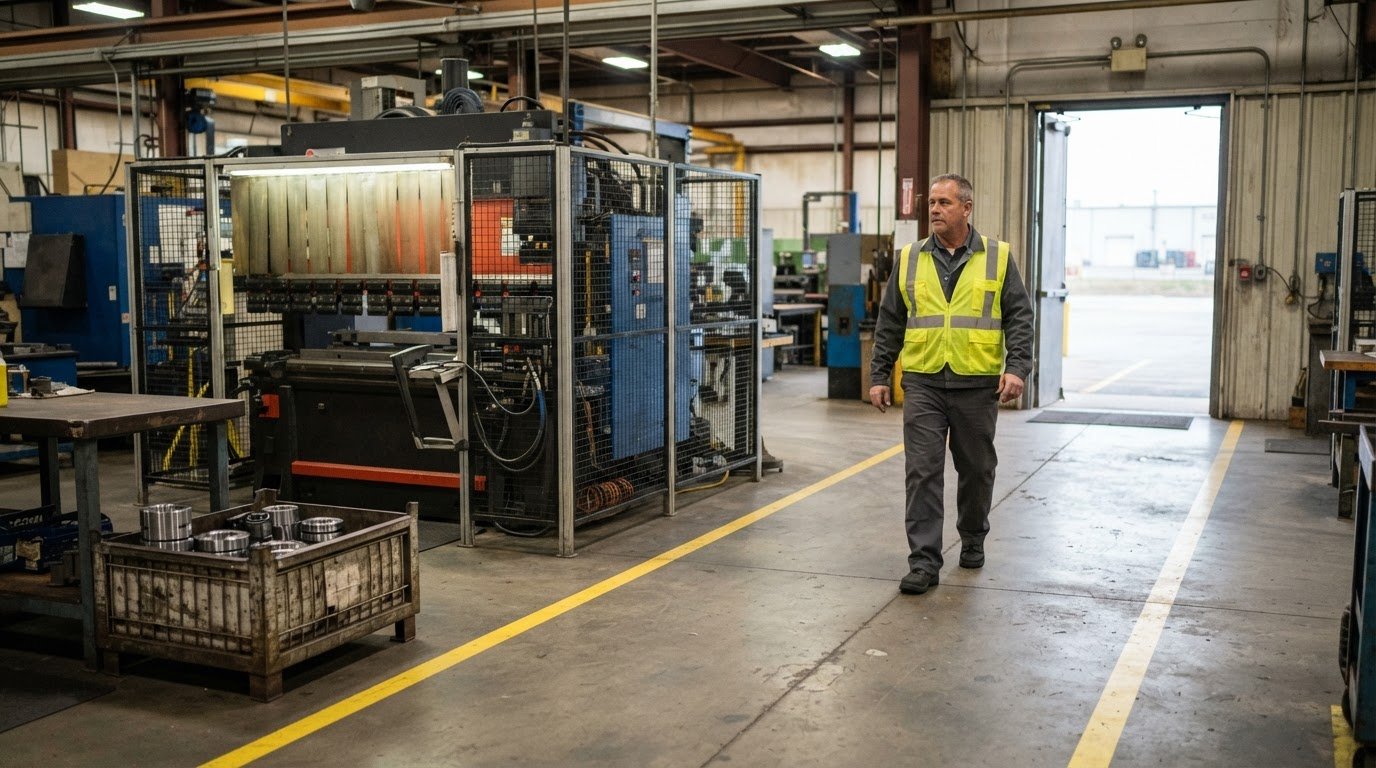
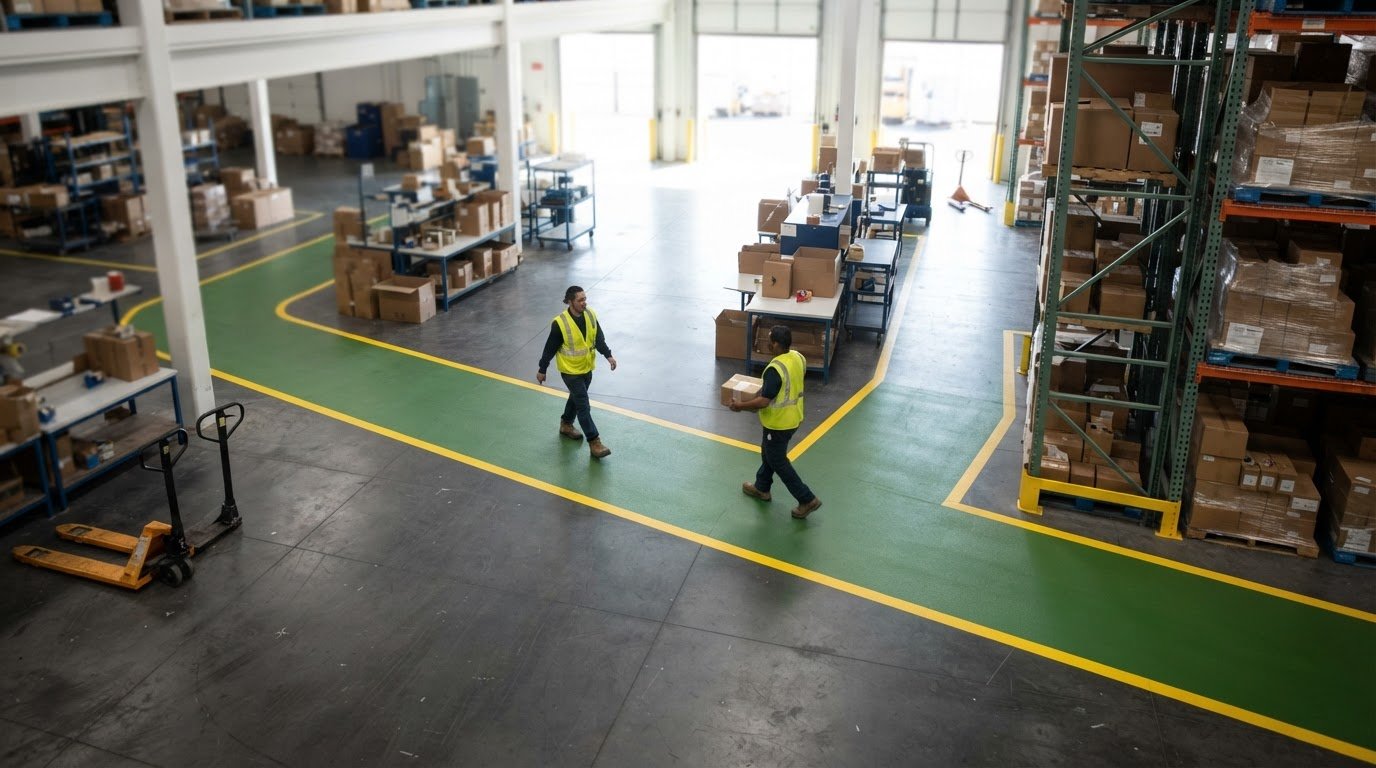
Most facility managers treat floor lines as a simple maintenance task, but the reality is that high-performance manufacturing facility floor marking is a precision-engineered safety system. If you are seeing your lines peel under forklift traffic after only six months, you have not just lost paint; you have compromised your operational standards and safety protocols. It is a frustrating cycle that leads to operational downtime and the constant threat of OSHA fines, which can reach up to $16,550 for a single serious violation as of 2026.
We understand that navigating the conflict between ANSI color standards and the physical realities of a heavy-traffic floor is a significant logistical stressor. This guide provides the seasoned expertise you need to master industrial floor markings, covering everything from OSHA compliance to selecting high-durability epoxy systems (a two-part chemical coating) that withstand the harshest manufacturing environments. You will learn how to align your facility with current safety regulations, reduce pedestrian-vehicle accidents, and implement a marking strategy that prioritizes long-term durability over temporary fixes. We will examine the critical role of mechanical surface preparation and the specific color codes required to pass every safety audit with confidence.
Key Takeaways
- Identify the specific requirements of OSHA Standard 1910.22 to ensure your permanent aisles and passageways meet federal safety compliance.
- Evaluate the performance differences between standard paint and industrial epoxy line painting to choose the right manufacturing facility floor marking for heavy-traffic zones.
- Apply ANSI Z535 color standards to create a visual workplace that effectively separates pedestrian traffic from powered industrial trucks.
- Discover why mechanical removal via shot blasting is the most critical step for achieving a durable, long-lasting bond on industrial concrete surfaces.
- Streamline facility upgrades by partnering with national contractors who offer 24/7 availability to minimize operational downtime during high-profile re-striping projects.
Understanding Manufacturing Facility Floor Marking Standards and OSHA Safety
Floor markings serve as a critical component of a facility’s Hazard Communication (HazCom) program. They act as the first line of defense against forklift-pedestrian collisions by providing immediate visual cues that transcend language barriers. In a high-traffic manufacturing facility floor marking serves as a silent supervisor, directing traffic flow without requiring constant human intervention. This organization is vital because “struck-by” incidents remain a leading cause of industrial injuries; contact with objects and equipment resulted in 756 worker deaths in 2024 alone.
Adherence to OSHA Standard 1910.22 (Walking-Working Surfaces) is the baseline for any professional operation. This regulation requires that all walking-working surfaces are maintained in a clean, safe, and orderly condition. When you pair this with OSHA 1910.176(a), which governs material handling, the requirements become specific. You must provide sufficient safe clearances for aisles, loading docks, and doorways where mechanical handling equipment (such as forklifts or pallet jacks) is used. Clear, durable markings are the only way to prove these clearances are maintained during a safety audit.
The Core OSHA Requirements for Floor Markings
While OSHA regulations are often performance-based rather than prescriptive, industry best practices have established firm standards for visibility. Lines should be between 2 and 6 inches wide to ensure they are easily seen by equipment operators. Furthermore, aisles must be wide enough to accommodate the largest piece of equipment plus a safety buffer. For many plants, this means designing pedestrian walkways and safety aisles that are at least 4 feet wide or 3 feet wider than the largest vehicle. Don’t forget that egress paths (means of exit) must be marked according to OSHA 1910.35, ensuring a clear, unobstructed path to safety during emergencies.
The 5S Methodology: Beyond Basic Compliance
Moving from “meeting code” to “optimizing production” involves the 5S methodology: Sort, Set in Order, Shine, Standardize, and Sustain. This Lean manufacturing principle uses floor markings to create a dedicated “place for everything.” While some facilities utilize floor marking tape for temporary testing of new layouts, high-volume manufacturing environments require permanent solutions to achieve a true ROI. We have seen that standardizing your manufacturing facility floor marking improves production efficiency by reducing the time workers spend searching for tools or navigating cluttered paths. It is a service-plus-benefit approach that prioritizes both safety and your bottom line.
Industrial Durability: Comparing Epoxy, Paint, and Floor Marking Tapes
Manufacturing environments subject floor surfaces to stresses that retail or light warehousing spaces never encounter. While floor tape might suffice for a static storage area, it often fails at “pivot points” where forklifts turn their wheels while stationary, causing the adhesive to shear and peel. Choosing the right material for your manufacturing facility floor marking is a matter of calculating long-term ROI against the cost of operational downtime. For high-traffic zones, industrial epoxy line painting is the preferred solution because it creates a chemical bond with the concrete substrate (the underlying floor surface), ensuring the markings remain intact under heavy loads.
Durability is not just a maintenance preference; it is a legal necessity. Under OSHA standard 1910.176, permanent aisles and passageways must be appropriately marked. If your lines are obscured by tire marks or have peeled away due to heavy traffic, you are no longer in compliance. Professional epoxy systems outlast standard traffic paint by years because they are engineered to resist the abrasive friction of solid-core tires and the weight of multi-ton machinery. If you are unsure which material suits your specific traffic volume, you can request a professional site assessment to evaluate your facility’s needs.
Why Epoxy Line Painting is the Gold Standard
Industrial epoxy is valued for its extreme chemical resistance, which is essential in facilities that utilize oils, coolants, or harsh solvents. Unlike standard paint, which can soften and lift when exposed to chemicals, epoxy remains rigid and protected. It also offers superior impact resistance, allowing it to withstand the heavy vibrations of manufacturing equipment without cracking. Additionally, the high-gloss finish of professional epoxy enhances reflectivity, ensuring that safety lines remain visible even in areas with limited overhead lighting.
The Critical Role of Mechanical Surface Preparation
The most common cause of floor marking failure is improper preparation. Painting over dirt, oil, or old sealers leads to immediate peeling because the new material cannot bond to the concrete. We utilize shot blasting (a mechanical process that fires steel shot at the floor to remove the “laitance” or weak top layer of concrete) to create a textured profile. This profile allows the epoxy to anchor deeply into the floor. For precision removal of old lines or smoothing out rough patches, diamond grinding is employed to ensure a perfectly level surface for the new application.

Implementing a Visual Workplace: Color Coding and Layout Design
A visual workplace reduces the cognitive load on your staff by providing instant, intuitive directions. Implementing a standardized manufacturing facility floor marking system ensures that every person on the floor, from veteran operators to new contractors, understands the safety protocol at a glance. This layout design is not just about aesthetics; it is an engineered communication tool that minimizes “near-miss” incidents between heavy machinery and employees. By following the ANSI/ASME A13.1 and ANSI Z535 color standards, you create a predictable environment that supports the high-stakes pace of modern production.
Strategic layout design often includes more than just lines. We integrate stenciling for pallet positions and specialized zones to maintain order. For areas requiring physical protection, we recommend combining floor markings with physical barriers like bollards or guardrails (impact-resistant steel posts) to provide a secondary layer of safety in high-velocity traffic zones.
Standardized Color Coding for Manufacturing
Consistency is the foundation of a safe facility. We utilize a specific color palette to denote different levels of hazard and operational status:
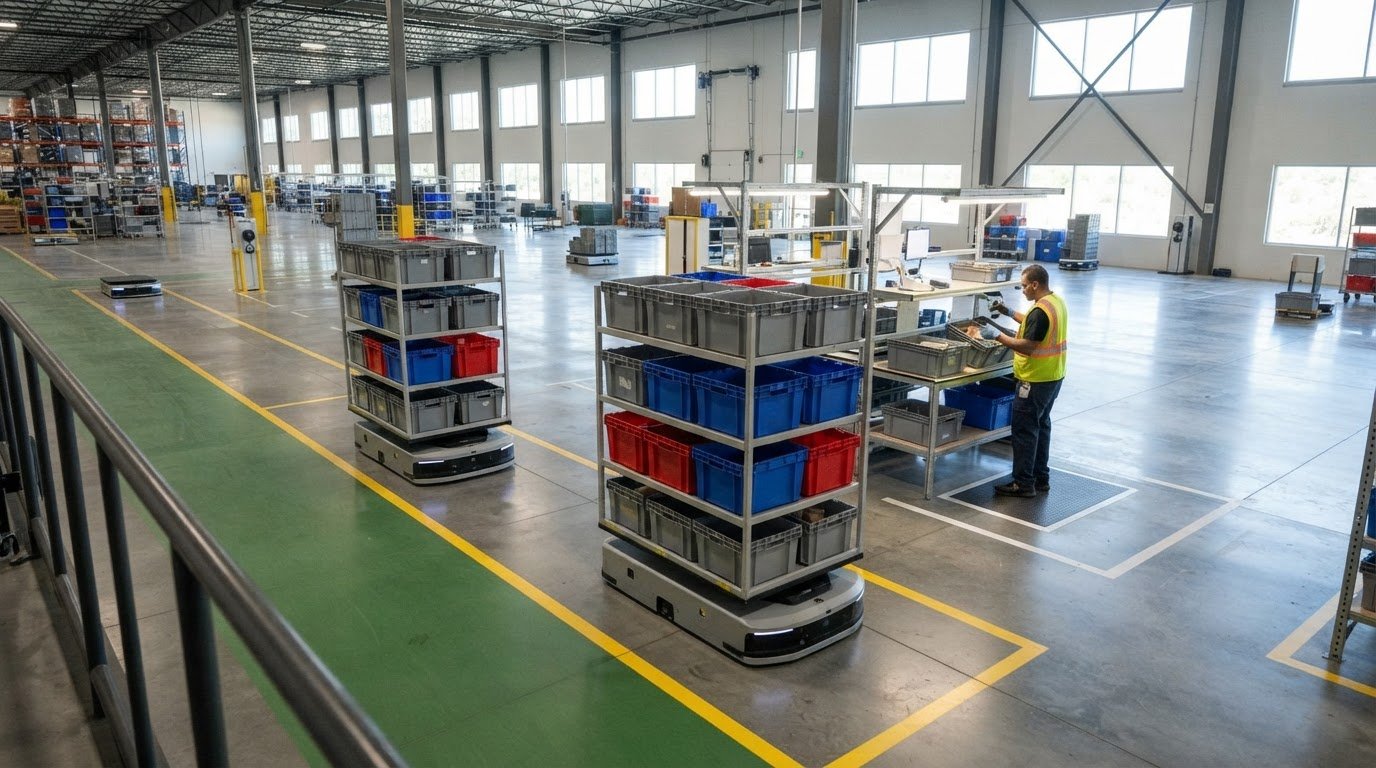
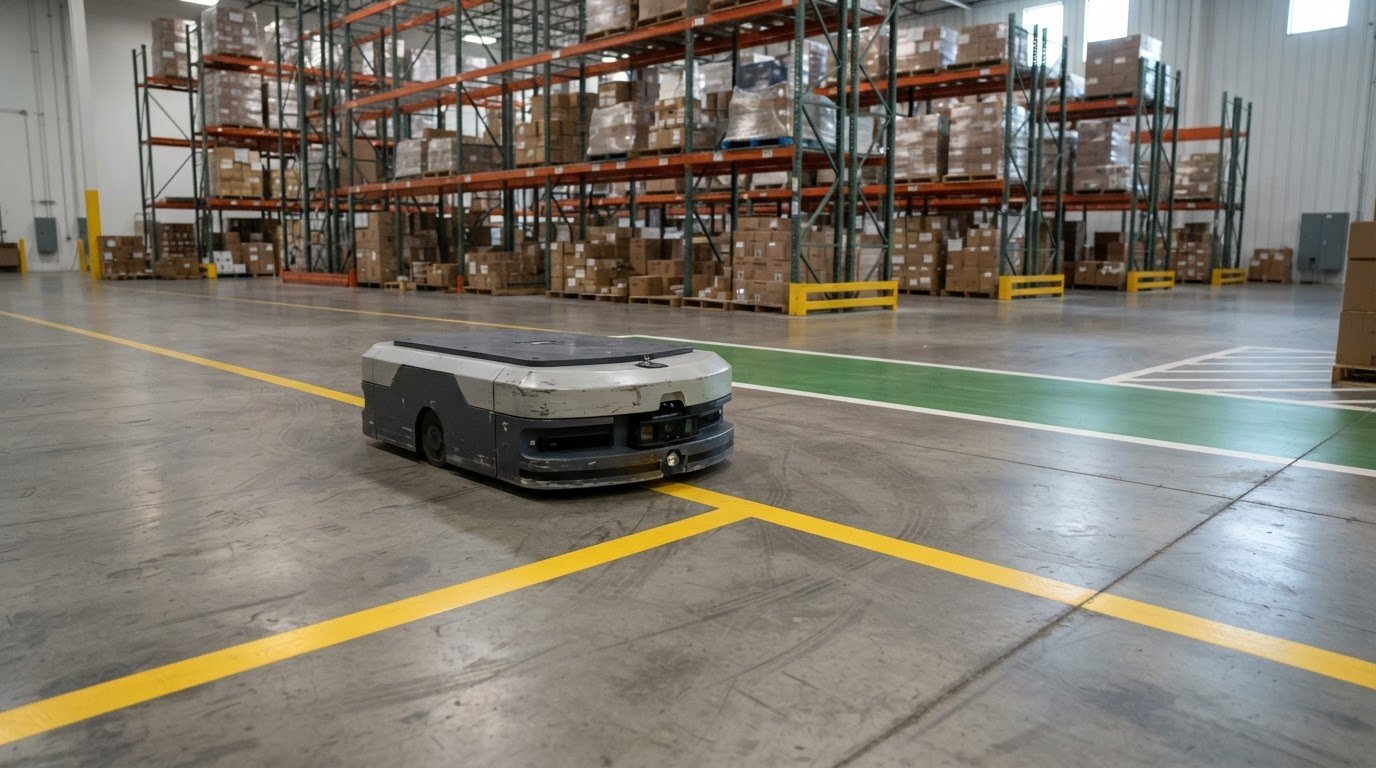
- Yellow: Used for aisleways, traffic lanes, and work cells to mark standard paths.
- Red: Reserved for danger zones, fire equipment locations, and emergency stops.
- Orange: Identifies material inspection areas or zones containing energized equipment.
- Green: Designates safety equipment locations, first aid stations, and “safe to walk” pedestrian paths.
Optimizing Traffic Flow and Staging Areas
Efficient traffic flow requires a clear separation of equipment and people. We design pedestrian walkways and safety aisles that keep foot traffic away from forklift lanes, which is critical given the industry’s injury rate of 2.7 cases per 100 workers. In specialized areas like forklift battery charging stations, we apply acid-resistant coatings (Novolac epoxy) to protect the floor from chemical spills while maintaining clear safety boundaries. For pallet staging, we use T-markers and L-markers to define inventory zones, ensuring that materials never encroach on required safety clearances or egress paths. To begin optimizing your facility’s layout for maximum safety and ROI, contact our team for a professional layout design.
The Professional Installation Process: Ensuring ROI and Compliance
A successful manufacturing facility floor marking project is defined by its longevity and its ability to withstand the daily rigors of heavy forklift traffic. Professional installation is not just about painting lines; it is about an engineered sequence of preparation and application. The most critical, yet frequently ignored, phase of any facility upgrade is warehouse line removal. Without the mechanical extraction of old, flaking materials, new coatings cannot achieve the necessary bond to the concrete substrate. This oversight is why many DIY or low-cost applications fail within months, leading to increased logistical stress and safety risks.
Managing the logistics of a striping project in a 24/7 manufacturing environment requires a partner who understands the high stakes of operational downtime. We coordinate our crews to work during off-peak hours or in phased sections, ensuring your production continues without interruption. For organizations with multi-site manufacturing hubs, the advantage of hiring a nationwide contractor is the guarantee of consistent safety standards and material quality across every location. This consistency simplifies your safety audits, while SourceLine can provide the specialized recruiting services necessary to staff these heavy equipment and construction environments with qualified professionals.
Mechanical Removal: Shot Blasting vs. Grinding
To achieve “Superior Adhesion,” we utilize mechanical removal methods that prepare the concrete slab without causing structural damage. Shot blasting is the industry standard for removing old epoxy and paint because it creates a textured profile for the new material to anchor into. In sensitive manufacturing environments where dust contamination is a concern, we use specialized vacuum-shrouded equipment to maintain a clean workspace. Diamond grinding is employed for precision removal in areas where the floor must remain perfectly smooth or where old markings are thin and deeply embedded.
Choosing the Right Industrial Striping Partner
Selecting an industrial contractor should be based on a multi-decade history of reliability. Our 29+ years of experience allow us to navigate complex facility layouts and predict potential points of failure before they occur. When reviewing an industrial striping quote, look for these three essential components:
- Mechanical Preparation: A clear description of the shot blasting or grinding process rather than simple chemical cleaning.
- Material Specification: Confirmation that high-durability epoxy or specialized coatings are being used for the specific traffic volume.
- Work Schedule: A detailed plan that accounts for your production cycles and necessary curing times.
A well-executed installation ensures your facility remains audit-ready year-round, providing a safe environment for your team and a clear return on your infrastructure investment.
While specialized floor markings are essential for safety, maintaining the overall appearance and protection of your building is equally important; for comprehensive commercial painting needs, MACLAIR Painting offers professional interior and exterior services to keep your property in top condition.
Securing Long-Term Safety and Operational Efficiency
Maintaining a compliant and efficient workspace requires more than just meeting the minimum OSHA standards; it demands a strategic approach to durability and layout design. By prioritizing high-performance materials and standardized color coding, you reduce the risk of accidents and ensure your facility remains audit-ready. The success of your manufacturing facility floor marking depends entirely on the quality of the bond between the coating and the concrete. This is why we prioritize mechanical surface preparation as the foundation of every project.
We bring 29+ years of industrial expertise to every job site, utilizing specialized shot blasting techniques to ensure your lines withstand heavy forklift traffic for years. Our national service capabilities mean we can handle large-scale manufacturing facilities across the country with the same level of precision and reliability. We understand the high stakes of your production environment and work around your schedule to minimize operational downtime. Ready to eliminate the stress of peeling lines and safety violations? Get a Professional Industrial Striping Quote from StripeGuys today. We look forward to helping you optimize your facility’s safety and ROI.
Frequently Asked Questions
What color should my warehouse floor markings be according to OSHA?
OSHA primarily requires that permanent aisles and passageways are clearly marked to prevent hazards. While the agency does not mandate a specific color code, most industrial facilities adopt the ANSI Z535 standard for consistency. Yellow is the industry standard for traffic lanes and work cells. Red is reserved for fire equipment and danger zones, while green identifies safety equipment like eyewash stations. Using these standardized colors ensures your manufacturing facility floor marking is intuitive for all personnel.
How long does professional epoxy line painting take to cure?
Most industrial epoxy systems require 12 to 24 hours of curing time before they can handle light foot traffic. For heavy forklift traffic or chemical exposure, you should wait at least 48 to 72 hours to ensure the chemical bond is fully stabilized. We coordinate our application schedules to align with your production downtime, often performing work during weekend shifts or holiday closures to minimize the impact on your operational throughput and revenue.
Can I apply new floor markings over old, peeling paint?
You should never apply new coatings over old, peeling paint because the new material will only bond to the failing layer, not the concrete. This leads to immediate delamination (peeling) under the weight of industrial equipment. We utilize mechanical removal methods like shot blasting to strip away old markings and prepare the concrete surface. This process ensures superior adhesion and a significantly longer lifespan for your new manufacturing facility floor marking investment.
Is floor marking tape or epoxy better for heavy forklift traffic?
Epoxy line painting is significantly better for heavy forklift traffic due to its superior durability and resistance to shearing friction. While industrial tapes are useful for temporary layouts, they often peel at “pivot points” where forklifts turn their wheels while stationary. Epoxy creates a permanent, high-strength bond with the floor that withstands constant impact and heavy loads. This makes it the most cost-effective choice for high-volume manufacturing environments over a multi-year period.
What is the minimum width for a forklift aisle in a manufacturing plant?
OSHA 1910.176(a) requires that aisles provide sufficient safe clearances for mechanical handling equipment. The industry standard is to design aisles that are at least 3 feet wider than the largest piece of equipment or a minimum of 4 feet wide for dedicated pedestrian paths. Maintaining these clearances prevents “struck-by” accidents and ensures your facility remains compliant during safety audits. Clear markings are the only way to consistently define and protect these required safe zones.
How often should manufacturing floor markings be inspected and refreshed?
You should inspect your floor markings weekly as part of your standard safety protocols to identify wear. According to industry best practices, markings should be refreshed or replaced if more than 25% of the line is obscured, faded, or peeling. In high-traffic manufacturing zones, epoxy systems typically last several years, whereas standard traffic paint may require attention every six months. Regular maintenance ensures that your visual safety cues remain effective and your facility stays audit-ready.