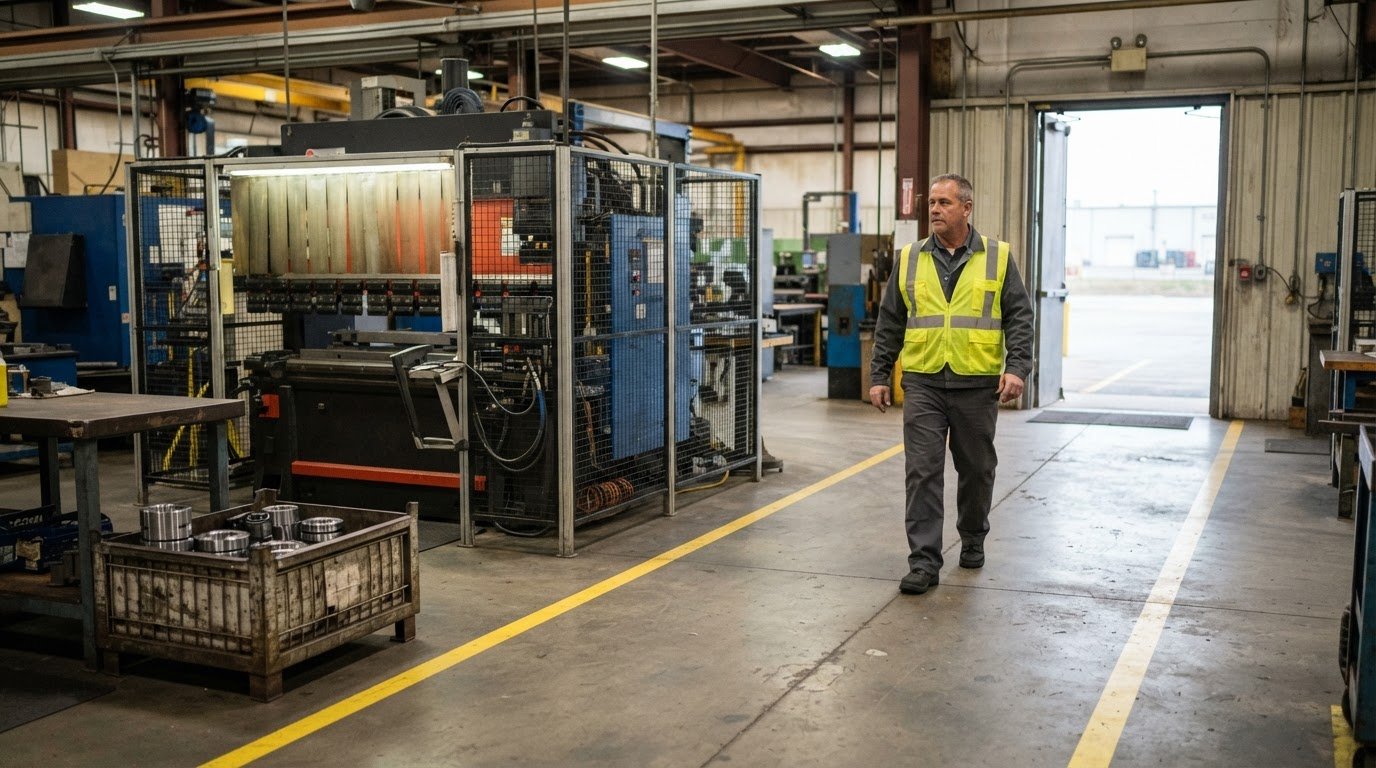
A truck court is a high-stress industrial zone, not a standard parking lot; treating it like one is a recipe for operational failure. Ensuring markings survive heavy trailer traffic and improve safety requires specialized material science rather than simple painting. You’ve likely seen standard traffic paint vanish under 80,000-pound loads and constant trailer scrubbing in just a few months. When markings fade, driver confusion at the dock leads to delays and increases the risk of accidents. Investing in professional truck court line striping services is a critical safety and efficiency upgrade for any high-volume logistics hub.
With nearly three decades of industrial experience, we understand that your facility can’t afford to grind to a halt for maintenance. You need markings that survive the physical realities of heavy industrial traffic without requiring constant touch-ups. This article will show you how specialized materials and mechanical surface preparation, such as shot blasting (a process that cleans and profiles the concrete), create a safer, more organized environment. We’ll cover how to achieve full compliance with 2026 OSHA standards, where serious violations can now cost up to $16,131 per instance. You’ll learn how to optimize traffic flow, reduce driver turnaround times, and select heavy-duty coatings that protect your operational budget while maintaining 24/7 facility continuity.
Key Takeaways
- Learn how specialized marking systems reduce yard accidents by improving driver visibility and dock alignment in high-traffic logistics hubs.
- Understand why high-stress turning zones require professional truck court line striping services using industrial-grade materials like epoxy to withstand 80,000-pound axle loads.
- Discover the importance of mechanical surface preparation, such as shot blasting, to ensure maximum coating adhesion and long-term durability against repetitive tire scrubbing.
- Identify the essential safety markings and oversized stenciling required to maintain full OSHA compliance and improve communication with drivers in high cabs.
- Explore strategic phased execution methods that allow for full-scale facility maintenance without halting your critical incoming or outgoing trailer traffic.
Optimizing Logistics with Professional Truck Court Line Striping
Professional truck court line striping services provide more than simple aesthetics; they establish a functional framework for high-volume logistics. Unlike standard parking lots, truck courts are industrial maneuvering zones where heavy-duty vehicles require precise visual guidance to operate safely. These specialized road surface markings are engineered to define clear boundaries in environments where 80,000-pound trailers are constantly shifting. By implementing a standardized layout, facilities significantly reduce “yard accidents” (low-speed collisions between trailers or infrastructure) that often stem from ambiguous traffic patterns. Investing in expert truck court line striping services ensures that every square foot of your pavement contributes to operational speed by minimizing equipment damage and insurance liabilities.
Enhancing Safety in High-Traffic Loading Zones
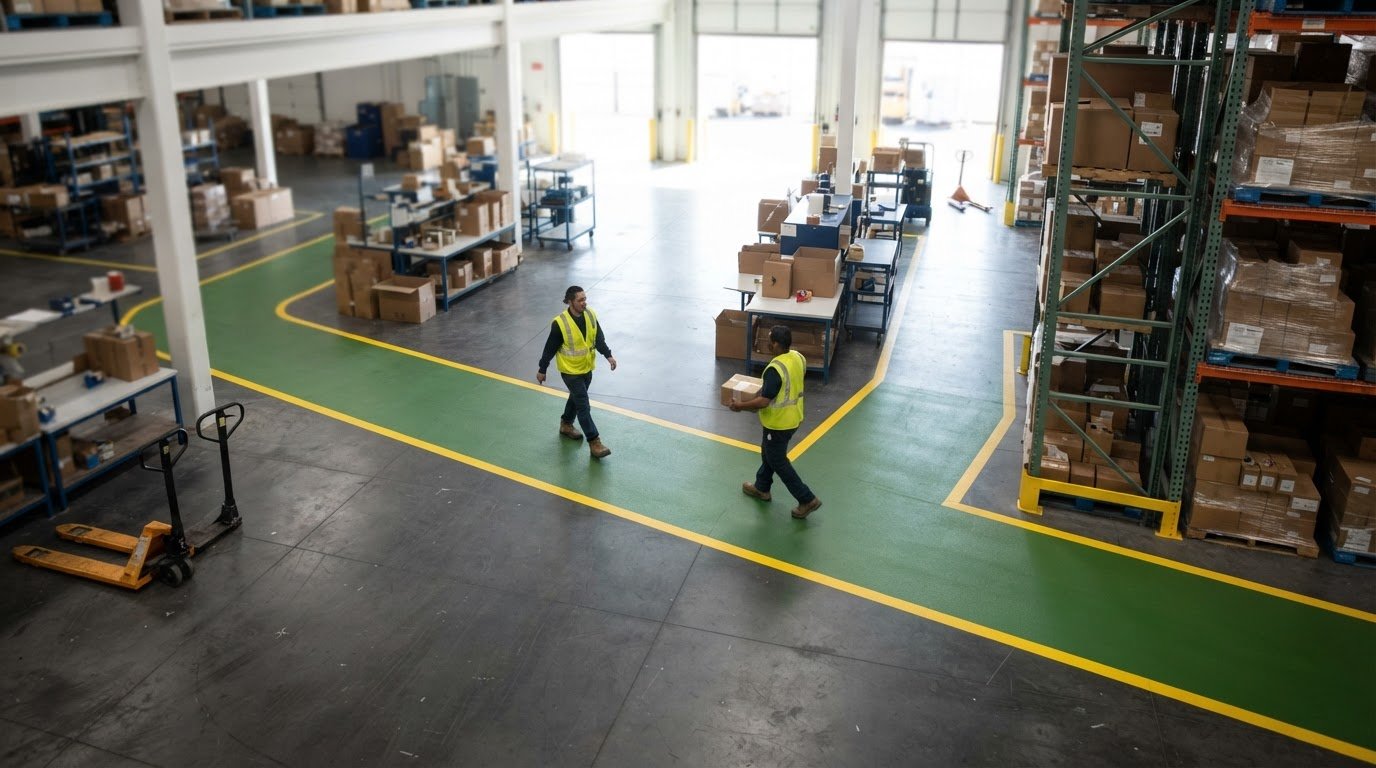
Safety in a loading dock environment depends on the absolute separation of human and machine. We utilize high-visibility pedestrian walkways and safety aisles to keep personnel away from active trailer paths. Beyond walking paths, we mark trailer landing pads (the reinforced concrete areas where trailer legs rest) and “no-parking” fire lanes to ensure emergency access remains unobstructed. Utilizing standardized safety colors, such as OSHA-compliant yellow for traffic lanes and red for fire hazards, provides an immediate, non-verbal warning to everyone on the pavement. This systematic approach reduces liability and protects your most valuable assets.
Maximizing Efficiency Through Visual Organization
A well-organized yard eliminates the “lost time” drivers spend searching for assigned bays or staging areas. Clear, oversized stenciling and directional arrows manage one-way traffic flow, preventing the gridlock that occurs when two trailers meet in a narrow throat. By optimizing trailer staging areas, you ensure that incoming loads don’t bottleneck the exit. This level of visual organization transforms a chaotic yard into a high-throughput asset. It allows drivers to dock and depart with professional precision, effectively increasing the number of loads your facility can handle per shift.
Industrial-Grade Materials for High-Stress Turning Zones
Heavy-Duty Epoxy vs. Standard Traffic Paint
Most facilities discover that water-based paint peels within months of application in active courts. This happens because standard paint forms a superficial film that lacks deep chemical bond strength. Industrial epoxy coatings create a rigid, cross-linked structure that anchors into the concrete pores. Adhering to OSHA safety standards requires that markings remain clearly visible to prevent workplace injuries; choosing epoxy ensures you stay compliant without the operational headache of biannual re-application. It’s a strategic choice that trades a higher initial cost for years of reliable, high-visibility performance.
Thermoplastic and Specialized Coatings
For outdoor asphalt sections of the truck court, thermoplastic offers exceptional longevity due to its thickness and weather resistance. In specialized areas like forklift charging bays located near the court perimeter, we apply acid-resistant coatings to protect the substrate from corrosive battery acid spills. We also integrate reflective additives, which are tiny glass beads embedded in the wet material, to enhance visibility for night-shift drivers and improve overall yard safety. If you’re ready to upgrade your facility’s durability with materials built for industrial life, consult with our team to determine the best material for your specific traffic patterns.
Essential Markings: Stenciling, Safety Zones, and Dock Alignment
Effective logistics depend on clear communication between the facility layout and the driver. Professional truck court line striping services provide the visual cues necessary for precision docking and yard management. A modern distribution hub requires a comprehensive suite of markings, including high-visibility bay numbers, trailer stop bars, and staging slot delineations. These markings must adhere to OSHA permanent aisle and passageway marking standards to ensure that mechanical handling equipment and trailers move through the yard without conflict. Beyond the heavy-duty zones, we ensure full ADA compliance for parking areas adjacent to the court, maintaining a safe environment for all facility visitors and personnel.
Truck Court Number Stenciling and Bay Identification
Visibility is the primary challenge for drivers seated eight to ten feet above the pavement. We utilize oversized, high-contrast stencils (typically 24 to 36 inches in height) so bay numbers remain legible from a distance and through a truck’s side mirrors. Standardizing this bay identification speeds up gate-to-dock transitions and prevents drivers from wandering into the wrong zones. We also install heavy-duty trailer “stop bars” at the dock face. These bold lines provide a clear visual target for the driver, helping to prevent impact damage to dock seals, bumpers, and the building’s structural facade during the docking process. To keep your facility’s exterior and facade in top condition, you can visit No Pressure Power Washing for expert cleaning services.
Protecting your infrastructure is just as important as organizing traffic. We clearly delineate concrete landing pads to ensure drivers drop their trailers on reinforced surfaces, preventing the “rutting” or sinking that occurs when landing gear sits on hot asphalt during summer months. Our team also integrates pedestrian walkways to guide staff safely through the staging area and away from active trailer paths. By striping precise trailer storage slots and marking “dolly leg” positions, we maximize your yard’s storage capacity and ensure trailer stability during loading operations. If your yard layout is causing delays or safety concerns, contact us for a professional site evaluation to optimize your facility’s flow.

Seamless Execution: Minimizing Operational Downtime During Striping
Logistics hubs operate on razor-thin margins and tight schedules. A facility shutdown for maintenance isn’t just an inconvenience; it’s a financial liability. Our professional truck court line striping services are built around the reality of 24/7 operations. We utilize a “Phased Approach” to maintenance, where the yard is divided into manageable zones. This allows us to prep and stripe specific sections while trailers continue to move through the rest of the facility. Choosing a contractor with 29+ years of experience ensures that your project is managed by experts who’ve handled high-profile projects for airports and national distribution centers. We coordinate directly with your yard management team to schedule trailer relocations, ensuring that when our crew arrives, the work area is clear and ready for immediate service.
Night-Shift and Weekend Scheduling
Active yards are dangerous environments for crews and drivers alike. To mitigate risk and maximize efficiency, we prioritize work during low-traffic windows, typically on night shifts or weekends. We employ fast-cure material options, such as high-performance epoxies or thermoplastics, which allow for a rapid return-to-service, often within just a few hours of application. Our teams follow strict safety protocols, including high-visibility gear and physical barriers, to ensure they remain safe while working near active trailer paths. This meticulous planning keeps your logistics moving while we deliver long-lasting, high-visibility markings.
National Project Management for Multi-Site Facilities
For organizations managing a national network of logistics hubs, consistency is vital for driver safety and brand standards. We provide national project management, offering a single point of contact for all your facilities across the country. This streamlines the parking lot line striping and truck court work, ensuring that every location follows the same safety protocols and material specifications. By centralizing your facility maintenance, you eliminate the administrative burden of managing multiple local contractors and ensure a uniform standard of excellence from coast to coast. This organized approach guarantees that your operational standards are met at every gate and dock in your network.
Secure Your Facility’s Operational Future
Maintaining a high-volume logistics hub requires more than just paint on pavement; it demands an engineered approach to safety and traffic flow. By prioritizing high-durability materials like industrial epoxy and utilizing mechanical surface preparation, you ensure your markings survive the extreme friction of heavy trailer maneuvering. Clear, oversized stenciling and defined safety zones don’t just reduce yard accidents; they streamline your entire dock operation. It’s about creating a predictable, organized environment where drivers and personnel can work with confidence.
We bring over 29 years of industrial expertise to every project, providing nationwide service for large-scale facilities that can’t afford operational delays. Whether you need specialized epoxy or long-lasting thermoplastic, our team delivers the technical precision required for modern industrial environments. Investing in professional truck court line striping services is a strategic decision that protects your infrastructure, your personnel, and your bottom line. Get a Professional Quote for Your Truck Court Striping Project and let’s optimize your facility’s layout. We look forward to being your partner in industrial safety.
Frequently Asked Questions
How long does truck court line striping typically last?
Standard water-based paint typically lasts 12 to 18 months, while industrial materials like thermoplastic offer 3 to 5 years of service. Epoxy paint generally provides the longest lifecycle, often lasting 4 to 6 years in moderate-traffic environments. These timelines rely heavily on mechanical surface preparation like shot blasting to ensure a deep bond. Without proper prep, even high-end materials will peel prematurely under the constant friction of heavy trailer maneuvering.
Can you stripe a truck court while the facility remains operational?
We utilize a phased approach to ensure your logistics remain active throughout the project. By dividing the yard into specific zones, we can perform surface preparation and application in one area while trailers continue to move through others. Scheduling work during low-traffic night or weekend windows further minimizes disruptions. Our team coordinates directly with your yard management to facilitate trailer relocation, ensuring a seamless workflow that protects your facility’s daily throughput.
What is the best paint for areas with heavy semi-truck traffic?
Heavy-duty epoxy and thermoplastic are the most effective materials for high-stress turning zones. Standard traffic paint is designed for passenger vehicles and often fails under the 80,000-pound axle loads of semi-trailers. Epoxy provides a chemically bonded, cross-linked structure that resists tire scrubbing and chemical spills. Utilizing professional truck court line striping services ensures you receive the high-solids coatings necessary to maintain visibility despite the lateral shear forces generated by pivoting trailers.
Are there specific OSHA requirements for truck court markings?
OSHA standard 29 CFR 1910.176 mandates that permanent aisles and passageways be appropriately marked where mechanical handling equipment is used. Additionally, 2026 regulations require these paths to be at least 3 feet wider than the largest equipment or a minimum of 4 feet. Failure to maintain clear, visible markings can result in serious violations, which now carry penalties of up to $16,131 per instance for distribution centers and warehouses nationwide.
How long is the curing time before trucks can drive on new lines?
Curing times vary by material, but most industrial coatings allow for a rapid return-to-service. Fast-cure epoxy systems often permit heavy traffic within 4 to 8 hours of application. Thermoplastic is even faster, cooling to a solid state within minutes. We prioritize these high-performance options to minimize operational downtime. Environmental factors like humidity and pavement temperature will influence these windows, so we monitor site conditions closely to prevent premature traffic damage to new markings.
What is the difference between parking lot striping and truck court striping?
Truck court striping requires significantly higher durability and larger visual cues than standard parking lot painting. While parking stalls accommodate passenger cars, truck courts must handle the intense friction of 80,000-pound trailers. We use oversized stenciling, often 24 to 36 inches high, to ensure bay numbers are legible from high truck cabs. This specialization accounts for the unique mechanical stresses and visibility needs of an industrial environment rather than a retail lot.