With 84 forklift-related worker deaths recorded in 2024 (a sharp increase from 67 in 2023), the margin for error in facility safety has disappeared. You likely understand that a disorganized floor plan isn’t just a logistical headache; it’s a liability that threatens both your personnel and your bottom line. Since forklifts are involved in approximately 25% of all warehouse accidents, investing in professional warehouse walkway striping is the most direct way to separate pedestrian traffic from heavy machinery. However, many managers struggle with markings that peel or fade within months because of poor surface preparation.
This guide explains how to select a contractor who treats floor marking as a precision engineering project rather than a simple painting task. You’ll learn how to ensure OSHA compliance (such as maintaining the mandatory four-foot minimum aisle width) while maximizing the durability of your investment. We’ll cover the technical necessity of mechanical surface preparation (the process of shot blasting or grinding to create a profile for the paint to grip) and how to coordinate installations to avoid operational downtime. By the end, you’ll have a clear roadmap for achieving high-visibility, long-lasting boundaries that keep your facility safe and efficient.
Key Takeaways
- Reduce workplace hazards by using clear demarcation to separate pedestrians from heavy machinery in high-traffic zones.
- Prioritize mechanical surface preparation, such as shot blasting, to ensure your floor markings bond permanently to the concrete substrate (the “Iceberg Theory” of durability).
- Implement compliant warehouse walkway striping that adheres to OSHA requirements for aisle width and safety color coding.
- Assess the long-term value of your project by focusing on the total cost of ownership and the contractor’s historical tenure in the industrial sector.
- Coordinate a national facility marking strategy to maintain safety consistency and operational standards across multiple geographic locations.
The Strategic Role of Warehouse Walkway Striping in Modern Logistics
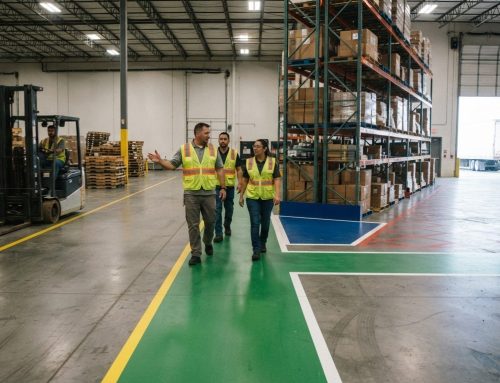
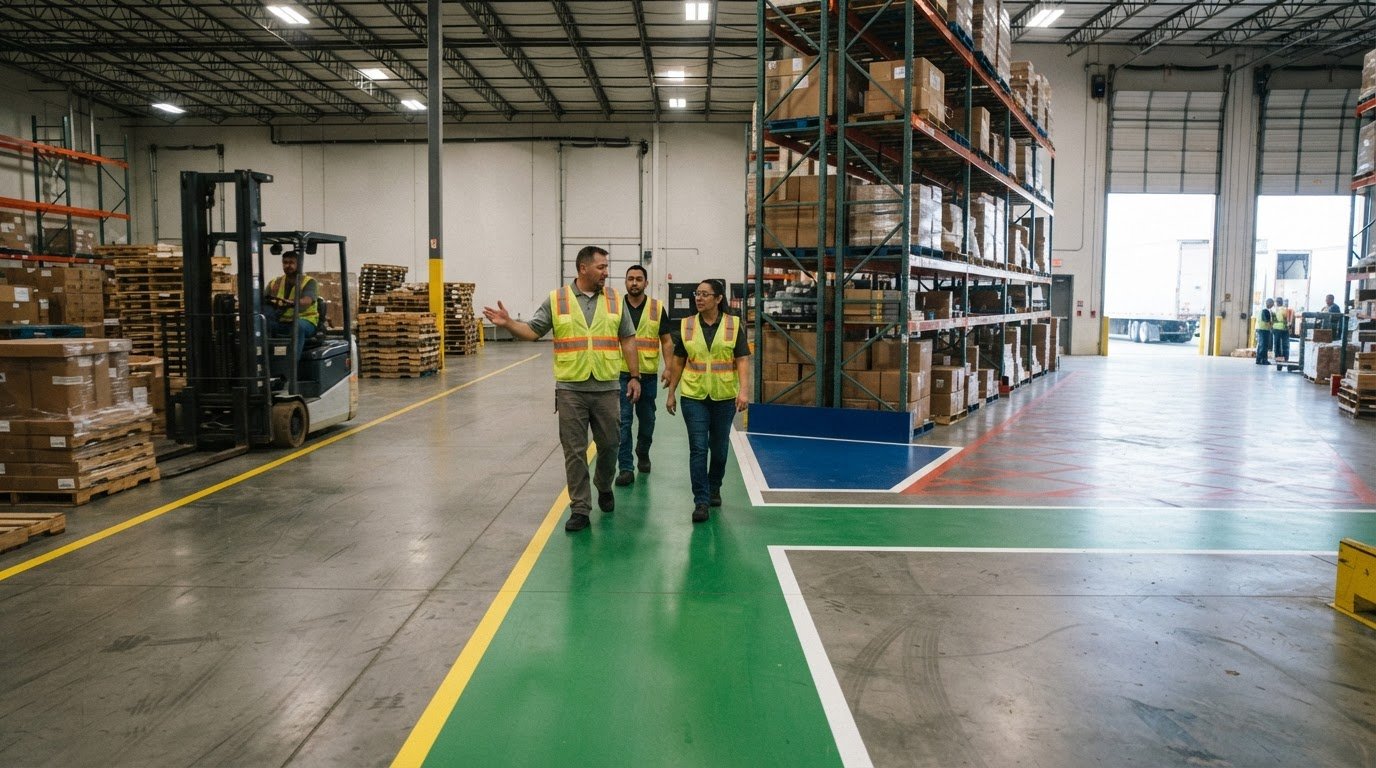
Industrial floor marking is more than just paint on concrete. It’s a functional engineering system that serves two critical masters: safety and operational throughput. In high-traffic distribution centers, clear demarcation is the primary defense against forklift-pedestrian collisions. Since forklifts are involved in approximately 25% of all warehouse accidents, the visual separation provided by warehouse walkway striping isn’t optional. It’s a foundational requirement for risk management. Beyond safety, an organized floor layout directly impacts inventory accuracy by defining exact staging areas and pallet positions. This eliminates the “ghost inventory” caused by misplaced loads and keeps your throughput at peak levels.
OSHA Compliance and Safety Standards
OSHA standards, specifically 29 CFR 1910.22, mandate that all permanent aisles and passageways be appropriately marked. Professional contractors use a standardized color palette to communicate hazard levels instantly. Yellow is the industry standard for traffic lanes and aisles (the most common color used in logistics), while red identifies fire protection equipment and emergency exits. Permanent markings must be at least 2 to 6 inches wide to remain compliant, with 4 inches being the standard for visibility. To further support site-wide safety and hazard communication, many organizations pair these markings with professional industrial signage from imagesquareprinting.com. Failing to maintain these lines doesn’t just invite federal fines; it creates a massive legal vulnerability. If an accident occurs in an unmarked zone, the facility faces significant liability and potential litigation costs that far outweigh the cost of a professional installation.
Optimizing Traffic Flow and Staging
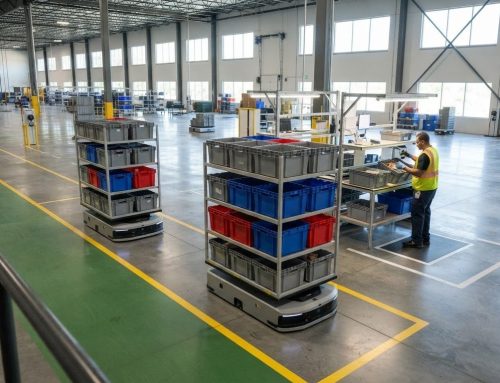
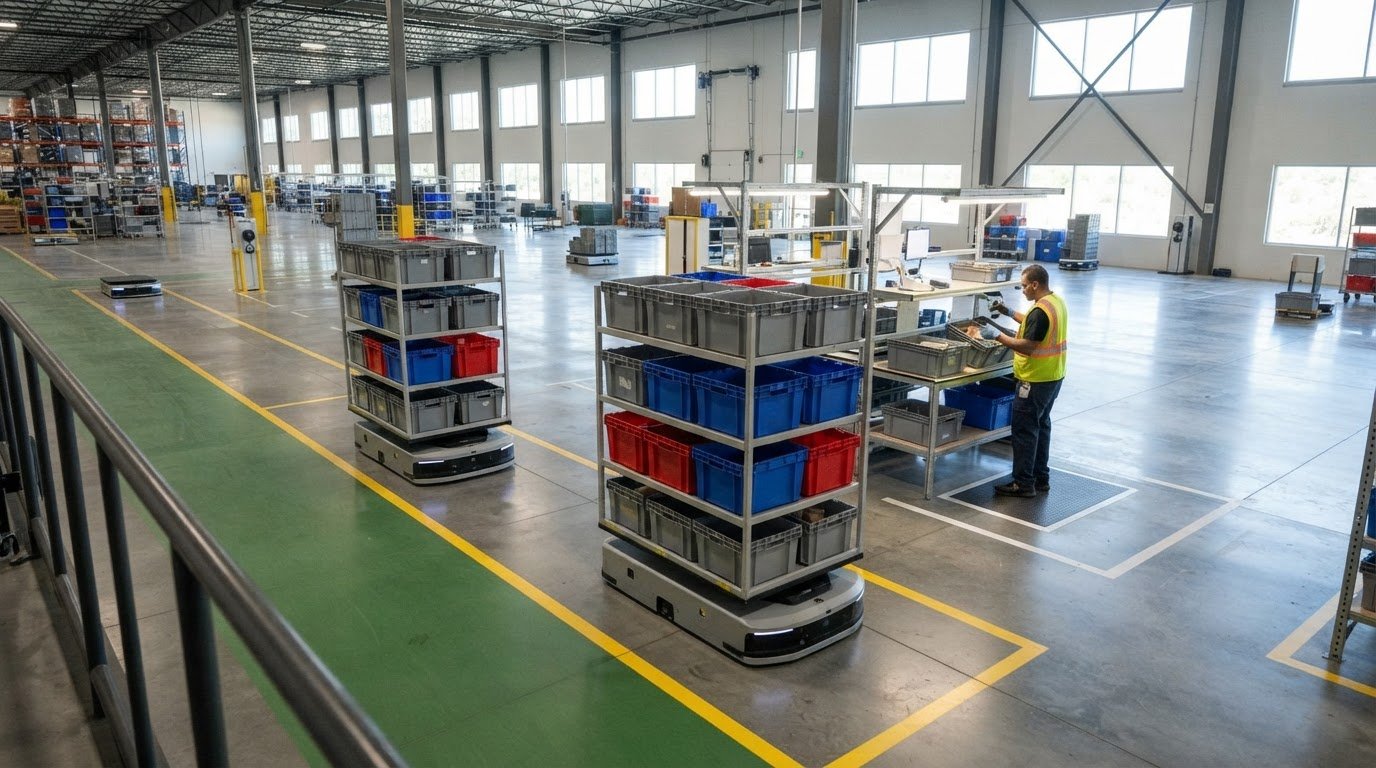
Efficiency in a modern warehouse depends on the frictionless movement of goods. Directional arrows and lane markings act as a facility’s internal traffic control, preventing bottlenecks and head-on traffic jams in narrow corridors. By clearly defining pedestrian walkways and safety aisles, you ensure that foot traffic never crosses paths with heavy machinery unexpectedly. Professional warehouse walkway striping prevents these “struck-by” incidents, which remain a leading cause of serious injuries. While some facilities attempt to use various floor marking tape materials for temporary zones, permanent epoxy striping is required for high-traffic staging areas to withstand constant forklift scrubbing. Organized stenciling for pallet positions also integrates with your warehouse management software (WMS), ensuring every square foot of floor space is utilized with extreme precision.
Engineering Durability: Materials and Surface Preparation
Durability in industrial environments follows the Iceberg Theory; 90% of a marking’s lifespan is determined by what happens beneath the visible topcoat. Standard traffic paint often fails within 12 to 18 months in high-scrub zones because it lacks a mechanical bond with the concrete. In contrast, professional warehouse walkway striping utilizing two-component epoxy or polyurethane systems can last 3 to 7 years, even under constant forklift traffic. Choosing the right material depends on your facility’s specific operational stressors, such as chemical exposure, tire friction, or pallet dragging.
Mechanical Surface Preparation: Shot Blasting vs. Grinding
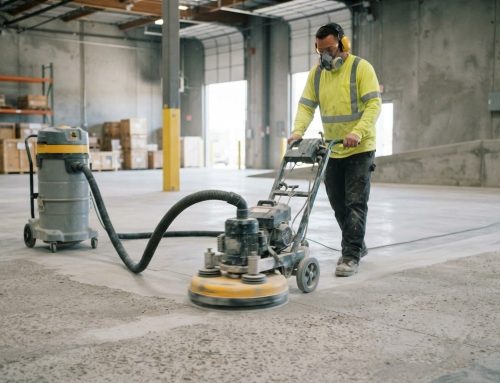
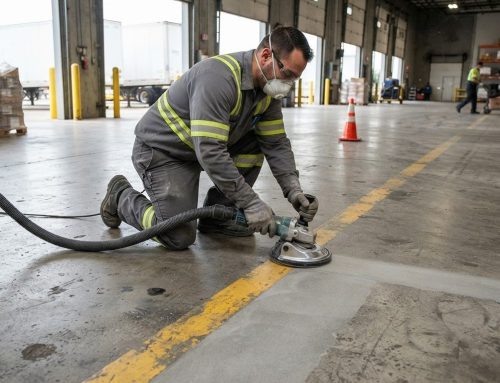
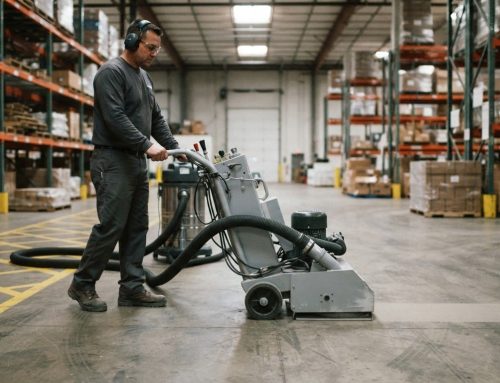
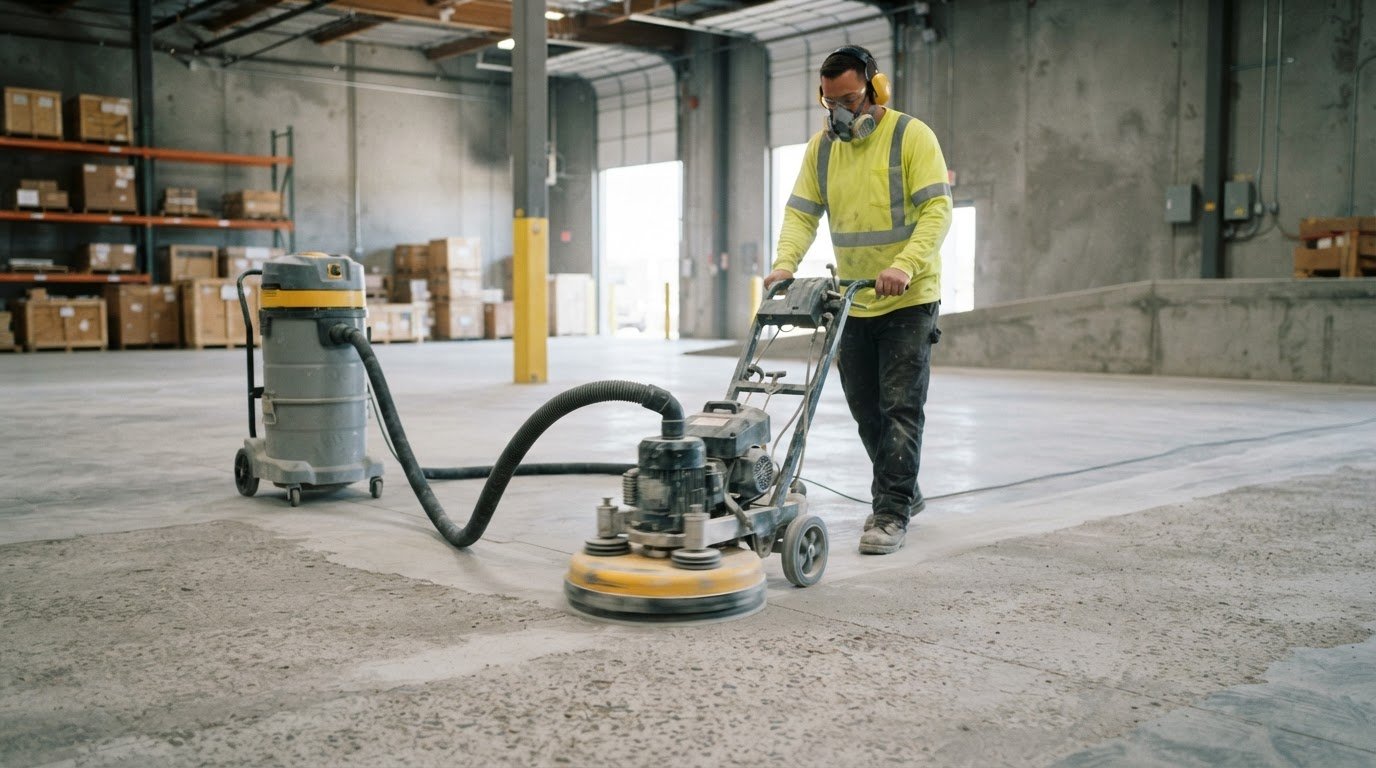
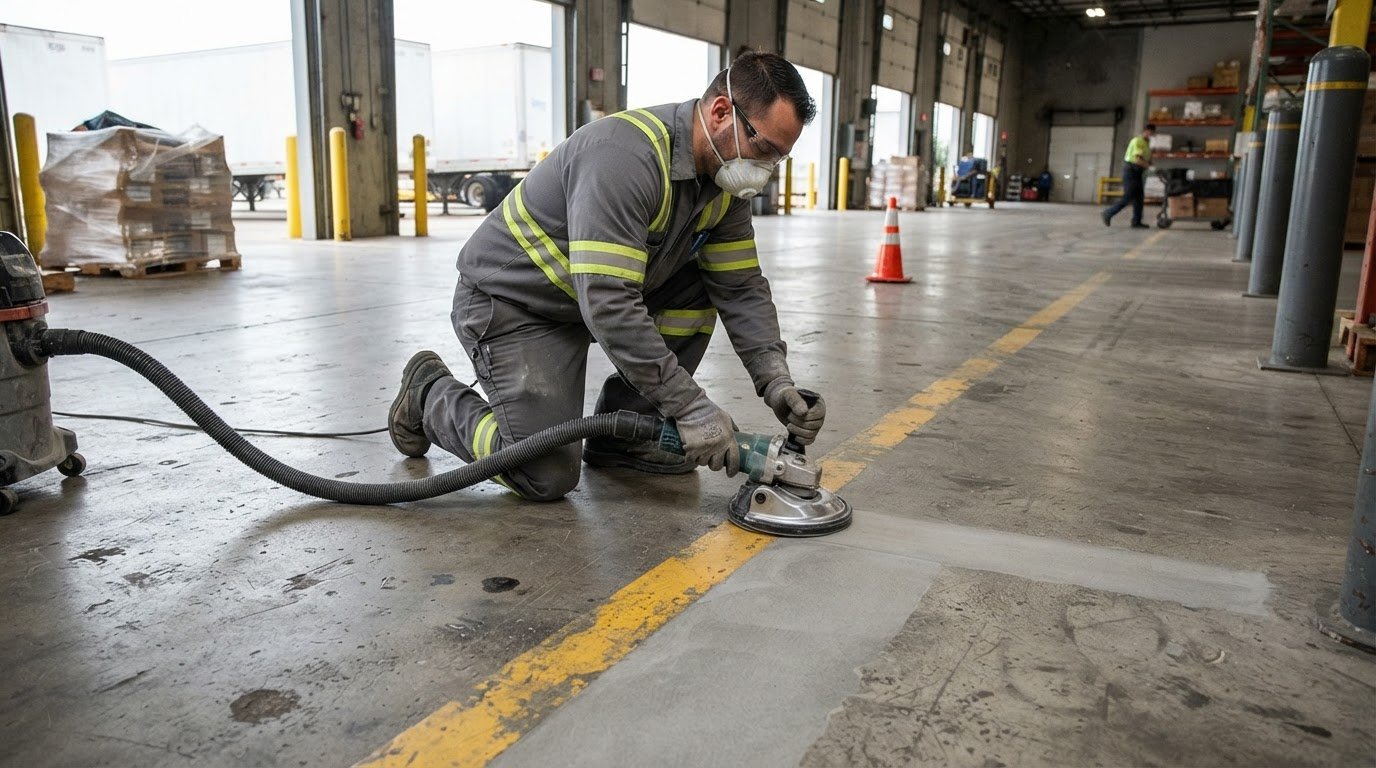
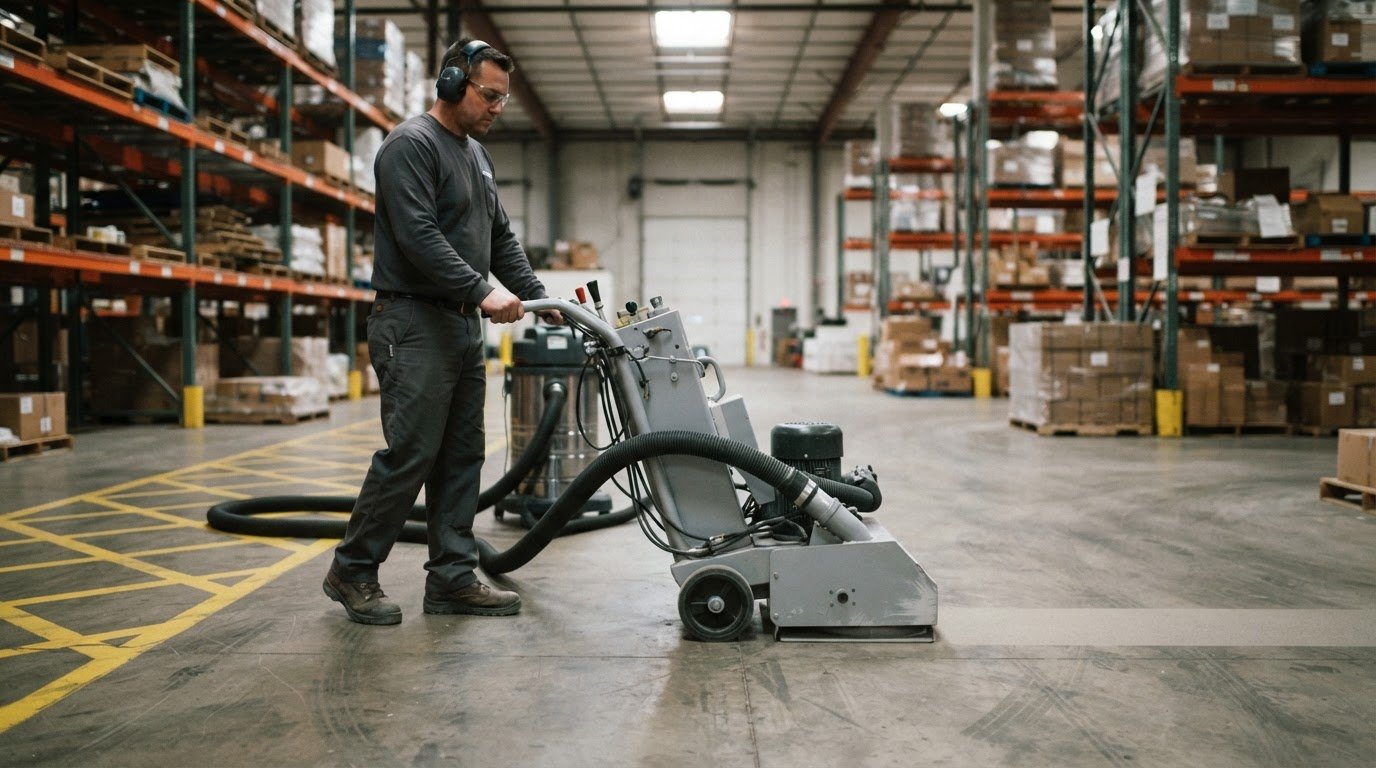
Before applying any industrial coating, the concrete must be etched to create a “profile” (a rough texture that allows the epoxy to grip). Shot blasting is the gold standard for this process. It uses high-velocity steel shot to remove the weak top layer of concrete (laitance) and deep-seated contaminants. Proper warehouse line removal via mechanical grinding is also a mandatory prerequisite for any new installation. Painting over old, peeling lines is a recipe for immediate failure. The new coating will only be as strong as the failing layer beneath it, leading to delamination under the weight of heavy machinery.
High-Performance Coating Systems
For maximum abrasion resistance, epoxy warehouse striping provides a dense, chemical-resistant finish that withstands the daily rigors of 24/7 logistics. In specialized zones, such as battery charging stations where electrolyte spills are common, we deploy Novolac acid-resistant coatings to prevent floor degradation. These systems align with pedestrian safety guidelines by maintaining high visibility over years of use rather than months. For facilities with large dock doors or skylights, adding a UV-stable urethane topcoat prevents the yellowing and chalking that occurs with standard epoxies. If you are unsure which system fits your traffic volume, request a technical site assessment to review your floor’s specific needs.

Criteria for Selecting Industrial Floor Marking Contractors
Selecting a contractor based on the lowest initial bid often results in a higher total cost of ownership over a five-year window. If a provider lacks a dedicated equipment fleet (such as industrial shot blasters and high-pressure airless sprayers), they cannot achieve the concrete profile required for permanent adhesion. This leads to premature peeling and frequent re-striping cycles. A professional partner ensures your warehouse walkway striping remains visible and intact for years, which reduces the long-term budgetary impact of constant maintenance and repairs.
Vetting Contractor Experience and Safety
For facility managers who need to maintain the rest of their commercial property to the same high standard, they can check out Hudson Line Painters for professional interior and exterior painting services that complement their safety markings.
Historical tenure is a reliable shorthand for reliability in the industrial sector. A company with 29+ years of experience has refined its processes across millions of square feet in large-scale distribution centers and airports. Beyond tenure, you must scrutinize their safety record and insurance documentation. Ensure they carry comprehensive General Liability and Workers Compensation coverage to protect your organization from liability during the installation. Reviewing case studies from similar high-traffic environments will confirm they can handle the specific logistical stresses and safety protocols of your facility.
Operational Flexibility and Project Management
Facility managers require contractors who respect their production schedules and operational needs. We provide 24/7 availability to ensure that installation occurs during your lowest traffic periods (such as third shifts or weekend windows), which eliminates operational downtime. Project management is equally critical for multi-site organizations. Having a single point of contact for national parking lot line striping and interior floor marking ensures that safety standards are identical at every location. In specialized environments, such as food-grade or pharmaceutical warehouses, verify that the team utilizes advanced dust containment systems to maintain air quality and prevent product contamination. This level of coordination ensures a seamless transition from old, failing lines to a high-performance safety system.
Connect with an industrial consultant to schedule a site walk-through and receive a comprehensive project estimate for your facility.
Executing a National Facility Marking Strategy
Managing a single warehouse is a challenge, but overseeing a national portfolio of logistics hubs requires a standardized approach to safety. When warehouse walkway striping is identical across every location, you create a universal safety language for your workforce. This consistency reduces training time and minimizes the risk of human error during inter-facility transfers. A national strategy ensures that every site meets the same high-performance standards for durability and visibility, regardless of local contractor availability.
Mobilizing teams for high-profile industrial projects requires a contractor with the logistical infrastructure to move specialized equipment across the country. Shot blasting units and high-capacity airless sprayers must be on-site and operational to meet tight project windows. Beyond the interior floor, a comprehensive strategy includes maintaining parking garages and floor markings to ensure safety from the moment an employee or driver enters the property. Planning for long-term maintenance cycles prevents the gradual degradation of these visual cues, which keeps your facilities in a state of constant compliance.
Scalability for Large-Scale Commercial Projects
StripeGuys Warhouse Line Striping manages multi-state rollouts by implementing strict material specifications and application protocols across all geographic locations. This ensures that a distribution center in one region receives the same high-durability epoxy system as a facility in another. Our veteran teams are capable of rapid deployment for emergency re-striping or facility reconfigurations, which allows your operations to adapt to market changes without compromising safety standards. This level of scalability is essential for maintaining brand and safety consistency across large-scale commercial portfolios.
The StripeGuys Warhouse Line Striping Advantage: Reliability and Expertise
With 29 years of specialized focus on industrial floor safety, we provide the seasoned expertise required for the most complex logistics environments. Our commitment to transparency is backed by around-the-clock accessibility, which ensures that project updates are available whenever your facility is active. We act as safety-conscious consultants who prioritize your operational needs and budgetary constraints above all else. This no-nonsense approach to project management ensures that your facility remains organized, efficient, and compliant. Schedule a national facility marking assessment to standardize your safety protocols and optimize your traffic flow today.
Standardizing Safety Across Your Industrial Portfolio
Maintaining a compliant and efficient facility requires a shift from viewing floor marking as a maintenance task to treating it as a critical safety investment. The longevity of your markings is dictated by mechanical surface preparation. Without shot blasting, even the highest-grade epoxy will fail under the constant friction of heavy machinery. By implementing a standardized warehouse walkway striping strategy, you protect your personnel from forklift-related hazards while optimizing the traffic flow of your entire logistics network.
StripeGuys Warhouse Line Striping brings over 29 years of industrial expertise and nationwide service coverage to every project. We specialize in high-performance epoxy systems and mechanical removal, ensuring your markings withstand the rigors of 24/7 operations. Our veteran teams are ready to mobilize across the United States to deliver consistent, OSHA-compliant results that respect your operational schedule and budgetary constraints.
Don’t leave your facility’s safety to chance or poor surface prep. Request a Professional Industrial Striping Quote from StripeGuys Warhouse Line Striping to secure your facility’s operational efficiency. We look forward to partnering with you on your next large-scale project.
Frequently Asked Questions
What is the most durable material for industrial floor markings?
Two-component epoxy systems are the most durable option for industrial environments. These materials create a high-strength chemical bond with the concrete substrate, providing superior resistance to abrasion and chemical spills. While standard traffic paint might last 12 months, industrial-grade epoxy can maintain its integrity for 3 to 7 years. For specialized areas with extreme chemical exposure, Novolac coatings offer even higher levels of protection against corrosive substances.
How long does warehouse floor striping take to cure before forklift traffic can resume?
Standard industrial epoxy systems typically require 8 to 12 hours for a tack-free state and 24 to 48 hours for a full cure before heavy forklift traffic can resume. Cure times vary based on ambient temperature and humidity levels within your facility. We utilize specialized fast-cure resins when operational downtime must be minimized, allowing for traffic in as little as 4 to 6 hours. Always verify the manufacturer’s technical data sheet before reopening a zone.
Does OSHA require specific colors for warehouse floor markings?
Yes, OSHA mandates specific color codes to identify hazards and zones. Yellow is the required standard for marking aisles, traffic lanes, and physical hazards. Red must be used for fire protection equipment and emergency stop controls. While OSHA allows for other colors to designate storage or work areas, the use of yellow for warehouse walkway striping is a non-negotiable safety requirement to ensure universal recognition among personnel and visitors.
What is the difference between shot blasting and diamond grinding for floor prep?
Shot blasting uses high-velocity steel shot to remove the concrete’s surface layer and create a deep mechanical profile for epoxy adhesion. Diamond grinding uses rotating abrasive discs to smooth the surface or remove thin coatings. Shot blasting is generally preferred for heavy-duty industrial applications because it provides a more aggressive anchor for the material. Diamond grinding is often better suited for thin-film applications or areas where a smoother finish is required for aesthetic reasons.
Can you install floor markings in cold storage or freezer facilities?
Yes, floor markings can be installed in freezers, but they require specialized low-temperature resins. Standard epoxies fail to cure properly in sub-zero environments, leading to immediate delamination. We utilize polyaspartic or methyl methacrylate coatings that can cure at temperatures as low as -20 degrees Fahrenheit. Proper surface preparation is even more critical in these zones to ensure the material bonds despite the potential for moisture or frost on the concrete substrate.
How often should industrial floor lines be refreshed in a high-traffic warehouse?
In high-traffic logistics centers, you should expect to refresh your warehouse walkway striping every 3 to 5 years when using high-performance epoxy. Facilities using standard traffic paint may require a refresh every 6 to 12 months. Factors such as the frequency of forklift scrubbing, the type of tires used on machinery, and your facility’s cleaning protocols will influence the lifespan. Routine inspections help identify fading lines before they become a compliance risk.