The toughest-looking line isn’t automatically the right marking system for your facility. Epoxy floor striping can be a practical choice, but performance depends on the existing floor, the traffic each marking will face, and the preparation required. Before choosing a system, consider coating compatibility, wear, and how the work can fit around facility operations.
Floor markings organize traffic and work zones, so the right choice needs to reflect how your facility runs. Skipping a review of floor condition or daily activity can lead to rework and scheduling pressure. This guide compares epoxy line painting with other marking approaches and explains what to assess before planning a project. You’ll learn how existing coatings, vehicle and pedestrian traffic, surface preparation, and access constraints shape the scope. With more than 29 years of industrial striping experience, StripeGuys Warhouse Line Striping plans marking work around the facility’s actual conditions, not a one-size-fits-all specification.
Key Takeaways
- Epoxy line markings define aisles, staging areas, and boundaries without coating the entire floor.
- Compare epoxy floor striping, conventional paint, and marking tape by floor condition, traffic, application needs, and how often the layout may change.
- Review existing markings, coating history, and floor condition to identify preparation needs before scheduling work.
- Map traffic routes and coordinate work areas with facility operations to build a marking plan that suits how your site runs.
What Epoxy Floor Striping Does for an Industrial Facility
Epoxy floor striping applies lines and markings to selected floor areas. A full epoxy floor coating covers a much broader surface. Striping helps make routes, work zones, and boundaries easier to identify, giving people and equipment clearer direction through a facility.
Epoxy floor striping uses defined markings to show where traffic should travel, where work takes place, and how shared industrial space is organized. It can be part of a broader floor-marking plan or accompany a larger coating project. The right approach depends on the floor’s condition and existing finish, since those factors determine what preparation is needed.
Epoxy floor striping versus a full epoxy floor coating
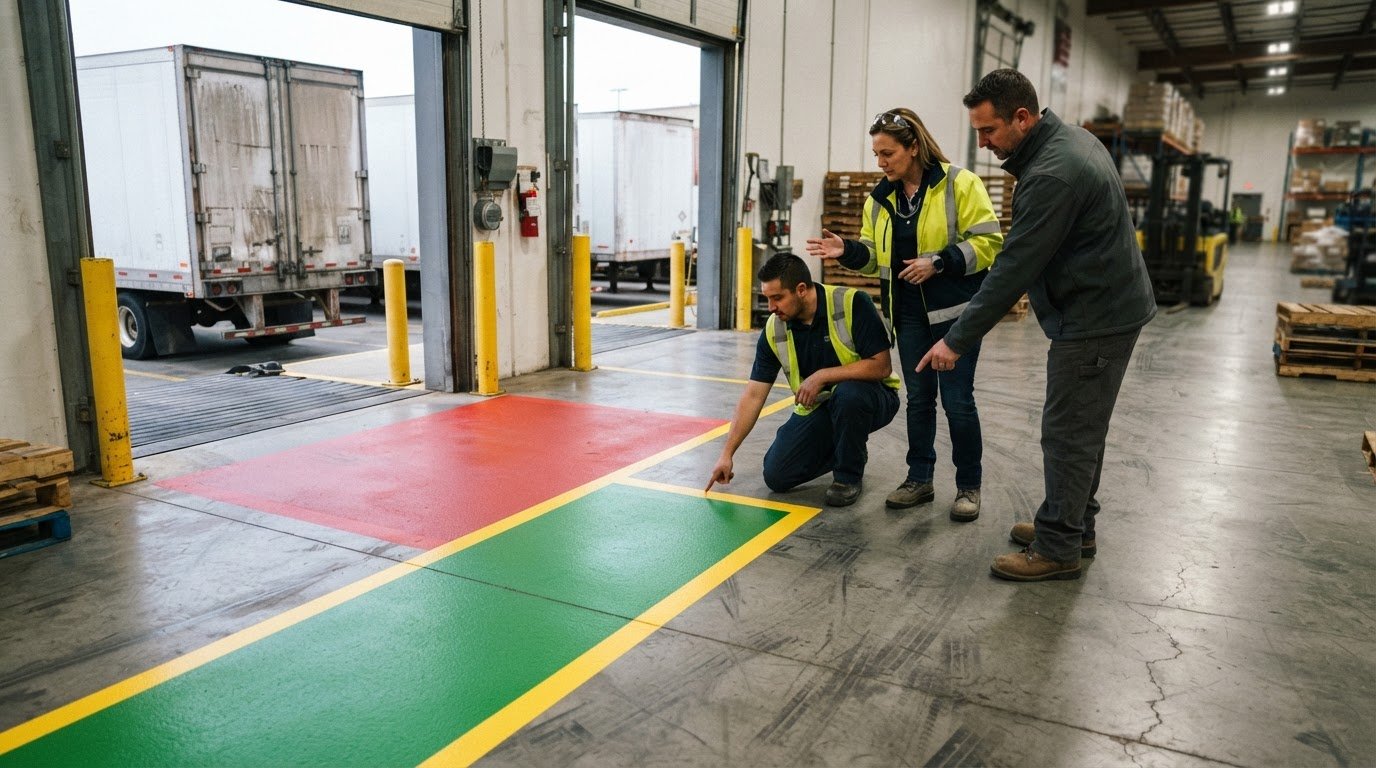
Striping covers selected lines, aisles, staging areas, or other boundaries. A full coating treats a much wider floor area. For example, a facility might add forklift lanes to an existing floor, or include lines in a project that also addresses larger coated areas. Define the scope by documenting the floor’s condition, coating history, and operational priorities, rather than choosing by marking material alone.
Where industrial floor markings support daily operations
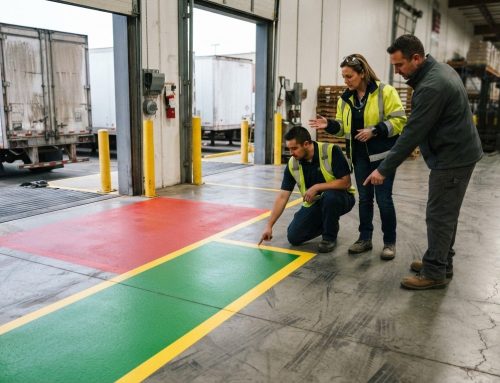
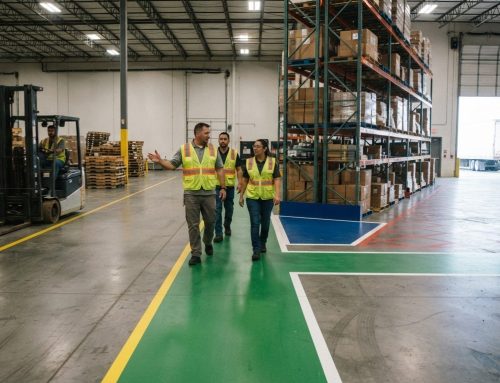
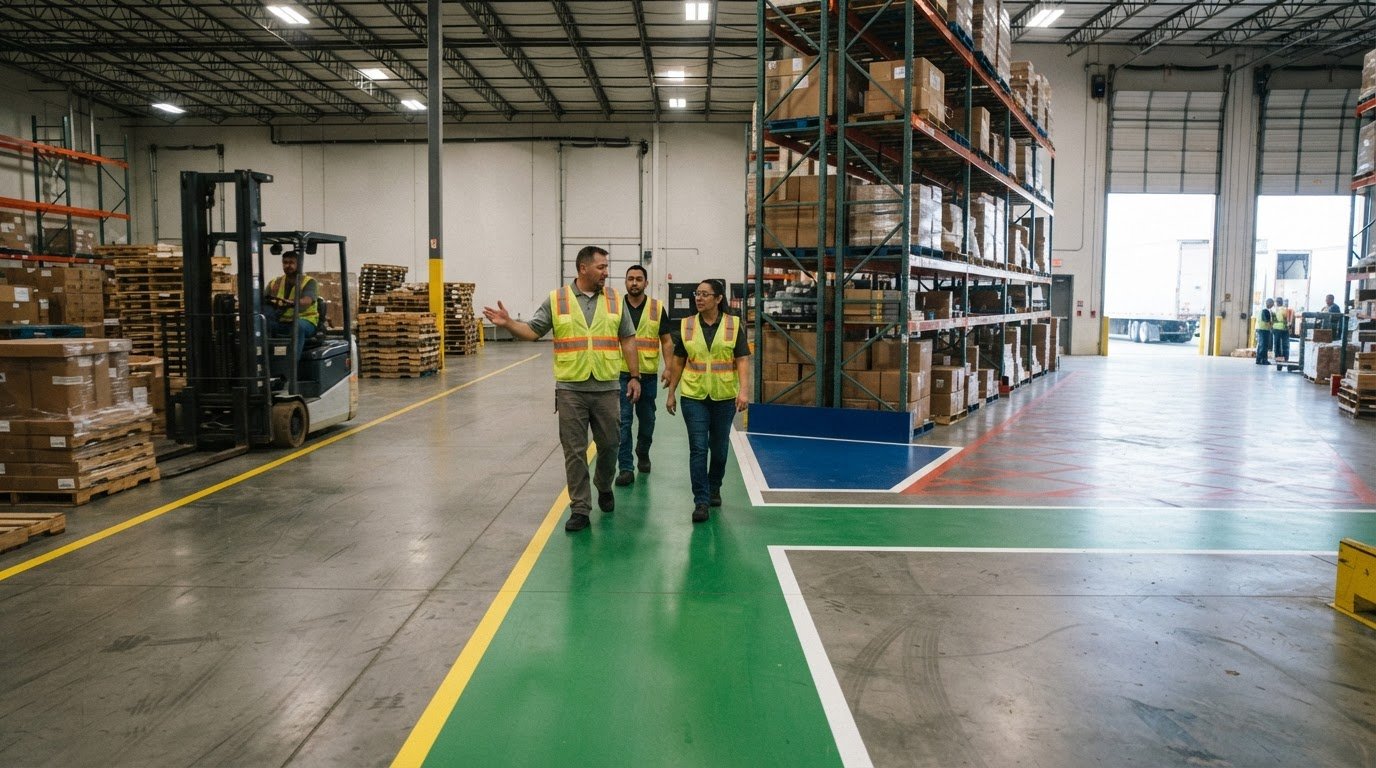
Markings communicate how different parts of a facility are intended to be used. Aisle lines identify equipment routes, pedestrian paths distinguish walking areas from vehicle movement, and boundaries separate staging from active travel lanes. In a warehouse, the layout may need to account for forklifts moving between receiving, storage, and shipping while employees cross those routes during daily work.
Build the plan around actual traffic and workflow. A distribution floor with frequent pallet movement may need defined travel lanes and staging limits. A production area may need boundaries around work zones while keeping access routes distinct. Include intersections and shared access points in the layout, and consider how people and equipment move through them. Facilities planning separated walking routes can connect those paths with pedestrian walkway and safety aisle striping.
For warehouse projects, epoxy warehouse striping can form part of a facility-specific marking plan. Place routes and boundaries according to the work happening on the floor, rather than copying a generic template.
How to Compare Epoxy Floor Striping with Other Marking Options
No marking method suits every floor. Compare the surface condition, the traffic crossing each line, application requirements, and how likely the layout is to change. A marking system for a stable forklift route may not be the most practical choice for a temporary work zone that moves often.
| Decision factor | Epoxy line painting | Conventional floor paint | Floor-marking tape |
|---|---|---|---|
| Floor condition | Existing coatings and substrate condition affect preparation and suitability. | Surface condition still matters for application and adhesion. | The surface needs to be suitable for the tape to adhere. |
| Traffic exposure | Consider the type and frequency of vehicle and pedestrian traffic, along with the selected specification. | Assess whether the expected traffic fits the chosen paint and maintenance plan. | Consider how repeated equipment crossings and contact may affect the marking. |
| Application needs | Requires planning for surface preparation and application conditions. | Requires a prepared surface and coordination around the application. | Applied as a surface marking, with layout and placement planned in advance. |
| Future layout changes | Changes may require removal or other surface work before new lines are applied. | Changing painted lines can involve covering or removing old markings. | May suit layouts that need to be adjusted, though removal and surface condition still matter. |
Choose a marking system by matching the surface, traffic, and operating plan, not by assuming one material is best for every facility.
When epoxy line painting may fit facility requirements
Epoxy line painting can suit facilities that need defined painted routes for ongoing operations, particularly where traffic exposure is an important part of the floor plan. Performance depends on the product specification, surface preparation, and site conditions. The word “epoxy” alone doesn’t explain how a system will perform. StripeGuys provides epoxy warehouse striping as part of an industrial marking plan shaped around those facility factors.
When paint or tape may better match changing needs
If storage areas, equipment routes, or work zones shift often, account for how markings can be revised. Painted lines may need to be removed or the surface worked on before new markings go down. Tape can be repositioned, but removal and floor condition still matter. For routes used by mechanical handling equipment, refer to OSHA’s aisle-marking requirements when planning marked aisles and passageways. To discuss a facility-specific striping plan, share your project requirements with StripeGuys.

What to Assess Before Planning an Epoxy Floor Striping Project
Start an epoxy floor striping plan with the facility’s layout and current conditions. Record what needs to be marked, the state of the floor, and how crews can access each work area. These details help define surface preparation and coordinate the project with facility operations, rather than assuming one schedule or approach will suit every site.
Map the layout, traffic, and marking priorities
Begin with a site plan showing how people, vehicles, and materials move through the facility. Identify priority routes and areas, then note crossings and access constraints that could affect the sequence of work.
- Identify marking needs. Map aisles, pedestrian routes, staging zones, work-area boundaries, and facility-specific symbols. Flag intersections and shared-use areas where the intended route needs to be especially clear.
- Trace traffic and workflow. Compare forklift routes with pedestrian movement, equipment access, and material flow. Note crossing points and whether receiving, storage, or production activities change traffic patterns during a shift.
Assess the floor and prepare the work plan
Next, document the surface and consider how the work can fit around normal facility activity. Existing markings, coating history, visible damage, and access limitations help define preparation needs. StripeGuys provides warehouse striping, epoxy line painting, line removal, and surface preparation for industrial facilities, with more than 29 years of experience.
- Record floor conditions. Note the substrate, existing coating, old markings, visible damage, and areas where markings may need removal. These details inform the preparation plan because the floor’s current condition and coating history affect the work required.
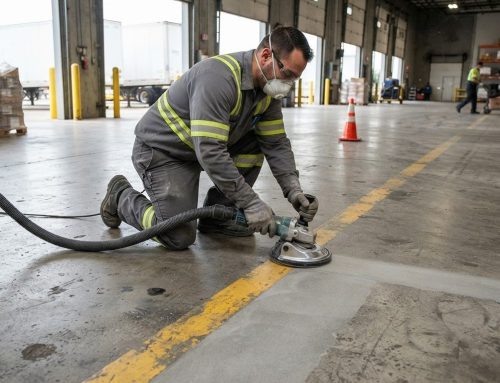
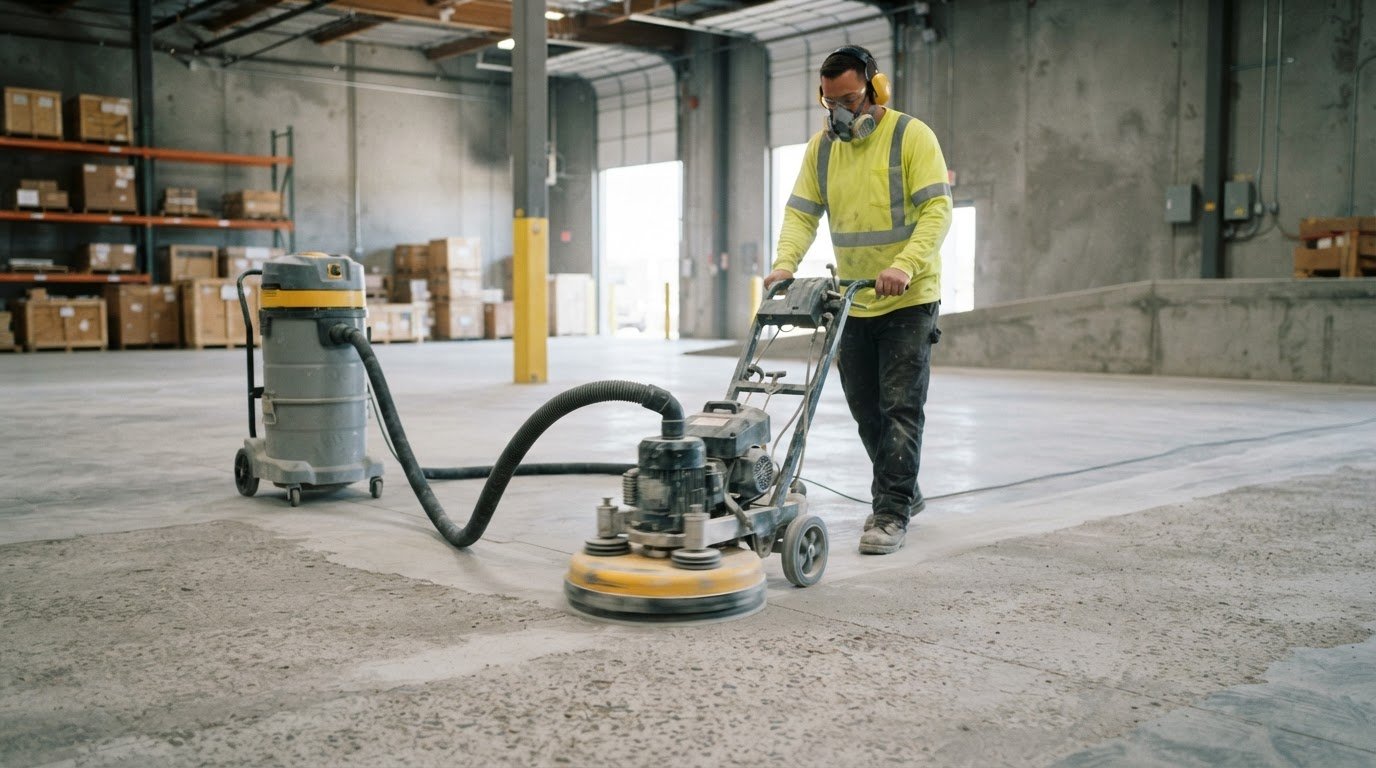
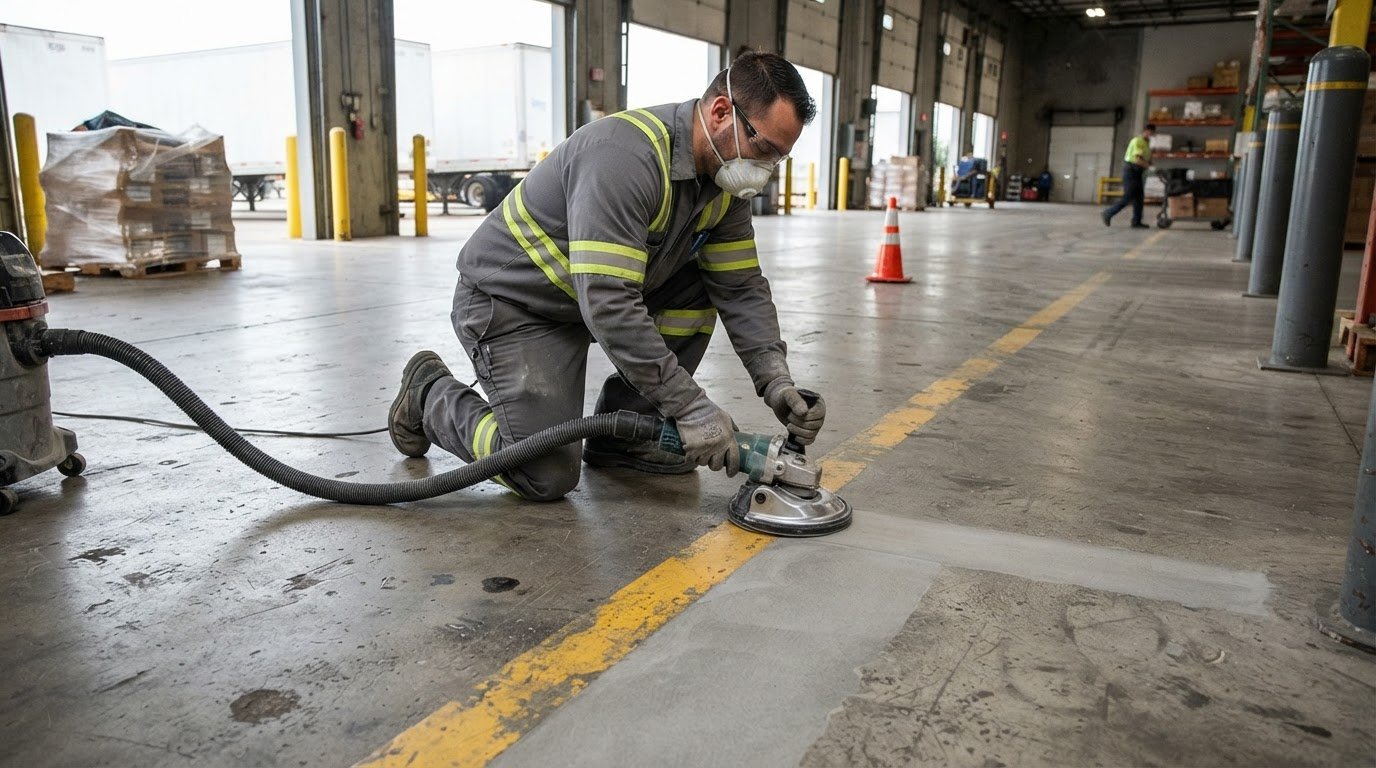
- Coordinate access and sequence. Identify available work zones, areas that must remain accessible, operating schedules, and equipment or inventory that could affect access. Mechanical removal may involve shot blasting or grinding, depending on project needs. Planning around these constraints helps set realistic expectations without assuming operations can continue uninterrupted.
Bring the marked-up layout and floor-condition notes together before setting the project sequence. Discuss your industrial striping project with StripeGuys and plan around your facility’s marking and access requirements.
How StripeGuys Supports Industrial Epoxy Floor Striping
Industrial marking works best when its scope reflects how the facility operates. StripeGuys provides warehouse floor striping and epoxy line painting for large commercial and industrial projects. The team plans routes and zones with the movement of people, equipment, and materials in mind. With more than 29 years of experience, StripeGuys understands that floor condition, existing markings, and operational priorities all shape the work.
StripeGuys serves large commercial and industrial facilities across the United States. Project scope can account for the facility layout, priority areas, surface preparation, and removal of existing lines. This keeps the marking plan focused on practical site requirements rather than a generic layout.
From floor assessment to a coordinated marking plan
A useful scope connects the layout with floor conditions. It can account for traffic routes, pedestrian areas, staging zones, preparation needs, and which markings need removal before new lines are applied. Existing marks may need to be addressed as part of the work, and preparation depends on the floor and its coating history. Warehouse line striping services can support facility-specific marking needs.
Epoxy line painting is one option within the plan, not a substitute for deciding what the facility needs marked or how the surface should be prepared. StripeGuys also provides line removal and surface preparation, bringing these project elements together in an industrial striping scope.
Prepare project information for a useful discussion
Gather information that describes the facility and its constraints before discussing the work. A floor plan, written notes, or clear photographs can make the conversation more specific. Include:
- The approximate facility size and the areas included in the project
- Priority zones, routes, staging areas, and pedestrian paths
- Visible floor damage, existing markings, and known coating history
- Operating schedules, access limits, and areas that need to remain available
These details help align the proposed scope with marking priorities and operating requirements. They also give the project discussion a practical starting point, without assuming a schedule, material specification, or outcome before understanding the facility’s needs.
Ready to plan the next step? Discuss your epoxy floor striping project with StripeGuys.
Turn Your Marking Plan Into the Next Step
Use the marking plan to establish how routes and work areas should function. Before work begins, align facility operations around priority zones, access constraints, and how proposed changes will be communicated to employees. This shared understanding keeps decisions practical as workflows shift and the facility evolves.
Keep the site plan and marking priorities available to the teams managing daily movement through the building. When routes, staging needs, or equipment patterns change, revisit the plan so markings continue to reflect actual operations. A considered approach to epoxy floor striping connects the selected marking work with the way your facility runs.
StripeGuys can help turn facility requirements into a focused project scope. Discuss your industrial floor striping project and plan markings around your site’s layout, surface, and operating needs.
Frequently Asked Questions
What is epoxy floor striping?
Epoxy floor striping applies epoxy-based lines or markings to selected floor areas, rather than coating the entire floor. A facility can use the markings to distinguish an equipment route from a pedestrian crossing or show where materials should be staged. The right system depends on the substrate, existing finish, and conditions of use. Products and installation methods vary, so the term alone doesn’t describe one uniform system.
Can epoxy floor striping be applied over an existing epoxy floor?
It may be suitable, but assess the existing floor’s condition and the proposed marking material first. Worn lines on an otherwise sound coating present different conditions from areas with peeling, damage, or multiple old layers. A site assessment helps identify those issues and plan preparation. Compatibility and performance depend on the specific surface and materials, not simply on both products being called “epoxy.”
Is epoxy floor striping suitable for forklift traffic?
Epoxy floor striping can be considered for forklift routes, but suitability depends on the selected marking system, surface preparation, traffic intensity, and facility conditions. Map more than straight travel paths: turning points, braking areas, and repeated crossings can place different demands on markings. For example, a line at a frequently used aisle intersection may experience more tire contact than one beside a low-traffic storage area. Assess each route rather than assuming one system fits them all.
How should a facility prepare for epoxy floor striping?
Identify and clear the intended work areas as facility operations allow. Share layout priorities and document existing markings and floor conditions. Note access limits, equipment, or inventory that could affect the work zone. For example, a route that must remain open for material movement may influence the work sequence. Preparation varies with floor condition and project scope, so there isn’t one universal method or schedule.
Can epoxy floor striping be removed or changed when a warehouse layout changes?
Existing markings can be addressed as part of a layout revision, but the removal approach depends on the markings, floor condition, and replacement plan. Mechanical methods may include grinding or shot blasting. For example, changing an aisle boundary may require removing the old line before placing a new one nearby. Removal differs by floor, so assess the specific surface and markings rather than assuming a damage-free result.
How do you choose between epoxy line painting and floor-marking tape?
Compare expected traffic, floor condition, layout stability, and how often markings may need revision. Fixed routes with frequent equipment crossings have different requirements from a temporary work area that may move as operations change. Tape and painted lines involve different application and removal considerations, and neither is the universal choice. Assess the floor and how each area is used before selecting a marking system.