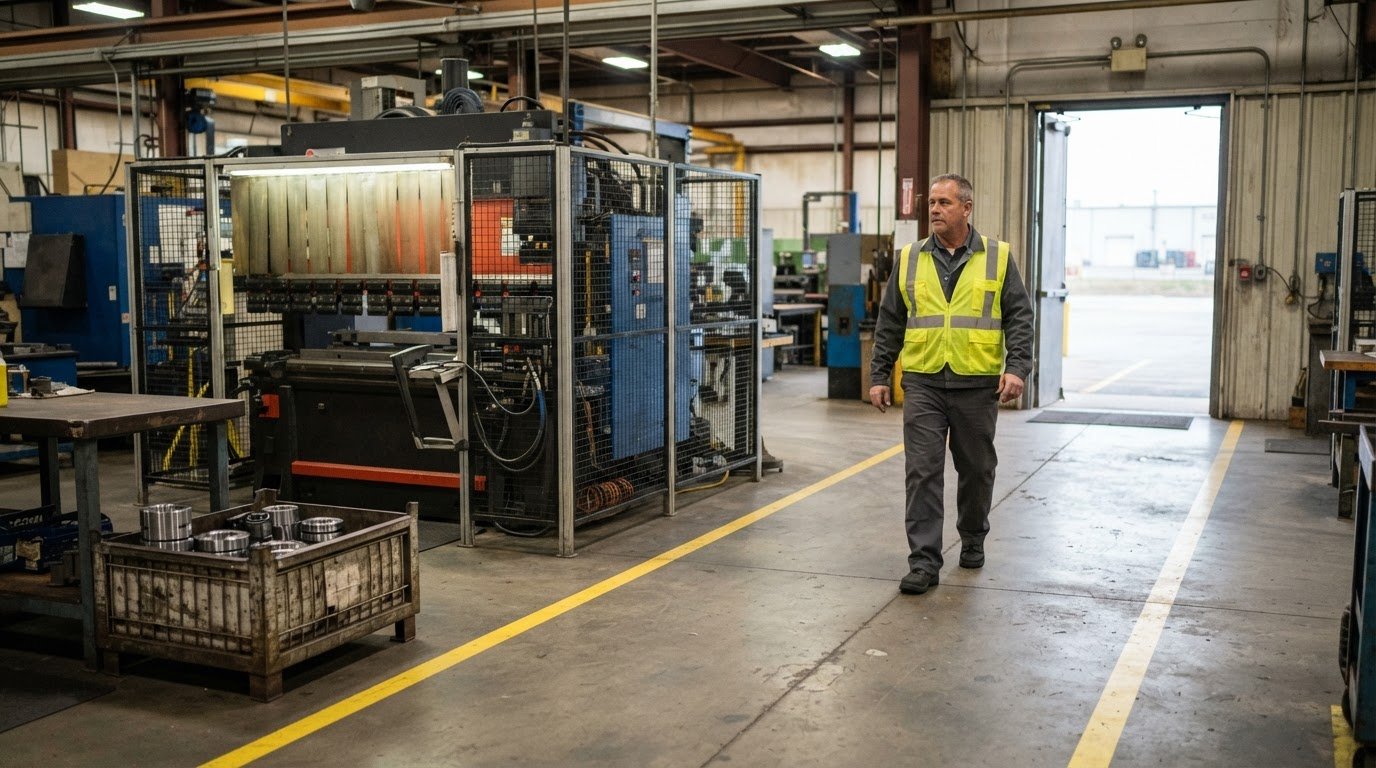
The most aggressive removal method isn’t automatically the best choice for an old warehouse line. If a revised traffic plan has made existing markings obsolete, concrete scarifying for line removal may seem like a direct solution, but its rough, grooved finish can affect the floor and the next marking application. Is scarifying right for your facility? It depends on the marking, concrete condition, and required finish.
There’s more to consider than whether the old line disappears. Surface damage, dust control, downtime, and the adhesion requirements of replacement paint or epoxy all matter. Choose a removal method that clears conflicting markings while leaving the floor suitable for its next use.
This guide explains when scarifying may suit line removal, how it compares with grinding and shot blasting, and what trade-offs to weigh before work begins. You’ll also learn how surface profile and dust management factor into planning replacement markings. StripeGuys Warhouse Line Striping brings more than 29 years of industrial striping experience to warehouse line removal and mechanical surface preparation, helping facilities plan removal as part of the complete floor-marking project.
Key Takeaways
- Concrete scarifying for line removal cuts into the floor, so weigh its aggressive action against the marking and the surface condition.
- Compare scarifying, grinding, and shot blasting by how each removes material, the finish it leaves, and the work area’s needs.
- Assess the existing marking and concrete before choosing a method. Paint, coatings, residue, and damaged areas each affect the approach.
- Plan dust controls, cleanup, and a test area to manage work conditions and avoid an unsuitable surface finish.
- Align removal and surface preparation with the replacement paint or epoxy system so the floor is suited to the next application.
Concrete scarifying for line removal: what the method does to a floor
Scarifying mechanically removes surface material with rotating cutting tools. For floor-line removal, the cutters pass over the marked area and break up or abrade the line, sometimes taking a thin layer of concrete with it. Unlike removing a separate film or dissolving a marking, scarifying physically cuts into the surface. Covering a line, by contrast, leaves the old material beneath the new finish.
Scarifying cuts and chips the surface, grinding abrades it more gradually, and shot blasting propels abrasive media against it. Each method affects the floor differently. With concrete scarifying for line removal, the outcome depends on the marking material, concrete condition, equipment setup, and whether the goal is only to remove the line or also to create a more aggressive surface profile.
How concrete scarifiers remove existing floor markings
A scarifier’s rotating drum carries cutting tools that strike or scrape the floor as the machine moves. Tool type, machine settings, and pass depth influence how much material is removed and how pronounced the resulting grooves or profile may be. A thick or layered marking can require more removal than a thin painted line, but cutting deeper also affects the concrete. Water-based approaches use water rather than the same dry mechanical cutting action. Hydrodemolition and hydro scarification provides background on water-jet concrete removal.
When scarifying may be more aggressive than the line-removal goal
Removing a coating and leveling or profiling concrete are different objectives. If the floor is sound and only a surface marking needs to come off, unnecessary cutting can leave grooves, expose aggregate, or create a finish that needs additional preparation. Take extra care near joints and edges, where uneven passes can damage the surrounding surface or leave abrupt transitions.
Set the finish criteria before work starts. Define how much visible marking is acceptable, what surface texture the replacement paint or epoxy requires, and whether color variation is expected. A small test area helps show how the marking and concrete respond to the selected setup before applying the method across a larger floor. Even after removal, differences in concrete color or texture may remain, so a perfectly invisible line is not a realistic default expectation.
Scarifying vs. grinding and shot blasting for concrete line removal
No single removal method fits every marking, slab, and finish requirement. Compare how each process acts on the floor, then match that effect to the concrete condition and the surface needed for replacement markings. Scarifying is generally the most aggressive cutting approach, but the result depends on the equipment setup, marking, and slab.
| Method | Removal action | Typical objective | Surface impact | Key planning concern |
|---|---|---|---|---|
| Scarifying | Rotating cutters cut or chip the surface | Remove stubborn material or create a more pronounced profile | Can leave a rough, grooved texture; results vary by setup and concrete | Avoid removing more sound concrete than the job requires |
| Grinding | Abrasive tooling wears material down in a controlled manner | Remove thinner markings or refine a surface | Typically leaves a smoother finish than scarifying | Allow for edge and joint work, where access and finish can differ |
| Shot blasting | Propelled abrasive impacts the surface | Prepare broader areas for coating or marking | Creates a textured profile; results depend on the process and floor | Plan for tight spaces and edges that may need separate treatment |
Scarifying versus grinding: removal intensity and finish
Scarifying uses cutting action, while grinding relies on abrasion to remove material more gradually. Grinding may suit a sound slab where the goal is to remove a thinner marking and retain a smoother finish. Scarifying may be considered when more substantial material needs removal, but it can leave a rougher profile that requires further preparation. The concrete’s condition and the required finish matter more than choosing a method by name alone.
Plan transitions at joints, edges, and nearby finished surfaces. These areas can be harder to treat consistently and may need a different approach from the open floor.
Scarifying versus shot blasting: match the process to the next finish
Shot blasting uses abrasive impact to prepare the surface, while scarifying cuts and chips it. Both can affect the profile needed for new markings, but neither produces the same result on every slab. The replacement system helps define the target: new epoxy warehouse striping and paint may have different surface-preparation requirements. Follow the product requirements and assess the actual floor before selecting the removal process.
StripeGuys provides warehouse line removal using mechanical preparation methods, including grinding and shot blasting. Discuss warehouse line-removal planning as part of preparing the floor for its next layout.

How to assess a concrete floor before choosing line-removal scarifying
Before selecting concrete scarifying for line removal, assess the marking, slab, replacement finish, and facility conditions as one job. A painted stripe, a thick coating, leftover adhesive or paint residue, and damaged concrete are different conditions. Treating them as interchangeable can lead to unnecessary surface removal or leave material that interferes with the revised layout.
- Identify the marking. Record whether it’s paint, a coating, or residue. Note visible layers, how firmly it adheres, and whether the line crosses joints or repair patches.
- Inspect the concrete. Document cracks, spalling, worn areas, repairs, existing coatings, and joint locations. These conditions can affect how the floor responds and where extra care is needed.
- Define the finish. Decide whether the objective is to remove the old line, prepare a broader area, or create a revised layout. Let the desired replacement finish guide both the removal method and the surface preparation that follows.
- Plan controls and access. Map work zones, equipment routes, pedestrian separation, and nearby operational areas. Coordinate the work with facility activity, and plan for dust collection and cleanup. These controls can manage dust and disruption, but they do not make the process dust-free or guarantee uninterrupted operations.
- Test a representative area. Choose a small section that reflects the marking and slab conditions across the work zone. Review how effectively the line comes off and what concrete profile remains before deciding how to proceed across the floor.
Plan testing, dust control, and facility operations
A test area is useful when it informs clear decisions. Compare the result with the agreed removal goal and the replacement system’s surface requirements. If a painted line crosses a patch or joint, assess those transitions separately rather than assuming the test result will apply uniformly. Plan how collected dust and debris will be contained and removed, and keep access routes and active work areas clearly separated.
Thoughtful assessment connects line removal to the floor’s next use. StripeGuys brings more than 29 years of industrial striping experience to warehouse line removal and mechanical surface preparation for new paint or epoxy markings. Discuss your warehouse floor-removal plan as you prepare for a revised layout.
From concrete line removal to a floor ready for new striping
Line removal is one stage in a larger floor-marking project. Start by documenting which lines are obsolete and mapping the revised traffic plan. Then select a mechanical removal method based on the existing markings and floor condition, remove the unwanted material, clean the work area, and assess the exposed concrete before applying replacement markings. Concrete scarifying for line removal may change the surface profile, so evaluate the result against the next application’s requirements.
Prepare the concrete for replacement paint or epoxy lines
After removal, clear dust and debris and inspect the surface for remaining marking material, uneven texture, damaged areas, or color variation. Consider the concrete’s condition alongside the replacement paint or epoxy system. Follow the selected material’s surface-preparation requirements rather than assuming that removal alone makes the floor ready or guarantees adhesion.
Use the new layout to restore clear traffic routes, intersections, and safety aisles. For replacement pedestrian routes, explore pedestrian walkway and safety aisle striping. Facilities planning a full warehouse layout can also review warehouse floor striping services.
Plan line removal around safety and facility continuity
Include affected aisles, dock approaches, equipment routes, and pedestrian areas in the work plan. Set boundaries around active work zones, coordinate access restrictions, and sequence removal and replacement marking to reduce avoidable conflicts with facility operations. A clear plan supports a legible revised layout while accounting for access restrictions during parts of the work.
StripeGuys provides warehouse line removal and mechanical surface preparation, including grinding and shot blasting, to prepare floors for new paint or epoxy markings. With more than 29 years of industrial striping experience, the team can handle removal and restriping as parts of the same project. To discuss your facility’s needs, share the affected areas, existing marking type, revised layout, and intended replacement finish through a project-planning conversation.
Plan the next floor layout with confidence
Choosing concrete scarifying for line removal starts with the marking and the slab, not the machine. Scarifying can cut more aggressively than grinding or shot blasting, so match the method to the removal goal and the floor’s condition. Then assess the result and prepare the concrete for the replacement paint or epoxy system instead of assuming line removal alone is enough.
Plan the full sequence: identify affected areas, manage access and dust, remove the old markings, clean and assess the surface, then apply the revised layout. This keeps removal connected to the outcome your facility needs: clear, functional routes for vehicles and pedestrians.
StripeGuys brings more than 29 years of industrial striping experience to warehouse line removal for commercial and industrial facilities nationwide, using mechanical methods including shot blasting and grinding. Discuss your industrial line-removal project and plan a practical path from old markings to a floor ready for its next layout.
Frequently Asked Questions
What is concrete scarifying for line removal?
Concrete scarifying for line removal uses rotating cutting tools to break up or abrade an existing floor marking. The process can also remove a thin layer of concrete, depending on the equipment and setup. Unlike covering a line or dissolving its material, scarifying physically alters the surface. It may suit some stubborn markings, but the marking type, slab condition, and finish needed for the replacement layout all matter.
Is scarifying the best way to remove lines from a concrete floor?
Not always. Scarifying is a more aggressive cutting method, while grinding abrades the surface and shot blasting uses abrasive impact. The right choice depends on the marking, concrete condition, removal goal, and surface requirements for new paint or epoxy lines. For example, a thin line on sound concrete may not call for the same approach as a thick coating. A test area can help assess the result before proceeding.
Can concrete scarifying damage a warehouse floor?
Yes. Because scarifying cuts into the surface, an unsuitable setup or excessive removal can leave grooves, uneven texture, or damage around joints, edges, and repairs. The risk depends on the slab’s condition and how the equipment is used. Inspect cracks, patches, wear, and existing coatings first. A representative test area and clearly defined finish criteria help reveal how the concrete responds before work extends across the floor.
How does scarifying compare with grinding for line removal?
Scarifying uses rotating cutters to chip or cut material, while grinding uses abrasive tooling to wear it down more gradually. Scarifying can leave a rougher profile; grinding generally offers more controlled abrasion and may leave a smoother finish. Neither method is automatically better. Consider the marking thickness, concrete condition, edges and joints, and the surface profile needed for replacement markings when planning removal.
Will scarifying remove old floor lines completely?
Scarifying can remove marking material, but a completely invisible result isn’t assured. Residual color, a difference in concrete texture, or a visible outline may remain, particularly if the marking penetrated or altered the slab. Results depend on the marking layers, concrete condition, and removal setup. Agree on the acceptable finish in advance and evaluate a test area so expectations account for realistic surface and color variation.
What happens after concrete line removal?
After removal, workers clear debris and assess the exposed concrete for remaining marking material, surface damage, and texture. The floor must then be prepared to suit the selected replacement paint or epoxy system, since removal alone doesn’t establish that the surface is ready for application. Once preparation is complete, the revised layout can be marked and applied. Planning the new routes alongside removal helps keep the floor-marking change coordinated.