That low-cost quote for your truck court looks efficient on paper until the markings vanish after six months of heavy industrial traffic. For facility managers, the real commercial parking lot striping cost isn’t just the initial paint application; it’s the hidden price of premature failure and the legal risk of non-compliance. You likely understand that a faded fire lane or an undersized ADA stall is a liability waiting to happen. It’s frustrating to manage a budget when low-quality materials force you into a cycle of constant, expensive maintenance.
This 2026 industrial pricing guide provides a transparent breakdown of what drives project expenses for large-scale facilities. We draw on over 29 years of field experience to help you navigate the variables of material durability and regulatory requirements. You’ll learn how surface preparation, such as mechanical line removal, and specialized coatings like epoxy or thermoplastic impact your long-term ROI. We will preview the specific factors that ensure your facility remains safe, compliant, and organized without the stress of budget surprises. This guide ensures you’re investing in a solution that stands up to industrial wear while meeting every local and federal standard.
Key Takeaways
- Learn to distinguish between linear footage and per-stall units while accounting for mobilization fees required for nationwide industrial projects.
- Understand how material selection, ranging from standard acrylic to industrial epoxy, dictates the total commercial parking lot striping cost and long-term durability.
- Identify the specific cost drivers for ADA and fire lane compliance to ensure your facility meets all current safety and regulatory standards.
- Recognize why mechanical surface preparation, such as shot blasting or grinding, is required to prevent premature paint failure in high-traffic environments.
- Evaluate the operational benefits of industrial-grade application methods that prioritize functional longevity over frequent, low-quality restriping.
Breaking Down Commercial Parking Lot Striping Costs in 2026
Calculating an accurate commercial parking lot striping cost requires looking beyond the bottom-line figure on a quote. In industrial environments, professional contractors typically utilize linear footage as the primary unit of measurement. This method provides a more precise reflection of the actual labor and material consumption compared to generic per-stall pricing. For multi-site facility managers, the mobilization fee is another essential consideration. This fee covers the logistical requirements of transporting specialized equipment and crews to your location. It ensures consistent quality across national portfolios, maintaining the same operational standards at every gate.
When budgeting, you must distinguish between the immediate price and the Total Cost of Ownership (TCO). A low-cost application using inferior Road surface marking materials might save capital today, but it often leads to premature fading in high-traffic truck courts. Frequent restriping cycles eventually exceed the cost of a single, high-durability installation. Industrial veterans focus on functional outcomes, ensuring that every line serves its purpose for years, not months.
New Layout vs. Re-striping: Pricing Differentials
A new layout involves significantly more engineering than a standard maintenance cycle. Crews must perform precise measurements and “chalking” to ensure the facility maximizes space while maintaining compliance. Because of this added labor and technical planning, a new layout typically carries a 30% to 50% surcharge over a simple restriping of existing lines. If you’re expanding your facility or altering traffic flow, expect the initial investment to reflect this complexity. Following existing lines during routine parking lot line striping is much more efficient and cost-effective for long-term maintenance.
The Impact of Facility Size and Stall Count
Industrial facilities face extreme mechanical stress from heavy-duty vehicles that standard retail lots never encounter. This environment dictates the selection between water-based acrylic, solvent-based paint, or epoxy resin. While material selection significantly impacts the initial commercial parking lot striping cost, choosing the wrong grade leads to premature failure. High-traffic truck courts require materials that can withstand constant friction and chemical exposure from leaking fluids or industrial cleaners. Specialized equipment, such as high-pressure airless sprayers (machines that atomize paint without compressed air), is also necessary to achieve the consistent mil thickness required for industrial durability. For facility managers seeking high-quality finishes across various property types, My Paint Job Singapore provides professional painting services that ensure both durability and aesthetic excellence.
For zones with heavy forklift or semi-truck activity, industrial epoxy line painting offers a superior return on investment. Standard traffic paint lacks the chemical bonding necessary for long-term adhesion in high-volume distribution centers. Epoxy provides a durable, high-build finish that resists abrasion for years, which effectively reduces the total commercial parking lot striping cost by extending the maintenance cycle. Adhering to the 2010 ADA Standards for Accessible Design also requires precise application that only industrial-grade materials and laser-guided layout tools can consistently provide.
Operational Complexity and Timing
Large-scale industrial operations rarely stop, so the timing of the application is a major cost driver. To minimize facility downtime, projects often require night or weekend execution. This schedule involves a labor premium but prevents the logistical costs associated with closing a 24/7 loading dock or manufacturing plant. Phasing the work allows your facility to remain operational while we secure specific zones for curing. Environmental factors like surface temperature and moisture levels also dictate labor efficiency. Applying materials outside of optimal weather windows (typically 50°F and rising) can compromise the chemical bond and lead to peeling. If you need a tailored phasing plan to keep your gates open, you can discuss your facility’s schedule with a consultant to ensure a seamless rollout.
The Cost of Compliance: ADA, Fire Lanes, and Safety Markings
Compliance is never an optional upgrade for industrial facilities; it’s a mandatory shield against litigation and municipal fines. When calculating your commercial parking lot striping cost, you must prioritize the regulatory standards that govern your specific industry. Non-compliance with federal or local codes can lead to significant financial penalties and increased liability in the event of an accident. Following the guidelines established in the Manual on Uniform Traffic Control Devices ensures that your pavement markings are universally recognizable and legally defensible. This authoritative standard dictates the color, size, and placement of markings to maintain safety for both vehicle operators and pedestrians.
ADA Standards and Stenciling Requirements
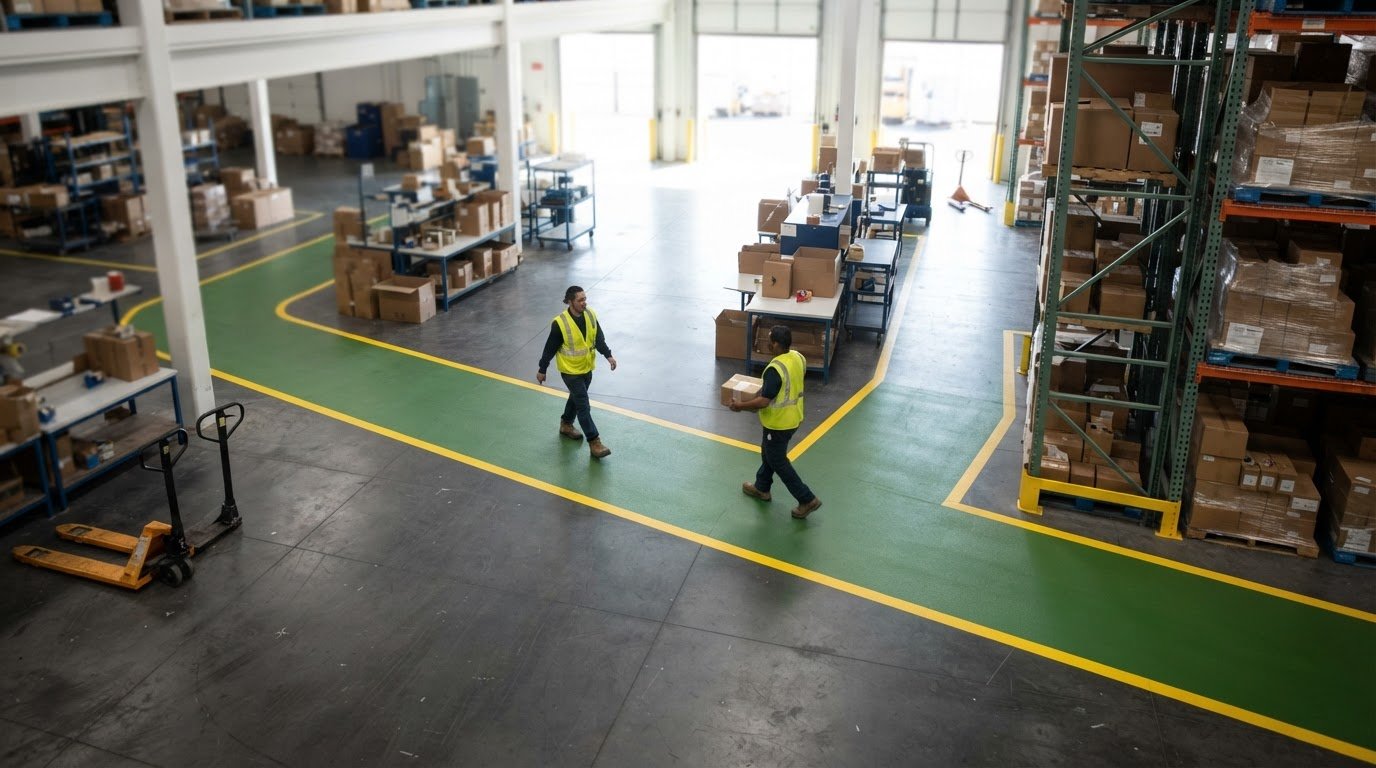
Adhering to the Americans with Disabilities Act (ADA) involves more than just a blue symbol on the asphalt. Federal law requires specific stall dimensions, such as 8-foot wide spaces with adjacent 5-foot or 8-foot access aisles for vans. These aisles must feature blue and white hatching to prevent unauthorized parking. Standard handicap stencils generally range from $30 to $60 per application, but the real cost lies in the precision required for the layout. Industrial facilities also benefit from custom stenciling for truck numbers and pallet positions to streamline logistics. Integrating high-visibility pedestrian walkways and safety aisles is a critical step in separating foot traffic from heavy equipment, which reduces the risk of workplace injuries.
Safety Zones and Loading Dock Markings
Loading docks and truck courts require specialized safety markings to manage the high volume of heavy-duty traffic. These “No Parking” zones often use cross-hatching (diagonal lines spaced at regular intervals) to keep emergency access points clear. Fire lanes are another major cost factor, typically requiring red curb painting and “FIRE LANE” stencils every 20 to 25 feet. We also include bollard painting and protective markings for concrete barriers in our industrial quotes to protect your facility’s physical infrastructure. These markings act as a visual warning for drivers, preventing expensive damage to building corners and dock doors. If you’re concerned about meeting local fire marshal codes or OSHA standards, you should contact our compliance consultants for a detailed facility audit and quote.

Surface Preparation and Line Removal: The “Invisible” Costs
Surface preparation is the most critical phase of any industrial project, yet it’s often the most undervalued component of the commercial parking lot striping cost. Many managers attempt to save budget by painting directly over existing, degraded lines. This approach is fundamentally flawed. New paint can’t bond to old, flaking material. It needs a clean, stable substrate to ensure long-term adhesion. If your facility is undergoing a complete layout change, professional warehouse line removal is essential to prevent ghosting (the visual remnant of old lines) and ensure the new markings are the only ones visible to drivers and operators.
Beyond removal, cleaning the surface is a mandatory step that impacts the final bill. Power washing and industrial sweeping remove bond-breakers like oil, grease, and accumulated dirt. In older facilities, we often encounter concrete pitting or spalling. Repairing these defects before applying new markings prevents the paint from settling into cracks, which leads to uneven wear and poor visibility. Addressing these “invisible” factors during the planning phase ensures your facility maintains high operational standards from day one.
Mechanical Removal: Shot Blasting and Grinding
We utilize two primary mechanical methods to strip old markings: shot blasting and grinding. Shot blasting involves propelling small steel spheres at the surface to remove paint and “profile” the concrete (creating a textured surface for superior bonding). This is the gold standard for high-performance epoxy applications in heavy-traffic truck courts. Grinding uses rotating abrasive disks to shave off the top layer of paint. While grinding is often more cost-effective for standard traffic paint, shot blasting provides the mechanical anchor necessary for long-term durability. In sensitive industrial environments, we use integrated vacuum systems to manage dust and debris, ensuring your operations aren’t compromised by airborne particles.
Maximizing ROI Through Proper Prep
Poor surface preparation is the primary cause of premature striping failure. While intensive prep work increases the initial commercial parking lot striping cost, it drastically reduces the frequency of maintenance cycles. A properly prepared surface allows the chemical bond to reach its maximum strength, providing a durable solution that survives heavy forklift and truck traffic for years. It’s a simple calculation: the cost of professional prep is always lower than the cost of a premature re-striping project. You should get a professional assessment for your parking lot line striping project to identify which mechanical preparation methods will maximize your facility’s safety and long-term budget efficiency.
Optimizing Your Industrial Infrastructure for 2026 and Beyond
Managing a large-scale facility requires a shift from viewing pavement markings as a recurring expense to seeing them as a strategic safety investment. We’ve established that the real commercial parking lot striping cost is dictated by material selection and mechanical surface preparation rather than just the initial price per foot. High-traffic environments demand industrial-grade solutions that resist premature fading and ensure constant adherence to ADA and fire code regulations. By prioritizing durability and professional removal of old lines, you protect your budget from the hidden costs of frequent maintenance and legal liability.
StripeGuys Warhouse Line Striping brings 29+ years of industry-leading expertise to every project, providing specialized industrial-grade materials that stand up to the heaviest logistics traffic. Our nationwide service model is designed specifically for multi-facility logistics hubs that require consistent operational standards across every location. We focus on functional outcomes that keep your gates open and your employees safe. You don’t have to navigate complex regulatory requirements or budget uncertainty alone. Request an Industrial Striping Quote from StripeGuys Warhouse Line Striping to secure a compliant, high-performance solution for your facility. We look forward to partnering with you to maintain a safer, more efficient workspace.
Frequently Asked Questions
How much does it cost per line to stripe a parking lot in 2026?
Standard industry pricing for 2026 is generally calculated by the linear foot rather than a flat fee per line. This measurement accounts for the specific width and length of industrial stalls, which often exceed standard retail dimensions. The type of paint selected, such as water-based acrylic or durable solvent-based, significantly impacts the final commercial parking lot striping cost. Most industrial veterans recommend high-solids traffic paint to ensure the markings withstand heavy vehicle friction over time.
What is the average mobilization fee for a commercial striping contractor?
Mobilization fees cover the logistical overhead of transporting heavy machinery and specialized crews to your facility. These fees ensure that a contractor can maintain strict operational standards and safety protocols regardless of the project’s location. For large-scale industrial hubs, this fee is a standard component of the quote. It reflects the costs of fuel, equipment maintenance, and the specialized labor required to manage complex, multi-site logistics projects with high precision and reliability.
Does the cost of striping include the removal of old lines?
Line removal is an independent service and is rarely bundled into a standard restriping quote. Professional removal is essential when you’re implementing a new traffic flow or correcting a non-compliant layout. We use mechanical methods like shot blasting or grinding to completely eliminate old markings. This prevents “ghosting,” which refers to the visible remains of previous lines, and provides a clean surface that ensures the new paint bonds permanently to the substrate.
How much extra should I budget for ADA compliance markings?
ADA compliance requires a dedicated portion of your budget for specialized stenciling and hatching. You must account for the blue and white paint used in access aisles and the specific dimensions required for van-accessible stalls. While these markings involve more labor and material than standard lines, they’re mandatory for federal compliance. Investing in accurate ADA markings protects your facility from expensive legal challenges and ensures a safe environment for all site visitors and employees.
Is epoxy line painting more expensive than standard traffic paint?
Epoxy line painting carries a higher initial investment compared to standard water-based traffic paint. This difference is due to the chemical complexity of the resin and the intensive surface preparation, such as shot blasting, required for a successful bond. In high-traffic industrial zones, epoxy is the superior choice because it lasts significantly longer. It reduces the total commercial parking lot striping cost over the facility’s lifespan by eliminating the need for frequent, disruptive maintenance cycles.
What factors increase the labor cost for industrial parking lot projects?
Labor costs escalate when projects require night or weekend execution to avoid disrupting 24/7 operations. Complex parking lot geometries, such as curved lanes or intricate loading dock patterns, also require more man-hours for precise layout and chalking. Extensive surface cleaning or concrete repair before application adds to the labor total. These steps are necessary to ensure the paint adheres correctly and provides the functional longevity expected in a professional, safety-conscious industrial workspace.